

The phrase 18/8 vs 18/10 stainless steel describes nominal composition shorthand, not an automatic performance ranking or lot certificate. ## What Do the Numbers in 18/8 and 18/10 Mean?
The shorthand places chromium first and nickel second. Read 18/8 as a nominal description of stainless steel with about 18 percent chromium and 8 percent nickel; read 18/10 as about 18 percent chromium and 10 percent nickel. The numbers are rounded commercial language. They do not provide every element, permitted range, manufacturing condition or delivery requirement that would appear in a complete material specification.
The notation can be useful to introduce a material family or communicate a product-maker’s chosen description. It is not a heat-by-heat chemical analysis. A buyer who needs to establish compliance with a named grade should specify that grade and the applicable product or material standard, then agree what records will support the claim. A two-number phrase alone leaves open which exact specification, composition limits, product form, condition and verification method apply.
The British Stainless Steel Association’s discussion of 18/8, 18/10 and 18/0 describes 18/10 as an alternative commercial designation associated with the 304 family in cutlery and holloware. That is useful context for understanding why two labels may appear on products that are being described within a similar material family. It does not authorize a buyer to assume that every item labeled 18/8 or 18/10 is a particular certified grade. Product makers may use shorthand differently, so ask the supplier what the notation means for the quoted item.
The buyer’s question is not only “Which number is larger?” It is “What does this seller claim, what grade do I require, and what record ties that claim to the material delivered?” Keeping those questions separate prevents a product description from being treated as a chemical certificate or a complete purchase order requirement.

18/8 Vs 18/10 Stainless Steel: Does 18/10 Automatically Mean a Higher Stainless Steel Grade?
No. A larger second number is not an automatic grade ranking. The shorthand suggests a nominal nickel difference, but a standardized grade is defined through a fuller chemistry and specification context. A buyer cannot determine from the two numbers alone whether the quoted material is a different formal grade, meets a required product specification, or is appropriate for a particular use.
Suppose two product listings describe similar accessories as 18/8 and 18/10. The label comparison supports a limited observation: the stated nominal nickel figure is 8 versus 10, while the stated nominal chromium figure is 18 in both phrases. The description does not prove the two items meet different grade specifications. It also does not prove their actual material chemistry is the same. Those are different propositions and need different evidence.
This distinction is important when a buyer compares bathroom hardware. Official regional pages for some bathroom accessories use 18/10 as a product description, and the BSSA explains the term’s use in a product context. A product label can describe what a brand chooses to communicate. The importer still needs to establish the agreed material requirement for the item being sourced, especially when the purchase order names a particular grade or the use environment requires a specific specification.
Avoid calling a supplier misleading merely because its 18/8 item is also described as 304 or because another seller uses 18/10. Commercial labeling practices vary. Ask the supplier to reconcile the label with the technical specification and records. The goal is to make the order verifiable, not to turn shorthand into an unsupported accusation or quality ranking.
What Does a Two-Percentage-Point Difference Actually Show?
The nominal second figures differ by two percentage points: 10 minus 8 equals 2. If one compares the number 2 with the starting figure 8, the arithmetic ratio is 2 divided by 8, or 25 percent. That is a mathematical comparison of the stated shorthand values only. It does not mean a product performs 25 percent better, lasts 25 percent longer, resists corrosion 25 percent more, or has 25 percent higher quality.
This is a useful buyer-side check because percentage language can make a small composition notation sound like a performance result. Composition is one input to material behavior; the component’s actual grade, manufacturing, finish, geometry, welds, cleaning, deposits and service environment matter too. A nominal label cannot substitute for a comparative test or engineering assessment of finished products.
| Statement | What can be calculated or inferred | What the statement does not establish |
|---|---|---|
| 18/8 versus 18/10 | The nominal second value differs by 2 percentage points | A 2-point performance gain |
| 2 compared with 8 | The arithmetic ratio is 25% of the starting number | 25% better corrosion resistance or lifespan |
| Both labels start with 18 | Both descriptions state roughly the same nominal chromium figure | Identical full chemistry or the same actual lot |
| A product is labeled 18/10 | The seller uses that commercial description | A specific standardized grade unless also specified and supported |
If a supplier offers an “upgrade,” ask what exactly changes: the named grade, material source, composition specification, finish, construction or documentation. Request a side-by-side specification rather than accepting “higher number” as the explanation. If the commercial difference is the only documented change, describe it as a labeling difference until further evidence is supplied.
How Do the Labels Relate to 304 Stainless Steel?
The labels are often discussed alongside 304 stainless steel, but they are not interchangeable with a complete 304 specification. The BSSA’s discussion links 18/10 terminology to the 304 family in the context of cutlery and holloware. A separate bathroom product maker may use 18/10 wording to describe an item it associates with 304-equivalent material. These examples explain common usage; they do not mean every product bearing either label has been verified against the same grade limits.
For procurement, write the material requirement at the level you actually need. If the project requires grade 304, name the grade and identify the applicable specification or product standard in the purchasing documents. If a product program accepts a commercial 18/8 or 18/10 description, define what that description means contractually and which record must accompany the lot. Do not leave the purchase order with only a broad adjective such as “premium stainless.”
If a supplier proposes “304,” “SUS304,” “18/8” and “18/10” as equivalent without an explanation, ask the supplier to state the basis. A supplier may be referring to a recognized product convention, a brand label, a material declaration or a tested lot. Those are not the same evidence. The buyer should preserve the explanation along with the quotation and approved sample.
The existing stainless steel grades guide covers broader grade terminology, while this article focuses on the meaning and limits of the 18/8 and 18/10 shorthand. Use the broader grade page when the decision concerns a grade family beyond these two commercial labels.
Can Appearance or a Magnet Identify 18/8, 18/10 or 304?
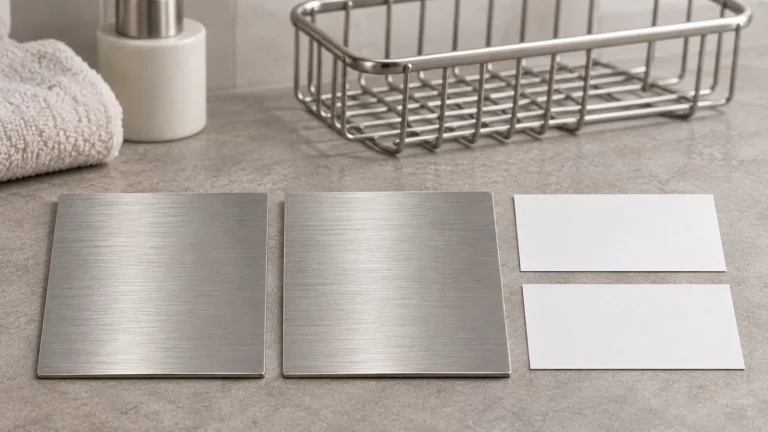
No. A polished, brushed or reflective surface does not reveal the exact alloy chemistry. Similar-looking products can carry different material descriptions, and a visual comparison cannot confirm the composition of the lot. Finish describes the surface appearance and processing; it should be recorded separately from the grade or material specification.
A handheld magnet is also not a reliable stand-alone grade identification method. Magnetic response can depend on alloy family, processing and the state of a component. A magnet result does not provide the complete chemical composition or prove compliance with a particular purchase specification. Do not accept a “magnet test” as sole evidence that an item is or is not 304, 18/8 or 18/10.
For a buyer, a more reliable documentation path begins with a written requirement and a traceable material record. Identify the material grade or commercial label, the record type expected from the supplier, the item or lot it covers, and how the identification will be preserved through production. Depending on the project and supplier arrangements, the buyer might request a material declaration, mill documentation, supplier lot record or a test report from an appropriate source. A document is only useful when it clearly applies to the supplied material and is credible for the claim being made.
If the project requires independent chemical verification, specify who performs it, what method and acceptance limits apply, which samples represent the order, and how results are linked to the lot. Do not imply that an informal visual inspection, a magnet, or a generic certificate automatically provides that verification. The evidence level should match the risk and the actual claim the buyer needs to support.
What Should a Buyer Compare Beyond the Label?
First, compare the actual material requirement. Is the purchase order asking for 304, another named grade, or only a product maker’s shorthand? If a grade matters, identify the applicable specification and the evidence expected. If an 18/10 product description is acceptable, state whether that is merely a commercial label or a defined composition requirement.
Second, compare the component and its environment. A dry interior trim component, a frequently wet bathroom accessory and a part exposed to cleaning residue do not have identical service conditions. Record expected contact with water, cleaning chemicals, deposits, coastal air, ventilation, drying and crevice locations. Do not treat the stainless label as a universal corrosion guarantee. Material choice must be considered with finish, fabrication and environment.
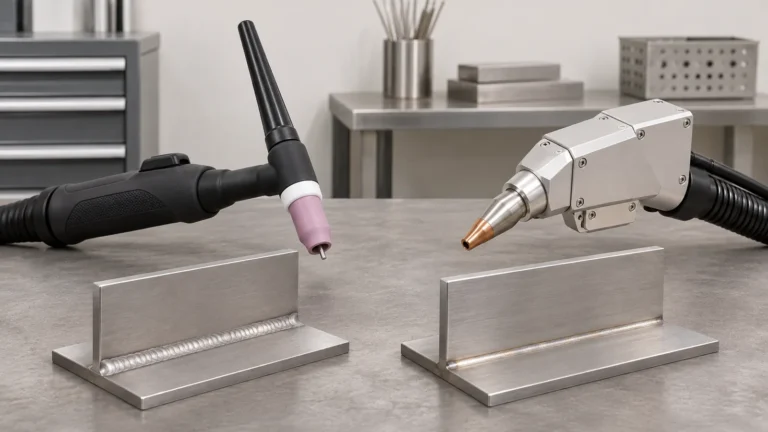
Third, compare how the component is made. Forming, cutting, welding, polishing and assembly can affect the finished surface and local conditions. A grade statement does not establish the quality of a weld, the absence of contamination, the quality of polishing or the performance of a coating. Keep material identity and workmanship requirements as distinct checks in the inspection plan.
Fourth, compare what is included in the offer. If one supplier quotes an 18/10 label and another quotes 304, ask both to document grade, finish, included parts, packaging and any substitution. The quoted item should match the approved sample and drawing revision. A changed label alone should not silently change the purchase specification.
| Comparison point | Buyer question | Evidence to align |
|---|---|---|
| Material identity | Is the requirement a named grade or a commercial notation? | Purchase order and material specification |
| Lot traceability | Which record applies to the delivered lot? | Material, supplier and lot identifiers |
| Surface | Is the requested finish specified independently? | Finish sample, drawing or approved appearance reference |
| Service conditions | What exposure and cleaning are expected? | Product-use brief and design assumptions |
| Fabrication | Which welds, formed areas and cosmetic faces matter? | Drawing, sample and workmanship criteria |
| Substitution | What must be approved before material changes? | Written change-control requirement |
For surface preparation and appearance questions, see the chrome versus stainless versus powder-coating guide and the 304/201 finish-stack selection guide. These pages address related but distinct comparisons; neither changes what the 18/8 or 18/10 shorthand proves.
Why Does Product Application Matter for Bathroom Hardware?
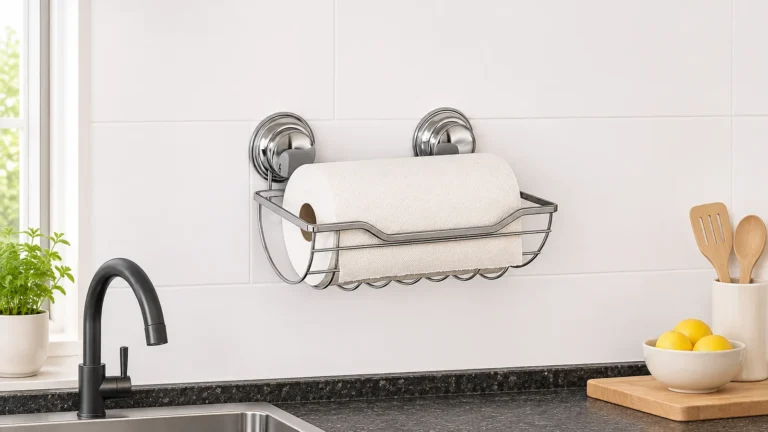
Bathroom accessories put the material discussion into a real purchasing context. A towel holder, tissue holder, wire basket or other metal accessory may be described as 18/10, stainless or 304 in a product listing. The importer should identify the exact item, its components, the finish and the intended exposure instead of applying one label to every part in a product family.
A multi-part accessory may combine a visible body, mounting plates, fasteners, a wire section or a concealed support. The buyer should ask whether the material description covers all parts or only the main visible body. If a bracket, screw or insert is made from a different material, that should be clear in the technical record where it matters. A product photograph cannot establish that all components share one grade.
The service environment also depends on use and care. A component in a frequently wet area may retain moisture at a joint or behind a mounting plate; a component in a ventilated dry room may experience a different exposure. Cleaning practices, residues and geometry matter. The article does not assign a universal service-life ranking to 18/8 and 18/10. Buyers should define the environment and request evidence that matches any performance requirement.
For product development, keep the sample, drawing, bill of material or declared material requirement and finish reference connected. If a supplier changes the listed grade, ask whether the actual material, product geometry, finish or only the label changed. Document the answer before approving production. This is especially important for private-label programs where different product pages or regional catalogs may use different wording for similar accessory designs.
How Should an Importer Write the Material Requirement?
Avoid vague wording such as “better stainless,” “high-quality 18/10,” or “304 equivalent” unless the purchase documents define what those phrases mean. A concise requirement can state the named grade, applicable specification, product form or part coverage, requested record and substitution approval process. If the project uses 18/8 or 18/10 as a commercial description, define whether it is informational or a contractual composition criterion.
The requirement should also identify the component scope. For example, the buyer can list the visible wire body, mounting plate and supplied fasteners separately if their material differs or if the product requirement applies only to certain parts. A clear table can help the sourcing team compare supplier responses without assuming that the product title applies to every included item.
Specify what the supplier should provide before order confirmation and at delivery. The record should identify the supplier, material claim, relevant item or lot and document date. If a test report is requested, identify the test’s purpose and who is responsible for interpreting it. Avoid asking for a result without defining the represented sample, method or acceptance requirement.
The change-control rule is as important as the initial material line. State that any material or label substitution requires written disclosure and buyer review before production. A revised product listing or verbal explanation should not silently replace the material specification on an approved purchase order. Keep the approved sample and product drawing linked to the same revision so that the team can identify what was actually evaluated.
What Can a Small-Batch OEM Manufacturer Review?
Koitor Hardware is a family-owned custom metal hardware factory specializing in bathroom and home storage hardware, with flexible small-batch OEM production and direct factory communication. For a relevant metal accessory, a buyer can provide a drawing or physical sample, the target material description, the finish, the intended service environment and the required quantity. That information gives the supplier a bounded scope to discuss the component, fabrication and quotation.
The material review still has limits. A factory discussion or quotation does not itself prove the chemical composition of a supplied lot. If the buyer needs a specific grade record or independent test, define that requirement and its verification path in advance. Do not imply that a manufacturer’s general experience replaces material traceability or a third-party report when one is contractually required.
Small-batch sample development can help the product team check the form, joints, mounting interface and finish appearance before scaling an order. The sample should be tied to its material declaration and drawing revision. If the buyer later changes the grade, finish, supplier or component construction, record whether a new sample or additional verification is needed. The decision depends on what changed and which risks the purchase specification controls.
An OEM partner can also help make the documentation request practical. The buyer can ask what material records are available from the proposed supply chain and whether those records identify the ordered lot. If the requested evidence is not available, the buyer can decide whether to change the sourcing requirement, request a different supplier route or hold the purchase. This is more useful than accepting a product title as proof or expecting the factory to infer an unstated certification requirement.
Buyer Checklist Before Requesting a Quotation
- State whether 18/8 or 18/10 is a commercial description or a contractual material requirement.
- Name the required grade and applicable specification when a named grade is necessary.
- Identify which product components the material requirement covers.
- Define the expected service environment, cleaning exposure and relevant wet or crevice conditions.
- Specify the finish separately from the alloy or grade.
- Ask which record will identify the material and how it is linked to the delivered lot.
- Define any independent chemical verification, sampling and acceptance criteria required by the project.
- Record the approved product drawing, sample and material-document revision.
- Require written approval before a supplier changes the specified grade or commercial label.
- Compare supplier quotations using the same component scope, finish, packaging and evidence requirement.
The checklist helps procurement turn shorthand into a verifiable requirement. It does not create a grade definition or guarantee that a record is authentic. Buyers should specify the evidence they need and review whether it actually supports the claim being made.

Frequently Asked Questions
Is 18/10 always better than 18/8 stainless steel?
No. The notation states a nominal chromium/nickel description, not a complete quality or performance ranking. A larger stated nickel number does not by itself prove better corrosion resistance, longer life or a higher standardized grade. Compare the actual material specification, product construction, finish, service conditions and evidence.
Does 18/8 stainless steel mean 304?
Not by itself. The 18/8 phrase is shorthand for approximate chromium and nickel proportions. Some commercial usage associates it with the 304 family, but the label alone is not a full grade specification or lot chemistry record. If 304 is required, name that grade and specify the supporting documentation.
Does 18/10 stainless steel prove a product contains exactly 10 percent nickel?
No. The label is a nominal commercial description. It should not be read as an exact analysis of the actual supplied lot. Ask the supplier what basis and record support the description for the quoted item.
Can I use a magnet to distinguish 18/8 from 18/10?
A magnet response is not a reliable stand-alone identification method for those labels or a specific grade. It does not establish full chemistry or lot compliance. Use a written material requirement and evidence appropriate to the claim instead.
Why might two brands describe similar bathroom products differently?
Product makers may use commercial labels, grade references or regional catalog conventions differently. Similar appearance does not settle the exact material identity. Ask each supplier to explain its wording and connect it to the applicable specification or lot record.
Should the finish be included in the stainless steel grade line?
Keep them separate. The grade describes material identity; the finish describes surface appearance or treatment. Both may matter to sourcing and inspection, but one does not prove the other.
Work With Koitor Hardware
For a custom metal bathroom or home-storage accessory, share the product drawing or sample, component list, material requirement, finish reference, service environment and expected quantity. Koitor Hardware can discuss OEM manufacturing scope and sample development for relevant metal hardware. If a named grade or lot-level evidence is required, include that requirement in the RFQ so the documentation path can be reviewed before quotation.
How does 18/8 vs 18/10 stainless steel fit the exact product and buyer decision?
Use the model-specific drawing and evidence described above; this guide does not create a universal specification.
Review the Material Specification
Share the relevant product drawing or sample, intended use, material or finish requirements, and target quantity. Koitor can review the manufacturing scope for custom bathroom and home-storage hardware based on the information provided.
OEM / PRIVATE LABEL
Turn this sourcing guide into a product brief
Share your target product, size, finish, order quantity and packaging requirements. Your team receives a practical manufacturability review before quotation.
 English
 Español
 Português
 Français
 Deutsch
 العربية