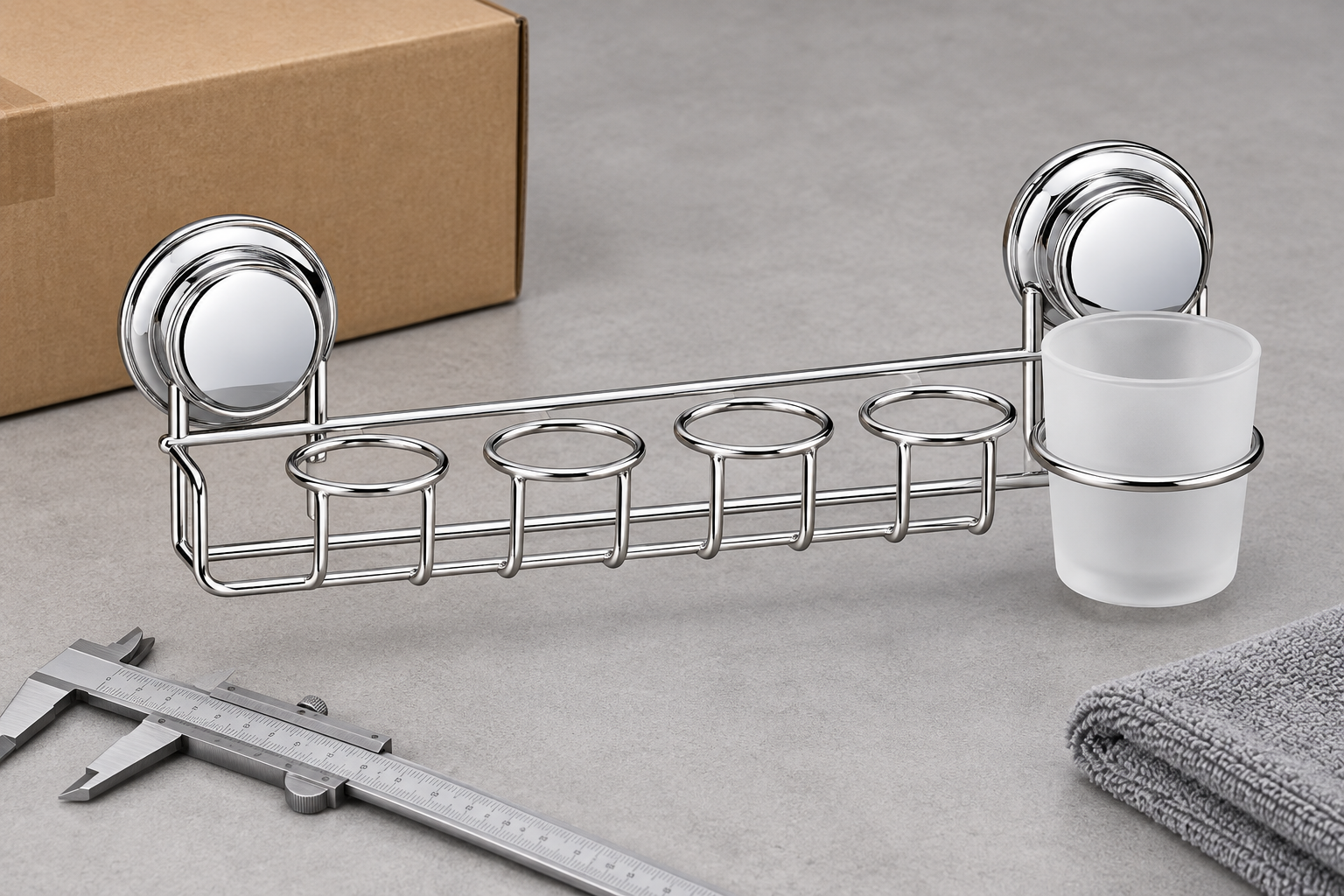
A suction cup toothbrush holder manufacturer should be assessed as the supplier of a complete bathroom product system, not simply a metal frame attached to a suction cup. Overseas buyers need to define the mounting components, intended wall surfaces, slot spacing, cup fit and cleaning access, finish, installation information and packaging before comparing quotations. Controlled drawings and samples produce a more useful sourcing decision than unsupported universal load or surface claims.
The product combines metal fabrication, visible finish, suction components and user handling. A small change in geometry can affect assembly, cleaning, retail presentation or replacement. Importers, distributors and private-label teams should therefore approve the product, mounting method and packed unit together.
What Should Buyers Define Before Requesting a Quote?
Begin with the intended user task and market format. Define the product configuration, target dimensions, expected bathroom location and representative smooth wall surfaces. State whether the quotation should include mounting parts, instructions, retail packaging and spare components. A photograph communicates appearance, but a dimensioned drawing identifies the features the factory must repeat.
For this toothbrush holder, the RFQ should identify number and diameter of brush slots, center spacing between handles, removable cup diameter, drainage and drying clearance, overall projection, and dual-mount center distance. Separate functional requirements from preferences. Functional points affect fit, use, cleaning or assembly; preferences may allow the supplier to propose a practical manufacturing route.
Wall compatibility must remain conditional. Smooth glazed tile, glass and polished stone are not equivalent to textured surfaces, grout joints or curved walls. Buyers should provide representative samples or define a review method. Installation preparation, moisture, dust and user technique can influence a suction assembly, so marketing language should not promise compatibility with every wall.
Ask the supplier to state assumptions in the quotation. Material, finish, component source, sample quantity, packing method and order quantity can change cost. Koitor’s no-drill bathroom accessories manufacturing page gives buyers a relevant starting point for discussing the project.
Which Product Options Should OEM Buyers Compare?
Compare options against the actual product use, inspection method and price position. The lowest component price may create more assembly or packaging work, while the most complex option may add no buyer value. The table below frames the main decisions for this product.
| Option | Potential value | Buyer approval point |
|---|---|---|
| Separated wire rings | Clear individual brush positions | Check handle and head clearance |
| Stamped slot plate | Compact repeatable layout | Review edges and drainage |
| Removable cup module | Adds rinsing or storage function | Control fit, rattle and cleaning |
| Dual suction mounts | Supports a wider organizer | Control alignment and center distance |
A vacuum suction toothbrush rack OEM program should include a component list. Identify the chrome cover, rubber cup, locating base, metal product structure, connectors and packing parts. Two quotations are not comparable when one includes the complete mechanism and another assumes buyer-supplied components.
Material descriptions also require precision. “Stainless” does not define section, thickness, grade or finish direction, and a bright surface does not prove a specific performance result. Confirm the project material and approved finish sample. Any corrosion, load or market-specific statement should be supported by an agreed project method rather than inferred from appearance.
What Should the Drawing and Approval Sample Control?
The drawing should explain what to make, where to measure and which revision controls production. It does not need tight tolerances on every feature. It does need clear datums for dimensions that affect use, alignment and assembly.
- Number and diameter of brush slots with a measurable reference and approval method.
- Center spacing between handles with a measurable reference and approval method.
- Removable cup diameter with a measurable reference and approval method.
- Drainage and drying clearance with a measurable reference and approval method.
- Overall projection with a measurable reference and approval method.
- Dual-mount center distance with a measurable reference and approval method.
Define dimensions from stable references. Decorative cover edges may be difficult to measure consistently, while a base center, frame edge or fixture datum can be clearer. Mark cosmetic zones separately from hidden assembly surfaces. This helps inspection focus on what the buyer and end user will actually see.
If development starts from a physical sample, record what the sample controls. It may define proportion and handling but not hidden material, tolerance or packaging. Measure the sample, add missing requirements and identify the approved version. Email photographs alone are not a reliable master sample.
How Should Buyers Approve Samples and Manufacturing Capability?
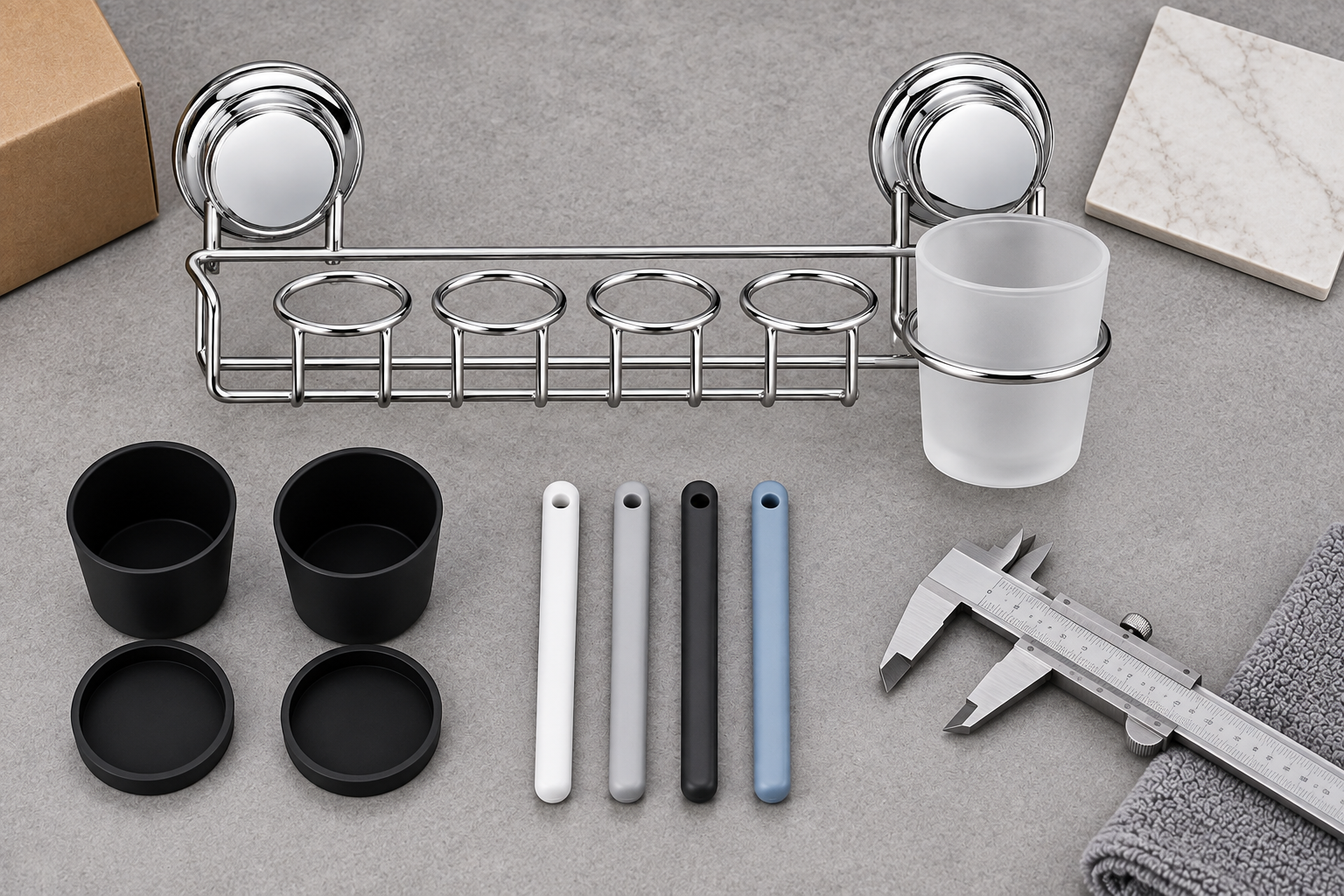
Use a production-intent sample whenever possible. Early prototypes can answer geometry questions, but final approval should use the intended metal structure, mounting components, finish and packaging. Record the sample condition, reviewer, date and drawing revision instead of writing only “approved.”
- Confirm the drawing, component list and representative wall surfaces.
- Inspect unassembled mounting parts and metal connection points.
- Measure the critical product features and visible alignment.
- Install the complete sample using the intended instructions.
- Review user access, removal, cleaning and reinstallation.
- Inspect finish and edges under consistent lighting.
- Pack the sample and check contact between polished and suction surfaces.
- Label the approved sample and retire superseded versions.
Factory capability should match the real process route. This product may use wire or tube forming, welding, grinding, polishing, surface finishing, assembly and packaging preparation. Ask how fixtures control alignment, where first-piece inspection occurs and who confirms purchased suction components. Practical answers matter more than broad claims about factory size.
Koitor Hardware is a family-owned custom metal hardware factory specializing in bathroom and home storage hardware. Koitor can review drawings or physical samples, discuss manufacturability and support flexible small-batch OEM development. MOQ can start from 100 pieces for some products, while sample and production timing depend on confirmed structure, components, finish, quantity and packaging.
Which Quality and Packaging Controls Reduce Sourcing Risk?
Quality control should follow the points that affect function, appearance and packing. Incoming review can confirm the correct suction cups, bases and covers. First-piece checks can verify dimensions and alignment before the batch proceeds. In-process checks can focus on forming, joints, edges and finish. Final inspection can confirm assembly, accessory completeness and packed condition.
A no drill toothbrush holder supplier should explain how repeatable positioning is achieved. A simple fixture or gauge may control the relationship between the product frame and suction base. Buyers do not need to design factory tooling, but they should understand which features are controlled and how changes trigger reapproval.
Packaging must protect polished metal and the working face of the suction cup. Loose components can scratch visible surfaces; concentrated pressure can deform rubber parts; dust can contaminate contact faces. Review the retail card, sleeve, tray or insert with the complete accessory set. Confirm carton orientation and pack quantity before bulk production.
Use this checklist before releasing a private label bathroom cup holder order:
- ☐ Number and diameter of brush slots is confirmed in the latest drawing or sample.
- ☐ Center spacing between handles is confirmed in the latest drawing or sample.
- ☐ Removable cup diameter is confirmed in the latest drawing or sample.
- ☐ Drainage and drying clearance is confirmed in the latest drawing or sample.
- ☐ Overall projection is confirmed in the latest drawing or sample.
- ☐ Dual-mount center distance is confirmed in the latest drawing or sample.
- ☐ Surface assumptions and installation steps are written.
- ☐ Finish and cosmetic zones match an approved reference.
- ☐ Packaging protects polished parts and suction faces.
- ☐ Any post-approval change requires documented review.
What Common Sourcing Mistakes Should Buyers Avoid?
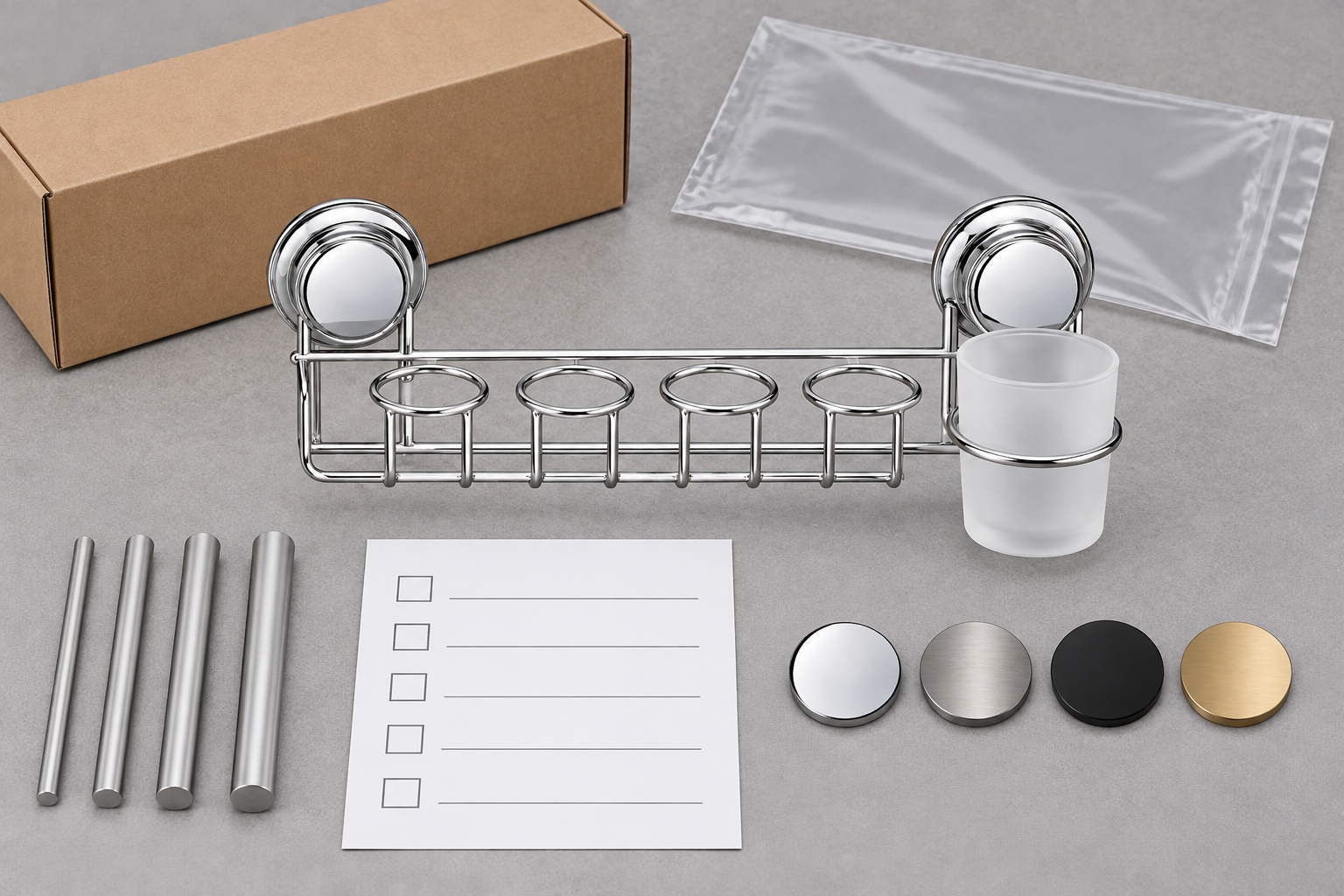
Most avoidable problems begin with incomplete specifications or assumptions that remain hidden until packing. Treat the metal item and suction mechanism as one product. Keep one controlled drawing, component list, packaging specification and open-issue record.
- Avoid checking only one toothbrush handle size.
- Avoid placing slots too close for brush heads.
- Avoid creating a cup pocket that traps water.
- Avoid using two mounts without an alignment reference.
- Avoid packing loose cups where they scratch the rack.
Do not request a universal load statement without defining surface, preparation, installation, load position and observation method. If a claim is commercially necessary, agree on a project-specific method and evidence before using the statement in packaging or sales materials.
Do not approve appearance only from close photographs. Reflections can hide finish direction and cosmetic variation. Review a physical sample under consistent lighting and mark critical faces. For repeat orders, compare every revision in material, finish, component, artwork and pack quantity with the last approved configuration.
Build a quotation comparison sheet before choosing a supplier. Use separate rows for the metal structure, suction assembly, finish, sample charge, tooling or fixture assumptions, unit packaging, master-carton quantity and delivery basis. Note whether the quotation uses the buyer’s drawing revision and whether alternative components have been proposed. A low price is difficult to evaluate when the included product is unclear. The comparison should also identify one-time development costs separately from repeat-order costs, because a trial order and a mature repeat program may not have the same cost structure.
Ask each supplier to return a short list of open questions. This reveals assumptions about slot spacing, cup fit and cleaning access, surface compatibility, inspection and packing before they become production disagreements. Resolve the answers in one controlled specification rather than leaving them across email and chat threads. When an alternative is accepted, record why it was chosen, which drawing changed and which sample checks must be repeated. A disciplined decision record helps purchasing, quality and factory teams work from the same product definition.
A suction cup toothbrush holder manufacturer should also explain change control for repeat production. Purchased rubber cups, bases and decorative covers may appear similar while using different mating details. The factory should not substitute a component, material, finish or packaging method without buyer review. For a repeat order, compare the new bill of materials and packing specification with the last approved versions, then focus reinspection on changed items and their interfaces.
Prepare an order handoff pack containing the final drawing, component list, finish reference, approved-sample photographs, critical inspection points, installation leaflet, retail-pack layout and carton details. Give every controlled file a revision and date. The handoff should state who may approve changes and where the physical master sample is stored. This is useful for small-batch programs because development, purchasing and packaging decisions often happen close together, and it reduces the chance that an old file returns during replenishment.
Finally, define evidence that is proportionate to risk. A new mounting component, wider product, changed finish or revised retail pack may justify another production-intent sample. An unchanged repeat order may need confirmation against the existing master. The buyer and factory can agree practical checkpoints without turning every order into a full redesign. The goal is a traceable product that can be quoted, sampled, inspected and repeated with fewer interpretation gaps.
After the first shipment, record installation feedback, packaging damage, missing-part reports and recurring cosmetic observations by production lot. Review that evidence before placing the next order, even when no drawing change is planned. A short post-order review can distinguish isolated handling issues from a specification or process gap. Feed confirmed improvements into the controlled drawing, inspection checklist or packaging file, then identify the new revision on the repeat purchase order. This closes the sourcing loop and gives the buyer and factory a shared basis for improving future batches.
Frequently Asked Questions
What should buyers send to a suction cup toothbrush holder manufacturer?
Send a drawing or sample, product dimensions, mounting concept, material and finish direction, target quantity, packaging format and intended approval checks.
Can this product work on every bathroom wall?
No universal compatibility should be assumed. Define representative smooth surfaces and an agreed installation and sample-review method.
How should buyers compare supplier quotations?
Compare the included component set, material, finish, sample scope, packaging and inspection assumptions, not unit price alone.
Can Koitor support sample-based development?
Koitor can review a buyer drawing or physical sample within its supported manufacturing scope. Missing requirements should be documented before final approval.
Are small trial orders possible?
Small-batch production can be discussed. MOQ can start from 100 pieces for some products depending on structure, components, finish and packaging.
Work With Koitor Hardware
Planning a Custom Suction Toothbrush Rack?
Send Koitor your drawing, sample, surface assumptions, finish requirement, packaging idea and expected quantity. The factory team can review structure, mounting interfaces and a practical small-batch OEM route.
OEM / PRIVATE LABEL
Turn this sourcing guide into a product brief
Share your target product, size, finish, order quantity and packaging requirements. Your team receives a practical manufacturability review before quotation.
 English
  Español
  Português
  Français
  Deutsch
  العربية