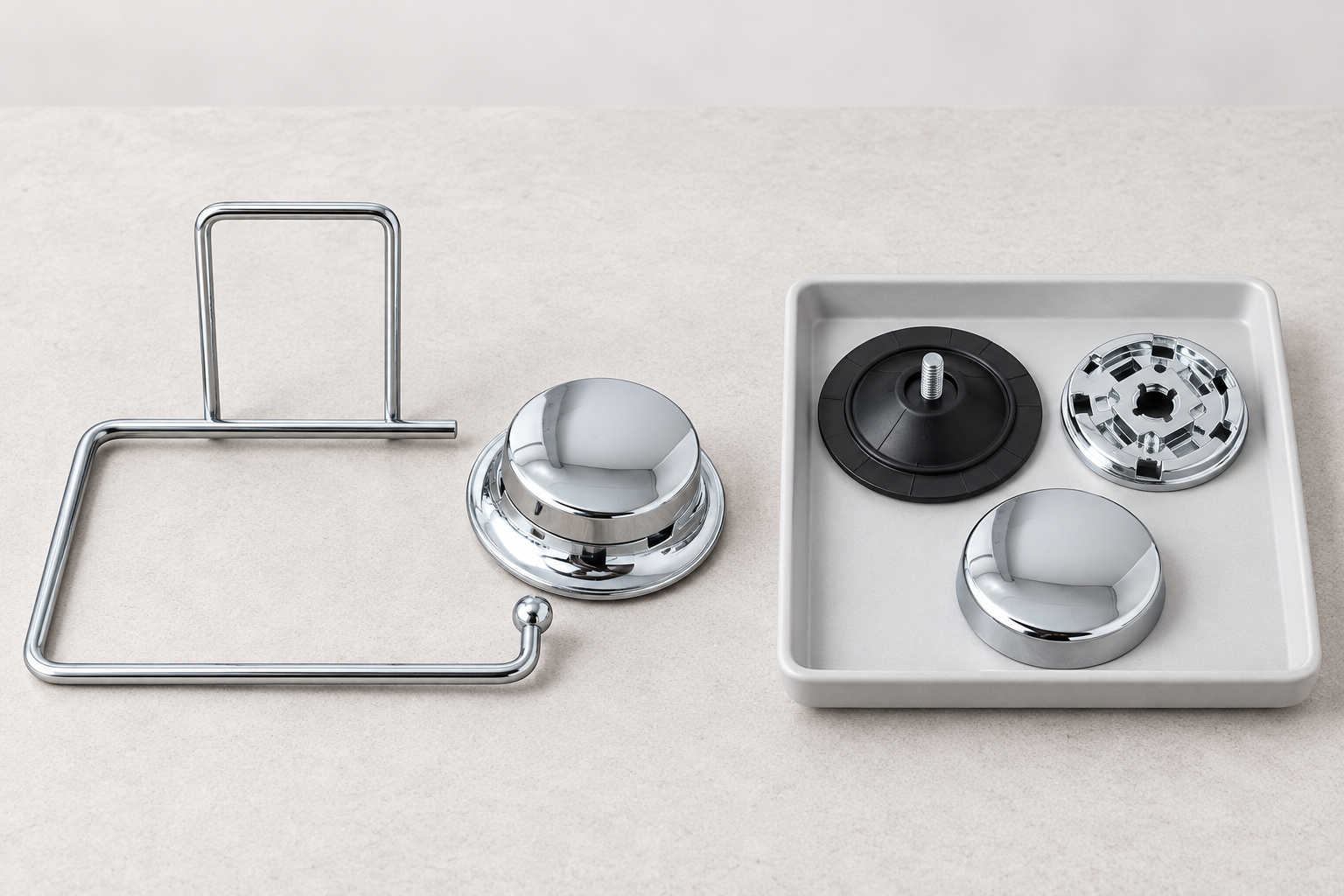
Suction cup bathroom accessory replacement parts should be planned as matched, revision-controlled service items before an importer launches the finished product. A spare rubber cup that looks similar may not fit the original metal base, front cover, or accessory frame. The practical approach is to identify the exact assembled product, define which components may be replaced by a customer or service team, approve a physical spare kit, and connect that kit to the same drawing and batch records used for the main order.
Why should an OEM buyer plan service parts before launch?
Early planning prevents a small after-sales problem from becoming a mixed-component problem. A suction-mounted towel holder, basket, or tissue holder may be sold for months or years after its first production run. If the cup, cover, or base changes during that period, a buyer needs to know which spare set belongs to which shipped version. The product appearance alone cannot settle that question: two round chrome covers may hide different locating features or center connections.
Define the service promise in the product brief. Will the buyer offer only a complete replacement mount, or individual rubber and metal components? Who is permitted to take the assembly apart? Are there instructions for a consumer, or will a distributor handle the service? These choices change the spare bill of materials, packaging, labeling, and support scripts. Do not advertise a customer-replaceable part before confirming that the finished product can be serviced without damage or ambiguous reassembly.
Koitor Hardware is a family-owned custom metal hardware factory focused on bathroom and home storage products. In a small-batch OEM program, buyer drawings or physical samples can define the approved structure before a service kit is quoted. Direct factory communication is useful when an accessory has several similar-looking revisions: the buyer can ask for the exact part interface, sample and packing arrangement, rather than ordering a generic “suction cup.” Koitor’s no-drill bathroom accessories manufacturing page gives the relevant product-family context.
This planning does not imply a fixed life span or a guaranteed wall performance. It helps a buyer identify the right part and preserve the intended assembly. A separate installation and use assessment is still needed for the actual accessory and intended surfaces.
Which components belong in a matched spare set?
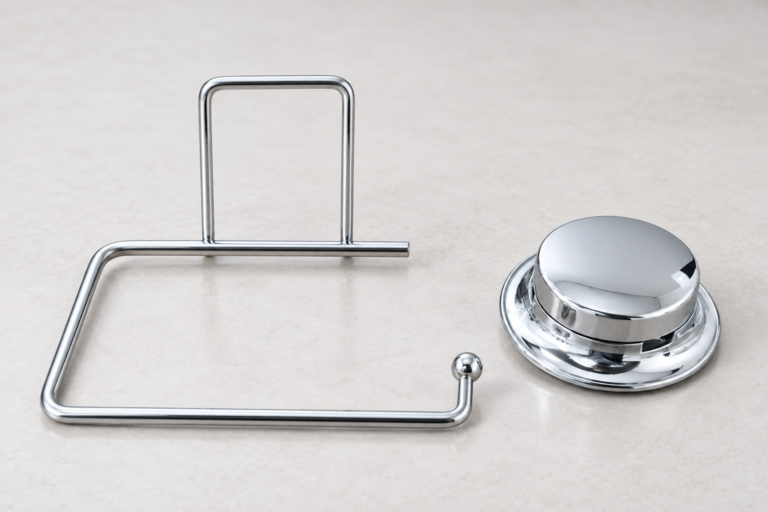
Start suction cup bathroom accessory replacement parts planning with the product-specific bill of materials, then decide whether the service unit is one component or a controlled assembly. The Koitor reference set used in this guide includes a black rubber suction cup with a central connection, a chrome locating base, and a separate smooth front cover. Those visible components do not prove that every Koitor suction accessory shares identical dimensions or retainers. A buyer should treat each accessory model and revision as its own fit question.
| Possible service item | Buyer fit question | Recommended record |
|---|---|---|
| Rubber suction cup | Does the contact edge, diameter, center connection, and shape match the approved mount? | Part drawing, revision, and approved physical sample |
| Metal locating base | Does the opening and accessory-retention geometry match the frame and cup? | Interface photograph and product model mapping |
| Front cover | Does the cover engage the correct center connection and show the agreed finish? | Finished sample and appearance approval |
| Complete mount assembly | Can the entire unit be replaced without confusing its parts with another version? | Assembly instruction and service kit identifier |
| Accessory frame | Is a damaged wire or bracket separately serviceable, or does it require product replacement? | Service decision and warranty handling rule |
A complete mount may be easier for a service team to control when internal interfaces are difficult to identify. Individual parts may reduce waste or shipping volume where the design permits clear, safe replacement. The right answer depends on the actual product, buyer support channel, and approved instructions. Avoid mixing a black rubber cup from one model with a polished cover from another solely because the external diameter appears close.
Ask the factory to show the spare kit next to an approved finished unit. The purpose is to verify that the kit is an additional matched set, not a loose pile of substitute parts. The finished basket or holder should retain its own complete mount in product photographs. If a customer will receive the kit, its part count and order of assembly need to be understandable without factory context.
How should buyers control model and revision compatibility?
Use a simple model-to-part matrix that links the sold SKU to the exact service kit and revision. A single product family can have a chrome and a white finish, different bracket shapes, or a revised rubber cup. The buyer should record whether a change affects service interchangeability. If it does, assign a new kit identifier and an effective production or shipment date. Keep the obsolete kit traceable for products already in the market.
Define a compatibility statement at the part level. “Fits our suction basket” is too broad if there are several basket sizes or production versions. A better service record names the specific article or SKU, mounting assembly revision, component drawing references, and any exclusion. If the factory and importer agree that one part is interchangeable across two versions, keep the comparison sample and the approval evidence. Do not infer it from a photograph or a salesperson’s recollection.
The same discipline matters when the factory produces a small trial run. A buyer may request a revised front cover, a different wire route, or a packaging change between the first and second order. Some changes affect only appearance; others affect mating geometry. Put the change disposition in writing. A part that is cosmetically acceptable could still fail to engage the older base, while a new rubber cup could have a different stud or sealing edge.
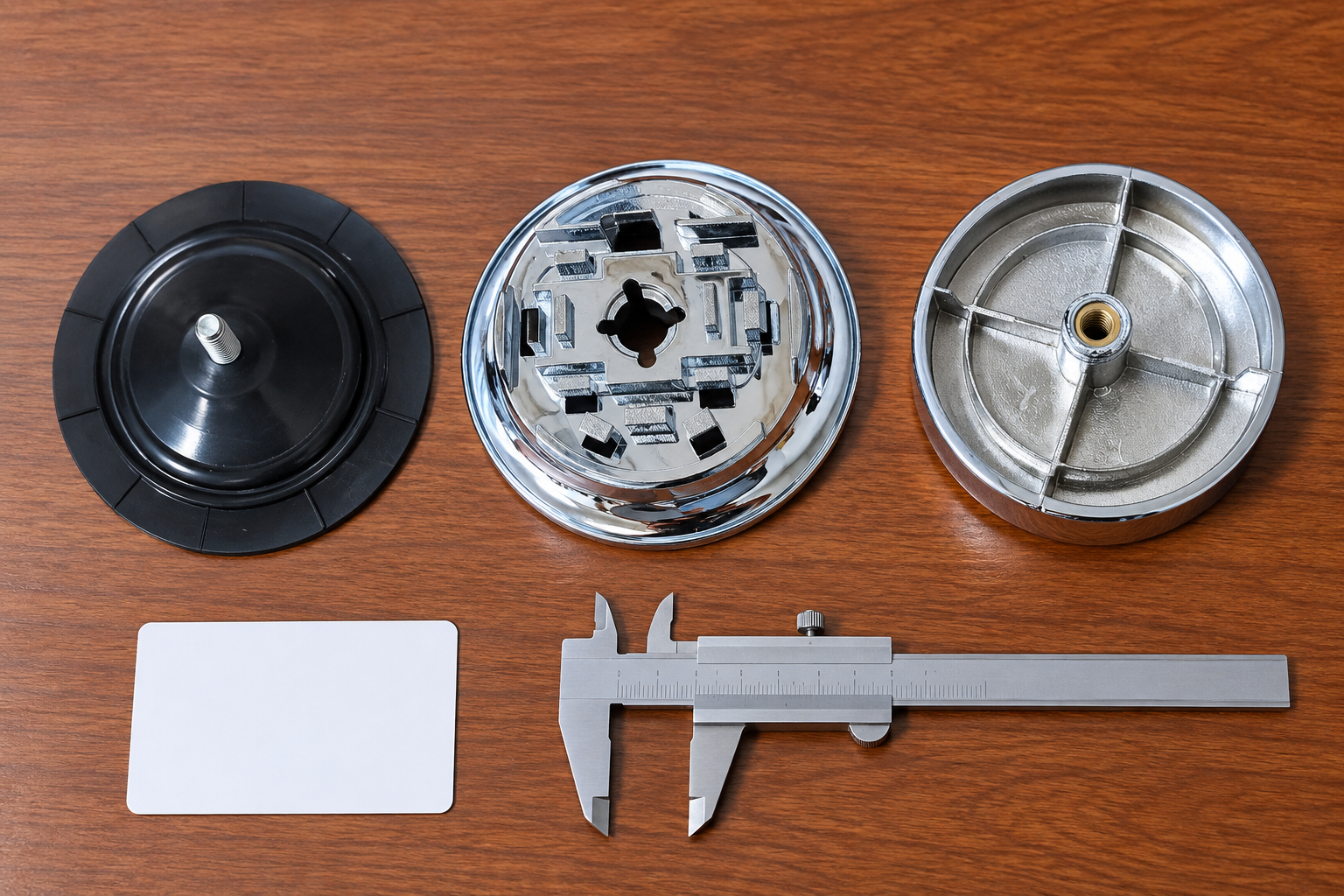
The component photograph is a geometry reference, not a declaration that these pieces fit every Koitor basket. For an import program, retain one approved spare kit and one original product sample together. That pair is more useful for future customer support than a list of generic dimensions without a physical fit example.
What must a service-kit sample prove before ordering?
A sample must prove identity, physical fit, and the service workflow intended by the buyer. Ask for the same component appearance and functional interfaces as the controlled product reference. Check that the kit arrives complete, can be identified from its pack, and produces the expected assembled configuration under the approved instruction. If disassembly is not intended for the consumer, the instruction should direct them to the appropriate service route rather than show an improvised repair.
- Identify the sold product. Record SKU, model name, finish, mount count, and the production revision on the sample request.
- Confirm the spare bill of materials. Count each cup, base, cover, and any product-specific piece in the proposed kit.
- Compare visible and hidden interfaces. Review the rubber contact face, center connection, keyed opening, cover interface, and bracket or wire retention where applicable.
- Trial the intended service step. Use an approved product sample and written instructions. Record any forced fit, damage, or ambiguous orientation.
- Inspect the resulting product. Confirm that the accessory frame is correctly located and that the finished cover presents the intended appearance.
- Check the kit pack. Protect the rubber face and chrome surface, keep the parts together, and ensure the identifier stays legible through handling.
- Approve the version. Save the sample photographs, drawing revision, packing method and sign-off with the main SKU record.
Do not treat a successful bench assembly as proof of a particular wall holding value. The service task and product performance are different gates. If the buyer has a specified validation method for the finished accessory, apply it to the serviced configuration under agreed conditions. Avoid inventing a universal torque, lifetime or load figure for a spare cup.
A practical trial should include at least one product from the shipped version being supported. Using only a current development prototype risks missing a change introduced after the first order. Where more than one production revision is in market, sample each relevant combination or limit the kit’s stated compatibility.
How should an importer package and label replacement parts?
Package the kit so a service team can identify it and the sensitive surfaces stay usable. The rubber wall-contact face should be protected from debris, abrasion and avoidable deformation. Chrome covers should not rub against a metal base or the accessory frame. A plain divider or fitted tray may help, but the actual pack needs an open-and-close sample review. Koitor’s packaging preparation capability can be discussed during product development; the buyer should specify the channel and labeling needs.
The label should carry a clear kit identifier and compatible product model or SKU. A batch or revision reference helps the importer investigate later returns. If the kit is sold to consumers, the instructions should identify the correct product and the intended replacement step without promising that a new cup will solve every installation issue. If the kit is for distributor service only, the pack can be more utilitarian, but the same part identity still matters.
Inventory planning should account for the period the buyer expects to support each product version, the likely service route, and realistic demand evidence from the buyer’s own market. No generic percentage of spare stock can be recommended for every accessory. A small-batch trial order may begin with a modest, clearly identified service stock and be adjusted after actual feedback. Record the decision so a repeat order does not accidentally replace an older service kit with a superficially similar current one.
When a service request arrives, ask for the product model, purchase or batch information if available, and clear photographs of the mount and issue. This helps distinguish a worn or damaged component from an unsuitable surface, incomplete installation, a bent frame, or a mixed-version kit. Customer support should not automatically send a generic cup for every complaint.
What buyer checklist prevents avoidable after-sales errors?
A useful checklist connects the product sale to its service parts in one controlled record. The importer should be able to answer which kit supports a particular unit, what it contains, who may install it, and how the result will be reviewed. For suction cup bathroom accessory replacement parts, the checklist should be completed before public service claims or bulk spare procurement.
- Is the finished accessory model and mount revision clearly identified?
- Is each replacement component referenced to an approved drawing and physical sample?
- Have the cup, base, cover and accessory frame been checked as a matched set?
- Are color and finish variants separated where they cannot be substituted?
- Does a compatibility matrix list supported and excluded product versions?
- Does the pack protect rubber and chrome surfaces and retain all small components?
- Are customer-facing or distributor-facing service instructions appropriate to the actual design?
- Has the importer approved the trial assembly and any required finished-product validation?
- Are kit identifiers, batch records and future change decisions stored for repeat orders?
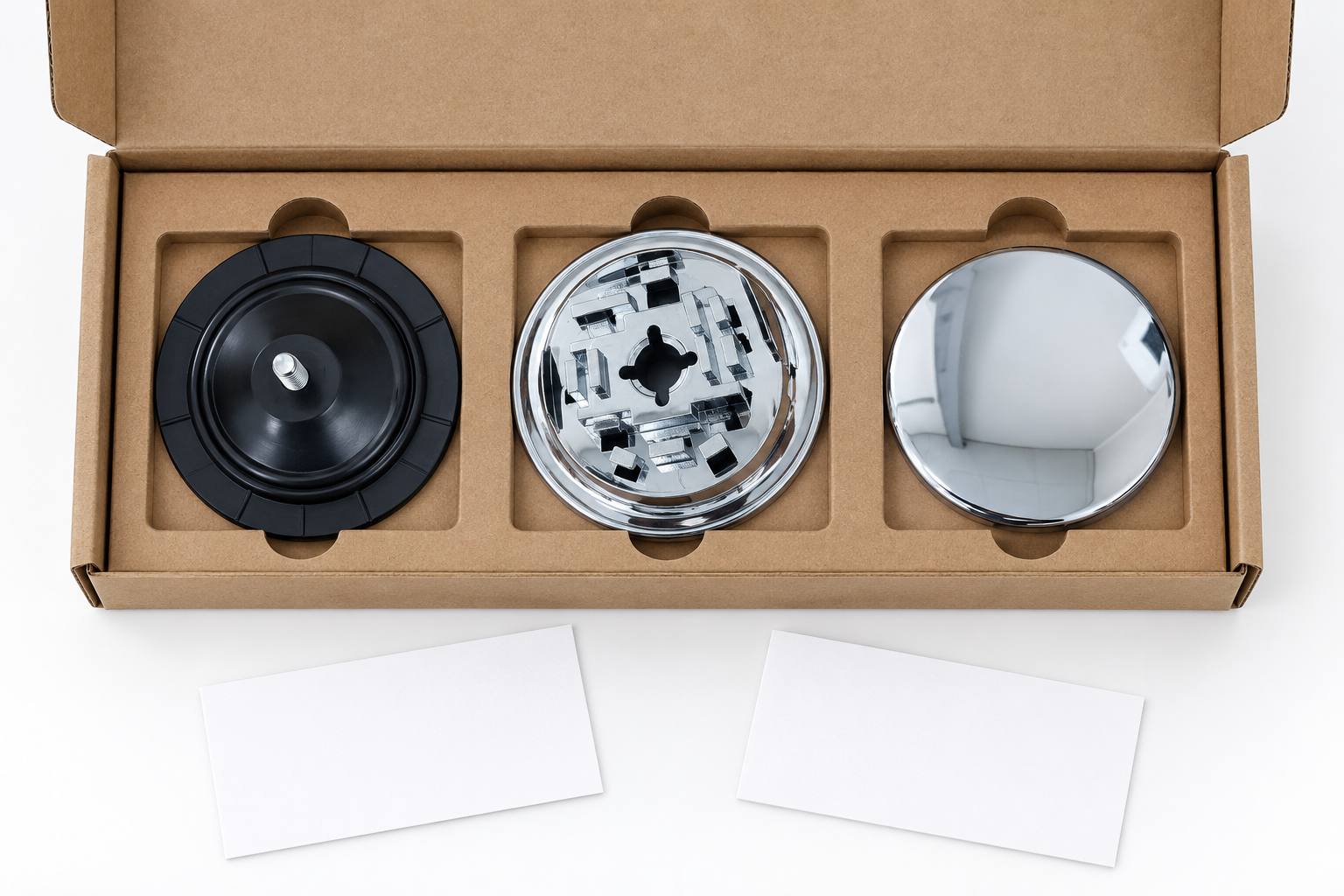
Buyers can use this list as a quotation attachment. Send Koitor the approved product drawing or physical sample, the number of installed mounts, the desired service scope, expected quantities and pack format. A clear specification lets the factory discuss manufacturability and matching parts before a service-kit sample is prepared. For related OEM sourcing questions, the Koitor contact page provides a direct route to share those details.
FAQ: What do buyers ask about suction spare parts?
Can a rubber cup be replaced without changing the metal base?
Only if the product-specific design and approved service instruction allow it. Verify the center connection, cup geometry, base interface and resulting assembly on the exact product revision.
Are chrome covers with the same appearance interchangeable?
Not necessarily. Hidden mating details and finish can differ. Compare controlled drawings and physical samples before combining covers and bases from different versions.
Should a spare kit contain individual parts or a complete mount?
Choose the format after reviewing the actual service route, assembly complexity, pack protection and customer instruction. A complete mount may simplify control, while individual parts can suit a clearly serviceable design.
How should an importer identify an older product version?
Use the sold SKU, production or shipment records, revision code and product photographs where available. Keep the matching spare-kit record tied to that version.
Does a new suction cup guarantee that a product will attach on any wall?
No. Surface condition, installation, accessory structure and intended use still matter. A replacement kit restores specified parts; any performance claim requires separate product-specific evidence.
Work With Koitor Hardware
Plan a Matched Service Kit for Your No-Drill Range
Send Koitor your product drawing or sample, mount revision, finish requirement and service-pack idea. The factory can review component fit, sample development and flexible small-batch OEM options before quotation.
OEM / PRIVATE LABEL
Turn this sourcing guide into a product brief
Share your target product, size, finish, order quantity and packaging requirements. Your team receives a practical manufacturability review before quotation.
 English
  Español
  Português
  Français
  Deutsch
  العربية