Custom metal hardware tooling ownership should be agreed in writing for each project-specific asset before an importer approves the related cost. Define what the asset is, who owns it, who keeps it, who may use it and what happens when the project changes or cooperation ends. A quotation line called “tooling” may cover development work, shared equipment, a dedicated fixture or several different items. Clear definitions help buyers plan repeat orders without assuming that payment, possession and ownership mean the same thing.
Which assets count as tooling in a metal hardware project?
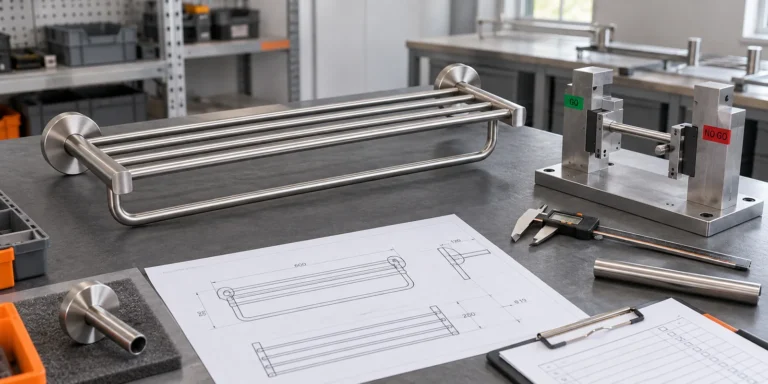
Tooling is the equipment or aid used to make, assemble or check a product, but the commercial meaning depends on the quotation and agreement. For bathroom and home storage hardware, relevant items may include a forming template, a bending aid, a welding-position fixture, an assembly jig or a dedicated inspection gauge. Identify the actual asset rather than relying on the word alone.
A fixture holds or positions parts for an operation. A jig commonly guides an operation, although suppliers may use these terms differently. A gauge checks a defined characteristic. A general welding machine is production equipment rather than automatically a buyer-owned asset. Clarify the supplier’s terminology before deciding which items need project-specific ownership provisions.
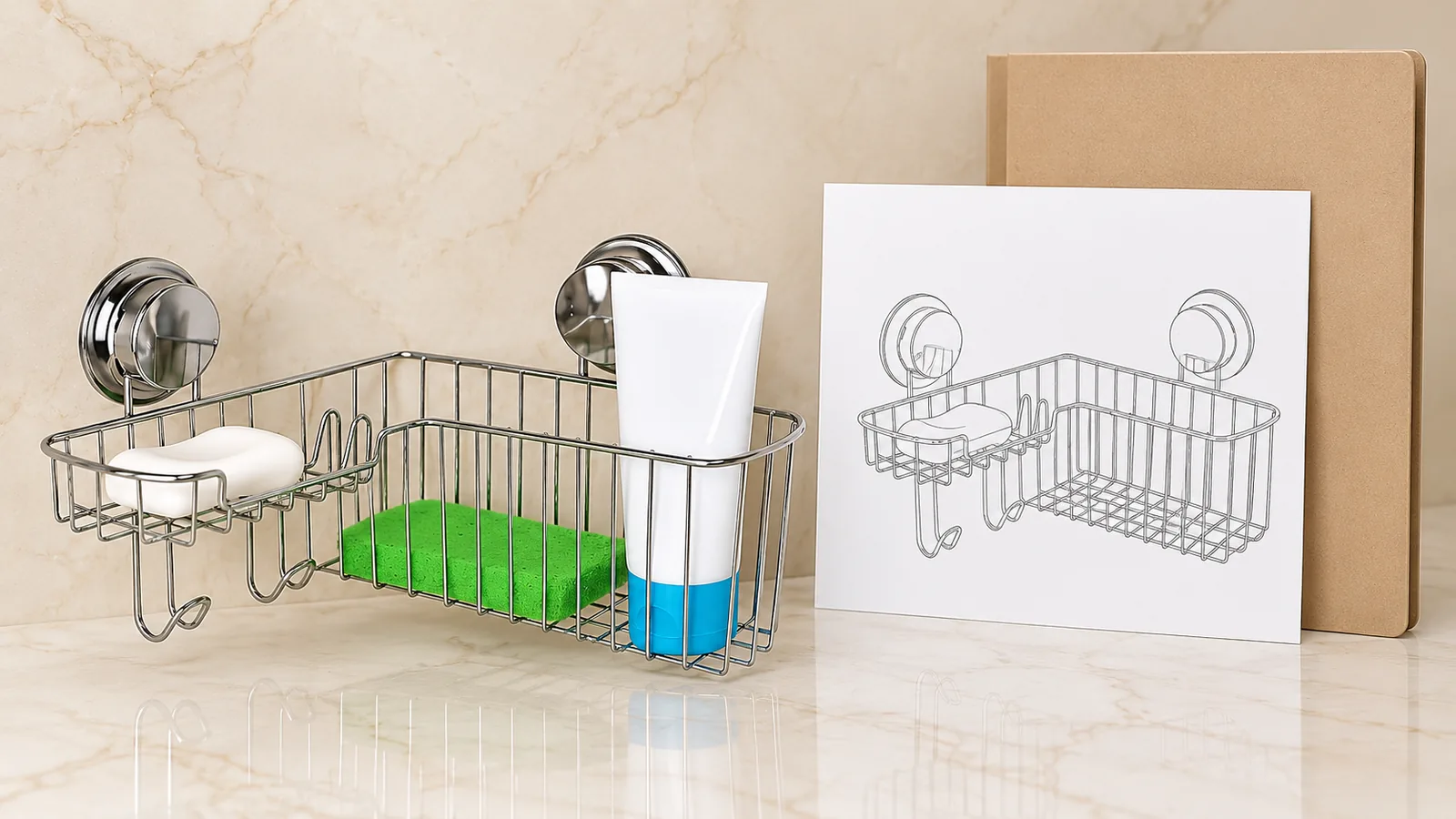
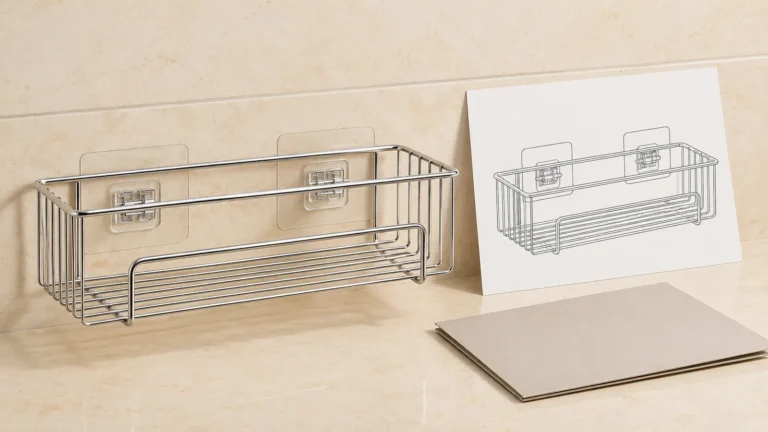
Different products require different arrangements. A wire shower caddy may need a way to locate rails and cross wires; a towel rack may use an assembly aid; a tissue holder may need a fit check. These examples explain the discussion, not a claim that every Koitor product requires dedicated tooling. A simple product may use existing equipment with little or no dedicated asset cost.
Separate tangible assets from information. A physical fixture, its design file, a product drawing and a manufacturing instruction can have different rights and practical uses. Owning a fixture does not necessarily answer who can modify its design file or use the supplier’s process documentation. Ask the parties to list the deliverables and permissions individually.
Koitor Hardware is a family-owned custom metal hardware factory with drawing- and sample-based customization and flexible small-batch OEM production. Buyers can discuss product geometry and proposed development steps through OEM home storage hardware. Any dedicated-asset arrangement should be confirmed for the actual project rather than inferred from general manufacturing capability.
What should the quotation say before buyers approve a tooling charge?
The quotation should identify the scope, deliverables and commercial basis of the charge. Ask whether the amount covers design work, fabrication of a dedicated asset, setup, sampling, modification or an allowance incorporated into unit prices. These are different activities and may not create the same ownership or delivery entitlement.
Request a short breakdown appropriate to the project. A buyer does not always need the supplier’s confidential cost model, but should understand what will exist after payment and what evidence will confirm completion. For example, the quotation might identify a product-specific positioning fixture and a sample review, rather than one unexplained “mould fee” for a welded wire product.
Clarify whether an existing tool is shared, adapted or newly made. If the supplier plans to use a common fixture, an exclusivity expectation may be impractical unless a separate arrangement is agreed. If an adapter is developed for the buyer, state whether the adapter alone is dedicated or whether the broader assembly is included.
Confirm when the charge becomes due and what approval closes that stage. The agreement may link payment to an accepted design, completed asset evidence or an approved sample, depending on the project. Do not assume that a payment milestone automatically establishes ownership; state the asset rights separately and align the documents.
A manufacturer’s own published terms can illustrate why definitions matter. Tom Smith Industries’ customer terms address supplier retention of tooling rights unless otherwise agreed. This is one company’s arrangement, not a universal legal rule or Koitor policy. Buyers should read the proposed supplier’s terms and resolve the specific project provisions before approving costs.
Ask whether quoted unit prices depend on retaining the tool at that facility or recovering development cost over future quantities. If the project stops after a trial order, a different commercial outcome may apply under the agreement. Make these assumptions visible so a buyer’s purchasing forecast does not become an unspoken obligation.
How do ownership, custody and use rights differ?
Ownership concerns the agreed rights in the identified asset; custody concerns where it is physically kept; use rights concern who may operate it and for what purpose. Record all three. A buyer-owned fixture may remain with the factory for production, while a supplier-owned fixture may be reserved for a specific project under a separate agreement.
Define the intended use narrowly enough to be understandable. Discuss whether the tool may be used only for the buyer’s orders, for specified products, or for other work. Where exclusivity matters, define its scope and duration rather than using an unexplained promise that the supplier will “never use the tool again.”
Keep product design rights separate from tool rights. A buyer may provide a product drawing while the supplier develops its own positioning method. The documents should identify buyer-provided files, supplier-created files and any agreed deliverable copies or permissions. Avoid assuming that all manufacturing knowledge transfers with a physical asset.
| Subject | Question to agree | Useful record |
|---|---|---|
| Asset ownership | Who holds the agreed rights in this identified tool? | Asset-specific written provision |
| Custody | Where will it be stored and operated? | Facility or custodian identification |
| Use permission | Which products and orders may use it? | Defined permitted-use scope |
| Design information | Which drawings or files are deliverables? | File list and revision references |
| Maintenance | Who approves work and pays agreed costs? | Responsibility and notification procedure |
| Transfer or retirement | What conditions and records apply? | Agreed release, packing and disposition process |
In a Reddit sourcing discussion about supplier control, buyers raise concerns about tooling and design-file control. These questions show a practical information gap, not evidence that any particular supplier misuses assets. Use them to clarify the agreement without converting unverified comments into accusations or legal conclusions.
How should buyers identify and accept a dedicated fixture?
Give each agreed dedicated asset an identifier and connect it to the product and drawing revision it supports. The record should be detailed enough to distinguish the asset from similar fixtures, with photographs or a description where useful. An invoice saying only “one tool” can be difficult to reconcile with later modifications.
An asset record can contain its name, identifier, custodian, location, product family, current revision, acceptance date and related order reference. Include only information actually available and agreed. A small project may use a short shared record rather than a complex database, as long as both sides understand the same identity and scope.
Define acceptance in terms of the asset’s agreed purpose. For a positioning fixture, that might mean it supports an approved sample-making route and the specified product arrangement. For a gauge, acceptance may require agreement on the characteristic, reference and method. Product acceptance and asset acceptance are related but different decisions; neither should silently substitute for the other.
Ask what evidence can be supplied without revealing unrelated confidential processes. An overview photograph, identified sample and agreed dimensional record may be sufficient for one project; another may need a more detailed review. Evidence should establish the promised deliverable rather than create an implied claim about a certified system or testing laboratory.
Record outstanding issues before authorizing the next stage. If a fixture needs modification, identify the affected product revision, responsible person and expected review evidence. If a sample is approved with a deviation, state whether that approval also accepts the asset as supplied or leaves asset acceptance pending.
What happens when products change or tools need maintenance?
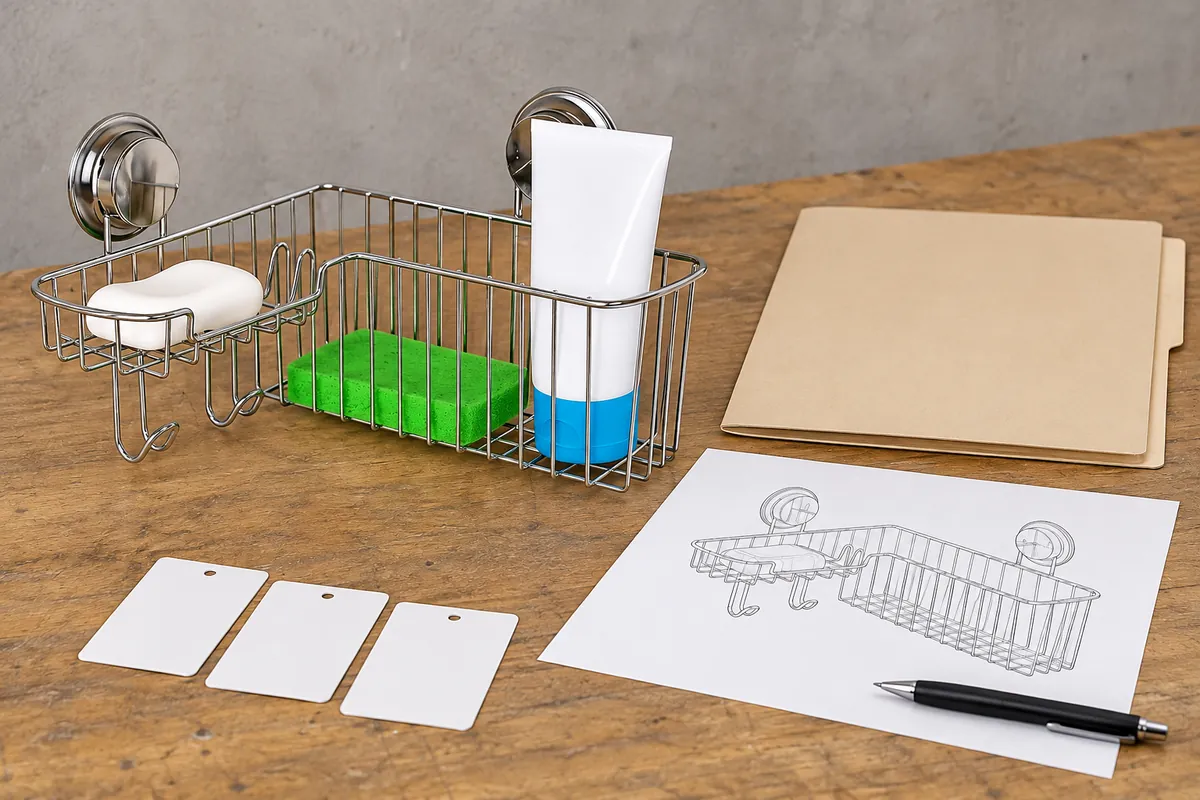
Agree a change and maintenance process before problems arise. A revised basket width, rail spacing, weld location or mounting interface may require a tool adjustment even when the finished product looks broadly similar. Identify who approves the change, how cost is agreed and how the updated asset and sample are recorded.
Separate ordinary upkeep from design changes and replacement. The agreement should explain which activities are included in the existing arrangement and which require a new quotation or authorization. Do not promise unlimited tool life or a fixed number of cycles without project-specific supporting information.
Ask how the supplier will report damage, wear or loss that may affect the product or schedule. Define the communication path and the next decision rather than assuming the factory will absorb every possible cost. Responsibility can depend on the agreement and circumstances; the purpose of the buyer checklist is to make expectations explicit.
For repeat orders, confirm that the retained asset supports the current product definition. A fixture made for an older sample may need review after a drawing change. Likewise, a new component or finish specification may affect assembly or checking requirements. Keep the revision relationship visible in the repeat-order request.
Consider dormant projects. If an asset remains unused for a long period, agree any storage charges, review conditions and process for restarting production. Before ordering again, ask whether the asset is available and whether a fresh sample review is required. A previous photograph is not a current condition report.
Koitor’s direct factory communication is relevant here because buyers can discuss a drawing change and its practical production implications. It does not establish a default ownership, maintenance or transfer policy. The project documents should confirm those details with the people responsible for the actual order.
What should a buyer check for retention, transfer or retirement?
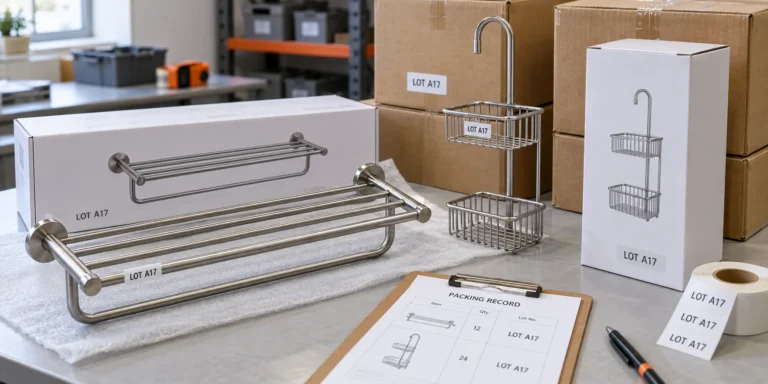
Plan the possible end states at the start of the relationship: continued storage, transfer, sale, replacement or retirement. A physical tool may need identification, packing and handling instructions; a transfer may also require agreed files or information. Define what will be delivered and what practical limitations apply.
Do not assume another factory can immediately use an existing fixture. Equipment interfaces, process sequences and available reference information may differ. Discuss portability separately from ownership, and obtain a realistic review from the receiving facility when transfer is contemplated. Owning an asset does not prove that it is a complete production system.
Identify transfer prerequisites in the written arrangement, such as authorization, any agreed outstanding commercial matters, release documentation, packing cost and logistics responsibility. Avoid presenting any one condition as a universal legal requirement. Rights and enforceability can depend on the agreement and applicable jurisdiction; appropriate professional review can resolve those questions when they are material.
For retirement, agree who authorizes the disposition and what record confirms it. A damaged or obsolete tool may have little continuing production value, but related design files or components can still need separate decisions. State the scope of the retirement rather than assuming that disposal of one item closes every information or rights issue.
Use this checklist before approving custom metal hardware tooling ownership provisions:
- List the physical assets and information deliverables separately.
- Explain whether each charge is for work, setup, an asset or several items.
- Identify existing, shared, adapted and newly made tooling.
- Agree ownership, custody and permitted use for each relevant asset.
- Connect asset identifiers to the product and drawing revision.
- Define acceptance evidence and the authorized reviewer.
- Agree maintenance, damage reporting and change approval.
- Record storage and dormant-project expectations.
- Define transfer scope, practical compatibility review and responsibilities.
- Agree retirement authorization and documentation.
Keep the final record with the quotation, purchase order, approved sample and change history. A buyer should be able to explain the arrangement to a colleague handling the next order without relying on recollection of a chat. If provisions conflict across documents, resolve them before approval rather than expecting operational staff to interpret them later.
For this project, custom metal hardware tooling ownership should close a defined buyer decision with traceable records. Keep the approved product revision, unresolved conditions and next responsible person together so a repeat order does not depend on assumptions.
FAQ: What do OEM buyers ask about tooling arrangements?
Does paying a tooling charge automatically settle ownership?
Read the specific quotation and agreement. A charge may cover development work, setup or an identified asset under different terms. State the ownership arrangement explicitly rather than assuming that the payment description answers every rights question.
Can a buyer-owned fixture stay at the supplier's facility?
That can be an agreed arrangement. Document custody, permitted use, care, notification and eventual release conditions. Physical location and the agreed rights should both be clear in the project records.
Are product drawings and fixture design files the same deliverable?
They can be separate. Identify buyer-provided files, supplier-created information and agreed copies or use permissions. A finished product drawing does not necessarily describe how the supplier positions parts during production.
Will a transferred tool work immediately at another factory?
Portability needs a practical review. Equipment, interfaces and manufacturing methods can differ. Ask the receiving facility what information and modifications are needed before assuming that transfer permits immediate production.
Does every wire basket project need a dedicated fixture charge?
No general requirement applies to every design. Discuss the actual geometry, production route and available equipment. Ask the supplier to explain the proposed charge and deliverable for the specific project.
Discuss your custom metal hardware project with Koitor
Clarify Development Scope Before Ordering
Share your drawing or physical sample, expected quantities, revision requirements and any dedicated-asset questions. Koitor Hardware can discuss practical metal storage product development and project-specific commercial details before you approve the next stage.
OEM / PRIVATE LABEL
Turn this sourcing guide into a product brief
Share your target product, size, finish, order quantity and packaging requirements. Your team receives a practical manufacturability review before quotation.
 English
  Español
  Português
  Français
  Deutsch
  العربية