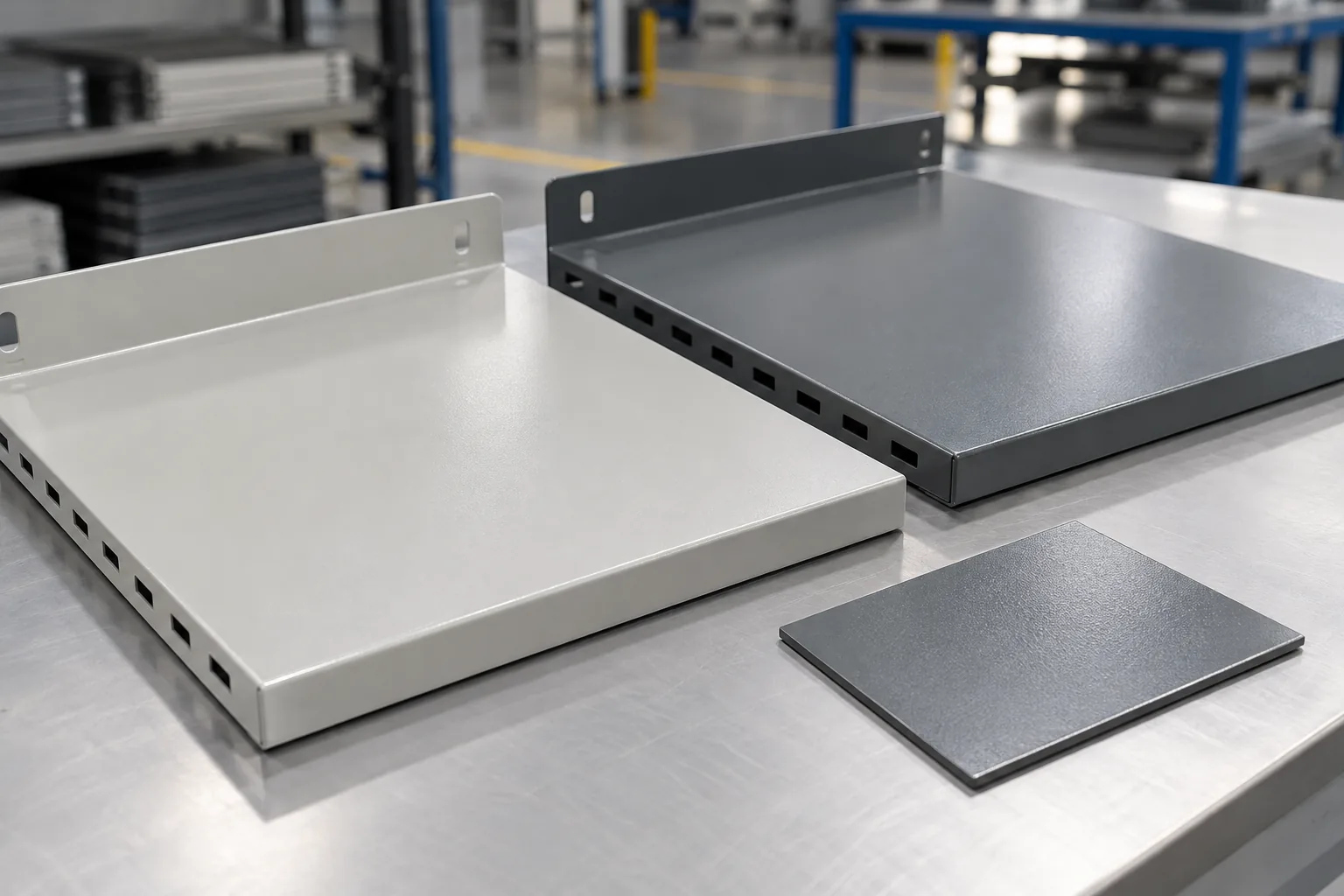
Powder coating recoat rework approval should happen only after the buyer and supplier understand the defect, existing coating condition, proposed repair route, and effect on the finished part. Adding another layer may change appearance, film build, fit, edge coverage, or intercoat adhesion; it is not automatically a harmless way to hide a defect. The decision should identify whether the issue is local touch-up, an additional powder coat, stripping and refinishing, or rejection, with technical approval for the specific material and coating system.
For importers buying powder-coated metal shelves and bathroom storage hardware, a controlled rework decision keeps nonconforming parts from returning to production without traceability. The coating supplier’s technical data and approved procedure must govern preparation and curing. Koitor’s confirmed capability includes powder coating as a process area, but a specific recoat route, coating chemistry, test result, or rework permission must be verified for each project rather than assumed.
Why can a second coat create a new problem?
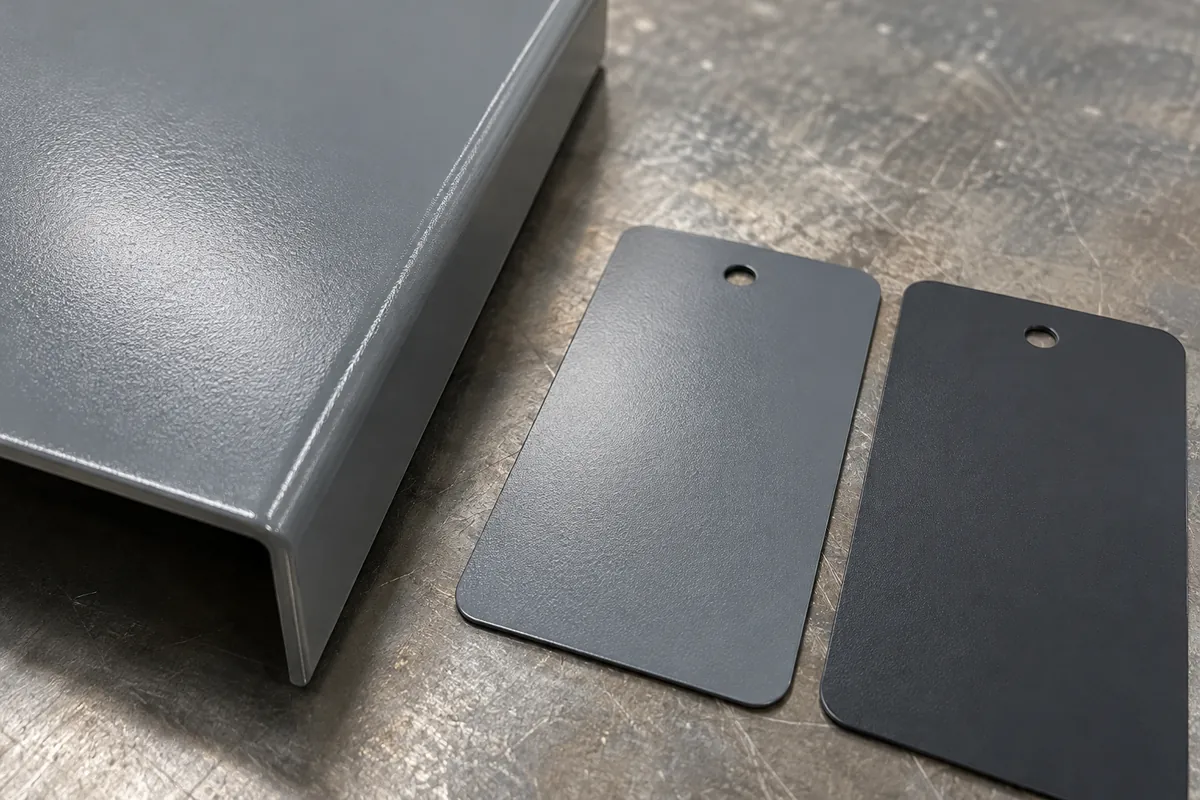
The first coating may already be cured, partially cured, contaminated, damaged, or outside the product’s film-build requirement. The second coat must adhere to the existing surface and cure under conditions appropriate to the powder chemistry and substrate. Surface preparation, compatibility, grounding, film thickness, part temperature, and time-temperature history can affect the result. A coating that looks covered after rework may still have an intercoat adhesion or assembly-fit issue.
IFS Coatings explains that overbaking a first coat can affect intercoat adhesion in two-coat systems and notes that base coat thickness can affect application of a topcoat. Its two-coat application guide is general process guidance; it does not authorize a particular repair on a buyer’s finished shelf. The coating maker’s current technical data and the supplier’s approved procedure should determine the actual route.
A cured first layer also changes the surface the next layer encounters. A local repair may have different thickness and appearance from the surrounding area. Additional heat exposure could affect the part or existing finish depending on the materials and design. On a shelf or bracket, extra build near a slot, hook interface, mounting hole, or mating surface can change fit. These are reasons to review the complete product characteristic, not to assume every recoat is unsuitable.
What should the buyer decide before authorizing rework?
First identify and contain the nonconforming condition. Record the part number and revision, batch or sample identity, affected quantity, location, defect description, and how it was detected. Use clear terms such as “coating discontinuity at the rear bend” rather than a conclusion like “bad cure” unless the cause has been established. Preserve representative parts and images before sanding, stripping, or recoating changes the evidence. A documented powder coating recoat rework approval decision keeps defect evidence separate from the later repair result.
Then ask the supplier to propose a disposition. Depending on the defect and product requirements, options may include a controlled local repair, full recoat, strip and refinish, use-as-is with buyer concession, or scrap. The supplier should explain the preparation, powder compatibility, cure route, dimensional impact, and inspection evidence for its proposal. The buyer’s engineering or quality owner should approve deviations that affect drawing or finish requirements. Rework permission should not be inferred from a verbal “we can spray it again.”
Clarify the acceptance target before work starts. Does the repair need to restore appearance only, or must it also satisfy defined adhesion, film-thickness, corrosion, fit, or functional requirements? Which method or specification controls each decision? If the original requirement does not define repair acceptance, pause and establish an approved disposition instead of inventing a test after the parts are reworked.
| Disposition option | When it may be evaluated | Buyer evidence to review |
|---|---|---|
| Local touch-up | Localized condition and an approved repair system exists | Repair boundary, color/appearance, adhesion and handling instructions as applicable |
| Additional powder coat | Coating supplier confirms compatibility and cure route | Existing coating condition, preparation, film build, intercoat adhesion, fit |
| Strip and refinish | Existing layer or defect prevents a controlled overcoat | Substrate condition after stripping, pretreatment, finish sample, dimensional impact |
| Use as-is by concession | Deviation does not violate critical buyer requirements | Written approval, defined affected quantity, traceability, risk owner |
| Reject or scrap | No acceptable controlled repair or disposition is established | Containment, quantity reconciliation, corrective action and replacement plan |
What information belongs in a rework request?
Send the supplier the approved drawing and finish specification, substrate and pretreatment information if available, original coating product or system identity, known cure history, defect location, batch traceability, and any geometry or assembly limits. If exact process history is unknown, say so; do not guess. Ask the supplier to identify any information it needs from the powder manufacturer before recommending recoat.
The written proposal should name the repair method and scope, preparation steps at an appropriate level, coating compatibility confirmation, cure basis, controlled sample plan, inspection criteria, and record format. Detailed operating parameters should come from the coating manufacturer and qualified process owner, not be copied from a generic blog. The buyer needs enough information to approve the product disposition without pretending to control a supplier’s proprietary recipe.
Also state whether the repair is allowed on all affected parts or only a bounded subset. Identify which pieces must be segregated, labeled, and re-inspected. If repaired parts are mixed with conforming stock, downstream buyers may not be able to trace which configuration they received. Require the rework record to identify part, lot, original defect, disposition, process owner, inspection outcome, and final buyer approval where applicable.
How should a rework sample be evaluated?
Use a representative sample made with the proposed route and actual substrate or a documented equivalent approved by the technical owner. Inspect the visible surfaces, edges, recesses, welds, hooks, mounting holes, and interfaces affected by added film or heat. Compare the result with the approved master under agreed lighting and viewing conditions. Record limitations if the sample does not replicate the production geometry or process history.
The finish owner should select applicable checks. Depending on the defect and specification, these may include visual review, dimensional or fit inspection, a coating-thickness method, adhesion evaluation, or corrosion testing. No single check proves every characteristic. For instance, a visual match does not establish intercoat adhesion, while an adhesion check does not show whether a slot remains within drawing limits. Test method, specimen preparation, acceptance criteria, and responsible reviewer should be defined before the sample is evaluated.
Ask the supplier to retain before-and-after images and identify the reworked surfaces. If a test is destructive, agree whether the sample can be consumed and whether additional pieces are needed. Keep the sample’s coating system, cure history, lot, and inspection report linked. A successful trial supports only the tested configuration; it does not automatically approve other colors, substrates, powder chemistries, or geometries.

How do buyers protect fit, appearance, and repeat orders?
Inspect dimensions and mating features that can be affected by an added layer. Review mounting slots, holes, nested parts, contact faces, screw locations, telescoping parts, and packaging clearances where relevant. The appropriate measurement depends on design. If rework changes the finish build at a critical interface, the supplier may need masking or a different approved route; that must be reviewed with the product engineer rather than assumed.
Appearance approval should consider the transition between repaired and original surfaces, color or gloss variation, texture, edge coverage, and any visible repair boundary. Define whether the part can be touched up locally or whether a full panel or component must be refinished to preserve consistency. The buyer should set an acceptance boundary with a master sample or controlled photos, not rely on “looks close” as the sole release criterion.
For repeat production, separate routine process adjustment from nonconformance rework. A planned two-coat system approved during product development is not automatically the same as applying another layer to a defective, fully cured production part. Keep the approved finish stack and rework procedure distinct. If the product, substrate, supplier, powder chemistry, cure route, or rework scope changes, review whether new sample approval is required.
The supplier’s corrective-action report should address the suspected cause, containment, affected quantity, repair/reject decision, and prevention plan. Do not require a root cause to be asserted before evidence is available. A sound record can distinguish confirmed facts from hypotheses and identify the next verification step. This protects both buyer and factory from treating a temporary cosmetic fix as proof that the underlying process issue has been corrected.
What should the buyer record for audit and release?
Keep the original nonconformance report, supplier proposal, buyer disposition, rework lot identification, inspection result, sample approval, and final quantity reconciliation. Note who approved each decision and which drawing or finish specification revision applied. If parts were reworked by a subcontract finisher, record the responsibility and handoff. The buyer may not need to retain every internal process setting, but should keep enough evidence to establish what was authorized and what was shipped.
If a customer or market requirement controls finish testing, document how repaired parts are covered by that requirement. Do not assume a test on an unreworked sample qualifies a separately repaired batch. The responsible compliance and quality owners should decide whether the rework affects the scope of existing evidence. This is particularly important when appearance, corrosion, or product assembly requirements are contractually defined. A powder coating recoat rework approval record should state whether existing evidence remains applicable or what additional review is required.
Close the record only after the affected quantity has been reconciled. The total should distinguish conforming original parts, accepted reworked parts, rejected parts, and any parts still under review. If a replacement shipment is needed, tie it to the original nonconformance so the buyer can confirm that containment reached the full scope. This final accounting prevents a successful sample from overshadowing unresolved pieces in the same lot and gives the supplier a clear basis for corrective-action follow-up.
Buyer checklist: what must be approved before recoat begins?
- – Identify the defect, affected parts, lot, revision, and containment status.
- – Preserve representative evidence before stripping, sanding, or recoating.
- – Obtain a written disposition proposal from the qualified coating process owner.
- – Confirm substrate, original coating system, known cure history, and information gaps.
- – Define whether the proposal is local repair, recoat, strip-and-refinish, concession, or rejection.
- – Review coating compatibility, preparation, cure basis, and supplier technical data.
- – Identify film-build, fit, appearance, adhesion, corrosion, or other acceptance requirements as applicable.
- – Approve a representative sample and test plan before bulk rework.
- – Trace reworked parts separately and inspect affected functional interfaces.
- – Reconcile quantities and retain the buyer approval and final inspection record.
- – Decide what product/process changes require a new sample or finish review.
FAQ
Can a powder-coated shelf always be recoated to hide a defect?
No. The existing coating condition, powder chemistry, substrate, preparation, cure history, geometry, and buyer requirements all matter. The coating supplier must propose and validate an appropriate route for the specific part.
Is a second coat the same as a planned two-coat finish?
Not necessarily. A planned multilayer system is designed and controlled as such. Reworking a cured production coating introduces different surface and process conditions and needs its own approval.
Does a smooth appearance prove that the rework passed?
No. Appearance review does not establish adhesion, thickness, fit, corrosion performance, or compliance. Define and verify each applicable characteristic separately.
Who should approve a recoat deviation?
The buyer’s designated quality or engineering owner should approve any disposition that changes a controlled requirement. The coating supplier or process owner should confirm technical feasibility and provide supporting evidence.
Can the original sample approval cover reworked parts?
Only if the approved criteria and evidence explicitly cover that repair configuration. Otherwise, the buyer should review a representative rework sample and decide whether additional checks are needed.
Does this article describe Koitor’s exact powder-coating rework parameters?
No. Process parameters depend on the coating product, substrate, cure history, and supplier instructions. Obtain current technical data and project-specific confirmation; no universal recipe is provided here.
Work With Koitor Hardware
Discuss a Custom Metal Hardware Project
Share the affected part, finish specification, defect records, sample, and proposed rework route with Koitor. Confirm process ownership, disposition authority, and acceptance evidence before repaired parts are released.
OEM / PRIVATE LABEL
Turn this sourcing guide into a product brief
Share your target product, size, finish, order quantity and packaging requirements. Your team receives a practical manufacturability review before quotation.
 English
  Español
  Português
  Français
  Deutsch
  العربية