
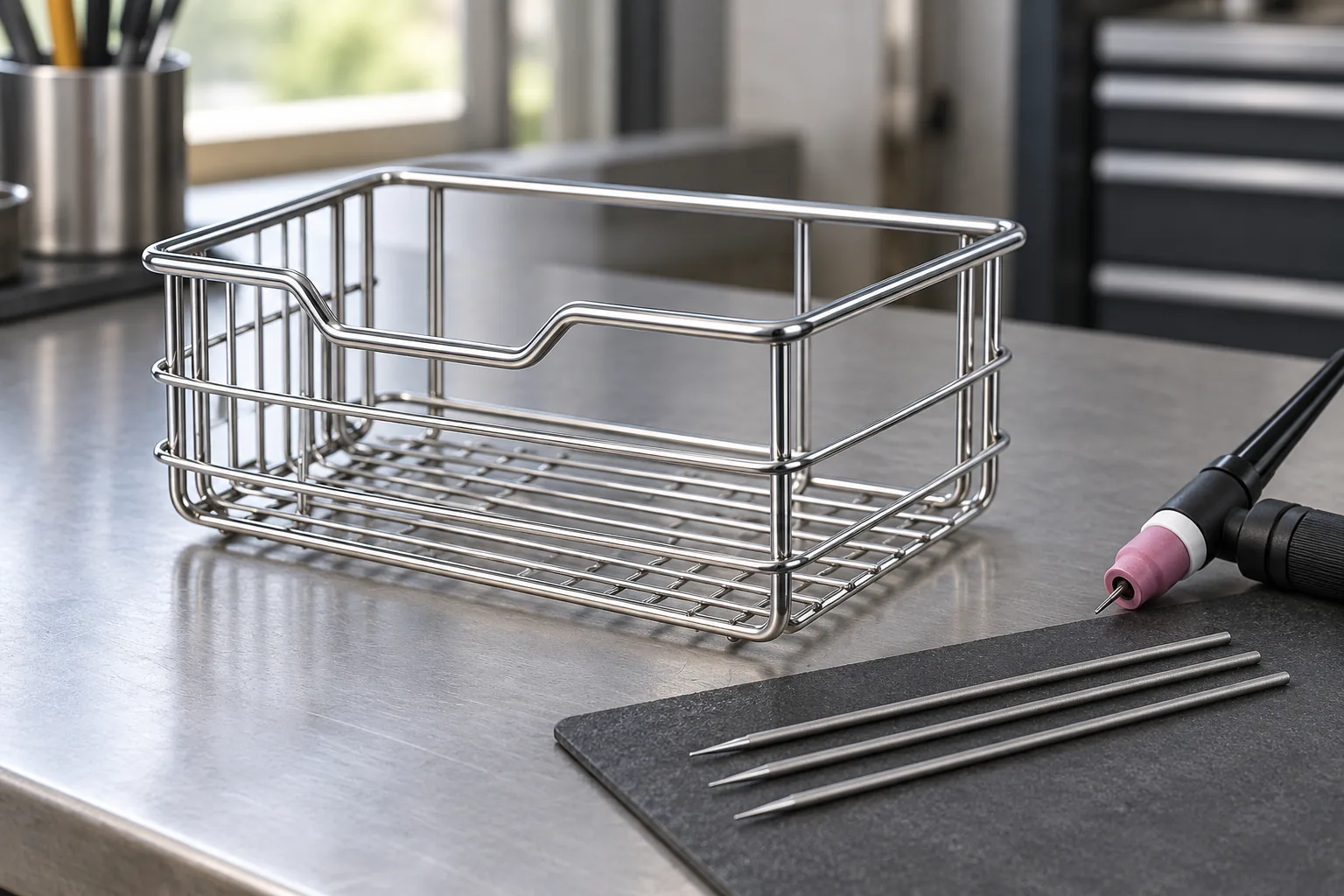
TIG tungsten grinding direction electrode tip preparation should be treated as a controlled input to a proposed hardware welding procedure. Buyers should ask the supplier to identify the electrode, define the prepared tip condition and explain how that condition is reproduced for samples and production. A pointed electrode photograph alone cannot establish suitability for the actual material, joint or welding mode. Approve the finished joint against its requirements while preserving the preparation record that makes the sample reproducible.
Why should a hardware buyer ask about prepared tungsten?
A prepared tungsten electrode is part of the TIG process that produced the approved sample. Its condition can influence arc behavior, but a sourcing buyer’s task is not to prescribe a universal sharpening recipe. The useful question is whether the supplier has an appropriate, repeatable preparation method for the identified joint and can relate that method to representative product evidence.
For bathroom and home storage hardware, a joining location may be visible, small or difficult to access. A supplier can produce one acceptable sample using a carefully prepared electrode, then use a different preparation condition during repeat production. The buyer may see only the polished product and have no record of this input. That gap can complicate later comparisons even when the product drawing has not changed.
This topic concerns the condition deliberately created before use: preparation direction, tip profile, material identity and handling. Accidental contamination during welding is a separate investigation. A record of initial preparation does not prove that the electrode remained unchanged through every operation, but it establishes what the supplier intended to start with.
TIP TIG’s electrode guidance recommends grinding along the electrode axis, discusses taper and a truncated tip, and recommends a dedicated preparation wheel to avoid cross-contamination. It also explains that suitable electrode choice and working ranges depend on the application. Treat that as a supplier discussion reference. It does not establish a preparation angle, tip dimension, electrode grade or performance result for a Koitor basket or frame.
The buyer should ask for enough information to compare a proposal and preserve sample approval. A detailed machine-operator instruction may be unnecessary for the purchase contract. A vague statement such as “sharpened tungsten used” may be too little when preparation consistency is a relevant concern.
Which electrode and tip characteristics need identification?
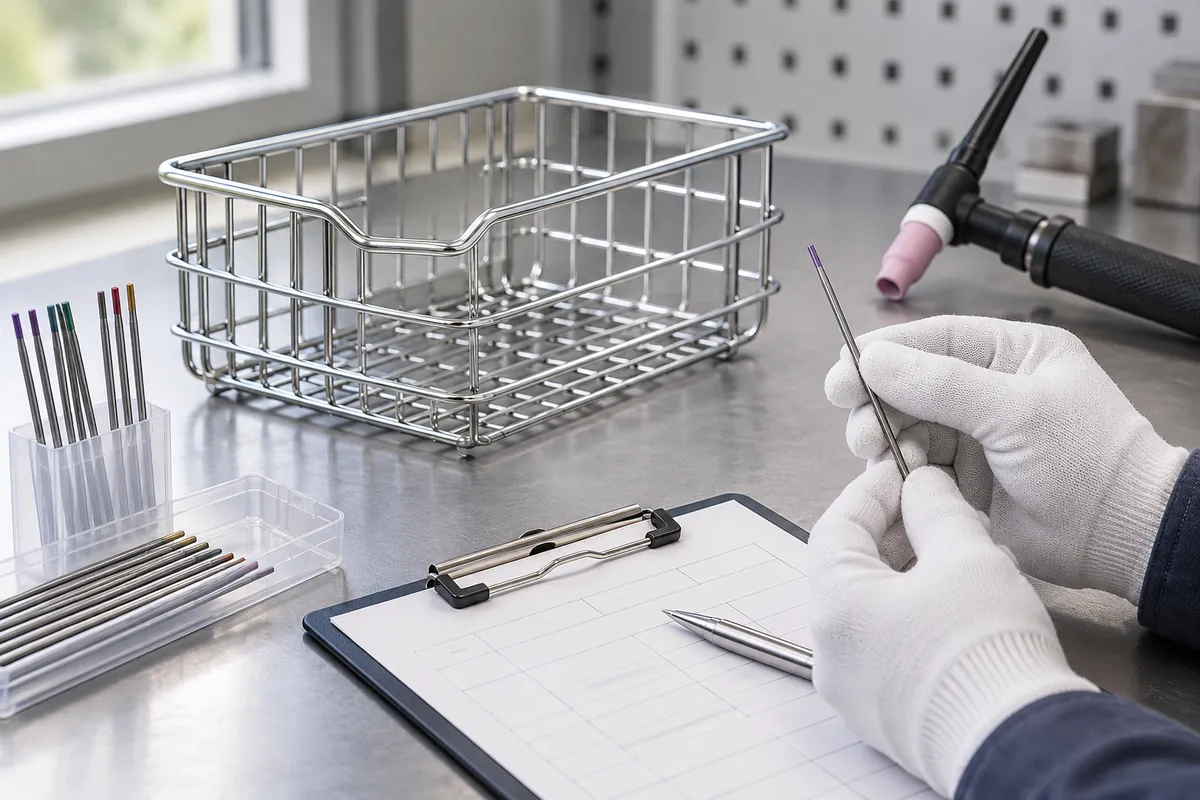
Identify the actual electrode material designation, diameter where relevant, preparation profile and intended process conditions. A color band may help identification, but the buyer should request a traceable designation rather than relying on an image or informal color description. Keep proposed and approved inputs distinct.
The electrode designation and delivered condition should come from the supplier or consumable manufacturer’s information. This article does not recommend a particular composition for all bathroom hardware. The appropriate choice depends on the welding process, equipment, material and current conditions considered by the responsible technical party.
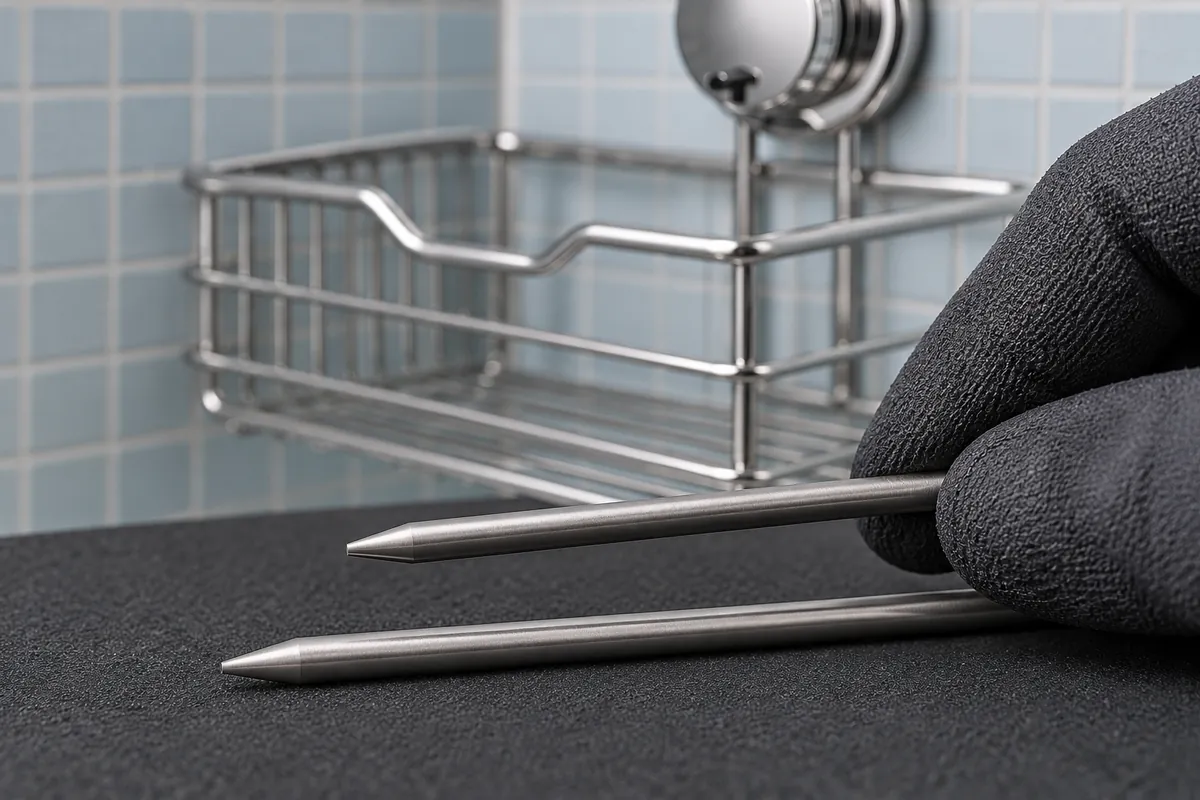
For the prepared profile, ask the supplier to specify which features it controls. Those may include a taper, an end flat or other relevant shape depending on the route. Ask whether there is an illustrated procedure, an approved reference or another defined method. A buyer does not need to invent a universal angle or substitute a blog illustration for a procedure.
Preparation direction and surface condition should be described sufficiently to distinguish the approved method from a visibly different one. A macro photograph can aid communication but may not measure fine texture or every dimension. If a quantitative requirement is necessary, the supplier should demonstrate an appropriate inspection method and the responsible party should define the acceptance basis.
Relate the tip to the actual joint
Record the joint group or location to which the prepared condition applies. A method validated on an accessible flat coupon may not represent a confined frame corner or a small attachment in a basket. Ask what material, geometry, torch access and process mode the supplier considered in its proposal.
If several joint groups use different preparations, identify the group boundaries. This need not create excessive paperwork; a clear drawing reference can be enough to avoid assuming that one preparation condition covers the entire product. The buyer can then decide which samples are needed for each relevant configuration.
How should supplier preparation methods be compared?
Compare the defined preparation outcome and its reproducibility rather than ranking equipment names. Different suppliers may use different suitable preparation methods. The buyer needs to understand whether each method produces the intended condition and whether the sample represents the proposed production route.
| Preparation evidence | Useful information | Limitation | Buyer question |
|---|---|---|---|
| Consumable designation | Identity of the supplied electrode | Does not describe its prepared shape | Is the designation traceable to the actual sample? |
| Preparation procedure or reference | Intended direction, profile and handling | Does not prove every electrode conforms | How is the prepared condition checked? |
| Tip photograph | Visual communication of the selected sample | May not quantify fine geometry or texture | Which features can this image establish? |
| Suitable profile measurement | A defined characteristic under the stated method | Does not establish finished-joint performance | What datum, method and acceptance basis apply? |
| Production-intent weld sample | Result of the documented route at the tested joint | Applies to its inputs and conditions | What changes would invalidate the comparison? |
An effective comparison keeps the workpiece and joining conditions identified. If one supplier changes the electrode type, profile and welding mode simultaneously, its sample may still be acceptable, but the comparison cannot isolate the effect of preparation direction. Decide whether the buyer needs a mechanism comparison or simply approval of each complete proposed route.
Avoid judging suitability from sharpness alone
A very sharp-looking tip is not necessarily the appropriate preparation for the proposed operation. The required shape belongs to the actual procedure and operating conditions. Ask the supplier why its profile is appropriate and how the outcome was evaluated. Avoid rejecting a controlled truncated tip because it looks less pointed in a photograph.
Similarly, a clean polished product does not establish the electrode profile that produced it. Record the input while it is available during development. The record is most useful when it is connected to the sample rather than reconstructed later from the supplier’s memory.
Establish preparation and handling responsibilities
Ask who prepares the electrodes, where the procedure is kept and how consumables are identified after preparation. The supplier should manage its equipment, dust, handling and operating controls through appropriate procedures. A purchase specification should define the evidence and responsibility needed for the project without becoming an unqualified shop-floor instruction.
If preparation is outsourced or electrodes are purchased ready-ground, identify that boundary. Ask which delivered characteristics are specified and how substitutions are controlled. A bought-in prepared tip is still an input requiring an appropriate identity and approval basis; it is not automatically equivalent to an internally prepared electrode.
What sample evidence connects preparation to product quality?
Use an identified sample made with the intended preparation method and the actual product conditions being approved. The record should connect the electrode identity and prepared condition with workpiece material, joint location, process route and finished-joint evaluation. It should avoid implying that a consumable record alone establishes product quality.
For a visible hardware joint, agree the appearance condition and finish stage. If polishing or another finishing operation follows welding, identify whether the buyer needs pre-finish observations as well as final appearance. A final image can show the surface delivered but may conceal the joining condition needed for a process comparison.
For dimensional or functional requirements, define appropriate datums, methods and sample conditions. If integrity needs evaluation, use a suitable method with qualified personnel and an agreed acceptance basis. This guide does not supply a test load, allowable defect rate, electrode-life number or universal tip tolerance.
If preparation consistency between operators, batches or sources is the concern, ask the supplier to propose a representative comparison. The sample plan should address that specific variation. A single well-prepared electrode and one attractive joint may demonstrate feasibility, but it may not answer a repeatability question.
Retain observations before assigning a cause
A supplier may propose changing preparation after observing arc instability or a sample defect. Ask for the actual observation, the checks performed and the basis for selecting preparation as a contributing factor. Other inputs may matter, and a change made alongside several adjustments cannot demonstrate a single cause by itself.
A confirming sample should identify the new preparation condition and the unchanged inputs. If the aim is approval of the complete route, record that purpose. If the aim is to investigate preparation direction, use a comparison that can answer that question. Keep those two decisions clear in the trial record.
Resolve records that appear inconsistent
When a tip image, procedure and supplier explanation disagree, verify the electrode and sample identities before drawing a conclusion. The photograph may show a development electrode rather than the approved production condition. The procedure may have a newer revision. Document the resolution and identify the current reference.
Where a measurement is disputed, compare the characteristic, method, datum and reporting basis. A visual estimate of a taper is not necessarily comparable to a measured profile. If the supplier cannot provide adequate evidence for a critical characteristic, keep the item open and agree a practical additional review.
What belongs in the RFQ and repeat-production checklist?
An RFQ for TIG tungsten grinding direction electrode tip preparation should identify the product and the evidence required to approve its joining route. Let the supplier’s responsible technical personnel propose the preparation condition, then record the approved basis rather than importing a universal recipe.
- Product drawing or identified sample and the relevant joint locations.
- Known workpiece material, thickness or wire form, and finish sequence.
- Proposed TIG route and process mode as applicable.
- Electrode material designation and relevant consumable information.
- Defined preparation direction and tip-profile reference.
- Method used to check the characteristics important to the proposal.
- Handling and identification responsibility after preparation.
- Production-intent sample IDs and the inputs used for each trial.
- Agreed appearance, fit or joint-integrity evidence and acceptance authority.
- Changes requiring notification, a new sample or renewed approval.
Compare preparation costs in context
Preparation can affect consumable purchasing, setup time, inspection effort and consistency. Ask the supplier which items are included in the quotation and which relate to development. Do not assume that a particular grinder or ready-ground product will save cost without evidence for the actual route.
For a trial order, the buyer can start with a focused record of electrode identity, preparation reference and representative samples. More detailed controls may be justified as the product risk, variation or production program changes. The documentation level should be proportionate to the decision it supports.
If a supplier proposes a cost-driven preparation change, ask whether the new condition has been reviewed against the existing sample approval. A visually similar tip can still differ in material identity or a controlled characteristic. Conversely, different preparation equipment may be acceptable if the defined result and evidence remain suitable.
Define change triggers rather than freezing every adjustment
Agree which consumable substitutions, profile changes, preparation-source changes or process changes require buyer review. Routine actions within an approved procedure can remain under supplier control when the contract allows them. The record should make the boundary clear enough that both parties can apply it to a repeat order.
Koitor Hardware is a family-owned custom metal hardware factory supporting TIG welding, forming, grinding, polishing and other approved processes for bathroom and home storage hardware. Exact electrode choices, preparation equipment and product-specific results must be confirmed for the project. Buyers can discuss OEM home storage hardware and custom metal storage basket production by supplying the actual drawing, known material and the joint criteria needing review.
Frequently asked questions
Can a buyer specify only the electrode color?
Use a traceable designation and relevant supplier information. Color can assist identification, but a photograph or informal description should not replace the identity of the material used for the sample.
Is the sharpest tungsten tip always suitable?
No. The prepared geometry should suit the intended procedure and operating conditions. Ask for the supplier’s application basis and review representative finished joints instead of judging the tip by appearance alone.
Does a tip photograph prove that grinding direction was controlled?
It can communicate the pictured condition but may not establish fine surface details or every prepared electrode. Connect it to a procedure, suitable checks and identified sample evidence where needed.
Is this a guide to correcting accidental tungsten contamination?
The focus is the deliberately prepared condition before use. Accidental contamination needs its own observation and corrective-action record. An initial preparation record helps that investigation but does not replace it.
What is the final buyer decision?
For TIG tungsten grinding direction electrode tip preparation, preserve an appropriate and reproducible process input alongside the approved hardware sample. The finished joint’s agreed requirements remain the acceptance basis.
Review Your Hardware Drawing and Sample Requirements
Send Koitor the drawing or physical sample, known material and finish, joint location and the approval evidence your buyer team needs. Our family-owned factory can discuss manufacturability and small-batch OEM options; specialized routes and results require project confirmation.
OEM / PRIVATE LABEL
Turn this sourcing guide into a product brief
Share your target product, size, finish, order quantity and packaging requirements. Your team receives a practical manufacturability review before quotation.
 English
  Español
  Português
  Français
  Deutsch
  العربية