
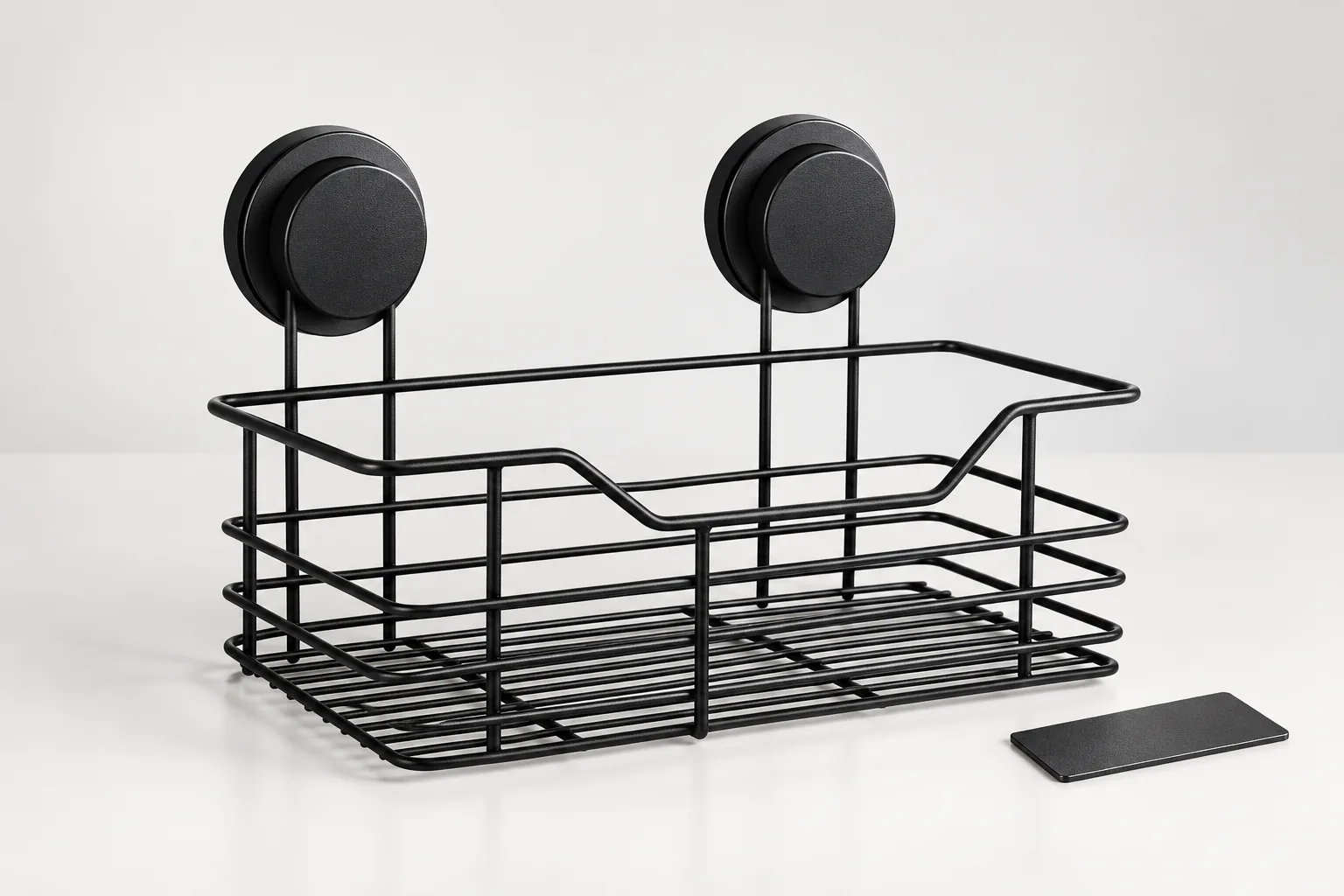
Powder coating differential scanning calorimetry residual cure evidence can help buyers of coated bathroom racks investigate remaining reaction potential, but it is not a stand-alone pass/fail certificate for a finished rack. The useful question is whether the test specimen represents the actual coating system and production condition, and whether the result answers a defined approval concern. Buyers should connect the report to an identified product, coating batch, sample history, and agreed decision rule before using it to accept or reject a supplier lot.
This is a narrow residual-cure evidence question, not a general guide to powder coating or a claim that every rack requires DSC. A suitable solvent-rub screen, a part-metal-temperature profile, coating appearance checks, adhesion tests, or another method may be more appropriate for a particular issue. A buyer should select evidence with the coating supplier and product team rather than treat one laboratory technique as a universal quality score. The phrase powder coating differential scanning calorimetry residual cure should therefore describe a defined investigation, not a blanket inspection requirement.
What does residual cure mean in a powder-coating decision?
Thermosetting powder coatings are formulated to flow and chemically react during a specified cure cycle. The production part experiences a time-temperature history that depends on the coating formulation, substrate, geometry, thermal mass, loading, airflow, and line conditions. “Residual cure” describes reaction potential that remains in a coating sample after a chosen cure exposure; it is not a direct measurement of every property that matters on the finished article.
DSC is a thermal-analysis method that measures heat flow while a sample follows a controlled temperature program. In a coating investigation, a laboratory may compare a sample’s thermal response with an appropriate reference or uncured material to assess whether a reaction signal remains. The interpretation depends on the material, sample preparation, test program, baseline, and analyst’s method. Buyers should not compare two reported values unless the supplier confirms that the samples and procedures are comparable.
The method can be useful when a buyer and coating supplier need a more analytical look at a cure concern than a quick shop-floor screen provides. It may help investigate a question such as whether a representative coating sample appears to retain reaction potential after a specified exposure. It does not, by itself, establish that a bathroom rack will resist corrosion, retain adhesion, avoid chipping, or perform for a defined service life.
When should a buyer request DSC evidence?
Start with the observed risk, not with a request for the most sophisticated-sounding test. A DSC investigation may be worth discussing when a supplier or buyer has a specific unresolved cure question, when two sample conditions need a controlled laboratory comparison, or when a coating specialist recommends thermal analysis to investigate an ambiguous result. The buyer should document why the question matters to the intended product and what decision will follow from the result.
For a buyer evaluating powder coating differential scanning calorimetry residual cure, the first gate is a concrete question: is the concern about the sample’s remaining reaction potential, the production exposure, or a finished-part property? Separating those questions prevents the laboratory method from being asked to answer more than it measures.
It is less useful as a routine attachment to every shipment when there is no defined concern, no agreed sampling plan, and no interpretation rule. A report can appear precise while leaving the commercial decision unclear. For example, it may describe a test on loose powder or a flat panel, while the order concerns a formed wire rack coated on a production line. That evidence may still be informative, but the report must state the connection—and the gap—between the tested material and the delivered hardware.
| Buyer question | What DSC may contribute | What still needs separate evidence |
|---|---|---|
| Is reaction potential detectable in this sample after the stated exposure? | A laboratory thermal response under the reported procedure | Whether the sample represents the production rack and coating batch |
| Are two coating conditions distinguishable by the agreed method? | A controlled comparison when samples and procedures match | Whether the difference changes the product acceptance decision |
| Did a cure concern occur after a process or supplier change? | Additional diagnostic evidence for the investigation | Production history, part temperature records, appearance and relevant product checks |
| Can this result approve every lot or geometry? | Usually no; the method is tied to the tested sample and method | A sampling plan, traceability, acceptance criteria and change-control rules |
What sample and process information should accompany the report?
Before authorizing testing, identify the finished product and the exact source of the specimen. Record the rack drawing or item revision, substrate and known preparation route, coating product or supplier identification, color or finish, lot, sample date, and any repair or recoat history that could affect interpretation. Where a sample is cut from a finished part, document the location and how the cut or preparation was handled. If a separate panel is used, state how it was coated and cured relative to the production article.
Ask the laboratory or coating supplier to describe the method sufficiently for the buyer to understand what was measured. The report should identify the sample condition, test program, relevant reference or comparison basis, result units, and interpretation limits. The test owner should explain whether the reported value is an observation, a calculated conversion, or a pass/fail judgment based on a pre-agreed criterion. If the method or acceptance threshold is proprietary, the buyer still needs a clear statement of what the conclusion does and does not mean.
Production context matters because the same nominal oven setting does not guarantee identical part exposure. A light panel, a thick mounting plate, a dense welded junction, and a rack loaded at different positions can heat differently. A DSC result on one sample cannot reconstruct the temperature history of another location on the production line. If the concern is whether a rack reached its required cure exposure, review the applicable powder-coating technical data and representative part-temperature evidence; see the separate buyer guide to part-metal temperature versus oven setpoint.
Likewise, the laboratory result should not be detached from the actual coating material. Powder chemistry, storage history, batch variation, film build, substrate, and cure schedule may change the interpretation. Buyers should ask the supplier to confirm which product and formulation were tested and whether the reference sample is from the same approved source and revision. If a formulation, supplier, oven route, line loading, or part design changes, decide in advance whether the change requires a new sample or renewed approval.
How does DSC differ from a solvent-rub screen?
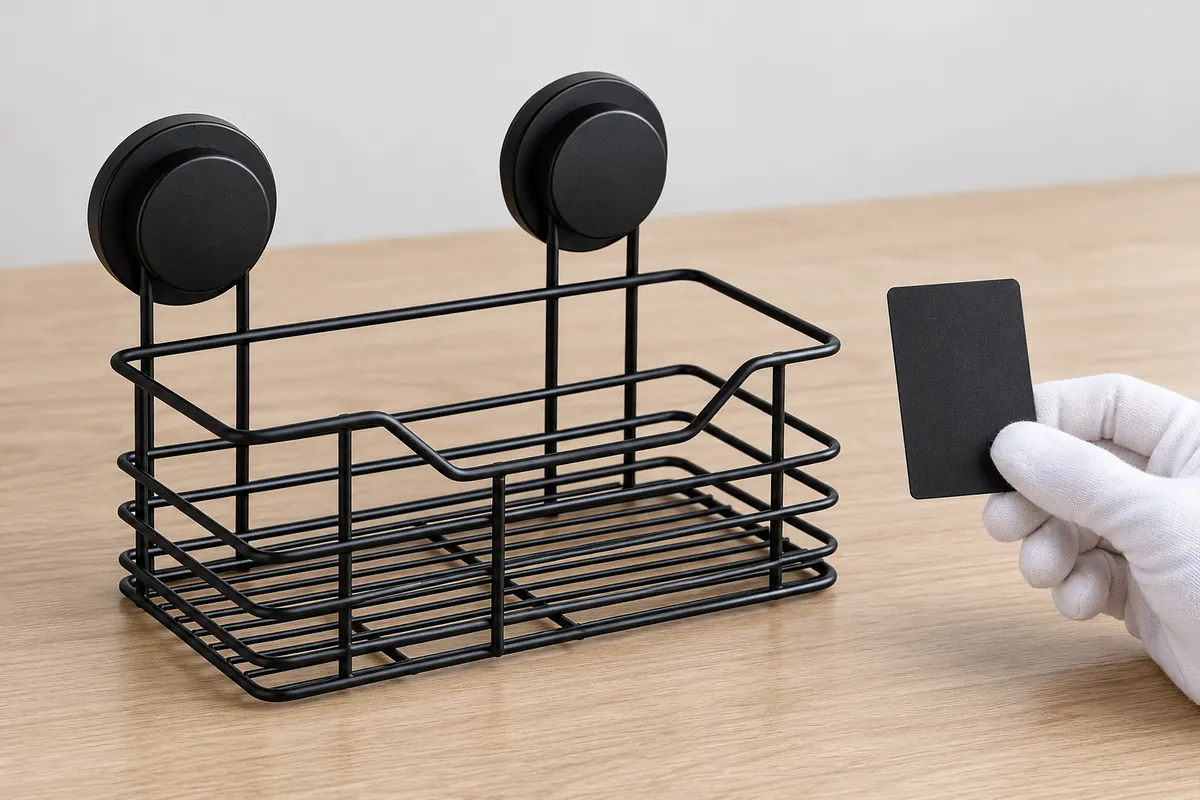
A solvent-rub test and DSC do not ask exactly the same question. A solvent rub is a practical surface-resistance screen performed with a specified solvent, rubbing material, technique, and evaluation rule. It can indicate how a coating surface responds under those conditions. It does not directly measure all chemical conversion, and a poor result may have causes other than simple under-cure. The method’s limitations and buyer-use conditions are discussed in the guide to solvent-rub cure-test limitations.
DSC is a laboratory thermal-analysis approach. It can add information about thermal response or remaining reaction potential for a defined specimen and procedure, but it requires competent method selection and interpretation. It is not automatically “better” because it uses laboratory equipment. The right comparison depends on the decision: quick screening, root-cause investigation, supplier qualification, or product-lot acceptance may call for different evidence.
| Evidence route | Typical buyer use | Main limitation to state |
|---|---|---|
| Solvent-rub screen | Screening surface response under a stated procedure | Technique and coating formulation affect interpretation; not a universal cure measurement |
| DSC analysis | Investigating thermal response or residual reaction potential in a defined sample | Sample and method represent only the tested material and condition |
| Part-temperature profile | Reviewing the time-temperature exposure of representative production parts | A profile does not by itself prove every coating property or every lot’s conformity |
| Finished-part performance check | Assessing a product property relevant to a defined requirement | The test must be selected for that property and product use; it may not explain cure cause |
When a supplier proposes a test, ask: “What exact uncertainty will this resolve, and what would we do if the result is high, low, or inconclusive?” If nobody can answer, the report may add cost without improving the release decision. A buyer can request a brief method rationale before approving laboratory work, especially if the test is destructive or requires a paid external lab.
How should a buyer interpret the result?
Interpretation should begin with the agreed comparison, not with an isolated number. Confirm whether the sample was tested as received, after a known cure schedule, or against an uncured or reference condition. Check that the same test program, sample preparation, and reporting basis were used for any comparison. If the report includes a pass/fail statement, identify who established the criterion, when it was agreed, and whether it applies to the actual coating and product.
Do not convert the result into an unsupported claim such as “fully cured,” “corrosion-proof,” or “guaranteed to last.” A thermal signal is one piece of evidence. The finished rack also has geometry, welded intersections, edges, contact points, and areas that may be harder to coat consistently. Its acceptance may require other agreed checks for appearance, coverage, adhesion, or corrosion resistance. Each check answers a different question.
If a result is unexpected, preserve the sample and record the chain of custody before commissioning another analysis. Repeating the same test without checking sample identity, process history, or lab method can reproduce confusion rather than resolve it. A focused investigation may compare a representative production sample with a retained approved sample, review coating batch records, confirm part-temperature evidence, and ask the coating supplier whether the analytical procedure is suitable for that formulation.
A practical review sequence
- State the product risk or buyer question in one sentence.
- Identify the rack revision, coating product, batch, sample location, and process history.
- Agree who selects the test method and who interprets the result.
- Confirm the reference sample, preparation, test program, units, and decision rule.
- Decide whether a production-representative rack or panel is needed in addition to powder or a laboratory coupon.
- Record the result, limitations, disposition, and any follow-up sample or process-control action.
- Define which changes require renewed approval before the next order.

What should go into the RFQ or approval plan?
Avoid writing “DSC required” without naming the decision it supports. A more useful specification says whether the test is optional diagnostic evidence or a required acceptance test; identifies the product and coating condition; states who selects or approves the laboratory procedure; describes the sample source and traceability; requires the report to disclose method and result basis; and identifies how an inconclusive result is handled. If the buyer expects the supplier to pay for testing, establish that responsibility before sample submission.
For an initial development sample, the buyer may first need visual confirmation of finish, a representative drawing and sample review, and agreement on the coating source and process. DSC could be reserved for a specific concern or a qualification plan agreed by the responsible technical parties. For repeat production, the purchaser and supplier can define whether routine lot control relies on process records and simpler checks, with laboratory analysis triggered by a defined change or unresolved deviation.
Keep acceptance criteria tied to the intended product and its risk. Do not copy a threshold from another resin, coating supplier, substrate, or industry without confirming applicability. A limit that is meaningful for one powder chemistry or sample preparation may be inappropriate for another. When a laboratory or coating specialist recommends a criterion, the buyer should document its source and intended scope rather than presenting it as a universal standard.
The specification should also define disposition authority. A test result may support acceptance, containment, rework review, or further investigation, but the report author should not silently become the product approver. The importer, brand owner, contract manufacturer, coating supplier, and test provider can have different responsibilities. Clarify who reviews the evidence, who can authorize shipment, and who controls any concession or process change.
Common mistakes when using DSC evidence
- Treating a laboratory result as a finished-product guarantee. It characterizes a sample under a method, not every property or service condition of a rack.
- Comparing unlike samples. Powder, flat panels, cut parts, different lots, and different cure histories are not interchangeable without a defined rationale.
- Requesting analysis before defining the decision. A technically valid report can still leave acceptance, rework, or resampling unresolved.
- Using a result to infer production oven conditions. Thermal analysis does not recreate the rack’s production temperature profile.
- Skipping traceability. Without coating identity, part revision, batch, sample location, and date, the result may not map to the goods on order.
- Assuming one method replaces another. DSC, solvent rub, temperature profiling, adhesion, appearance, and corrosion testing have different purposes.
- Changing the process without revisiting approval. A coating formulation, supplier, line loading, or part-geometry change can alter the relevance of an old reference sample.
What can a metal-hardware OEM contribute?
A metal hardware manufacturer can help connect the buyer’s finish concern to the rack drawing, substrate, welds, geometry, sample build, and production handoff. Koitor is a family-owned custom metal hardware factory with metal forming, welding, grinding, polishing, powder-coating, assembly, and packaging experience. It can review buyer drawings or physical samples and discuss how a requested finish requirement fits a product’s manufacturing and approval workflow.
That does not mean Koitor owns a DSC instrument, operates an accredited laboratory, formulates every powder coating, or can certify a cure result. Buyers should confirm the responsible coating supplier and qualified test provider for each project. The useful OEM role is to help identify the production-intent rack and sample interfaces, preserve revision and batch traceability, and coordinate which questions must be answered before mass production or a repeat order.
For a small-batch trial or private-label launch, a clear sample plan can prevent an expensive misunderstanding. The buyer can provide the product drawing, finish appearance target, intended use environment, known coating specification, and the exact concern. The supplier can then identify what is known, what is outside its confirmed scope, and whether a coating specialist should advise on method selection. Do not approve a report merely because it is formatted as a laboratory document; verify that it maps to the ordered part and decision.
Buyer checklist for residual-cure evidence
- Is there a specific cure-related question or product risk that requires DSC?
- Is the coating product, supplier, substrate, rack revision, and sample lot identified?
- Does the specimen represent the actual product, or is it a separate panel or powder sample?
- Are sample preparation, test program, result units, and comparison basis described?
- Who selected the method and who is qualified to interpret it?
- Is the result diagnostic evidence or a contractual acceptance requirement?
- What complementary evidence is needed for process exposure or finished-part performance?
- What happens if the result is inconclusive or differs from the approved reference?
- Which changes require a new sample, investigation, or renewed approval?
- Are decision authority, cost responsibility, and record retention agreed before testing?
Frequently asked questions
Does DSC prove that a powder-coated bathroom rack is fully cured?
No. It provides a thermal-analysis result for the specimen and procedure reported. Product-level cure approval needs a suitable sample, process context, interpretation, and agreed acceptance criteria; the result does not prove every finish property.
Is DSC always more reliable than a solvent-rub test?
Not as a blanket rule. They answer different questions and have different limitations. Choose the method based on the concern, coating formulation, sample, and decision; a coating specialist may recommend using more than one kind of evidence.
Can a flat coated panel represent a finished wire rack?
It may support a controlled comparison if its coating and cure history are documented, but it does not automatically represent every feature of a production rack. Confirm how the panel relates to the substrate, geometry, coating batch, and production route.
Should every shipment include a DSC report?
Only when the buyer and supplier have agreed that it is necessary and meaningful for the release plan. Routine testing without a defined question can add cost while leaving traceability and acceptance unclear.
What if the report gives a result but no clear pass/fail limit?
Treat it as diagnostic information until the responsible parties agree on interpretation and disposition. Do not create a threshold after seeing the result or present an unstated limit as an industry-wide requirement.
Work With Koitor Hardware
Review a Coated Rack Drawing or Production Sample
Share the rack drawing or physical sample, coating identification, and the exact approval question. Our family-owned factory can discuss metal-part manufacturability, sample traceability, and OEM coordination within a confirmed project scope.
OEM / PRIVATE LABEL
Turn this sourcing guide into a product brief
Share your target product, size, finish, order quantity and packaging requirements. Your team receives a practical manufacturability review before quotation.
 English
  Español
  Português
  Français
  Deutsch
  العربية