
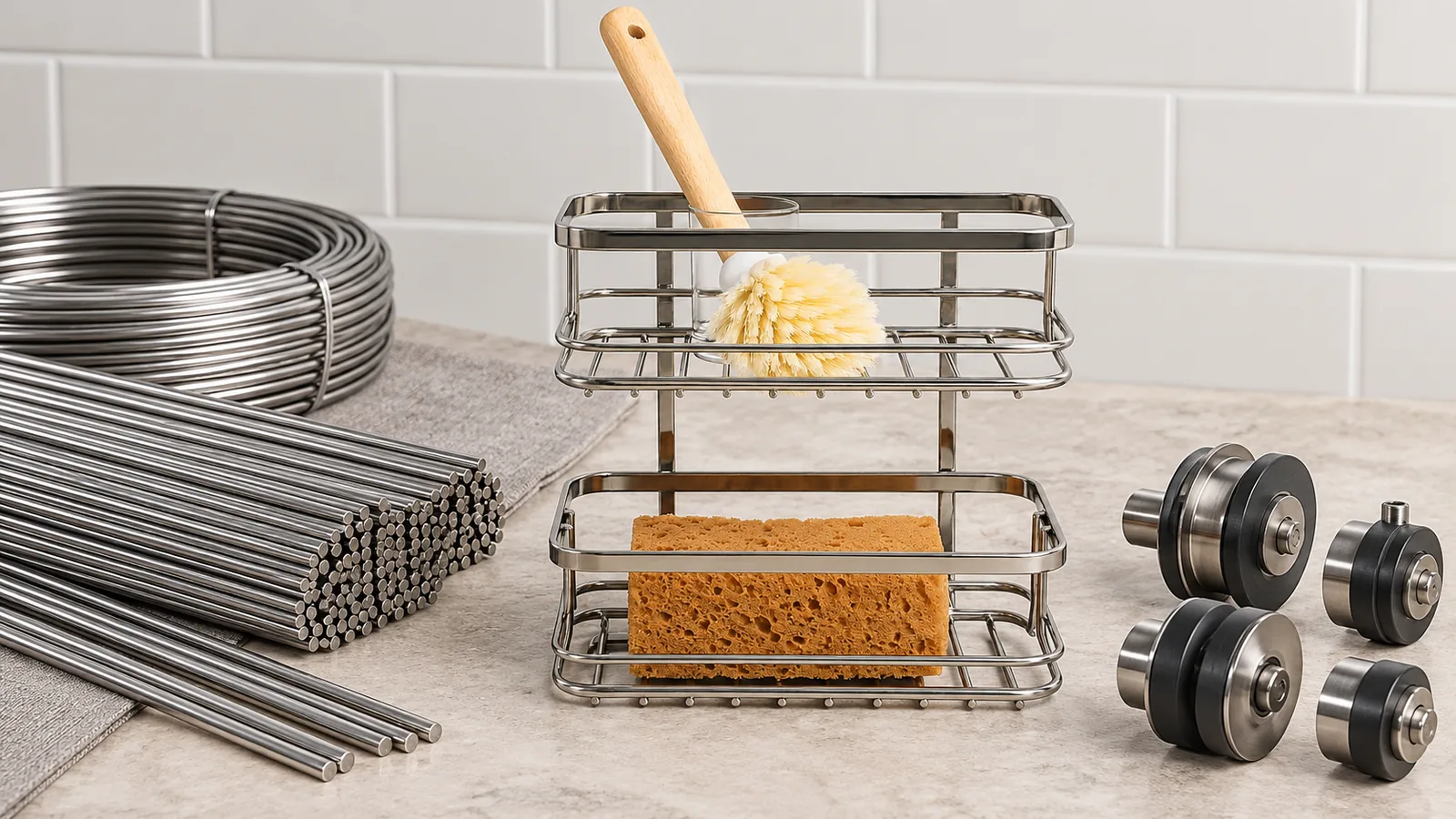
Why buyers ask about wire feed length control
For buyers specifying wire forming feed roller slip encoder length control, the goal is not to select a machine brand. It is to understand how the supplier detects and responds when programmed feed length and the wire actually delivered to a forming operation may differ. On a formed wire basket, a length-related variation can affect the location of bends, cross wires, hooks, returns or end features. The impact depends on the drawing and the assembly interfaces.
An importer may first notice a symptom such as a basket width that changes between samples, a hook that sits off-position, or a cross wire that does not align with a fixture. Those observations do not prove that feed rollers slipped. Coil set, wire straightening, cut length, fixture location, weld sequence, material variation and measurement method can also contribute. The buyer question should therefore ask what process evidence is available and how it is connected to a finished-product characteristic.
This article focuses on feed-length slippage evidence, distinct from a general discussion of coil memory or wire straightening. An encoder or monitor may be part of a supplier’s process, but it does not by itself establish finished-part acceptance. The project drawing, control plan and sample inspection remain the basis for deciding whether the product meets its intended requirements.
Separate commanded feed from the finished feature
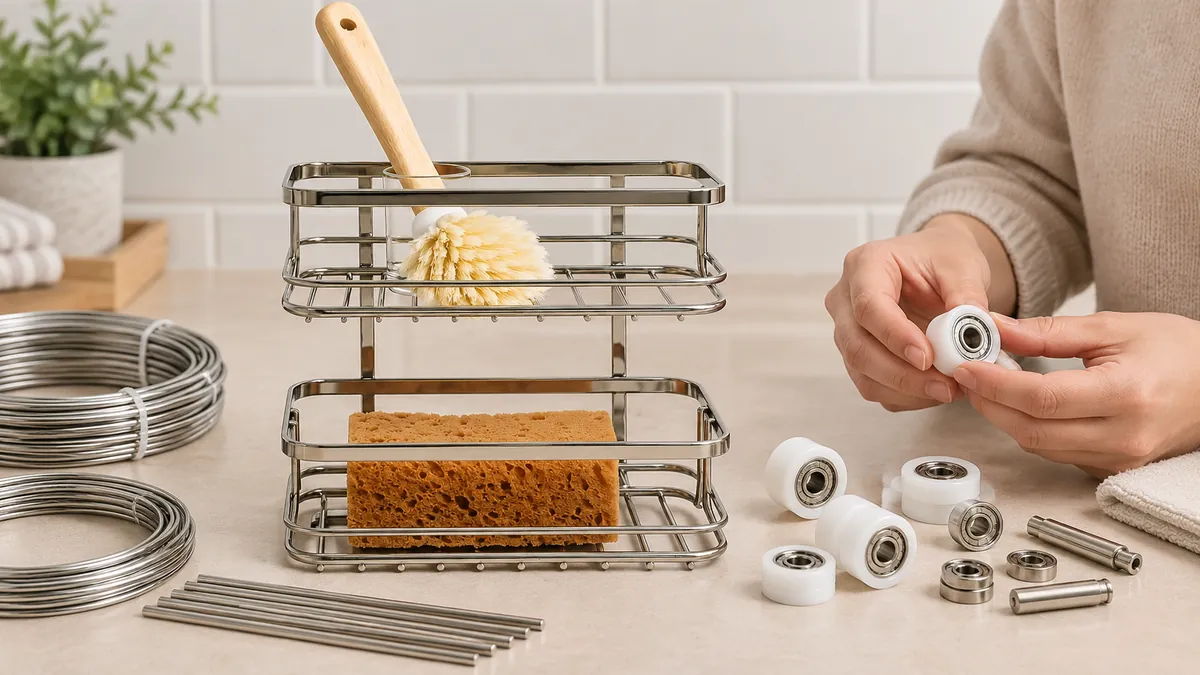
A forming recipe can specify a feed distance, while a measuring device observes movement at a particular point in the system. The exact relationship depends on the machine arrangement and setup. Buyers should ask what the encoder measures, where it is installed, which component it measures, and whether it is intended to detect a difference between commanded and observed motion. Do not assume the displayed or recorded value is a direct measurement of the finished basket dimension.
Roller contact, wire surface condition, setup, maintenance and operating conditions can influence feeding. A device that monitors length can provide process information; the supplier still needs a defined response when a reading is outside the approved window. That response may involve stopping, adjustment, verification or segregation according to the supplier’s documented procedure. Buyers should request the actual project control plan rather than assuming that an alarm automatically prevents every nonconforming part.
Translate the relevant process feature into the product drawing. For a wire basket, that might be the distance between formed legs, the location of a hook, the length of a return, or a cross-wire position. Identify the feature and datum that make the feed question commercially meaningful. If no finished dimension or assembly consequence is identified, the process data can become a disconnected machine statistic.
Clarify which dimension is at risk
Before discussing control equipment, agree on the product characteristic. A feed-length difference may influence one or more downstream dimensions, but the relationship depends on the forming path and where later bends, cuts or welds locate the wire. A basket’s overall width, height or hook position may be influenced by several operations. The supplier should explain the relevant chain for the actual part rather than offer a universal one-to-one formula.
Use a drawing view or annotated sample to mark the feature, reference direction and measurement endpoints. State whether the dimension applies before or after welding, and whether the part is measured freely supported or held in a fixture. A formed wire part can move under handling or clamping, so the measurement setup matters. Buyers should avoid combining a straight wire cut length with a finished assembly dimension as if they were identical controls.
The manufacturer can then identify which process step is capable of influencing the feature, what inspection evidence is practical, and how often it is collected under the agreed plan. If the supplier proposes monitoring feed length as a preventive control, pair that record with periodic checks of the finished feature. This keeps equipment data and buyer acceptance connected without confusing their purposes.
What to request in a supplier review
| Buyer question | Evidence to request | Boundary to keep clear |
|---|---|---|
| What feed-related feature matters on this part? | Drawing callout, datum and product-specific explanation | A machine value is not automatically a finished dimension |
| What does the encoder measure? | Sensor location and the intended measured motion | Do not assume it measures the final cut or formed length |
| How is a mismatch handled? | Alarm/stop response and the documented reaction plan | Monitoring alone does not prove that output is contained |
| What finished parts are checked? | Sample IDs and measurements tied to the drawing revision | Do not substitute setup data for product verification |
| Which other steps affect the dimension? | Process sequence, fixture references and relevant downstream operations | Feed is only one possible contributor |
| What changes require renewed approval? | Change-control triggers for setup, tooling, material or program | A prior approval may not represent a revised process |
The level of evidence should be proportionate to the product risk and buyer requirement. A simple noncritical wire feature may need a straightforward sample measurement. A feature that controls fit into another part may require a more deliberate fixture and traceable records. A wire forming feed roller slip encoder length control review is most useful when these process signals are tied to the dimension the buyer actually accepts. Do not request a specific monitoring system as a substitute for defining the product acceptance condition.
Distinguish feed slip from nearby process causes
When a sample dimension varies, preserve the observed evidence before naming a cause. Confirm that the same drawing revision, material specification and measurement setup were used. Compare the affected dimension across identified samples and note whether the difference appears before or after forming, cutting, welding or assembly. This sequence can help narrow where the variation enters the process.
Feed roller slip is one possible mechanism, but it is not the only explanation. Wire straightening may affect how a length sits against a stop or fixture. A cut-off operation may create a different end reference. A fixture may locate an upstream feature differently, and welding may introduce movement. The buyer does not need to diagnose the machinery independently; the supplier should investigate the process with appropriate evidence and explain the conclusion.
Avoid asking for a machine log alone when the defect is visible in a finished basket. Request both process information relevant to the suspected mechanism and a check of the product characteristic. If the supplier concludes that the source was not feed movement, record what evidence supports the alternate explanation. This creates a useful corrective-action trail and reduces the chance of repeating the same guess on the next order.
Approve a representative wire-basket sample
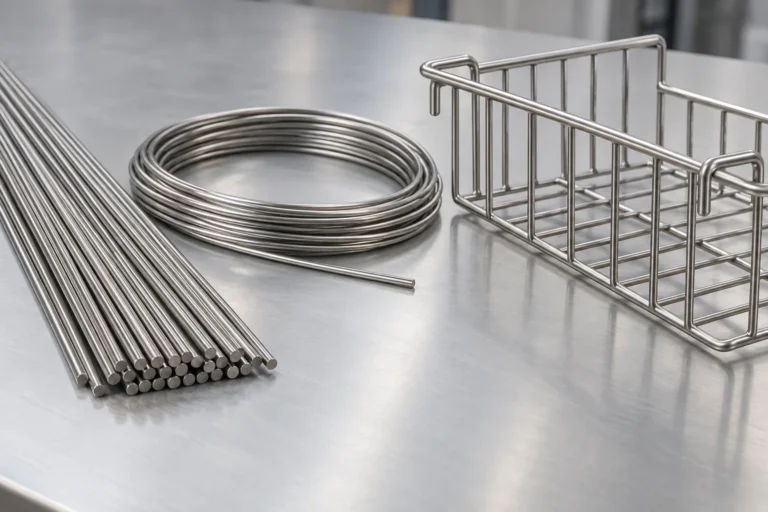
Select a sample that represents the intended wire material, diameter, forming program, fixture and joining sequence as applicable. Record its identity and the drawing revision. Inspect the feature that motivated the feed-control question, then review the basket as an assembly: orientation, symmetry where defined, hook location, mating fit and any cross-wire relationship shown on the drawing.
If a measurement depends on a fixture, identify the fixture and contact points. If the part is checked on a flat reference surface, state how it is supported and oriented. A photograph is useful for communicating the view and sample identity, but perspective images do not provide reliable dimensional scale unless the setup is controlled and specifically intended for that purpose. For acceptance, use the agreed measurement or fit method and preserve the record.
When comparing samples, do not mix observations from different material lots or program revisions without labeling them. A sample made during setup can be useful for feasibility review but may not represent a stable production condition. The supplier and buyer should agree which evidence is preliminary, which is production-intent and which is the actual approval basis.
Common gaps in feed-control discussions
The buyer asks whether the supplier has an encoder but not what it measures. Request the sensor location, measured motion and product feature it is intended to help control.
A process record is presented as proof of every finished dimension. Keep process monitoring separate from product inspection. Link each record to a drawing characteristic and an acceptance method.
A variation is blamed on roller slip before other causes are checked. Preserve sample identity and measurement conditions, then investigate feed, straightening, cutting, forming, fixture and joining steps as relevant.
The sample is not tied to a revision. Put the part number, drawing revision, material condition and sample ID on the approval record.
A tolerance is added without a usable measurement method. Define datums, support, endpoints and fixture conditions before demanding an acceptance number.
The reaction plan is missing. Ask what happens after an out-of-window process reading or product measurement, including how suspect parts are identified and dispositioned under the project plan.
Questions to include in the RFQ or control-plan review
Ask the supplier to map the feed-related concern to the product drawing. Which feature is controlled? What is the datum? Which operation creates it? Which downstream steps could alter it? If feed length is monitored, what is measured and where? How is the system verified or checked according to the supplier’s process?
Then ask what evidence will be available at sampling and during production. Will it include sample-level measurements, a fixture check, process monitoring records or another documented method? Which items are routine controls and which are first-article or change-approval checks? Agree the expected format and traceability so the buyer can review actual evidence instead of a general assurance.
Finally, agree the change triggers. A new wire grade or diameter, a revised feed program, roller replacement, a changed straightening route, a different fixture or a modified basket drawing may alter how prior evidence applies. The buyer and supplier should define which of these changes require notification, sample review or renewed approval for the specific project.
Koitor is a family-owned manufacturer of custom metal bathroom and home-storage hardware and can discuss drawing- and sample-based requirements for formed products. This article does not assert that a particular encoder, machine or feed-control system is used at Koitor. The actual equipment and process route must be confirmed for each project.
Buyer approval checklist
- Identify the exact wire-basket part, revision and material condition.
- Mark the finished feature that is relevant to feed-length control.
- Define the datum, support and measurement endpoints for that feature.
- Ask what the encoder or monitoring device measures and where.
- Separate process-monitoring records from finished-product acceptance.
- Confirm the sample represents the intended sequence and joining condition.
- Preserve sample IDs, measurements, photos and observed deviations together.
- Agree the supplier’s documented response to an out-of-window condition.
- Record process or material changes that trigger another approval review.
Frequently asked questions
Does an encoder prove that a wire basket dimension is correct?
No. An encoder measures motion at a particular point in a process. Its readings may support process control, but the buyer should still verify the finished feature using an agreed drawing-based inspection or assembly check.
Is feed roller slip the same as wire straightening variation?
No. They describe different possible process conditions. Either could influence how a wire length is presented to a downstream operation, but the supplier should investigate the actual sequence and evidence before assigning a cause.
What should an importer ask for during sampling?
Ask for identified samples tied to a drawing revision, measurements of the relevant finished feature, the datum and method used, and an explanation of any process control proposed for that feature.
Should buyers set encoder limits in the product drawing?
Usually the drawing should define the part requirement. Process limits are typically agreed with the manufacturer in the control plan, linked to the product feature and the supplier’s validated method. A machine setting alone is not a substitute for a product specification.
Conclusion: connect process signals to buyer acceptance
Feed roller slip and encoder monitoring can be relevant to wire-forming consistency, but the useful buyer decision begins with the finished feature. Define its datum and measurement method, ask what the supplier’s device actually observes, and review sample evidence from the intended process route. Keep likely causes open until the sequence and measurements support a conclusion.
For custom wire baskets or storage hardware, share the drawing, sample and fit-critical features with the manufacturer before finalizing acceptance criteria. That is the buyer-side purpose of wire forming feed roller slip encoder length control: make a production signal useful for a finished-product decision. Learn about Koitor OEM home-storage hardware manufacturing or start a project conversation through the contact page.
Review a Wire-Formed Hardware Requirement
Share the basket drawing revision, fit-critical feature and sample evidence needed for a project-specific discussion.
OEM / PRIVATE LABEL
Turn this sourcing guide into a product brief
Share your target product, size, finish, order quantity and packaging requirements. Your team receives a practical manufacturability review before quotation.
 English
  Español
  Português
  Français
  Deutsch
  العربية