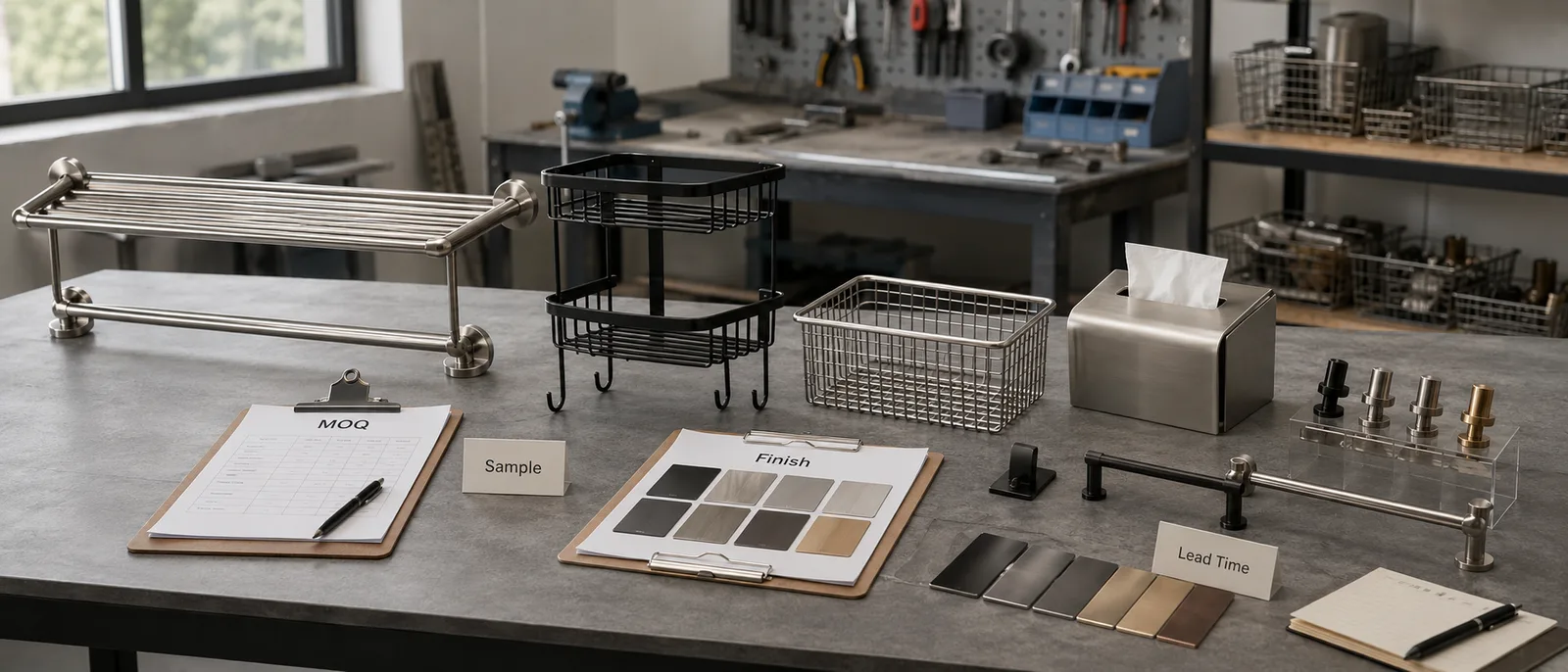
Small batch OEM hardware is a practical sourcing option when an importer wants to test bathroom or home storage products before committing to a larger repeat order. The buyer should confirm the product structure, target quantity, sample process, finish, packaging and lead time before asking for a final price. For products such as towel racks, shower caddies, wire baskets, hook bars and tissue holders, Koitor Hardware can act as a family-owned factory and custom metal hardware manufacturer that reviews drawings, samples and packaging needs before quotation.
What Does Small Batch OEM Hardware Mean for Importers?
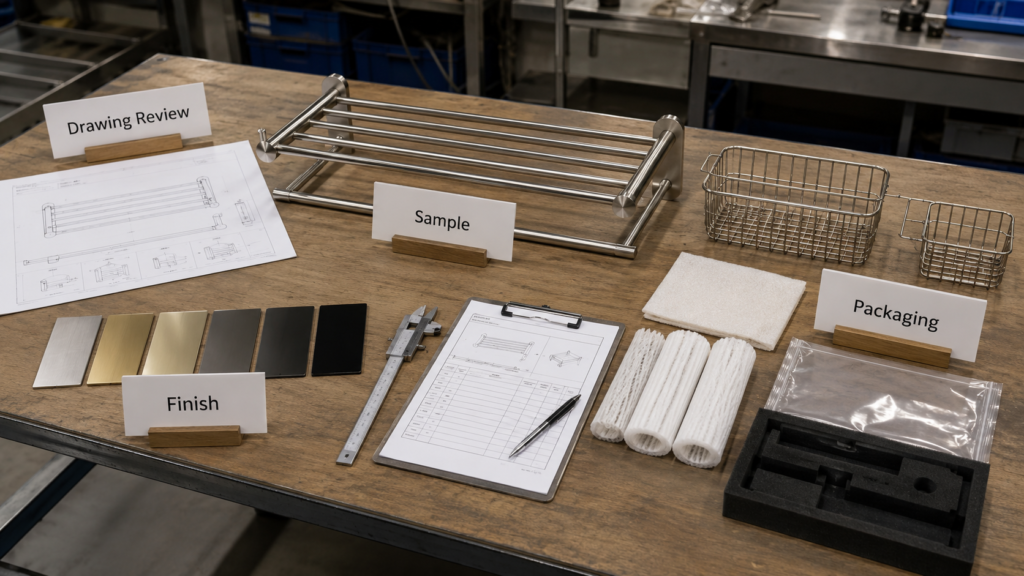
Small batch OEM hardware means a production facility makes a limited quantity of customized or semi-custom metal hardware according to the buyer’s specification. The project may start from an existing item, a drawing, a reference sample or a product improvement idea. The factory still needs to review material, bending, welding, surface finish, assembly and packing, but the first order is planned for testing rather than immediate large-volume rollout.
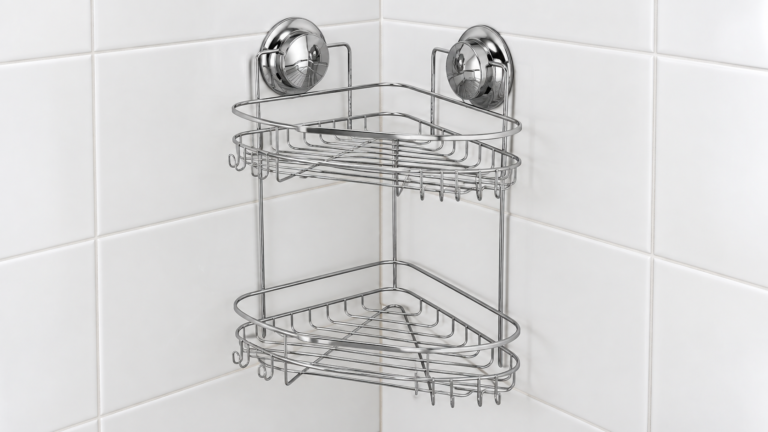
For bathroom and home storage hardware, this often includes towel racks, towel bars, shower shelves, corner baskets, metal storage baskets, wall-mounted racks, hook rails, tissue holders and kitchen storage racks. These products look simple in catalog photos, but small details affect real sourcing results. A towel rack needs stable mounting. A shower caddy needs suitable drainage and spacing. A wire basket needs consistent welding points and practical finish coverage. A retail pack needs enough protection to reduce scratches or deformation during transport.
Small-batch sourcing is useful when the buyer is testing a new sales channel, validating a private-label line, comparing finishes or checking supplier communication before scaling. It is not the same as buying a few retail pieces. Even a trial order needs a clear product definition, confirmed sample expectations and a realistic discussion about MOQ and production timing.
Why Do MOQ, Samples and Lead Time Vary by Product?
MOQ is affected by the manufacturing route behind the product. A simple hook bar with standard finish and ordinary packing may be easier to arrange than a multi-tier bathroom rack with custom wire diameter, special color, individual retail box and several welded components. Material availability, surface finishing, carton planning and assembly steps can all change the practical minimum order quantity.
For Koitor Hardware projects, MOQ can start from 100 pcs depending on product structure, material, finish and packaging. This should be treated as a project-specific starting point, not a fixed promise for every item. A towel holder, a welded shower basket and a larger home storage rack may each need different planning.
Samples usually take 5-7 working days after the design, materials and main details are confirmed. If the buyer changes the size, asks for a different finish, sends unclear drawings or requests special packaging, the timeline may need to be reviewed again. Bulk production usually takes 4-6 weeks depending on order quantity, complexity, material availability, surface finishing and packaging.
For buyers planning broader storage lines, Koitor’s OEM home storage hardware production page is a useful reference for how bathroom, kitchen and home organization products can be discussed together.
What Should Buyers Prepare Before Requesting a Trial Order Quote?
A practical quotation starts with clear input. If a buyer only asks for the price of a bathroom shelf, each supplier may assume a different size, wire thickness, finish, mounting method and package. That makes price comparison unreliable. The goal is not to send a perfect engineering file on the first day. The goal is to give enough information for a factory team to understand the product and the sourcing risk.
Useful RFQ details include product type, target dimensions, reference photos, drawings if available, material preference, finish requirement, estimated order quantity, packaging style, logo or private-label needs and target market. A physical sample is especially helpful because it shows real proportion, weld locations, surface feel, assembly style and packaging fit more clearly than a photo.
Buyers should also explain what the first order is meant to test. A retail chain may be testing shelf presentation and carton handling. An e-commerce seller may focus on mail-order protection and assembly instructions. A distributor may want a practical carton quantity and warehouse-friendly pack. A private-label brand may care about finish consistency, packaging style and line extension potential.
For low MOQ bathroom accessories, it helps to separate must-have requirements from flexible preferences. Size, mounting position and finish may be essential. Carton quantity, minor package artwork or optional accessories may be adjustable during the first trial. Clear priorities help Koitor review what should be fixed before sampling and what can be refined after the first feedback round.
How Should Buyers Compare Small-Batch and Large-Volume Production?
Small-batch production is usually best for validation. Large-volume production is usually better after the specification, packaging, demand level and repeat purchasing plan are already stable. The right choice depends on the buyer’s stage, not only the target price.
| Sourcing Route | Best Use Case | Buyer Benefit | Risk to Control |
|---|---|---|---|
| Small-batch OEM trial order | New product, new finish, new supplier or new retail channel | Lower first-order exposure and faster learning before scale-up | Unit cost may be higher and specs must be clear |
| Standard catalog order | Buyer needs existing products with limited changes | Faster selection when the item already fits the market | Less control over size, finish and packaging |
| Large-volume custom order | Mature item with confirmed demand and stable specification | Better production planning for repeat supply | Higher risk if the sample or package has not been validated |
| Mixed sourcing through a trader | Buyer needs many unrelated categories together | Convenient product consolidation | Technical feedback may pass through extra communication layers |
The cheapest first quote is not always the lowest risk. A rack that wobbles, a shower caddy that holds water in the wrong place, a finish that scratches during packing, or a weak retail box can create more cost than a small difference in unit price.
Small batch metal fabrication should be judged by whether the supplier can discuss structure, welding points, finish coverage, assembly and packaging before production. For general bathroom accessory projects, Koitor’s custom bathroom hardware manufacturer page gives buyers a clear category reference.
What Manufacturing Details Matter Before Sample Approval?
A custom hardware trial order should confirm the details that are likely to affect repeat production. The first batch is not only a purchase order. It is also a practical test of the product structure, factory communication, package protection and buyer instructions.
Structure and Stability
Bathroom hardware should feel stable during normal use. Wall-mounted racks need mounting points that match the intended installation method. Wire baskets need reasonable spacing and support. Multi-tier racks need alignment and balance. Hook bars and towel holders need a practical relationship between visible surfaces and load-bearing parts. If the buyer has a target market with heavier products or special installation habits, that should be discussed before sampling.
Welding, Bending and Surface Finish
Resistance welding, laser welding, TIG welding, bending, punching, grinding, polishing and powder coating can all affect the final appearance and production consistency. Buyers should ask where visible welds will appear, which edges need extra attention, whether the finish suits humid bathroom use and how packaging may protect finished surfaces. Rust resistance and surface durability should be discussed carefully and confirmed according to project needs.
Packaging and Assembly
Packaging often reveals problems during trial orders. A rack may look fine on the inspection table but arrive with scratches or deformation if the inner packing is weak. Flat-pack or KD structures can reduce shipping volume, but they need clear assembly logic. Retail packaging may need color boxes, hang cards or carton planning. E-commerce packaging may need stronger protection and more attention to movement inside the carton.
Koitor Hardware can review drawings or physical samples, discuss likely welding points, check finish and packaging considerations, and suggest practical adjustments before sample production. This is where direct factory communication can reduce misunderstanding before the buyer moves from a custom hardware trial order to repeat production.
For projects that include retail presentation or private-label packs, Koitor’s private label bathroom accessories development page is relevant because packaging and product structure often need to be reviewed together.
Buyer Checklist Before Requesting a Quotation
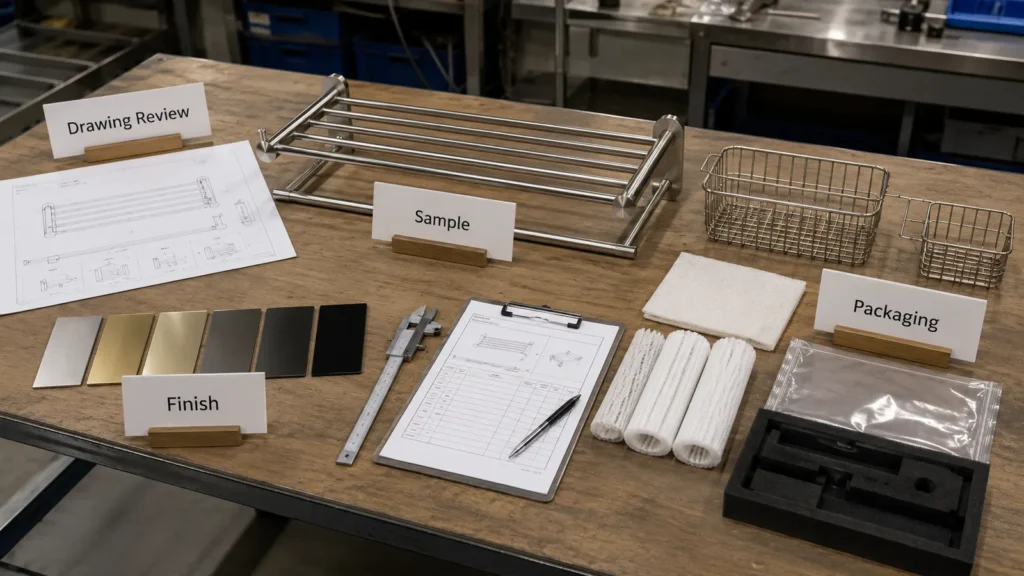
Use this checklist before asking a supplier to quote small batch OEM hardware for bathroom or home storage products:
- Product category, such as towel rack, shower caddy, wire basket, hook bar, tissue holder or kitchen rack
- Target dimensions and product structure
- Reference photos, drawings or physical sample availability
- Material preference, such as steel or stainless steel where relevant
- Wire diameter, tube size, sheet thickness or target weight if known
- Surface finish requirement, such as powder coating, polishing or other finish discussion
- Target MOQ or trial order quantity
- Sample requirement and review process
- Packaging type, such as bulk packing, color box, hang card, mail-order protection or carton plan
- Logo or private-label packaging requirement
- Target market and sales channel
- Known concerns, such as rust risk, stability, assembly, scratching or carton damage
A clear checklist does not make the project slower. It reduces guessing and helps the factory prepare a quotation that matches the real product, not a vague catalog assumption.
Frequently Asked Questions
Is small batch OEM hardware suitable for private-label brands?
Yes. It can be useful when a buyer wants to test a product, finish, package or supplier before scaling. Private-label buyers should prepare packaging requirements, logo needs, target market details and product-line expectations so the first batch reflects the intended sales channel.
What MOQ should importers expect for custom bathroom hardware?
MOQ can start from 100 pcs depending on product structure, material, finish, packaging and order details. Buyers should confirm MOQ project by project because a simple towel holder, a welded shower basket and a multi-tier storage rack do not always require the same production planning.
How long do bathroom hardware samples usually take?
Samples usually take 5-7 working days after the design, materials and key details are confirmed. If the buyer changes the drawing, requests a new finish or sends incomplete information, the sample timeline should be reviewed again before expectations are fixed.
Should buyers send drawings or physical samples?
Both are useful. Drawings show dimensions and structure, while physical samples show weight, weld positions, finish appearance, packaging fit and real product feel. If only photos are available, buyers should add measurements and explain what they want to keep or improve.
Can a trial order reduce sourcing risk?
A trial order can help buyers check product stability, finish appearance, packaging protection, supplier communication and market response before placing a larger order. It does not remove every risk, but it gives the buyer a practical validation step.
Work With Koitor Hardware
Need Help Planning a Small-Batch Hardware Trial Order?
Send Koitor your drawing, sample, size target, finish requirement, packaging idea or expected order quantity. Our team can review the structure, manufacturability, packaging method and small-batch production options before quotation.
OEM / PRIVATE LABEL
Turn this sourcing guide into a product brief
Share your target product, size, finish, order quantity and packaging requirements. Your team receives a practical manufacturability review before quotation.
 English
  Español
  Português
  Français
  Deutsch
  العربية