
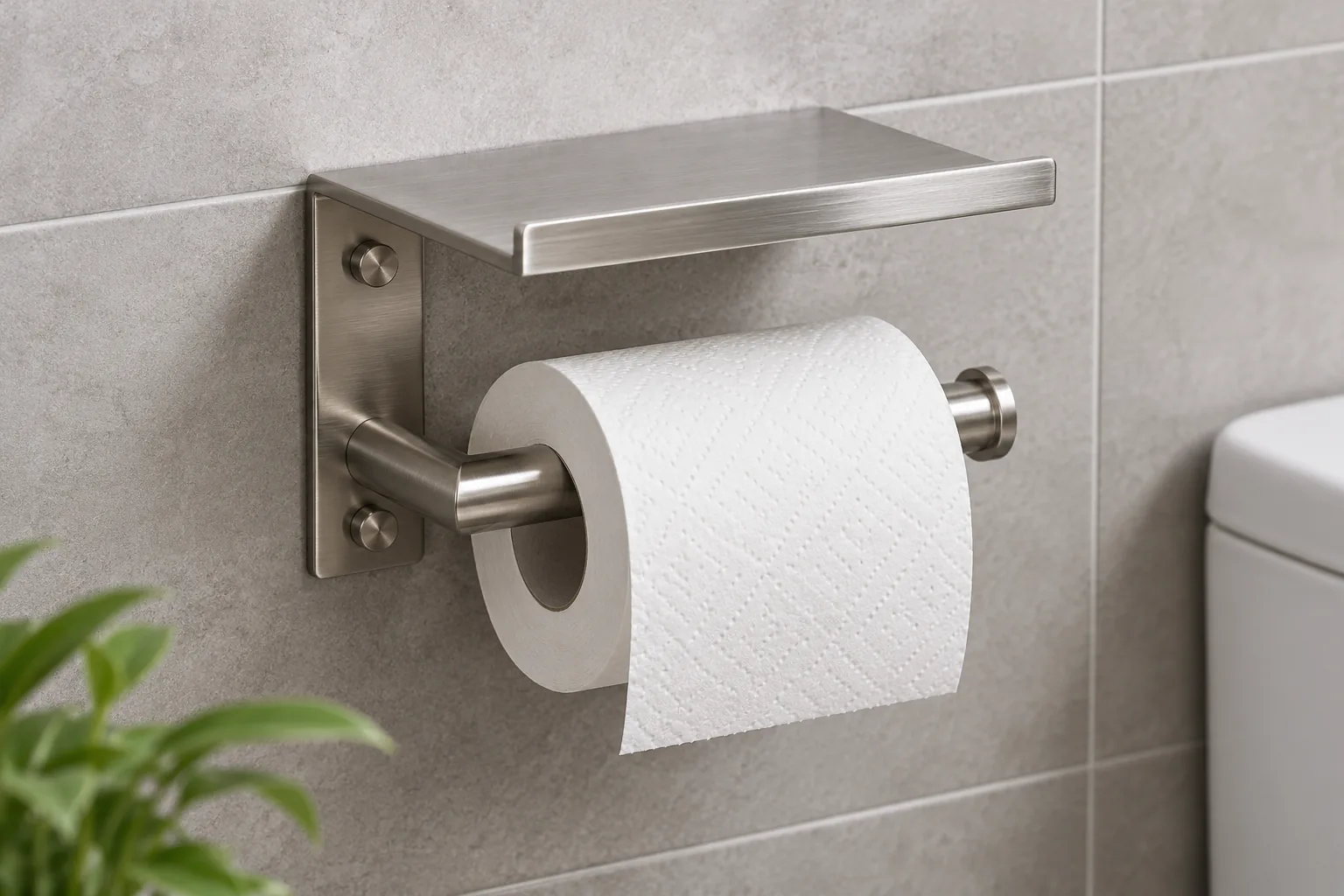
A toilet paper holder with shelf combines two functions in one wall-mounted product: holding a roll and providing a small horizontal surface. An importer should define what the shelf is intended to accommodate, how much usable area the buyer needs, how the roll is replaced, and which mounting, finish and component details belong to each SKU. A product’s outside width or styled photograph does not answer those questions by itself.
The first step is to distinguish the integrated wall-mounted holder from a freestanding toilet-roll stand with reserve storage or a recessed cabinet. When the product is sold as a toilet paper holder with shelf, the intended shelf use should be explicit in the RFQ rather than inferred from the label. This guide focuses on the wall-mounted combination and the sample decisions that a private-label brand, distributor or bathroom-accessory importer can document. It does not claim Koitor currently manufactures this particular holder, establishes a load rating or proves that any item will remain on a shelf.
What product configuration is the buyer approving?
Before writing dimensions into an RFQ, identify the intended architecture. A wall-mounted holder may have an open bar or arm, a hinged or removable roll support, a shelf above the roll, and a concealed or visible fixing arrangement. Models can open in different directions and use different mounting plates or fasteners. A freestanding holder with a shelf and spare-roll storage answers another buyer question and should have a separate SKU and sample record.
Manufacturer product information illustrates this variety. HEWI’s System 900 product sheet describes a named wall-mounted model with an integrated shelf, a hinged roll holder opening to the right and concealed fastening; it also lists model-specific dimensions and finishes. Ruhe’s current listing describes a different model with its own one-piece shelf/backplate construction, right-opening roll arm, mounting pattern and stated dimensions. These details belong to those models only; they are not universal design requirements or evidence about a different product. See the HEWI model sheet and Ruhe’s product specification.
Record the chosen reference image, drawing, model code and sample revision together. If the buyer wants a left-opening roll support, a different shelf shape, a concealed fixing or a particular finish, list that as a configuration decision rather than assuming the supplier’s standard model includes it. Distinguish factory-provided parts from buyer-selected installation accessories.
What should the shelf be designed to hold?
A shelf may be intended for a phone, a small packet, a wipe pack or another light personal item, but the importer should select and define the intended use instead of assuming that the word “shelf” promises all of them. Provide an example item or its maximum outside width and depth. If more than one item type matters, record them as separate reference cases and decide which is the controlling footprint for the sample.
Request the shelf’s usable width and depth, not only its overall dimensions. A raised edge, radius, slope, side return or front lip can change the flat area available to an item. Ask the supplier to show where the measurement starts and ends on the drawing. Also note whether an item is expected to sit fully within the flat surface or may extend beyond it; do not infer usable area from a top-view photograph.
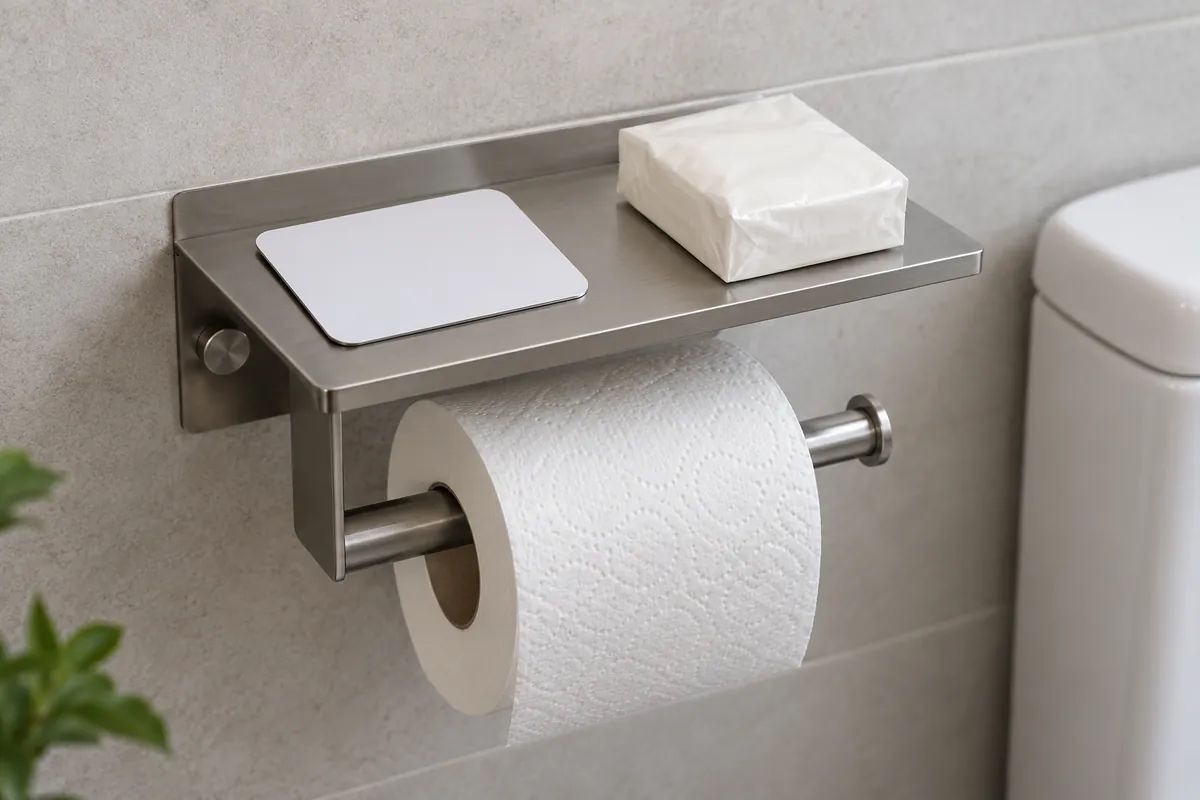
If the buyer wants an edge, recess or lip, define its purpose and shape in measurable terms. The geometry may affect how an item rests, but it does not prove retention under movement or impact. A visual sample review can show whether the intended reference item fits the space and whether obvious interference exists. It cannot establish a safe load, anti-slip behavior or suitability for a particular device unless the supplier has model-specific evidence and the buyer defines a relevant test.
A model-specific load statement should be handled separately from the overall product description. Ask the supplier to identify the exact model, test setup, loading location, duration and acceptance criteria that support any stated figure. Do not copy a load number from another brand’s data sheet, and do not turn a sample’s appearance into a performance claim. If no substantiated rating is available, describe the shelf by its dimensions and intended review sample rather than assigning an unsupported capacity.
How should roll clearance and replacement be checked?
The shelf and roll support occupy neighboring space, so their relationship should be checked on the selected sample. Define the intended roll type or representative roll dimensions, including the outside diameter and width relevant to the project. Ask the supplier to show the distance between the shelf underside or edge and the roll’s path, plus the arm or bar’s opening direction. These measurements are specific to the chosen geometry; no single clearance is correct for all rolls and products.
With the sample in its intended orientation, install a representative roll and confirm that it can be placed and removed using the designed opening. Check whether the roll contacts the shelf, wall or adjacent part as it turns. If the product uses a hinged arm, verify the opening side and the movement needed to change a roll. If the support is open-ended, review whether the roll can be loaded without removing another component. Record the result and the roll reference in the sample checklist.
This is a product configuration review, not a general installation or accessibility assessment. A separate commercial-height guide covers buyer decisions about holder placement and reach; see the commercial toilet-paper-holder height guide. If the project needs a jumbo roll, assess that requirement as a named size case rather than extending the sample result to every roll.
What material, finish and mounting details belong in the RFQ?
State the desired material and finish for the named model and identify which parts they apply to: backplate, shelf, roll arm, end cap and visible fasteners may not share the same construction. If a supplier proposes stainless steel or a coating, request the grade or finish reference and the evidence that applies to the exact part. Do not use a broad “rustproof” or service-life claim without relevant product-specific testing and conditions.
Mark cosmetic faces and visible edges on the drawing. Review corners, bends, joints and the front shelf edge for finish consistency and obvious burrs. If the design uses a bent one-piece shelf and backplate or a separate welded shelf, record the actual construction from the supplier’s drawing; do not assume every similar product uses the same architecture. Inspect the approved finish under the agreed lighting and keep a reference sample or control image for repeat orders.
For mounting, request the hole pattern, overall plate envelope and fastener list for the selected SKU. Make clear whether the fixing hardware is included and who selects anchors for the actual wall substrate. A supplier’s listed screws or concealed fixing system are model-specific and do not establish suitability for every wall. Installation tool access and the installer’s wall preparation are separate decisions; the buyer should not treat a holder sample as proof of installation compliance.
| RFQ item | Buyer definition | Evidence to request |
|---|---|---|
| Intended shelf use | Reference item and maximum outside footprint | Usable shelf width/depth and measurement points |
| Shelf geometry | Flat area, edge, lip or side return to review | Dimensioned top and side views |
| Roll case | Named roll or controlling width/diameter case | Roll-to-shelf clearance and loading orientation |
| Roll support | Arm/bar type and desired opening direction | Sample showing roll replacement sequence |
| Material/finish | Selected part-level grade and finish reference | Drawing, material declaration or finish sample for that model |
| Mounting | Hole pattern, plate position and included parts | Model-specific mounting drawing and hardware list |
| Order identity | SKU, option code, carton and revision | Quote and label mapped to approved sample/drawing |
The table is a comparison structure, not a specification standard. The importer and supplier should fill it with the actual project’s values and identify unresolved fields explicitly. If a product is being offered in several widths, finishes or roll-support directions, map each combination to an orderable code rather than relying on a single family name.
How should the importer approve a sample and pack-out?
Review the exact sample with the selected roll and reference shelf item. Check the usable shelf footprint, edge shape, roll loading and replacement, visible finish, joint placement, mounting pattern and included parts. Photograph the sample from the top, front and side, and note any accepted deviation or change request. If a prototype differs from the quoted production configuration, identify the open items instead of treating the prototype as final approval.
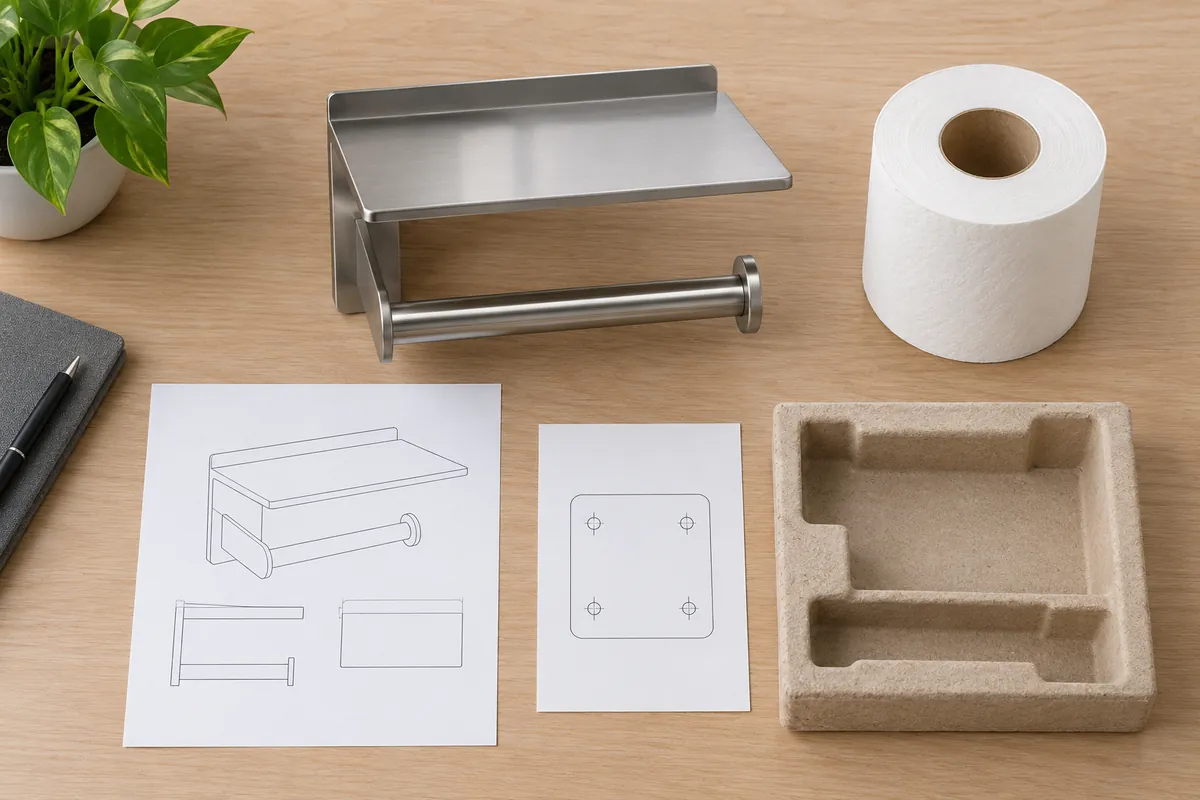
Then confirm the packaging approach. Protect the visible shelf face, roll arm, corners and finish from contact with fasteners or another unit. Request a trial pack that shows the protective separator, any bag or inner carton, included fasteners, labels and carton quantity. Review the packed sample and record the pack revision. A trial pack informs a packaging decision; it does not guarantee that every transit route will be damage-free.
The approved sample record should connect the model code to its drawing revision, shelf dimensions, intended reference item, roll case, material/finish, mounting pattern, included parts and packaging. If any of these changes, decide whether the supplier must provide a new drawing, finish sample or physical sample before a reorder. This makes product data, quote lines and inspection criteria consistent across the importer’s catalog and purchase documents.
Which related toilet-paper holder guides answer different questions?
This shelf-equipped wall holder is different from a freestanding stand with reserve-roll storage. The freestanding toilet-paper holder with storage guide addresses its own base, reserve-roll and tip-stability decisions. K142 focuses on the usable shelf and its relationship to a wall-mounted roll support.
The broad custom tissue-holder page serves supplier-intent questions, while K142 is a product specification and sample-approval guide. Buyers who need broad company scope can see the custom tissue-holder manufacturer page; no current Koitor production of this exact shelf model is asserted here. Keeping the page roles separate avoids confusing a product category query with a sourcing checklist or another holder architecture.
Buyer sample checklist
- Confirm wall-mounted, recessed or freestanding architecture; this guide covers only the integrated wall-mounted shelf form.
- Identify the shelf’s intended reference item and its outside dimensions.
- Record usable shelf width and depth separately from overall product dimensions.
- Define edge or lip geometry and the visible surfaces to review.
- Specify the roll case and check replacement access, direction and shelf clearance on the exact sample.
- Request model-specific material, finish, fixing pattern and included-parts information.
- Review the sample and trial packaging; tie both to the same model and drawing revision.
- Treat load, retention, corrosion and service-life claims as evidence-dependent.
The practical takeaway is to define the shelf’s job and test that exact use with the selected holder sample. A useful toilet paper holder with shelf RFQ connects the intended item to usable shelf dimensions, roll clearance, replacement access, part-level finish, mounting and pack-out. That gives importers a clear approval and reorder record without implying an unsupported load rating or factory capability.
Frequently asked questions
Does an outside shelf dimension equal usable shelf area?
Not always. An edge, return, radius or slope can reduce the flat area available to an item. Ask the supplier to identify usable width and depth on a drawing, then compare them with the intended reference item.
Should the importer specify a phone shelf?
Only if a phone or phone-sized reference object is part of the intended use. Define its outside footprint and review fit on the sample. Do not promise that an item will stay in place or that the shelf supports a specific load unless the exact model has evidence for that claim.
Can the buyer transfer a load figure from another product sheet?
No. A load claim belongs to the named model and its stated test conditions. Request the supplier’s evidence for the exact SKU and keep it separate from dimensions or visual sample observations.
Is a shelf-equipped holder the same as a freestanding holder with storage?
No. The wall-mounted integrated form combines a roll arm and a small shelf; a freestanding stand may add reserve-roll storage and has a different stability and footprint question. Keep their drawings, SKU codes and sample criteria separate.
Does Koitor currently make this exact product?
The approved company information does not verify current production of this specific wall-mounted shelf holder or a shelf-load rating. This article offers importer specification guidance only.
Discuss a Metal Storage Project Brief
Planning a new storage hardware SKU?
Share the buyer specification, drawings or sample, target quantity and packaging requirements. Koitor can first review whether the request fits its verified manufacturing scope.
OEM / PRIVATE LABEL
Turn this sourcing guide into a product brief
Share your target product, size, finish, order quantity and packaging requirements. Your team receives a practical manufacturability review before quotation.

 English
 Español
 Português
 Français
 Deutsch
 العربية