
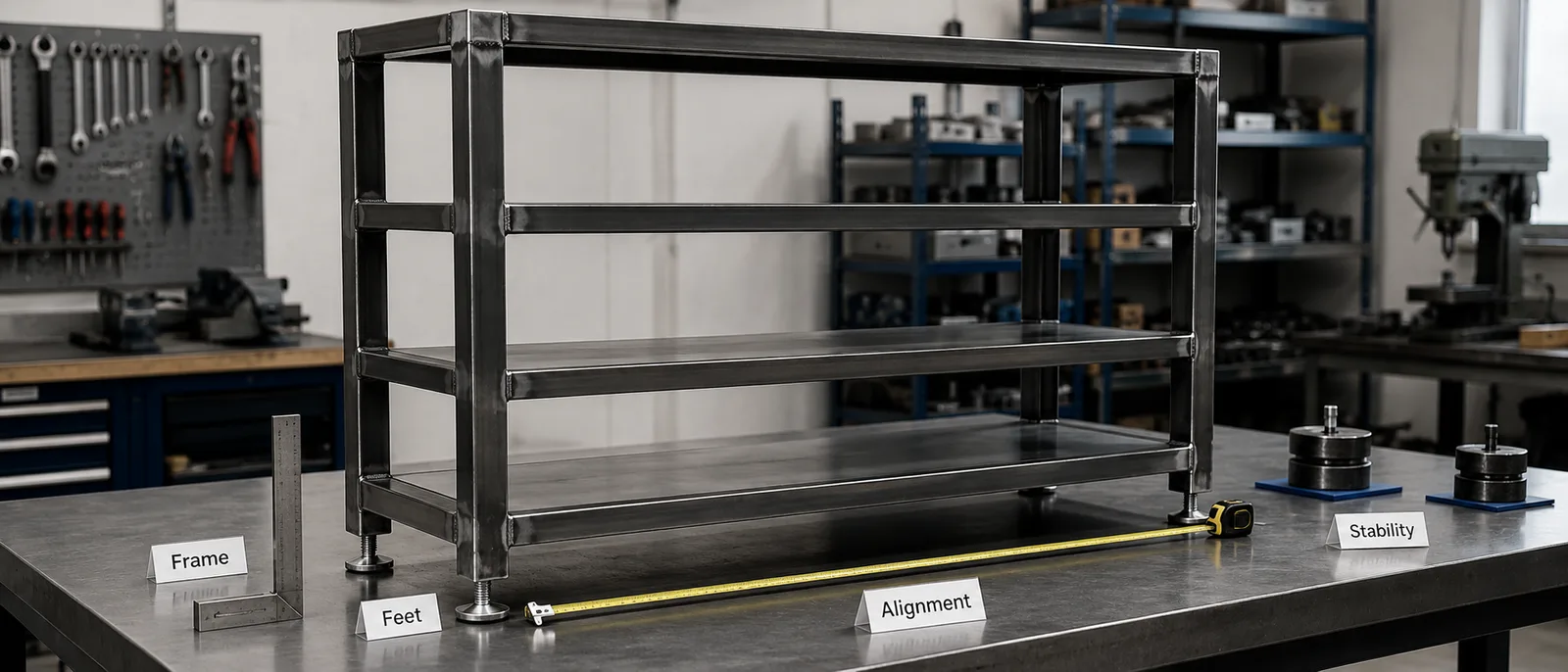
A wobbly storage rack is usually caused by a combination of structure, part alignment, welding distortion, uneven feet, loose connections or an installation surface that was never considered during development. B2B buyers should not judge stability by pushing one finished sample once. They should check the rack on a flat reference surface, measure diagonal alignment, inspect joints and feet, repeat assembly, load it according to the project plan and compare the approved sample with bulk-production controls. The most reliable solution is to define how stability will be checked before tooling, sampling and quotation are finalized.
Why Does a Metal Storage Rack Wobble?
A metal storage rack wobbles when its contact points, frame geometry or connections do not hold the product in a stable plane. Even a small difference between four feet can create visible rocking. A tall narrow rack can also feel unstable when the base is too small for the product height or when weight is concentrated on the upper shelves.
The buyer first needs to separate two problems. Rocking means one foot does not contact the floor consistently. Sway means the frame bends or joints move from side to side. A product can have either problem or both. These defects require different corrective actions, so a useful inspection report should not describe every movement simply as “unstable.”
Common causes include cut-length variation, bends that are not square, weld heat pulling the frame out of alignment, shelves positioned at different heights, loose knock-down connectors, uneven plastic feet, and mounting holes that do not match. The floor or wall used for installation can add another variable. A rack that is stable on a factory table may behave differently on tile with uneven grout lines.
For a new OEM project, buyers should discuss these risks during drawing review. Koitor’s custom metal storage rack manufacturing page explains the product-development route for racks that need custom dimensions, structures, finishes or packaging.
Which Design Choices Control Storage Rack Stability?
Storage rack stability begins with proportions and load paths. The base width, rack height, shelf spacing, frame shape and expected load position should work together. Adding thicker material does not automatically solve a poor layout. A better design directs weight through the frame into stable floor or wall contact points and reduces the chance of a wobbly storage rack after assembly.
A freestanding rack normally benefits from a base that is wide enough for its height and intended use. Crossbars, back frames or diagonal support can reduce side-to-side movement. Shelf connections should prevent the left and right frames from rotating independently. If the product is designed to be wall-mounted, bracket position and hole spacing become part of the stability system.
The product’s sales channel matters as well. A fully welded rack can provide a rigid structure but may require a larger carton. A knock-down rack can reduce shipping volume, but connectors, screws and assembly instructions must be controlled carefully. E-commerce buyers may need a design that customers can assemble consistently without specialist tools.
| Design Area | Typical Stability Risk | Buyer Review Point |
|---|---|---|
| Base and height | Tall, narrow proportions increase tipping or sway risk | Confirm product dimensions and expected load position |
| Frame support | Parallel side frames can move independently | Review crossbars, back support and shelf connections |
| Feet | Different foot heights cause rocking | Check tube ends, plastic inserts and adjustable feet |
| Knock-down joints | Loose clearance allows movement after assembly | Repeat assembly and check screw and connector fit |
| Wall mounting | Bracket or hole mismatch transfers movement to the rack | Review mounting template, hardware and installation surface |
| Shelf loading | High or uneven loads increase sway | Define project-specific load placement for sample checks |
Buyers should send the supplier the target dimensions, use environment, installation method, product weight and intended shelf use. These inputs make the design discussion more practical than asking for a “strong rack” without measurable project conditions.
How Do Welding and Fixtures Affect Frame Alignment?
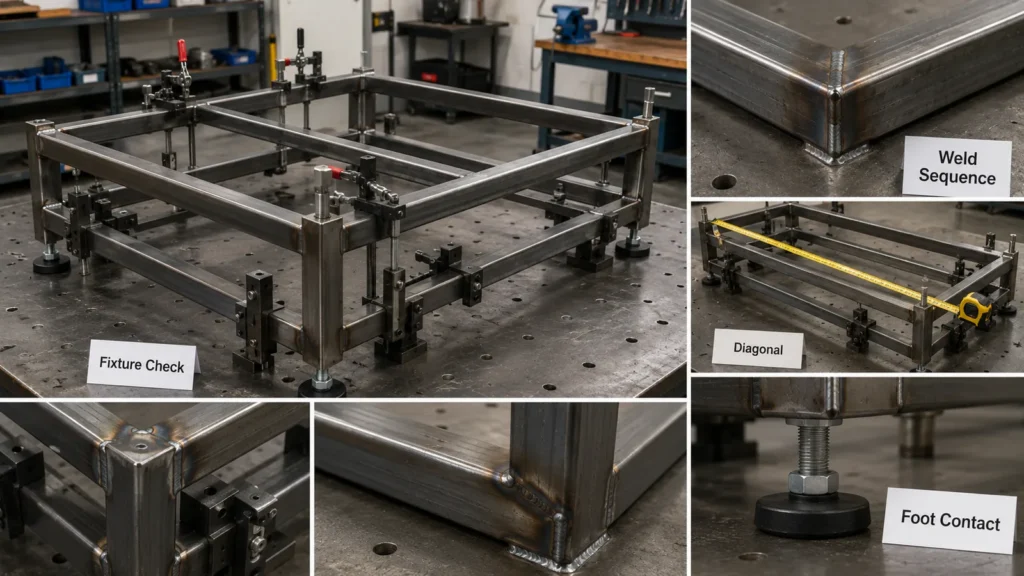
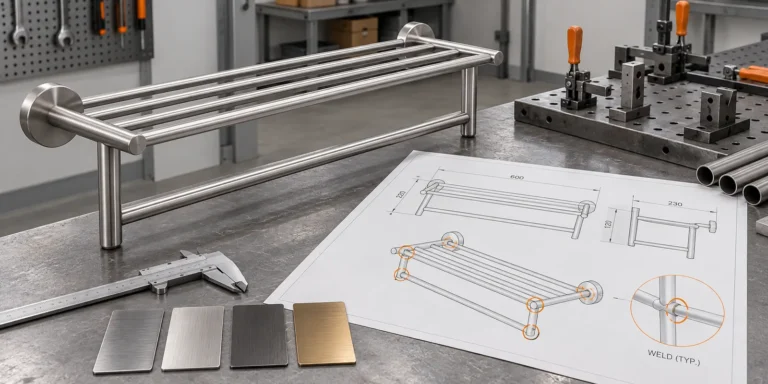
Welding and assembly fixtures affect whether a metal frame remains square and whether repeated units match the approved sample. Heat can pull tubes or wires during welding, while an inaccurate fixture can hold parts in the wrong position. Good metal rack welding quality therefore depends on joint appearance, penetration appropriate to the project, sequence, part location and post-weld alignment.
A production fixture, sometimes called a jig, locates components while they are welded or assembled. The fixture should support repeatable spacing and angles, but the tool alone does not guarantee accuracy. Operators still need clear reference points, a suitable welding sequence and checks for wear, debris or movement in the fixture.
Buyers sometimes request “CNC jig precision” as if the phrase itself proves product stability. CNC machining may help create accurate fixture components, but the finished rack must still be measured. The useful questions are whether critical locating points match the drawing, whether diagonal dimensions agree within the project tolerance and whether the rack sits correctly after welding and finishing.
Weld sequence is important because repeated heating on one side may distort a frame. Tack welding can hold the geometry before final welding, and a balanced sequence can help reduce movement. The exact method depends on the material, tube or wire size, joint design and product structure. It should be confirmed during sample development rather than treated as one universal process.
Surface finishing can reveal or add variation. Grinding may change a contact point, and coating buildup can affect tight-fitting knock-down joints or feet. The supplier should therefore check stability after the product reaches its finished condition, not only when the bare metal frame leaves welding.
What Should Buyers Check During Sample Approval?
Sample approval should turn the idea of stability into a repeatable inspection routine. Place the finished rack on a verified flat surface, press near each top corner and observe whether a foot lifts. Then check side-to-side sway, diagonal dimensions, shelf level, connector tightness and mounting alignment. This repeatable method helps buyers identify a wobbly storage rack before bulk production. Record the method with photos or a short video so the same check can be repeated later.
For knock-down products, assemble the sample using only the parts and instructions intended for the customer. Disassemble and rebuild it to see whether the joints remain consistent. Confirm that screws enter cleanly, connectors seat fully and the assembly order does not force the frame out of square.
Load review should be based on the buyer’s project requirements. Avoid publishing or approving an exact load claim without project-specific evidence. Instead, agree on where test items are placed, how long the sample is observed and what movement or permanent deformation would be unacceptable. Keep the result with the approved sample documentation.
A useful sample approval record should cover:
- Overall width, depth and height compared with the confirmed drawing.
- Diagonal measurements for frame squareness.
- Contact of every foot on a flat reference surface.
- Side-to-side sway at the top and at each shelf connection.
- Weld position, appearance and surrounding distortion.
- Level and parallel alignment of shelves, rails and baskets.
- Fit of plastic feet, caps, screws, inserts and knock-down connectors.
- Mounting hole position and bracket fit for wall-mounted designs.
- Finished coating or polished surface around joints and contact points.
- Packaging protection for feet, corners, shelves and loose hardware.
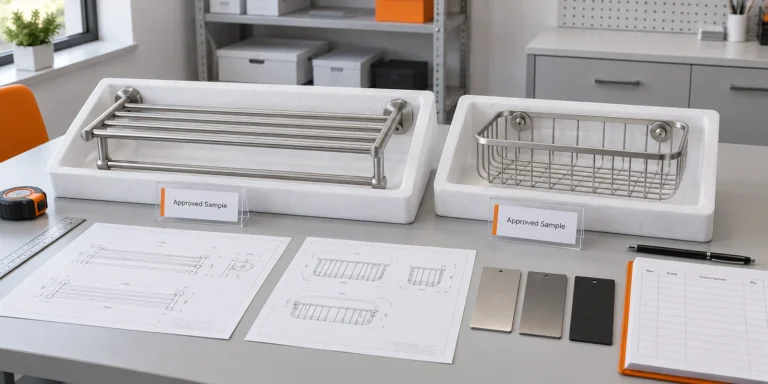
The approved sample should be retained as a physical reference when possible. Drawings and photos are useful, but the actual product helps both buyer and supplier compare movement, assembly feel and finished appearance during bulk production.
How Can Packaging and Installation Create a Wobbly Rack?
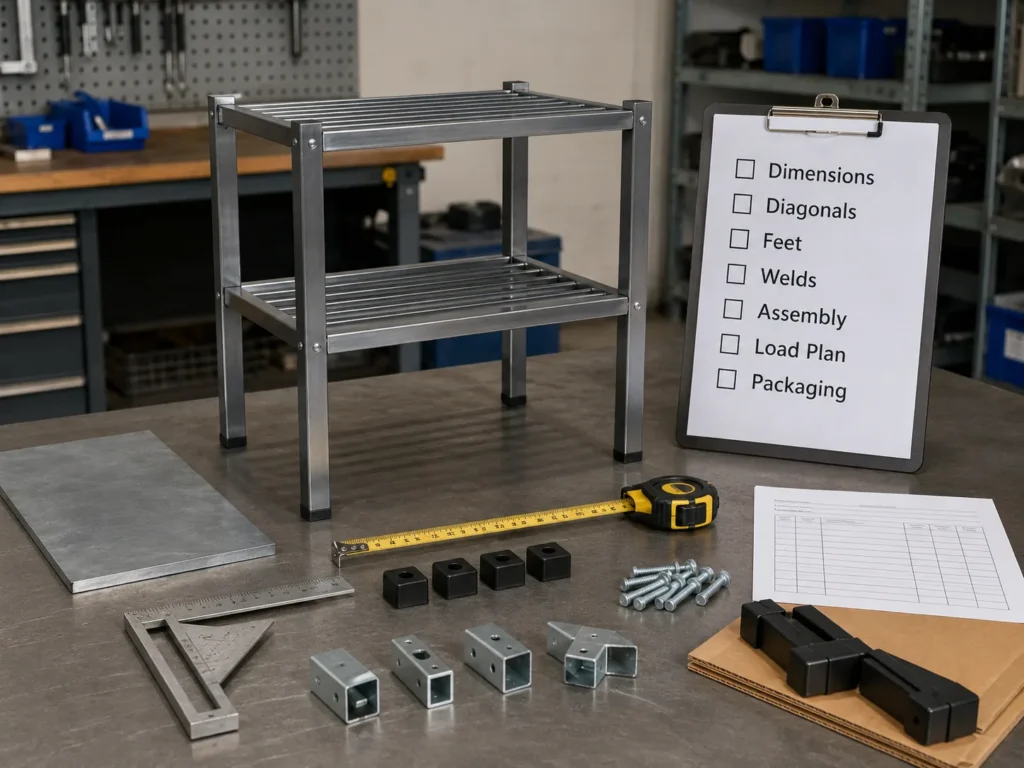
Packaging and installation can create a stability complaint even when the rack was aligned at the factory. Long frames can bend under carton pressure, feet can loosen during transport, and loose hardware can scratch or damage connection points. A compact package can reduce shipping volume, but it must not force the product into a distorted position.
Packaging review should check how the frame is supported inside the carton. Corner protection, part separation and hardware bags should prevent rubbing and concentrated pressure. For knock-down racks, every connector and screw should be counted and contained. Missing or mixed hardware can lead customers to improvise, creating movement that is later reported as a manufacturing defect.
Installation instructions should state the assembly sequence and identify where fasteners must be tightened. A rack may remain loose if users tighten one side fully before the frame is squared. Where wall attachment is required, the instructions and supplied hardware should match the agreed product plan, while buyers should still account for different wall materials in their target market.
Importers developing a broader assortment can review Koitor’s OEM home storage hardware capabilities for metal racks, baskets and related organization products.
How Should Importers Control Stability in Bulk Production?
Bulk-production control should focus on the dimensions and process points that cause movement. The buyer and supplier should identify critical checks from the approved sample, define an inspection frequency suitable for the order and keep records that can be compared when a problem appears.
Incoming tube, wire, feet and connectors should match the confirmed specification. During fabrication, the factory can check cut length, bend position and fixture location. After welding, frame diagonals and foot contact can be reviewed before finishing. Final inspection should repeat the stability and assembly checks on finished, packaged units according to the agreed plan.
When a defect is found, separating rocking, sway, connector looseness and installation error makes corrective work faster. For example, a single high foot points toward geometry or foot variation, while side-to-side movement in every unit may point toward insufficient frame support or loose shelf connections.
Koitor Hardware is a family-owned custom metal hardware factory specializing in bathroom and home storage hardware. For a new rack project, Koitor can review a drawing or physical sample, discuss welding points and frame structure, prepare a sample and support small-batch OEM production. MOQ can start from 100 pieces depending on structure, material, finish and packaging. Samples usually take 5-7 working days after details are confirmed, while bulk production usually takes 4-6 weeks depending on project conditions.
For a wobbly storage rack complaint, the most helpful starting information is a video of the movement, photos of the feet and joints, product dimensions, assembly details and the surface used during the check. This evidence helps the factory distinguish design, production, packaging and installation causes before proposing a change.
Related sourcing and quality articles are available through Koitor resources.
Frequently Asked Questions
Does a heavier metal rack always wobble less?
No. More material can increase weight, but stability also depends on proportions, frame geometry, connections, feet and installation. A heavy rack with poor alignment or weak joints can still rock or sway.
What is the difference between rocking and swaying?
Rocking usually means the feet do not sit in one plane, so one contact point lifts. Swaying means the frame or connections move from side to side. Buyers should record which movement occurs because the corrective actions differ.
Can adjustable feet solve every stability problem?
Adjustable feet can compensate for small floor differences, but they should not hide a frame that is badly distorted or a structure that lacks support. The frame should be checked before adjustable feet are used as the solution.
Why should a knock-down rack be assembled more than once?
Repeated assembly shows whether connectors, screws and instructions produce consistent alignment. It can reveal clearance, thread or sequence problems that are easy to miss during one factory assembly.
What information should a buyer send for a stability complaint?
Send a short video, photos of feet and joints, the assembly method, product dimensions, the surface used for checking and details of any load placed on the rack. Keep the affected unit for comparison if possible.
Work With Koitor Hardware
Need Help Reviewing a Metal Storage Rack Sample?
Send Koitor your drawing, physical sample, stability video, dimensions, finish requirement, packaging idea and expected order quantity. Our team can review the structure, welding points, assembly method and small-batch production options before quotation.
OEM / PRIVATE LABEL
Turn this sourcing guide into a product brief
Share your target product, size, finish, order quantity and packaging requirements. Your team receives a practical manufacturability review before quotation.
 English
  Español
  Português
  Français
  Deutsch
  العربية