
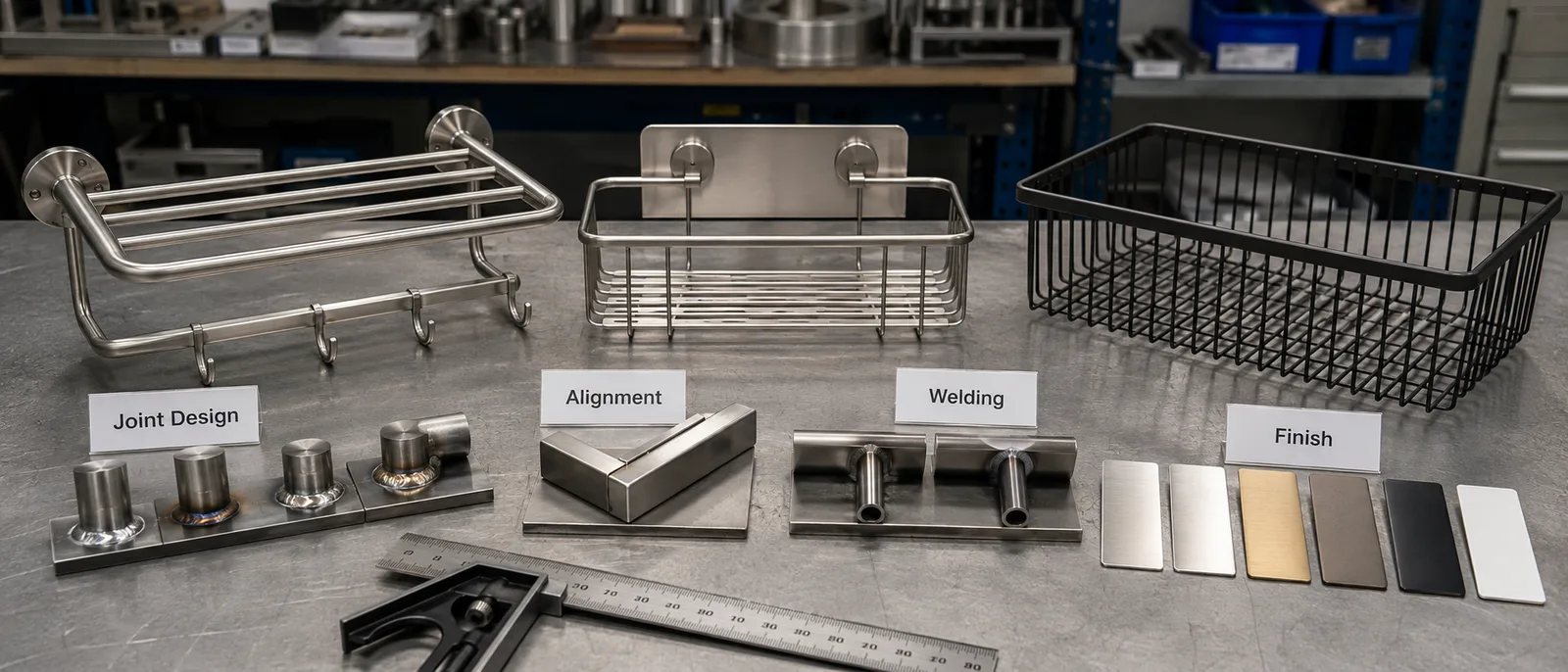
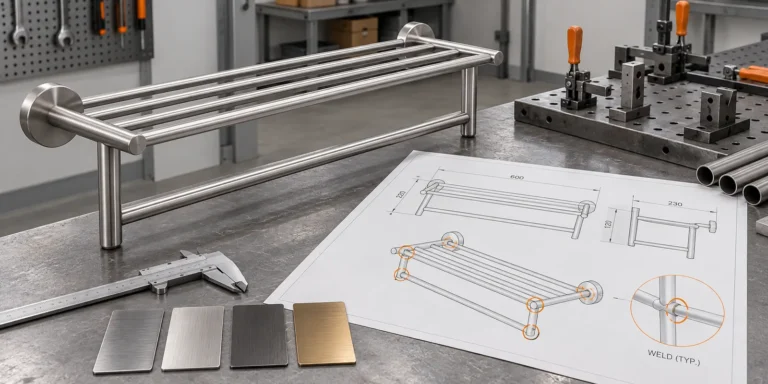
Bathroom hardware welding quality depends on more than whether a joint looks smooth. B2B buyers should review joint design, material thickness, part alignment, welding method, heat distortion, finishing coverage and the inspection method used before bulk production. A good sample approval process checks whether the joint supports the intended structure, stays aligned after welding and finishing, and can be repeated consistently. The safest sourcing approach is to define critical weld locations and acceptance points on the drawing or approved sample instead of relying on general terms such as “strong welding.”
What Does Good Bathroom Hardware Welding Quality Mean?
Good welding quality means the joint is appropriate for the product structure, positioned correctly, finished consistently and repeatable in production. It should support the agreed use without creating avoidable movement, sharp edges, visible distortion or finish problems. Appearance matters, but appearance alone cannot confirm whether a joint is suitable.
Bathroom towel racks, shower caddies, wire baskets, hook bars and tissue holders use different combinations of tube, wire, sheet and brackets. A weld that works for a wire intersection may not suit a tube-to-bracket joint. Buyers should evaluate welding against the actual product, material and load path rather than request one method for every component.
There are three practical dimensions to review. Structural quality concerns joint position and the way force moves through the frame. Dimensional quality concerns squareness, spacing and distortion. Visual quality concerns spatter, pits, rough grinding, discoloration and whether the surface finish covers the welded area consistently.
Koitor’s custom bathroom hardware manufacturer page is the main reference for buyers developing towel racks, baskets, caddies and related OEM products from drawings or physical samples.
Which Welding Method Fits Each Bathroom Hardware Joint?
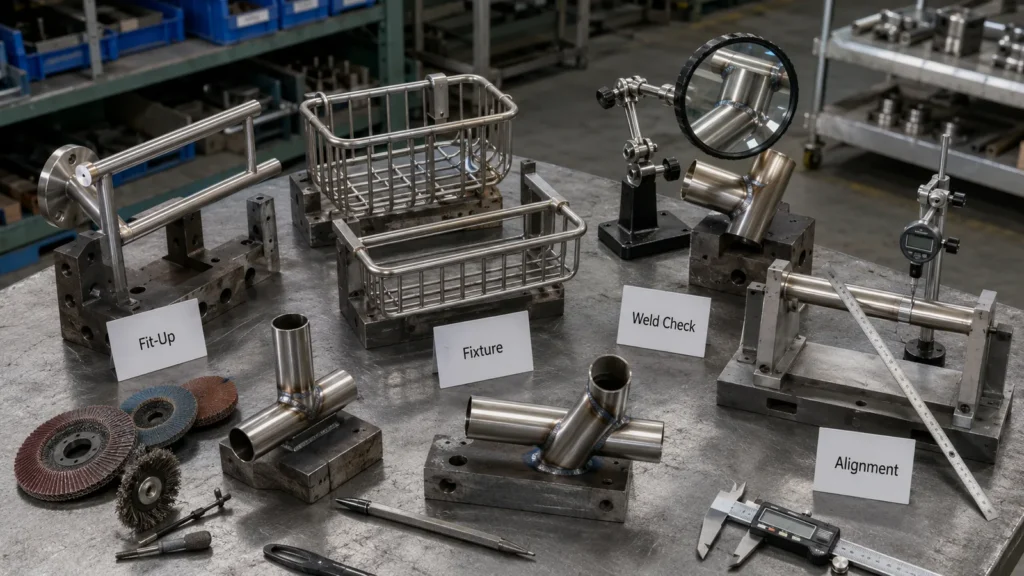
The suitable welding method depends on joint geometry, material, thickness, appearance target and production plan. Resistance welding, laser welding and TIG welding can all be useful in bathroom and home storage hardware, but each process serves different joint conditions.
Resistance welding is often suitable for wire intersections and overlapping metal contact points. In wire basket welding, controlled contact and fixture positioning help maintain wire spacing and basket geometry. Buyers should inspect whether joints are located consistently and whether the basket remains square after welding.
Laser welding can support concentrated heat input and neat visible joints when part fit-up and joint design are suitable. A laser welding towel rack project still requires accurate component preparation and alignment. The process name does not compensate for a gap, mismatched parts or a joint that was not designed for the product structure.
TIG welding can be useful for tube, bracket and sheet connections that need controlled manual welding and practical access around the joint. For TIG welding bathroom accessories, buyers should review consistency around corners, heat discoloration where relevant, grinding and polishing, and whether the finished joint matches the approved appearance.
| Welding Method | Typical Bathroom Hardware Use | Buyer Review Points |
|---|---|---|
| Resistance welding | Wire intersections, basket frames and overlapping contact points | Joint position, wire spacing, contact consistency and frame distortion |
| Laser welding | Suitable tube, bracket or sheet joints with controlled fit-up | Part gap, joint continuity, visible appearance and heat distortion |
| TIG welding | Tube-to-bracket, sheet and accessible frame connections | Weld consistency, corner access, discoloration, grinding and polishing |
| Tack plus final welding | Frames that need geometry held before completed joints | Fixture location, tack position, weld sequence and final squareness |
The table is a sourcing guide, not a fixed engineering specification. The final method should be reviewed against the buyer’s drawing, sample, material, finish and project-specific performance requirements.
How Do Joint Design and Fixtures Affect Welding Results?
Joint design and fixtures determine whether parts meet in the correct position before welding starts. A welding process cannot reliably correct components that are cut, bent or located incorrectly. Clear contact surfaces, practical welding access and stable part location make consistent production easier.
A fixture, also called a jig, holds tubes, wires, brackets or sheets during tack welding and final welding. It can control spacing, angles and reference points, but it must match the approved design. Wear, debris, loose stops or incorrect loading can introduce variation even when the same fixture is used every day.
For a towel rack, critical points may include bracket spacing, bar parallelism and the angle between the wall plate and frame. For a shower caddy, the basket rim, vertical frame and mounting hooks must remain aligned. For a wire basket, wire spacing and corner geometry influence both appearance and how the product fits other components.
Weld sequence also matters because heat can pull a frame out of square. Tack welds can hold the structure before final joints are completed, and alternating weld positions may help control distortion for suitable designs. The exact sequence varies by material and structure and should be confirmed during sample development.
Buyers should mark critical dimensions on the drawing and record how they are measured. Fixture photos can help explain production planning, but finished-part measurements are still necessary. The real acceptance target is the product after welding and surface finishing, not the empty fixture.
What Welding Defects Should Importers Check on Samples?
Importers should check samples for joint location, incomplete contact, visible gaps, excessive spatter, pits, cracks, sharp edges, distortion and inconsistent grinding. The review should include visible and hidden areas because wall brackets, tube ends and basket corners may contain risks that catalog photos do not show.
A buyer should not label every surface mark as a welding defect. Some appearance changes may come from grinding, polishing, coating preparation, handling or packaging. The inspection should identify the process stage where the issue begins so the supplier can correct the right operation.
Use normal lighting and angled lighting to review visible joints. Check the product from the customer-facing direction and from installation angles. Use a suitable inspection method to identify rough areas without creating a safety risk. Confirm that grinding has not made a tube or bracket visibly uneven.
Then place the product on a flat reference surface or the intended mounting fixture. Check frame squareness, parallel bars, shelf level and bracket spacing. Welding heat can create a visually neat joint while still pulling the product out of alignment.
For custom bathroom towel rack manufacturing, buyers should compare the bar, brackets, wall plates and mounting holes as one system. A small shift at a welded bracket can create installation difficulty even if the joint itself looks acceptable.
How Should Buyers Approve a Welded Sample?
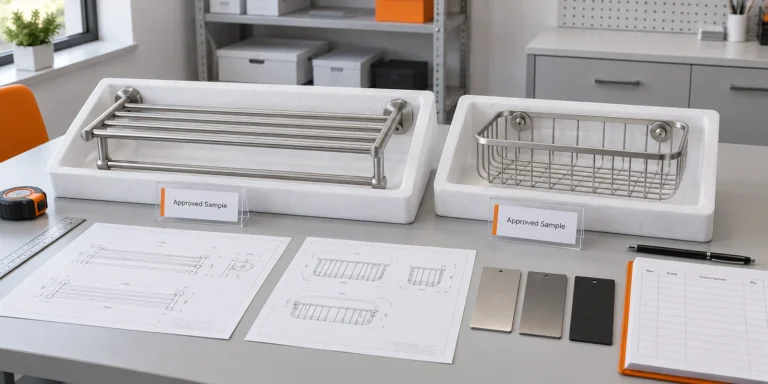
A welded sample should be approved through a documented review of dimensions, appearance, alignment, finish and project-specific use. Keep photos of critical joints and record which surfaces are cosmetic. If the buyer signs off only on the overall shape, later discussions about grinding marks or weld visibility may become subjective.
Buyer checklist for welded bathroom hardware samples:
- Confirm the material, tube size, wire diameter and sheet thickness assumptions.
- Compare overall dimensions and critical joint locations with the confirmed drawing.
- Check whether frames, bars, shelves and brackets remain square and parallel.
- Inspect resistance, laser or TIG welded areas under normal and angled light.
- Review visible gaps, spatter, pits, rough grinding and sharp edges.
- Confirm mounting holes, wall plates, screws and brackets fit together correctly.
- Check the surface finish around welds, corners and hidden contact points.
- Repeat assembly for knock-down products and inspect connector movement.
- Define any project-specific functional check before bulk production.
- Approve packaging protection for finished joints and protruding parts.
Do not publish an exact load-capacity or durability claim unless the project has documented evidence and an agreed test method. For sourcing control, it is safer to define how the sample will be checked, where force will be applied and what result requires investigation.
Keep one approved sample when possible. The physical sample provides a practical reference for joint appearance, grinding level, frame alignment and finish after production starts.
How Do Grinding, Polishing and Coating Affect Weld Quality?
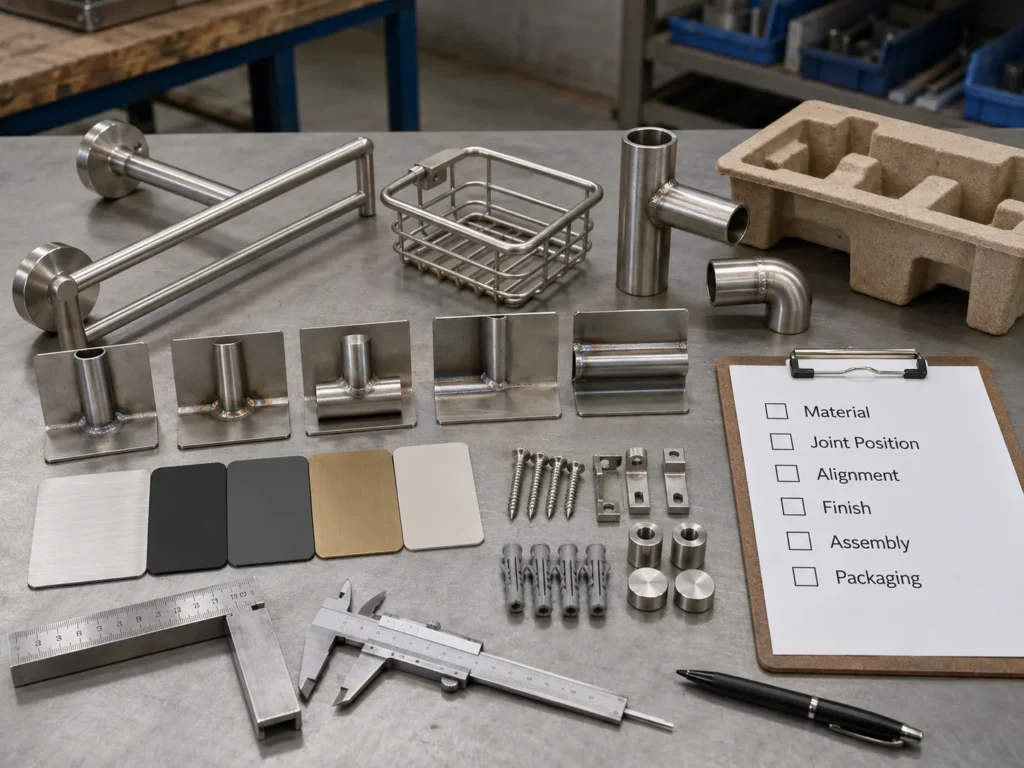
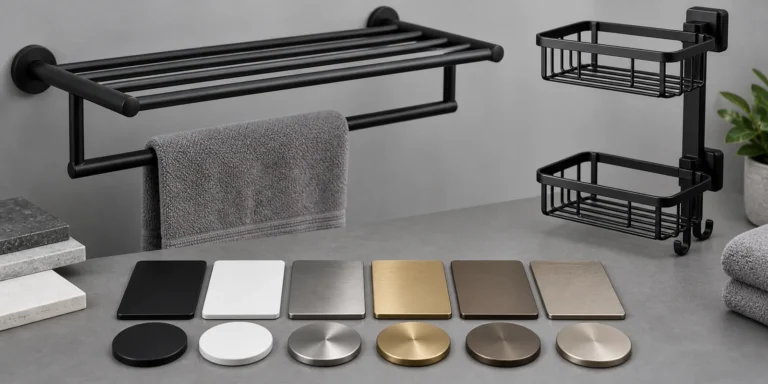
Grinding, polishing and coating affect how a welded joint looks and how well the surrounding surface is protected. A structurally acceptable joint can still create a retail complaint if grinding is uneven, polishing directions do not match or powder coating leaves weak coverage around corners.
Grinding should remove unwanted protrusions without thinning or flattening nearby parts beyond the approved appearance. For brushed or polished stainless steel products, the repaired area should be reviewed together with the surrounding finish. Color and texture differences may become more visible after cleaning or under retail lighting.
For powder-coated products, the welded frame normally moves through surface preparation and coating after fabrication. Buyers should inspect weld joints, corners, overlaps and hidden edges for coating coverage. Spatter or rough weld residue can show through the final coating and create both appearance and handling concerns.
Packaging is the final part of the finish-control chain. Metal components, mounting screws or adjacent racks can rub against a welded corner during transport. Part separation, protective sleeves and carton support should be reviewed with the finished sample so acceptable factory output arrives in the same condition.
For welded baskets and organizers, buyers can review Koitor’s custom metal storage basket production capabilities.
How Can Koitor Control Welding in Small-Batch OEM Projects?
Koitor Hardware can review product drawings or physical samples, identify important welding points, discuss joint appearance and prepare samples before small-batch production. As a family-owned custom metal hardware factory, Koitor focuses on practical communication for towel racks, shower caddies, wire baskets, tissue holders and related storage products.
The development discussion can cover material, structure, joint access, resistance welding, laser welding, TIG welding, grinding, polishing, powder coating, assembly and packaging. The selected process depends on the product rather than a marketing preference for one welding technology.
MOQ can start from 100 pieces depending on product structure, material, finish and packaging. Samples usually take 5-7 working days after the main details are confirmed. Bulk production usually takes 4-6 weeks depending on quantity, complexity, material availability, finishing and packaging. These ranges should be confirmed for each project.
For bathroom hardware welding quality, buyers can help the factory by sending a drawing with critical dimensions, close photos of an existing sample, notes about cosmetic surfaces, the preferred finish and any known installation concern. This information supports a more useful manufacturability review before quotation.
During production, critical dimensions and visible weld areas can be checked against the approved sample. If a problem appears, separating joint suitability concerns, dimensional distortion, surface finishing and packaging damage helps both sides identify the responsible process stage.
More practical sourcing and manufacturing articles are available through Koitor resources.
Frequently Asked Questions
Is laser welding always better for bathroom hardware?
No. Laser welding can suit specific joints and appearance targets, but part fit-up, access, material and structure still matter. Resistance welding or TIG welding may be more practical for other components.
What should buyers check on wire basket welds?
Check joint location, wire spacing, basket squareness, visible spatter, sharp points and surface-finish coverage. Compare the finished basket with the approved sample rather than reviewing isolated welds only.
Can grinding hide a welding problem?
Grinding changes appearance but does not prove the underlying joint is suitable. Buyers should review joint design, welding process, alignment and any project-specific functional checks before approving the cosmetic finish.
Why do welded frames become distorted?
Heat, part fit-up, fixture position and welding sequence can move the frame during fabrication. Critical dimensions should be checked after welding and again after finishing when relevant.
What information should an importer send for welding review?
Send the drawing or physical sample, material assumption, dimensions, finish target, cosmetic-surface notes, installation details, packaging concept and expected order quantity.
Work With Koitor Hardware
Need Help Reviewing Bathroom Hardware Welding Requirements?
Send Koitor your drawing, sample, joint photos, dimensions, finish requirement, packaging idea and expected quantity. Our team can review welding access, frame alignment, finishing and small-batch production options before quotation.
OEM / PRIVATE LABEL
Turn this sourcing guide into a product brief
Share your target product, size, finish, order quantity and packaging requirements. Your team receives a practical manufacturability review before quotation.
 English
  Español
  Português
  Français
  Deutsch
  العربية