
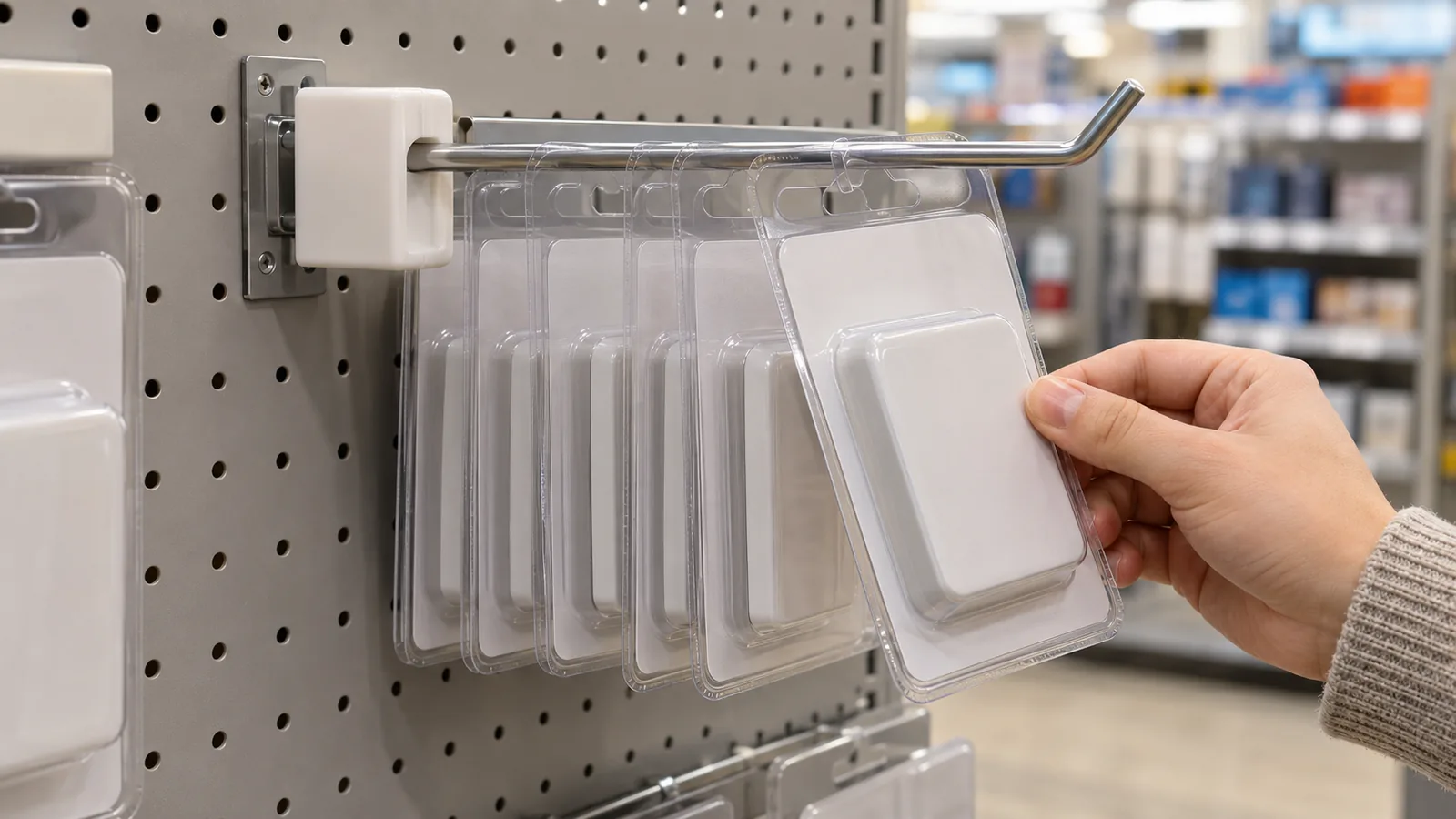
A buyer evaluating anti sweep retail hooks should compare the exact package, shopper access action, staff refill routine, mounting adapter and complete module. A hook selected only by length may leave the way merchandise is released, replenished and serviced undefined. Different products can require different user actions and different purchased components, even when a retailer describes them with a similar category name.
This guide is for retail-fixture importers, hardware and housewares distributors, brand merchandising teams, and private-label product managers. It is a procurement framework, not an operating or security-bypass guide. Follow the exact supplier instructions for the chosen model. This article does not establish that a hook prevents theft, reduces shrink, improves sales, or satisfies any security requirement. Those claims require suitable evidence from the responsible specialist and the retailer’s own assessment. For buyers assessing anti sweep retail hooks, the controlling record is the approved configuration, supporting evidence, and named approval owner.
Distinguish Open Hooks From Controlled-Release Configurations
Start by identifying the operating concept the buyer is actually considering. An open hook offers direct access according to its design. A controlled-release hook may require a defined shopper action and may provide a distinct process for staff replenishment. Some product families may also offer variants with timed or electronic functions. These are different scopes and should not be blended into a single product claim.
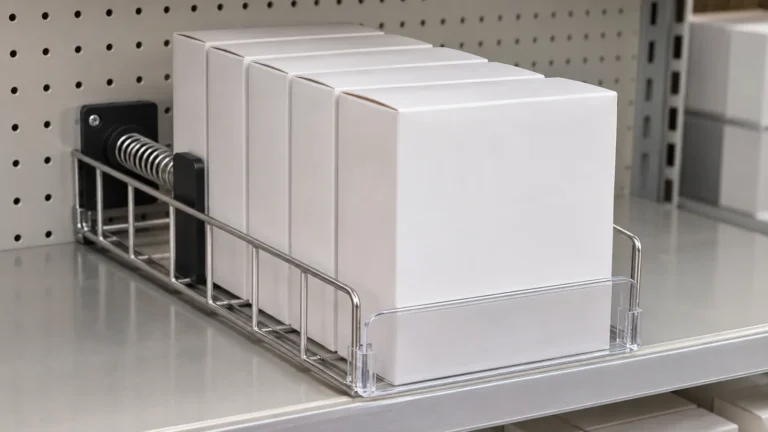
Primary manufacturer pages reviewed for this topic describe different hardware architectures. Siffron identifies a steel hook, bracket and adapter alongside a polycarbonate hood, and distinguishes spiral, timed-lockout and electronic-alert variants. HL Display describes a shopper turning action and a separate staff refill routine, along with hood variants and mounting adapters for certain fixtures. Those statements apply to the suppliers’ named products; they do not establish an effectiveness ranking, independent field performance or compatibility with every fixture. See the makers’ Siffron spiral hook information and HL Display ASW spiral hook page. Obtain current model documentation before using operational details.
A buyer’s RFQ should name:
- The supplier, model and revision.
- The exact hook, bracket, adapter, hood or specialist module included.
- Whether the product is mechanical or includes an electronic component.
- The actual package SKU and hanging feature.
- The shopper action the maker documents for that model.
- The staff refill and service procedure from current instructions.
- The fixture or panel system to which it is being mounted.
- Parts and services included or excluded.
- Any security claim the retailer expects to assess, with a named evidence owner.
Do not choose a product based on “anti-sweep” wording alone. That phrase may be a market category or supplier description; it is not proof of a tested result. Ask the maker what the mechanism is intended to do and what evidence it provides. If the retailer’s requirement is specific, such as limiting access to one item at a time, request model- and package-specific information. Do not assume that the behavior of one model extends to a different hood, hook or adapter.
Define the Shopper Action and Staff Refill Routine Separately
A shopper-facing access action and an employee refill action are separate parts of the operating model. The buyer should record both using the chosen supplier’s terms and instructions. A model may expect the shopper to interact with a spiral or other release feature, while staff replenishment may use a different access path or require a distinct process. These details are product-specific. Do not invent the number of turns, time delay, force, service tool or sequence.
Ask the supplier to provide its current instructions or demonstration for the exact model. Identify who in the retailer’s organization reviews the shopper interaction and who owns staff training. If a service vendor maintains the fixture, confirm what documentation and parts it needs. The distributor coordinates the information, but should not alter the mechanism or improvise a routine.
An operations review can record:
- Shopper-facing action as documented for this exact model.
- Which package and hanging feature were used in the supplier’s demonstration.
- Staff refill procedure and its source document.
- Whether refill access differs from ordinary shopper access.
- Any separate service, key, tool or purchased module described by the supplier.
- Who approves the workflow for the intended store.
- Which parts are not covered by the quote.
- What remains unverified by a demonstration.
This record should describe the actual buyer’s workflow, not a general consumer instruction. Avoid describing a method that could defeat or tamper with a security feature. If the supplier’s steps are unclear, request the official instructions and keep the product review on hold until the responsible party clarifies them.
The retailer should also consider the staffing and service context. A feature that changes refill work may affect store operations, but the importer should not promise labor savings without evidence. Record the retailer’s own evaluation needs, such as access, replenishment frequency or service responsibility, as buyer requirements. Do not present those considerations as a measured benefit of a product.
Match the Complete Package and Hook Configuration
The package is part of the interface. Its hang hole, header, thickness, width and orientation affect how it sits on the actual hook. A hook drawing or catalog photo cannot establish compatibility with an unlisted package. Nominate the real SKU or a controlled sample and ask the supplier to identify the package configuration it has reviewed.
A package reference can include:
- Brand or buyer SKU and packaging revision.
- Width, thickness and any projecting header from controlled data.
- Hang-hole shape and position.
- Whether one or multiple packages are intended on the hook.
- Package orientation in the display.
- Any hood or front component expected to surround or guide the pack.
- Which face is shopper-facing.
- Whether the sample is a production package or a mock-up.
Review the hook and package together as a visual fit and workflow exercise under supplier instructions. Note if the package is the one in the current drawing, if the hanging feature is correctly engaged, and whether the display arrangement matches the retailer’s plan. Do not invent an acceptance criterion for package progression, release, retention or loading. The supplier should define any technical performance limit for its model and method.
If packaging changes, ask whether the model remains compatible. A revised header card or package thickness can change the relationship even when the product itself is unchanged. A new package should trigger supplier review if the prior compatibility statement does not clearly cover it. The buyer should not assume that a shared brand or similar hang-hole means all package variants are equivalent.
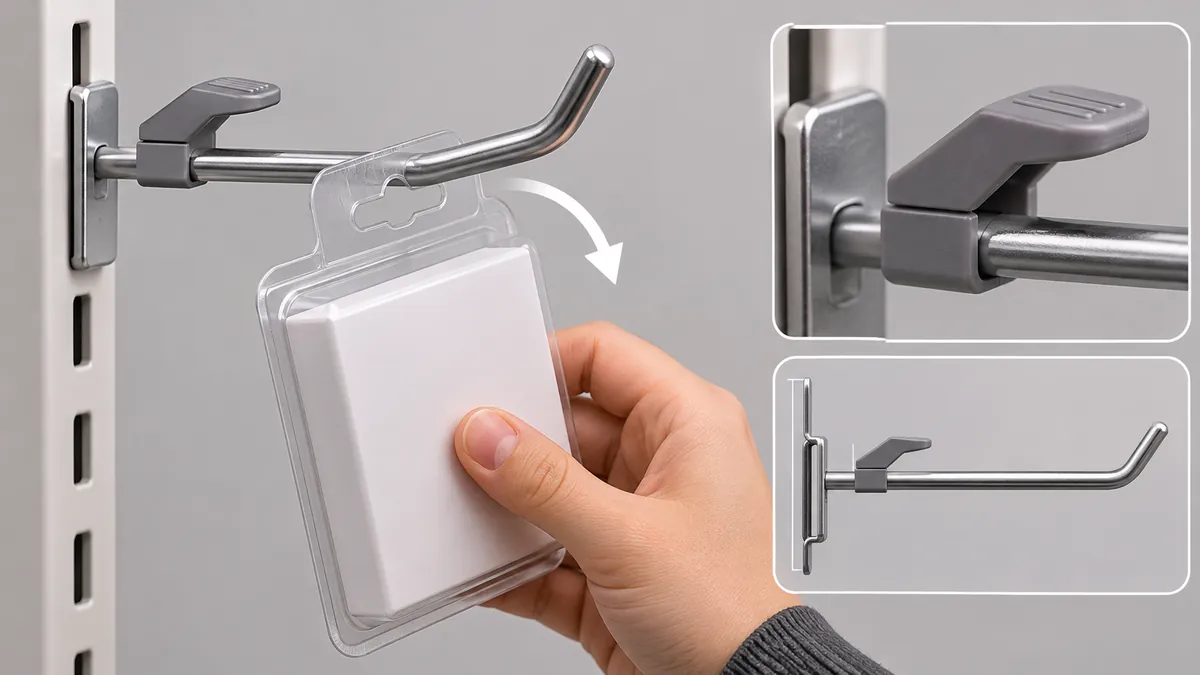
| Configuration to compare | Buyer-approved access and refill scope | Evidence to retain |
|---|---|---|
| Open hook | Direct access under the selected model’s documented arrangement | Exact hook, bracket and package pairing; supplier instructions |
| Mechanical controlled-release hook | The maker’s specified shopper action and separate staff refill path | Model-specific instructions and a demonstration using the actual package |
| Hooded or specialist-module variant | The additional hood, adapter, timed or electronic component included in that quoted model | Exact component list, operating documentation and named security-evidence owner |
These labels describe purchasing configurations, not a performance ranking. Ask the supplier to confirm which parts and behaviors apply to the exact quoted model; the table does not establish security effectiveness or fixture compatibility.
Confirm the Adapter, Bracket, and Specialist Module Scope
A complete retail display hook may include a metal hook, bracket, hood, adapter and other specialist elements. The package may also depend on an existing pegboard, slatwall, gridwall or another display fixture. Confirm each part and the mounting interface in the quotation. A supplier’s adapter for a named fixture is not universal proof of fit with other panels or rails.
The Siffron and HL Display pages list adapters and model-specific mounting details. Those details support asking for an exact adapter reference; they do not define a common industry standard. Ask the supplier which host fixture or panel the quoted adapter is designed for. If the retailer uses a different fixture, obtain confirmation from the responsible parties before releasing the order.
The buyer should keep separate:
- Metal hook and bracket.
- Hood or cover, including the responsible component supplier.
- Adapter and its named host-fixture interface.
- Any timed or electronic module and its control/service scope.
- Package reference and operating instructions.
- Retailer-provided fixture and installation responsibility.
- Replacement parts and service supplier.
Koitor’s verified manufacturing capability includes metal forming, joints, finishing, assembly and drawing/sample review. The research pack does not establish a current controlled-release retail hook, precision security mechanism, polymer hood molding, lock, electronics, security engineering, patent license or certification. Buyers should not imply Koitor provides or can reproduce a complete mechanism. Any metal-component inquiry should be qualified against confirmed capabilities and purchased-part responsibilities.
A responsibility matrix can prevent a metal frame or adapter supplier from being assigned security performance it does not own. Name the specialist mechanism maker, retailer, installer, service contractor and brand owner where relevant. Each party should confirm the portion it supplies and supports. If the complete kit is assembled by one party from bought-in modules, ask who controls substitution and who is responsible for model-level documentation.
Review Refill, Service, and Display States With the Supplier
A controlled-release fixture should be reviewed in the states relevant to the retailer’s process, using the exact supplier instructions. The buyer can observe the package in the intended display position, the supplier-demonstrated shopper access behavior, and the staff refill or service procedure. Do not test an improvised bypass or alter the hardware.
A buyer record may distinguish:
- Empty fixture with the quoted hook, adapter and hood components.
- Fixture with the nominated package arrangement.
- Shopper-facing access demonstration performed by the supplier.
- Staff refill demonstration performed according to current instructions.
- Service or replacement-part scope, if the supplier identifies one.
- The retailer fixture or panel used in the review.
- Any conditions not represented, such as a different package or mounting system.
- Open questions and the party responsible for answering them.
The demonstration is a bounded observation. It does not prove loss-prevention effectiveness, resist all attempts to remove goods, reduce shrink, prevent damage, establish safe loading or certify the store installation. The research sources are manufacturer product descriptions; they are not independent field trials or quantified tests. Do not use phrases such as “theft-proof,” “guaranteed anti-theft,” or “reduces loss by X percent” without exact, credible evidence and the retailer’s approval.
If effectiveness is a requirement, separate the product-fit review from any security assessment. The security owner should define the intended risk scenario and evidence needed. The fixture supplier should identify what its product documentation does and does not establish. A buyer’s sample interaction can inform usability questions, but it is not a controlled test of theft deterrence.
Build a SKU, Adapter, and Service Matrix
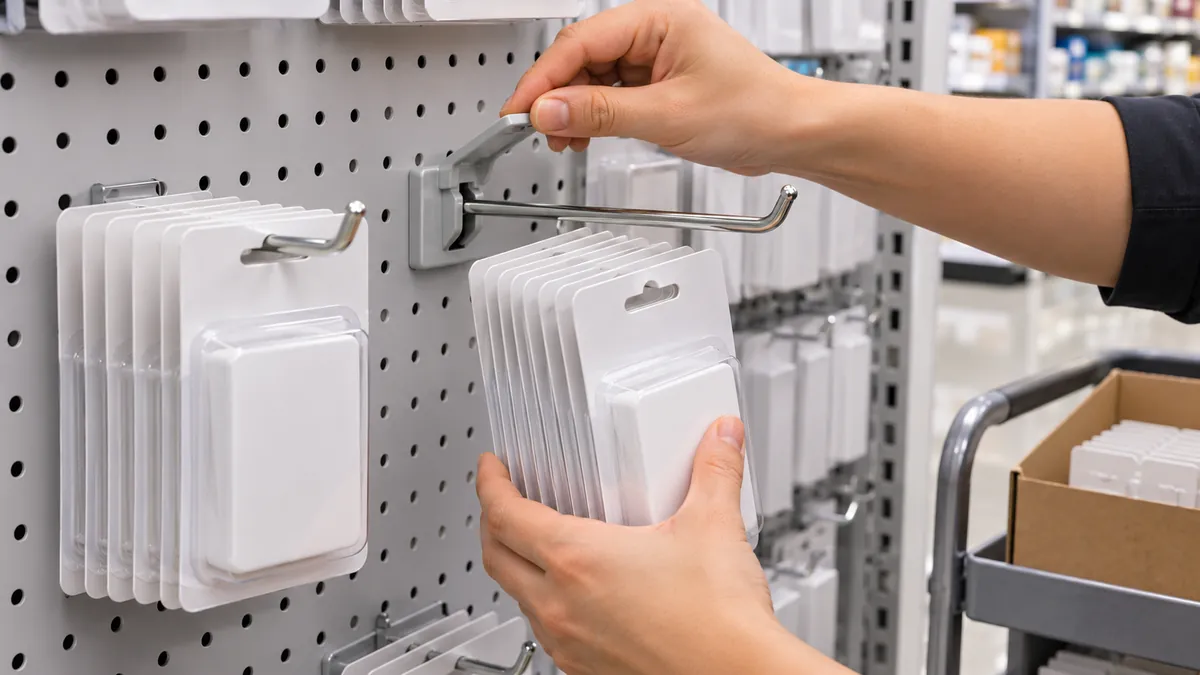
Retailers may operate different wall systems, product packages or refill processes. A distributor should create one row for each approved combination rather than a broad “fits retail hooks” statement. Include the hook model, adapter, package reference, shopper action, staff refill instructions and any service component. Mark an unknown combination as pending.
The matrix should include:
- Retailer fixture or panel reference.
- Hook, bracket, hood and adapter model numbers.
- Package SKU and revision.
- Shopper-facing action as documented by the supplier.
- Staff refill and service procedure source.
- Parts supplied and excluded.
- Electronic module or service dependency, if applicable.
- Approved product claims and their sources.
- Review date and change triggers.
- Parties responsible for installation, maintenance and security evaluation.
A changed package, adapter, host fixture, hood or electronic component can alter the approved configuration. Ask the supplier which changes require a new review. Keep the instructions and product page linked to the same revision. If an adapter is replaced, do not assume the old host-fixture approval carries over.
The comparison should be operational as well as dimensional. Two hooks with a similar length can differ in shopper action, refill process, mounting interface and service responsibility. A buyer should compare those facts without treating one architecture as universally more effective. If the retailer has not selected an operating routine, hold the SKU decision until the customer or responsible operations party clarifies the requirement.
Scope a retailer pilot without overstating the result
A retailer may want to assess whether a proposed hook fits its merchandising and replenishment process. Define the pilot’s scope before it begins: the store or fixture reference, hook model, package SKU, adapter, staff instructions and review owner. Keep the pilot limited to approved operations and the supplier’s current instructions. Do not ask store staff to alter a module or experiment with a security feature.
An operations-focused pilot can record whether staff received the correct parts and instructions, whether the nominated package was installed as specified, whether the refill process was understood, and whether any service or replacement question arose. Those notes are useful for procurement and training. They are not a measurement of theft reduction or evidence that the product prevents unauthorized access. If the retailer needs a security assessment, route it to the designated security owner and use a method appropriate to that objective.
Pilot records should identify the sample dates, locations, staff roles and product revisions, while minimizing unnecessary collection of customer information. If a package or fixture changes during the pilot, note it as a different configuration. Do not combine results from different adapters or hook models under one product name unless the retailer and supplier establish that the evidence applies to each.
At the end of the pilot, the buyer can separate three decisions: whether the package and adapter fit; whether the store can follow the supplier’s refill instructions; and whether a separate security claim has been substantiated. A positive answer to one does not automatically answer the others. If the evidence is incomplete, keep that decision pending rather than converting an operational observation into a product-performance statement.
Include support, service, and replacement parts in the quote
The buying process should identify who answers a store’s question when a hook is damaged, an adapter is lost or the specialist module needs service. Ask the supplier for the component list, replacement references and current support route. If the fixture integrator installs the adapter, record its part number and the installation responsibility. If an electronic variant is being considered, identify who supplies and supports its electronic parts without assuming those services are included in the mechanical-hook quote.
The product record should distinguish included hardware from retailer-provided fixtures, optional adapters, specialist modules and service items. A sample display may include a part that is absent from a production quotation. Compare the sample BOM, purchase order, carton contents and product listing before release. If a supplier proposes an equivalent component, require its written confirmation that the exact model and host fixture remain in scope.
A service matrix can list the hook model, adapter, host fixture, package type, replacement parts, document revision and support contact. It can also state which issues must be escalated to the retailer’s security or facilities owner. This keeps a distributor from trying to resolve a technical or security concern through an undocumented workaround. If a replacement changes the hood, bracket or release module, treat it as a new configuration until the supplier confirms the earlier approval still applies.
Keep Security Claims Separate From Usability Observations
A product can demonstrate an access action and still lack evidence for a broad security outcome. A sample review can describe whether the supplier’s documented action was demonstrated with the nominated package. It cannot establish how often a particular event will occur in a store, how much loss might change, or how a fixture compares with another approach.
Claim substantiation should identify:
- Exact hook model and revision.
- Exact package and adapter configuration.
- The specific statement being made.
- The source and evidence for that statement.
- Relevant conditions and limitations.
- Which party approved the claim.
- Whether the evidence is product documentation, a controlled test, a retailer pilot or an independent study.
Do not promote operating features as a proven reduction in theft or shrink unless the evidence supports that exact inference. Do not reuse one model’s timed or electronic feature claim for a mechanical spiral hook. Do not imply that a hood, bracket or adapter changes performance unless the responsible supplier documents it. Any product page should accurately separate user instructions, component descriptions and outcome claims.
Retail usability feedback can be valuable. Staff can report whether an approved refill routine is practical, and a retailer can assess whether a package is suitable for the display. Label that information as a pilot observation and avoid presenting it as a universal consumer result. Performance claims require their own evidence pathway.
Reconcile the product page with the approved model
Before a listing is published, compare its name, image, feature bullets and instructions against the supplier’s model reference. Remove a timed or electronic feature from copy if the selected SKU is a different mechanical variant. Make clear whether the adapter or specialist module is included, and avoid using a generic security badge that implies an independently verified result. If the package image shows a different hang feature or hood, update it before ordering. A consistent product page helps the retailer identify the item it actually received and gives customer support a controlled reference for model-specific questions.
When the supplier revises a model, ask for a change summary and determine which drawings, adapters, packages and operating documents remain valid. Keep the old and new references distinct in the warehouse and product information. This prevents a later substitute from inheriting an approval that was made for a different module.
Buyer Questions Before Ordering
Does “anti-sweep” prove a hook prevents theft? No. It is not independent evidence of effectiveness. Request the exact supplier documentation and keep any security claim tied to its substantiation.
Are all spiral hooks operated the same way? No. Operation is model-specific. Use the current instructions for the exact product and do not transfer a routine across variants.
Does one adapter fit every pegboard, slatwall or grid fixture? No. Confirm the named host-fixture interface and adapter reference with the supplier.
Can a sample demonstrate refill access? It can show the supplier’s demonstrated procedure for that model and package. It does not prove security effectiveness or every staff workflow.
Does a metal hook supplier necessarily make the hood or electronic module? No. Identify each component supplier and its responsibilities in the BOM.
Can Koitor be assumed to supply a complete controlled-release hook? No. Current specialist mechanism, hood and security-system capabilities are unconfirmed. Any adjacent metal-component request requires scope review.
A Buyer-Ready Access and Refill Approval
Before purchase, identify the complete hook model and adapter, nominate the package, ask the supplier for its current shopper and staff instructions, and review the actual package and fixture under that guidance. Record the refill and service scope, exclusions and change triggers. Keep any security-effectiveness question with the retailer’s security owner and the responsible evidence source; do not infer a security result from a successful sample demonstration.
This anti sweep retail hooks worksheet gives the buyer a way to compare operating scope and package fit while avoiding unsupported claims. It does not rate loss-prevention performance. Koitor’s OEM home-storage hardware information describes its confirmed metal-hardware focus. A buyer with a related metal hook or bracket drawing can send the exact scope through Koitor’s contact page for capability review; current controlled-release mechanisms, polymer hoods and electronics are not confirmed products.
Work With Koitor Hardware
Discuss an Adjacent Metal Hardware Scope
Koitor’s confirmed focus is bathroom and home-storage metal hardware. For an adjacent product, share a controlled drawing, representative sample and any bought-in component scope so the team can assess whether the request fits its confirmed capabilities. This review does not imply that the complete product is currently manufactured.
OEM / PRIVATE LABEL
Turn this sourcing guide into a product brief
Share your target product, size, finish, order quantity and packaging requirements. Your team receives a practical manufacturability review before quotation.
 English
 Español
 Português
 Français
 Deutsch
 العربية