

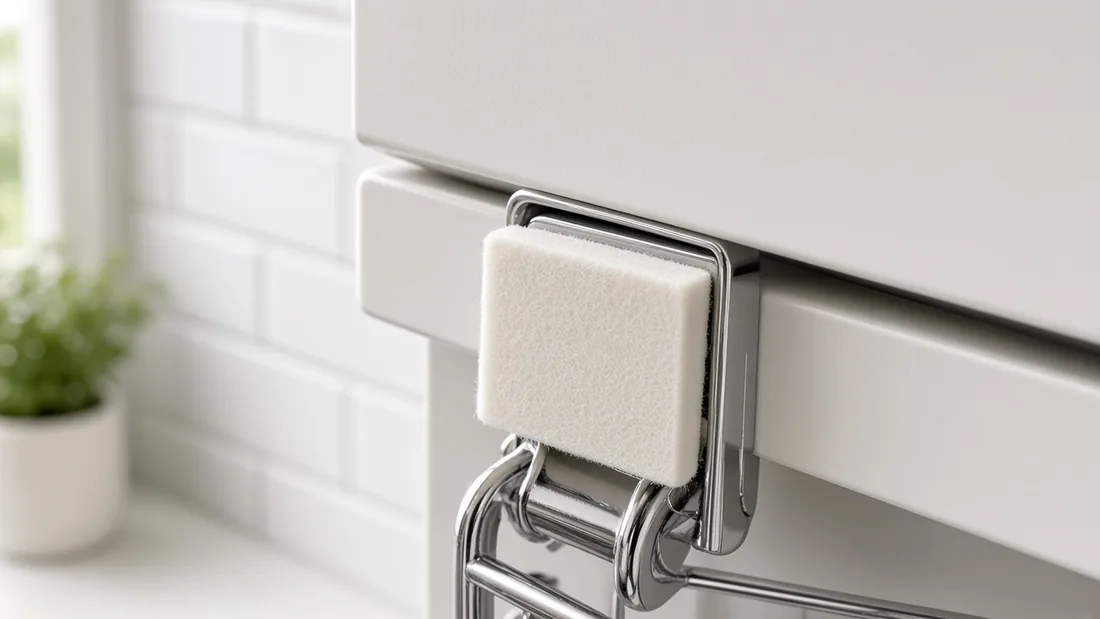
Under cabinet wire basket cabinet face scratch pads should protect painted or otherwise finished cabinet faces at the clip or hook contact points, without reopening an already approved clip throat. Importers who specify a clip-on basket and forget the pad will discover paint rub after a few weeks of loading, even when the clip still holds.
This page owns the pad at the cabinet-face contact: location, material intent, retention on the clip, and how a painted face is checked. It does not reopen clip-throat geometry or retention of the basket on the cabinet rail.
A live neighbor already covers under-cabinet basket clip fit; it is not in the internal-link file used here and is not hyperlinked. Keep that clip-fit standard sealed, and add pads as a contact-protection layer unless a documented change says the throat must move.
This is not a slide or pull-out basket rail file, and it is not a dish-rack foot-pad file.
Pull-out wire basket rail-width tolerance remains the slide-basket neighbor. Over-cabinet-door storage rack specification is useful when a different hanging contact exists on a door, not as a substitute for under-cabinet clip pads. Custom metal storage basket manufacturing and custom kitchen storage rack manufacturing are the general factory conversations. Shore hardness for rubber hardware pads is the method-family neighbor if a project uses a hardness number; this page does not publish a Koitor hardness value.
Where should pads sit, and what must they not change?
Pads should sit on the faces of the clip or hook that actually touch the cabinet front or the cabinet underside at the contact line. If a basket also kisses a door or a finished edge in normal use, say whether that second contact needs a pad. Do not guess; look at the installed geometry.
The pad stack should not quietly thicken the throat so an approved clip no longer fits the cabinet rail or the door thickness it was approved on. If a pad changes fit, stop and treat that as a clip-fit revision, not as a silent pad upgrade.
A conceptual clip-on under-cabinet basket is the product form in this file. Do not treat a sliding under-sink basket as the same contact problem. Those two products touch cabinets in different ways.
How should pad fit, retention, and face protection be frozen?
Write how the pad is held—molded onto the clip, pressed into a pocket, or adhered—and how it is checked after a practical load and after handling in the carton. A pad that stays in the bag or peels after one week is not protecting the face.
Write the face-protection intent in practical terms: the pad should prevent metal-to-paint rub at the named contacts under normal loading. Do not invent a scratch-proof claim or a hardness number as a factory standard. If a project uses Shore hardness, treat ASTM D2240 as a method family and put the number only in the project file after it is actually chosen.
| Pad decision | What to freeze | What often goes wrong | How to check it |
|---|---|---|---|
| Contact location | Which clip or hook faces touch the painted cabinet, and whether a second contact exists | Pads sit on a visible decorative face and miss the real rub line | Install on a finished sample panel and mark the actual contact |
| Fit versus the sealed clip | Pad thickness and pocket so the approved throat is unchanged, or a formal clip revision is opened | A thicker pad makes a sealed clip too tight or too loose on the rail | Recheck the sealed clip-fit standard after the pad is added; do not reopen it casually |
| Retention on the clip | How the pad is held and whether it must survive pack and first use | Pads fall off in the carton or during the first unload | A handling check and a short practical load, written as a project method |
| Face protection | The intent to prevent metal-to-paint rub at named contacts | A slogan such as scratch-proof, with no contact location | A finished-panel rub check agreed as a project method, not a published factory grade |
| Material notes | Material family and any project hardness or compression notes | A number copied from another product, or a dish-rack foot used as if it were a clip pad | Point hardness questions at the Shore neighbor; do not copy a foot-pad standard onto a clip |
What this file should not reopen
Clip throat, spring-in, and how hard the clip must be to install belong in the clip-fit file. Rail width for a pull-out basket belongs in the rail-width neighbor. Counter feet on a dish rack belong in the foot-pad file, which is a different live topic and is not hyperlinked from here. Use those files; do not rewrite them in a pad paragraph.
What the factory can make and check, and what it cannot promise
A factory can place pads at named contacts, check that the sealed clip fit is still the sealed clip fit, and run a practical retention and panel-rub check written in the project file. It cannot honestly promise that a painted cabinet will never mark, because cabinet paints, loads, and install conditions vary.
Koitor can review pad placement as a family-owned China OEM manufacturer of bathroom and home-storage metal hardware, including kitchen storage baskets. Commercial promises, hardness defaults, and any scratch-proof language stay outside this page.
Buyer checklist for under cabinet wire basket cabinet face scratch pads
Use this list when a clip-on under-cabinet basket is already approved and a pad is being added or confirmed.
- Mark the real cabinet-face contact points on an installed sample, including any second contact.
- Place pads on those contacts, not only on a decorative visible face.
- Confirm the approved clip throat is unchanged, or open a formal clip-fit revision.
- Write how the pad is retained on the clip, and check pack handling plus a practical load.
- Write face-protection intent without a scratch-proof slogan.
- If a hardness number is used, treat it as a project value and use a stated method family such as ASTM D2240; do not invent a Koitor default.
- Do not copy a dish-rack foot-pad standard onto a cabinet clip.
- Do not treat a sliding pull-out basket as the same contact problem.
- Keep over-door hanging contacts in their own specification if that is a different product.
- Re-check pads when the clip, the wire diameter, or the cabinet-panel sample changes.

Paint systems vary. A soft latex on a display cabinet and a harder factory finish on a kitchen door will not mark the same way. The project should name the panel used for the rub check, and should not treat one kitchen photo as universal proof. This is also why this page refuses a general scratch-proof sentence.
Glossy faces show rub earlier than some matte faces, and dark faces show a shiny rub path earlier than some light faces. If you sell into mixed cabinet colors, include at least a dark and a light finished panel in the project check, or say that the check was only done on one panel.
If the clip has a metal edge that can cut a thin pad, the pad design should account for that edge, or the pad will slice and then the metal will touch paint again. An edge that cuts pads is a pad-design issue first; it is not automatically a reason to redesign the sealed throat.
Adhesive-backed pads need a stated surface on the clip—clean bare metal, coated metal, or a pocket—and a stated wait before first load if the project uses one. An adhesive pad stuck to a dusty coated clip in a packing rush will become a field peel. Write the condition, or choose a mechanical hold.
Color of the pad is a retail choice and a hiding choice. A black pad on a black clip may disappear in a photo and still do the work. A natural or grey pad may show dust. Color is not protection. Do not approve a color sample as if it were a rub check.
Temperature in a kitchen, including a pad near a warm under-cabinet light, can change how some materials sit or how an adhesive holds. If the product is likely to sit near a light or a heat source, mention that in the project file. This page does not publish a temperature rating.
A basket that is removed daily will cycle the pad against the paint more often than a basket that stays put. If your listing encourages daily removal, the retention and rub checks should reflect that habit. A stay-put product can use a simpler cycle, and should say so.
Do not add pads only on the units used for photography. Production clips must carry the same pads in the same places. A photo basket with pads and a production basket without them will create a complaint that looks like a quality mystery and is actually a pack or BOM miss.
BOM and effectivity thinking applies when a pad is added to a running product. The first lot that includes pads, and the disposition of unmarked older lots, should be written. Customers who receive both will otherwise think the pad is missing or extra.
If a retailer already approved a clip without pads, adding pads is still a change they may need to see, even when the throat is unchanged. Send a short notice and a photo of the contact, and keep the clip-fit file closed unless the throat actually moved.
Wire diameter and clip width change how a pad sits. A pad too narrow will leave a metal line on each side of the contact. A pad too wide may show around the clip in a way the buyer did not want, or may catch on a cabinet edge. Fit the pad to the clip face that touches, not to a generic rectangle from another SKU.
Corner cabinets and thick rails can create a third contact that a straight-run sample did not show. If you sell a “universal” under-cabinet clip, say which cabinet thicknesses and which face conditions were checked, and do not imply a universal cabinet promise.
Cleaning products used on cabinet faces can change how a mark appears or how a pad stains a painted surface. If a project fears staining, add a stain note as a project test. This article does not claim stain resistance.
Replacement pads, if offered, need a kit identity and a way to seat them on the same clip. A loose bag of pads without a hold method will not restore protection in the field. If you do not offer replacements, do not imply that pads are user-serviceable.
Incoming checks can be simple: pad present at each named contact, pad not torn, clip still matching the sealed fit gauge or the sealed sample. Keep the fit check as a confirmation, not as a new design session.
If a factory proposes a cheaper pad material, rerun retention and the panel-rub check on the production geometry. A material swap is a project change. It is not a courtesy substitution.
Do not specify these pads with a dish-rack foot drawing, even if the rubber looks similar in a bin. Feet sit on a counter under compression; clip pads sit on a painted vertical or underside face and must stay on a moving clip. Shared Shore language, if any, still needs a product-specific value and a product-specific check.
When the contact locations, the unchanged throat, the retention method, and the modest protection intent are written, under cabinet wire basket cabinet face scratch pads can be added to a sealed clip program without reopening the clip. When they are not written, the basket is still a metal edge waiting for a painted door.
A sample panel should be stored with the sealed clip, labeled with the paint type if known and the date of the last rub check. Future lots can then be compared to a real face, not only to a memory of a kitchen visit.
If the basket also includes a front lip or a hook that can swing into a door in some installs, decide whether that is in scope. A pad file that only treats the top clip will not help a lip that ticks a door. Either add a contact, or state that swing contacts are out of scope.
Packaging should not crush or crease the pads. A tight wrap that folds a pad will ship a permanent dent that then marks the paint in a new line. Include a pack look at the pad, not only at the basket form.
If two clip versions exist in a family, do not assume one pad blank fits both. Approve each clip-and-pad pair, or write the shared pad only after both contacts are checked.
Installer instructions should tell the user to keep pads in place and not to peel them for a “tighter metal grip.” Some users will peel pads thinking they increase hold. A one-line warning in the sheet can prevent that, and it belongs in the kit, not only in this article.
Field photos of a marked cabinet should include the clip contact, the pad if still present, and the cabinet finish, so aftersales can tell a missing-pad issue from a wrong-install issue. This is evidence routing, not a warranty promise.
Keep the language modest and locational. Pads at named contacts, throat unchanged, retention checked, face protection as a project method. That is enough to source the part. Anything larger belongs in a test file the project actually funds.
If a cabinet face is freshly painted, say whether the rub check waits for a stated cure time in the project file. A pad checked on an uncured paint will not tell you what a finished kitchen will do, and it may stick in a way a cured face will not.
Metal baskets that also rest a rear wire on a cabinet rail need a look at that rear contact. A front-clip pad will not help a rear wire that rubs a painted rail. Either add a pad or a sleeve at that contact, or state that rear rail contact is out of scope.
When several cabinet thicknesses are sold as compatible, check the pad on the thinnest and the thickest approved faces, still without opening the throat. A pad that bunches on a thick face may be fine, and a pad that hovers short of a thin face is not protecting anything.
Incoming photos from a factory should show the pad on the clip, not only a basket full of kitchen props. Lifestyle shots hide whether the contact is actually covered. Keep one boring close-up in every lot packet.
If a second language sheet is printed, keep the “leave pads in place” line in every language. Users who peel pads are a documented risk, and the warning should travel with the kit, not only with an English engineering file.
A modest end-of-line tug and a look at each named contact will catch missing or folded pads before a shipment leaves. Write that habit into the pack check, and keep it shorter than a laboratory protocol.
If a distributor warehouses baskets in a cold aisle and then ships them to a humid kitchen market, say so in the project notes when an adhesive hold is used. A hold that only passed in a warm packing room may not be the hold that arrives. Mechanical pockets avoid some of that risk, and they still need a pack check.
Sales samples carried in a car or a trade-show case take more knocks than a carton in a container. If sales teams carry loose samples, protect the pads or carry a dedicated sample that is re-checked after the show. A flattened show pad should not become the sealed standard.
When a cabinet maker is also the buyer, ask them for a leftover door skin or a finish chip to use as the project panel. Their finish is the one that matters, and a generic white panel will not represent their door. Store that panel with the sealed clip.
Frequently asked questions
Do pads mean we must redesign the clip throat?
No. The first goal is to add protection without changing the sealed fit. Only open the clip-fit file if the pad actually changes the throat or the install force.
Can we use the same pad as a dish-rack foot?
Not as a copied standard. The contact, the load, and the retention are different. A project may choose a similar material family, but the checks must be written for this clip.
Will these pads make a cabinet scratch-proof?
No, and this page does not allow that claim. They are meant to prevent metal-to-paint rub at named contacts under a practical project check.
How should hardness be written if we want a number?
Use a stated method family such as ASTM D2240, choose a project value, and point at the Shore hardness neighbor for method context. Do not treat a number in this article as a Koitor default.
Is this the same problem as a pull-out slide basket?
No. A pull-out basket has rail and width issues covered in a different neighbor. This file is about clip-on under-cabinet contact pads on painted faces.
What if a customer peels the pads off?
The instruction sheet should say to leave them in place. This page does not promise field behavior, and it does not create a warranty rule.
Work With Koitor Hardware
Need cabinet-face scratch pads reviewed on a clip-on under-cabinet basket, without reopening a sealed clip fit?
Send Koitor the clip photos, the current pad if any, and a note on the cabinet face you care about. Our team can review contact location and retention, and can also discuss the hardware construction and small-batch OEM options.
OEM / PRIVATE LABEL
Turn this sourcing guide into a product brief
Share your target product, size, finish, order quantity and packaging requirements. Your team receives a practical manufacturability review before quotation.


 English
 Español
 Português
 Français
 Deutsch
 العربية