
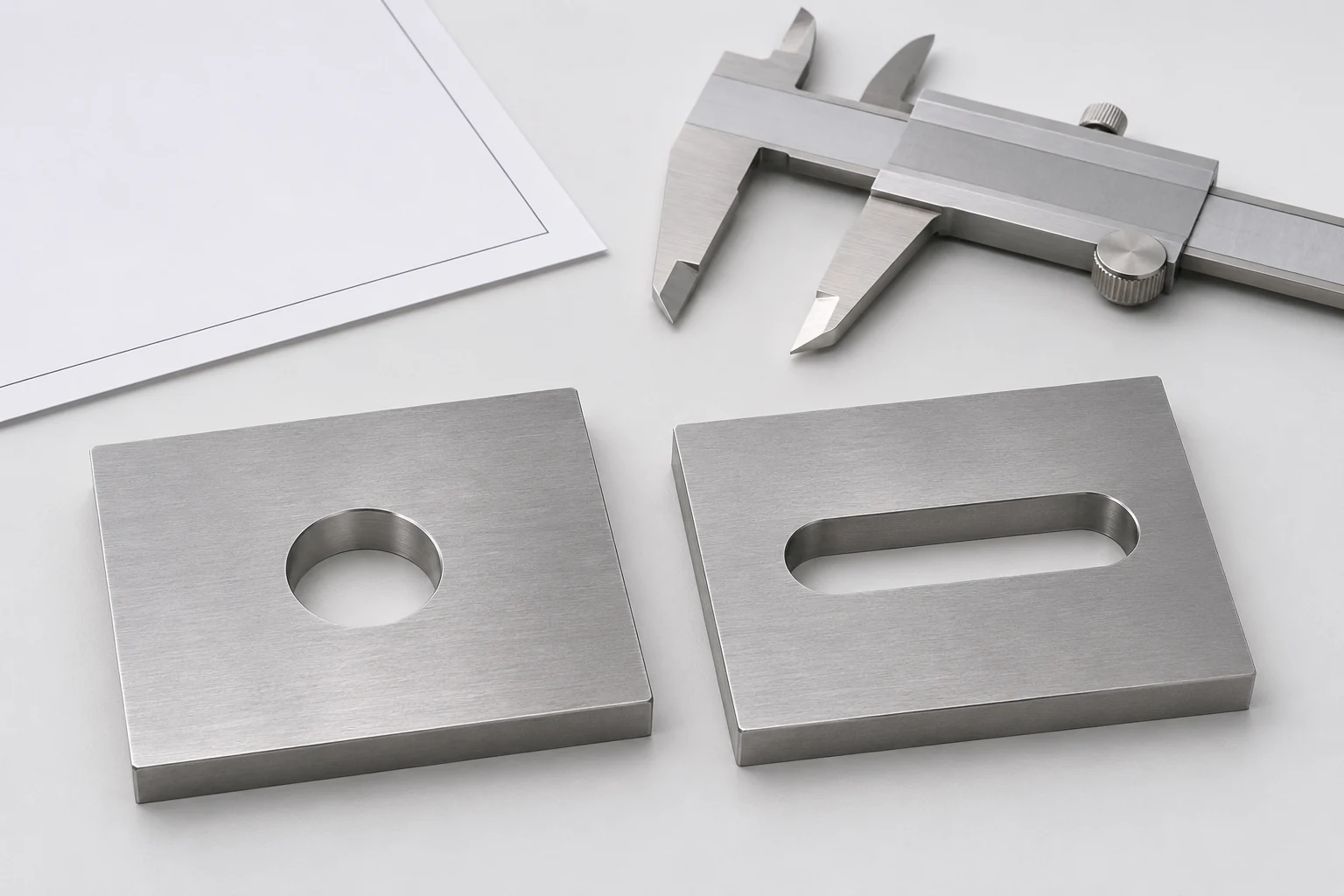
A typical drill press vs mill comparison starts with the intended motion: a drill press generally advances a rotating tool along the spindle axis, while a milling machine is designed for controlled relative feed across a workpiece as well as suitable drilling operations. Buyers should evaluate the machine model, tooling, workholding, feature geometry, and supplier’s documented route together. A table that can be adjusted for setup does not by itself prove that the machine is designed for milling. For a metal bracket or mounting plate, ask how the required hole, slot, datum, and acceptance evidence will be produced and checked.
What Does a Drill Press vs Mill Comparison Actually Compare?
The drill press vs mill comparison is about a machine’s designed cutting tasks and the movement available under cutting load, not merely whether both machines have a vertical spindle or a table. In a typical drill press, a rotating drill enters material along the spindle axis. The workpiece is positioned and held beneath the tool. In a mill, the machine is designed to control the relative movement of cutter and workpiece so that cutting can proceed across a face or along a feature, within the model’s rated configuration.
These descriptions are general. There are combination mill-drill machines and specialized drill presses with additional movement or features. The product name alone cannot resolve the distinction. Buyers should check the manufacturer’s model-specific documentation, intended operations, workholding provisions, and any limits. An adjustable table used to position a part for drilling is not necessarily equivalent to a controlled machining feed for lateral cutting.
The distinction matters when a drawing calls for a round hole, a slot, a flat, a pocket, or a controlled surface. A round hole may be produced by different processes depending on its material, location, tolerance, finish, and production context. A slot can also be made by different routes. The buyer’s task is not to prescribe a machine based only on a sketch; it is to define the feature and ask the supplier to identify the proposed process and how the result will be verified.
| Comparison point | Typical drill press | Milling machine | Buyer question |
|---|---|---|---|
| Common movement during cutting | Tool advances mainly along spindle axis | Designed relative feed may move across the workpiece | What movement does this exact model support under the proposed operation? |
| Example feature | Axial drilled hole | Hole, slot, flat, or other suitable feature, subject to machine and tooling | Which feature and tolerance are on the controlled drawing? |
| Workholding | Work is held under the spindle for drilling | Workholding must support the planned feed and cutting load | How will the part be located and restrained? |
| Evidence | Model documentation and inspection record | Model documentation, process plan, and inspection record | What evidence will identify the actual route and accepted result? |
Rong Fu’s published comparison describes a typical drill press as limited mainly to one axis and a mill-drill as able to cut in multiple directions, while noting that some models combine features. That is useful as an explanation of the general distinction, not as a universal specification for every machine. The buyer should confirm the exact machine and operation rather than extrapolating from a generic label. (Source: Rong Fu, “Should You Get a Drill Press or a Mill Drill Machine?”)
Why Should Importers Check the Feature Before the Machine Name?
A drawing feature expresses a product requirement; a machine label describes equipment. They answer different questions. A supplier might describe a hole as drilled, punched, laser-cut, or machined, but the buyer still needs to confirm the actual result against the drawing and agreed acceptance method. Similarly, calling equipment a “mill-drill” does not prove that every part, cutter, fixture, or requested tolerance is suitable for it.
Begin with the controlled feature definition. Identify the nominal dimensions, location references, any tolerance, material and thickness, cosmetic surface, edge condition, quantity, and whether the feature has a functional mating role. For a mounting plate, the distance between holes or from a slot to an edge can matter as much as the feature’s shape. For an assembled product, a hole’s function might be clearance, fastener location, drainage, or alignment. The drawing should say what must be controlled rather than leaving a buyer or supplier to infer it from a rendering.
Then ask the supplier to describe the process route in terms appropriate to the part. Avoid requiring a named machine where a performance-neutral feature requirement is enough. If a particular process is contractually required, state it explicitly and confirm that the supplier accepts it. If the process may vary, define the result and evidence that must remain consistent. That keeps the discussion anchored to the product and agreed inspection rather than an assumed machine capability.
For procurement, this is also a document-control issue. If a quotation, approved sample, drawing, and production record use different feature descriptions, a later review can become ambiguous. Use one current revision and make sure the quotation or process response refers to it. The goal is not to demand unnecessary machine details; it is to ensure that the supplier understands the feature, the acceptance boundary, and what changes require buyer review.
How Do Feed Motion and Workholding Change the Decision?
Feed motion describes how the tool and workpiece move relative to one another during a cut. A drill press is commonly used for axial drilling, where the tool enters along its spindle axis. A milling machine is designed for operations that use controlled relative feed across a workpiece, in addition to appropriate hole-making tasks. Machine construction, tool holding, table movement, and workholding all contribute to whether a proposed operation is appropriate for a given model.
Workholding is critical because the part must remain located and restrained for the actual cut. A drawing may show a small plate with a slot, but the practical route depends on material, dimensions, part shape, access, required finish, and how the feature relates to other surfaces. The buyer usually does not need to design the fixture. The buyer does need enough information to assess whether the supplier has understood the part, has a suitable process, and can present the agreed verification evidence.
One common misunderstanding is treating an adjustable setup table as proof that a drill press can perform milling. Setup adjustment can place a workpiece under a tool. It does not automatically establish that the equipment, spindle, tool holding, structure, and workholding are designed for the side forces and controlled feed of a milling operation. Follow the machine maker’s instructions and rated use; do not infer permission to perform lateral cutting from the appearance of a table or clamp.
The reverse assumption is also unhelpful: a mill is not automatically required for every hole, nor does its name guarantee the finished part will meet a drawing. The specific machine, tooling, fixture, process plan, operator method, material, and inspection all matter. A robust supplier response identifies the relevant evidence without promising a result that the buyer has not defined. In many sourcing discussions, a clear feature requirement and representative sample review are more useful than a machine-name debate.
How Can Buyers Compare a Round Hole and a Slot?
A round hole and an elongated slot make a useful illustrative comparison because they are visibly different features, but the example does not prescribe the production route. A hole may be drilled, punched, laser-cut, or formed by another suitable process. A slot may be produced by punching, cutting, milling, or a multi-step route. Each choice depends on the part and the approved product requirements. Do not infer that one process is always more accurate, cheaper, stronger, or suitable from the feature shape alone.
The buyer can map the decision in four steps:
- Identify the function. Is the feature for a fastener, adjustment, assembly, drainage, or another purpose? The answer determines which dimensions matter.
- Define the controlled geometry. State the size, location, reference datums, tolerance when required, and relevant edge or cosmetic condition.
- Ask for the proposed route. Have the supplier explain the process at a level that supports the agreed requirement. If the route is flexible, ask what controls the output.
- Agree on evidence. Decide how the feature will be checked, how the sample relates to production, and which record identifies the drawing revision and lot.
This framework prevents two opposite mistakes. One is over-specifying a machine without connecting it to the product need. The other is leaving a functional feature vague and assuming the supplier will know which attribute the buyer will inspect. A measured drawing or an approved sample can help, but a sample alone may not communicate every hidden requirement or revision. Make the acceptance criterion explicit.
For plate features, the process comparison may overlap with the question of laser cutting versus punching. That is a separate process-selection discussion with its own material, design, tooling, volume, and edge considerations. Use the separate process discussion on laser cutting versus punching for that question. This article stays focused on the general feed and machine-design distinction.
What Evidence Should a Supplier Provide?
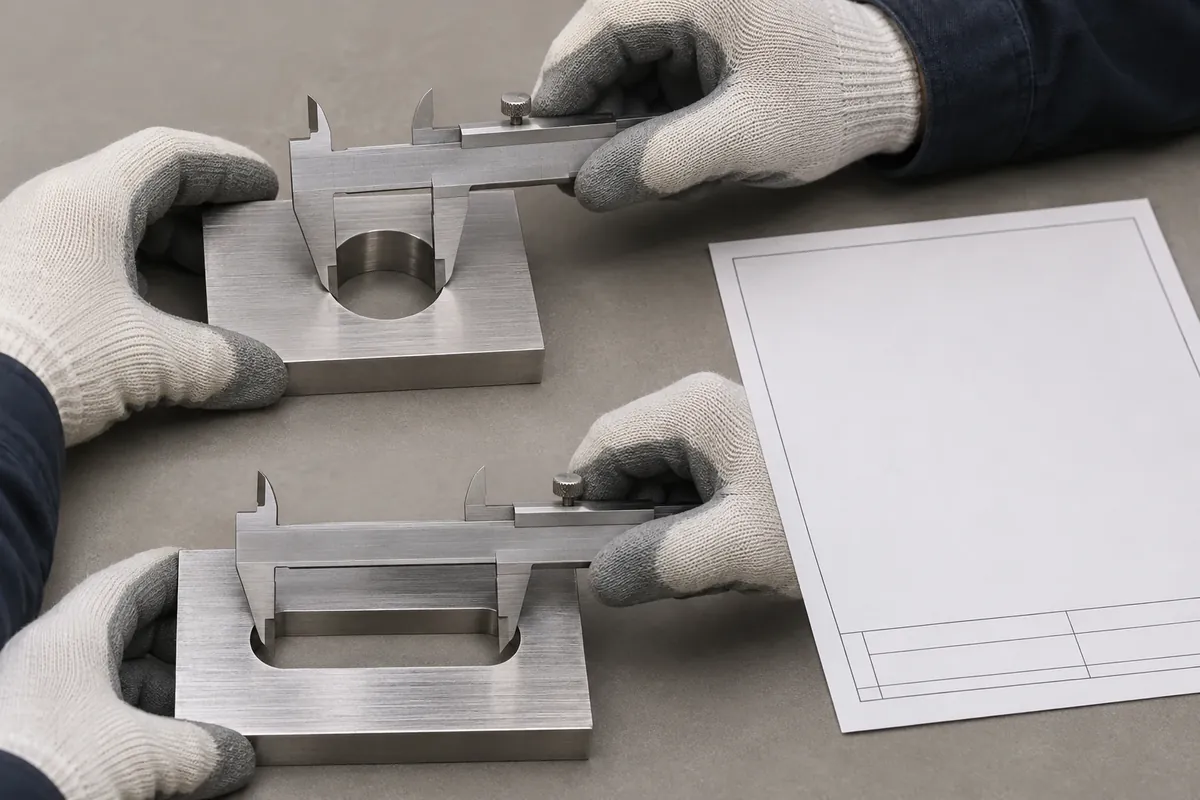
A useful response connects the feature, drawing revision, process route, and inspection evidence. It does not need to disclose sensitive factory details that are irrelevant to acceptance, but it should be specific enough for the buyer to understand who is responsible for the operation and how conformity will be evaluated.
For a quotation or engineering clarification, ask for:
- A reference to the current drawing revision and the relevant feature callout.
- The supplier’s proposed process route, including any outside operation if applicable.
- Confirmation of which dimensions or conditions are critical to fit or function.
- The inspection method or record used for those requirements.
- A statement about whether a sample or tooling change affects the approved route.
- Identification of any assumptions, exclusions, or buyer decisions still required.
Avoid accepting generic statements such as “we can do this” as evidence of a controlled process. At the same time, do not demand an accuracy number or machine capability that is not necessary to the component. Requirements should be proportionate and verifiable. If the feature mates with another component, confirm the interface in the drawing and define the relevant fit or assembly check. If the feature is cosmetic, identify the viewed face and finish expectation so the supplier knows which surface matters.
Buyers can also compare supplier responses using a simple record:
| Review item | Clear response | Follow-up if unclear |
|---|---|---|
| Drawing basis | Revision and feature callout are identified | Which file or revision controls the quote? |
| Process route | Proposed operation and responsible party are stated | Is any operation outsourced or changed by volume? |
| Acceptance | Required dimensions and check method are described | What evidence will be returned with the sample or lot? |
| Change control | Changes to feature or process are reviewable | What triggers reapproval before production? |
A supplier may have a suitable route even if it does not use the buyer’s preferred machine name. Conversely, a named machine does not guarantee a conforming feature. Keep the review focused on the part requirement and the evidence.
What Sourcing Mistakes Create Avoidable Confusion?
Choosing equipment by name alone. A broad label may hide model differences or special configurations. Ask for the actual model and intended operation when machine capability affects the decision.
Treating a movable table as a milling specification. The table’s movement and the machine’s designed cutting task are not the same thing. Do not approve a lateral operation based only on a photograph or adjustable setup.
Prescribing the process before defining the result. A buyer may insist on milling when the drawing only needs a simple hole that another accepted route can produce. That can constrain sourcing without improving product value. If the process itself matters, explain why and place it in the controlled requirement.
Leaving a slot or hole under-defined. A feature without location references, tolerances where needed, edge expectations, or function can be interpreted differently by the buyer, supplier, and inspector.
Using a sample as the complete specification. The sample can show appearance and assembly, but it may not state every dimension, material, hidden interface, or revision. Keep the controlled drawing and sample identification aligned.
Assuming a process label proves quality. “Milled,” “drilled,” or “laser-cut” is not a substitute for inspection evidence. Decide which characteristics matter and how they will be verified.
Ignoring process ownership. A quoted supplier might use an approved subcontractor for a feature. Identify the responsible party and the information that returns with the product, especially where a process or document handoff affects traceability.
These checks are practical procurement controls. They are not a substitute for engineering review where a design has safety-critical, regulated, or specialized requirements. If those apply, use a qualified professional and the responsible manufacturer’s current instructions.
For a repeat order, preserve the accepted baseline as a controlled record. A buyer can note the part number, drawing revision, sample identifier, supplier response, and the specific feature accepted. If the supplier later proposes a different process, evaluate whether that change affects the requirement or inspection evidence. A process change does not automatically mean the product is unacceptable, but it should not be invisible when it changes a buyer-approved condition. Keep decisions tied to the purchase specification and the current drawing rather than informal machine descriptions.
How Should a Small-Batch OEM Factory Discuss a Feature?
A family-owned custom metal hardware factory can support drawing or sample review within its confirmed scope, discuss forming and joining, coordinate finish and assembly requirements, and clarify packaging preparation. That general positioning does not mean Koitor owns a drill press, a mill, or every machining operation mentioned here. The actual route for a project must be confirmed by the responsible supplier and based on the current drawing, material, quantity, and required evidence.
For a small-batch OEM discussion, provide the drawing or representative sample, expected order range, material and finish requirements, mating parts, and the function of the feature. Identify whether the buyer is open to a supplier-proposed route or requires a specified process. Ask which items need formal approval before production and which records are available for sample review. When a feature may be outsourced, clarify the handoff and who checks the finished dimension.
Small-batch flexibility is useful only when scope remains clear. A trial order can expose an ambiguity in a drawing, packaging instruction, or approval record, but it does not automatically validate a different process or later order quantity. If the design changes after sample review—such as moving a slot or changing a mating part—ask the supplier to confirm whether the route, fixture, or inspection method changes. Record the answer against the updated revision.
A useful conversation distinguishes three layers:
- Product requirement: what the finished component must look like, fit, or do.
- Process proposal: how the responsible supplier intends to produce it.
- Acceptance evidence: what will show that the agreed requirement has been met.
Keeping these layers separate helps prevent a process name from becoming an unsupported product promise. It also makes later reorders clearer: the buyer can compare the new order against the approved drawing and evidence rather than relying on an informal description from an earlier conversation.
For more relevant manufacturing context, see a separate cutting-tool reference, which addresses tool categories without deciding which machine a supplier must use. For product-specific scope review, contact Koitor Hardware with the actual drawing or sample.
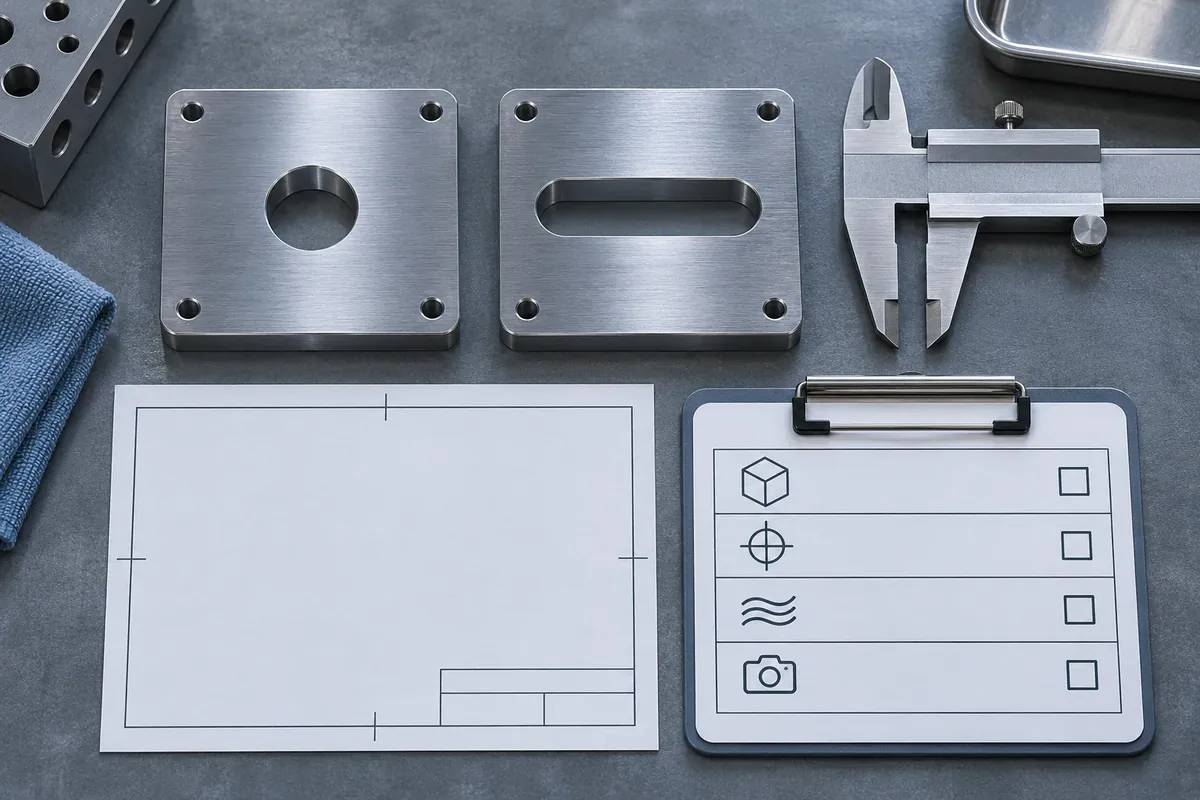
Buyer Checklist Before Requesting a Quotation
- State the feature’s function and the product interface it serves.
- Provide one controlled drawing revision and identify the relevant views.
- Mark hole or slot dimensions, location references, tolerance needs, and cosmetic faces.
- Identify material, thickness, finish, quantity, and expected order pattern.
- Ask the supplier to name its proposed route and the responsible party.
- Confirm whether a process is mandatory or may be proposed by the supplier.
- Agree on the inspection evidence for functional dimensions and visible conditions.
- Identify how sample approval and drawing changes will be recorded.
- Clarify subcontracting or process handoffs when they affect acceptance.
- Keep the approved sample, drawing revision, and quotation scope aligned.
Frequently Asked Questions
Is an adjustable table enough to make a drill press a mill?
No. Table adjustment may position a workpiece for setup, but it does not establish that a particular machine is designed for controlled lateral cutting. Confirm the machine model, manufacturer instructions, intended operation, tooling, and workholding. Do not attempt an operation that the equipment maker does not authorize.
Can a machine combine drilling and milling functions?
Some models are designed as mill-drills or include additional features. The range of suitable operations is model-specific, so check the actual manufacturer documentation and rated use rather than relying on a general name.
Does a mill guarantee a more accurate finished component?
No machine name guarantees a finished result. The drawing, setup, tool, fixture, material, process controls, operator method, and inspection evidence all affect whether the required feature is met. Define the characteristic and acceptance method.
Should an importer specify the machine in an RFQ?
Only when the machine or process is a genuine requirement. Otherwise, define the part feature and acceptance evidence, then ask the supplier to propose a suitable route. If a particular process is mandatory, state it and confirm the supplier accepts that scope.
What should a buyer do if the supplier says a feature is outsourced?
Ask which party performs the operation, how the drawing revision is transferred, who verifies the feature, and what record accompanies the sample or production lot. The buyer should be able to trace responsibility without assuming the prime supplier performs every operation in-house.
Sources and Scope
- Rong Fu, “Should You Get a Drill Press or a Mill Drill Machine?”. Used only for the general distinction between typical axial drilling and designed feed in a mill-drill, including model-specific overlap. Its precision, cost, speed, volume, and productivity comparisons are not adopted here.
- Koitor internal links identify product and contact routes; they do not claim that Koitor operates the machines discussed or offers machining as a standalone service.
Reviewing a Machined Feature in a Custom Hardware Project?
Share the controlled drawing or sample, critical feature and project requirement. Koitor can discuss a verified bathroom or home-storage hardware scope; the machining supplier must confirm its actual equipment, route and evidence for the part.
OEM / PRIVATE LABEL
Turn this sourcing guide into a product brief
Share your target product, size, finish, order quantity and packaging requirements. Your team receives a practical manufacturability review before quotation.


 English
 Español
 Português
 Français
 Deutsch
 العربية