
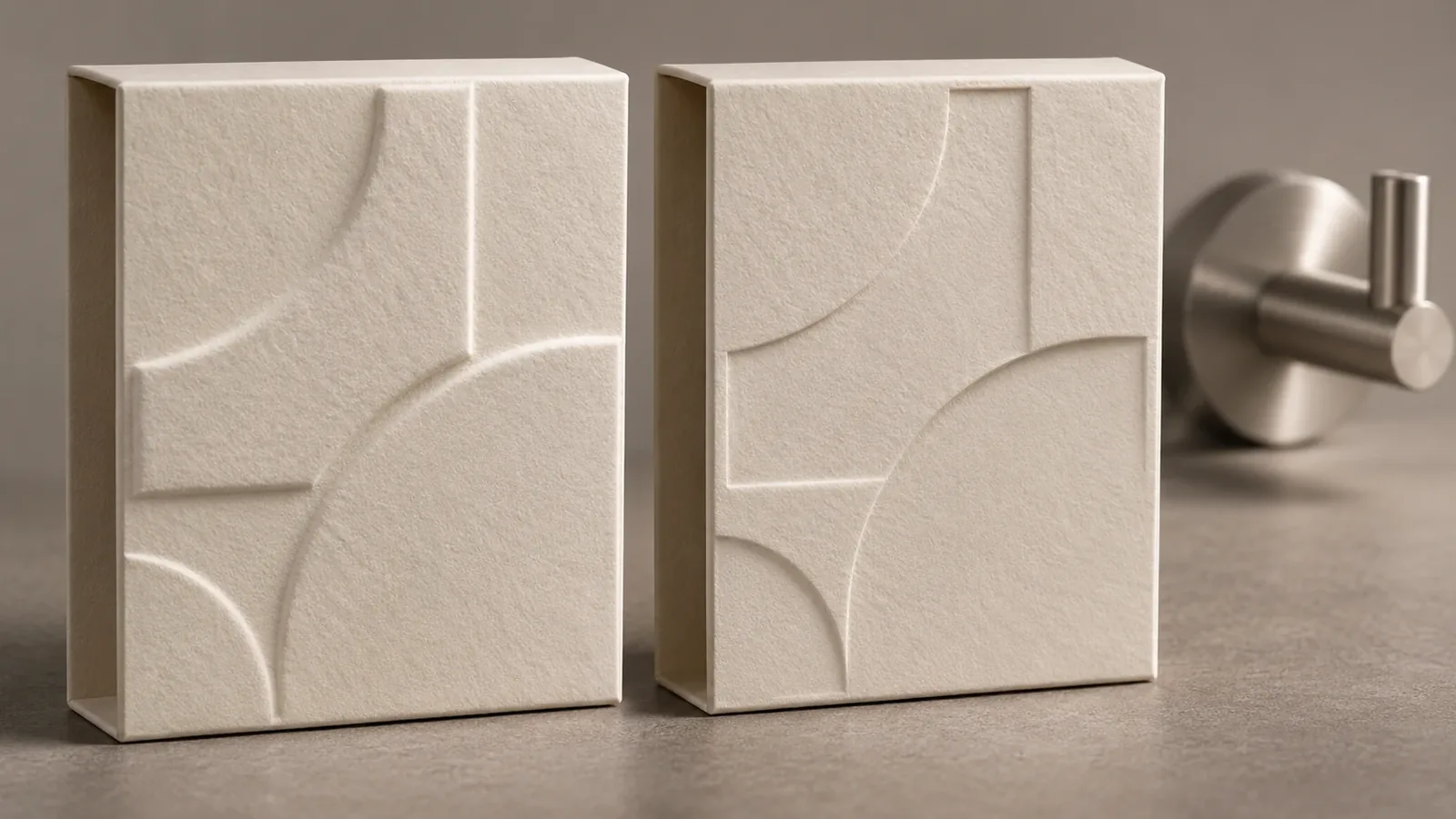
Embossing vs debossing describes whether a design rises above or presses below the selected display face of a paper or card surface. Embossing creates raised relief; debossing creates recessed relief. Neither term by itself specifies ink, foil, artwork color, reverse-side appearance, material thickness, tooling details, or a quality grade. For an importer approving a retail card or carton sleeve for bathroom hardware, name the reference face, state the intended relief direction, separate the relief from any print layer, and inspect both sides of the physical sample before release.
This distinction sounds simple until a packaging brief moves from a screen mockup to a physical sample. A designer may call a mark “raised,” a supplier may describe an embossing die, and a buyer may be looking at a coated carton with foil and a reverse impression. Those descriptions can refer to different parts of the result. A clear specification turns the comparison into an agreed sample outcome instead of relying on an adjective that each party may interpret differently.
What does embossing vs debossing mean on packaging?
Embossing and debossing are two ways to create physical relief relative to a named surface. With embossing, a selected design is raised from the chosen display face. With debossing, the design is pressed into that face so it appears recessed. The words describe the relationship between the design and the surface, not the color or the full method used to print the package.
Packaging Unit’s overview describes embossing as a raised design and debossing as an indentation. That is a useful vocabulary baseline, but a buyer should still define which side is the “front.” A design that stands proud when viewed from the printed face may look different from the reverse. The exact impression depends on the material, artwork, tooling and production arrangement. A sample should therefore show the actual front and back rather than relying only on a rendered front view.
Consider an importer preparing a paperboard sleeve for a metal towel holder. The logo area might be pressed outward from the front face, while a simple pattern may be recessed. The sleeve may also contain a printed color, a foil accent or no additional color at all. These are separate design choices. The embossed or debossed feature is the physical contour; ink and foil are visual treatments applied alongside or in register with that contour.
| Specification question | What the answer should identify | What it does not settle by itself |
|---|---|---|
| Relief direction | Raised or recessed relative to a named face | Color, foil, durability or print registration |
| Display face | The side the buyer considers the front | How the reverse will look or feel |
| Visual layer | Blind relief, ink, foil or a defined combination | Whether a relief feature is present |
| Artwork location | The exact logo, graphic or pattern area | Tooling capability or finished appearance |
| Sample acceptance | The approved physical reference and revision | Universal production limits for every stock |
This table is a coordination aid, not a printing standard. The buyer and packaging supplier should use the selected supplier’s current process information and a physical sample to resolve material-specific questions.
How should buyers distinguish relief from ink and foil?
Relief is the change in surface height. Ink and foil are visual layers. The distinction matters because a graphic can be colored without being raised, while a raised or recessed design can remain unprinted. A request for a “gold embossed logo,” for example, can combine two separate requirements: raised geometry and a gold visual finish. The phrase does not say whether the gold is ink, foil or another specified treatment.
A buyer can reduce ambiguity by dividing the brief into four fields:
- Surface: identify the substrate and the face to be viewed.
- Relief: state whether the feature is raised or recessed from that face.
- Visual layer: specify whether the feature is blind, printed, foil-treated or combined with another approved treatment.
- Position: show the artwork and any registration relationship on a controlled drawing or marked proof.
“Blind” generally indicates relief without ink or foil in that area. Packaging Unit describes blind embossing as relying on depth and shadow rather than added color, and it describes foil embossing as a combined visual and relief treatment. Those examples help separate the terms, but buyers should not copy a supplier’s marketing phrase as a complete specification. A mockup that shows gold on screen does not prove the sample uses foil, and a printed outline does not prove the paper has been pressed into a raised form.
The same separation helps when a private-label brand compares several packaging proposals. One quote may include a raised logo with foil, another may include a recessed logo with ink fill, and a third may use a flat printed graphic. If the buyer compares them only by “logo finish,” the physical processes and sample outcomes remain unclear. Compare the relief, visual layer, position, substrate and accepted reference separately.
Which face is the reference for raised or recessed relief?
The buyer should name the viewing face before calling a feature raised or recessed. “Raised” is meaningful only in relation to a surface. If a dieline or artwork proof has front, inside and reverse panels, the production team needs to know which panel supplies the reference. A photo of the finished sleeve from one angle may hide how the back surface changes.
Use a simple front-and-reverse review. Mark the intended display face in the approved packaging file. Show the design area on the front and the corresponding area on the reverse. If a reverse impression is acceptable, state that it is accepted for the specific sample. If the reverse must remain visually clear for instructions, a barcode or another graphic, ask the packaging supplier to demonstrate that region on the sample. Do not assume the reverse is untouched merely because a debossed design is being discussed.
Packaging Unit’s article states that embossing makes an impression on the back and says debossing leaves the reverse untouched. That is a supplier-authored explanation, not a universal rule to apply to every stock and tooling arrangement. For buyer control, the safer instruction is to request both sides of the proposed sample and record the observed result. The actual reverse depends on the construction and setup being supplied. A sample review is stronger evidence for the specific order than an assumption based on the process name.
This is particularly useful when the package carries information on both sides. A raised brand mark on a sleeve may affect a nearby printed instruction or a panel that contacts the product. A recessed area may create a visible contour on the reverse. Whether that is acceptable is an artwork and packaging decision, not a general quality failure. The approval record should identify the sample revision, the accepted viewing face, and the reverse-side appearance that the buyer inspected.
What should a packaging sample prove before approval?
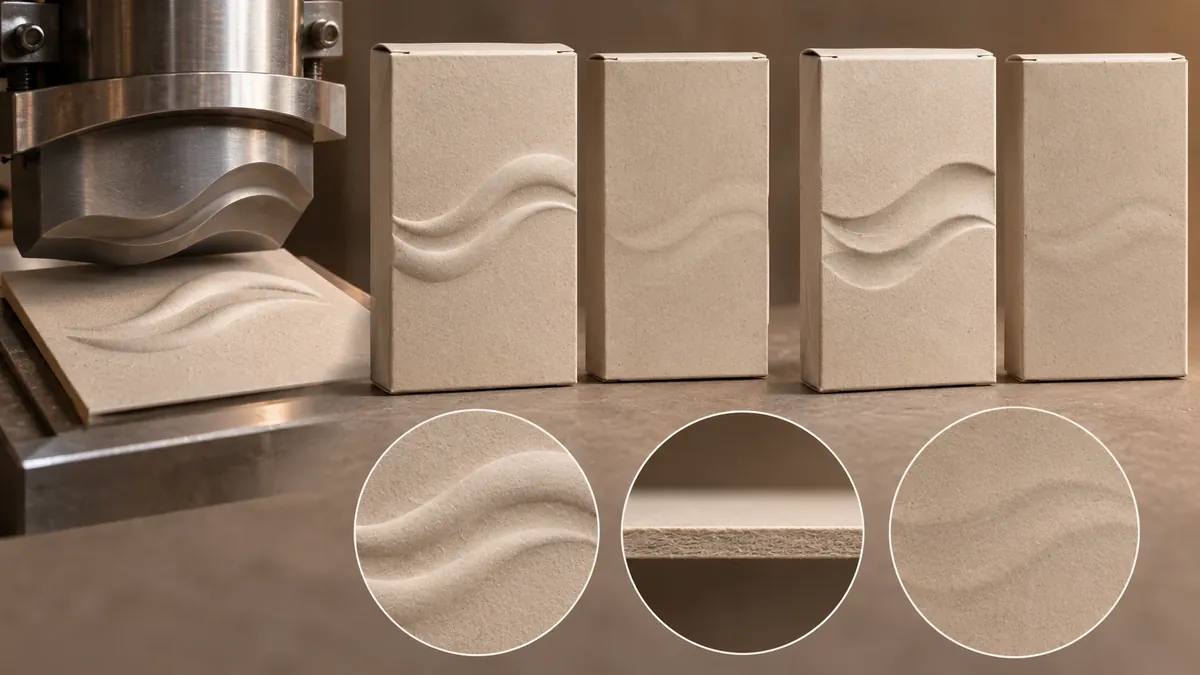
A sample should demonstrate the specific visual and physical result the buyer intends to approve. It should not be treated as proof of a universal material limit, press setting or production guarantee. The sample is a controlled reference for a defined substrate, artwork revision and proposed process. Buyers should capture enough context to let the next reviewer identify what was inspected.
Start with the sample identity. Record the package type, substrate description supplied by the packaging vendor, artwork revision, relief direction, selected visual treatment and date of review. If the sample is only a digital rendering or a flat print proof, label it as such. A screen proof can help review artwork placement, but it cannot show tactile relief or a physical reverse impression.
Then inspect the actual area from several views:
- Look at the selected display face under ordinary viewing light and at a low angle where shadows reveal relief.
- Feel the feature gently, if the packaging supplier’s handling recommendation allows it, and compare the raised or recessed region with adjacent stock.
- Turn the sample over and check whether the corresponding reverse area remains compatible with other artwork and package functions.
- Review small details, line endings and intersections for legibility on the sample rather than assuming every screen detail transfers unchanged.
- Confirm that any ink or foil relationship matches the approved visual proof.
- Record an accepted example and any agreed exceptions, rather than writing only “looks good.”
These are review prompts, not formal acceptance criteria. The packaging supplier should explain its own process and any material restrictions. The buyer should not infer a minimum paper weight, relief depth, temperature, pressure, run speed, cost or durability from a general comparison article. Those values depend on the specific supplier process and package construction, and no universal values are established here.
How do artwork and material affect the comparison?
Artwork detail and material response affect whether the intended relief can be represented clearly, but the exact outcome must be confirmed with the supplier. Packaging Unit recommends simple artwork and discusses the influence of stock and reverse-side appearance. Such advice is supplier context, not a guarantee that one particular design will work or that heavier stock is always the correct choice.
For a buyer, the practical step is to separate the artwork question from the material question. First, identify the feature that must be tactile: perhaps a small logo, a border or a broad decorative shape. Then ask the supplier to review the actual vector artwork, including fine lines, tight corners, nearby folds and panel edges. A motif that looks crisp on a monitor may produce a different visual effect when pressed into the chosen substrate.
Next, ask the packaging supplier which stock and sample method it proposes for the intended package. Do not specify paper thickness or a relief depth by copying a number from an unrelated product or a competitor article. Ask the supplier to show the proposed substrate and a relevant physical sample. If the package folds around a metal bathroom accessory, review whether the relief region sits near a crease, closure, hanging hole or area that may contact the product. This is a layout review, not a claim that the relief will necessarily crack, flatten or damage the package.
The buyer may also need to consider reverse-side content, the package’s protective role, barcode placement, retail display and the available space for product information. Those requirements can conflict. A large pressed feature could compete with a label area; a small logo could be more appropriate. The decision should be made with the complete packaging layout rather than by optimizing the tactile effect alone.
When should a buyer choose embossing or debossing?
Choose the direction that best fits the intended viewing face and approved sample, not because one method is universally more premium. Embossing creates a raised feature; debossing creates a recess. The terms do not prove that either option is more durable, more expensive, easier to manufacture or better suited to a particular market.
An importer can compare a few practical conditions:
| Buyer condition | Question to resolve with the packaging supplier |
|---|---|
| Logo should be tactile | Which face is viewed, and should the logo rise or recess from it? |
| A reverse panel carries copy | What does the sample show on the matching reverse area? |
| Foil or ink accompanies relief | Which layer is used and how is its alignment represented in the sample? |
| Artwork contains fine details | Does the physical sample show the details clearly at the intended size? |
| The feature is near a fold or closure | Can the supplier demonstrate the complete package construction? |
These questions frame a review; they do not select the process automatically. If the supplier recommends a different relief direction, request a sample or a clearly marked proof before approving a production specification. If the production team changes the artwork or packaging material later, review whether the accepted tactile result still applies.
How does this fit a private-label hardware packaging project?
Embossing and debossing are packaging decisions, not metal-forming operations. They describe relief on paper, card or another substrate, and they should not be confused with an embossed rib formed in a metal shelf or with engraving that removes material from a metal surface. Similar words can refer to different buyer questions. This article concerns tactile relief in packaging only.
For a hypothetical private-label bathroom accessory project, the buyer may coordinate a metal product specification with a separate carton or sleeve proposal. The product and package may have different suppliers, materials, approval records and revision paths. The packaging brief should identify which party owns the print artwork, the relief tooling, the physical sample and the final packaging sign-off. This division prevents a product drawing from being mistaken for a packaging specification.
Koitor Hardware is a family-owned custom metal hardware factory focused on bathroom and home storage hardware. Buyers discussing a new product can share drawings or a physical sample for a structure and manufacturing review. That does not mean Koitor manufactures paper cartons, embossing dies or foil stamping. If the buyer is coordinating a private-label launch, keep the metal product review and packaging vendor’s process confirmation as separate but linked workstreams. The team can review the product scope and packaging information supplied by the buyer without representing an unverified packaging service.
For broader private-label planning, review Koitor’s private-label bathroom accessories information. The page concerns Koitor’s bathroom hardware context; it should not be interpreted as proof that Koitor performs printing or paperboard converting.
What mistakes make the specification hard to approve?
The most common coordination problem is describing an appearance without stating the reference face or physical feature. “Make the logo embossed” may be enough to start a discussion, but it leaves open the relief direction, print layer, artwork position, reverse appearance and sample revision. The result is difficult to compare when the buyer receives a proof.
Avoid these shortcuts:
- Using “embossed” as a synonym for any raised graphic. State whether the feature is physical relief or only a printed highlight.
- Mixing foil, ink and relief into one vague finish term. List each treatment separately.
- Approving only a front-view digital mockup. It cannot confirm tactile feel or the actual reverse.
- Assuming a process name guarantees the reverse appearance. Inspect both sides of the actual sample.
- Copying another supplier’s process limits. Request the selected vendor’s material-specific guidance rather than importing unsupported pressure, depth or stock values.
- Changing artwork after approval without a new review. A changed feature or panel location can make the earlier reference obsolete.
- Treating packaging texture as product performance evidence. A tactile logo does not establish the metal accessory’s material, finish, corrosion behavior or load performance.
The correction is not to create a longer specification than the project needs. It is to write down the few fields that affect the approval decision and attach the relevant sample or drawing. A clear and bounded record often prevents more confusion than a paragraph of subjective adjectives.
How should importers document approval and revisions?
Keep the approved sample, artwork and production description tied to one revision. A buyer should be able to answer: which package was reviewed, which face was considered the front, what relief direction was approved, which visual layer was included, and whether the reverse-side appearance was accepted. If the supplier changes the substrate, artwork, tooling arrangement or fold location, ask whether a new sample review is needed.
A compact approval record can include:
- Product and package identifier used by the buyer.
- Artwork file name and revision date.
- Named display face and panel location.
- Embossed or debossed relief direction.
- Ink, foil or blind treatment requested.
- Sample photographs of front, reverse and close detail.
- Reviewer, review date and disposition.
- Open questions or agreed deviations.
- The party responsible for confirming final process capability.
This does not create a certification or guarantee. It preserves context for the next purchase order, artwork handoff and reorder. If a buyer wants to compare two alternatives, keep both sample revisions and describe the difference in terms of the actual relief and visual treatment, rather than calling one “better” without a defined requirement.
For a buyer asking “embossing vs debossing?”, this checklist should be applied to the named sample, assembly or supplier record.
Buyer checklist before approving packaging relief
- Identify the exact package component: carton panel, sleeve, insert or card.
- Name the display face and show the matching reverse face.
- State whether the design is raised or recessed from that reference.
- Specify blind relief, ink, foil or the exact approved combination.
- Attach the artwork revision and identify the feature area.
- Ask the packaging supplier to review fine details, folds and nearby copy.
- Inspect an actual sample under ordinary light and at a low angle.
- Review both front and reverse; record any accepted impressions.
- Keep the approved sample and approval record linked to the purchase order.
- Re-review after a material, artwork or package construction change.
Frequently asked questions
Is embossing raised or recessed?
Embossing raises a design relative to the chosen display face. The specification should still name that face and show a sample, because the reverse side can also show an impression depending on the material and production setup.
Is debossing the same as engraving?
No. Debossing describes pressing a design below a surface. Engraving commonly describes cutting or removing material in a different process context. A recessed paper feature is not automatically an engraved metal mark.
Can an embossed or debossed design also use foil?
It can be specified as a combination, but the buyer should state the relief and foil requirements separately. The physical sample should show the requested appearance and registration for the selected supplier and material.
Does debossing always leave the reverse untouched?
Do not assume so. Supplier explanations may describe a common arrangement, but the buyer should inspect the reverse of the actual sample and confirm the result for the proposed stock and tooling.
Which option is better for bathroom hardware packaging?
Neither is universally better. Select the relief direction after reviewing the package face, artwork, reverse content, supplier sample and retail presentation. The terminology does not establish a performance ranking.
Does embossed packaging mean the metal product is embossed?
No. This article uses embossing and debossing for tactile relief on packaging. A formed rib in a metal component is a separate product-design and manufacturing feature.
Source note
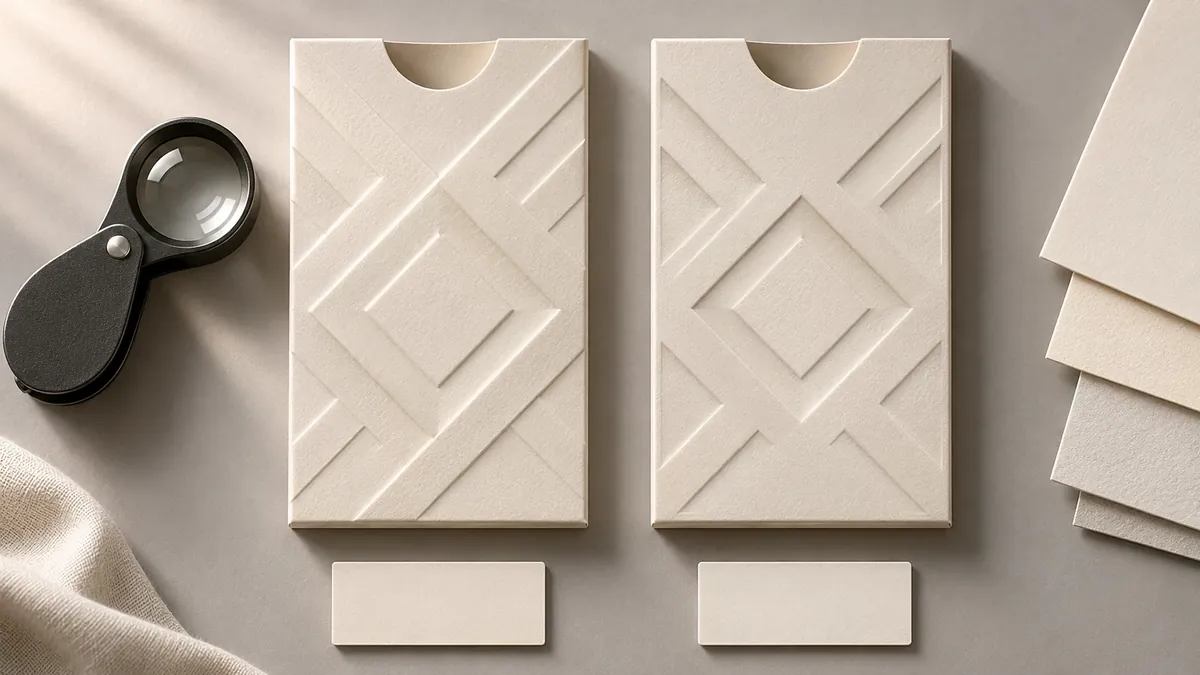
The embossing and debossing terminology is informed by Packaging Unit’s overview of packaging relief. Its statements are supplier-authored practical guidance, not a packaging standard or a guarantee for every stock. This article intentionally does not carry over universal claims about reverse-side appearance, stock thickness, pressure, temperature, cost or durability.
Work With Koitor Hardware
Planning a Private-Label Bathroom Hardware Project?
Send Koitor your product drawing, sample, finish target and expected order quantity. The team can review the metal hardware structure and manufacturing questions while you coordinate packaging artwork and relief approval with the responsible packaging supplier.
OEM / PRIVATE LABEL
Turn this sourcing guide into a product brief
Share your target product, size, finish, order quantity and packaging requirements. Your team receives a practical manufacturability review before quotation.
 English
 Español
 Português
 Français
 Deutsch
 العربية