

Aluminum 3003 vs 5052 is a comparison of two distinct alloy designations, but the alloy number alone is not a complete sheet specification. A metal supplier identifies manganese as the principal alloying addition for 3003 and magnesium for 5052; a buyer must also keep temper, product form, thickness, supplier specification and finished geometry attached to the comparison. Representative conditions such as 3003-H14 and 5052-H32 are not interchangeable condition labels. Do not use a generic alloy chart, appearance, or the material name alone to approve a substitution for a formed hardware part.
What does aluminum 3003 vs 5052 mean for a buyer?
The two designations name different wrought aluminum alloys. For sourcing, the decision is not simply to choose the number that appears stronger or more corrosion-resistant in a supplier article. The buyer needs to know what the part requires, which actual stock form and temper the supplier proposes, and which evidence connects the delivered material to the drawing.
A supplier-authored comparison identifies manganese as the principal alloying element for 3003 and magnesium as the principal addition for 5052. That broad family distinction is useful for identifying the alloys. It does not provide a complete chemical specification, a certified composition for a particular coil or sheet, or a result for a finished product. Chemical limits and acceptance criteria must come from the governing material specification and the supplier’s documentation for the actual item.
For a bathroom or home-storage product, an aluminum part might be a formed cover, panel, bracket, tray, housing, or decorative element. This list is illustrative and does not claim that Koitor currently stocks or manufactures a specific 3003 or 5052 component. The functional requirement depends on the part’s geometry, thickness, joining method, finish, exposure, and role in the assembly. A generic material comparison cannot replace that product-specific review.
The buyer should therefore separate three questions:
- Which alloy designation is specified? Confirm 3003 or 5052 against the drawing and supplier offer.
- Which temper or condition is supplied? Record the exact suffix and any material condition called out by the applicable specification.
- What form and feature are being evaluated? Identify sheet or coil, thickness, formed geometry, edge conditions, joining, finish, and the feature that matters to the product.
For buyers comparing aluminum 3003 vs 5052, the first question identifies an alloy family. The second and third help determine whether the proposed material and process fit the actual part. If the buyer asks only “3003 or 5052?” the supplier may answer at a level too broad to establish whether the quotation matches the drawing.
How do 3003 and 5052 alloy identity and temper differ?
The research source describes 3003 as primarily manganese-alloyed and 5052 as primarily magnesium-alloyed. A buyer can use those principal additions to distinguish the broad alloy families, then verify the complete material designation against the supplier’s document. The distinction is about identity; it should not be treated as a product-performance guarantee.
Temper is a separate part of the designation. Suffixes such as H14 or H32 communicate a supplied condition in the applicable aluminum temper system. A supplier comparison may use 3003-H14 and 5052-H32 as examples, but that pair does not hold temper constant. It should not be presented as an alloy-only experiment or as a like-for-like property ranking. The buyer should ask for the exact alloy and temper required by the drawing and confirm which condition the quote includes.
| Specification field | What it identifies | Buyer’s check |
|---|---|---|
| Alloy designation | The alloy family, such as 3003 or 5052 | Compare the full designation with the drawing and supplier record |
| Temper or condition | The supplied material condition represented by the full suffix | Do not drop or substitute the suffix without design review |
| Product form | Sheet, coil, plate or another supplied form | Confirm the form and dimensions that the supplier actually quotes |
| Thickness and tolerance | The stock dimension and permitted variation relevant to the part | Use the controlled drawing and applicable material specification |
| Lot or supplier reference | The delivered material record or traceable identification | Connect the document to the actual shipment or production lot |
| Finished geometry | The product shape after forming and any later processing | Review a representative sample or suitable evidence for the real feature |
The table intentionally does not list chemical percentages, mechanical-property values, or corrosion ratings. The supplier article used for background includes specific values and ratings that this guide does not adopt as current normative limits or universal material rankings. Buyers should use the current specification and supplier evidence for the actual grade, temper, form, thickness, and lot.
The distinction between the two alloys also should not be simplified into “one is always easier to form.” Published sources may compare workability at a general level, but the actual operation depends on the temper, thickness, feature geometry, tooling, direction, surface condition, and process sequence. A bend in a simple coupon is not automatically representative of a finished multi-feature part. The buyer should discuss the actual drawing with the material and forming specialists.
Why does the supplied condition matter during forming?
Two quotations can use the same alloy designation while describing different tempers or product forms. Two sample parts can look similar while having different underlying material records. Temper and form belong in the material callout because they can affect the supplier’s forming proposal and the characteristics the buyer evaluates. They should not be separated from the alloy name when the team compares stock.
For example, if a drawing calls for a particular alloy and temper but a quotation omits the temper, the buyer cannot assume the supplier intended the same condition. If a proposed replacement uses another suffix, the supplier should state the exact material offered and the design owner should review whether the new condition fits the part. A changed suffix is not automatically acceptable just because the alloy number remains familiar.
The formed feature matters as well. A buyer evaluating a narrow bend, a deep drawn shape, a flange, a hole near a bend, or a visible surface should describe the actual requirement and request a representative sample or supplier review. These are examples of geometry questions, not universal defect predictions. Do not infer a minimum bend radius, allowable springback, or crack acceptance from this article. Those values require an applicable specification and qualified engineering input.
The production route can also affect what the buyer sees. A part may be cut, formed, joined, polished, coated, anodized, assembled or packaged, depending on the approved product design and supplier scope. Later steps can alter appearance and fit. The material certificate or coil label should therefore be connected to the product lot, and the finished sample should be evaluated against the agreed drawing and finish requirement. A material designation does not by itself certify the appearance or performance of the finished product.

A useful review separates the material record from the formed-part assessment. The first can confirm what the supplier says was supplied and identify the referenced specification or lot. The second can show whether a sample made from the proposed material and process appears to meet the product drawing. Neither should be used to claim more than it actually demonstrates. A visual sample is not a chemical analysis, and a material document is not an automatic acceptance of every finished feature.
When a material change is proposed after sample approval, compare the change against the product requirement rather than the earlier alloy name alone. The buyer can ask what changed in designation, temper, thickness, form, source, or processing sequence. The supplier can then describe its production proposal and any relevant evidence. The design authority decides whether the change is acceptable, and the record should show that approval before the purchase specification is revised.
What should an importer put in the RFQ?
A useful RFQ gives the supplier enough information to quote the same material and part that the buyer intends to purchase. It should avoid vague directions such as “use 5052 equivalent” unless the design owner has defined which properties, finish, tolerances and evidence make the alternative equivalent.
Include the following where relevant:
- Full alloy and temper designation, including the suffix.
- Product form, such as sheet or coil, and the actual thickness range or drawing dimension.
- The controlling drawing, revision, and any material specification or accepted supplier document.
- The formed features that influence manufacturability or appearance.
- Surface finish, coating or anodizing requirements and any protected or cosmetic faces.
- The intended assembly interfaces, joining requirements and related components.
- The target quantity, sample requirement, packaging plan and any private-label needs.
- Any proposed alternative, clearly identified for approval rather than silently substituted.
- The evidence expected for the material identity, sample review and agreed finished-part checks.
If the buyer does not know which alloy or temper should be selected, state the product requirement and ask the qualified material or design specialist to recommend an option for review. A supplier can explain what it proposes to source and form, but an article or quotation should not replace a design decision. The buyer should record the selected designation and the reason for any approved deviation.
A comparison also needs a consistent basis. Do not place two unlike spec sheets side by side and attribute every difference to alloy identity if the temper, thickness, form, test method, or specimen differs. Ask the suppliers to identify those fields. If a property matters, obtain current data for the same defined condition and relevant product form from the responsible source. This guide does not reproduce numerical property tables because the pack’s source does not support treating its reported figures as a current universal purchasing specification.
The request should distinguish an initial material proposal from a production commitment. A sample may be made with an early material condition while the final quote assumes another. Before production release, confirm that the approved sample, final drawing, order record and supplied material are aligned. If they are not aligned, ask the supplier to document the difference and wait for approval from the responsible design owner.
What evidence should accompany a substitution?
Evidence should match the decision being made. A supplier document that identifies alloy and temper addresses material identity. A forming sample shows a particular part made with a particular material and process. A finished-product inspection may address specified dimensions or appearance. Those records answer related but different questions.
For a proposed substitution, the buyer can request:
- The offered material designation. Record the complete alloy, temper, product form, thickness and supplier reference.
- The source document. Confirm which current material specification, supplier certificate or lot record applies to the material being offered.
- The reason for the change. Ask the supplier to state whether the proposal changes alloy, temper, availability, form, thickness or processing assumptions.
- A representative sample when relevant. Connect the sample to the actual drawing revision and proposed production route. State which features are being reviewed.
- A defined evaluation basis. Identify the dimensions, finish, fit, appearance or other requirement that the design owner wants assessed.
- A change approval. Preserve the buyer’s decision and apply the approved material callout to the relevant purchase record.
The buyer should not request a certificate or test without understanding what it proves. A certificate can report a material designation or test result within its stated scope; it does not automatically prove a formed component is suitable for every exposure or load. A sample can demonstrate a specific geometry; it does not identify chemistry by appearance. A test result depends on the specimen, method, condition and acceptance criteria. Ask the issuer and responsible technical owner to clarify the evidence’s scope.
If the product will be used in a demanding environment, the buyer should define that environment and the required evidence with a qualified specialist. Do not rely on a general supplier statement that one alloy is “better for marine use,” “stronger,” or “more corrosion-resistant” without connecting the claim to the actual product, condition and evidence. The cited supplier comparison contains broader rankings and historical data that this article deliberately does not adopt as a universal specification.
For repeat orders, keep the approved material and sample references attached to the buyer’s revision-control process. If a supplier changes source, temper or form, the buyer can decide whether a new sample or documentation is required. A documented change is easier to compare with the prior approved item than a verbal note that “the aluminum is equivalent.” The actual requirement belongs to the buyer’s drawing and order terms.
Which sourcing mistakes should buyers avoid?
Comparing alloy numbers but dropping the temper. The suffix is part of the supplied condition. Keep the full designation in the drawing, quotation and purchase record.
Using a strength ranking without matching conditions. A table that compares 3003-H14 with 5052-H32 is not an alloy-only comparison. The temper differs, and the figure may come from a supplier article rather than the specification governing the buyer’s material.
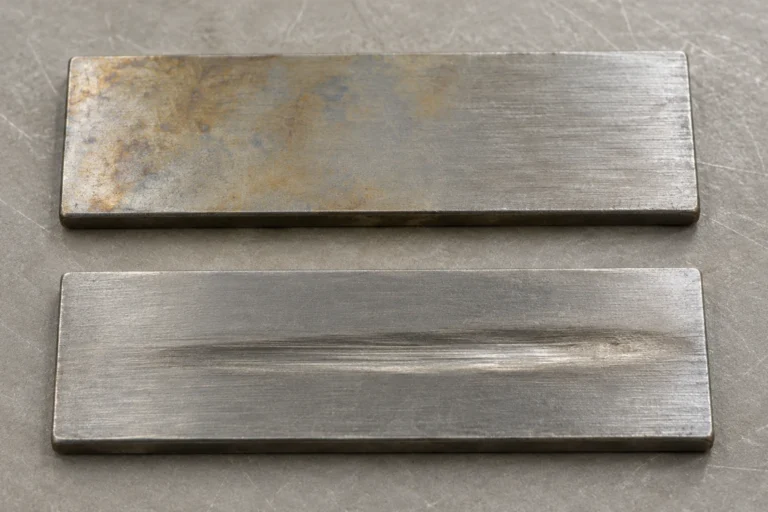
Choosing from appearance. An aluminum sample’s color, finish or bend shape cannot establish that the alloy is 3003 or 5052. Use the supplier’s material record and the approved project documents.
Assuming a general formability description predicts the finished part. A broad statement about workability does not evaluate the buyer’s exact thickness, radius, feature sequence, tooling, surface or acceptance tolerance.
Treating an alloy substitution as a like-for-like replacement. A substitution may change condition, geometry, forming behavior, finish route, weight, fit or other requirements. Ask the supplier to identify what changes and obtain design-owner approval.
Transferring marine or pressure-vessel examples to bathroom hardware. End-use examples in a supplier article are not proof for a different product, environment, product design or regulatory requirement.
Relying on an old table as a current normative specification. Confirm the applicable current standard and supplier data for the material being purchased. This guide does not set chemical limits or mechanical properties.
Letting sample approval become a material approval by implication. A sample review should state whether it approved appearance, fit, geometry, material identity or another defined feature. Do not infer that every unreviewed attribute was accepted.
Leaving the supplier free to select an equivalent without approval. If substitutions are allowed, define the criteria and approving party. Otherwise, require written approval before the material designation changes.
Assuming Koitor has a specific aluminum grade in stock. No current 3003 or 5052 inventory is confirmed by the project facts. Confirm availability and process scope for the actual order.

Buyer checklist before approving 3003 or 5052 sheet
Use this checklist to keep identity, condition and part requirements together:
- Exact alloy designation and complete temper suffix.
- Sheet, coil or other product form, with the drawing’s thickness and tolerance.
- Supplier specification and material document expected for the order.
- Part number, drawing revision, sample identity and approval status.
- Formed features, cosmetic surfaces and interfaces that matter to the product.
- Finish and any operations that may affect appearance or fit.
- Whether the quotation contains a proposed alternate and what fields change.
- The buyer or design owner authorized to approve substitutions.
- The scope of each certificate, sample review or inspection record.
- A traceable link between the material lot or source record and the produced item.
- A record of open questions and the party responsible for resolving each one.
For an early product concept, the buyer may not yet have a final material callout. In that case, the RFQ can describe the intended part, use context, geometry and acceptance needs, then invite a supplier proposal for review. The proposed material should remain a proposal until the designated owner confirms the full alloy, temper and applicable evidence. This avoids presenting a preliminary discussion as a released specification.
The buyer can also keep the comparison table beside the controlled drawing during quotation review. If the supplier writes “3003,” ask whether that includes a temper and form. If the supplier writes “5052 equivalent,” ask which alloy condition it proposes and what evidence supports the substitution. The response should identify the actual material, not merely repeat the requested phrase.
Frequently asked questions
Is 5052 always better than 3003?
No universal ranking follows from the alloy names alone. Requirements, supplied temper, product form, thickness, geometry, finish and the intended environment matter. Use current data for the actual condition and obtain qualified review for the product.
Does 3003-H14 have the same condition as 5052-H32?
No. These are different alloy and temper designations. The cited supplier article uses them as examples, but that pair does not isolate alloy identity or establish a universal property comparison.
Can a buyer identify 3003 or 5052 by looking at a sample?
No. Appearance does not verify alloy chemistry or temper. Use the supplier’s material documentation and connect it to the actual product, lot and drawing.
Does the alloy number alone prove the part will form correctly?
No. The exact temper, thickness, product form, geometry, process route and acceptance requirement all matter. A representative sample and qualified review can address the actual part more directly than a generic alloy description.
Can I copy a property table from a supplier article into a purchase order?
Do not treat a general article table as the controlled specification. Check the applicable current standard, supplier data, exact temper and test basis. The table may refer to different conditions or a historical source.
Can 3003 and 5052 be substituted for one another?
This guide does not approve a universal substitution. The design owner should compare the actual product requirement, condition, form, process, finish and evidence, then approve or reject a specific proposal.
Does 5052’s use in marine products prove it is right for a bathroom product?
No. A use example does not decide suitability for a different product or exposure. Define the actual environment and required evidence with the responsible technical specialist.
Does Koitor currently stock 3003 or 5052?
No specific current stock position is established by the project materials. Confirm grade, temper, form, availability and order scope for the actual quotation.
Sources
- Kloeckner Metals: What’s the Difference Between 3003 Aluminum and 5052? — used only for the broad principal alloying-element distinction and examples of separate alloy/temper labels. The source’s numerical property, composition, cost, ranking and end-use claims are not adopted as universal specifications.
Work With Koitor Hardware
Reviewing a Formed Aluminum Hardware Part?
Share the drawing or sample, the specified alloy and temper, and the manufacturing question you need to resolve. Koitor can discuss the verified scope of a custom bathroom or home-storage hardware project; material availability and substitution approval must be confirmed for the actual order.
OEM / PRIVATE LABEL
Turn this sourcing guide into a product brief
Share your target product, size, finish, order quantity and packaging requirements. Your team receives a practical manufacturability review before quotation.


 English
 Español
 Português
 Français
 Deutsch
 العربية