

For 6061 vs 6063 aluminum storage hardware, buyers should compare the exact alloy and temper against the profile geometry, finish, joining route and finished-product requirements. The alloy number alone does not approve a towel rail or storage extrusion. Ask the profile supplier to state the proposed temper and product form, then validate the actual formed, finished and assembled part with a production-intent sample. Where a design uses a bought-in aluminum profile within a larger metal accessory, clarify which supplier controls the material and any substitutions.
What product decision are you trying to make?
Start with the component’s role. Is the profile a visible rail, a structural support, a decorative cover or a feature that must connect to another material? A towel rail and a storage-frame member may share an extrusion process but differ in geometry, load path, appearance and connection method. Buyers should state the required function and identify critical dimensions before debating alloy preference.
The real question may be about extrusion complexity, surface appearance, strength in a particular condition, machining or joining compatibility. These considerations interact. A material that is attractive for one profile form may not be the easiest choice for a different cross-section or finish. Ask the supplier to evaluate the actual section and temper rather than compare data-sheet values detached from the part.
Hydro’s alloy information describes 6063 and 6061 as different extrusion material choices with application and property considerations. It is a useful starting point for a technical conversation, not a project-specific approval. Confirm the current material designation, temper, product form and supplier capability for the intended profile.
For a B2B sourcing project, identify who owns the product design and who is expected to select the alloy. If the buyer provides a complete drawing, the supplier can quote against that definition and flag manufacturability questions. If the supplier proposes material, record the proposal and qualification assumptions so it is not mistaken for an already approved specification.
The distinction matters even when the profile is a small part of a larger bathroom or home-storage product. A visible rail may be chosen for appearance and fit, while another profile may be selected for a specific interface or machining requirement. A buyer who asks only for “aluminum rail” leaves material and temper selection implicit. In a 6061 vs 6063 aluminum storage hardware review, ask suppliers to list the actual material designation and temper on the quotation, state whether it is their standard proposal or a buyer requirement, and identify any operation that depends on that choice. This lets engineering compare comparable offers instead of treating two unspecified materials as equivalent.
How should buyers compare 6061 and 6063?
Avoid reducing the comparison to a universal “stronger” or “better finish” claim. Alloy, temper, extrusion geometry, dimensions, orientation, processing and surface treatment all matter. Supplier technical data should be tied to the stated product form and condition. If the supplier’s recommendation depends on a particular temper or finishing route, include that in the review record.
| Buyer consideration | Questions for the 6061 proposal | Questions for the 6063 proposal |
|---|---|---|
| Profile geometry | Is the section and wall distribution suitable for the proposed extrusion? | Can the required shape and detail be produced in the proposed form? |
| Temper and condition | Which temper is offered, and what product properties does the supplier document for it? | Which temper is offered, and is it consistent with the design requirements? |
| Appearance and finish | What surface preparation and finish are planned for the visible faces? | What surface preparation and finish are planned for the visible faces? |
| Joining and machining | How will holes, joints or attachments affect the finished part? | How will holes, joints or attachments affect the finished part? |
| Sample qualification | Can the buyer review the final profile and assembled product? | Can the buyer review the final profile and assembled product? |
| Change control | How are alloy, temper or supplier substitutions approved? | How are alloy, temper or supplier substitutions approved? |
The table is a buyer comparison framework, not a performance ranking. Request data for the exact product form and temper, and have engineering decide which values matter to the design. If structural behavior is important, define the finished-product requirement and relevant test or analysis separately. A generic alloy property cannot establish a complete rail’s capacity.
Which dimensions and temper details belong in the RFQ?
State the exact alloy designation, temper, profile dimensions and applicable product standard or controlled specification when known. If the buyer cannot prescribe these yet, require the supplier to identify the proposed material and supporting documentation. Include cross-sectional drawing, critical wall or feature dimensions, cut length, hole locations, visible surfaces and mating components.
Temper should not be treated as an optional footnote. The chosen condition affects the material state supplied for the profile and may influence fabrication and product behavior. Buyers should have the proposed temper reviewed by a qualified materials or engineering resource when a requirement depends on mechanical properties. Do not infer one temper from an alloy family name.
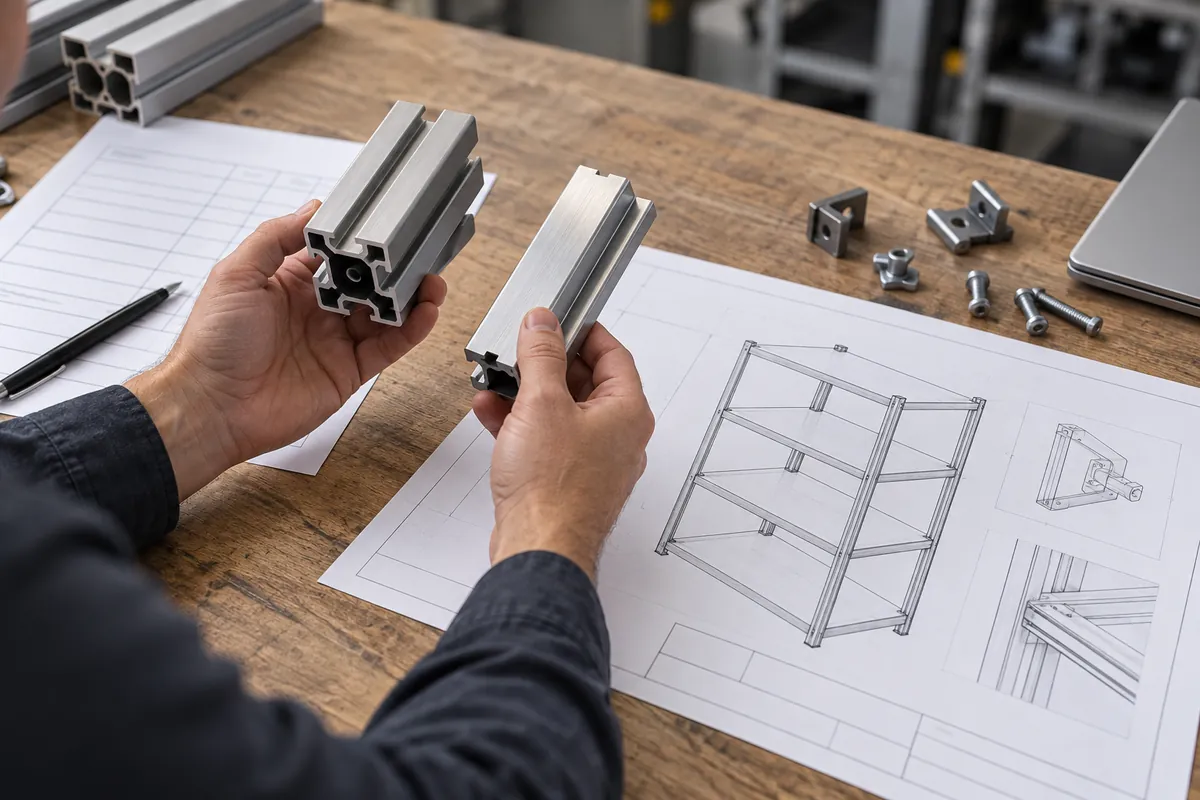
Ask suppliers to identify how the profile will be cut, drilled, bent, joined or assembled. A straight extrusion that looks acceptable on its own may develop fit or appearance concerns when attached to a steel bracket or combined with a formed wire component. Specify the interface and sample condition, not just the unassembled length.
If the profile receives anodizing, powder coating or another finish, define which faces are visible and how the appearance is approved. The supplier should identify finish responsibility and whether the agreed dimensions are before or after finishing. Do not assume one coating or anodizing route is available or included in every quotation.
How do geometry, forming and joining affect the choice?
Profile geometry is central to manufacturability. Thin walls, hollow sections, slots, sharp corners and asymmetrical features can create different process and design considerations. Ask the extrusion supplier to review the actual cross-section for feasibility, tolerance and finish expectations. Any recommendation should be confirmed against the drawing and supplier process route.
Secondary operations can influence the final result. Drilling or milling may create burrs or expose edges that need an agreed treatment. Cutting can affect end appearance and fit. Joining a profile to dissimilar metal parts can create a different interface, appearance or corrosion question that the design team should assess. The article does not prescribe a universal connection method; the part’s function and environment govern the decision.
If a profile must be bent after extrusion, confirm the supplier’s proposed material condition and forming sequence. Do not assume every alloy and temper can be bent to every radius without risk. Review a representative sample with the actual geometry and finish sequence. If a supplier suggests a different temper or process, document the trade-off and require approval before production.
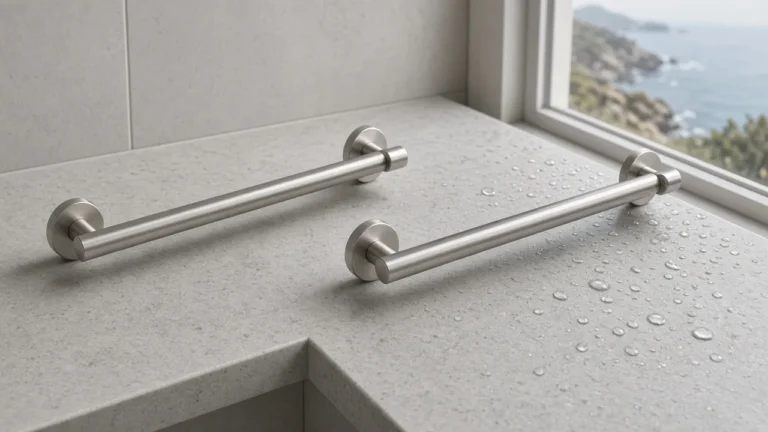
For a towel rail, the end connection, wall brackets and mounting substrate may matter as much as the rail section. For a storage rack, cross-member joints and connection points can govern assembly. The buyer should consider the entire load path and installation design. This prevents a material selection conversation from overlooking the interfaces that drive product performance.
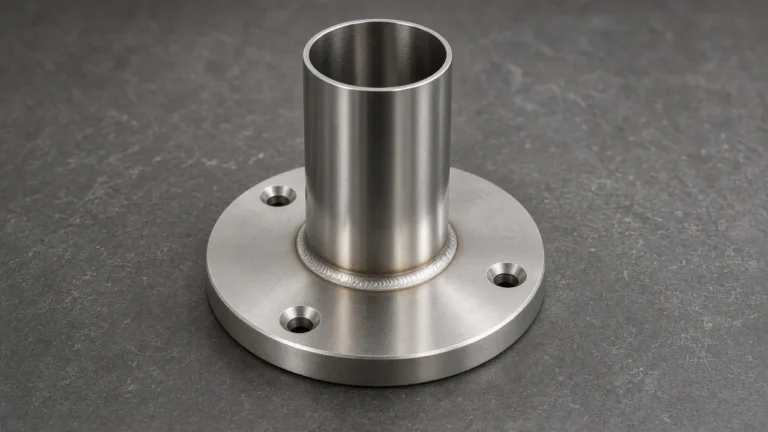
An interface review should include how parts are retained, aligned and finished at the connection. If a fastener passes through an extrusion, specify its position and the required access for assembly. If a bracket is welded or mechanically fixed to a different metal, have the supplier identify what process is proposed and what appearance or contact surfaces need approval. These details are particularly important when a profile is only one part of an OEM assembly and material decisions are split across multiple suppliers. Record assumptions in the drawing review rather than rely on a verbal assurance that a joint is “standard.”
How should finish and appearance be qualified?
A visible aluminum profile should be reviewed under a defined appearance standard. Identify the visible side, acceptable texture and color reference, edges, cut ends and contact points. If the product uses a finish supplier separate from the extrusion supplier, assign responsibility for the approved finish sample and lot traceability.
The surface condition of the incoming extrusion can influence the finishing discussion, but do not promise that a particular alloy automatically produces a desired appearance. Ask the supplier to show production-intent samples made with the proposed alloy, temper, profile geometry and finish. Approve the final component, not an unrelated flat coupon.
Include finish and packaging in sample approval. Protective film, separators or packing may prevent handling marks in transit, but the appropriate packaging depends on the product and route. If scuffing occurs, document whether it was present before packing, after finishing, during assembly or on receipt. Evidence helps distinguish process and logistics questions.

What should production-intent approval include?
The approved sample should identify alloy, temper, supplier, drawing revision, finish, assembly details and approval date. If the sample is not made using the final process, list what remains provisional. Keep a sample label or record that connects it to the purchase and later inspection.
Inspect fit in the real assembly. Verify dimensions and interfaces that affect installation, appearance and alignment. If the product joins aluminum to steel or another material, evaluate the complete interface. A material certificate and a visually acceptable extrusion do not prove assembled fit.
Agree which records will accompany production, such as supplier declarations, lot identity or inspection documentation required by the buyer’s quality system. Do not demand an unsupported certificate format; specify what information is needed and who reviews it. For any independent testing, agree provider, method, sample and acceptance criteria before work begins.
A concise checklist:
- – Define product role and critical finished-product requirements.
- – Specify alloy and temper, or request a documented supplier proposal.
- – Attach the actual profile cross-section and mating-part details.
- – Identify cutting, drilling, bending, joining and finish operations.
- – State whether controlled dimensions apply before or after finishing.
- – Approve a production-intent profile and complete assembly sample.
- – Record the material source, revision, finish and approval status.
- – Review the entire load path and installation interfaces where relevant.
- – Define substitutions and process-change approval.
- – Keep shipment records linked to supplier lot and purchase order.
For suppliers quoting both materials, make the comparison format consistent. Ask each to identify alloy and temper, extrusion source, finishing provider, profile tolerances and the evidence they will provide with the production lot. Separate one-time development charges from recurring unit cost where applicable, and ask whether a proposed finish or secondary operation is included. This makes a 6061 vs 6063 aluminum storage hardware comparison useful to procurement without pretending that the alloy label alone determines total price or product quality. Record open questions as open rather than converting them into assumed supplier capabilities.
How can Koitor support sourcing discussions?
Koitor is a family-owned bathroom and home-storage hardware manufacturer with relevant experience in metal fabrication, finishing, assembly and buyer drawing/sample review. An aluminum profile may be a purchased component or part of a custom project; the current manufacturing scope should be confirmed for each quotation. Do not assume Koitor extrudes or anodizes a particular alloy simply because the topic concerns aluminum.
For an RFQ, share the cross-section, alloy/temper requirement or proposed alternative, finish, connection details and intended use. Ask the supplier to identify which operations it performs and which are subcontracted. Koitor can discuss how the profile fits into the wider hardware assembly within the contracted scope, while alloy-specific technical questions should be verified with the material or extrusion supplier.
الأسئلة الشائعة
Is 6061 always stronger than 6063 for a storage rail?
Is 6063 always the right alloy for visible extrusion?
Should the buyer specify alloy or let the supplier choose?
Does an alloy certificate prove the finished rail is suitable?
What changes require reapproval?
For related supplier information, see Koitor’s OEM home-storage hardware information و custom metal storage basket manufacturing page. To discuss a project drawing and supplier scope, اتصل بـ «كويتور». For alloy context, review primary extruder information on 6063 alloy و 6061 alloy.
Review an Aluminum Profile Requirement
Share the profile drawing, material or temper proposal, finish and connection details so the supplier scope and production-intent sample can be reviewed.
OEM / العلامة التجارية الخاصة
حوّل دليل التوريد هذا إلى موجز منتج
يرجى إطلاعنا على المنتج المستهدف، والحجم، والتشطيب، وكمية الطلب، ومتطلبات التغليف. وسيتلقى فريقك تقييمًا عمليًّا لإمكانية التصنيع قبل تقديم عرض الأسعار.
 English
 Español
 Português
 Français
 Deutsch
 العربية