
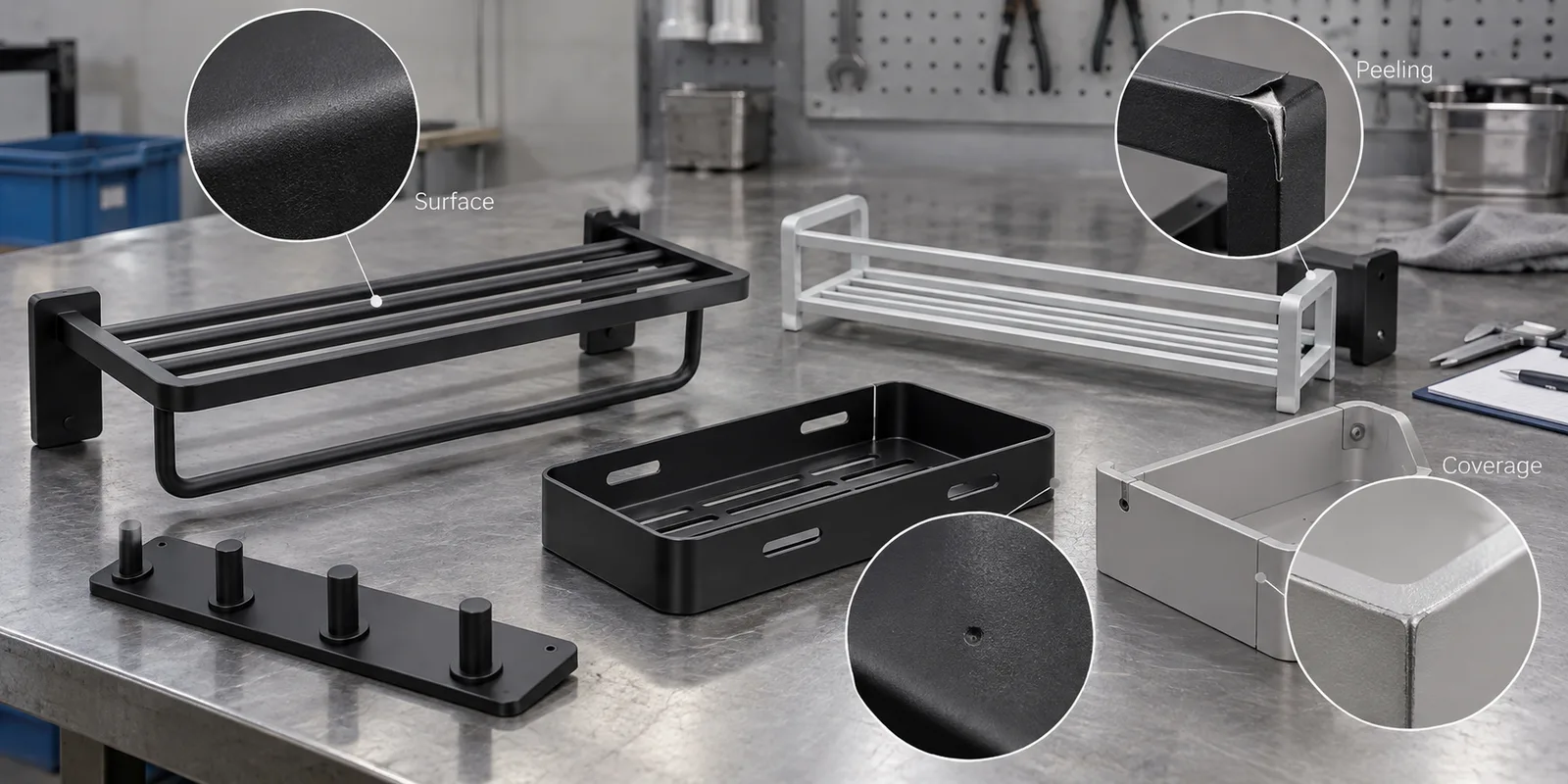
Powder coating defects metal racks show most often include peeling, poor coverage, pinholes, rough particles, color variation, runs or sags, and damage around welds or packaging contact points. Buyers can reduce the risk by defining the base material and finish reference, reviewing pre-treatment and hanging areas, approving a finished sample, and inspecting production under consistent lighting. A coating cannot correct a weak weld, sharp edge or contaminated surface. Acceptance criteria should be agreed for the specific product before bulk production.
Which powder coating defects should metal rack buyers recognize?
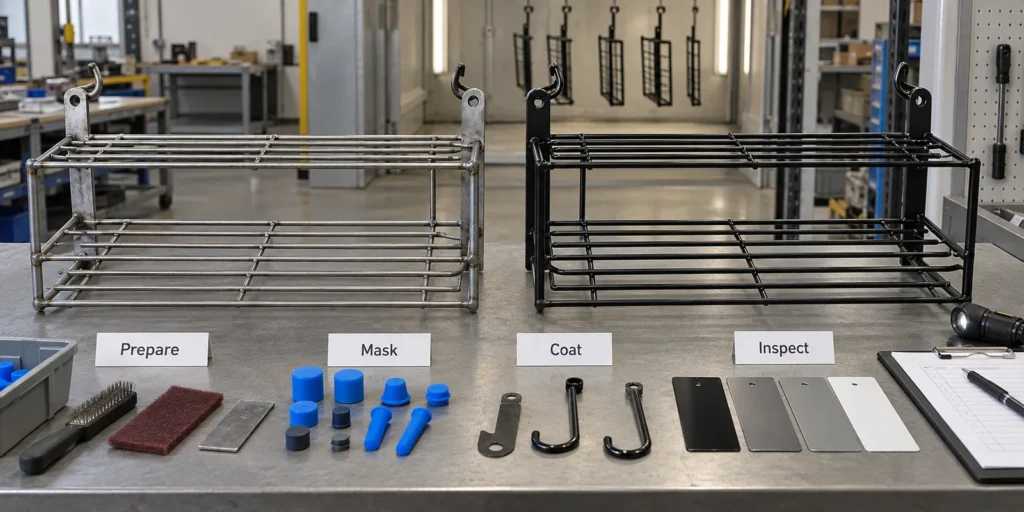
Buyers should recognize defects by their visible form and likely process area, then record the location and extent instead of using a general comment such as “finish is bad.” Clear descriptions help the factory investigate the relevant preparation, application, curing, handling or packaging step.
Peeling is separation of the coating from the base material or from an underlying layer. It may appear at an edge, bend, weld, screw hole or damaged area. The exact cause needs investigation; photographs alone do not prove whether preparation, contamination, cure, impact or another factor is responsible.
Pinholes are small openings in the coating surface. They may be easier to see under angled light. Rough particles or inclusions create raised points, while craters form small depressions. Buyers should distinguish isolated marks from a repeated pattern across a batch.
Thin coverage often appears on sharp edges, deep corners, closely spaced wires and hidden bracket areas. A rack can look acceptable from the front while showing incomplete coverage at weld intersections or the wall-facing side.
Runs, sags or heavy build create uneven texture and can interfere with assembly. Excess coating around threads, slots or fitted parts may prevent screws, hooks or covers from working correctly. Masking and post-finish checks should follow the approved product design.
Color, gloss and texture variation should be evaluated against an approved reference and under consistent light. Differences between batches, parts or viewing angles need to be described precisely. A digital screen image is not a reliable color standard by itself.
Why does coating peel on a bathroom rack?
Coating can peel when the substrate is not suitably prepared, contamination remains, the coating and cure are unsuitable for the project, or the finished surface is damaged during assembly, packing or use. The failure should be traced through the complete process.
Oil, dust, rust, polishing residue and handling contamination can interfere with adhesion. Weld areas and ground transitions deserve attention because their surface condition may differ from the rest of the wire or tube.
Sharp edges and burrs can create weak coverage and become damage starting points. Product design and metal preparation therefore matter before powder is applied. A thicker-looking coating does not automatically solve an unsuitable edge.
Bending or assembling a coated part can stress the finish. If components must flex, slide or press together after coating, review those contact points on the sample. Assembly tools and fixtures should not scrape visible surfaces.
Packaging can also cause a coating peeling bathroom rack complaint. Loose screws, hard dividers or movement between racks can chip the finish. Investigate whether the defect existed before packing or appeared at a repeated carton contact point.
Bathroom exposure adds moisture, cleaning products and residue, but no coating should be described as guaranteed rust-proof. Material, preparation, coating system, fabrication, drainage, maintenance and use environment all influence performance.
How do structure and welding affect powder coating quality?
Structure and welding affect where powder can reach, how parts drain and how the surface is prepared. Closely spaced wires, deep corners, overlapping plates and rough joints can make consistent coverage more difficult.
Welding heat can discolor or oxidize nearby metal, and grinding changes surface texture. These areas should be prepared consistently before coating. A smooth front face does not compensate for rough or contaminated weld zones behind the rack.
Drain holes and hanging points should be planned with the finish process in mind. The rack must be held during coating, so small contact marks may occur at agreed locations. Buyers should decide which areas are visible after installation and define acceptable hanging points.
Threaded holes, sliding joints and tight-fitting covers may need masking or dimensional allowance. Coating build can change fit. Assemble a finished sample with the actual screws, brackets and accessories before approving bulk production.
The following table helps buyers connect common surface finish defects with practical review actions.
| Observed defect | Possible area to investigate | Buyer review |
|---|---|---|
| Peeling or flaking | Preparation, contamination, cure, impact or bending | Record location and compare process history |
| Thin or missed coverage | Edges, corners, wire intersections or hidden faces | Inspect all viewing directions under consistent light |
| Pinholes or craters | Surface condition, trapped contamination or application | Count pattern and affected components |
| Rough particles | Cleanliness, handling or coating environment | Compare visible and concealed surfaces |
| Runs or heavy build | Application amount, geometry or cure position | Check appearance and component fit |
| Scratches or chips | Assembly, handling, packing or transport contact | Trace repeated contact points |
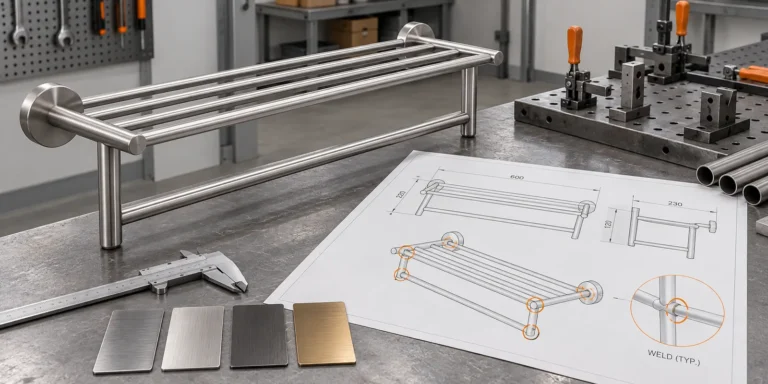
كويتور OEM bathroom hardware manufacturing process can include structure, welding, grinding, finish and packaging discussion before a powder-coated sample is approved.
What should buyers approve on a powder-coated sample?
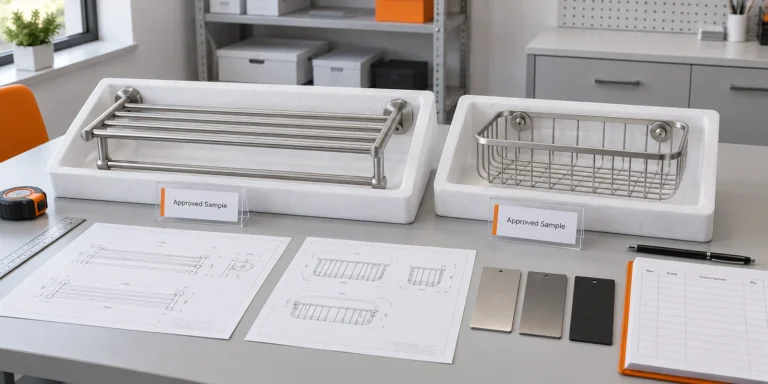
Buyers should approve color, gloss, texture, coverage, edge treatment, weld appearance, assembly fit and packaging contact on the actual finished sample. The approval should identify the reference, lighting and any accepted limitations.
Check the sample from the normal viewing distance and close range. Rotate it under the same light to inspect front, back, underside, brackets, wire intersections and mounting areas. Record which surfaces are decorative and which are normally concealed.
Compare the finish with a physical color or texture reference where possible. Keep photographs for communication, but recognize that screens and cameras change appearance. Retain an approved sample for production comparison when practical.
Assemble the rack after coating. Confirm that hooks, trays, covers and screws fit without scraping or excessive force. Check that masked areas and threads remain functional.
Review packaging with the finished sample, not an uncoated frame. Add separators, sleeves or accessory bags where needed. Verify that labels, ties and carton edges do not press against the main viewing surface.
Any adhesion, corrosion or other performance check should use project-specific conditions and acceptance criteria. Do not invent test hours or convert an informal demonstration into a certification claim.
Approve boundary samples where appearance decisions are difficult to describe. One reference can show the intended finish, while another records a limited condition the buyer will or will not accept in a defined location. Label each sample by product, color and date so it is not confused with an earlier revision.
Check whether components are coated before or after assembly. A pre-coated part may be scratched during joining or fitting, while a fully welded assembly can create difficult corners. The quotation and sample record should state the intended sequence.
Ask whether production parts will use the same base material, preparation route and finish code as the sample. If a temporary sample method is used, require an explanation of how the production result may differ and whether another approval is needed.
For multi-component racks, place parts side by side and assembled. Color or texture variation may be less visible separately but obvious after a shelf, bracket and towel bar are joined. Review replacement components against the same reference.
How should powder coating inspection be performed before shipment?
Powder coating inspection should use approved references, consistent lighting, defined sample selection and clear defect categories. Inspectors should record the product model, color, batch and affected location.
Begin with identity and quantity. Confirm that cartons and units match the purchase order and finish code. Similar black or white products may use different gloss or texture, so names alone are not enough.
Inspect a representative selection from different cartons and production points. Review all sides and functional interfaces. If a repeated defect appears, expand the investigation according to the buyer’s agreed inspection plan.
Separate appearance defects from fit or protection problems. A rough particle on a concealed bracket differs from peeling on the front rail, while coating inside a thread may be an assembly issue. Acceptance should reflect location and intended use.
Check assembled function and packaging. Confirm hardware count, component fit and movement protection. Photograph recurring contact points and compare them with carton dividers or accessory positions.
Record findings with counts and images rather than broad statements. The supplier can respond more effectively when the report identifies the model, area, defect type and observed frequency.
Inspection lighting should reveal the surface without creating unrealistic expectations. Agree a normal viewing distance and use angled light for investigation. Separate defects visible during ordinary use from tiny marks found only under extreme magnification.
When a defect is confirmed, identify affected cartons and production timing before rework. Cleaning, touching up or recoating can change appearance and dimensions. The correction method should be reviewed for the affected product rather than assumed to be harmless.
Reworked pieces should pass the same fit, finish and packaging checks as first-pass products. Pay attention to threads, covers and contact areas because extra coating or handling may affect assembly.
Maintain a short defect library with approved photographs and descriptions. It can help purchasing, factory and third-party inspectors use the same language on repeat orders, especially when different people review the product.
What checklist helps reduce surface finish defects?
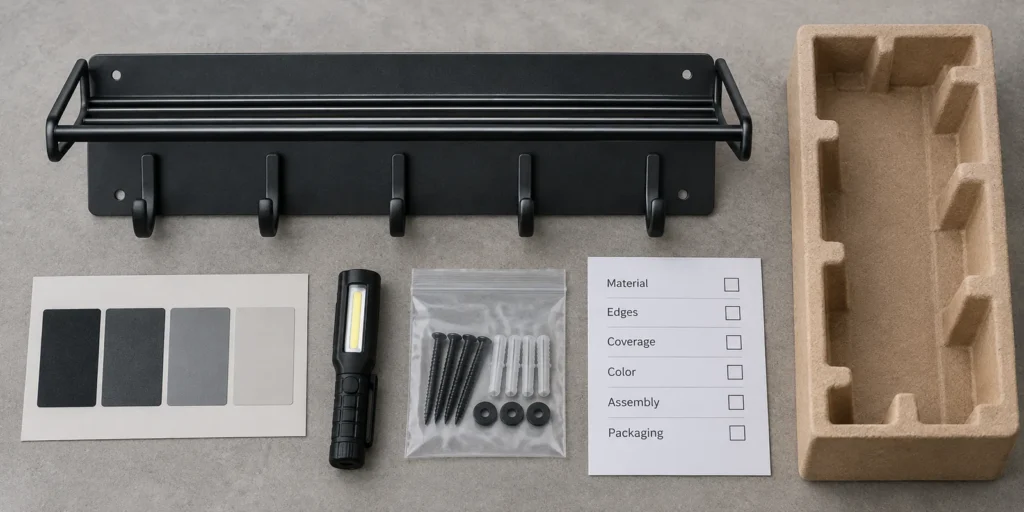
A useful checklist connects product design, metal preparation, coating reference, sample approval, production inspection and packaging. It helps buyers manage powder coating defects metal racks may develop without relying on one final visual check.
- Product use: installation area, moisture exposure and cleaning expectations.
- Base material: agreed material and condition for every coated component.
- الهيكل: edges, corners, overlaps, welds and areas that are difficult to coat.
- Preparation: project-specific cleaning and surface preparation discussion.
- Finish reference: color, gloss, texture and visible-surface priorities.
- Hanging and masking: approved contact points, threads and fitted areas.
- Sample: finished and assembled reference with recorded revisions.
- Inspection: lighting, sample selection, defect descriptions and acceptance criteria.
- التغليف: sleeves, separators, hardware bags and carton contact points.
- Change control: review any material, structure or coating change before production.
Additional مصادر توريد تجهيزات الحمامات cover related decisions about welding, samples, packaging and quality inspection.
When comparing supplier quotations, confirm whether coating preparation, masking, custom color development, assembly and individual protection are included. A lower unit price may describe a different finish scope. Ask suppliers to list exclusions and any minimum quantity related to a special powder or packaging version.
At Koitor, MOQ can start from 100 pieces depending on structure, material, finish and packaging. A custom powder color may affect practical purchasing and sample arrangements, so the buyer should confirm it for the specific project.
This extended checklist gives buyers a consistent way to review powder coating defects metal racks may show during sample approval, production and final inspection.
Frequently asked questions about powder-coated metal racks
These answers address common buyer questions about peeling, inspection and sample approval. Final requirements should follow the specific product and finish system.
Does thicker powder coating always prevent peeling?
No. Adhesion and durability depend on the complete substrate, preparation, application, cure, design and handling process. Excessive build can also interfere with fitted components.
Can powder coating hide rough welds?
It may change their appearance, but it does not correct poor joint geometry, sharpness or contamination. Welds and ground transitions should be reviewed before coating.
Why are edges more likely to show damage?
Edges may receive different coverage and are exposed to handling or impact. Review edge design, preparation, coating and packaging together.
Can buyers approve color from a photograph?
Photographs are useful for communication but not a complete color standard. Approve a physical reference or finished sample under agreed lighting when color consistency matters.
Should every small mark be rejected?
Acceptance depends on location, visibility, function and the agreed quality standard. Define defect categories before inspection so decisions are consistent.
How can packaging prevent coating damage?
Separate metal parts and loose hardware, protect projecting areas and control movement inside the carton. Confirm the method with finished samples.
Review powder coating requirements with Koitor
Koitor Hardware can review drawings or physical samples for powder-coated towel racks, shower caddies, baskets and home storage hardware. The family-owned factory supports small-batch OEM projects with direct discussion of structure, welding, finish, assembly and packaging.
Need Help Reviewing a Powder-Coated Rack?
Send Koitor your drawing or sample, base material, finish reference, defect photographs, packaging idea and target quantity. Our team can review practical sample and production points before quotation.
OEM / العلامة التجارية الخاصة
حوّل دليل التوريد هذا إلى موجز منتج
يرجى إطلاعنا على المنتج المستهدف، والحجم، والتشطيب، وكمية الطلب، ومتطلبات التغليف. وسيتلقى فريقك تقييمًا عمليًّا لإمكانية التصنيع قبل تقديم عرض الأسعار.

 English
  Español
  Português
  Français
  Deutsch
  العربية