
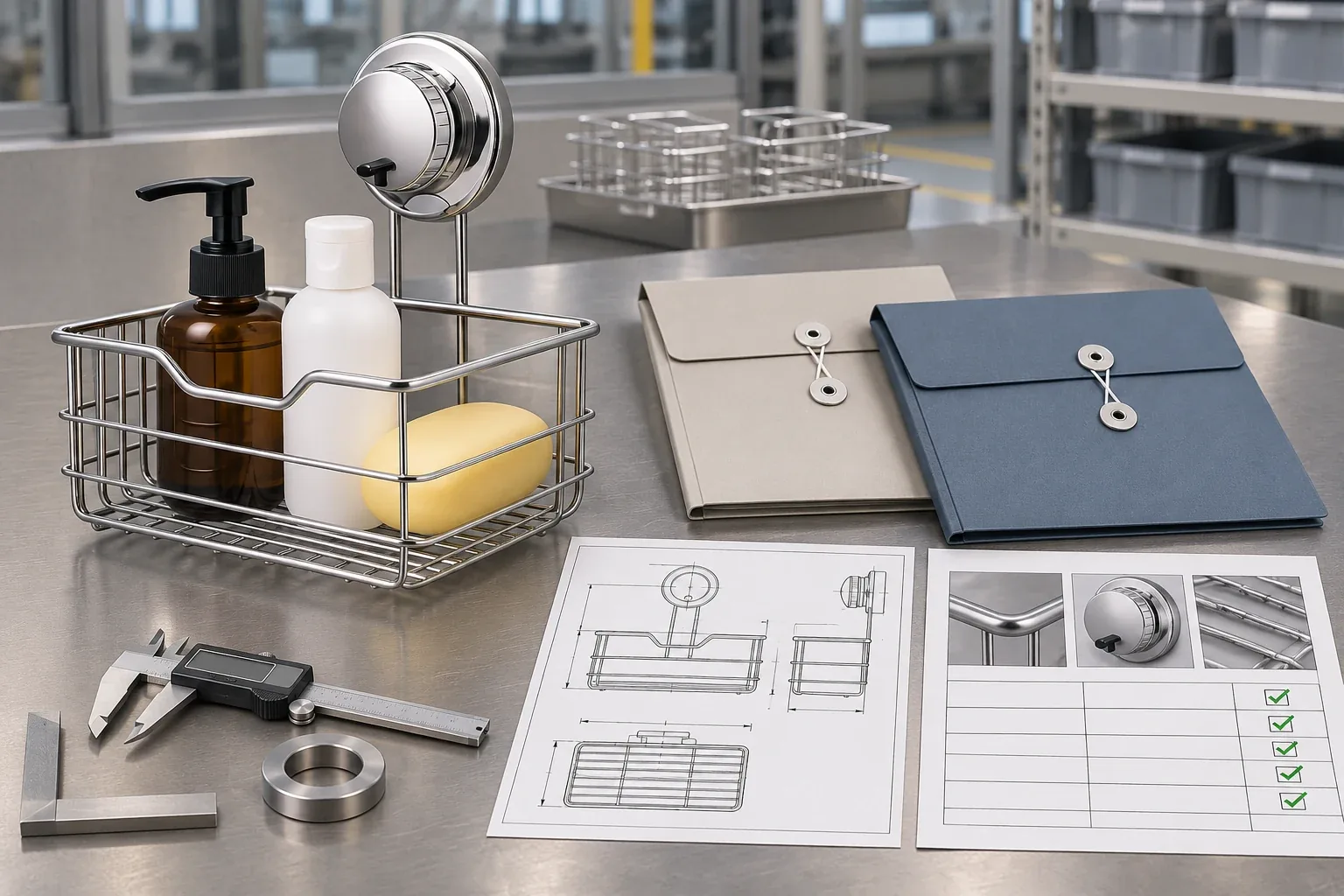
ISO 9001 vs ISO 13485 is a comparison of quality management system scope, not a shortcut for deciding whether a particular metal part is safe or suitable. ISO 9001 is a broadly applicable quality management framework; ISO 13485 is designed for organizations involved in the medical device sector and its regulatory-purpose quality management. Buyers should identify the supplier’s actual role, the product and market context, the certificate scope and the separate evidence needed for the component. A standard name alone does not approve a material, finish, process or end use.

What decision does this comparison help buyers make?
Purchasing teams may see both standard numbers in supplier questionnaires, customer requirements or audit documents and ask whether one replaces the other. The practical question is narrower: what quality system does the organization maintain, for which activities and locations, and how does that system relate to the product or service being purchased? A certificate can support supplier qualification, but its title cannot answer every product-specific requirement.
This distinction matters when a company buys metal hardware, brackets, fasteners or fabricated components that may be used as one part of a larger product. A buyer should not assume that a component becomes a medical device because it is used near medical equipment, nor that every supplier in a medical supply chain must hold the same certificate. The organization’s actual function, customer obligations, regulatory context and controlled scope must be evaluated by qualified owners. This article provides a supplier-question framework, not legal or regulatory advice.
The comparison also needs current edition awareness. The official ISO public pages reviewed for this article show ISO 9001:2026 published on September 16, 2026, while ISO 13485:2016 remained the confirmed edition as of 2025. Buyers working with certificates that reference a previous edition should ask the certification body or issuer about transition arrangements and the status of that particular certificate. A public edition page does not determine whether an individual certificate is valid or what deadline applies to it.
How do the standards differ in purpose?
ISO 9001 sets requirements for a quality management system that can be applied across organizations and sectors. It concerns how an organization manages processes and aims to meet applicable customer and regulatory requirements within its stated scope. It is not a product specification. It does not define the alloy, coating, dimensions or inspection result for a buyer’s component. A supplier’s ISO 9001 certificate therefore needs to be read as evidence about a defined management system, not as a direct test report for each shipment.
ISO 13485 is tailored to quality management systems in the medical device sector. The official ISO material describes requirements for organizations involved in one or more stages of a medical device life cycle and indicates relevance to suppliers or external parties that provide products or services to such organizations. Its purpose and sector context differ from a broad cross-industry QMS. That still does not mean a certificate alone establishes medical-device classification, product approval, clinical performance, sterilization suitability or market access.
The distinction can be framed as a series of separate questions: which organization is being assessed, what activities are included, what products or services fall within scope, which site or sites are covered, and what customer or jurisdiction-specific requirement applies? If the supplier is a component maker, the buyer needs to know whether the certificate scope actually covers the relevant manufacturing activity. If a distributor or service provider is involved, its role may differ from the original manufacturer’s role. Do not infer scope from a logo on a website.
An effective qualification record keeps these questions in separate columns. One column can identify the supplier’s quality-system standard and edition; another can record the certified entity and location; a third can state the activity performed for the order. Separate columns then capture the product specification, acceptance evidence and open regulatory questions. This prevents a purchasing form from turning “certificate received” into a blanket approval for every item. It also makes later reviews easier: when a site, subcontractor, product design or edition changes, the owner can see which conclusion must be revisited rather than reopening unrelated evidence.
For example, a buyer might source a formed metal support from one factory, a finished fastener from another supplier and a final assembly from a brand owner. The relevant system scope for each organization may differ. The buyer should map who controls the design, who purchases material, who approves a finish change and who releases the finished assembly. A certificate may provide context about one organization’s processes, while the purchase specification and quality agreement define what evidence is expected from each supplier. The example does not determine which standard is legally required; it shows why organizational role and contract scope need to be visible.
Where a customer has a specific requirement, preserve the source and the exact wording. Record whether it comes from a contract, regulatory assessment, internal supplier policy or a product-specific risk decision. If the requirement refers to a standard edition, include that edition and the date it was checked. Avoid paraphrasing “certified supplier” as “certified product” in internal systems or marketing copy. That small distinction keeps the qualification record accurate and helps prevent claims that a certificate did not make.
| سؤال من المشتري | ISO 9001 context | ISO 13485 context | What still needs separate review |
|---|---|---|---|
| What type of system is being discussed? | Broad QMS framework usable across sectors | QMS framework tailored to medical-device sector context | The organization’s current certificate and scope |
| Does the standard specify a component’s metal or finish? | No | No | Drawing, material, finish and product requirements |
| Does the number alone prove every site is covered? | No | No | Certificate locations and activity scope |
| Does certification prove a product is approved for a market? | No | No | Applicable regulatory and customer evidence |
| Does it prove a lot passed inspection? | No | No | Defined inspection, traceability and acceptance records |
الـ ISO 9001 official page و ISO 13485 official page describe their respective scopes and editions. Use those pages to establish the current public edition context, then obtain the supplier’s actual certificate and applicable controlled documentation. Do not reconstruct a clause-by-clause comparison from public summaries or from older comparison tables when the editions differ.
How should a buyer read a supplier certificate?
Start by checking the issuing organization and the certificate’s current status through an appropriate verification route. Confirm the exact legal entity name, site address, certificate number, standard edition, effective period if stated, and scope description. The relevant organization may trade under a brand that differs from the legal entity on the certificate. If multiple facilities are involved, verify which one performs the work and whether it is included.
Read scope language literally. A certificate might cover design, manufacture, assembly, distribution, servicing or another defined activity; it does not automatically include every product or process a supplier advertises. If the scope is broad or unclear, ask the supplier to explain how the purchased operation sits within it. The certification body, not a buyer’s visual guess, is the right party to clarify certificate status and scope questions.
Next, compare the certificate against the actual order flow. Identify who buys the raw material, who forms or joins the component, who applies the finish, who performs final inspection, and who releases the shipment. If work is outsourced, determine how the certified organization controls the external provider. A supplier’s management system may govern its purchasing and control process, but it does not automatically establish the quality system of every subcontractor or confirm that a specific lot met the drawing.
The same discipline applies to locations. A group may operate multiple factories or offices; a certificate for one address does not automatically establish the same system at another. If the product is made at a different facility from the one shown on the certificate, identify the relationship and ask for evidence that the relevant site and activity are within scope. A company website or group chart is useful context but is not a substitute for verification.
Finally, separate certification from performance evidence. A QMS certificate is not a substitute for material identification, dimensional results, coating documentation, product testing or shipment inspection when those are required. Conversely, a supplier may provide product evidence without holding a particular management system certificate. Choose supplier qualification requirements based on the risk and applicable obligation, not on a generic assumption that a higher-sounding standard guarantees a better product.
What should a buyer require for metal hardware?
Begin with the part and the intended use. A hypothetical metal basket, rail support or bracket may be a component in a larger assembly. The drawing should define its material, dimensions, finish, joining details, interfaces and any inspection characteristics that matter. The quality plan should identify the evidence expected, sampling approach if applicable, disposition of nonconforming product and responsibility for approval. These are product controls; they are not supplied by the standard number alone.
Then identify the supplier’s role. Is the company the manufacturer, a trading intermediary, a design owner, a finishing processor, an assembly supplier or more than one of these? Which organization controls revisions and approves sub-suppliers? Which site performs the work? Clear answers prevent a certificate for one organization from being mistakenly applied to another entity in the chain. They also help the buyer route product questions to the person who can provide the right record.
For a medical-device context, ask the customer or regulatory owner which requirements apply to the purchased component and supplier activity. A product’s use in a medical environment does not by itself answer whether the part or supplier falls under a specific requirement. Intended purpose, product classification, jurisdiction and contractual relationships may matter. The current official standard scope can inform the conversation, but the qualified regulatory or quality owner must determine applicability.
For a general metal hardware sourcing context, a buyer may use ISO 9001 as part of a supplier assessment without implying that certification guarantees corrosion resistance, cleanliness, load capacity or dimensional conformity. Define those properties separately in the drawing, purchase agreement and inspection plan. If the buyer’s customer requires ISO 13485, make that requirement explicit and confirm which entity and activity must be covered. Do not silently substitute ISO 9001 or assume ISO 13485 covers every product requirement.
Edition changes and transition questions
Standards are revised, and procurement documents may lag behind current editions. The research for this article confirms the official ISO page lists ISO 9001:2026, published September 16, 2026, while ISO 13485:2016 was the confirmed edition on the official page reviewed in 2025. When a purchase document cites an older edition, do not overwrite it automatically. Ask the customer, supplier quality owner and certification body which edition governs the contract and what transition arrangements apply.
A withdrawn or superseded publication does not, on its own, tell a buyer the status of an individual certificate. The organization may be operating under a transition period, a customer may have a separate contract requirement, or an issuer may have updated the certificate. Buyers should seek the certificate’s current status and written clarification from its issuer or certification body. Avoid announcing a universal expiration date based only on the publication of a new edition.
Do not rely on a clause mapping written for an older edition as a current conformity analysis. It may compare different requirements or omit revised context. If a supplier is transitioning, ask for the plan, the responsible certification body and the evidence that is relevant to your purchase. That is a governance discussion; it does not make the buyer responsible for certifying the supplier.
Common mistakes when comparing the two standards
One mistake is treating ISO 13485 as simply “stricter ISO 9001.” The standards have different purposes and sector contexts; a one-dimensional ranking misses what each system is intended to address. A supplier’s scope and the buyer’s application matter more than a general adjective. The right question is whether the organization’s system and evidence fit the real contractual and regulatory need.
Another mistake is equating certification with product conformity. A certificate does not tell a buyer which alloy was used in the latest shipment, whether a coating met a requirement, or whether a dimensional characteristic passed inspection. Those claims require appropriate product and lot evidence. Ask for the evidence that directly addresses each requirement and maintain a clear connection to the purchase order and revision.
A third mistake is assuming all upstream suppliers need the same certification. Requirements should follow the applicable standard, customer obligation, product risk and supplier role. A company that supplies packaging or an uncritical component may not have the same position as the organization responsible for a medical-device design or manufacturing process. The article cannot determine that status for an individual supply chain; the regulatory and quality owners should.
A fourth mistake is accepting a certificate image without checking scope and identity. The name may be incomplete, the site may differ, or the listed activity may not cover the purchased process. A fifth mistake is using a 2015-versus-2016 comparison as if it were a current crosswalk for ISO 9001:2026. Always record the edition and verification date in the supplier file.
How can an OEM sourcing review help?
An OEM review can clarify product drawings, material and finish requirements, subcontracted processes, assembly interfaces and the records expected at shipment. It can also identify where a supplier quality agreement, factory audit or product inspection should answer different questions. That coordination is useful when several parties contribute to a component, but it should not be confused with a certification audit or regulatory determination.
Koitor Hardware is a family-owned custom metal hardware factory serving bathroom and home-storage product development. Buyers can discuss drawing or sample customization, manufacturing steps, finish coordination, assembly and packaging preparation. The actual facility scope, suppliers and product requirements should be confirmed for each project; no ISO certification or medical-device manufacturing capability is asserted here. For related buyer frameworks, see the guides to Verify supplier test report authenticity against order scope و technical factory audits.
When requesting a quote, send the component drawing, intended application, required quality-system standard and edition, site or activity scope expected, inspection requirements and documentation list. Identify any requirements that come from your customer or regulatory owner. Ask the supplier to confirm which processes it performs and which are outsourced. If a requirement is not applicable or cannot be confirmed, keep that item open rather than converting an assumption into a purchase condition.
Create a supplier-scope matrix
A practical matrix can prevent certification evidence from being copied into the wrong part of a supplier file. Start with one row per legal entity or site involved in the order. Record the supplier’s role, the activity it performs, the standard and edition named in its certificate, the scope wording, the product or service in the purchase, and the evidence owner. Add a separate column for product-level requirements such as material records, inspection results or finish evidence. That structure keeps system information and product acceptance distinct.
For a multi-tier purchase, include outside processors and distributors where they affect the order. The goal is not to demand that every organization hold every standard; it is to see who performs each controlled activity and how the primary supplier manages the handoff. Ask whether the relevant site appears on the certificate and whether the listed scope includes the activity. If the answer is uncertain, send the question to the supplier quality contact or certification body rather than guessing from a certificate logo.
The matrix also helps identify changes that should trigger review. A new plant, legal-entity change, outsourced operation, revised customer requirement or standard edition may affect the qualification record. Decide who monitors these changes and what notification is expected. A supplier questionnaire can ask for updates, but the buyer should define the review process instead of assuming a certificate remains current indefinitely.
Finally, link the matrix to the controlled part number and purchase-order revision. A record should let a reviewer move from the supplier’s system evidence to the purchased product and then to the relevant acceptance documents. If a QMS certificate covers one entity while a separate factory makes the part, state the relationship and evidence path. Clear mapping supports a defensible decision without overstating what the standard certifies.
Supplier qualification checklist
- Confirm the legal entity and manufacturing or service location.
- Record the standard number and edition exactly as shown.
- Verify certificate status and scope with an appropriate source.
- Match the listed scope to the actual activity and purchased product.
- Identify sites, subprocessors and external providers involved in the order.
- Separate supplier QMS evidence from material, finish, dimensional and product test evidence.
- Ask which customer or jurisdictional requirement creates the certification requirement.
- Confirm who owns applicability decisions for a medical-device context.
- Record edition-transition questions and the responsible issuer or certification body.
- Link product acceptance criteria to the controlled drawing and order revision.
- Define which records must accompany shipment and how they identify the lot.
- Review changes to scope, location, process or subcontractor before repeating the order.
الأسئلة الشائعة
Does ISO 13485 replace ISO 9001?
They serve different purposes and have different scopes. Whether one or both are required depends on the organization, customer, contract and applicable regulatory context. Do not assume one automatically substitutes for the other.
Does an ISO 9001 certificate prove a metal component passed inspection?
No. The certificate concerns a quality management system within a defined scope. Product acceptance requires the agreed inspection or test evidence for the actual part and order.
Does every medical-device supplier need ISO 13485?
This article cannot make that determination for every jurisdiction, product or supplier role. Ask the responsible regulatory and quality owners to identify applicable obligations and customer requirements.
What should I do with an older edition listed in a supplier certificate?
Ask the certificate issuer or certification body to confirm current status and transition arrangements, and ask your customer or quality owner which edition governs the purchase. Do not infer expiry from a general edition change.
Work with Koitor Hardware
If you are qualifying a metal hardware supplier, share the component drawing, supplier role, required quality-system scope and product evidence you need. Koitor can review the manufacturing and documentation questions that relate to a customized hardware project and identify which items require confirmation from another party. Discuss the project through the OEM home storage hardware page.

In practical sourcing, ISO 9001 vs ISO 13485 should frame a defined comparison; the purchase specification still needs the exact material or process, acceptance criteria, and evidence required for the actual part.
المصادر
Discuss Your ISO 9001 vs ISO 13485 Requirements
Share the controlled drawing or sample, intended use and the specific question you are resolving. Koitor can discuss relevant metal hardware manufacturing scope and identify details that need confirmation for your project.
OEM / العلامة التجارية الخاصة
حوّل دليل التوريد هذا إلى موجز منتج
يرجى إطلاعنا على المنتج المستهدف، والحجم، والتشطيب، وكمية الطلب، ومتطلبات التغليف. وسيتلقى فريقك تقييمًا عمليًّا لإمكانية التصنيع قبل تقديم عرض الأسعار.



 English
 Español
 Português
 Français
 Deutsch
 العربية