
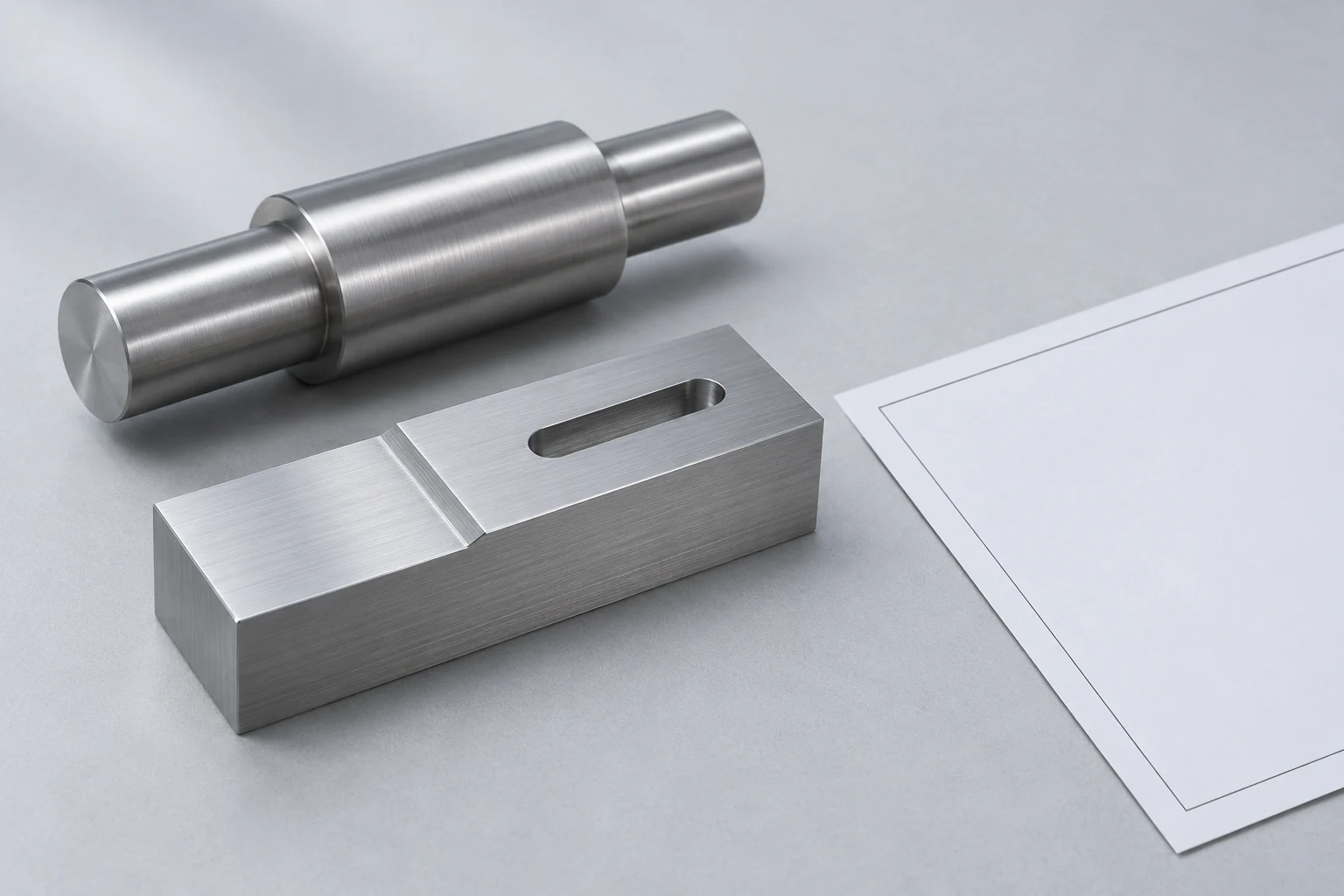
Lathe vs milling machine compares two common machining arrangements: a lathe typically rotates the workpiece while a cutting tool acts on it, while a mill typically rotates a cutter and moves it relative to a held workpiece. Turning commonly creates rotational features such as a cylindrical surface, while milling commonly produces flats, slots, pockets and other non-round features. These are typical motion patterns, not absolute rules for every machine. A machine’s name or photograph does not prove that a supplier can make a particular part to its drawing, tolerance, finish or volume requirement.
What does lathe vs milling machine mean for a buyer?
The phrase lathe vs milling machine can describe a basic equipment comparison, but an importer usually needs a more specific answer: which route is proposed for the component, what features must be made, and what evidence shows the proposed supplier can meet the drawing? The buyer’s concern is not the machine label in isolation. It is whether the part geometry, workholding, tooling access, process sequence and inspection plan are suitable for the order.
In a conventional lathe arrangement, the workpiece rotates around an axis and a cutting tool removes material. This motion naturally supports rotational features, including turned diameters or faces that share an axis. In a conventional mill, the cutter rotates and moves relative to a workpiece held in a fixture or other workholding. Milling is commonly used for features such as flats, slots, pockets, or shapes that do not revolve around a single axis.
The word “typically” matters. Machine configurations vary. Some lathes use live tooling or additional axes that allow milling operations; some milling setups use rotary workholding or other motion. A part can pass through multiple machines, or one machine can perform more than one operation. The source reference from Productivity describes the common motions and notes the overlap of modern lathes with live tooling. It does not provide a universal rule that a mill’s workpiece never moves or that every lathe uses one fixed tool arrangement.
For a buyer of bathroom or home-storage hardware, machined features may belong to a bought-in shaft, pin, insert, spacer, fixture, bracket or custom part. These examples illustrate the buyer’s decision; they do not state that Koitor makes any of those items on a lathe or mill. The product may be made by a specialist machining supplier or supplied as a component within a larger custom metal assembly. The buyer should identify who owns the machined part and who confirms its capability.
How do the usual motions and features differ?
A helpful comparison links three things: what rotates, what feature the route commonly creates, and what the buyer must verify. That gives the buyer a more useful question than “Which machine is better?” There is no universal better machine independent of the part, its quantity, the supplier’s equipment and the acceptance requirements.
| Comparison point | Typical lathe arrangement | Typical milling arrangement | Buyer’s check |
|---|---|---|---|
| Main rotating element | The workpiece rotates around an axis | The cutting tool rotates | Ask the supplier to explain the actual setup proposed |
| Common feature family | Cylindrical, concentric or other rotational surfaces | Flats, slots, pockets and non-axisymmetric features | Identify the critical features on the drawing |
| Workholding question | How the part is held and supported while rotating | How the part is held while the cutter moves | Confirm that the datum and fixture can control the relevant part surfaces |
| Possible overlap | Live tooling or added axes can perform some milling-type operations | Rotary tables or additional axes can add workpiece motion | Do not classify the whole route from the machine label alone |
| Evidence question | Can the supplier demonstrate the required turned features and inspection? | Can the supplier demonstrate the required milled features and inspection? | Ask for evidence tied to the same geometry, material and revision |
This map is a broad educational distinction, not a machining instruction or capability claim. It does not specify machine brands, axes, tolerances, surface-finish values, speed, feed, tool geometry, fixturing sequence, or production cycle time. Those details depend on the actual machine, tooling, workholding, material, drawing and qualified process owner.
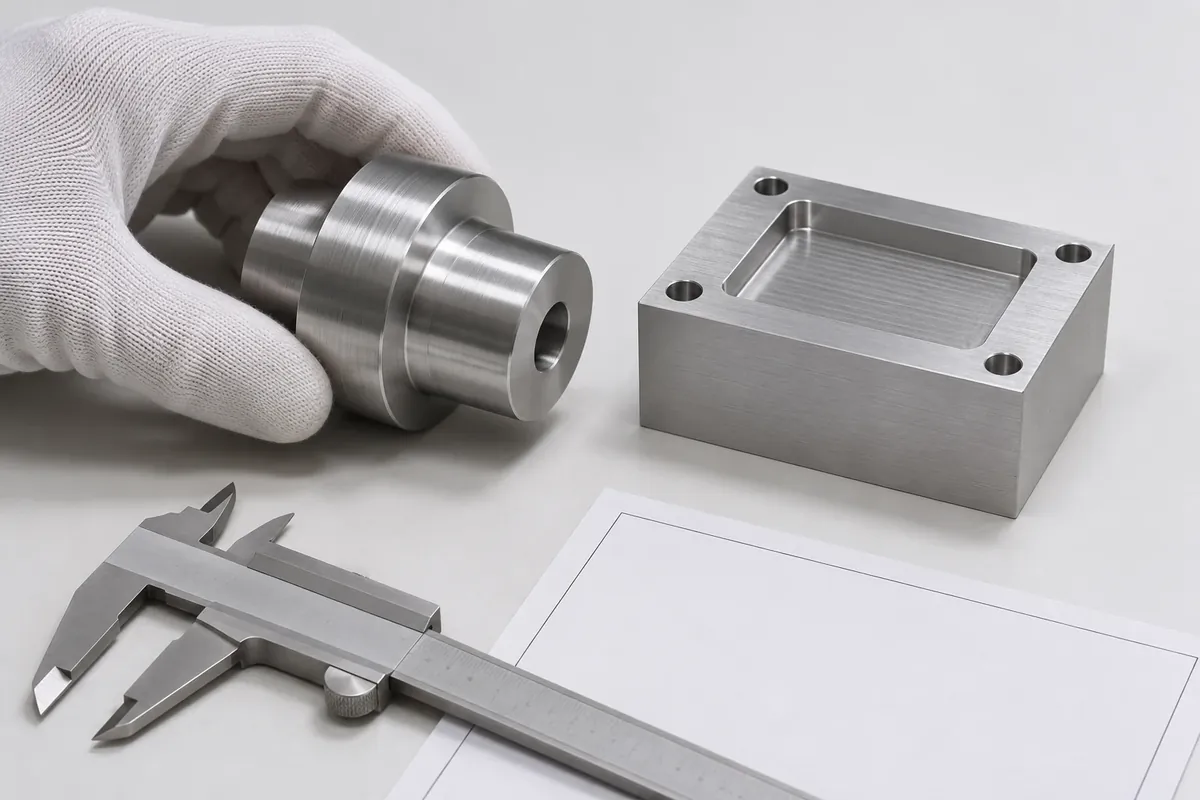
A simple illustrative pin may include a cylindrical outside diameter and a shoulder, which suggests why turning could be considered. A flat plate with a milled slot or pocket may suggest a milling operation. But a drawing may call for secondary operations, cross-holes, flats on a round part, turned contours, or a different manufacturing route. The shape alone cannot prove which exact machine or sequence is best.
The buyer’s first responsibility is to identify the features that matter. Are the diameter, length, flatness, slot position, concentric relationship, hole location, edge condition, or mating fit critical? The drawing should define the required dimensions and tolerances. The supplier should explain how the proposed route controls those features and how they will be measured. If a dimension is not critical, the buyer should avoid adding an unsupported tolerance merely because an equipment article mentioned one.
The quality record also matters. A part may look similar to a reference sample but differ in a hidden dimension or a feature that affects assembly. The buyer can ask what inspection evidence is planned for the specified features and how a sample will be identified to the drawing revision. The purpose is to connect a capability statement to the part being purchased, not to require a factory tour or a specific machine model for every order.
Why does the part geometry matter more than the machine name?
A machine name is a coarse description of equipment architecture. A product drawing defines the required component. Between those two are tool access, workholding, datum selection, sequence, material behavior, repeatability and inspection. A supplier’s answer should connect them. If a supplier simply says “we have a mill” or “this is a lathe part,” the buyer still needs to know whether the proposed route is appropriate for the actual geometry.
Consider a hypothetical round spacer that also needs a cross-hole. The outside diameter and end faces may be rotational features, while the cross-hole may require another operation or a different machine configuration. The fact that a lathe can turn the outside diameter does not prove the supplier can produce the cross-hole in the same setup. Conversely, a milling route might make several faces and holes but may not be the simplest proposal for a rotational surface. The supplier should explain the route and the buyer should evaluate the delivered feature requirements.
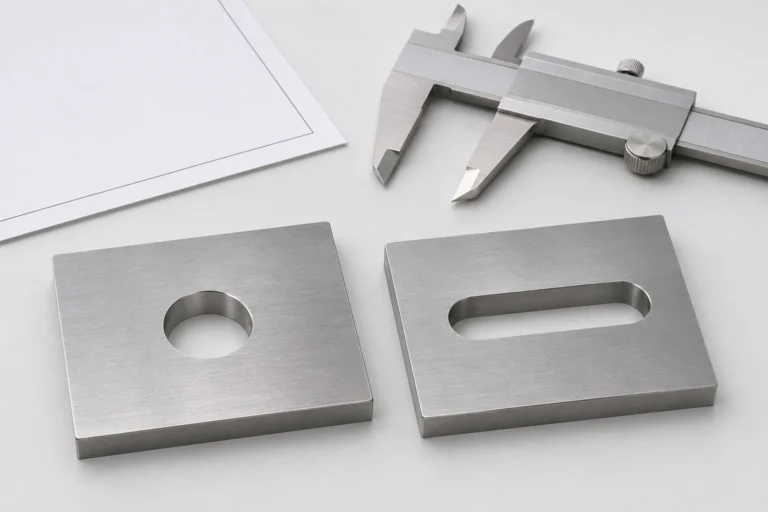
A flat component with a slot provides another example. The buyer may care about the slot width, end radius, location from a datum, edge condition, and its relationship to a mounting hole. Those are drawing questions. They are not automatically answered by knowing that the vendor owns a milling machine. A capability discussion should state which operation is included, which features are controlled, and what sample or measurement record will be returned.
A buyer should also consider the finished state rather than only the machining step. Surface finishing, deburring, coating, assembly or packaging can affect the final dimension, appearance or fit. If a machined feature is masked or coated later, the drawing should state which surfaces remain functional and how the completed part is accepted. A machine route may produce the initial geometry, while the order’s acceptance requirement applies to the final product.
How should a buyer review a supplier’s machining proposal?
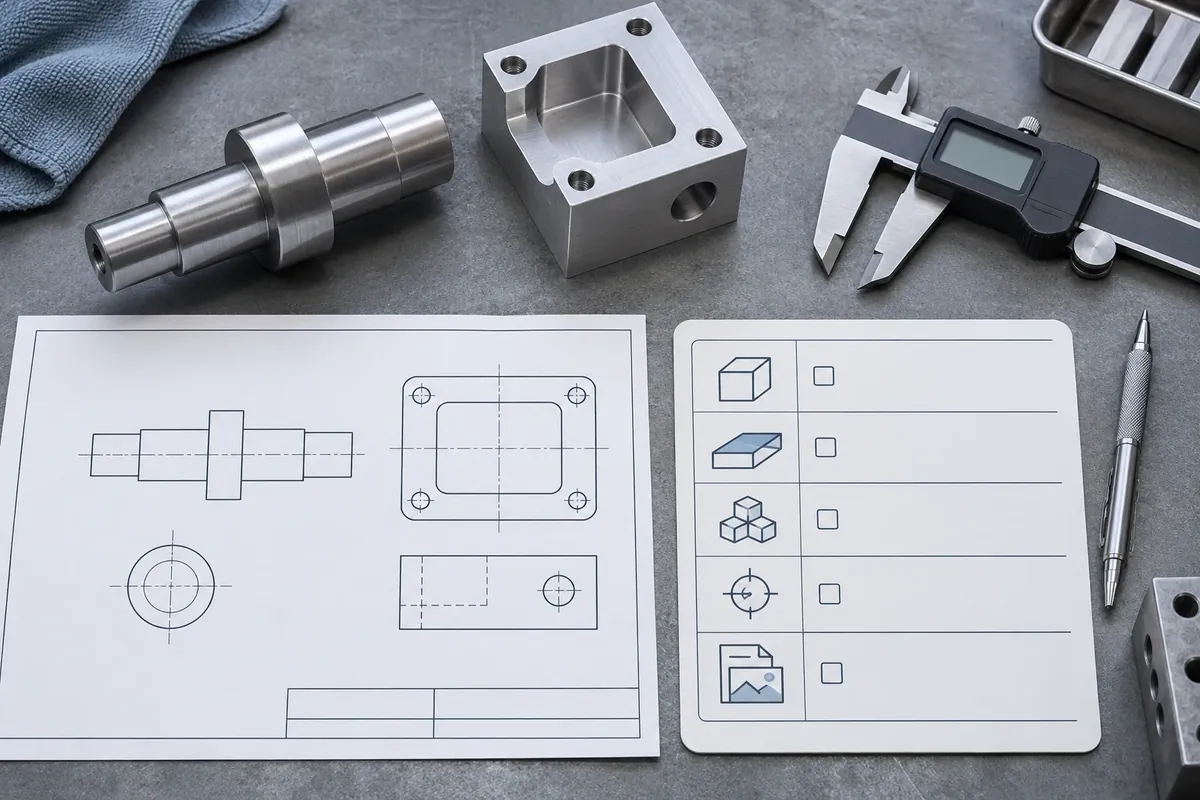
A useful review begins with a controlled drawing and ends with a clear record of the supplier’s proposed route and the buyer’s decision. The supplier need not disclose confidential process details to answer basic scope questions. It should still identify its assumptions and evidence for the features that matter.
Match the quotation to the drawing
Confirm the part number, drawing revision, material, quantity, finish and any secondary operations that the quotation includes. If the supplier’s proposal excludes a feature, inspection or finish, record it before comparing price. Two quotes that use similar machine names may cover different routes or levels of completion.
If the drawing is incomplete, mark the open dimensions or requirements and assign an owner. Do not let the supplier infer a critical tolerance from a visual reference. A drawing, sample or model can help communicate the geometry, but the buyer should specify which is authoritative when they conflict.
For a useful file handoff, the project guide on sending STEP, DXF or PDF files for a sheet-metal RFQ discusses controlled drawing references and file context. The exact format needed for a machined component depends on the supplier and project; that sheet-metal guide is not a machining standard.
Ask what evidence demonstrates the relevant capability
The buyer can ask the supplier to identify a comparable part or feature it has produced, a sample it can submit, or the inspection record it will provide. The evidence should be representative of the same material, geometry, dimensions, finish and production scope where possible. A generic machine photograph proves only that a machine is pictured. A brochure is not evidence that a particular lot met the buyer’s drawing.
If a critical feature is hidden or difficult to inspect after assembly, address it in the acceptance plan before ordering. The buyer and supplier can agree who measures it, what datum or method is used, and what record is retained. This article does not prescribe a measurement method or tolerance; the required evidence belongs to the specification and the responsible quality owner.
Clarify hybrid routes and secondary operations
Ask whether the part is made in one setup or several operations if that difference affects the part or quotation. A lathe with live tooling may make features associated with milling; a separate mill may perform them later; or a supplier may propose another route. The question is not whether one label is technically “correct,” but whether the planned process can produce and verify the defined features.
Where secondary operations are included, identify who performs them and how the part is transferred between suppliers or processes. Any outside machining, finishing or assembly should be clear in the order scope. The main component supplier remains responsible for the agreed deliverables, but specialist capability claims should be confirmed with the party doing the work.
How should a buyer handle a part that uses both motions?
A component can combine turned and milled features. A hypothetical spacer might have a cylindrical outside surface and shoulder, plus a flat, cross-hole or slot that is not defined by rotation around the same axis. The drawing should show the location and relationship of those features, and the supplier should state whether it proposes one machine with additional tooling or more than one operation. This is a planning discussion; the article does not prescribe a sequence or claim that one route is always more economical.
The buyer should pay attention to the datum scheme. If one feature is used to locate another during assembly, identify that reference on the controlled drawing. The supplier can then explain how the proposed setup locates the part and which measurement record will demonstrate the defined relationship. A generic description such as “turn then mill” does not establish the position tolerance, measurement method or final acceptance criterion.
The quotation should also distinguish included operations. One supplier may price a complete part with secondary features, deburring and finish coordination; another may quote only the primary turning or milling step. Compare the same deliverable and identify who is responsible for any outsourced operation. If a feature is made by a second supplier, preserve the part identity and revision across the handoff so the incoming inspection evaluates the intended drawing.
For a first article or approval sample, record which features are being reviewed and whether the sample uses the proposed production route. A sample can help assess geometry and fit, but it should not be treated as proof of every future lot or unmeasured characteristic. The buyer and supplier should agree what further production evidence is needed before order release. This keeps a hybrid route review tied to the part’s requirements instead of assumptions about what a machine can do.
If the buyer changes a feature after sample review, the route may need a new feasibility check. A moved slot, revised shoulder or new finish can affect workholding, access or inspection even when the part still appears to belong to the same machine family. Keep the approved drawing, supplier response and sample identification together, and ask the supplier to state whether the change affects its quoted operation or acceptance evidence. The goal is to prevent an old sample from being used to approve a materially different component.
What sourcing mistakes should buyers avoid?
Choosing a machine before defining the part. A machine comparison does not identify the required features, tolerances, material or quantity. Start with the part and then evaluate the proposal.
Assuming a machine name limits or guarantees every operation. Live tooling, rotary workholding, additional axes and secondary setups can change the route. Ask the supplier to describe the actual configuration rather than relying on a simplified label.
Treating a machine photograph as capability evidence. A photo does not show the tooling, workholding, calibration status, operator, sample geometry or inspection result. Request evidence tied to the ordered component.
Comparing suppliers on price while the scopes differ. One offer may include secondary drilling, finishing or inspection, while another excludes it. Normalize the route and deliverables first.
Using machine terms instead of feature requirements. The buyer may say “mill this bracket” even when the real requirement is a defined slot, flat, hole relationship or surface. Describe the feature and controlled drawing, then let a supplier state its proposed route.
Assuming a sample proves production capability. One sample can support a specific review, but it does not automatically prove repeatability, process control or lot acceptance. Define what the sample validates and what production evidence remains.
Assuming Koitor owns or operates a lathe or milling machine. The project’s approved company facts do not confirm those specific machine types or CNC capabilities. Do not transfer a machine supplier’s statements to Koitor.
Leaving inspection until after the part is finished. Some features become less accessible after finishing or assembly. Identify critical dimensions and acceptance evidence before the supplier commits to a sequence.
Over-specifying a drawing based on generic advice. An unneeded tolerance can raise cost or complicate sourcing. The design authority should decide which dimensions are functional and how they are accepted.
Buyer checklist for a machined component quote
- Controlled part number, drawing revision and model or file reference.
- Material designation, product form and any required material documentation.
- Critical dimensions, datums, interfaces and surfaces.
- Finish, coating, assembly or packaging requirements that apply after machining.
- Supplier’s proposed route and any live-tool, rotary or secondary-operation assumptions.
- Features included or excluded from each quote.
- Inspection evidence for the dimensions or features the buyer defined as critical.
- Sample requirements and what the sample is intended to validate.
- Responsibility for any outside machining or finishing supplier.
- Approval owner for substitutions or drawing changes.
- Final product condition and the record needed at receiving or reorder.
A short checklist helps procurement compare two proposals without requiring the buyer to select a machine architecture prematurely. If the supplier proposes a different route, record it as an alternative and compare it against the same feature requirements. The buyer can then decide whether the change is acceptable based on the drawing, sample and evidence, not on a generic assertion that a machine is more accurate, faster or cheaper.
الأسئلة الشائعة
What is the main difference between a lathe and a milling machine?
In a conventional lathe, the workpiece typically rotates while a tool removes material. In a conventional mill, the cutter rotates and moves relative to a held workpiece. Configurations vary, and modern machines can combine or add motions.
Is a lathe only used for round parts?
Turning is commonly associated with rotational features, but machine configurations and secondary operations vary. A modern lathe with live tooling can perform some milling-type work. The supplier should confirm the actual route for the part.
Does a milling machine always keep the workpiece completely stationary?
No. The conventional comparison describes a rotating cutter acting relative to a held workpiece, but real setups can include rotary tables or additional axes. Ask for the proposed machine configuration rather than treating the basic definition as an absolute.
Can a machine name prove a supplier meets my tolerance?
No. A machine label does not show whether the supplier can hold a particular drawing requirement. Review the actual feature, material, workholding, process, inspection method and evidence for the component.
Should I select the machine route from a part photograph?
No. A photograph can help communicate shape but does not establish dimensions, tolerances, hidden features, material or production acceptance. Use a controlled drawing and a supplier’s route proposal.
Can one machine perform both turning and milling?
Some modern lathes use live tooling or additional axes that permit milling-type operations. The exact ability depends on the machine, tooling, setup and part. Confirm the proposed operations with the supplier.
Does Koitor currently operate a lathe or CNC mill?
The approved company facts do not establish ownership of those specific machines or CNC capability. This guide does not claim Koitor performs machining. Confirm the responsible supplier and route for a specific project.
What should I send a machining supplier?
Send the controlled drawing or model, material, quantity, finish, critical features, tolerances, sample expectations and any inspection evidence requirement. Ask the supplier to state its route assumptions and identify open questions before quotation approval.
المصادر
- Productivity Inc.: Mills vs Lathes — used for conventional rotating-workpiece versus rotating-cutter descriptions and the source-specific note that some modern lathes include live tooling. Broad claims about accuracy, speed, cost, finish or universal machine capabilities are not adopted.
اعمل مع شركة «كويتور» للأدوات
Reviewing a Machined Feature in a Custom Hardware Project?
Share the controlled drawing or sample, critical feature and project requirement. Koitor can discuss a verified bathroom or home-storage hardware scope; the machining supplier must confirm its actual equipment, route and evidence for the part.
OEM / العلامة التجارية الخاصة
حوّل دليل التوريد هذا إلى موجز منتج
يرجى إطلاعنا على المنتج المستهدف، والحجم، والتشطيب، وكمية الطلب، ومتطلبات التغليف. وسيتلقى فريقك تقييمًا عمليًّا لإمكانية التصنيع قبل تقديم عرض الأسعار.

 English
 Español
 Português
 Français
 Deutsch
 العربية