
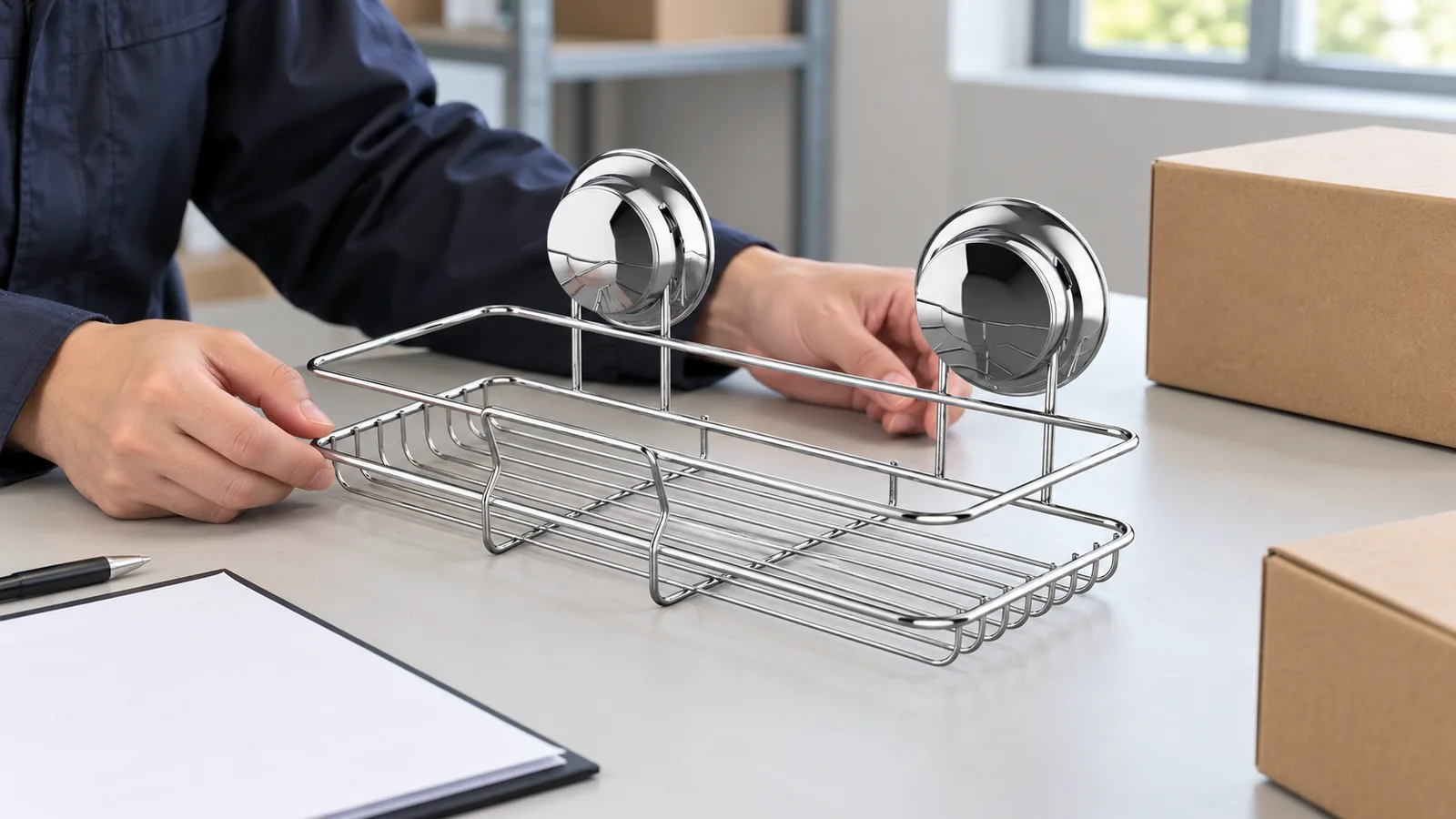
If you are asking how to buy from Alibaba safely for business, treat safety as a sequence of evidence checks—not a badge, a video call or a single successful sample. For a small-batch bathroom or home-storage hardware order, identify the supplier, define the exact product and packaging, compare a sample to written criteria, place and pay for any protected order through the eligible Alibaba.com flow, and keep an inspection record when the goods arrive. This reduces avoidable ambiguity, but no marketplace or checklist can guarantee that every supplier, product or shipment will be problem-free.
What does “safe” mean for a first small-batch order?
Small orders are often useful for testing an assortment or private-label concept, but they still involve real cost and decision risk. A buyer may find a supplier whose profile looks credible, receive a sample that seems acceptable, and then discover that the bulk order uses a different finish, omits a component, arrives in a different carton configuration, or is difficult to dispute because the written order did not specify what mattered. A practical answer to how to buy from Alibaba safely for business begins by separating these risks instead of looking for one badge or guarantee.
Separate the risks rather than asking whether a supplier is simply “safe.” The questions are: is this the correct legal business and contact; can it discuss the product you need; does the sample represent the intended specification; are the order terms specific enough to compare delivery with the agreement; does any platform protection apply to this exact order and payment route; and can you document a discrepancy promptly?
The label “small batch” does not establish a universal minimum order quantity or prove that production will be identical to a sample. MOQ, sample charges, customization, packaging, payment methods, shipping responsibility and timing are project-specific. Request written confirmation for your product and destination rather than assuming that a platform listing applies to your negotiated order.
How should buyers screen a supplier before paying?
Use a profile badge as a lead for questions, not as a substitute for due diligence. Alibaba.com describes its Verified Supplier program as involving third-party on-site verification and assessment information. That can provide a useful signal about the supplier profile, but it does not independently prove that every product shown is made at the assessed facility, that a particular sample meets your requirement, or that future bulk goods will match.
Start with identity and scope. Compare the supplier’s legal or registered business name shown in the platform order, profile, quotation and payment instructions. Ask which entity will accept the order, which entity will manufacture the goods, and whether any subcontracted process or bought-in component affects the product. Differences between a trading entity and a production entity are not automatic evidence of wrongdoing; they do need a clear explanation and consistent documentation.
Then test product fit through a focused discussion. Can the supplier review a drawing or physical sample, confirm dimensions and mounting details, distinguish material from finish, discuss packaging, and answer questions about revisions? A polished profile or broad catalog is weaker evidence than specific, internally consistent answers about your actual model. For a custom wire rack, clarify the basket dimensions, wire arrangement, mounting parts, finish, accessories and any private-label requirements.
Ask for evidence appropriate to the claim. A factory video can help you prepare questions, but it is not the same as an independent audit. A platform verification report should be read within its stated scope and date. A product test report should identify the sample, method and configuration. Do not ask for generic “certificates” without identifying the legal rule, buyer specification or product decision the document is meant to address.
What should a small-batch hardware RFQ and sample define?
Send comparable information to each shortlisted supplier. If one quote excludes the mounting components or individual packaging while another includes them, the prices are not comparable. A concise RFQ can include:
- Product drawing or physical reference sample, with a revision or reference date.
- Overall and critical dimensions, material by component, wire or tube details where relevant, and finish/color requirement.
- Included accessories, fasteners, suction or adhesive parts, hooks, instructions and spare parts, if any.
- Quantity by model and finish, sample requirement, target order structure and what “small batch” means for this inquiry.
- Packaging level: product protection, inner pack, master carton, carton quantity, marks or barcode requirements, and who supplies artwork.
- Destination country, delivery address type, requested shipping arrangement and the Incoterm or responsibility split agreed for the transaction.
- Required documents and testing only when you have identified the applicable legal or retailer requirement.
- Acceptance criteria for visible finish, dimensions, function, assembly and quantity, plus how the buyer and supplier will record a nonconformity.
A sample is a reference for a defined configuration, not a blanket promise about every later unit. Mark what was reviewed: model, material, finish, dimensions, components, packaging and revision. If the sample changes after approval, document the change and ask whether it affects cost, timing, tooling, fit or acceptance.
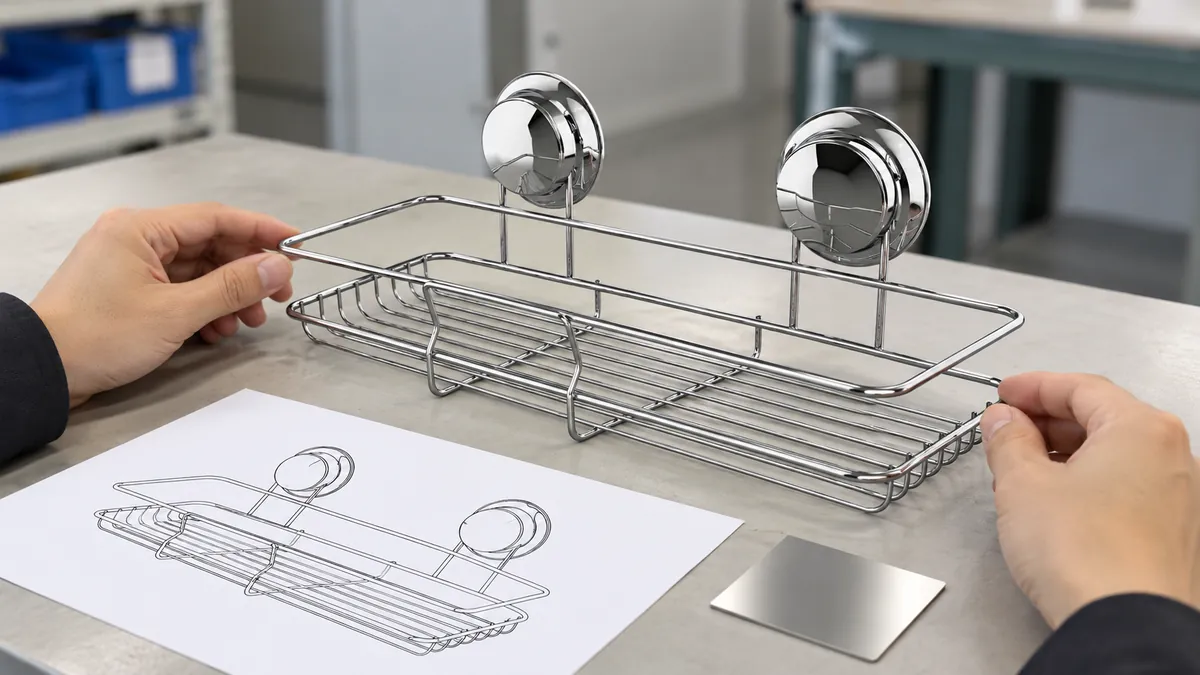
For small-batch bathroom hardware buying, photograph the sample from consistent angles and record critical measurements. If the product uses two suction mounts, for example, capture their spacing and both wire-support paths in the approved reference; do not rely on a general description such as “chrome basket.” The goal is to make the approved version understandable to both sides.
How can the written order reduce ambiguity?
Before you pay, reconcile the quotation, pro forma invoice, platform order and attached specification. The Alibaba.com sourcing guidance recommends putting product quantity, specifications and shipping information into the Trade Assurance order and keeping relevant communication and attachments on the platform. The current interface and terms may change, so review what the live order actually records before checkout.
For a hardware SKU, translate general promises into identifiable entries: model or SKU, drawing revision, material and finish, dimensions or critical tolerances, included parts, packaging, quantity, shipment details, ship date or agreed milestone, and any documented inspection or acceptance condition. Avoid relying on chat statements such as “same as sample” unless the order clearly identifies which sample and what “same” covers.
An order can be concise while still being specific. Attach a dated drawing, sample photo sheet or packaging specification if the platform supports it, then confirm that the order description and attachments refer to the same revision. Where a term is unclear—especially color tolerance, substitute parts, inspection timing, split shipments or shipping responsibility—resolve it before payment rather than assuming it will be interpreted in your favor later.
| Order item | Buyer should define | Evidence to retain |
|---|---|---|
| Product identity | SKU, drawing revision, sample reference and included components | Approved drawing, sample photos and change log |
| Quantity and finish | Units by model/color/finish and any allowed variation | Order line items and accepted sample record |
| التغليف | Unit pack, carton configuration, protection and marks | Packaging drawing or written pack specification |
| Shipment | Destination, responsibility split and agreed timing | Platform order, shipping details and later dispatch record |
| Acceptance | What is checked, when, and how issues are documented | Inspection criteria, dated photos and measurement record |
What should buyers know about Trade Assurance and payment?
Trade Assurance is a platform service for eligible orders, not a guarantee against every commercial loss. Alibaba.com’s current Trade Assurance overview describes orders, payment through Alibaba.com, product or shipping issues and a resolution process. The operative protection depends on the order’s eligibility, the terms accepted, the payment method and the platform’s current conditions.
Before using it, confirm the supplier and order are eligible, the product and delivery terms are recorded in the online order, and the payment instructions appear in the platform’s approved flow. Alibaba’s buyer guidance on Trade Assurance says protection applies to eligible online orders paid through Alibaba.com; the official information also warns that a direct payment to a supplier’s personal account or a payment method outside the checkout options may not be covered. Verify the exact current rule shown for your order and country. Do not transfer money to a different account merely because a chat message or invoice asks you to do so; pause, verify the change through a trusted platform channel, and confirm the legal payee and order record.
A small order does not remove the need to check the beneficiary. Match the payee against the order’s payment details and the supplier identity already verified. Be cautious about urgent requests to switch bank accounts, personal accounts, external payment services or communication channels. If a legitimate payment route is unavailable, resolve the discrepancy with the platform and the supplier before proceeding.
Keep negotiations about specifications, quantity, ship date and quality criteria in the order record or another channel that the current terms recognize. If a dispute later arises, the written order is the point of comparison. Do not assume a protection program will cover a term that was discussed informally but omitted from the order.
How should buyers inspect and document a trial batch?
Plan receipt checks before the shipment arrives. Decide who will count cartons, identify mixed SKUs, inspect packaging, sample units and compare them with the approved reference. If you need a third-party inspection or a specific test, agree its scope, timing, sample selection and cost before production; do not assume that an inspection is included automatically.
At receipt, keep records that connect the goods to the order: outer-carton condition, carton count, SKU labels, packing list, product quantity and any visible damage. For a small trial batch, a simple receiving log can record date, order reference, model, quantity checked, observed issue, supporting photo and the person who reviewed it. For dimensional or finish checks, state which points were measured and what reference or acceptance limit was used. A photograph can show appearance or damage, but it cannot prove a hidden material grade or long-term performance.
Compare the received item with the approved sample and written order, not with memory. Record whether a mismatch is a different product, a revision, an agreed substitution, packaging damage or an unresolved condition. Separate the facts from the conclusion: “two brackets missing from one opened carton” is more useful than “supplier shipped a bad order.” Notify the responsible party promptly through the communication and dispute route required by the live platform terms. The applicable time limits and evidence rules can change; check them in the order and official help center when an issue occurs.
A trial order should also produce a decision for the next order. Record what matched, what did not, what changes were accepted, whether packaging protected the finish, and what needs to be added to the next specification. The trial is valuable when it tests a defined requirement, not simply when it produces a lower unit count.
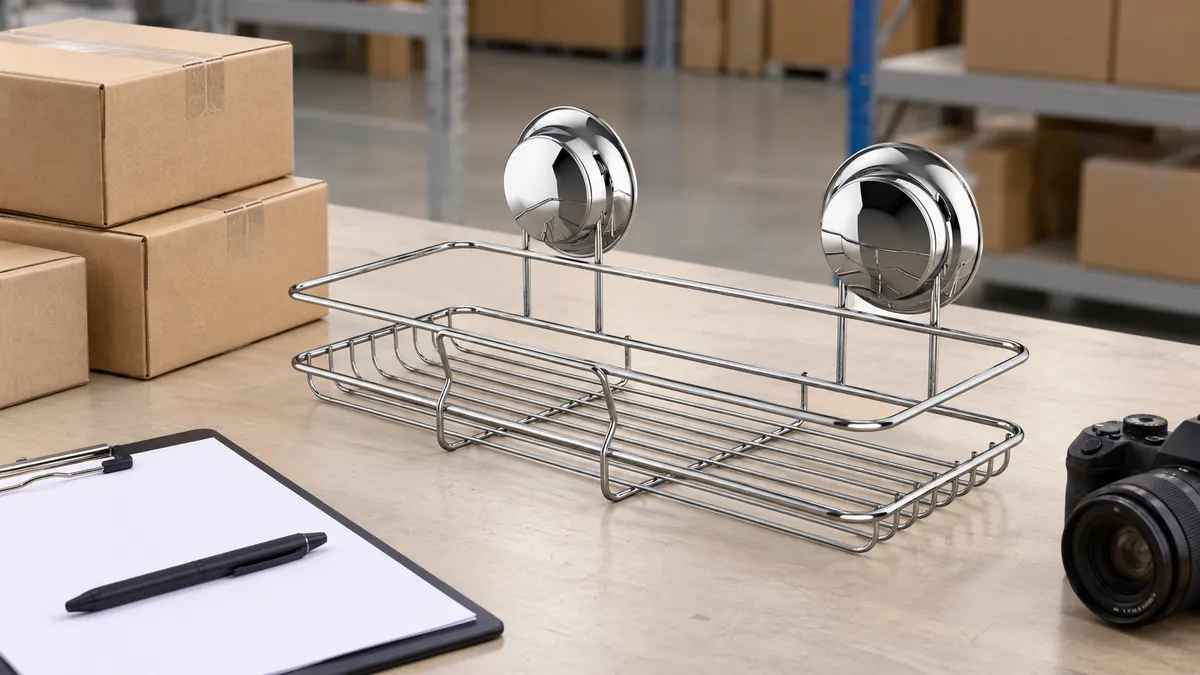
What practical checklist can an importer use?
Before sending funds:
- Confirm the supplier, legal entity and payee match the order documents.
- Define the product SKU, drawing/sample revision, materials, finish and included components.
- Compare quotations on the same quantity, packaging and shipment basis.
- Record the sample’s critical dimensions and configuration; identify what the sample cannot establish about bulk production.
- Put the agreed specification, quantity, delivery details and relevant acceptance terms in the platform order.
- Confirm current Trade Assurance eligibility, payment route and terms for the exact order; do not assume protection is universal.
- Keep platform messages and attachments that explain the agreement.
- Arrange receiving, inspection and issue-documentation responsibilities before dispatch.
- Check current dispute instructions and deadlines immediately if a discrepancy appears.
- Keep an audit folder for the PO/order, approved sample, revisions, payment confirmation, shipping records and receiving evidence.
This checklist does not certify a supplier or guarantee a result. It helps an importer make a more informed first-order decision and creates a clearer record if expectations differ.
الأسئلة الشائعة
Is an Alibaba supplier badge proof that the product is good?
No. A badge or assessment can be a profile-level signal with a defined scope. It does not prove that a particular bathroom rack matches your drawing, sample, finish or future bulk order. Check the underlying report and independently verify product-specific details.
Does Trade Assurance protect every Alibaba.com order?
No blanket assumption is safe. Confirm that the supplier and order are eligible, use a payment method accepted in the live Alibaba.com order flow, and make sure the product and shipment terms are recorded accurately. Read the current terms for your transaction and country.
Should a first small batch be identical to a sample?
It should be compared against the configuration and criteria you approved, but a sample alone does not specify every production detail. Document material, finish, dimensions, components, packaging and revision, and clarify how changes will be approved.
What if the supplier asks to move payment or key discussions off-platform?
Pause and verify the request. Alibaba.com’s published buyer guidance ties Trade Assurance protection to eligible orders and platform payment; a personal-account payment or unlisted external route may fall outside coverage. Contact platform support through the official account before paying, and keep any decision tied to the active order.
Can a buyer rely on a video call instead of a written order?
A call can resolve questions, but record the resulting agreement in the order or its accepted attachments. Written specifications and dated revisions make it easier for both sides to understand the same product and provide evidence if expectations later diverge.
For private-label bathroom and home-storage programs, product details, finish, packaging and order terms should be discussed together. Koitor Hardware is a family-owned custom metal hardware factory; buyers can review تصنيع تجهيزات الحمامات حسب الطلب و إكسسوارات الحمام ذات العلامة التجارية الخاصة before sharing a drawing or sample for a focused discussion.
Plan a clearer small-batch hardware order
Share your drawing or sample, finish, quantity, packaging needs and destination so the product scope can be discussed before quotation. Platform order eligibility and payment protection should be confirmed within your active Alibaba.com transaction.
OEM / العلامة التجارية الخاصة
حوّل دليل التوريد هذا إلى موجز منتج
يرجى إطلاعنا على المنتج المستهدف، والحجم، والتشطيب، وكمية الطلب، ومتطلبات التغليف. وسيتلقى فريقك تقييمًا عمليًّا لإمكانية التصنيع قبل تقديم عرض الأسعار.


 English
 Español
 Português
 Français
 Deutsch
 العربية