

Ferrous vs non ferrous metals are separated mainly by whether iron is the defining or principal base of the material family; the label does not tell a buyer how a finished part will perform. Steel belongs to the ferrous family, while aluminum, copper, brass, bronze and zinc are common examples of non-ferrous metal families. A magnet can be a quick observation, but it cannot identify every alloy, and non-ferrous does not mean corrosion-proof. For a metal hardware RFQ, use the family name as an early classification step, then specify the actual grade, product form, finish, environment and evidence needed.
What question does this classification answer?
The ferrous vs non ferrous metals comparison is useful when a buyer first needs to understand whether a proposed material belongs to an iron-based family or a different metal family. That broad distinction can organize a conversation about steel, stainless steel, aluminum, copper alloys or zinc. It is a starting point for material literacy, not an engineering decision by itself.
For bathroom and home-storage hardware, a buyer may encounter metal in wire, sheet, tube, plate, a purchased fastener, a bracket or a decorative component. The family label helps identify which group of material documents or supplier questions may be relevant. It does not decide which material is best for every hook, basket, rack, frame or pivot. The suitable choice depends on product geometry, forming and joining requirements, finish, exposure, appearance, cost target, assembly and the buyer’s written specification.
This guide stays deliberately at the family-classification level. It does not replace a grade comparison such as carbon steel versus alloy steel, a stainless steel corrosion review, a heat-treatment decision or a contamination-control procedure. Those questions have different technical scope and should remain with the appropriate specification or existing article. If a buyer starts with “ferrous or non-ferrous?”, the next step is to ask what exact material is proposed and which product requirement is driving the choice.
What does ferrous mean?
In common materials and manufacturing usage, ferrous describes iron-based metals and alloys. Carbon steel, alloy steel, cast iron and stainless steel sit within this broad family. Their compositions and properties can differ greatly, but they share an iron-based classification. “Ferrous” is therefore not a synonym for mild steel, plain carbon steel, magnetic, untreated or rust-prone in exactly the same way.
The iron basis matters more than a single visible property. Steel is an alloy family with iron as its base and other elements that vary by grade and condition. Stainless steels remain ferrous even where a particular composition or processing condition gives weak magnetic response. Cast iron and steel are also both ferrous, though their manufacturing routes and product forms are not interchangeable. A family label does not capture the differences among them.
Suppliers may define the category with phrases such as “contains iron,” “iron-based,” or “iron is the main element.” Do not turn those broad definitions into an unsupported chemistry threshold. A general buyer guide cannot establish a universal percentage line for every commercial alloy or purchasing standard. If a contract needs a defined composition, refer to the specified grade and its governing material documentation. A family label is not a chemical assay.
Common ferrous examples
- Carbon steels: iron-based materials whose carbon and other controlled elements depend on the named grade and supply condition. The word “steel” alone is not a complete purchase specification.
- Alloy steels: iron-based steels with additional alloying elements chosen for specified material characteristics. Their detailed comparison belongs to the grade and condition level, not merely the ferrous/non-ferrous split.
- Stainless steels: iron-based alloy families that include chromium and may include other elements. “Stainless” does not mean that corrosion can never occur, and the family label does not establish suitability for every bathroom environment.
- Cast irons: iron-based casting alloys with characteristics that differ from wrought or formed steel products. A buyer should not substitute a cast component for a formed one based only on both being ferrous.
These examples help a buyer recognize the family, not choose a material without considering the part. For a wire basket or formed bracket, manufacturability, section, bends, welds and surface finish may matter. For a purchased screw or pivot pin, the exact component standard or supplier designation may control. The drawing and accepted material requirement should state what the project needs.
What does non-ferrous mean?
Non-ferrous is used for metal families that are not iron-based in the defining sense used for the material category. Aluminum, copper, brass, bronze and zinc are common examples. These are not one material with one shared performance profile. Their density, conductivity, forming behavior, joining methods, strength, finish response and corrosion behavior differ by alloy, temper, product form and environment.
The label does not mean literally that no iron atom can be present in every commercial composition. Alloying and residual-element rules are defined by the applicable grade or specification. The practical classification asks which metal family forms the basis of the material, while an actual procurement decision depends on the exact grade and its required documentation. If chemical limits matter, the RFQ must name the relevant specification and evidence rather than asking a supplier to certify “non-ferrous” in the abstract.
Common non-ferrous examples
- Aluminum and aluminum alloys: often considered where product form, weight, corrosion environment, appearance, joining or machining requirements support a particular grade and temper. The word aluminum alone does not establish strength or suitability.
- Copper: valued in many applications for properties such as electrical conductivity, but that does not make it an automatic choice for a structural storage component.
- Brass and bronze: copper-based alloy families with different compositions and uses. A color resemblance does not identify a particular alloy or prove its mechanical or corrosion behavior.
- Zinc and zinc alloys: used in specific material and product forms. A buyer should distinguish a zinc-based component from a zinc coating applied to a different base metal; the names describe different things.
These examples are deliberately broad. A buyer should avoid treating a family name as a performance ranking or assuming every supplier uses the same shorthand. The supplier’s actual material designation, mill or material documentation, product form and any required finish should be reviewed together.
Ferrous vs non ferrous metals: a buyer comparison
| سؤال من المشتري | Ferrous family | Non-ferrous family | What to specify next |
|---|---|---|---|
| What defines the broad family? | Iron-based materials, including steels and cast irons | Other metal families whose base is not iron | Actual material or alloy designation |
| Does the family name identify one grade? | No; steel and cast-iron families include many grades and conditions | No; aluminum, copper, zinc and their alloys differ widely | Applicable grade, temper or condition, if required |
| Can a magnet classify every sample? | No; some ferrous alloys may show weak or different magnetic response | No; magnetic response is not a complete composition test | Supplier documentation or suitable material verification |
| Does the label predict corrosion behavior? | No; composition, finish, exposure and maintenance matter | No; non-ferrous materials can also corrode or degrade | Named environment, finish and acceptance requirement |
| Does the label set strength or weight? | No; grade, geometry and processing affect a component | No; alloys and shapes vary across the family | Product-specific load, stiffness, mass or fit requirement |
| Can a buyer substitute between families freely? | No; process and design interfaces may change | No; material, joining and finish may change | Engineering review and written approval of any change |
Use the table to keep the conversation at the correct level. First identify the material family. Then move to the named alloy or grade and supply condition. Finally connect the material requirement to the part’s shape, manufacturing route, finish, assembly and operating environment. A family comparison alone cannot establish a substitution.
Why common shortcuts fail
“A magnet sticks, so the material is ordinary steel”
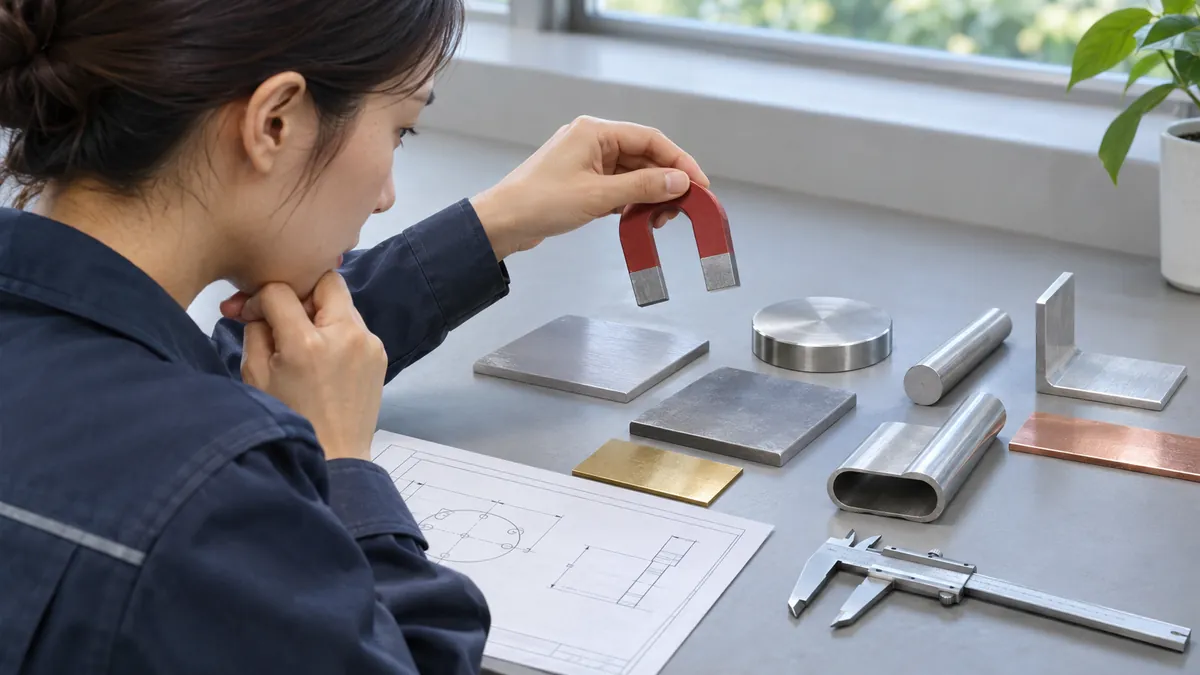
A magnet can help screen a sample, but it is not an alloy analyzer. Magnetic response can vary with alloy family, composition, processing history, geometry and test conditions. Some stainless steel conditions may respond weakly or differently from a buyer’s expectation. Conversely, observing little attraction does not identify an aluminum, copper or other exact alloy. If a grade matters contractually, verify it with the supplier’s controlled material records or a suitable test method agreed by the parties.
Use a magnet as an initial question generator: “This sample responded in this way; can you confirm the specified material and provide the agreed evidence?” Do not turn the observation into a final acceptance result unless the purchase specification explicitly defines a validated method and acceptance criteria for that purpose.
“Non-ferrous means it cannot rust or corrode”
“Rust” is commonly used for iron-containing corrosion products, but the broader purchasing concern is material degradation in the intended environment. Non-ferrous metals can still corrode, stain, tarnish, pit, discolor or otherwise fail a buyer’s appearance or functional requirement depending on alloy, surface condition, exposure and contact with other materials. The category name does not provide a pass/fail result for a bathroom, coastal, cleaning-chemical or outdoor use case.
The buyer should define exposure conditions realistically: humidity, direct water, cleaning products, temperature, ventilation, contact with other components and expected cleaning. Then specify a material and finish requirement supported for that use. Do not convert “non-ferrous” into a universal corrosion claim.
“Ferrous means stronger and cheaper”
Strength and cost depend on the exact material, condition, part geometry, processing route, supply market, order quantity, yield and finish. A generic family label cannot compare the performance or landed cost of a specific steel sheet with a particular aluminum extrusion or brass fitting. Even within a family, grades and tempers can serve different design purposes.
For a sourcing decision, compare equivalent product requirements and equivalent evidence. A quote comparison should state the material designation, dimensions, process, finish, quantity, packaging and any required inspection. Without those details, a lower unit price may reflect a different product definition rather than a genuine efficiency.
“Non-ferrous means lightweight”
Some non-ferrous materials, such as many aluminum alloys, are commonly selected in applications where mass matters. But “non-ferrous” also includes families with different densities and product forms. The label alone does not predict the mass of a finished assembly. Shape, wall thickness, dimensions, additional parts and material condition all contribute. If weight is a buyer requirement, specify a target or measurable range for the finished product and agree how it will be verified.
“A color or finish reveals the base metal”
Surface appearance may be influenced by plating, coating, polishing, anodizing, paint, passivation or other finishing processes. A silver-colored surface does not uniquely identify stainless steel, aluminum or a plated base metal. A gold tone does not by itself establish brass. Finish identification and base-material identification are separate controls; request the relevant declaration and confirm what the project needs to verify.
How buyers should use the classification in an RFQ
Separate family, grade, form and finish
Write these fields as separate items so that a supplier does not have to infer one from another:
- Family: ferrous or non-ferrous as a broad classification, if useful to the project.
- Grade or alloy: the named designation required by the product specification or proposal.
- Supply condition: temper, heat treatment, thickness, diameter, form or other condition where relevant.
- Product form: sheet, strip, wire, tube, bar, casting, purchased component or assembly.
- Manufacturing and joining: forming, bending, welding, fastening or other processes needed to make the geometry.
- Surface finish: appearance, coating, plating, polishing or protection requirement, with acceptance evidence where appropriate.
- Environment and use: moisture, cleaning, temperature, contact materials, service or maintenance conditions.
- Verification: material records, dimensional inspection, visual criteria or other testing that the contract actually requires.
Not every project needs every field at the first inquiry. The purpose is to expose which information is known and which remains open. If the buyer has a concept drawing but no selected grade, state that the material is a proposal item and ask the supplier to identify the assumptions, trade-offs and documentation for review. Do not present an unapproved proposal as a final specification.
Ask a comparable question across suppliers
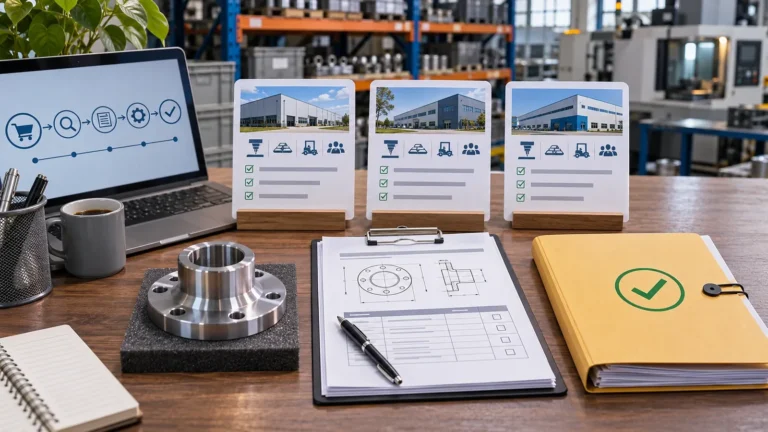
When multiple suppliers quote, send them the same controlled drawing and ask them to state the base material and exact grade they propose. Ask whether the finish is applied to the same material and product form, and whether any component is bought in or sourced separately. Request that any substitution be listed clearly rather than silently accepted. This makes the proposals easier to compare and supports approval before sample or production.
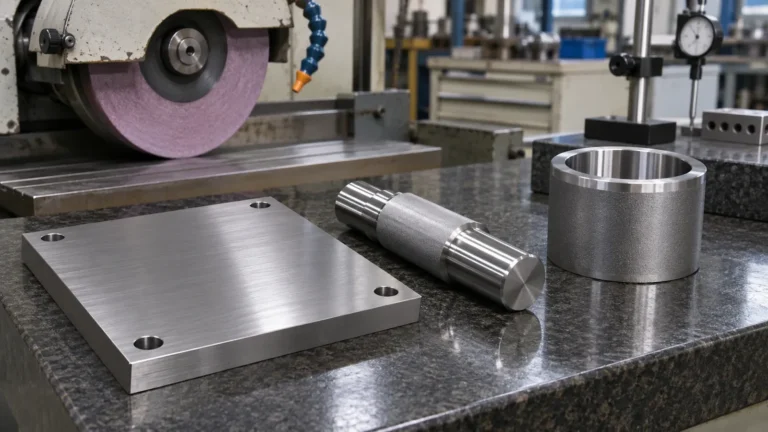
For metal storage hardware, the process route can interact with material choice. A shape may require bending, punching, welding, grinding, polishing or a finish operation; these should be reviewed for the actual geometry and material. Koitor’s approved capabilities include metal fabrication and assembly, but a buyer should not infer that every alloy, casting method, grade certification or laboratory test is offered. Ask about the specific project and keep material evidence with the responsible supplier.
Keep the change process controlled
If a supplier proposes changing from a ferrous to a non-ferrous material or the reverse, treat it as an engineering change. Compare the actual grade, form, fit, joining method, finish, appearance, dimensions, weight requirement and evidence. Reassess any connected components and customer-facing claim. A material change may affect more than the purchase price; it can alter process steps, finish compatibility, assembly, packaging or inspection.
Record the decision on the drawing or change record with a revision and approval date. Preserve the approved sample or reference where it is part of acceptance. If the buyer’s requirement is performance-based, identify the verification method rather than relying on a verbal assurance that the new family is “equivalent.”

Common sourcing mistakes to avoid
- Ordering from a family label only. “Ferrous” and “non-ferrous” are broad groups, not complete material callouts.
- Treating magnet response as certification. A quick check does not prove a precise grade or chemical composition.
- Assuming all stainless steel is non-magnetic. Magnetic behavior varies; keep material identity and magnetic response separate.
- Assuming all non-ferrous materials resist every bathroom exposure. Define the environment and finish requirement for the actual product.
- Comparing prices with different material descriptions. Confirm grade, dimensions, finish, process and quantity before deciding one offer is cheaper.
- Accepting a substitute based on color or weight. Appearance and mass do not prove equivalent alloy or finished-part performance.
- Letting a quote hide a purchased component. Identify who supplies a component and which material document covers it.
- Asking for unsupported test claims. Name the test and acceptance criteria only when the project needs them; do not rely on unverified numbers or certificates.
- Conflating base metal and coating. A zinc coating on steel is not the same as a zinc-alloy body; record both substrate and finish.
- Changing material after sample approval without review. Reconfirm fit, joining, finish, inspection and relevant documentation before release.
الأسئلة الشائعة
Is stainless steel ferrous?
Yes. Stainless steel is part of the iron-based steel family, so it is classified as ferrous. Magnetic response can vary by stainless grade and condition, so a magnet alone should not be used to identify the exact material.
Does non-ferrous mean the material contains absolutely no iron?
The term is normally used to identify a metal family whose base is not iron. It is not a universal chemistry threshold or proof that every commercial alloy contains zero iron. When composition limits matter, name the applicable grade or specification and request the required material evidence.
Can a magnet prove that a part is steel?
No. Magnetic response may help screen a sample, but it cannot reliably identify every alloy or grade. Surface layers, part geometry and material condition also complicate informal checks. Use supplier documentation or an agreed verification method for a controlled material requirement.
Are non-ferrous metals always more corrosion resistant?
No. Corrosion behavior depends on the exact alloy, surface, environment, contact materials and maintenance. Non-ferrous classification is not a corrosion rating. Define the intended exposure and verify the selected material and finish for the product requirements.
Are ferrous metals always stronger or less expensive?
No. Those comparisons require specific grades, conditions, dimensions, manufacturing routes, quantities and finish requirements. The family distinction is too broad to rank strength or cost for a product.
Which category should I specify for a bathroom hardware product?
Do not select only by category. State the intended application, exact grade or proposed alternatives, product form, finish, exposure, joining and acceptance evidence. If the grade is undecided, treat it as an open design decision and review supplier proposals before approving a sample.
Is zinc-plated steel a non-ferrous product?
Not by virtue of the coating. The base is steel, which is ferrous; zinc plating is a separate surface layer. Specify both the substrate and finish so that a supplier cannot confuse the coating material with the component’s base material.
Can I switch an existing steel part to aluminum to reduce weight?
Not without design and manufacturing review. The exact alloy and condition, section size, geometry, joining, finish, fit, cost and required evidence all matter. State a finished-product weight objective and obtain approval for a controlled substitution rather than inferring a result from the family names.
How can a buyer compare supplier material proposals?
Ask each supplier to provide the exact material designation, product form, condition and finish, then list assumptions and supporting documents. Compare those fields against the same drawing and use requirement. If the materials differ, evaluate the change explicitly instead of comparing only unit prices.
How can Koitor support a material discussion?
Koitor Hardware is a family-owned custom metal hardware factory focused on bathroom and home storage hardware. Buyers can share a drawing or sample, intended use, proposed material and unresolved manufacturing or finish question for project-specific discussion. This does not imply laboratory analysis, certification or supply of every named alloy.
What should I send with a material inquiry?
Send the current drawing or sample, the product form and dimensions, the intended environment, finish and appearance requirements, the proposed material designation, order quantity and any required verification records. Mark open questions clearly so suppliers can state assumptions rather than making a hidden substitution.
Where does ferrous vs non ferrous metals fit in the buying process?
It is an early classification question. After identifying the family, confirm the exact grade, supply condition, form, finish, manufacturing route and acceptance evidence. That sequence helps connect material terminology to a real product decision without treating a broad label as a performance guarantee.
Sources and scope
- Reliance Foundry: Ferrous and Non-Ferrous Metals
- Service Steel: Understanding Ferrous vs. Non-Ferrous Metals
- Metal Supermarkets: The Difference Between Ferrous and Non-Ferrous Metal
- Koitor’s existing Steel vs Iron guide covers the narrower distinction between those two ferrous materials
Scope note: This article explains a broad classification for buyer literacy. It does not recommend a universal material, certify composition, establish corrosion or load performance, or claim that Koitor supplies or tests every example. Use the named grade, drawing, supplier records and project-specific review for procurement.
Review a material choice for a hardware project
Share the drawing or sample, proposed material and finish, intended environment, and the unresolved requirement. Koitor can discuss the surrounding metal hardware project within its confirmed scope.
OEM / العلامة التجارية الخاصة
حوّل دليل التوريد هذا إلى موجز منتج
يرجى إطلاعنا على المنتج المستهدف، والحجم، والتشطيب، وكمية الطلب، ومتطلبات التغليف. وسيتلقى فريقك تقييمًا عمليًّا لإمكانية التصنيع قبل تقديم عرض الأسعار.
 English
 Español
 Português
 Français
 Deutsch
 العربية