
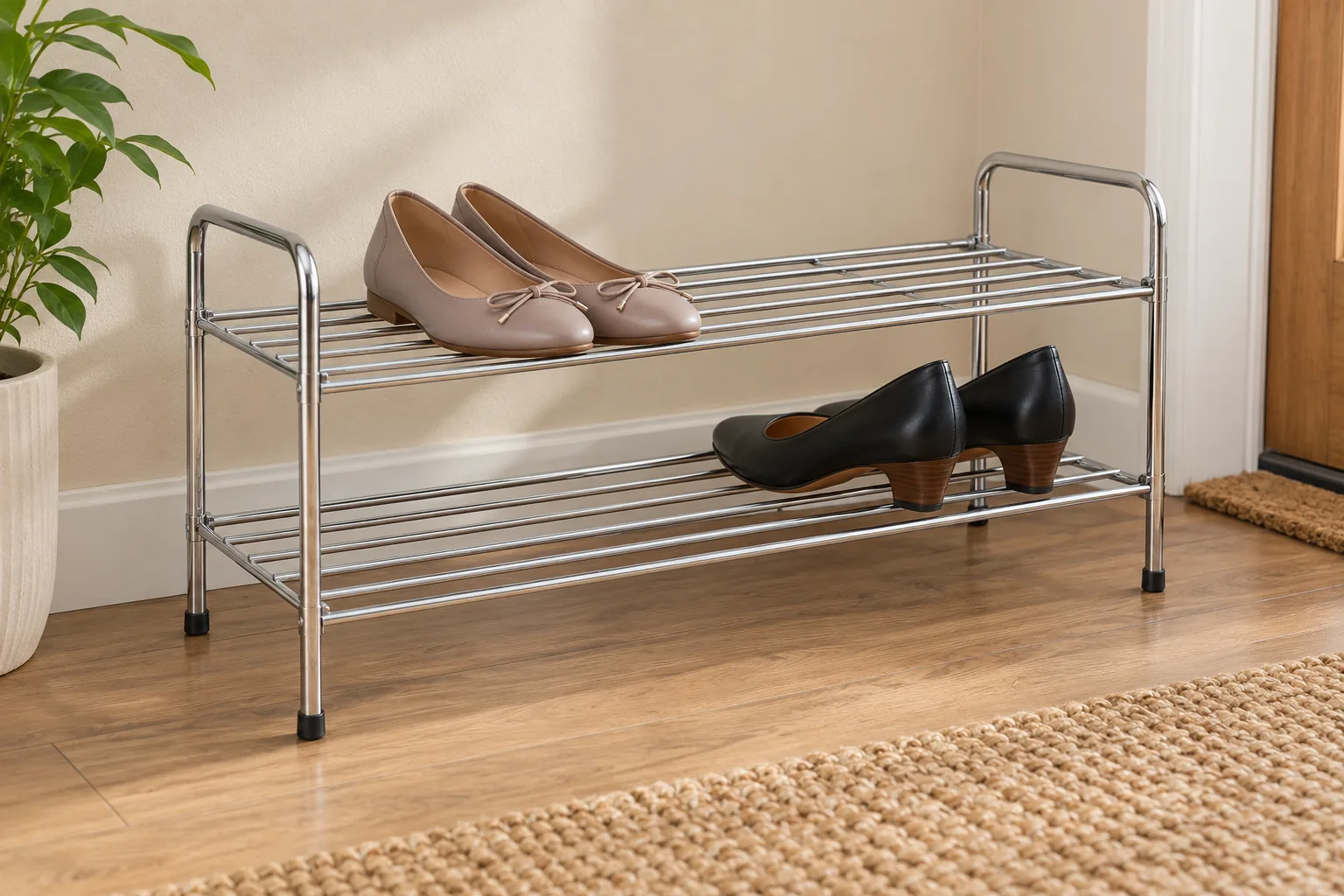
For shoe rack bar spacing small shoes, OEM buyers should approve the layout against actual soles and heels in the target assortment, not select a universal gap rule. For an open-bar metal rack, importers should define usable support surfaces and clear openings on the drawing, then check representative footwear on a sample. The acceptance record should identify shoe models or profiles, orientation, contact points, and any observed tipping or slipping. A fit check answers a geometry question; it does not establish a load rating or long-term durability.
The focus phrase “shoe rack bar spacing small shoes” is a search shorthand; the buyer specification must translate it into measurable geometry and an agreed sample check.
Searches for “shoe rack bar spacing small shoes” express a fit concern, but the product specification must translate that concern into measurable geometry and an agreed sample check.
Why does bar spacing matter for small shoes?
A small sole, narrow heel, or pointed toe may contact the rails differently from a broad adult sneaker. If a shoe bridges too few supports, rocks, or places a heel into an opening, the shelf layout may not suit the intended assortment even when the overall rack dimensions look correct.
Public consumer discussions have described small shoes or heels slipping between open rack supports, but individual posts are anecdotal signals, not defect-rate evidence. Product examples also show that manufacturers make rail spacing a deliberate design feature. The Yamazaki undershelf shoe-rack product page presents a specific open-bar layout, while the IKEA pull-out shoe shelf uses a solid shelf surface. These examples illustrate alternative product architectures; neither defines a universal spacing for every shoe, market, or rack.
For a private-label buyer, the practical question is therefore not “What is the correct gap?” It is “Which footwear must this SKU support, and what observable contact and retention criteria will approve its rail layout?”
The target assortment matters because “small shoe” is not one consistent geometry. A narrow flat may have a broad outsole; a pointed flat can taper sharply at the toe; a low heel may have a small heel tip; and a sandal may have flexible straps with a very different base. A rack does not need to accommodate every possible shoe, but the product brief should name the intended range so buyers, designers, and suppliers evaluate the same use case. A product team may start with the search phrase “shoe rack bar spacing small shoes,” but that phrase is only a problem label, not an inspectable specification.
Placement direction can change the result. A shoe placed toe-forward may bridge one set of rails, while the same shoe turned sideways may align a narrow heel or toe with an opening. If end users can reasonably place footwear in more than one direction, include likely orientations in the sample review. If the design depends on one orientation, show it in product instructions and confirm that the intended presentation remains practical.
What should the drawing define?
The controlled drawing should distinguish overall shelf dimensions from the geometry that actually supports footwear. A supplier should be able to identify which rails carry the sole, the largest clear opening between finished rails, and the rail positions relative to the side frame.
Include these details where they affect the project:
- Overall usable shelf width and depth, excluding frame or trim that cannot support a sole.
- Rail count, centerline positions, finished diameters or profiles, and clear openings between adjacent rails.
- The direction in which shoes are placed and the intended front and rear edges.
- Any front stop, side guard, or raised feature that changes where a shoe can sit.
- The target surface finish and the visible faces or edges that need appearance review.
- The drawing revision and sample identifier used for approval.
Dimensions should be specified from consistent datums. For example, a centerline-to-centerline dimension is not the same as the open gap between the finished surfaces. If the buyer is concerned about a heel entering an opening, the clear gap and the heel’s contact geometry are more informative than nominal spacing alone. Tolerances should be agreed for the actual part and process rather than copied from an unrelated product.
The drawing should identify which dimensions control assembly and which are product-fit characteristics. Rail location relative to a side frame may be an assembly dimension; the finished opening between rails may be a footwear-fit characteristic. A buyer can call out both, but should avoid contradictory tolerances. Agree how dimensions are measured on the finished article, including whether the measurement is taken before or after a coating or decorative finish that could affect the final opening.
Where the shelf is modular, adjustable, or sold in multiple widths, define whether the same support pattern applies to every version. A wider shelf can introduce a longer unsupported span or a different frame connection, so approval for one width should not automatically cover all variants. Record model code, drawing revision, finish, and the version represented by each sample. If several sizes share one drawing, identify which dimensions vary and which remain common.
The buyer may also separate critical-to-fit dimensions from visual preferences. Critical-to-fit items could include the clear opening, rail location, shelf depth, front-edge position, and relative level of the support surface. Cosmetic criteria may cover visible welds, finish consistency, and exposed cut ends. Keeping these categories distinct helps the supplier focus on dimensions that affect footwear contact without treating every visual preference as a functional tolerance.
How does the support construction change the decision?
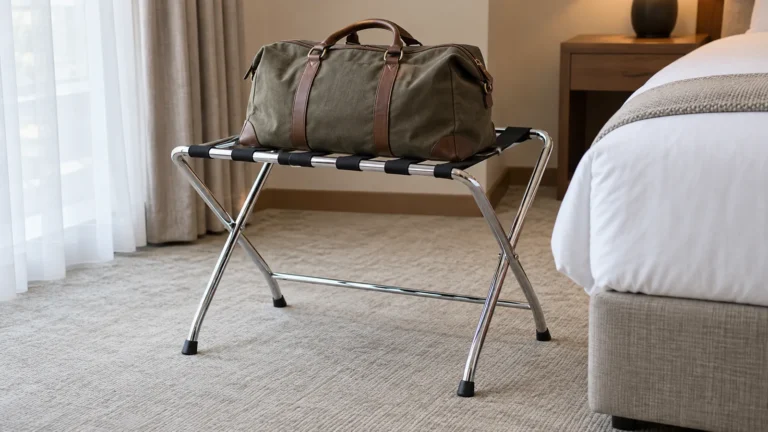
Parallel open rails provide visible contact lines and open spaces between them. A wire grid or solid tray may reduce open gaps, but it changes drainage, cleaning, material use, appearance, and packing volume. More metal or more rails can add fabrication and finishing work, so a buyer should compare the required shoe fit against the cost and product brief instead of assuming that added material always improves the SKU.
A rail’s diameter and position influence the contact patch, but they do not alone predict whether a shoe will remain stable. Sole shape, heel width, shoe orientation, shelf levelness, frame stiffness, and how the shoe is placed also matter. If the product uses a slope or front lip, evaluate that feature separately from the gap beneath the sole; K920’s separate front-lip retention question should not be conflated with horizontal support geometry.
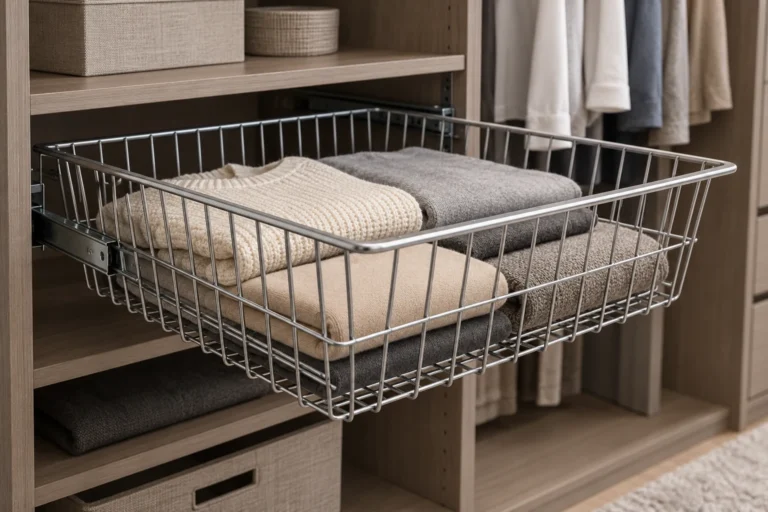
Each construction option creates a different set of decisions. Open parallel rails make the gaps visible, but the buyer should check whether narrow contact points align with the intended footwear. A denser wire pattern may provide more possible contact lines, while adding intersections, joints, finishing exposure, and potentially more complex packing. A stamped or sheet-based shelf may create a more continuous bearing surface but can change drainage, edge finishing, and tooling considerations. These are design alternatives, not a hierarchy in which one is universally superior.
Surface treatment and fabrication can change the finished geometry as well. The drawing should say whether the controlled dimension refers to bare metal, finished metal, or the assembled product. If rails are joined into a frame, the sample review can check that joining and finishing preserve the agreed clear opening. This article does not prescribe one process or tolerance for every rack; the appropriate production route depends on material, geometry, finish, and order requirements.
For quote comparison, ask suppliers to state their assumptions rather than asking only for a unit price. One quote may assume a simple open-rail layout; another may include a denser pattern or a different surface construction. Compare what is included: dimensions, rail profile, finish, sample work, packaging, and inspection records. A request that says only “suitable for small shoes” leaves too much room for different interpretations.
How should importers check a sample?
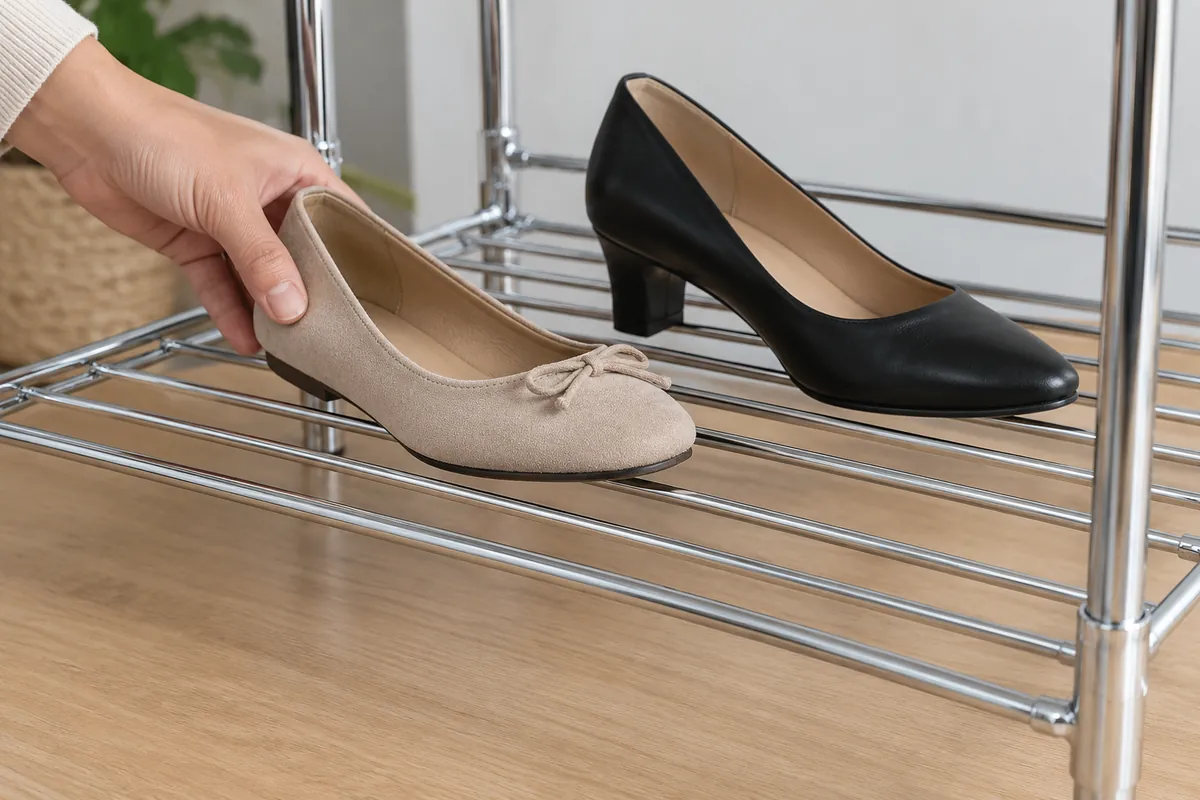
Use a defined set of representative footwear and repeat the same placement for each sample revision. Record what happens rather than relying on a single photo or an informal statement that the shoes “fit.”
| Sample check | What to record | Why it matters |
|---|---|---|
| Intended footwear | Model or profile, sole length and width, heel shape, and orientation | Identifies the assortment represented by the approval |
| Contact layout | Rails that bear the sole, contact near toe and heel, and any unsupported span | Shows whether the shoe bridges the intended supports |
| Movement observation | Rocking, tipping, slipping, or heel entry during agreed placement and removal | Makes the observed fit issue repeatable |
| Shelf interface | Usable depth, front edge, side guard, and level position | Separates rail spacing from other retention features |
| Revision control | Drawing revision, sample ID, and disposition | Connects the result to one configuration |
The buyer should agree in advance what counts as acceptable for the use case. If the rack is intended for flats, narrow heels, sandals, or a mixed assortment, include those profiles explicitly. A product photo can help document orientation, but it cannot replace a clear drawing or prove performance outside the conditions observed.
An efficient sample review can follow the same sequence for every candidate layout:
- Confirm the sample label, drawing revision, finish, and intended rack size before placing any footwear.
- Put the rack on the agreed surface and check that the frame is assembled as intended; an uneven setup can confuse observations about the rails.
- Place each representative shoe in the defined orientation without forcing it into position. Record the supporting rails and any portion that overhangs the shelf.
- Observe a normal placement and removal. Note rocking, a heel entering a gap, contact with a front or side guard, or a need to reposition the shoe.
- Photograph the same views for each revision, then mark the result as accepted, revise, or hold against the buyer’s written criteria.
This is a fit-review sequence, not a durability protocol. If a buyer needs to evaluate rated loading, repeated handling, impact, or long-term deformation, those questions need their own test definition and acceptance criteria. Identify the footwear used and keep the limits of the observation clear in the approval record.
It can be useful to compare more than one rail layout, but the comparison should isolate the change. If rail count, shelf depth, material, frame shape, and finish all change at once, the team may not know which revision addressed the observed fit issue. A controlled sample comparison records what changed and which result the buyer accepted. It also helps a supplier quote the revision without assuming that the previous sample represents the new configuration.
Retain the approval record with the drawing and purchasing specification. If the assortment later adds a new heel profile, changes to a more pointed toe shape, or targets a different market, revisit the sample criteria. An approved layout answers the question only for the configuration and shoe range actually reviewed; it should not silently expand to a different product brief.
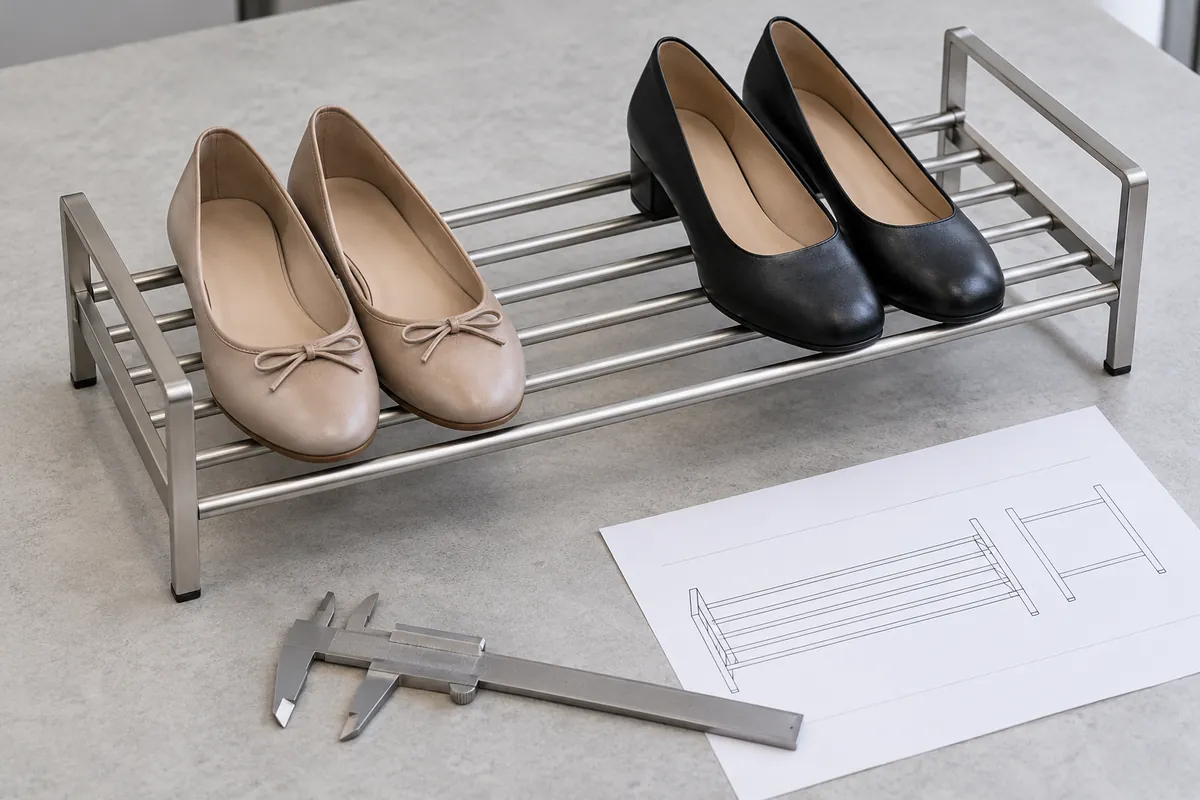
If the sample rocks or a heel enters a gap, document the shoe profile, placement direction, affected opening, and drawing revision. The product team and supplier can then compare options such as repositioning a rail, changing the support profile, adding a cross-support, or considering a grid or tray. Each option has trade-offs and must be evaluated on the revised sample. No one change is automatically suitable for all rack constructions.
Which questions should go into the RFQ?
A concise RFQ can prevent assumptions about the intended footwear and the meaning of “spacing.” Ask the supplier to confirm the measurement method and identify any assumptions before quoting or sample approval.
If an RFQ uses the phrase “shoe rack bar spacing small shoes,” attach the target footwear profiles and state whether the drawing controls centerline spacing, finished clear gaps, or both.
When sourcing from multiple factories, send the same controlled drawing and sample assumptions to each supplier. Ask each to quote the same support architecture and flag any manufacturing limitation or alternative separately. A supplier suggestion can be useful, but it should not silently replace the buyer’s intended rail layout. If a suggested change affects footwear contact, finish appearance, pack size, or component count, decide whether it is acceptable before sample approval.
The RFQ can also specify packaging requirements that protect the finished rack and keep assembled or loose components identifiable. Separators may help protect finished surfaces, but packaging does not correct a product-fit problem. Keep the product drawing, packaging instruction, labels, and sample revision linked so that the finished configuration can be evaluated consistently.
- Does the drawing define clear finished openings as well as rail centerlines?
- Which shoe profiles and placement directions should be included in the fit review?
- Are the front lip, side guards, and rail layout all shown in the same controlled revision?
- Which surfaces are cosmetic, and how will finish appearance be reviewed on the approved sample?
- If a rail position changes, what drawing and sample revision will be used for the next review?
- Is a separate load or durability test required? If so, who will define its conditions and acceptance criteria?
The buyer should not infer load capacity from bar count, wire thickness, a visual inspection, or a short fit demonstration. If a rated claim is required, specify a suitable verification method, setup, duration, and acceptance criteria independently.
How can a metal OEM manufacturer support the review?
A metal manufacturer can review a buyer’s proposed frame, rail geometry, drawing inputs, finish, and sample changes within its confirmed capabilities. Koitor’s approved profile supports custom metal bathroom and home-storage hardware developed from buyer drawings or samples. That general metalworking experience can inform a project discussion, but it does not establish that Koitor currently manufactures shoe racks or has tested a particular footwear assortment.
For a first inquiry, send the intended assortment, a dimensioned drawing or reference sample, target order quantity, finish preference, and packaging expectation. The manufacturer can then confirm which parts fit its current production scope and which require clarification or an outside component source. The goal is a comparable, technically understandable quotation—not a promise that every proposed design is immediately manufacturable.
For a related discussion of custom metal and home-storage development, see Koitor’s OEM home-storage hardware page. Buyers can اتصل بـ «كويتور» with a drawing or sample to confirm project fit and scope.
الأسئلة الشائعة
Is there a standard shoe-rack bar gap for small shoes?
There is no single gap that fits every small shoe, heel, rack depth, or placement direction. Define the intended footwear and approve the support layout on a sample.
Should a shoe rack have more rails?
Not automatically. Additional rails may change contact, material use, joining, finishing, and cleaning. Compare the revised layout against the target assortment and written acceptance criteria.
Can a sample fit check prove a rack’s load capacity?
No. A fit review records geometry and observable behavior under the review conditions. A capacity claim requires a separately defined and suitable test.
What is more useful: centerline spacing or clear gap?
Both may be useful, but they describe different things. Provide centerline locations for manufacturing reference and the finished clear opening when heel or sole entry is a concern.
Should buyers review every rack size?
Review each size that changes the frame or rail span in a way that could affect fit. If one size represents other versions, document why and confirm the relevant dimensions remain controlled.
Is a denser wire grid always a better alternative?
No. A grid can provide more contact locations, but it can also change cleaning, drainage, finishing, appearance, and packing. Compare it with the target assortment and product brief rather than treating density as a universal quality measure.
What should happen when the buyer changes the shoe assortment?
Identify which profiles changed and whether the approved sample still represents intended use. If sole width, heel shape, or placement direction changed, repeat the relevant fit observations and update the approval record when needed.
اعمل مع شركة «كويتور» للأدوات
Review a Custom Metal Storage Rack
Share the intended shoe assortment, drawing revision, finish requirement and sample-review criteria to discuss whether a proposed metal support layout fits the project scope.
OEM / العلامة التجارية الخاصة
حوّل دليل التوريد هذا إلى موجز منتج
يرجى إطلاعنا على المنتج المستهدف، والحجم، والتشطيب، وكمية الطلب، ومتطلبات التغليف. وسيتلقى فريقك تقييمًا عمليًّا لإمكانية التصنيع قبل تقديم عرض الأسعار.
 English
 Español
 Português
 Français
 Deutsch
 العربية