
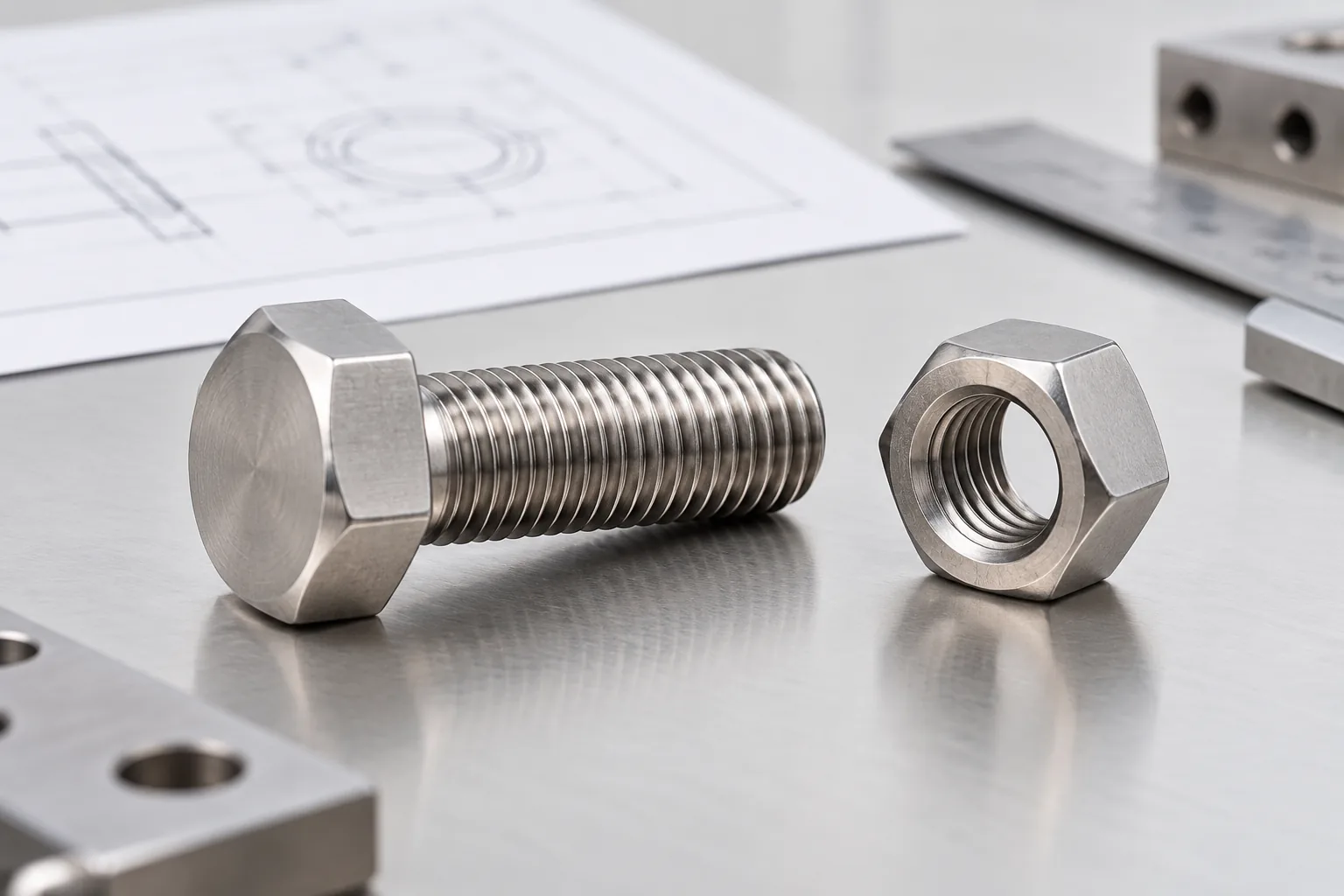
Stainless steel fastener galling in metal storage racks should be addressed as a joint-specification and assembly problem before bulk production. Buyers need to identify both mating threaded parts, their condition and the approved installation method. Lubrication, material pairing and assembly speed can influence galling, but none should be prescribed without considering the complete joint. Approve a representative sample and supplier-supported tightening instructions rather than relying on a universal torque chart or promising that stainless hardware cannot seize.
What is galling, and how does it differ from other thread failures?
Galling is adhesive damage between sliding metal surfaces that can cause threaded parts to bind or seize. A rack joint that stops turning may also have crossed threads, damaged threads, contamination or the wrong parts, so the symptom alone is not a diagnosis.
ASSDA's technical FAQ on galling discusses material pairing, surface condition and lubrication as relevant controls. The practical sourcing implication is to specify the joint system and assembly conditions together. A stainless label alone does not settle assembly suitability.
Cross-threading involves incorrect thread engagement. Stripping involves loss of the thread's ability to carry the intended load. Galling involves surface damage during relative movement. These conditions can coexist in a failed assembly, and a buyer should preserve the parts for competent review rather than guess from a single photograph.
The distinction matters commercially. If an instruction encourages the assembler to force a misaligned joint, changing the steel grade may not address the original problem. If a mating pair binds under the approved installation conditions, merely changing the instruction font does not validate the joint.
Describe the observed sequence: whether resistance occurred at initial engagement, partway through assembly, during final tightening or during removal. Record the tools, sample identity and part combination. That gives the supplier a usable problem statement without asserting a mechanism that has not been confirmed.
Do not keep forcing a seized fastener during approval work. Stop the trial, preserve the configuration and obtain technical review. The objective is to identify a controllable purchasing specification, not to demonstrate that a stronger wrench can complete an assembly.
Which storage-rack joints deserve early review?
Review joints that combine stainless threaded parts, require repeat assembly or have limited alignment access. The assessment should follow the actual rack design rather than assume that every fastener has the same duty.
A knock-down rack can contain shelf attachments, frame joints, adjustable feet and accessory brackets. Each can use a different thread form, mating component and assembly route. Map the joints separately, including any factory-assembled connections that a customer may later remove.
Identify where a bolt enters a loose nut, captive nut or threaded insert. Record whether the mating component can rotate or align freely. Check whether the assembler must hold several frame parts while engaging a fastener. Those conditions affect the usability of the approved method and the questions the supplier needs to answer.
Distinguish a fixed structural joint from an adjustment intended to move repeatedly. A connection tightened once at the factory and an adjustable foot repeatedly rotated by the user should not inherit the same sample-review scope without thought. Repeated adjustment is a project requirement to discuss, not a reason to invent a cycle-life promise.
| Joint feature | Buyer concern | Required specification discussion |
|---|---|---|
| Stainless bolt and nut | Binding during engagement or tightening | Mating materials, thread condition and assembly method |
| Captive threaded component | Limited alignment and replacement access | Drawing alignment, installation sequence and service plan |
| Adjustable foot | Repeated threaded movement | Adjustment conditions and intended serviceability |
| Shelf bracket | Several parts must align together | Part identification and sequence before final tightening |
| Decorative exposed joint | Lubricant residue or finish appearance | Product-compatible compound and application control |
| Replacement hardware | Unreviewed substitute part | Exact component identity and approved interchangeability |
A distributor selling replacement kits should keep the approved mating pair identifiable. A fastener with the same nominal size may differ in material, finish or another relevant characteristic. Do not treat appearance or packaging dimensions as proof that a substitution is acceptable.
Before quotation, send the supplier the joint drawing and intended user assembly sequence. A generic request for stainless screws leaves too much unstated, especially when the finished rack must be easy to assemble from a retail kit.
How should mating materials and thread condition be specified?
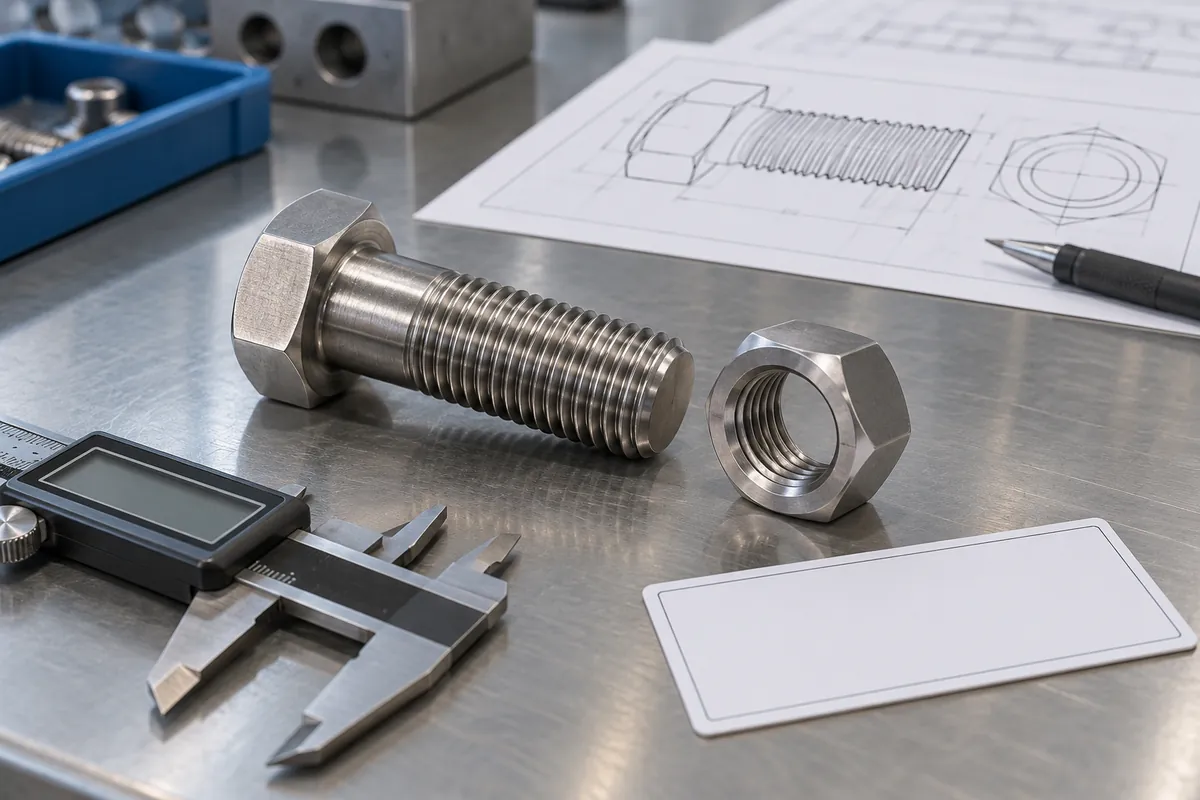
Specify both parts and the relevant thread requirements, then ask the supplier to justify the proposed pairing for the project. A bolt specification without a matching nut or insert specification is incomplete.
Record nominal diameter, pitch, applicable thread system, component type, material and finish. Obtain supplier identification sufficient to track substitutions. Where engineering requirements call for additional grade or thread-class detail, confirm it with the responsible designer and fastener supplier instead of copying an unrelated catalog value.
Material pairing should account for the product environment as well as assembly behavior. A proposed alternative can change corrosion, appearance, strength, availability or cost. Selecting a different mating material solely because it may reduce galling is not a complete rack specification.
Thread condition deserves a sample-level review. Ask about visible damage, burrs, contamination and handling. A part that was dropped, mixed with other hardware or poorly protected may no longer represent the approved condition. Inspection should identify the actual components and agreed acceptance method, not depend on a broad statement that threads look good.
A supplier may propose a surface treatment or specialized fastener option. Ask what problem it addresses, what limitations apply and how production identity will be controlled. Do not assume that passivation or a more corrosion-resistant grade independently eliminates galling.
For stainless steel fastener galling in metal storage racks, the buyer's approval should include any exclusions. If the joint is reviewed for a specified assembly method, an unapproved power-tool routine or replacement compound may fall outside the evidence. Put those boundaries into clear assembly documentation.
Use a component drawing or controlled bill of materials to keep the pairing visible. If two screw lengths or thread types appear in the same carton, packaging and instructions should make the correct combination easy to identify. That supports assembly quality without pretending that identification alone validates the metallurgy.
Which assembly and lubrication decisions require agreement?
Agree tool use, engagement, tightening and any lubrication as one installation condition. A change in friction can change the relationship between applied torque and joint load, so dry and lubricated instructions must not be casually interchanged.
Bolt Depot's thread-galling guidance discusses controlled installation speed, lubricants and suitable material pairing. These are general fastener considerations, not a ready-made recipe for a particular metal rack. Obtain the fastener supplier's advice for the actual joint and its intended environment.
Ask whether initial engagement should be completed by hand and how alignment should be confirmed before tightening. The supplier should explain the approved sequence, including when frame or shelf connections are tightened. Assembly instructions should not encourage using the screw to pull grossly misaligned components together.
If a lubricant or anti-seize compound is proposed, identify the actual product and its permitted application. Consider coating contact, visible residue, packaging transfer and user handling. The responsible suppliers should review compatibility. Do not prescribe a compound from an anecdotal online recommendation and treat it as approved for every bathroom or kitchen accessory.
Tightening guidance should identify its assumptions. The joint designer or relevant supplier should establish values and tools when numerical controls are needed. This guide does not provide universal torque numbers or a blanket reduction for lubricated assembly.
Clarify whether the factory applies the compound or the end user must do so. A retail kit that depends on an unavailable consumable has a different usability problem from a factory-assembled joint. Price the approved approach, including preparation, packaging and instructions, before comparing quotations.
Keep the approved assembly routine practical. Too many vague cautions can be ignored, while missing conditions create uncertainty. The instruction should identify the correct parts, engagement approach and clear stop condition if unusual resistance occurs.
How should sample assembly and serviceability be reviewed?
Review representative joints under the proposed assembly conditions and preserve the observations needed for a sourcing decision. One successful informal assembly does not establish consistency across production or repeated servicing.
Identify the sample revision, component sources, mating pair, finish condition and any compound. Record the tool and assembly sequence. Begin with the actual supplied parts rather than replacing a difficult nut with an easier one without documentation.
Observe whether the parts engage as intended, whether alignment requires unintended forcing and whether abnormal resistance occurs. If tightening requirements are specified, use the appropriate agreed measurement and competent personnel. A purchasing team should not infer joint strength from how firmly a fastener feels.
If disassembly or adjustment is part of the product requirement, agree how that will be reviewed. Document the intended operation and relevant limitations. Do not invent a number of cycles or claim lifelong serviceability. The evaluation plan should reflect a requirement established by the buyer and reviewer.
Photograph unusual observations and keep the affected hardware. Preserve the assembly state where possible so the supplier can inspect the actual problem. Record whether the issue appeared in one joint or multiple identified locations; do not turn a small sample into an invented production defect rate.
A corrective action should target the identified cause and then be reviewed in the changed configuration. Replacing a material, lubricant, thread source or assembly sequence creates a new combination. Confirm what additional evidence is needed instead of merely declaring the problem solved.
Stainless steel fastener galling in metal storage racks is therefore a purchasing control question as well as a failure question. The useful output is an approved mating pair, installation condition and change-review plan that suppliers can repeat and buyers can check.
Which joint checklist belongs in the RFQ and production file?
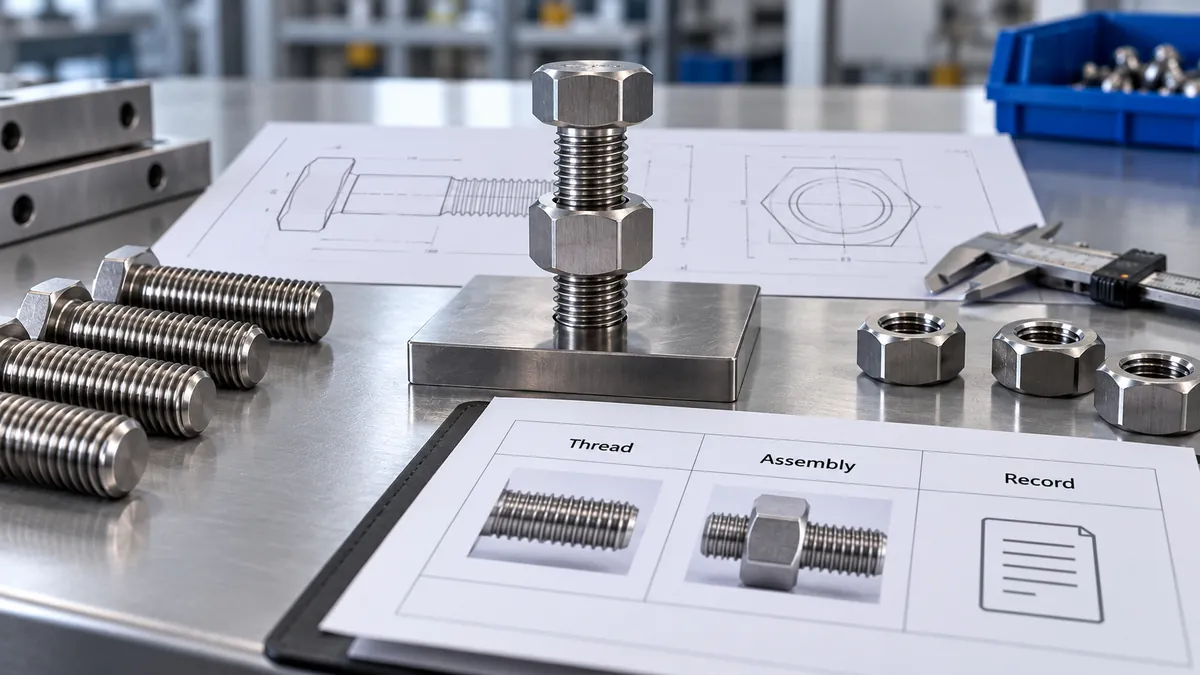
The joint checklist should combine drawings, components and assembly assumptions in one controlled record. It must make substitutions and unresolved requirements visible.
- – Identify the rack product, joint locations and drawing revision.
- – Describe structural, adjustable and serviceable connections separately.
- – Record bolt, nut or insert identities and approved mating pairs.
- – Specify thread dimensions and other engineering requirements where applicable.
- – Identify materials, finishes and relevant supplier records.
- – Define handling and inspection expectations for thread condition.
- – Record the approved engagement and assembly sequence.
- – Identify tools and supplier-supported tightening requirements.
- – Identify any lubricant, application method and compatibility review.
- – Record representative sample observations and limitations.
- – Approve instructions and hardware-kit identification.
- – Define component and process changes requiring review.
Koitor is a family-owned custom metal hardware factory with practical experience in forming, welding, assembly and packaging of bathroom and home storage hardware. During drawing or sample development, the team can discuss joint access, part alignment, assembly sequence and packaging organization. Fastener-specific technical requirements should still be agreed with the relevant suppliers and buyer's engineering reviewer.
The OEM home storage hardware page provides the commercial context for a project discussion. Send the component requirements and proposed assembly instruction with the product drawing, rather than waiting until a bulk kit has been packed.
For cost planning, separate fastener price from the cost of the approved joint system. A compound application, different mating component, additional inspection or revised instruction can affect the quotation. Compare like-for-like scope and record who supplies each component.
Before repeat orders, request notice of substitutions affecting the joint. A change to a nut source, material, surface condition, coating or compound can require an applicability review. The amount of follow-up depends on the actual change and the approved evidence.
Retain the final record alongside sample approval and packaging artwork. This helps a future buyer or distributor understand the approved configuration without relying on a former employee's memory or a verbal instruction.
What do buyers ask about stainless thread seizure?
Does corrosion-resistant stainless mean galling cannot happen?
No. Corrosion resistance and sliding-thread behavior are different considerations. Specify and review the actual mating pair and assembly condition rather than treating the material label as an assembly guarantee.
Can changing only the bolt grade solve the problem?
It may alter the joint, but the complete pairing still needs review. Thread condition, mating component, assembly, environment and applicable strength requirements all matter. Obtain supplier-supported advice for the proposed change.
Can buyers add any anti-seize compound to an existing torque instruction?
No. A compound can change friction and may interact with finishes or user requirements. Obtain advice for the actual compound and joint, and approve the tightening assumptions together.
Should assemblers force a fastener that becomes unusually tight?
No. Stop the approval trial and investigate abnormal resistance. Continued forcing can damage parts and obscure the original condition. Preserve the components for competent review.
What needs rechecking when the supplier changes a nut or insert?
Check whether the material, finish, thread requirements and approved assembly condition still apply. Record the substitution and agree the necessary confirmation before accepting it as interchangeable.
Discuss Your Hardware Specification With Koitor
Send Koitor your drawing, physical sample, material and finish requirements, intended use and packaging plan. Our family-owned custom metal hardware factory can review manufacturing practicality and small-batch OEM project requirements before quotation. Specific performance and any adjacent product feasibility require project confirmation.
OEM / العلامة التجارية الخاصة
حوّل دليل التوريد هذا إلى موجز منتج
يرجى إطلاعنا على المنتج المستهدف، والحجم، والتشطيب، وكمية الطلب، ومتطلبات التغليف. وسيتلقى فريقك تقييمًا عمليًّا لإمكانية التصنيع قبل تقديم عرض الأسعار.
 English
  Español
  Português
  Français
  Deutsch
  العربية