
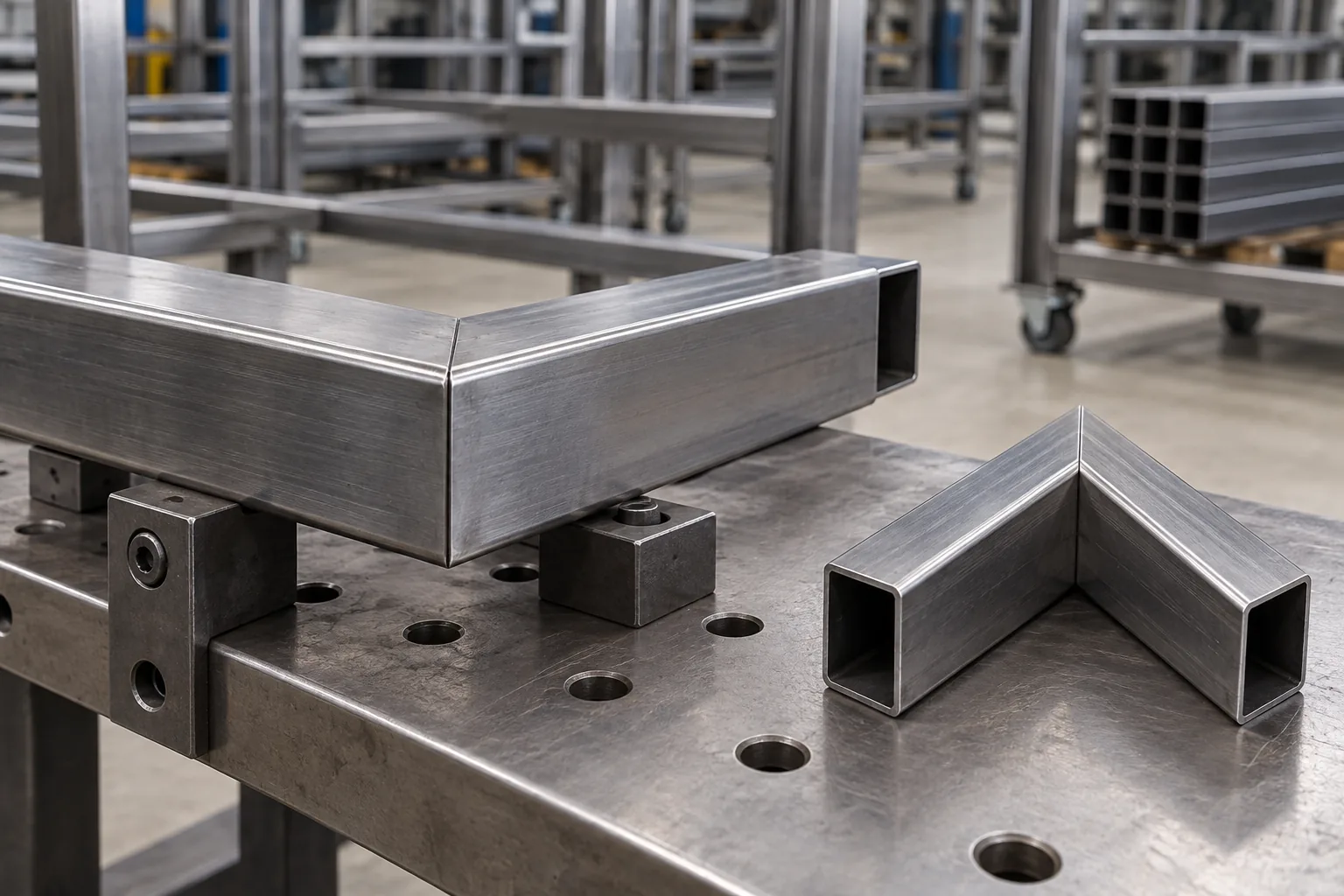
For tube cut squareness welding, buyers should define the actual functional requirement, approve a representative finished sample and retain the evidence against a controlled drawing. The correct choice depends on product geometry, material, finish and intended assembly; no universal dimension, setting or performance claim can replace project-specific review. Whether the end is square, mitered or another defined geometry and how fit-up is evaluated should be recorded before the supplier releases a production route.
Why is cut length not enough for a welded tube joint?
For a cut tube end at a welded storage-frame corner, judge the finished assembly against its agreed function, not appearance alone. Tube cut length controls one dimension, but the end face also has an angle and orientation relative to the member. The a product developer or supplier-quality buyer reviewing a welded tubular frame should define the controlling interface before the supplier selects a route. This keeps the decision tied to the product rather than an assumed standard configuration.
In an RFQ, tube cut squareness welding labels this specific buyer decision; the drawing and sample criteria still define acceptance.
Treat this as a controlled design input during why is cut length not enough for a welded tube joint?. Identify whether the end is square to the tube axis, mitered to meet an angled member or prepared to another controlled geometry. Make the drawing, sample and inspection note use the same feature names and revision. Resolve conflicting records before purchase release instead of relying on a later visual interpretation.
Connect whether the end is square, mitered or another defined geometry and how fit-up is evaluated to an observable acceptance step. A good fit-up review considers cut angle, twist, length, burrs, gap distribution and fixture contact together. Ask the supplier to list assumptions about material, finish or geometry for buyer approval. The goal is clear design intent and evidence, not an unsupported machine setting or tolerance.
The sample should represent the production-intent condition for a cut tube end at a welded storage-frame corner. Use a representative first article containing the actual combination of tube sizes, angles and joint sequence. Record any omitted finish or feature on an early prototype. An identified sample, controlled drawing and disposition make later comparisons repeatable without implying unperformed tests.
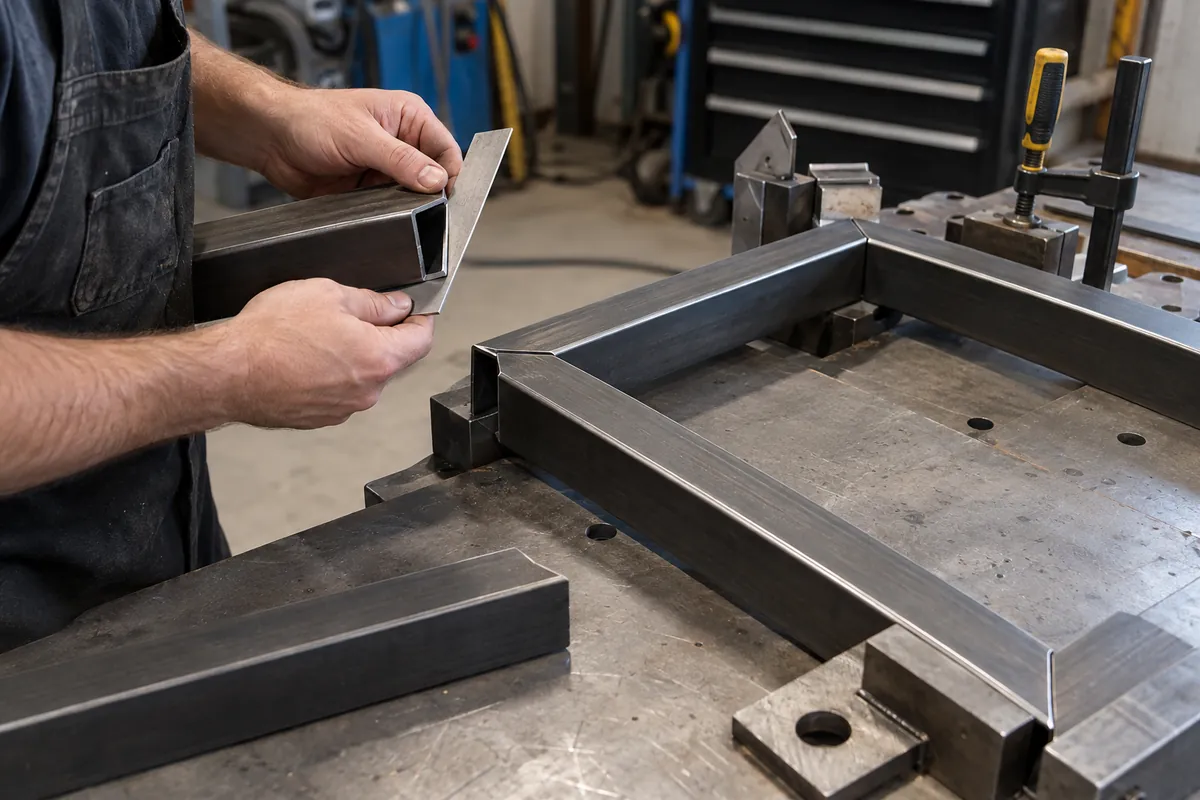
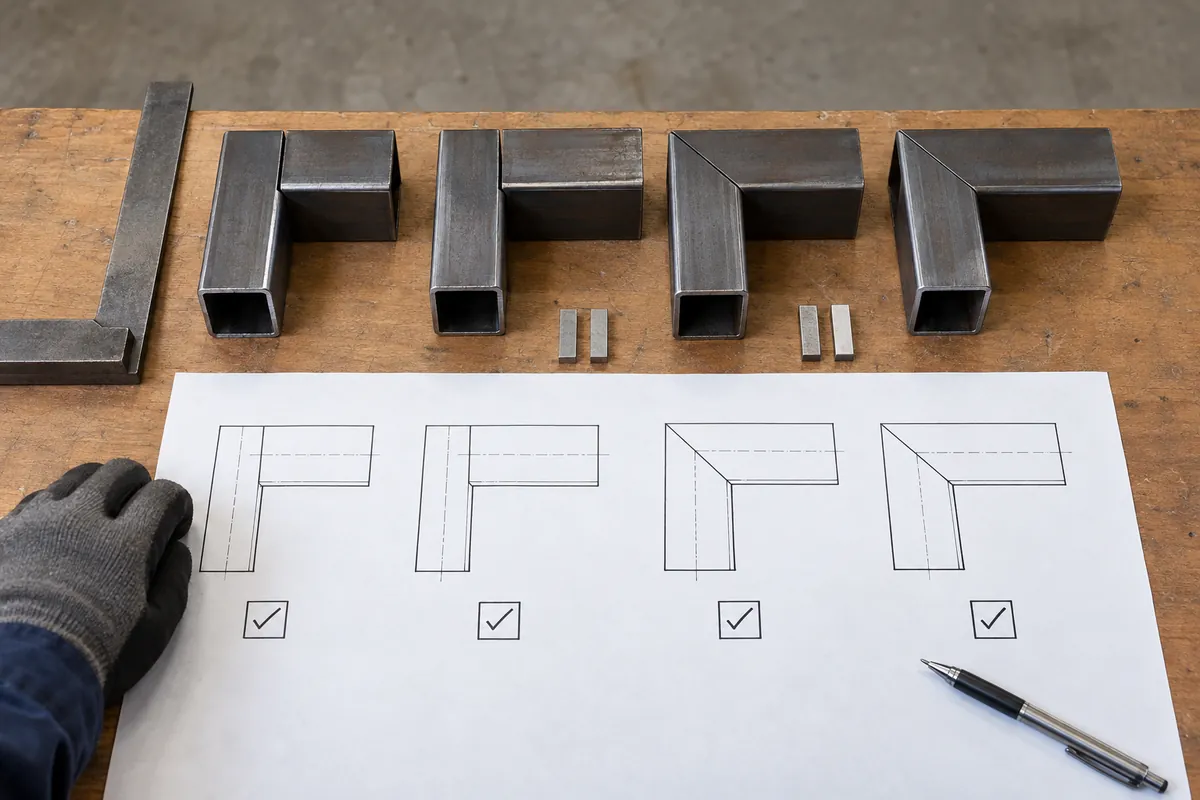
How should the drawing define square and mitered ends?
For a cut tube end at a welded storage-frame corner, judge the finished assembly against its agreed function, not appearance alone. Identify whether the end is square to the tube axis, mitered to meet an angled member or prepared to another controlled geometry. The a product developer or supplier-quality buyer reviewing a welded tubular frame should define the controlling interface before the supplier selects a route. This keeps the decision tied to the product rather than an assumed standard configuration.
Treat this as a controlled design input during how should the drawing define square and mitered ends?. A good fit-up review considers cut angle, twist, length, burrs, gap distribution and fixture contact together. Make the drawing, sample and inspection note use the same feature names and revision. Resolve conflicting records before purchase release instead of relying on a later visual interpretation.
Connect whether the end is square, mitered or another defined geometry and how fit-up is evaluated to an observable acceptance step. Use a representative first article containing the actual combination of tube sizes, angles and joint sequence. Ask the supplier to list assumptions about material, finish or geometry for buyer approval. The goal is clear design intent and evidence, not an unsupported machine setting or tolerance.
The sample should represent the production-intent condition for a cut tube end at a welded storage-frame corner. Tube cut length controls one dimension, but the end face also has an angle and orientation relative to the member. Record any omitted finish or feature on an early prototype. An identified sample, controlled drawing and disposition make later comparisons repeatable without implying unperformed tests.
What fit-up details influence the weld decision?
For a cut tube end at a welded storage-frame corner, judge the finished assembly against its agreed function, not appearance alone. A good fit-up review considers cut angle, twist, length, burrs, gap distribution and fixture contact together. The a product developer or supplier-quality buyer reviewing a welded tubular frame should define the controlling interface before the supplier selects a route. This keeps the decision tied to the product rather than an assumed standard configuration.
Treat this as a controlled design input during what fit-up details influence the weld decision?. Use a representative first article containing the actual combination of tube sizes, angles and joint sequence. Make the drawing, sample and inspection note use the same feature names and revision. Resolve conflicting records before purchase release instead of relying on a later visual interpretation.
Connect whether the end is square, mitered or another defined geometry and how fit-up is evaluated to an observable acceptance step. Tube cut length controls one dimension, but the end face also has an angle and orientation relative to the member. Ask the supplier to list assumptions about material, finish or geometry for buyer approval. The goal is clear design intent and evidence, not an unsupported machine setting or tolerance.
The sample should represent the production-intent condition for a cut tube end at a welded storage-frame corner. Identify whether the end is square to the tube axis, mitered to meet an angled member or prepared to another controlled geometry. Record any omitted finish or feature on an early prototype. An identified sample, controlled drawing and disposition make later comparisons repeatable without implying unperformed tests.
| Buyer decision | Define or compare | دليل الموافقة |
|---|---|---|
| Cut-end condition | What to define | What to inspect |
| Square end | Axis reference, orientation and mating face | Contact around the intended joint |
| Miter end | Angle relationship and member clocking | Gap distribution and frame corner fit |
| Deburred end | Edge condition and remaining face | No loose burr obstructing seating |
| Multi-member junction | Joint order and fixture references | Fit before joining and assembly after joining |
How should a first article be checked?
For a cut tube end at a welded storage-frame corner, judge the finished assembly against its agreed function, not appearance alone. Use a representative first article containing the actual combination of tube sizes, angles and joint sequence. The a product developer or supplier-quality buyer reviewing a welded tubular frame should define the controlling interface before the supplier selects a route. This keeps the decision tied to the product rather than an assumed standard configuration.
Treat this as a controlled design input during how should a first article be checked?. Tube cut length controls one dimension, but the end face also has an angle and orientation relative to the member. Make the drawing, sample and inspection note use the same feature names and revision. Resolve conflicting records before purchase release instead of relying on a later visual interpretation.
Connect whether the end is square, mitered or another defined geometry and how fit-up is evaluated to an observable acceptance step. Identify whether the end is square to the tube axis, mitered to meet an angled member or prepared to another controlled geometry. Ask the supplier to list assumptions about material, finish or geometry for buyer approval. The goal is clear design intent and evidence, not an unsupported machine setting or tolerance.
The sample should represent the production-intent condition for a cut tube end at a welded storage-frame corner. A good fit-up review considers cut angle, twist, length, burrs, gap distribution and fixture contact together. Record any omitted finish or feature on an early prototype. An identified sample, controlled drawing and disposition make later comparisons repeatable without implying unperformed tests.
What should be recorded for repeat production?
For a cut tube end at a welded storage-frame corner, judge the finished assembly against its agreed function, not appearance alone. Tube cut length controls one dimension, but the end face also has an angle and orientation relative to the member. The a product developer or supplier-quality buyer reviewing a welded tubular frame should define the controlling interface before the supplier selects a route. This keeps the decision tied to the product rather than an assumed standard configuration.
Treat this as a controlled design input during what should be recorded for repeat production?. Identify whether the end is square to the tube axis, mitered to meet an angled member or prepared to another controlled geometry. Make the drawing, sample and inspection note use the same feature names and revision. Resolve conflicting records before purchase release instead of relying on a later visual interpretation.
Connect whether the end is square, mitered or another defined geometry and how fit-up is evaluated to an observable acceptance step. A good fit-up review considers cut angle, twist, length, burrs, gap distribution and fixture contact together. Ask the supplier to list assumptions about material, finish or geometry for buyer approval. The goal is clear design intent and evidence, not an unsupported machine setting or tolerance.
The sample should represent the production-intent condition for a cut tube end at a welded storage-frame corner. Use a representative first article containing the actual combination of tube sizes, angles and joint sequence. Record any omitted finish or feature on an early prototype. An identified sample, controlled drawing and disposition make later comparisons repeatable without implying unperformed tests.
A useful review scenario is a change between the prototype and the intended production sample. For a cut tube end at a welded storage-frame corner, even a small change in geometry, finish or assembly order can alter a correct cut length can still leave an angular or clocking mismatch at a corner joint. The a product developer or supplier-quality buyer reviewing a welded tubular frame should ask which acceptance points remain valid and which need a new check. This avoids treating an earlier approval as blanket authorization for a different configuration.
Before requesting a quotation, provide the controlled drawing, the product’s installed or assembled orientation, the specified material and finish, and the buyer’s use conditions. Call out a cut-end view with datum, end angle, orientation, burr expectation and joint partner. Ask the supplier to identify missing inputs and quote assumptions in writing. A clear RFQ helps compare proposals fairly and reduces the risk that two suppliers price different interpretations of the same short product description.
At sample review, use the same names for features that appear in the drawing, photographs and inspection notes. Check dry-fit the members in a representative fixture and inspect the intended contact before joining. If the result is borderline or the sample differs from the production route, record the limitation and assign a decision owner rather than silently changing the criterion. The resulting evidence should be concise enough for sourcing and quality teams to reuse during a later order.
Finally, maintain a change record linking the approved configuration to the supplier response and the next purchase order. The drawing revision, mating tubes, controlled fixture or reference faces, and a recorded fit-up disposition If a proposed substitution affects a relevant feature, compare it with the accepted reference and document the buyer’s disposition before release. This modest control is especially useful when a private-label program moves from sampling into repeat orders or adds a related size.
Buyer approval checklist
Use this checklist at RFQ, sample approval and change review. Tailor it to the actual part and identify the person responsible for accepting each requirement.
- Identify the tube axis and the reference used to define the end face.
- State square, mitered or other end geometry with mating-member orientation.
- Define burr removal without changing the controlled cut face.
- Dry-fit representative members before joining and record contact condition.
- Track fixture, drawing revision, first-article result and approved deviations.
Frequently asked questions
Can a tube be the right length but still fail fit-up?
Yes. End angle, clocking, burrs and mating geometry can prevent the faces from seating as intended.
Should every welded tube joint have zero gap?
No universal gap requirement applies to every design and joining route. The project drawing and process review must define acceptance.
Is a square cut always better than a miter?
No. The cut geometry should match the frame design and joint orientation. Buyers should specify the intended relationship.
Does orbital tube-cutting guidance apply to all storage racks?
No. It illustrates preparation considerations for a particular application and should not be generalized to all cutting or welding routes.
Should the part be checked only after welding?
A pre-join dry fit can reveal cut and contact issues; the finished frame should also be reviewed against its design requirements.
Technical references
Use source documents as context and confirm their scope, revision and applicability to the actual material and process.
Keep tube cut squareness welding tied to the approved configuration and revision when recording a supplier decision.
For related sourcing context, see Koitor Hardware manufacturing information or contact the project team.
Discuss Your Product Specification
Share the controlled drawing, intended use, finish and representative sample requirements so the relevant manufacturing questions can be reviewed for your project.
OEM / العلامة التجارية الخاصة
حوّل دليل التوريد هذا إلى موجز منتج
يرجى إطلاعنا على المنتج المستهدف، والحجم، والتشطيب، وكمية الطلب، ومتطلبات التغليف. وسيتلقى فريقك تقييمًا عمليًّا لإمكانية التصنيع قبل تقديم عرض الأسعار.
 English
  Español
  Português
  Français
  Deutsch
  العربية