

The UK packaging EPR scheme makes packaging data a supplier-handoff issue as well as a compliance task. For bathroom and home-storage hardware, a towel rack, shower basket or metal shelf may reach the buyer in several packaging layers. The overseas factory or packaging vendor can describe the components it makes or packs; the UK-responsible organisation must determine who is obligated, what packaging activity and class apply, which evidence supports household or non-household treatment, and what belongs in its reporting file.
For each buyer SKU and approved pack-out revision, request a component-level record that identifies packaging material, weight, quantity, package level, evidence source and effective date. Keep the supplier’s factual information distinct from the importer’s market, sales-channel and legal-role decisions. This prevents a gross shipping weight, an old sample or a supplier’s general “recyclable packaging” statement from being mistaken for the structured data required under a current UK reporting method.
This is a practical sourcing guide, not legal advice. The GOV.UK guidance and reporting pages referenced here were checked on October 21, 2026; confirm current rules and deadlines for the organisation, UK nation, reporting period and packaging activity involved.
What does the UK packaging EPR scheme ask an importer to determine?
UK packaging extended producer responsibility (EPR) is not a single packaging-material certificate. The responsible organisation must first establish whether it has obligations and what producer category applies. The official GOV.UK “check if you must comply” guidance, updated on August 19, 2026, asks organisations to assess their business circumstances and packaging activities. Importing packaged goods is one relevant activity, but it does not by itself answer every producer, size, scope or reporting question.
The UK-responsible entity should identify the legal organisation and its role in the supply chain, check the applicable producer criteria and organisational thresholds, and determine which activities it performs. It may need company and market records that an overseas factory does not hold: UK turnover and packaging-tonnage facts, who owns or licenses a brand, who imports the packed goods, which party supplies packaging to another party, UK destinations, end-user channels and reporting-period volumes. Use current official guidance or a qualified adviser for the actual assessment rather than asking a supplier to decide whether the importer is obligated.
This article focuses on evidence a hardware buyer can request to make that assessment more reliable. It does not state that every importer, brand owner or distributor has the same legal responsibility. The producer hierarchy and the way a packaging activity is treated depend on the applicable rules and the transaction facts.
What supplier data should be requested for each hardware pack-out?
Begin with a specific product SKU and approved packaging revision. List every component and the package level or function it serves. A bathroom rack might have an individual retail pack, an outer carton, protection around a polished surface, and transport packaging used to consolidate multiple units. Those are prompts for inspection—not a claim about how any particular Koitor SKU is packed. The supplier should report what is actually used and identify where each component enters the packing process.
| Supplier-data field | What to request | Why the UK-responsible entity needs it |
|---|---|---|
| Buyer SKU and revision | Buyer item code, supplier code, product revision and pack-out revision | Ties the figures to the actual product configuration and affected orders |
| Packaging component | Carton, insert, bag, sleeve, tape, protection, pallet or other component actually used | Keeps unlike components from being collapsed into a vague “package” record |
| Packaging activity/level | What the organisation does with the component and whether it is primary, secondary, tertiary or shipment packaging under current guidance | Supports classification; the reporting organisation must apply the official definitions and codes |
| Material and subtype | Supplier’s factual material description and any supported subtype information | Helps the reporting team map evidence to current UK material codes and file fields |
| Component quantity | Count or area per sales unit, inner pack, master carton or shipment unit, with the basis stated | Allows a per-unit record to be reconciled to the real pack-out |
| Component weight | Weight per component in the requested unit, with net/gross distinction | The current large-producer guidance uses packaging-material weights; an overall shipment weight is not a component breakdown |
| Evidence method and source | Actual weighing, calculated value, specification, drawing, supplier declaration or estimate; date and document reference | Makes the source and confidence level visible to the reporting reviewer |
| Supplier/site and effective date | Packaging vendor, packing site, record owner and first affected revision/order | Supports traceability when more than one supplier or site controls the pack |
| Change record | Material, quantity, construction, supplier or pack-out change and effective date | Identifies which reporting period or orders may need review |
Ask the vendor to mark each value as measured, calculated, declared, estimated or unknown. If a component weight is calculated from a drawing or nominal material specification, retain the inputs and method. Do not silently replace a missing weight with zero, or turn a vendor estimate into a measured value. If a supplier cannot split the weight of a mixed-material component, record that limitation and follow the current reporting instructions for how the responsible organisation must handle it.
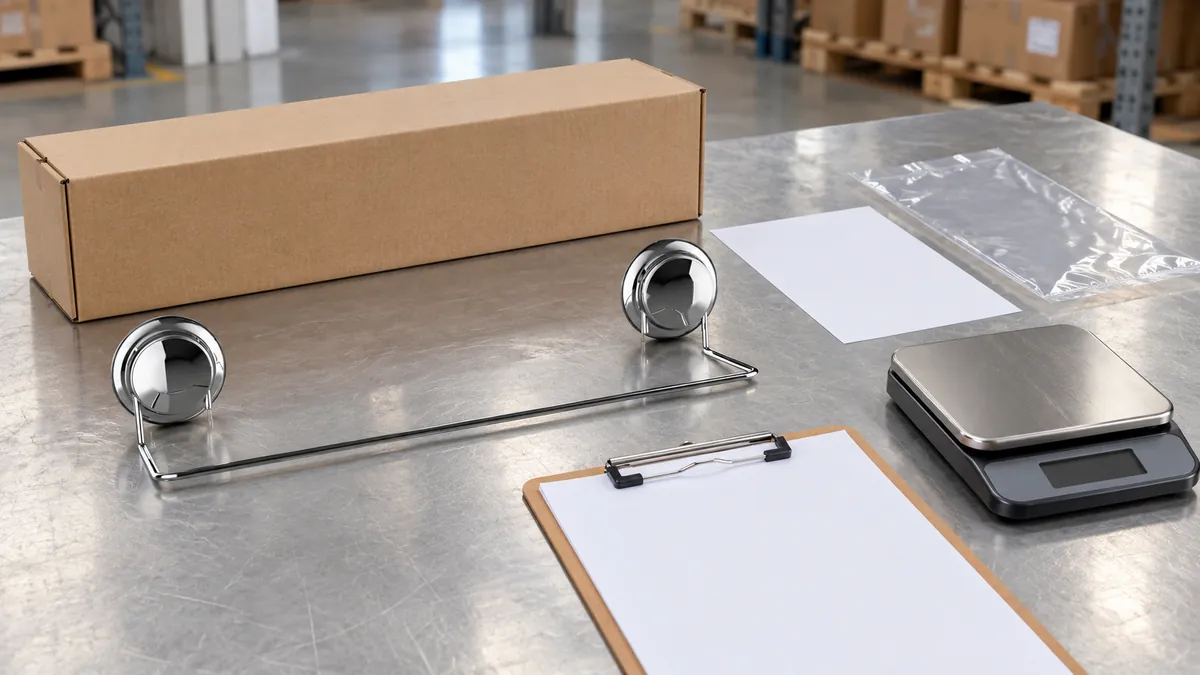
The official large-producer reporting guidance and the current reporting-file specification describe the information and codes used in reporting. The file guidance was published and last updated on August 19, 2026, and includes fields and code lists for packaging activities, types, classes, materials and country information. Suppliers should return factual component evidence in a buyer-controlled template; the responsible organisation should map that evidence to the current official file structure.
How should buyers distinguish package levels and reporting activities?
The same physical carton can play different roles depending on how it is used in a supply chain. A component directly associated with the packaged product, a grouping layer, transport protection and packaging supplied to a household recipient should not be treated as interchangeable labels. The organisation submitting data has to apply the current definitions for the actual packaging activity and component. The supplier’s pack-out description is evidence, not the final legal classification.
For a metal shower caddy or towel bar, an importer can ask the factory to show the packaging journey: what is packed around one saleable unit, what groups several units, what protects a load during business-to-business transport, and whether an e-commerce or fulfilment provider adds shipment packaging before delivery. If a distributor repacks or combines SKUs, identify that stage rather than assuming the factory’s original pack-out is the final package supplied in the UK.
The current reporting-file guidance provides separate activity and packaging type/class codes. The reporting organisation should use those official definitions rather than copy a home-made label such as “export carton,” “retail,” or “outer box” into a regulatory field without checking the intended meaning. A carton’s name, material and physical position do not, by themselves, determine the activity code or reporting owner.
Keep gross shipping weight separate from packaging-component weight. Gross weight may include the metal product, accessories, instructions, packaging, pallets and load material. A shipment invoice may be useful for transport reconciliation, but it is not automatically the material-by-component record required by the applicable reporting method. If a master carton contains mixed SKUs, retain the pack configuration and an agreed, reproducible allocation method; do not divide its weight equally without evidence that the allocation reflects the actual pack-out.
The reporting team also needs importer-controlled information. Sales by UK nation, reporting-period quantities, business structure, producer role, channel and packaging destinations may not be visible to the factory. A buyer should not ask the manufacturer to invent these facts simply because it supplied the physical goods.
When can primary or shipment packaging be reported as non-household?
Household/non-household classification is a significant evidence question for the UK packaging EPR scheme. Current joint regulator guidance says secondary and tertiary packaging must be classed as non-household. Primary and shipment packaging must be classed as household unless specified conditions are met. The official household/non-household guidance explains the conditions and the evidence that must be kept when primary or shipment packaging is reported as non-household.
For example, the guidance describes circumstances where packaging is supplied to a business or public institution that is the end user of the packaging, or where that recipient supplies goods to an end user with all packaging removed. It also addresses packaging for products designed only for business or public-institution use, subject to conditions about likely disposal, and imported packaging that the importer discards without supplying it to anyone in the UK. The facts and evidence matter; these are not blanket exemptions to infer from a product category or customer type.
Selling to a wholesaler or distributor does not automatically establish that primary packaging is non-household. The downstream organisation may resupply the packaged item, and a household-use bathroom accessory may eventually reach a consumer. A business invoice, trade-only website or “professional” label alone may not prove the treatment. The responsible organisation should trace the packaging to the relevant end user or activity and preserve the required evidence under the current regulator guidance.
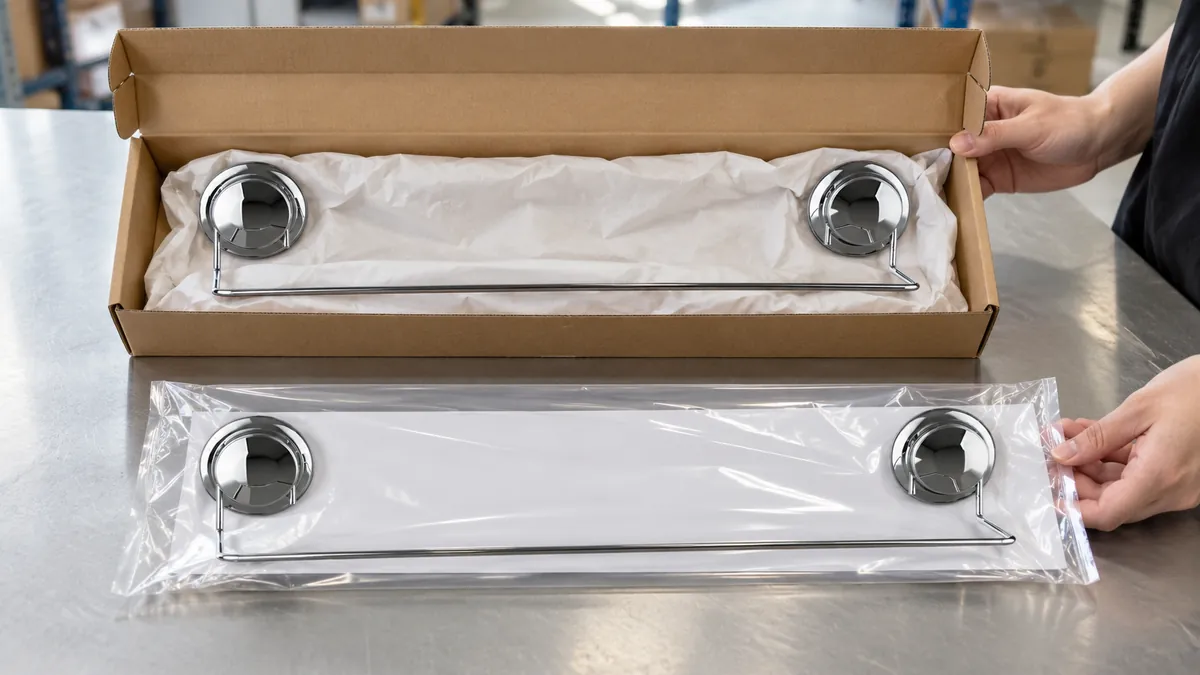
The supplier can support that review with package photos, SKU-specific configuration records, an item/pack description, and details about what packaging is removed or added at the factory. The importer or UK compliance owner usually controls downstream sales and channel information. They should combine both evidence sets and make the classification decision under the current rules; the supplier should not be asked to certify a household/non-household outcome that depends on facts it cannot see.
How should a supplier data handoff protect reporting accuracy?
Treat packaging data like a controlled product specification. Keep a current record per buyer SKU and packaging revision, and retain earlier versions rather than overwriting them. When a protective sleeve, insert, carton construction, count per master carton or packing site changes, request a dated revision notice and determine which purchase orders and reporting periods use the old or new configuration.
The supplier request can include these controls:
- Provide a component list for the named SKU and packaging revision, including every relevant package level.
- State the material description, quantity, component weight and unit for each listed component.
- Label the evidence basis for each figure and identify a measurement or calculation source and date.
- Link the data to the packaging drawing, bill of materials, approved sample or other supporting record.
- Identify mixed-SKU cartons, shared packaging and third-party packing steps; explain the observed configuration rather than guessing its allocation.
- Notify the buyer before a material or pack-out change and state which revision, order or effective date is affected.
- Return missing or uncertain fields as explicit gaps, with a named owner and follow-up date.
Before submitting a report, the responsible organisation should reconcile the supplier record against the current UK reporting file specification, its internal SKU and packaging masters, purchase orders, imports, UK sales and distribution records, and the evidence required for any household/non-household decision. If there are multiple suppliers, sites or channels, maintain source-level records that can be consolidated without losing traceability. Re-check the reporting period, deadlines and the regulator for the relevant UK nation against the current GOV.UK deadlines page. As of the October 21, 2026 check, that page lists six-monthly reporting for large producers and annual reporting for small producers, with published 2026-period deadlines; confirm the current schedule and the organisation’s category before acting.
What is the difference between UK packaging EPR and the Plastic Packaging Tax?
Packaging EPR and the UK Plastic Packaging Tax are separate regulatory programs with different questions and records. Packaging EPR focuses on the responsible producer’s packaging activity, packaging classes/types, material and component weights, data reporting and any applicable household/non-household treatment. Plastic Packaging Tax has its own scope and recycled-plastic-content evidence rules. A document prepared for one program should not be treated automatically as complete evidence for the other.
UK packaging EPR is also distinct from the UK Plastic Packaging Tax, which has its own scope and recycled-plastic-content evidence rules; evidence prepared for one program should not be assumed to satisfy the other. UK packaging EPR also differs from U.S. state EPR and EU PPWR: see the separate U.S. state packaging EPR supplier-data guide for a market comparison and the EU PPWR transport-packaging guide for an EU packaging-layer question. Keep each jurisdiction’s producer definitions and reporting fields separate.
Koitor’s role is to discuss metal hardware, product pack-out information and manufacturing-related packaging questions that can be supported for a specific order—not to act as a UK legal adviser, packaging EPR filer, compliance scheme, certification body or source of pre-verified weight values for every SKU. Buyers can discuss a product drawing, packaging configuration or revision request with the custom bathroom hardware manufacturer team or through the contact page. The UK-responsible organisation should confirm obligation, classification and reporting with current official guidance or a qualified adviser.
The practical takeaway is that a reliable UK packaging EPR scheme workflow separates three things: what the supplier physically packs, what evidence supports material and component weight, and what the obligated UK organisation must decide about activity, class, producer status and reporting. Request the first two in a revision-controlled format, then apply the current official rules to the actual supply chain and supporting records.
Build a traceable packaging-data handoff
Share the hardware drawing, packaging configuration and revision questions with Koitor for a manufacturing-feasibility discussion. Your UK compliance owner should confirm producer status, classification and reporting duties.
OEM / العلامة التجارية الخاصة
حوّل دليل التوريد هذا إلى موجز منتج
يرجى إطلاعنا على المنتج المستهدف، والحجم، والتشطيب، وكمية الطلب، ومتطلبات التغليف. وسيتلقى فريقك تقييمًا عمليًّا لإمكانية التصنيع قبل تقديم عرض الأسعار.


 English
 Español
 Português
 Français
 Deutsch
 العربية