
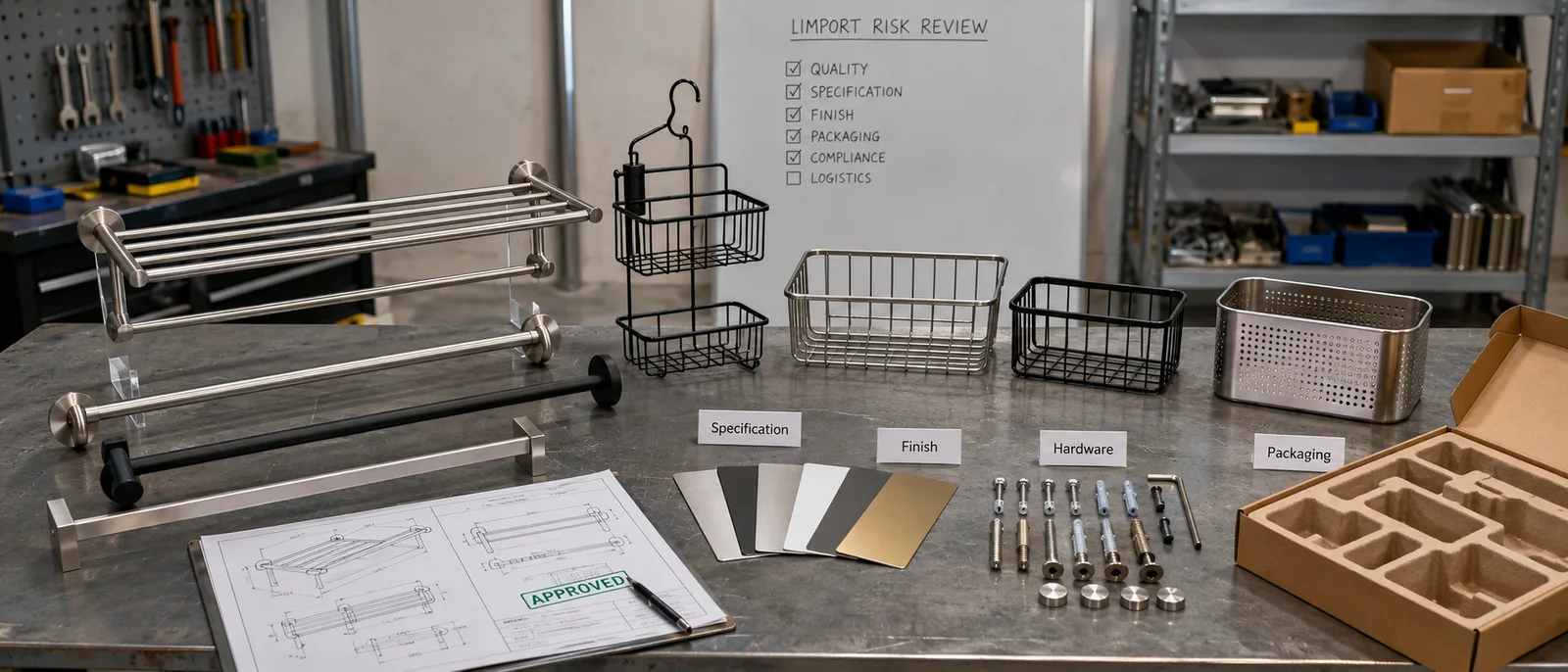
Bathroom hardware import problems usually begin before shipment: incomplete specifications, uncontrolled sample changes, unclear finish standards, weak packaging instructions or late communication. Importers can reduce these risks by converting product expectations into approved drawings, samples, inspection points and packaging references before bulk production. A low price or attractive sample does not replace a controlled approval process.
The most useful prevention method is staged confirmation. Define the product, approve a representative sample, freeze revisions, verify production consistency and inspect packaging before release. Each stage should produce evidence that the buyer and supplier can use when a question appears.
Which Bathroom Hardware Import Problems Occur Most Often?
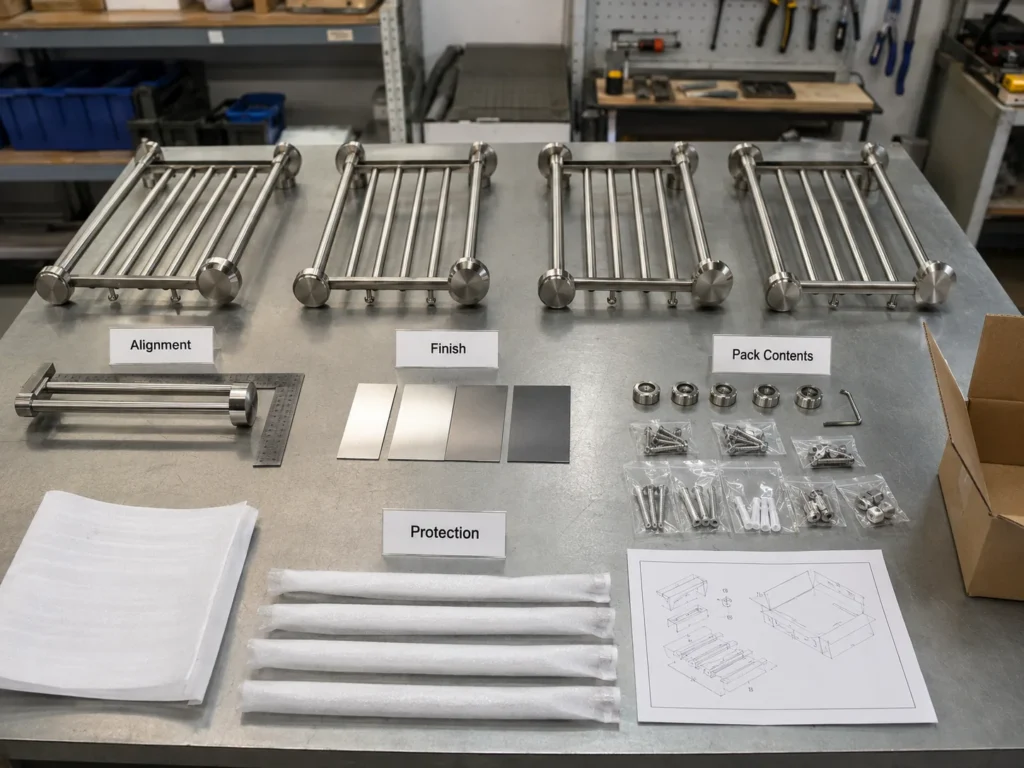
The most common problems involve product mismatch, inconsistent workmanship, finish variation, missing accessories, packaging damage and schedule surprises. These issues are connected: a vague brief makes inspection difficult, while a late packaging decision can change both cost and delivery timing.
| Import risk | Typical warning sign | Likely business effect | Practical prevention |
|---|---|---|---|
| Specification mismatch | Quotation or sample omits dimensions, material or mounting details | Wrong fit, rework or customer returns | Approved drawing, revision control and critical-dimension list |
| Workmanship variation | Only one carefully prepared sample is reviewed | Wobble, alignment or assembly differences across the batch | Trial order and representative batch inspection |
| Finish inconsistency | Color, gloss or polishing direction is described only in words | Mixed appearance within a retail range | Approved finish reference and consistent review lighting |
| Accessory shortage | Screws, anchors, caps or instructions are not listed | Installation failure or incomplete retail packs | Pack-content list and assembly verification |
| Packaging damage | Metal surfaces touch or loose parts move inside the box | Scratches, bent parts, damaged boxes or repacking cost | Approved inner protection, carton plan and shipment-specific review |
| Schedule slippage | Artwork, finish or materials remain open after order placement | Missed launch or higher freight cost | Confirmation calendar with owners and dependencies |
Not every observation has the same commercial importance. A critical installation mismatch should not be averaged with a small cosmetic observation. Buyers should define defect categories and decision rules for the project before inspection rather than improvising after goods are complete.
Why Do Specification Gaps Create Quality and Cost Issues?
Specification gaps create quality and cost issues because factories must otherwise interpret missing requirements during quotation, sampling or production. Two parties can use the same product name while imagining different wire sizes, mounting centers, surface appearance, accessories or packaging.
A useful specification does not need to be an elaborate engineering file. It should identify the product code and revision, overall dimensions, critical interfaces, material, component sizes, finish, visible surfaces, mounting parts, intended pack contents and packaging method. Photos can explain intent, but measurable details should appear in a drawing or written reference.
For a towel rack, critical interfaces may include bracket spacing, distance from the wall, usable bar length and screw-hole positions. For a shower caddy, buyers may need to define basket dimensions, wire spacing, drainage, hook or bracket geometry and bottle clearance. For a tissue holder, roll clearance and mounting orientation can matter more than overall appearance.
Revision control prevents an approved change from disappearing between sampling and bulk production. Put a date or revision code on drawings, artwork and packaging layouts. When the supplier suggests a substitution or process adjustment, approve it in writing and update the controlled reference.
Importers planning custom bathroom hardware manufacturing should send drawings or physical samples early. Koitor Hardware can review structure, welding positions, finish and packaging practicality before sample development, helping both sides identify open questions before quotation is treated as final.
How Do Manufacturing and Finish Choices Cause Batch Issues?
Manufacturing and finish choices cause batch issues when the approved appearance is not connected to repeatable process controls. Metal bathroom accessories combine cut or formed components, welding, grinding, polishing or coating, assembly and packing; variation at one step can remain visible in the finished product.
Structure comes first. Wire diameter, tube size, bracket geometry, weld position and joint design affect stability, alignment and manufacturability. A heavier component does not automatically create a better product if interfaces remain weak or poorly aligned. Any load requirement should be reviewed and confirmed through project-specific testing rather than assumed.
Welding quality should be checked for placement, continuity where required by the design, spatter, distortion and visible cleanup. A clean-looking front surface can hide alignment problems elsewhere. Buyers should assemble representative units and place freestanding products on a flat reference surface when stability matters.
Surface finish depends on both substrate preparation and the selected finishing process. Powder-coated steel may show inconsistent color, gloss, coverage or surface preparation when references are vague. Stainless steel products may show polishing-direction differences, handling marks or inconsistent visible areas. No common material should be described as universally rust-proof; exposure, grade, construction, finish and care all influence performance.
Use an approved finish sample where visual consistency matters. State which surfaces are customer-facing and review products under similar lighting. If several bathroom accessories will be sold as one coordinated range, inspect them together rather than approving each color independently.
What Should an Importer Inspect During Production?
- Incoming component sizes and material description against the approved order
- Fixture setup and critical dimensions before a full batch proceeds
- Weld location, alignment and visible cleanup on representative units
- Assembly interfaces, mounting hardware compatibility and missing parts
- Finish appearance against the approved sample after processing
- Pack contents, product separation and carton markings before final packing
Bathroom accessories quality issues are easier to contain when detected before every unit reaches final packaging. The appropriate inspection stage depends on the product and process, so buyers should agree which checks occur before finishing, after finishing and before shipment.
How Can Importers Reduce Packaging Damage to Bathroom Hardware?
Importers can reduce packaging damage by controlling movement, separating metal contact points, protecting visible finishes and validating the complete pack rather than the empty box. Packaging must protect the product through handling, consolidation and the intended shipping route while remaining practical for retail or e-commerce fulfillment.
Bathroom racks and baskets often contain protruding brackets, hooks, sharp geometry or multiple loose accessories. These features can rub against coated or polished surfaces, puncture thin inner materials or concentrate pressure against a retail box. Screws and anchors can move freely unless placed in a sealed, identified bag.
Start with a pack-content diagram. Show product orientation, protective sleeves or separators, hardware location, instructions, color labels and pack count. For multi-piece products, identify which surfaces may touch. Keep metal components from moving against each other during handling.
Carton planning should consider product weight, empty space, stacking arrangement, inner-box strength, carton dimensions and shipment method. A larger carton is not automatically safer because extra void can allow movement. A tightly packed carton can also transfer pressure to brackets or decorative surfaces if protection is poorly placed.
When retail packaging is customized, approve both artwork and physical construction. Check barcode position, product identity, quantity, language requirements supplied by the buyer and instruction revision. For wider brand programs, private-label bathroom accessories development should treat packaging as part of product approval rather than a final administrative task.
How Should Buyers Control Supplier Communication and Approvals?
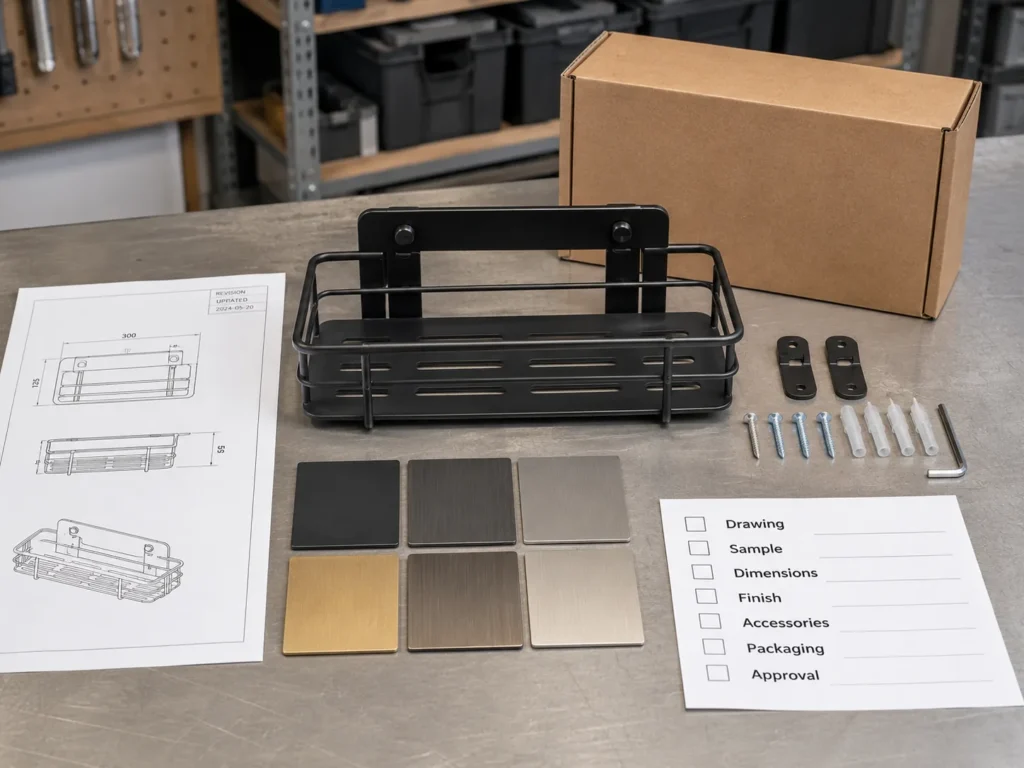
Buyers should control communication with one written decision trail covering open questions, approved references, changes, timing and issue closure. Frequent messages are not the same as clear communication; important decisions should be traceable to a product code, revision and responsible owner.
At the start, create an open-point list. Record what is confirmed, what requires a factory proposal, who decides and the required date. Typical open points include material availability, finish sample, mounting hardware, artwork, carton layout and target shipment timing.
Use stage approvals instead of one general “OK.” Separate drawing approval, sample approval, finish approval, packaging approval and shipment release. This makes it clear whether a comment permits only the next development step or authorizes production.
Supplier communication problems often become visible when something changes. A useful supplier response identifies the affected specification, available evidence, proposed containment and next action. If a defect appears, request photos, affected quantity, current production status, likely cause and corrective action. “We will be careful” does not explain how recurrence will be controlled.
Koitor Hardware is a family-owned custom metal hardware factory focused on bathroom and home storage products. Direct factory communication allows buyers to discuss manufacturability, welding, finish and packaging with the production team. Samples usually take about 5-7 working days after details are confirmed, and bulk production often takes about 4-6 weeks depending on quantity, complexity, materials, finish and packaging. These are planning references and should be reconfirmed for each project.
A small-batch trial order can test both product repeatability and communication before a larger commitment. MOQ can start from around 100 pieces for some products, depending on structure, material, finish and packaging. The trial should have written acceptance criteria and a recorded decision: approve, approve after correction, repeat the trial or stop.
What Should Be on a Bathroom Hardware Import Risk Checklist?
A bathroom hardware import risk checklist should cover the commercial brief, product specification, sample, production control, packaging, logistics and corrective-action process. Teams using the checklist consistently can identify bathroom hardware import problems before they become shipment-wide disputes.
- Supplier scope: Confirm the supplier understands the product category and required manufacturing processes.
- Product identity: Use one item code, drawing revision and sample reference across the purchase order and inspection documents.
- Critical dimensions: Mark mounting centers, interfaces, usable space and other fit-related measurements.
- Material and components: Define the material description, wire or tube sizes where relevant, accessories and mounting hardware.
- Finish reference: Approve color, gloss, polishing direction or other visible criteria using a physical or controlled reference.
- Functional review: Assemble and use representative samples with the intended accessories and target items.
- Batch inspection: Agree inspection timing, sample selection, defect categories and release responsibility.
- Packaging protection: Confirm separation, contact points, hardware bags, instructions, box layout and carton plan.
- Artwork control: Approve barcode, product identity, language content and revision before printing.
- Schedule dependencies: Record material, finish, artwork, sample and packing confirmation dates.
- Change approval: Require written acceptance before substitutions or structural changes are used.
- Issue closure: Record evidence, affected quantity, containment, corrective action and verification.
Price remains part of supplier selection, but compare quotations on the same specification and packaging basis. A cheaper quote that excludes mounting parts, protective packing or finish control may create higher landed cost later. The Koitor sourcing resources provide additional guidance for evaluating metal storage hardware projects.
Frequently Asked Questions
What are the most common bathroom accessories quality issues?
Common issues include incorrect dimensions, poor alignment, wobble, visible weld cleanup, finish variation, missing mounting parts and packaging marks. The relevant risks depend on the product structure, material, finish and installation method.
Is one approved sample enough before a large order?
An approved sample is necessary, but it does not prove batch repeatability. A controlled trial order and representative production inspection can show whether the supplier repeats the approved dimensions, workmanship, finish, assembly and packing method.
Who should define the inspection standard?
The buyer and supplier should agree project-specific inspection points before production. The buyer should identify market and customer requirements, while the factory can explain which dimensions and process stages are practical to control and record.
How can packaging damage to bathroom hardware be reduced?
Separate metal contact points, immobilize the product, protect customer-facing finishes, seal loose hardware and approve the complete inner-pack and carton arrangement. Packaging suitability should be reviewed for the product geometry and intended shipping method.
What should importers send when requesting a quotation?
Send a drawing or physical sample, target dimensions, material and finish preference, expected quantity, mounting components, packaging idea, target market, artwork needs and desired schedule. Mark open questions clearly so the supplier can review them before quoting.
Work With Koitor Hardware
Want to Review Import Risks Before Sampling?
Send Koitor your drawing, physical sample, finish target, packaging idea and expected order quantity. Our team can review the structure, manufacturing details, sample plan and small-batch production options before quotation.
OEM / PRIVATE LABEL
Turn this sourcing guide into a product brief
Share your target product, size, finish, order quantity and packaging requirements. Your team receives a practical manufacturability review before quotation.

 English
  Español
  Português
  Français
  Deutsch
  العربية