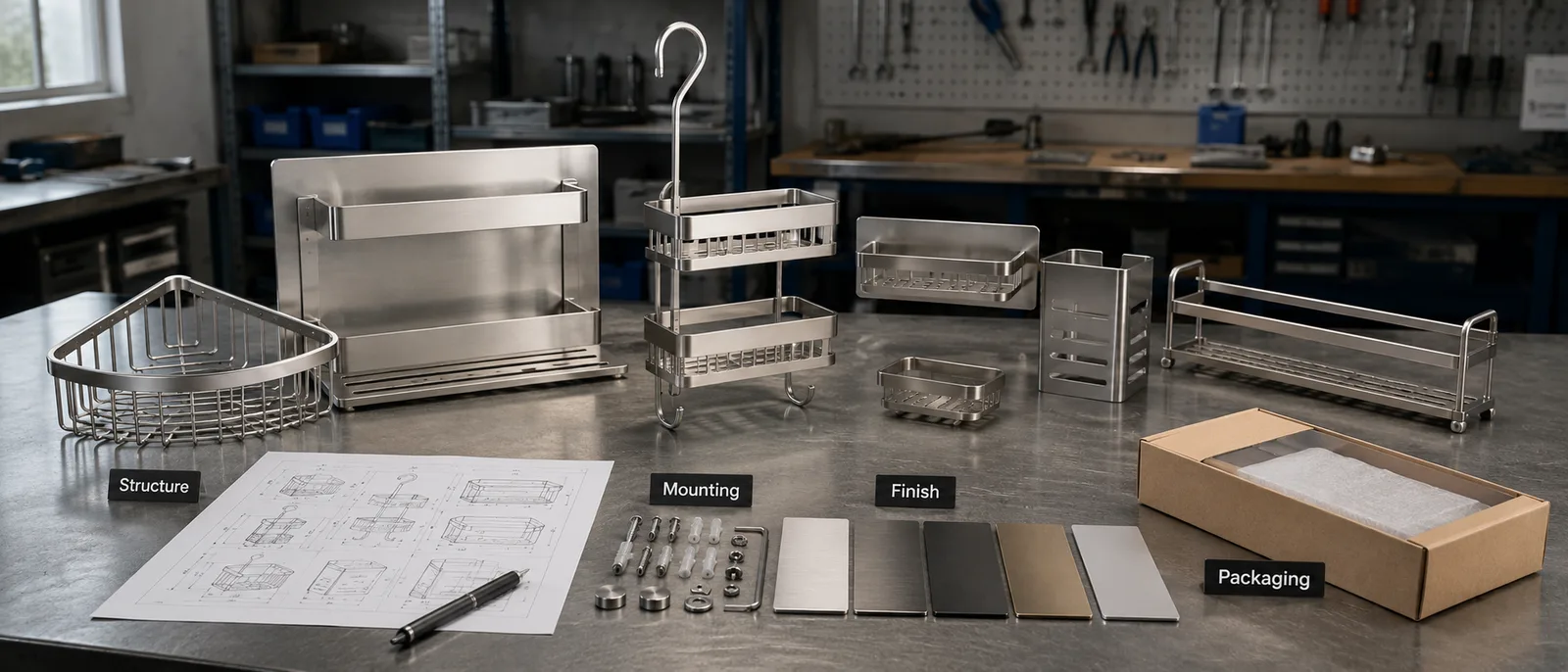
A custom shower caddy manufacturer should be selected by product-structure knowledge, mounting-system control, material and finish experience, sample discipline, packaging protection and practical order terms. Importers should give the factory a clear use case and inspect a complete installed or assembled sample before approving bulk production. The lowest quotation is not useful if it excludes mounting parts, finish requirements or protective packaging.
Shower caddies look straightforward, but shelf drainage, bottle clearance, wall interfaces, hooks, weld positions and moisture exposure create connected sourcing decisions. A reliable OEM process turns those decisions into an approved drawing, sample, inspection plan and pack reference that can be repeated across a production batch.
What Should Buyers Evaluate in a Shower Caddy Manufacturer?
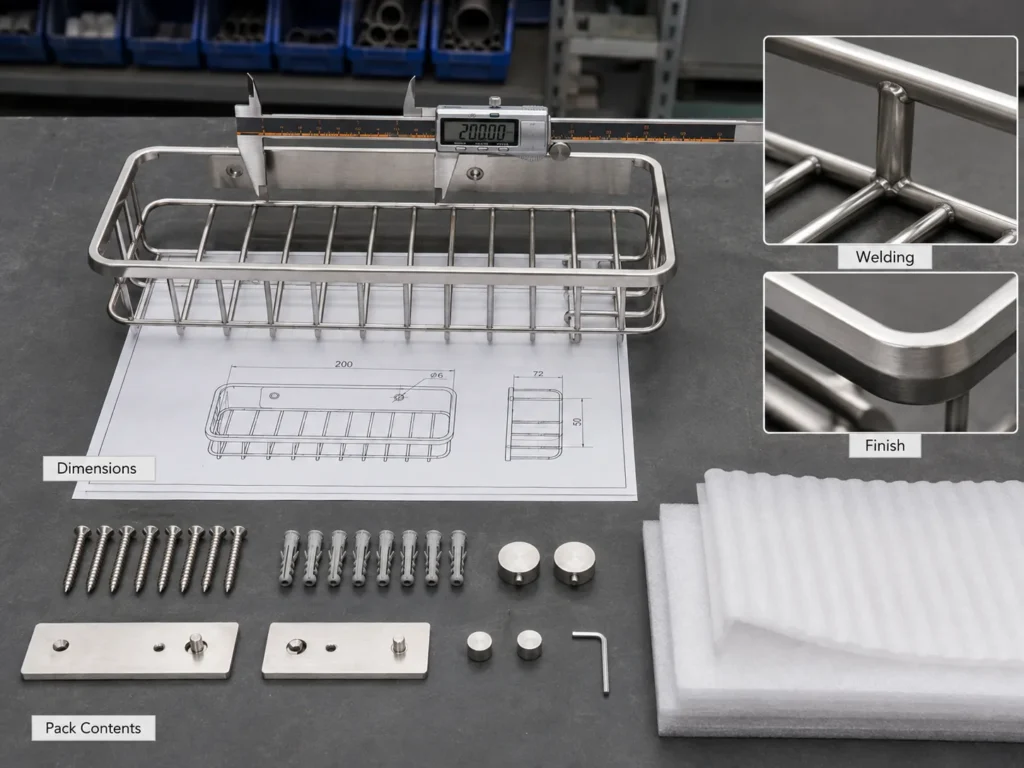
Buyers should evaluate whether the manufacturer understands the selected shower caddy format and can translate the brief into measurable production requirements. Relevant process experience matters more than a large catalog because custom products depend on structure, tooling, fixtures, finish and assembly control.
Ask the supplier to explain the proposed manufacturing sequence. A wire shower basket may involve cutting, forming, resistance welding or other suitable welding, grinding, surface preparation, finishing, assembly and packing. A tube-frame shelf may add brackets, hooks, caps or separate trays. The explanation should connect each process to a visible or functional product detail.
Review the quotation for completeness. Material, dimensions, finish, mounting components, logo or artwork, individual packaging, master-carton plan, sample cost, tooling and shipment terms should be clear. If an item remains open, it should be marked as an assumption instead of silently included or excluded.
| Evaluation area | What to confirm | Why it matters | Useful evidence |
|---|---|---|---|
| Product format | Corner, flat-wall, hanging, adhesive, screw-mounted or freestanding design | Changes geometry, installation and testing needs | Marked drawing and complete sample |
| Usable storage | Bottle sizes, shelf spacing, guards, hooks and drainage | Determines customer function | Sample checked with representative items |
| Structure | Wire or tube sizes, frame, joints and bracket interfaces | Affects alignment, stability and manufacturability | Factory drawing comments and process sample |
| Finish | Material, color, gloss, polishing direction and visible surfaces | Controls range appearance and moisture-related expectations | Approved physical finish reference |
| Pack contents | Brackets, screws, anchors, adhesive parts, caps and instructions | Missing or incompatible parts prevent installation | Assembly check and pack-content diagram |
| Order fit | MOQ, sampling, tooling, timing and packaging quantities | Determines trial-order practicality | Project-specific written quotation |
Buyers can review Koitor’s custom shower caddy manufacturing scope when comparing product formats, sample requirements and flexible OEM options.
How Do Structure and Mounting Affect a Custom Shower Caddy?
Structure and mounting determine whether a custom shower caddy fits the intended space, stores the target items and remains stable during normal use. Buyers should define the wall or hanging interface before refining decorative details because mounting geometry controls many later dimensions.
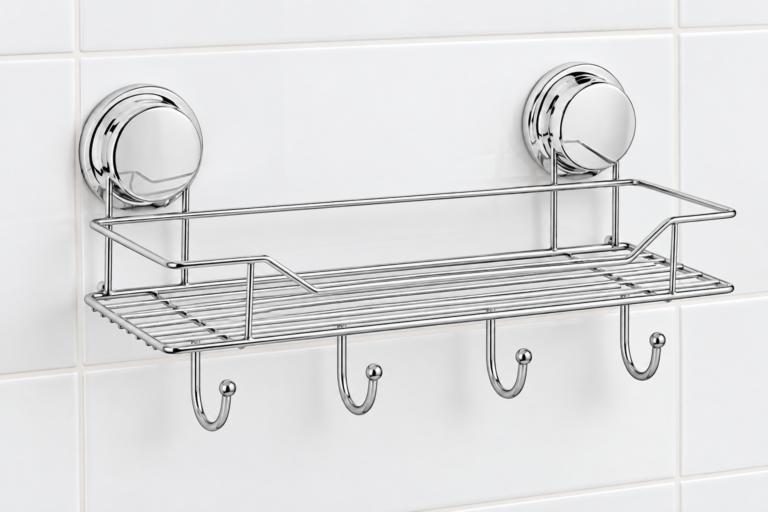
A flat-wall caddy needs clear bracket positions, wall clearance and usable shelf depth. A corner basket needs an angle and mounting arrangement that suit the target installation. A hanging caddy must account for the shower head or door interface, vertical length, anti-swing features and clearance around controls. Adhesive or no-drill systems require compatibility between the caddy, mounting component and target surface.
Installation claims should be limited to the approved mounting method and stated surface conditions. Buyers should define the intended substrate and verify installation with the actual supplied components. Universal performance should not be assumed across tile, painted wall, glass, stone or textured surfaces.
Usable storage is more than the outside dimension. Check bottle diameter and height, guard-rail position, shelf spacing, soap or small-item containment, hook clearance and access by hand. Wire spacing should support drainage without allowing intended items to tip or fall through.
Structure should be reviewed for joint placement, alignment and sharp contact points. Welding positions affect appearance and distortion. Brackets or hooks can concentrate stress if the surrounding frame is poorly designed. Any load requirement should be defined and confirmed through project-specific testing after the complete mounting method is approved.
Questions to Answer Before Drawing Approval
- Where will the shower caddy be installed?
- Which wall, corner, door or shower-head interface is expected?
- What bottle and accessory sizes must fit?
- How much drainage and ventilation are needed?
- Which dimensions affect installation or product function?
- Which surfaces are visible to the customer?
- Which hooks, rails, trays or removable parts are included?
- Which mounting components and instructions must be packed?
Which Materials and Finishes Should Buyers Compare?
Buyers should compare materials and finishes by target price, appearance, structure, moisture exposure, range coordination and packaging sensitivity. Stainless steel and powder-coated steel are common choices, but neither material description alone predicts the complete product’s performance.
Powder-coated steel offers broad color and appearance options. The buyer should approve color, gloss, texture and visible coverage. Product design, surface preparation, weld cleanup, coating application and handling all affect the result. Edges, joints, hooks and hidden contact points deserve review because geometry can make coverage less consistent.
Stainless steel can support a clean metallic appearance, but the grade, product structure, welding, polishing direction, handling and environment all matter. Buyers should mark visible surfaces and approve the required finish direction. A stainless product should not be promoted as universally rust-proof without project-specific evidence.
Mixed-material designs may include plastic caps, trays, adhesive components, rubber pads, screws or anchors. These parts affect color matching, assembly, aging expectations and replacement control. Include them in the approved sample and bill of pack contents instead of treating them as minor accessories.
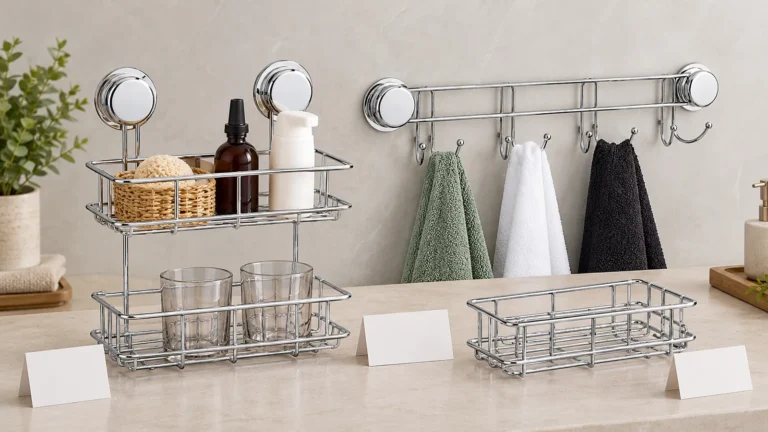
For coordinated bathroom ranges, inspect the caddy beside towel racks, hooks or tissue holders using the same lighting and reference. Materials with different substrates or finishing processes may not look identical even when a shared color name is used.
A custom shower caddy manufacturer should explain which finish details require a physical reference and which can be controlled by a written specification. Koitor Hardware can review material, welding, polishing or powder-coating requirements before sample production, depending on the proposed design.
How Should Samples, MOQ and Design Changes Be Managed?
Samples, MOQ and design changes should be managed through one controlled development record. The buyer should know which sample details are approved, which remain provisional and what must change before a trial or bulk order begins.
Send a drawing or physical reference together with the intended installation, target items, material and finish preference, expected quantity and packaging idea. Mark fixed requirements separately from areas where the factory can propose a more manufacturable structure.
The first sample should be assembled or installed using the intended mounting components. Measure critical dimensions, place representative bottles and accessories inside, inspect drainage and access, and compare the finish with the approved reference. Record photographs and approved deviations.
After sample review, update the drawing rather than relying on comments scattered across email or chat. Add a revision code and date. The same revision should appear in the quotation, purchase order, inspection criteria, artwork and packaging record.
MOQ depends on the product structure, material, finish, tooling and packaging. Koitor projects can start from around 100 pieces in some cases, but the suitable trial quantity should be confirmed for the exact shower caddy. A custom color, printed box or specialized component may have a different minimum than the metal product itself.
Samples usually take about 5-7 working days after details and materials are confirmed. Bulk production often takes about 4-6 weeks depending on complexity, quantity, material availability, finish and packaging. These are planning references, not fixed promises for every design.
For a private-label program, the product and packaging should develop together. Buyers can use private-label bathroom accessories development guidance to coordinate artwork, instructions, pack contents and range identity.
How Should Quality and Packaging Be Checked Before Shipment?
Quality and packaging should be checked against the approved drawing, physical sample, finish reference and pack-content list before shipment. Inspection should use representative units and separate functional issues from minor cosmetic observations.
Confirm product identity and revision first. Measure mounting centers, shelf dimensions, bracket interfaces and other critical dimensions. Check frame alignment, basket shape, wire spacing, weld location, grinding, sharp edges, removable parts and general assembly.
Review the finish under consistent lighting. Compare color, gloss, polishing direction, visible coverage and handling marks against the agreed reference. Inspect several units rather than one specially selected piece to evaluate batch consistency.
Assemble or install representative products with the actual packed hardware. Verify screw, anchor, bracket, adhesive component, cap and instruction quantities. Where mounting performance matters, use the buyer-defined surface and project-specific test method before bulk approval.
Shower caddies have hooks, brackets and open metal frames that can rub or puncture packaging. Protect customer-facing surfaces, separate metal contact points and immobilize loose parts. Hardware should be sealed and identified so it cannot scratch the product or disappear inside the carton.
Inspect the complete retail pack and master carton. Confirm product orientation, separators, instruction placement, barcode and artwork revision, pack count and outer markings. Extra empty space can allow movement, while excessive pressure against hooks or brackets can deform the product or damage the box.
Recommended Inspection Sequence
- Verify item code, drawing revision, finish and quantity.
- Measure critical installation and storage dimensions.
- Check alignment, welding, edges and assembly interfaces.
- Compare finish appearance on representative units.
- Install or assemble samples with supplied components.
- Count accessories and verify the instruction revision.
- Inspect inner protection, retail packaging and cartons.
- Record issue type, affected quantity, photos and disposition.
What Should Be on a Shower Caddy Sourcing Checklist?
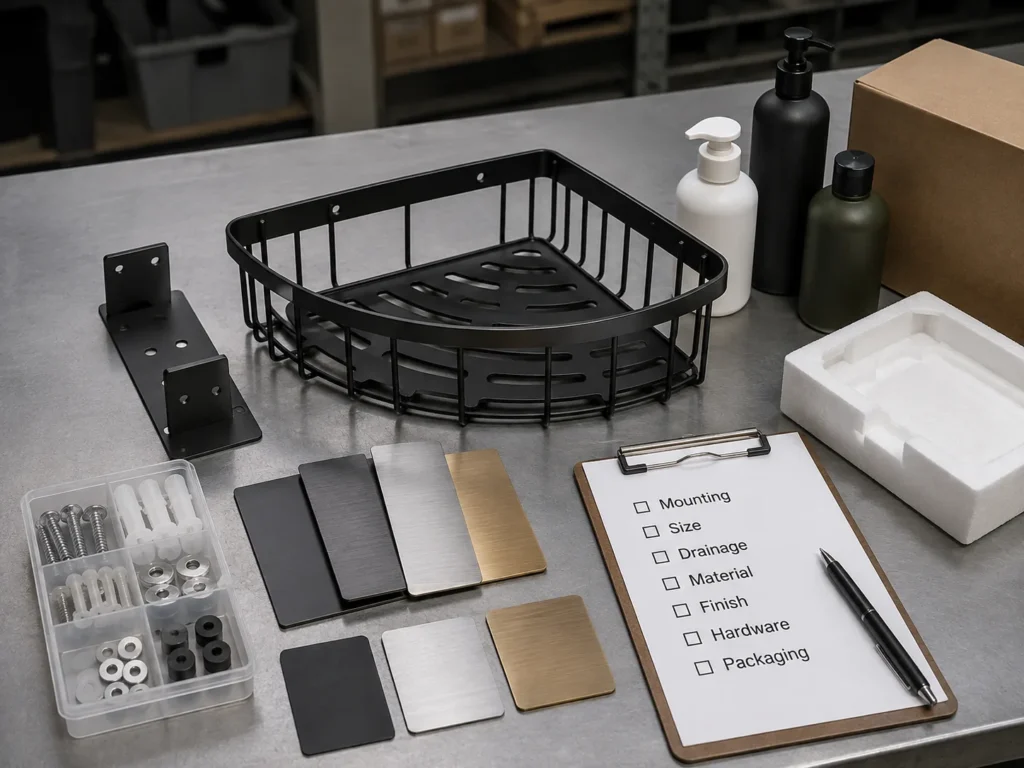
A shower caddy sourcing checklist should connect customer use, installation, product construction, finish, sample approval, packaging and commercial terms. Buyers using the same checklist across suppliers can compare evidence instead of relying on catalogs and general promises.
- Target market, sales channel and price position
- Shower caddy format and intended installation location
- Wall, corner, door or shower-head interface
- Target bottle sizes, shelf spacing, guards, hooks and drainage
- Overall dimensions and critical mounting measurements
- Material, wire or tube size and structural details
- Welding, alignment and customer-facing surfaces
- Finish color, gloss, texture or polishing reference
- Mounting brackets, screws, anchors, adhesive parts and caps
- Complete installed or assembled sample approval
- Drawing, finish, artwork and packaging revision control
- Trial quantity, MOQ, tooling and sample charges
- Inspection criteria and issue-classification method
- Inner protection, retail pack and master-carton layout
- Production timing and buyer-approval dependencies
A supplier score should not hide a critical installation issue. Define mandatory approval criteria for mounting fit, sharp edges, missing components or other project-specific risks. Commercial preferences such as optional colors or payment terms can be scored separately.
A custom shower caddy manufacturer should also state the approved scope clearly. Success with one powder-coated screw-mounted basket does not automatically validate a stainless hanging model or an adhesive mounting system. Expand the relationship by product and process family.
Frequently Asked Questions
What information does a shower caddy factory need for quotation?
Send a drawing or physical sample, dimensions, intended mounting method, target bottle sizes, material and finish preference, expected quantity, accessories, packaging idea, target market and desired timing. Mark details that remain open for factory review.
Can an OEM shower caddy start with a small trial order?
Yes, some projects can start from around 100 pieces depending on structure, material, finish and packaging. The product, printed packaging or custom components may have different minimum quantities, so confirm the complete project basis.
How should a buyer approve a shower caddy sample?
Review the drawing revision, install or assemble the sample with supplied components, measure critical dimensions, test it with representative bathroom items, inspect finish and approve the initial packaging concept. Record any accepted deviation in writing.
Is stainless steel always better than powder-coated steel?
No. The suitable choice depends on structure, appearance, target price, environment, finish process and range strategy. Both options require project-specific material, construction and surface-finish review.
What packaging risks are common with shower caddies?
Common risks include metal surfaces rubbing, hooks puncturing inner materials, loose hardware scratching the finish, product movement inside the box and pressure on brackets. A physical pack sample helps buyers review these contact points.
Work With Koitor Hardware
Developing a Custom Shower Caddy Range?
Send Koitor your drawing, physical sample, mounting idea, finish target, packaging concept and expected quantity. Our team can review the structure, manufacturability, sample plan and small-batch production options before quotation.
OEM / PRIVATE LABEL
Turn this sourcing guide into a product brief
Share your target product, size, finish, order quantity and packaging requirements. Your team receives a practical manufacturability review before quotation.
 English
  Español
  Português
  Français
  Deutsch
  العربية