Suction cup bathroom accessory retail claim substantiation starts by turning broad marketing phrases into specific statements about one product revision, named wall surfaces, a defined installation method, and a documented evidence plan. “No drill” can describe the installation category, but it does not automatically prove universal wall compatibility, permanent retention, a particular load, or unlimited reuse. Importers should approve the claim, instruction, product sample, packaging copy, and evidence scope together before artwork is released.
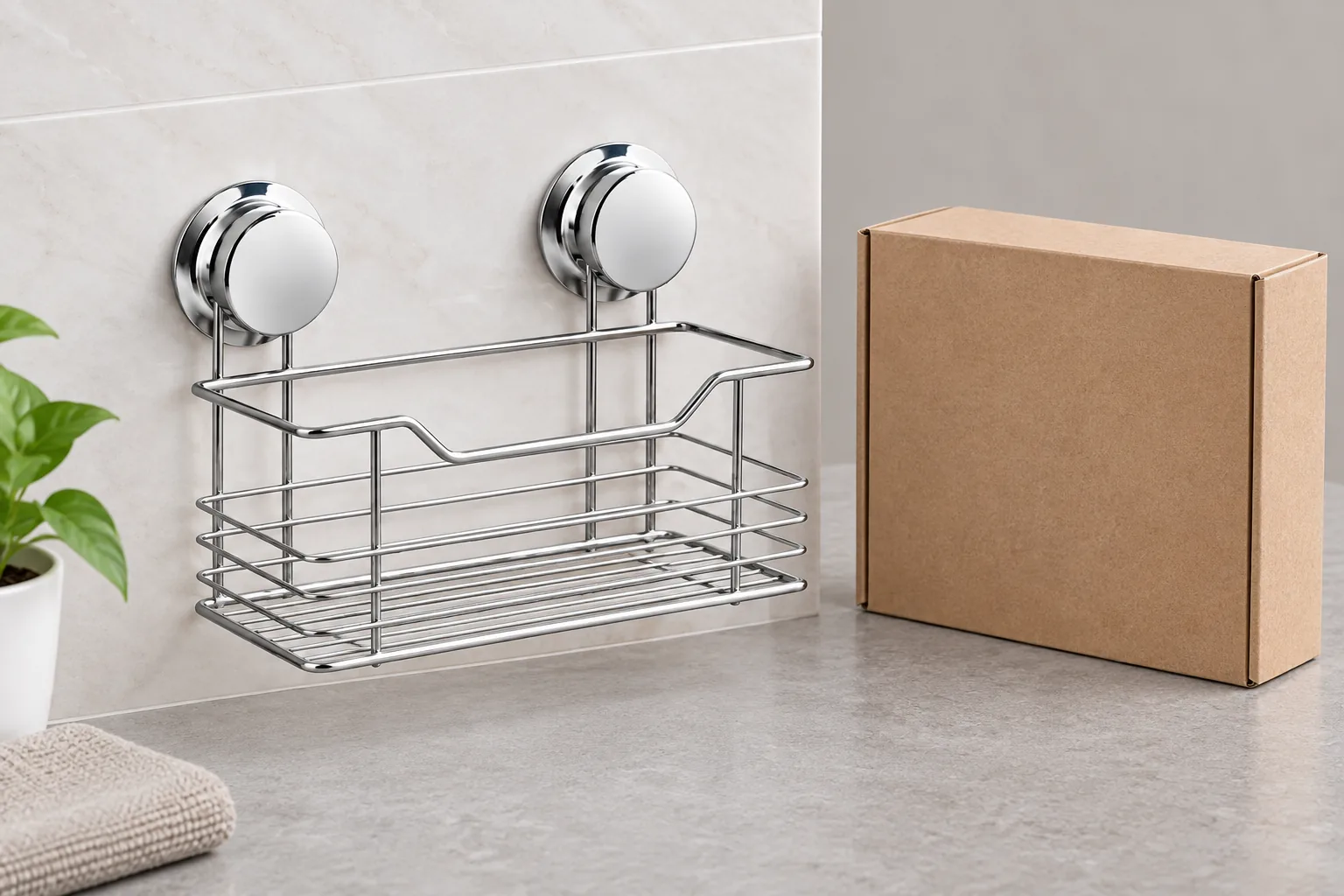
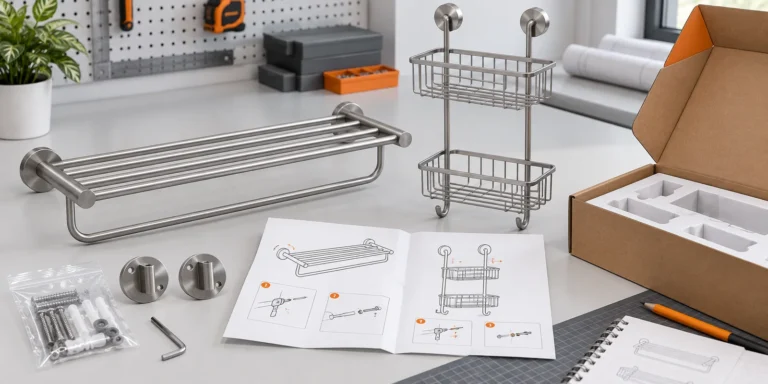
This guide uses a chrome wire basket with two suction mounts as the example. Each mount has two descending support wires connected to the same basket frame. Claims and images must describe that exact structure. A photograph of a single-mount basket, an adhesive accessory, or another product revision cannot substantiate copy for the approved dual-mount unit.
What Does Retail Claim Substantiation Mean for an OEM Buyer?
Claim substantiation means keeping enough relevant evidence to support the words, images, and instructions presented to the buyer’s market. The required evidence depends on the claim. A product-category statement such as “suction-mounted bathroom basket” asks a different question from a statement about surfaces, retention, loading, moisture, reuse, or lifetime.
Begin with the exact proposed wording. Do not ask the factory to “prove the package” when several claims are mixed together. Copy each statement into a claim register and identify where it appears: front panel, side panel, leaflet, product listing, marketplace image, sales sheet, or distributor catalog. Marketing teams often repeat one phrase across channels, so a later correction must cover every location.
Next, define the product identity. Record the SKU, drawing revision, approved sample, suction component revision, metal frame dimensions, finish, packaging, and installation instruction. For the example basket, the evidence pack should show two circular mounts, two support wires under each mount, mount spacing, rear-rail geometry, and the intended wall-contact arrangement. A structural change can affect the scope of earlier observations.
The buyer should own final claim approval because the buyer knows the destination market, retail channel, translations, and local requirements. A supplier can provide drawings, samples, process information, component records, and agreed inspection data, but it should not be asked to approve legal wording outside the project scope.
How Should Broad Marketing Phrases Be Converted Into Reviewable Claims?
Split a broad phrase into a statement that names the product, condition, and limitation. The goal is not weaker copy; it is copy that a sourcing and product team can evaluate. Keep claims proportional to what has actually been reviewed.
| Broad phrase | Buyer question | More reviewable direction |
|---|---|---|
| Works on any wall | Which named surfaces and conditions were reviewed? | List only buyer-approved smooth, flat surfaces and exclusions. |
| Easy installation | What cleaning, drying, positioning and seating steps are required? | Describe the defined no-drill installation steps. |
| Strong hold | What use condition, product revision and evidence method apply? | Use project-specific wording only after the buyer approves evidence. |
| Reusable | What removal, cleaning, inspection and repositioning limits apply? | State the approved removal and repositioning process. |
| Bathroom suitable | Which location, moisture and cleaning conditions are in scope? | Name the intended placement and care limits. |
A comparison matrix helps product, quality, marketing, and sourcing discuss the same statement. It does not create evidence by itself. Each approved phrase should point to a drawing, sample, instruction, surface list, review record, or other relevant source controlled by the buyer.
The Badezimmer-Accessoires unter Eigenmarke page provides useful context for coordinating the product, packaging, instruction sheet, and retail presentation as one development project.
Which Product and Installation Details Must Match the Claim?
The evidence product must match the sale product in features that could affect the statement. A claim based on one suction cup, wall sample, frame, or instruction should not silently move to a changed production version.
For a dual-mount wire basket, identify both suction cups, bases, covers, connection points, mount spacing, two support wires under each mount, rear rail, basket dimensions, material direction, finish, and assembly state. The two mounts act through one frame. If mount spacing or frame flatness changes, both contact areas may behave differently even when the rubber components remain unchanged.
Installation details belong in the claim file because they define how the product is used. Record surface cleaning, drying, contact-area position, joint avoidance, cup seating, cover engagement, orientation, any waiting step, removal, and repositioning. If a condition is necessary for the claim, it should also appear clearly in consumer-facing instructions.
Surface language needs similar discipline. “Tile” can describe smooth glazed ceramic, matte ceramic, heavy texture, a jointed area, or curved trim. Use physical samples or specific descriptions. Keep unreviewed textured, porous, cracked, jointed, or curved surfaces outside the approved wording unless the buyer has suitable evidence for them.
The Badzubehör ohne Bohren page helps buyers define suction, adhesive, and other installation systems without treating them as interchangeable.
How Should Packaging, Listings and Images Be Reviewed Together?
Build one claim register covering every customer-facing channel. Packaging, leaflet, web listing, marketplace images, video captions, distributor sheets, and translated copy should not make different promises for the same SKU.
Start with the master English wording and identify the evidence reference for each statement. Give every artwork file a revision. Record who approved product accuracy, claim scope, translation, and final layout. A claim hidden in an icon, badge, comparison chart, image caption, or product photograph deserves the same review as a paragraph.
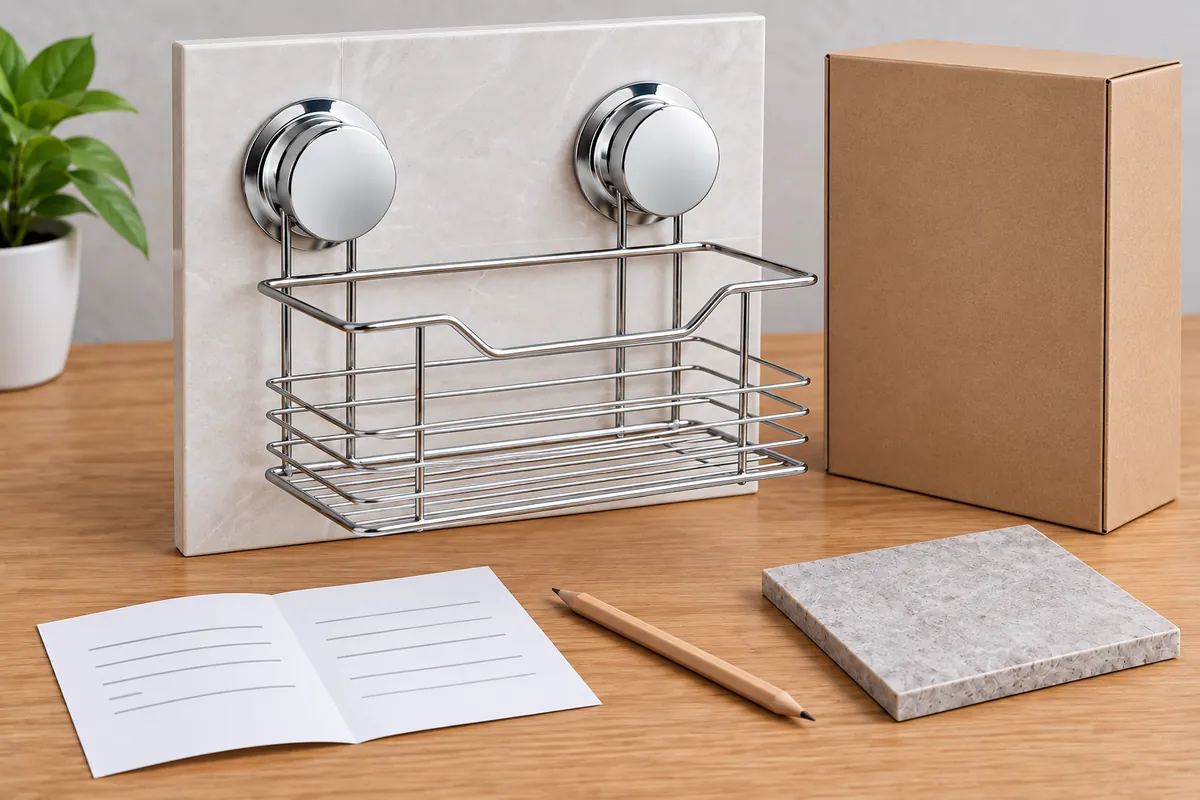
Images can imply more than text. A basket photographed across a grout joint may suggest that placement is approved. Several wall samples arranged beside an installed unit may imply compatibility with all samples. Bottles or heavy objects in the basket may suggest a capacity. Use product imagery to show structure and intended placement, and use captions to prevent an illustrative scene from being read as proof.
Keep the product form accurate. Both circular mounts and four descending support wires should be visible when the structure matters. Do not use a generated single-mount image simply because it looks cleaner. Visual inconsistency can create customer confusion, after-sales disputes, and an incorrect inspection reference.
Translations require a meaning review, not only a spelling review. A modest English statement can become absolute in another language. Ask a qualified reviewer to compare the translated claim, limitations, installation steps, and warnings with the approved master. Keep translation revision records with the artwork pack.
What Evidence Should the Buyer Request From the Supplier?
Request evidence that the supplier can reasonably provide and that matches the product-development task. The supplier’s records should support product identity and manufacturing consistency; the buyer should define any market-specific claim decision.
Useful supplier inputs can include a current drawing, bill of materials or component list, approved sample, component photographs, mount-spacing measurement method, assembly instruction, packaging specification, production inspection points, change record, and shipment sample. These documents help confirm that the product used for buyer review matches the product ordered.
For custom metal hardware, inspect features such as wire diameter or tube size where specified, bending geometry, weld location, rear-rail straightness, mounting connection, surface finish, basic assembly, and pack protection. These features do not automatically prove a consumer claim, but they help prevent uncontrolled product variation from undermining a buyer’s evidence.
Koitor Hardware is a family-owned custom metal hardware factory focused on bathroom and home storage hardware. Koitor can review a buyer’s drawing or physical sample, discuss the metal basket structure, welding points, finish, basic assembly, and packaging preparation, and produce a project sample after details are confirmed. MOQ can start from 100 pieces for some products, depending on structure, material, finish, and packaging.
A buyer should not request unsupported certificates, guaranteed universal performance, or invented reports for marketing convenience. If an important claim needs an independent or project-specific evaluation, define the method, sample identity, acceptance criteria, and responsible party before artwork approval. Keep the outcome linked to the product revision.
What Are the Most Common Claim-Approval Mistakes?
The first mistake is approving copy before the product and instruction are stable. If mount spacing, cup design, wall scope, or installation steps change later, the evidence and artwork may no longer match. Use provisional copy during development and release final artwork only after the product package is controlled.
The second mistake is treating “no drill” as a complete performance claim. It describes the absence of drilling in the intended installation method. It does not define compatible surfaces, use duration, load, moisture conditions, removal behavior, or reuse. Each additional statement needs its own scope.
The third mistake is copying a competitor’s wording. Another brand may use a different mount, product geometry, instruction, market, or evidence basis. Competitor copy can reveal questions to investigate, but it is not evidence for the buyer’s SKU.
The fourth mistake is separating artwork review from sourcing. A marketing team may approve a phrase while the factory receives only a drawing and carton dimensions. Put the claim register, instruction revision, and artwork reference into the product handoff so purchasing and quality know which features must remain controlled.
The fifth mistake is allowing old listing images to remain live after a revision. When the structure or approved scope changes, update the listing, packaging, instructions, distributor assets, and customer-service scripts as one controlled release.
What Should Be in the Final Buyer Approval Checklist?
The final checklist should connect every customer-facing statement to one controlled product and evidence source. Keep it short enough that the team actually uses it at artwork release and repeat-order review.
- ☐ SKU, drawing revision and approved physical sample are identified.
- ☐ Two suction mounts and two support wires under each mount are shown accurately.
- ☐ Proposed claims are listed exactly as they appear in each channel.
- ☐ Named wall surfaces and excluded conditions are documented.
- ☐ Installation, removal, care and repositioning steps are consistent.
- ☐ Each claim points to a buyer-approved evidence source.
- ☐ Packaging, leaflet, web listing and images use the same scope.
- ☐ Product photographs do not imply unreviewed load or surface claims.
- ☐ Translations preserve limitations and do not become absolute.
- ☐ Artwork and instructions carry controlled revision identities.
- ☐ Product or component changes trigger a claim-impact review.
- ☐ Purchasing, product, quality and marketing approvals are recorded.
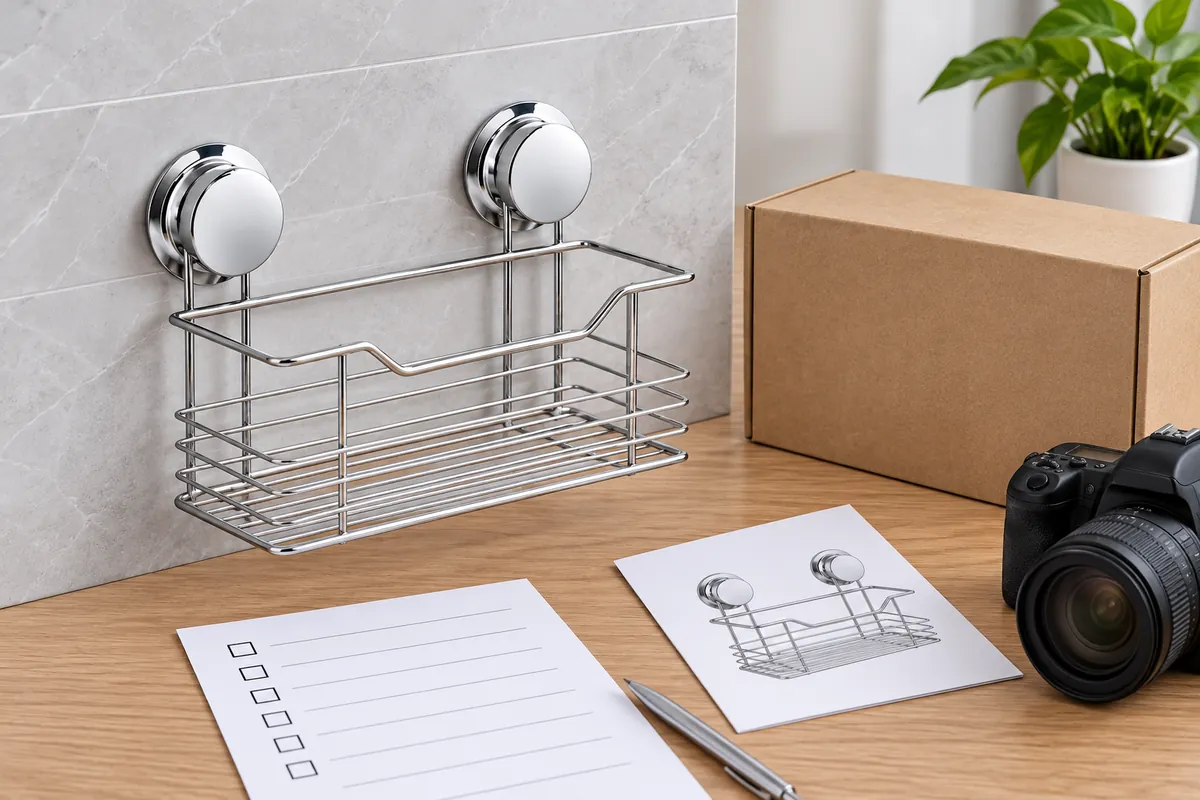
A controlled suction cup bathroom accessory retail claim substantiation file should remain available for repeat orders. At each reorder, confirm that the component revision, metal frame, finish, instruction, packaging, and public copy still match. This check is especially important when a buyer changes suppliers, materials, package formats, marketplaces, or destination markets.
Häufig gestellte Fragen
Does “no drill” prove that a product works on every wall?
No. It describes an installation category. Wall scope, preparation, placement, and other conditions must be defined separately.
Can a product photograph substantiate a compatibility claim?
A photograph can document product form and placement, but it normally cannot establish hidden wall properties, preparation, duration, or broader compatibility by itself.
Who should approve the final retail wording?
The buyer or brand owner should control final market-facing claims with input from product, quality, legal or compliance specialists where appropriate, and the supplier’s verified product information.
What happens when a suction component changes?
Give the component and product a new revision identity, assess which evidence and claims may be affected, review a production-intent sample, and update artwork only after the buyer’s decision.
Should online listing copy match the retail carton?
Yes. The channel may use different lengths or layouts, but the product identity, scope, conditions, and limitations should not contradict one another.
Good suction cup bathroom accessory retail claim substantiation makes product development and marketing work from the same controlled facts. It helps importers avoid overstatement while giving shoppers clearer installation and use expectations.
Align Your Product, Instructions and Private-Label Pack
Send Koitor your drawing or sample, suction structure, proposed packaging, instruction concept, finish and order quantity. The team can discuss product manufacturability and a practical sample route.
OEM / EIGENE MARKE
Verwandeln Sie diesen Beschaffungsleitfaden in ein Produktdossier
Teilen Sie uns Ihr Zielprodukt, die Größe, die Oberflächenausführung, die Bestellmenge und Ihre Verpackungsanforderungen mit. Ihr Team erhält vor der Angebotserstellung eine praxisorientierte Prüfung der Herstellbarkeit.
 English
  Español
  Português
  Français
  Deutsch
  العربية