
Risk based inspection frequency for repeat hardware orders should change when evidence about product, process, supplier, or order conditions changes—not simply because several orders passed or a calendar interval elapsed. Importers should keep a defined baseline for every lot, then add focused checks after material, tooling, finish, subcontractor, location, or packaging changes, a quality issue, or a long production gap. There is no universal number of “good orders” that safely justifies reducing inspection for every bathroom hardware program.
What does inspection frequency mean for repeat orders?
Inspection frequency is how often a buyer verifies a supplier’s output or process, and at what depth. It can refer to checking every delivery, sampling units within each lot, reviewing selected product characteristics, or auditing a process at a planned interval. Those activities answer different questions. A shipment inspection helps inform disposition of a particular lot; a process review looks at how output is made; supplier-performance review examines patterns over time.
For an importer buying wire baskets, shower caddies, towel racks, shelves, or tissue holders, the challenge is balancing verification effort with changing risk. Repeating the same full inspection on every stable lot can consume time without adding proportionate information. Reducing inspection solely because previous deliveries looked acceptable can miss a new material source, changed fixture, revised finish route, or different packing method.
Risk based inspection frequency for repeat hardware orders therefore starts with a written baseline and a traceable product history. It is a decision rule for reviewing evidence, not a fixed promise that the same number of pieces or checks will work for every order.
A risk-based plan starts with the buyer’s critical requirements. These may include dimensions that affect fit, mounting interfaces, wire or tube alignment, visible finish, weld workmanship, assembly, accessory count, carton configuration, labeling, and damage risk. The list must come from the agreed drawing, approved sample, specifications, and customer needs; it should not be invented from a generic checklist.
It is also important to distinguish a baseline from a trigger. The baseline says what is checked on a normal repeat lot. Triggers say when to add review, return to a fuller verification level, or qualify a change. A buyer can define a practical baseline with its supplier, but should not imply that a given cadence is automatically statistically valid or universally safe.
Which factors should change the inspection plan?
A useful review asks whether the current evidence still applies to the product being made today. The table below offers a decision framework; it is not a fixed sampling standard or a schedule recommendation.
| Condition | Suggested buyer response | Reason to review |
|---|---|---|
| Stable product, same approved material, process, finish, location, and pack | Keep agreed baseline checks and compare key features with the approved reference | Prior records may support continuity but do not erase lot-specific variation |
| New material source or substitution | Tighten material identity and affected feature verification before returning to baseline | A changed input may affect geometry, appearance, corrosion expectations, or fit |
| Tooling, fixture, bend, or welding route change | Request change notice and focused first-off or sample review | The operation may alter critical dimensions, distortion, alignment, or visible joins |
| Finish supplier, pretreatment, coating/plating route, color, or gloss change | Compare physical samples and agreed appearance criteria | Photographs and generic finish names may not fully capture surface differences |
| New subcontractor or production location | Review process responsibility, records, traceability, and a production-intent sample | Existing supplier history may not describe the new route |
| Complaint, rejected lot, or unresolved corrective action | Contain affected scope and increase relevant checks until evidence supports closure | A prior issue changes what should be watched; do not apply unrelated checks blindly |
| Long order gap, staff/equipment restart, or design revision | Confirm the approved reference and recheck vulnerable features | Conditions or documents may have changed while the program was inactive |
| Packaging configuration changes | Review pack-out, separators, edge protection, and handling-related damage | Product checks alone may not reveal shipping or finish-contact risk |
No single event automatically determines the exact inspection level. A material substitution that does not affect an agreed requirement still needs documented evaluation, while a minor document correction may not justify expanded physical checks. Identify the affected characteristic, likely failure path, and evidence available before choosing the response.
Supplier history matters only when it is traceable and comparable. A record from another SKU, finish, production line, or subcontractor should not be treated as direct proof about the current repeat order. If the reference sample, specifications, measurement method, or lot definition changed, comparisons across older records may be misleading.
How should a buyer set and adjust the baseline?
Start by defining the production lot and the release question. What units are grouped together? Which revision, finish, and packaging configuration are expected? Is inspection intended to accept or reject a shipment, confirm specific product characteristics, or monitor process stability? A buyer who cannot answer these questions may collect measurements without knowing what decision those measurements are meant to support.
For each product family, divide requirements into practical groups:
- – Identity and revision: SKU, drawing revision, approved sample, material description, finish, and kit contents.
- – Fit and geometry: overall dimensions, interface spacing, basket envelope, clearances, and mounting alignment, where specified.
- – Workmanship: exposed joins, wire ends, burrs, distortion, sharp edges, and visible surface quality, using agreed criteria.
- – Function: assembly, mounting, access, movement, or fit with buyer-supplied mating parts, when these are part of the product requirement.
- – Finish and handling: appearance against the approved reference and protection from part-to-part contact during packing.
- – Pack-out: accessories, instructions, bagging, separators, carton count, and shipping marks required by the order.
Choose checks based on how the characteristic can be observed and the decision needed. A quick visual check may confirm obvious finish mismatch but not material grade. A caliper reading may help verify a defined dimension but not prove all units are conforming. A sample pack-out can reveal missing separators but does not establish every transit condition. Keep the measurement method, reference, acceptance criteria, and responsible party consistent enough that changes in results can be interpreted.
When statistical lot acceptance sampling is part of the agreement, the buyer and supplier should define the plan, lot, sample selection, acceptance criteria, and disposition rules deliberately. NIST’s Engineering Statistics Handbook describes acceptance sampling as a lot-level decision based on sample information and distinguishes it from broader process-quality control. A sample-based acceptance decision is not a guarantee that every unit conforms, and it does not replace process controls. See the NIST explanation of acceptance sampling and its overview of lot acceptance plans. Do not pick a sample size or acceptance number by habit when the buyer has not agreed the purpose and risk assumptions.
The baseline should be documented in a control plan, purchase specification, inspection instruction, or another record the factory and buyer can both identify. State which checks apply to each order, which can be reduced only by a recorded review, who approves that adjustment, and what event restores tighter verification.
For risk based inspection frequency for repeat hardware orders, keep the event, evidence, and resulting plan change together. A future buyer or inspector should be able to see why the baseline stayed steady, why one feature received additional review, or why a specific check was reduced.
When should inspection tighten, stay steady, or reduce?
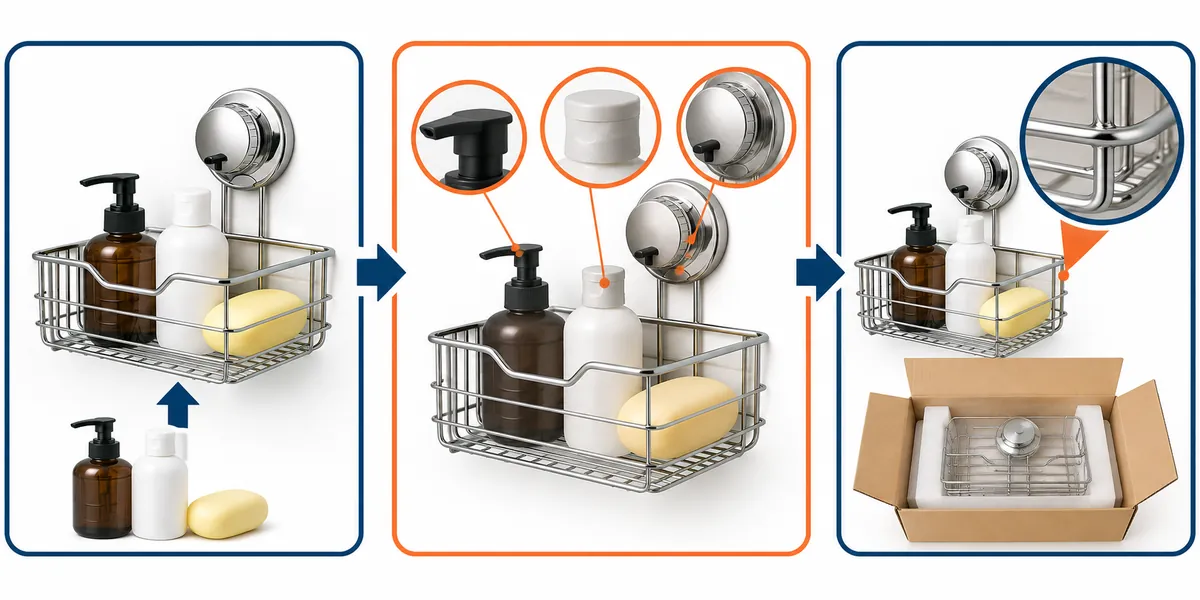
Inspection can be treated as a controlled dial with three broad states. “Steady” means the agreed baseline remains suitable because the same product and process conditions are still supported by current evidence. “Tighten” means add targeted evidence or widen review because something changed or a concern is open. “Reduce” means remove only checks that the buyer no longer needs, while preserving the baseline controls that protect critical requirements.
Tighten when a relevant trigger appears. Examples include a new finish or material source, a changed fixture or process sequence, transfer to a new production location, a complaint affecting a characteristic, an unresolved corrective action, repeated dimensional drift, a long pause, a major drawing revision, or packaging damage. The response should target the affected features. If a finish appearance concern occurs, rechecking unrelated carton artwork alone does not address it.
Stay steady when comparable evidence remains current. A run of accepted shipments may support confidence, but verify that the product, supplier route, specifications, equipment, measurement approach, and lot definition are still comparable. Keep order-level identification, record the review, and avoid using “same supplier” as a substitute for evidence. Repeat orders can be different if their material batch, operators, subcontractors, or packaging inputs changed.
Reduce only through an explicit review. A buyer may decide to remove a duplicated check or move from intensive requalification to a simpler baseline when objective records support the decision and critical risks remain controlled. Reduction is not the same as no inspection. Preserve checks for identity, the buyer’s most consequential features, and known failure triggers. Specify who approved the change and the date or scope when it applies.
An evidence ledger makes these decisions auditable. For each lot, capture result, reference revision, nonconformities, changes disclosed, containment or corrective-action status, and reviewer decision. Do not invent a numeric supplier score if the records are not comparable or the meaning of the number is unclear. A short narrative such as “same finish route; no open issue; basket width checked against revision C” can be more useful than an unexplained rating.
If the buyer uses an external inspector, explain the sampling objective and provide the current specification, critical features, acceptance criteria, reference images or master sample, and change status. Inspection provider frequency frameworks are inputs, not automatic answers for every OEM product. The supplier’s production controls and buyer’s incoming verification serve related but distinct functions.
How do changes and problems reset the repeat-order review?
A change invalidates only the assumptions it affects, but the buyer must identify those assumptions. Use supplier change notification to capture the proposed material, tooling, process, finish, supplier, location, inspection, assembly, or package change before production. The buyer can then decide whether to review documents, inspect a component, request a first-off sample, confirm mounting fit, compare finish, or assess packaging.
After a complaint, hold the affected scope while facts are established. Determine the lot range, affected characteristic, severity, evidence, and whether product has shipped. The first response is not automatically to inspect every feature at 100 percent; it is to prevent further exposure while selecting a check that can identify the reported issue. If cause is unclear, contain conservatively until the supplier and buyer agree the scope.
Once a corrective action is proposed, distinguish correction from prevention. Sorting current stock may address immediate containment, while a process or supplier change can introduce new risk that itself needs review. Verify that the action addresses the identified cause using an agreed method and retain evidence for the next comparable order. If the issue recurs, broaden the investigation and reset the risk assessment rather than repeating the same limited check.
A long gap also deserves a reasoned review, not a fixed threshold assumed to apply to every product. Ask what may have changed while production was idle: stored material condition, tooling, work instructions, staff familiarity, finish availability, packaging supplier, or the approved drawing. If none changed and records confirm the same route, a focused restart sample may be proportionate. If several elements changed, consider broader revalidation.
For small-batch bathroom hardware, variants can make a family-level cadence misleading. A change to a compact towel rack may not affect a deeper two-tier wire basket, even if both share a finish or supplier. Group SKUs only when their critical process path and risk characteristics are demonstrably comparable. Keep a separate trigger for a new mounting system, basket envelope, visible finish, or package if it changes buyer risk.
What mistakes create false confidence or unnecessary cost?
Using a fixed number of good orders as the only reduction rule. A run of accepted lots does not prove that every future lot will be identical. It is useful context only when records are traceable and product/process conditions are comparable.
Confusing acceptance sampling with process monitoring. Sampling supports a decision about the lot under an agreed plan. Process monitoring asks whether production behavior remains stable. NIST discusses these as related but distinct quality-control approaches. A buyer should not claim that occasional lot checks alone demonstrate a capable, stable process.
Applying the same inspection depth to every SKU. Different wire geometry, weld locations, mounting interfaces, finishes, or package constraints create different failure paths. Use product-specific critical features and common family checks only where supported.
Making inspection plans with vague criteria. “Check finish,” “verify welding,” or “confirm dimensions” is not repeatable unless the reference, method, locations, and acceptance criteria are stated. An inspector cannot apply an expectation that exists only in the buyer’s head.
Reducing every check after a clean shipment. Retain a baseline for identity and critical requirements. Adjust a particular check only after review; do not let “reduced inspection” mean no record, no issue escalation, or no supplier change communication.
Increasing checks without a decision rule. Inspecting more pieces is not automatically better. Define what result prompts hold, containment, corrective action, requalification, or disposition. Extra inspection that does not inform a decision can add delay without controlling the real risk.
Treating one-time performance as permanent supplier history. A supplier record should identify the product, revision, finish, production route, and order date. A new subcontractor, new source, revised fixture, or change in packaging can limit how much the old record tells the buyer.
Buyer checklist: what should a repeat-order inspection plan define?
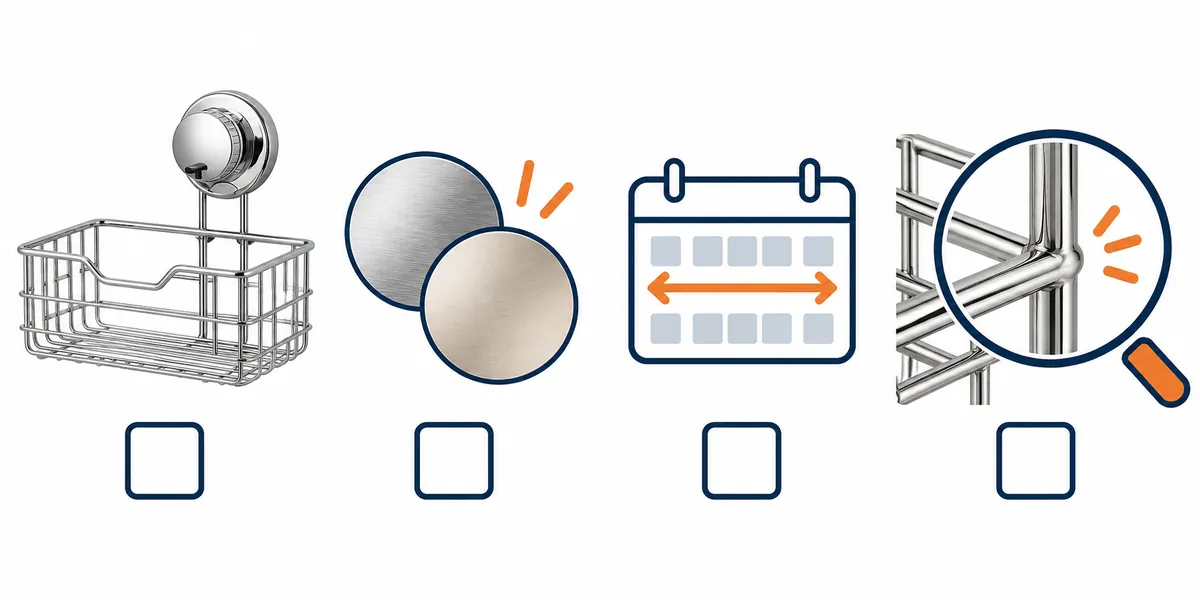
Before authorizing a repeat purchase order, check that the plan records:
- – Product family, SKU, drawing revision, approved sample, finish, and package configuration.
- – The lot definition and who identifies the lot at production and shipment.
- – Baseline checks for identity, dimensions, workmanship, finish, function, and pack-out as applicable.
- – The inspection purpose: shipment disposition, process monitoring, change verification, or supplier review.
- – Which characteristics are critical to fit, mounting, appearance, function, or customer requirements.
- – The method, reference, sampling approach, acceptance rule, and responsible reviewer for each check.
- – Supplier change-notice triggers for materials, tooling, operations, subcontractors, locations, finish, assembly, inspection, and packaging.
- – Events that tighten review, such as complaints, nonconformities, unexplained variation, long gaps, or process changes.
- – Conditions that permit reducing a specific check and the approval record required.
- – Containment, corrective-action, requalification, and release steps after a rejected lot or recurring issue.
- – How inspection records connect each order to its product revision and process route.
- – Which current documents and physical master samples the supplier and inspector should use.
Share this plan during sample approval, not after a problem. The factory can flag where a dimension is difficult to verify, where a master sample needs protection from damage, or where a check requires a buyer-supplied mating part. A direct conversation about these constraints helps the buyer write a measurable requirement before a repeat order depends on it.
Frequently asked questions about repeat-order inspection frequency
Should every reorder receive the same inspection?
Use an agreed baseline, but review whether product, material, process, supplier route, packaging, and open issues remain comparable. A repeat purchase order alone is not evidence that all relevant conditions stayed the same.
How many successful orders are enough to reduce inspection?
There is no universal count that applies to every product and supplier. Any reduction should be tied to comparable, traceable records, product risk, the buyer’s requirements, and a written decision that preserves necessary baseline checks.
Does acceptance sampling prove that every unit is good?
No. A sample-based lot decision is based on the inspected sample and a specified plan. It does not establish that every uninspected item conforms or replace process controls.
Should inspection tighten after a material or finish change?
Review the proposed change before it reaches production. Select evidence that addresses the affected properties, such as material identification, sample comparison, dimensions, fit, or agreed finish criteria. The check depends on what changed.
Can a buyer reduce inspection after a clean supplier record?
Possibly, for specific checks, if the evidence is relevant, comparable, and current. Keep critical baseline controls, define re-tightening triggers, and record who approved the adjustment and its scope.
Plan Repeat-Order Checks Around Real Product Risk
Share the approved drawing or sample, product variants, finish and packaging requirements, and known process changes. Koitor Hardware can discuss manufacturing review points and practical small-batch OEM coordination for bathroom and home storage hardware.
OEM / EIGENE MARKE
Verwandeln Sie diesen Beschaffungsleitfaden in ein Produktdossier
Teilen Sie uns Ihr Zielprodukt, die Größe, die Oberflächenausführung, die Bestellmenge und Ihre Verpackungsanforderungen mit. Ihr Team erhält vor der Angebotserstellung eine praxisorientierte Prüfung der Herstellbarkeit.
 English
  Español
  Português
  Français
  Deutsch
  العربية