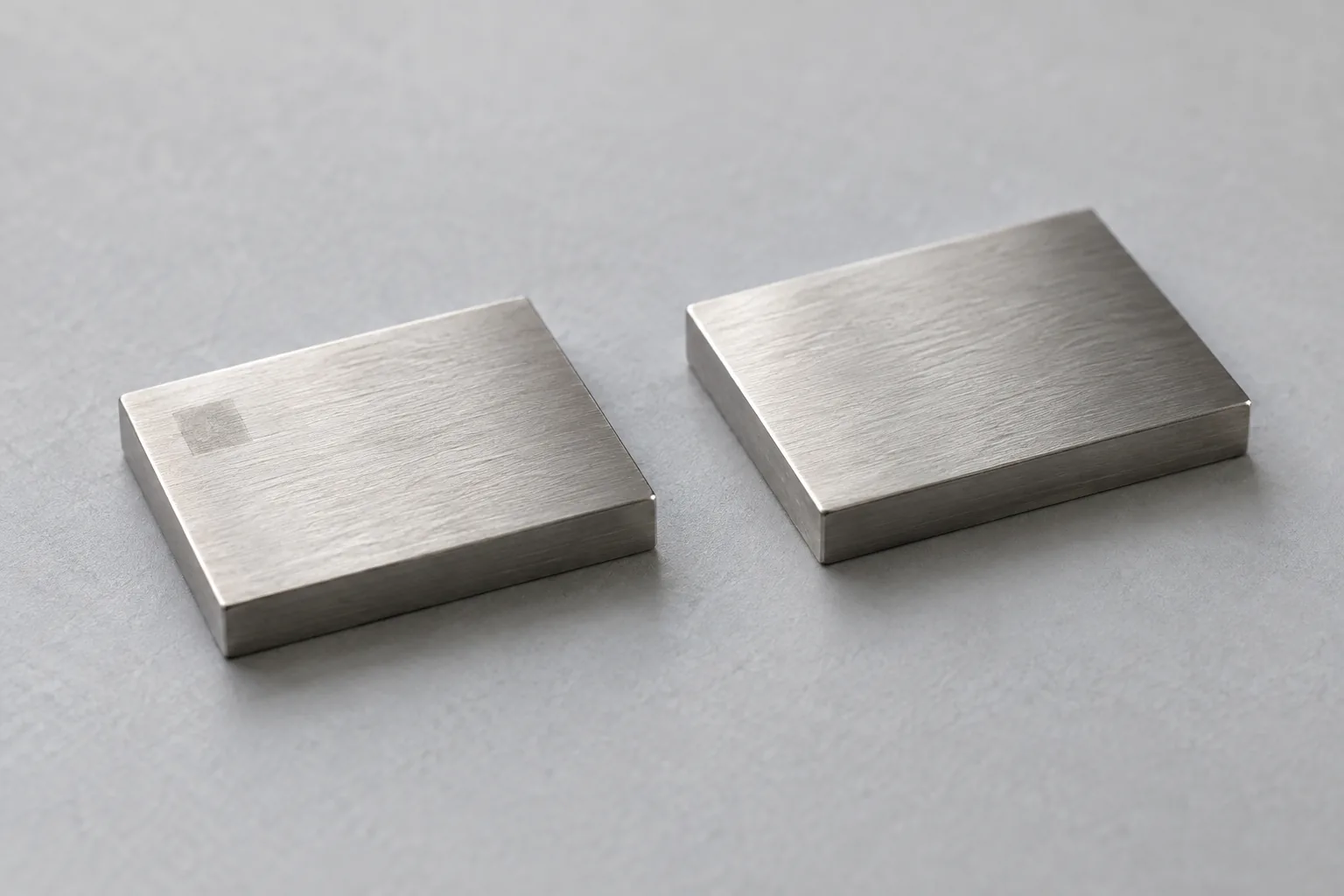
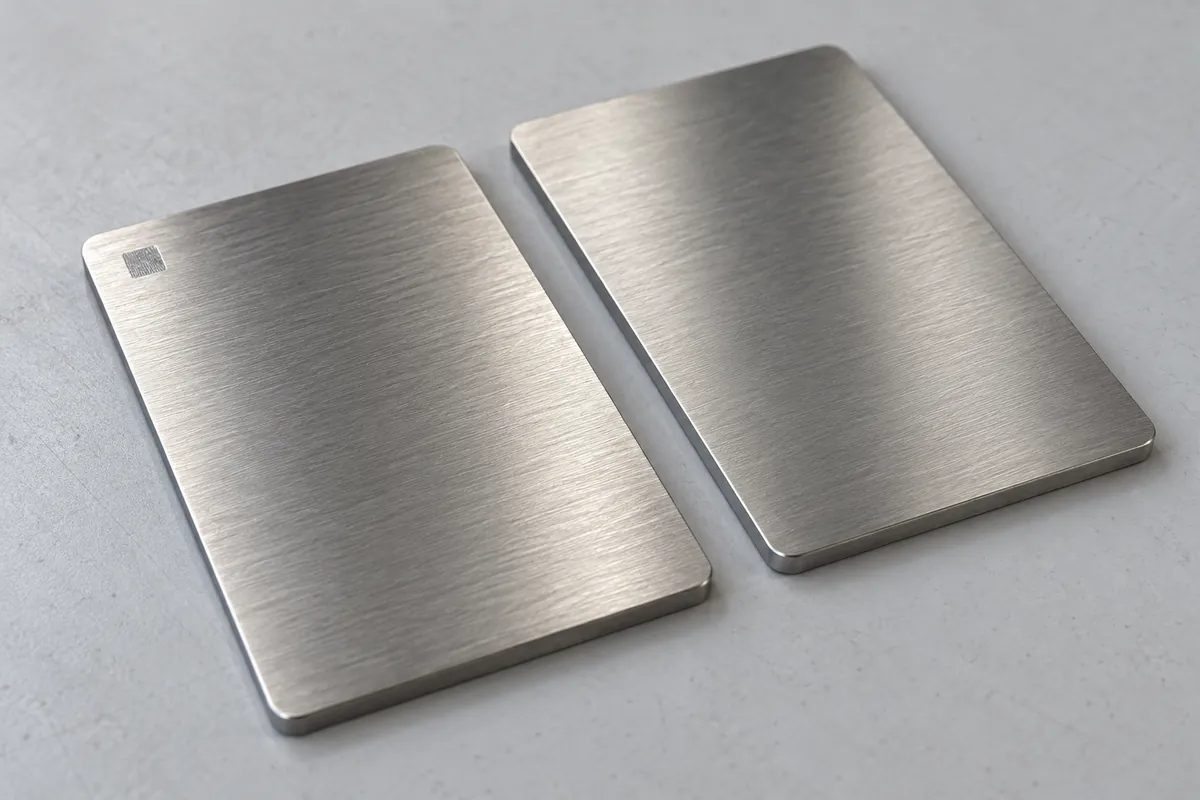
For laser marking stainless steel corrosion resistance, buyers should approve the exact marking method, location, depth or appearance, material and finish combination, cleaning route, and production sample together. “Laser marked” is not one universal surface condition: a visible dark mark, a light annealed mark, and a deeper engraved mark can affect the surface differently. A supplier should therefore show a representative sample and document the agreed acceptance criteria instead of promising that every laser mark is corrosion-neutral.
This guide is for importers and private-label product teams specifying identification, logos, batch codes, or traceability marks on bathroom and home-storage hardware. It is a sourcing framework, not a corrosion test result or a claim that Koitor provides laser marking in-house. Where marking is outsourced, the buyer should identify the responsible process owner and approve the complete finishing sequence.
What does “laser marking” mean on stainless hardware?
The phrase can describe different interactions with the surface. Some processes alter the surface appearance with limited material removal; others remove material to create a recessed mark. The result depends on the laser system, settings, alloy, surface state, geometry, and finishing steps. Buyers should not treat a dark mark and a deep engraving as interchangeable simply because both were made with a laser.
A useful starting point is to distinguish the required function. A decorative logo may prioritize contrast and location. A part number may need legibility after assembly. A traceability code may require consistent reading across a batch. A mark placed on a visible bathroom accessory may also need to preserve the product’s finish and cleaning expectations. These uses do not automatically require the same depth, contrast, or position.
The equipment supplier Gravotech describes multiple approaches to marking and etching stainless steel, including surface-color effects and engraving. That is useful evidence that the process label alone does not define the surface result; it is not proof that any one method is suitable for every product or environment. Ask the process provider to state what the proposed method does to the surface and show samples on the actual material and finish. See Gravotech’s overview of stainless-steel marking methods.
How can marking affect corrosion requirements?
Corrosion behavior is influenced by the full material and surface system, not merely by the presence of a mark. Buyers should avoid blanket conclusions such as “laser marking always causes rust” or “laser marking never affects corrosion.” The relevant question is whether the approved process, location, and post-process condition meet the product’s documented use and acceptance requirements.
A marking operation may change local surface appearance or remove some material. Heat input, residue, contamination, post-mark cleaning, and the starting finish can also matter. A deep mark can create geometry that is harder to clean than a shallow visual mark. These are reasons to review samples and process controls; they are not evidence that a specific failure will occur.
For bathroom hardware, the intended exposure should be described accurately. A dry interior location, a frequently wet shower area, and a part exposed to cleaners are different service conditions. If the product has a defined corrosion or appearance requirement, link the mark approval to the same material, surface finish, cleaning method, and acceptance process. Do not infer compliance from the word “stainless” or from a supplier’s general marketing statement.
A practical buyer should ask: Is the mark cosmetic, functional, or traceability-critical? Does it need to remain readable after the normal cleaning and handling process? Is it placed on a visible face, inside a basket, on a mounting surface, or near a joint? Will it be applied before or after polishing, coating, plating, or assembly? The answers drive sample design and sequence review.
Which marking method should buyers compare?
The table below frames a supplier discussion. It does not select a universal winner because process capability and product requirements vary.
| Buyer consideration | Surface-appearance mark | Deeper engraved mark | What to confirm |
|---|---|---|---|
| Primary purpose | Logo or identification contrast | Durable recessed identification | Required function and readability |
| Surface change | May alter color or reflectivity | Removes material and changes local geometry | Supplier’s process description |
| Appearance risk | Contrast can vary with material and finish | Depth and edge appearance can vary | Approved physical master sample |
| Cleaning | Usually depends on finish and residue control | Recess may retain soil if poorly located | Cleaning and drying review |
| Location | Can suit broad visible faces if approved | Needs enough material and usable geometry | Distance from edges, welds and bends |
| Validation | Compare visual result and process repeatability | Compare depth, legibility and surface condition | Defined lot sample and records |
Do not request “maximum depth” unless the design needs it. Unnecessary depth can increase the visual footprint and create a new surface feature without improving the buyer’s actual use case. If traceability is the goal, first determine the required code size, reading distance, data content, and location. A shallow mark may be adequate, but the supplier must demonstrate that it remains legible under actual use conditions.
What information belongs in the RFQ?
A complete RFQ gives each supplier enough information to quote the same outcome. Include a controlled drawing or annotated image, the exact material designation and form if known, the finish, and whether marking is performed before or after other finishing steps. Identify the target face and prohibited zones. If the mark must align with a logo, assembly feature, or product label, provide a datum or clear reference rather than relying on visual interpretation.
Specify the mark content and what is allowed to change. Separate fixed artwork from variable data such as lot code or date. State capitalization, line breaks, minimum legibility expectations, and whether a quiet zone is needed around the mark. For variable data, define who supplies the file, how revisions are controlled, and how obsolete artwork is removed from production.
Ask suppliers to return the following:
- – Proposed marking method and whether material is removed or surface appearance is altered.
- – Exact process sequence, including the point at which marking occurs relative to polishing, coating, plating, cleaning, and assembly.
- – Mark location, orientation, size, and any supplier-proposed limitations.
- – Sample material and finish, confirming that they match the intended production version.
- – Sample quantity and the method used to represent expected production variation.
- – Visual acceptance criteria, legibility requirement, and how nonconforming marks are segregated.
- – Responsibility for outsourced processing, transport protection, and final inspection.
- – Any process assumptions or deviations that require written approval.
For OEM development, ask whether the sample was made on a production-representative material and finish. A mark on a polished coupon may look different from one on a brushed tube or a part with a different surface preparation. If the sample does not use the intended substrate or process route, treat it as an appearance reference only, not final approval.
How should buyers review samples and production consistency?
Review samples under consistent lighting and at the normal viewing distance. Inspect the exact face, mark size, contrast, sharpness, alignment, and surrounding finish. Check the reverse side if the part is thin or the process may affect the opposite face. A buyer should not approve a photograph alone when appearance is critical because lighting and camera exposure can make contrast look stronger or weaker than it is.
A useful approval sequence has three gates. First, confirm the design intent: correct artwork, location, orientation, and size. Second, confirm the physical sample: correct material, finish, process sequence, and cleaning. Third, confirm repeatability: the supplier’s control plan identifies how marks are checked during production and how a process or artwork change triggers reapproval.
A sample approval record can be brief but should be unambiguous. Include the part number, drawing revision, material and finish, mark file revision, process description, sample date, approved photos from controlled lighting, and signatures or written approval from the buyer and supplier. Keep one physical master when the visual match matters. Record whether the master represents a minimum, maximum, or target appearance; a single sample may not show the full range.
During production, define inspection frequency according to risk and process stability rather than choosing a number without context. The buyer can request first-off confirmation and periodic checks, but the supplier should propose a practical sampling plan. For high-volume or traceability-critical work, consider automated readability verification where relevant. For a decorative mark, visual inspection may be more appropriate. The inspection method should match the requirement.
Changes that can justify a new sample include a different material source or grade, surface finish, marking provider, laser route, artwork file, process sequence, fixture, or cleaning method. Not every internal adjustment requires customer approval, but changes affecting fit, appearance, durability, compliance, or traceability should be handled through documented change control. State those triggers in the purchase specification.
What common sourcing mistakes create avoidable risk?
The most common mistake is specifying only “laser logo” and expecting the supplier to infer the rest. That leaves the mark method, position, appearance, finish sequence, and acceptance criteria open. A second mistake is approving the artwork on a sample made from an unrepresentative material. A third is treating a supplier’s general statement about stainless steel as evidence that the exact marked part meets the buyer’s requirement.
Another avoidable issue is placing the mark without considering forming, welding, assembly, packaging, or cleaning. A mark near a bend may distort visually after forming; one near a joint may be difficult to inspect; a high-contrast logo can be scratched by poor packaging contact. These possibilities should be checked on the actual product geometry, not treated as inevitable defects.
Do not ask a supplier to guarantee “no corrosion” without defining exposure, method, and acceptance. Such wording is not a useful inspection criterion. If corrosion performance is contractually important, reference the agreed test or product specification, define who performs it, and make clear which sample construction and marking process are covered. Do not assume an in-house marking vendor or an informal visual check can replace a properly defined validation requirement.
Buyer checklist: what should be approved before production?
Use this checklist before releasing a marked stainless-steel hardware order:
- – Zweck: identify whether the mark is decorative, functional, or traceability-critical.
- – Substrate: record the actual stainless grade/form and finish used in the approval sample; leave unknown material details as open RFQ questions.
- – Method: document whether the proposed process changes appearance, removes material, or both.
- – Location: show the permitted face, orientation, datums, and restricted zones on the drawing.
- – Illustration: control the master file, revision, variable data, and approval authority.
- – Sequence: state when marking happens relative to forming, joining, polishing, coating, cleaning, and assembly.
- – Sample: approve a production-representative physical sample, not only a rendering or photo.
- – Acceptance: define legibility, visual match, alignment, finish condition, and inspection method.
- – Repeatability: ask how production lots will be monitored and what triggers reapproval.
- – Verpackung: confirm the mark will not be rubbed or damaged by separators, bags, or nested parts.
- – Change control: identify material, process, supplier, or artwork changes that require notice.
- – Records: retain the drawing, sample approval, process declaration, and inspection record.
A buyer’s checklist should distinguish required characteristics from preferences. A precise logo location can be a requirement. A slight tonal difference between approved samples may be a preference unless the brand specification defines a limit. This distinction helps suppliers quote the right controls and prevents late disagreements about subjective terms such as “dark,” “clean,” or “premium.”
For a related manufacturer discussion, see Koitor’s pages on Fertigung von maßgefertigten Badbeschlägen and OEM home-storage hardware. These pages describe adjacent production context; they do not claim that laser marking is performed in-house.
For this project, the laser marking stainless steel corrosion resistance requirement should be recorded with the approved sample and drawing. Reconfirm the laser marking stainless steel corrosion resistance criteria if material, process, supplier, or intended use changes.
FAQ
No universal conclusion can be made from the process label alone. The actual result depends on material, surface condition, method, location, cleaning, and service environment. Buyers should validate the intended construction and requirement with a representative sample and a defined test where needed.
Is laser engraving the same as laser marking?
Not necessarily. Suppliers use terms differently. Ask whether the proposed route primarily changes surface appearance or removes material, and require a sample that demonstrates the agreed result.
Should the mark be applied before or after polishing?
There is no universal sequence. The best sequence depends on the mark method, product geometry, finish, and appearance objective. Ask the process provider to state its proposed sequence and show the final sample after all finishing and cleaning steps.
Can a buyer approve a laser mark from a photograph?
A photograph can support an initial review, but it should not replace a physical sample when surface appearance, touch, location, or cleaning matters. Lighting and image processing affect perceived contrast.
What should be approved when marking is outsourced?
Record the subcontracted process owner, material and finish supplied, handling and cleaning steps, sample approval, inspection responsibilities, and change-notification route. The prime supplier remains responsible for delivering the agreed product unless the contract states otherwise.
Does a marked sample prove corrosion performance?
No. A sample proves only the characteristics actually reviewed. Corrosion performance requires an agreed method, exposure, acceptance criterion, and representative sample when that property is part of the specification.
Arbeiten Sie mit Koitor Hardware zusammen
Discuss a Custom Metal Hardware Project
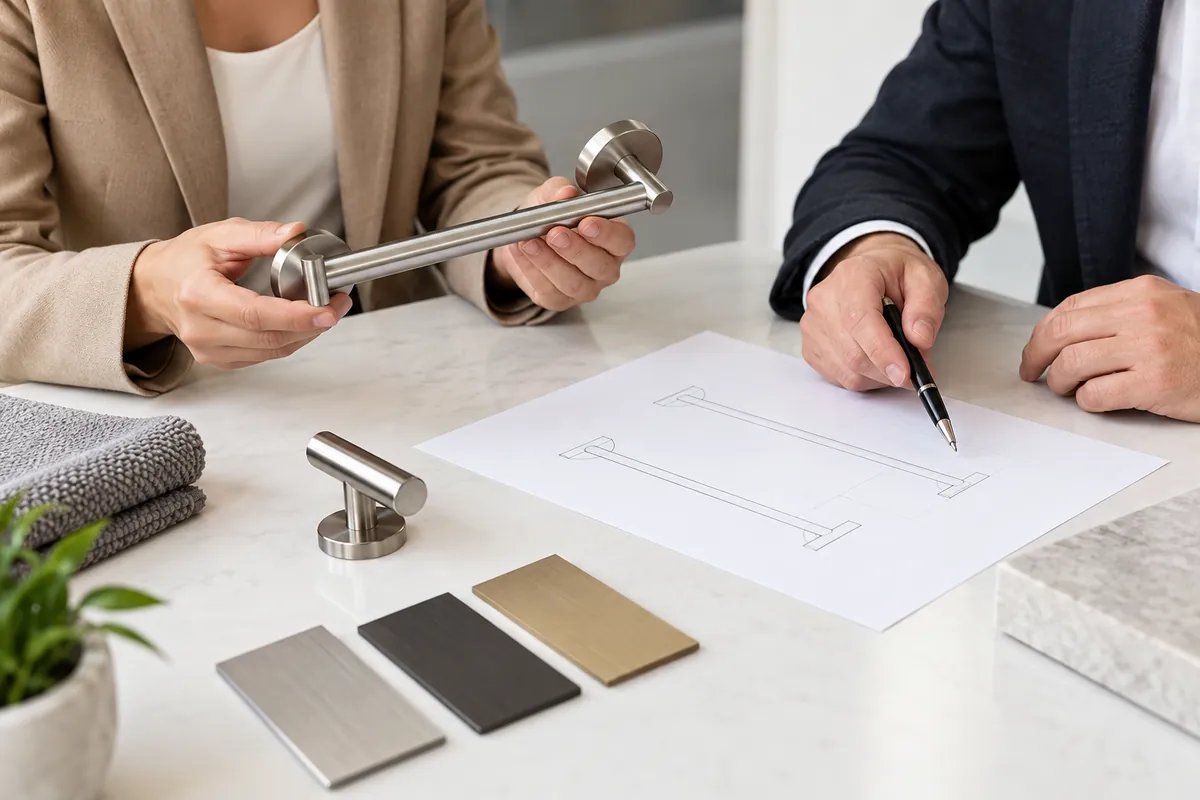
Share your drawing, target interface, material, finish, sample needs, and buyer acceptance criteria with Koitor. Confirm exact category capability and process responsibilities for each project.
OEM / EIGENE MARKE
Verwandeln Sie diesen Beschaffungsleitfaden in ein Produktdossier
Teilen Sie uns Ihr Zielprodukt, die Größe, die Oberflächenausführung, die Bestellmenge und Ihre Verpackungsanforderungen mit. Ihr Team erhält vor der Angebotserstellung eine praxisorientierte Prüfung der Herstellbarkeit.

 English
  Español
  Português
  Français
  Deutsch
  العربية