

Engineering BOM manufacturing BOM kit differences matter when a buyer’s approved product definition must become a quoteable, producible, packable order. The engineering BOM describes the design intent and required components; the manufacturing BOM organizes what a supplier needs to procure, make, assemble, inspect, and pack; the orderable kit definition states what the buyer expects in each sellable or shipped set. These views should be linked by revision and item identity, not assumed to be identical lists.
What does each bill of materials answer?
An engineering BOM (EBOM) captures the product structure from the design or product-definition perspective. It can identify finished assemblies, subassemblies, components, materials, drawings, and revision relationships needed to define what the product is. Its purpose is not necessarily to describe every production step or the exact sequence in which the supplier purchases and assembles the parts.
A manufacturing BOM (MBOM) organizes the product structure for production planning and execution. Depending on the supplier’s systems and process, it may include purchased items, fabricated parts, intermediate assemblies, consumables, packaging, and manufacturing relationships that are not represented in the same way in the design view. A small manufacturer may manage this information in controlled spreadsheets or work instructions rather than a particular software platform. Buyers should request the records they need, not assume the supplier runs a specific ERP or PLM system.
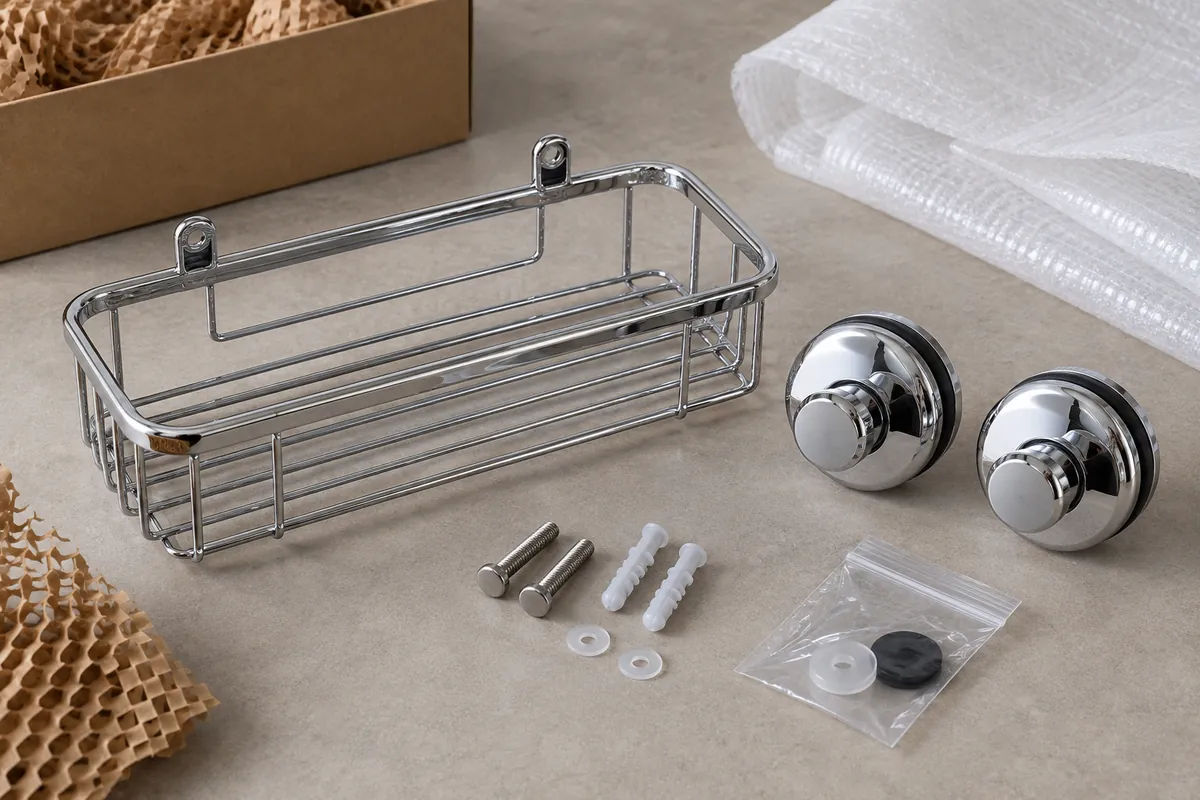
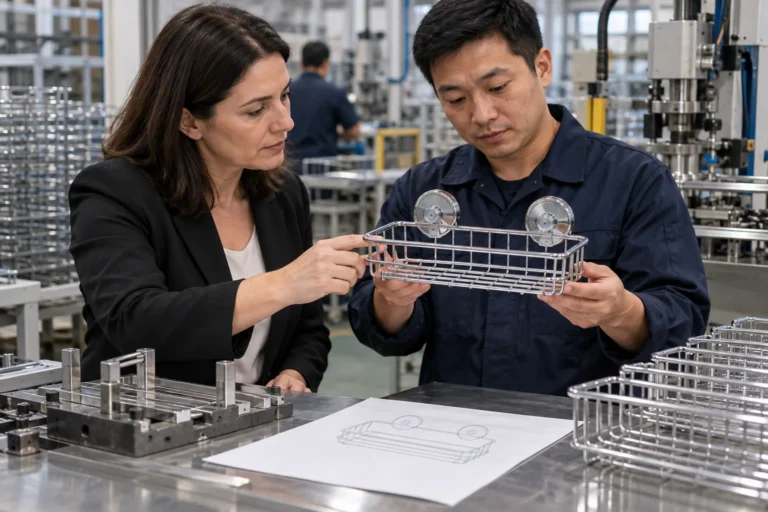
An orderable kit or sales configuration answers a different question: what does the customer receive per unit, carton, or set? A bathroom basket might be sold with mounting components, fasteners, an instruction leaflet, protective packaging, or a separate accessory. Some of these may not be designed metal parts, but omitting them from the order definition can create incomplete quotes, shortages, packing confusion, or inconsistent repeat orders.
When reviewing engineering BOM manufacturing BOM kit differences, terminology varies across organizations. The useful discipline is to define the buyer’s required outputs and the relationship among them. Do not debate labels while leaving unclear whether a suction cup, wall plug, screw pack, instruction sheet, spare part, or protective sleeve is included in the finished unit.
Why can an approved design still produce an incomplete quote?
A drawing may define the wire basket and mounting geometry but omit the purchased accessory set, retail packaging, carton quantity, label, or assembly state. The supplier may price only the fabricated part unless the buyer identifies those additional deliverables. Similarly, a product photo may show a complete kit while the formal specification lists only the main assembly. That mismatch can remain hidden until sampling or packing.
The reverse can happen too. A quote may include components that are not on the approved design or buyer order, perhaps because a supplier used an older kit or assumed a standard accessory. Extra items can affect cost, packing dimensions, inspection, and the customer’s experience. The buyer should resolve what is required before sample approval and clearly separate approved alternatives from mandatory components.
For an OEM project, connect each item to a source of truth: drawing, specification, buyer-selected component, supplier proposal, or packaging instruction. State whether it is fabricated, purchased, provided by the buyer, or included in a kit. The category alone does not prove Koitor currently manufactures or sources any particular accessory; confirm the actual project scope and supplier responsibility in the quotation.
How should buyers compare EBOM, MBOM, and the orderable kit?
Use a cross-reference instead of asking for three documents that may use different naming conventions. Buyers comparing engineering BOM manufacturing BOM kit differences should identify the buyer-facing finished product and set quantity first. Then map the design items to production and order items. The comparison should expose where an item is transformed, grouped, purchased, packed separately, or intentionally excluded.
| Buyer question | Engineering BOM view | Manufacturing BOM view | Orderable kit view |
|---|---|---|---|
| What product is defined? | Design assemblies, components, drawing and revision | Production-relevant parts and assemblies | Customer-facing SKU or set configuration |
| Which items are made or bought? | May identify designed components without supplier route | Can identify fabricated and purchased inputs | Clarifies items included in the customer deliverable |
| How are parts grouped? | By design structure or function | By production and assembly relationships | By unit, set, carton, or other order quantity |
| What does the buyer approve? | Geometry, material, finish, interfaces, revision | Proposed production structure and approved changes | Included contents, packaging and quantity |
| What must be reconciled? | Design intent to production realization | Production inputs to finished assembly | Finished product to shipped/orderable configuration |
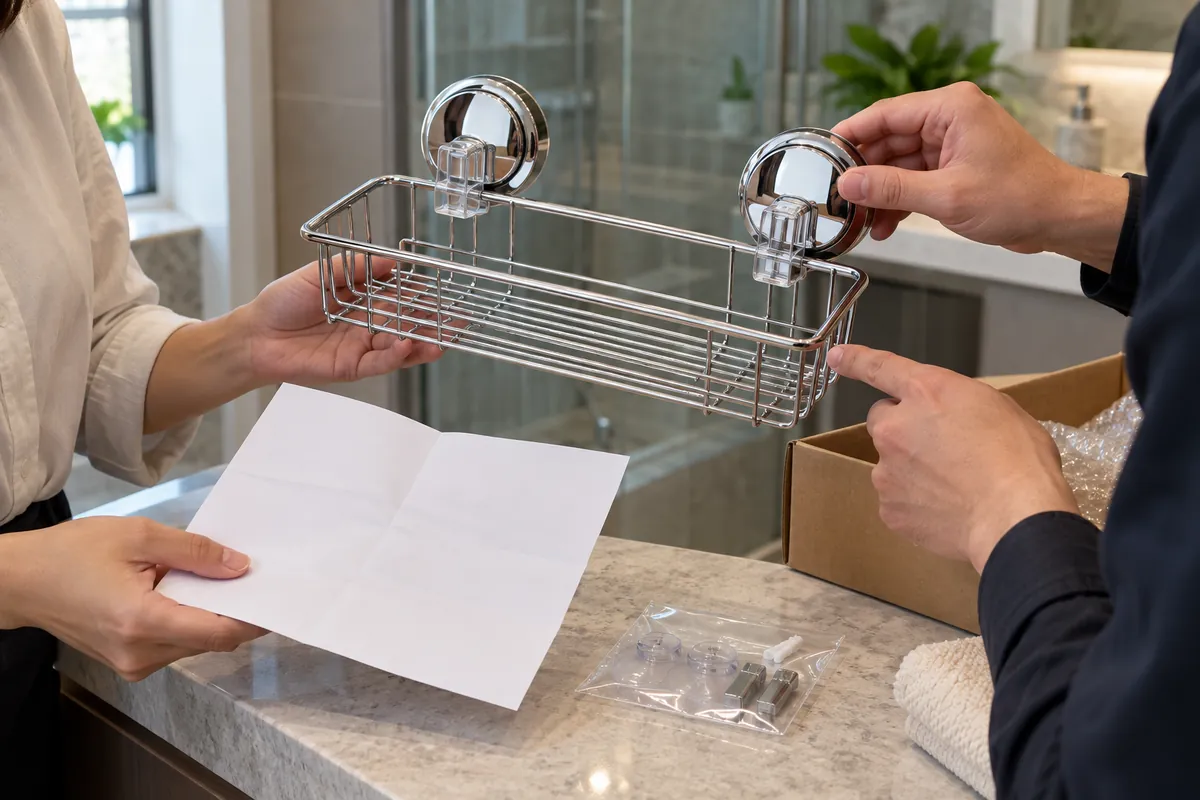
This comparison is a practical buyer framework, not a mandatory software schema. Ask the supplier to show the identifiers and relationships using a spreadsheet, controlled drawing list, or other agreed record. A useful cross-reference typically includes buyer part number, supplier part number if used, description, revision, quantity per finished unit, source or responsibility, and disposition such as make, buy, kit, or pack.
What should be included in a hardware kit definition?
Begin with what the end customer or installer receives. For a wall-mounted bathroom organizer, the kit may include the metal assembly and selected mounting components. The specific contents depend on the product, mounting method, market, and buyer specification; do not infer them from a generic image. If accessories are optional, list the option or SKU separately. If the buyer supplies components, state their identity, quantity, delivery point, and inspection responsibility.
Define quantity at the correct level. “One set” could mean one basket, one left-right pair, one complete bathroom assortment, or one master carton. Use explicit quantities per finished product and per carton. If parts are packed in a bag, describe whether that bag is one per product or shared across several units. This avoids a count that is technically correct at the carton level but wrong for the buyer’s item.
Clarify the state of assembly. A design structure may show a mount as a separate component while the buyer wants it assembled to the basket; alternatively, the buyer may require loose hardware to prevent transit damage or simplify installation. State whether the supplier installs, nests, bagged, or separately packs each component. Assembly and packaging instructions should reference the same approved product revision.
Packaging items also need ownership. Carton, protective sleeve, separator, label, instruction leaflet, and pallet configuration may be part of the finished order even if they are not product components. Define who supplies artwork, who approves the label, and which changes require buyer review. A packaging BOM or pack-out list can complement the product BOM without being confused with it.
How should revision control prevent mismatches?
Use a clear revision identifier for the design and the order configuration. A new drawing revision may change a wire bend, mount, finish, or accessory interface without changing every purchased item. A packaging revision may change a divider or carton while the design remains constant. Each change should be traceable to the documents and samples it affects.
When a revision changes, ask the supplier to identify which BOM rows and work instructions are affected and whether the approved sample still represents the new configuration. Maintain an effective date or order applicability rule where needed. Do not allow a newer spreadsheet filename to silently replace an approved record; identify the revision and approval state within the document or controlled transmittal.
Change control also works in the other direction. If a supplier proposes a substitute fastener, suction cup, material source, or packaging component, the buyer should see which finished item and order configuration are affected. The substitute may be acceptable, but approval should be explicit. An unrecorded substitution makes a later quality investigation difficult because the shipped kit may no longer match the reviewed sample.
For repeat orders, compare the order BOM or kit list with the approved baseline before production release. A focused check can catch omitted accessories, stale artwork, incorrect carton quantities, and outdated revisions. The level of review should match project risk and the buyer’s control plan; this guide does not assume any particular inspection software or system at Koitor.
What evidence should a buyer request before sample approval?
Ask for a draft product structure or itemized quotation that identifies included components, quantities, source responsibility, finish, and packaging. Compare it with the drawing and the requested orderable set. When exact supplier part numbers are not available, use stable descriptions and a controlled buyer reference so that similar-looking parts are not confused.
At sample review, count the parts and compare the physical kit against the agreed list. Confirm which parts are assembled, bagged, or packed separately; verify the product revision and finish; and review the packaging configuration. Photograph the overall kit and important interfaces. Record sample identifiers so that a later production sample can be compared to the same definition.
Do not treat an approved prototype as automatic approval of every procurement route or manufacturing sequence. The buyer is approving the stated design and sample configuration. If the supplier’s proposed MBOM introduces a different source, assembly sequence, or pack-out that could affect fit, function, appearance, or delivery, identify the evidence needed to approve that difference.
If a supplier uses different terminology, ask for a crosswalk instead of insisting on a label. The evidence should make clear what is designed, what is purchased, what is manufactured or assembled, and what is included in the customer’s unit. This can be a clean, readable component list and controlled revision record; a complex system export is not inherently better if it obscures the buyer’s decision.
Buyer checklist
– Define the finished product, SKU or set, and quantity basis.
– Identify the approved drawing, specification, and revision.
– List every included product, mounting, accessory, instruction, and packaging item.
– State each item’s quantity per finished unit and per carton where relevant.
– Mark whether each item is fabricated, purchased, assembled, buyer-provided, optional, or excluded.
– Reconcile the design structure to production inputs and the orderable kit.
– Identify source responsibility and any supplier-proposed alternatives.
– Confirm assembly state, bagging, pack-out, carton quantity, and label/artwork ownership.
– Count a representative sample against the approved list and record its identity.
– Define which design, sourcing, assembly, and packaging changes require renewed approval.
Häufig gestellte Fragen
Does every supplier need a formal MBOM software system?
No. Buyers need reliable, revision-controlled information that connects the approved design to the supplier’s production and the shipped configuration. The format can vary with project scale, as long as scope and changes remain clear.
Is the manufacturing BOM always more detailed than the engineering BOM?
Not in every system or company. The structures serve different purposes and can be organized differently. Request the production-relevant mapping needed for the project instead of assuming a fixed document hierarchy.
Should packaging be part of the product BOM?
Packaging must be defined somewhere in the controlled order information. It may be managed in a separate pack-out list or packaging structure. What matters is that the carton, protection, labels, and quantities are not omitted from the quoted and approved scope.
How should a buyer handle optional accessories?
Identify them as options with clear part references, quantities, and SKU or order rules. Do not mix optional components into the mandatory kit list without stating when they apply.
What if a sample contains a part missing from the drawing?
Pause approval and determine whether the part is required, an unapproved supplier addition, or a sample-only item. Update the controlled product or kit definition before production if it belongs in the deliverable.
Does BOM approval prove manufacturing quality?
No. A BOM aligns item definition and responsibility; it does not replace dimensional, material, finish, assembly, or packaging acceptance criteria. Buyers should link each quality requirement to an appropriate record and inspection method.
Align the product definition before an OEM order
Share the approved drawing or sample, required kit contents, packaging expectations, and change-control needs with the supplier. Koitor supports custom metal hardware development from buyer drawings or physical samples; specific components and sourcing responsibilities should be confirmed for each project.
Discuss an OEM product structure
Share the product definition and kit requirements so the quote, sample, and shipped configuration can be aligned.
OEM / EIGENE MARKE
Verwandeln Sie diesen Beschaffungsleitfaden in ein Produktdossier
Teilen Sie uns Ihr Zielprodukt, die Größe, die Oberflächenausführung, die Bestellmenge und Ihre Verpackungsanforderungen mit. Ihr Team erhält vor der Angebotserstellung eine praxisorientierte Prüfung der Herstellbarkeit.
 English
  Español
  Português
  Français
  Deutsch
  العربية