
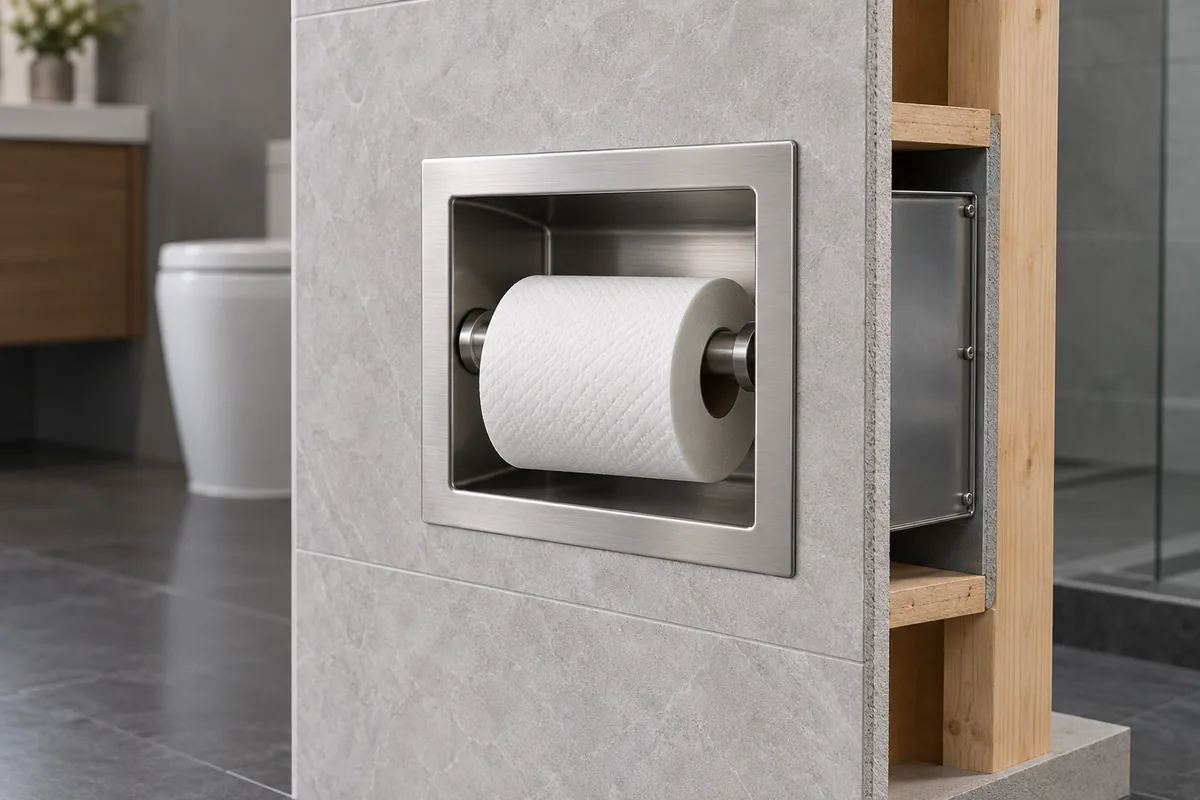
For recessed toilet paper holder wall depth, specify the cavity from the finished wall face, not from the visible faceplate or unfinished framing. Approve the selected holder’s rough opening, shell projection, flange overlap, fastening method and roll-service space against one wall-section drawing. Then fit a production-intent sample into a representative wall mock-up before releasing the product and installation information. There is no universal cutout or cavity depth that suits every recessed holder.
Why does a recessed holder need more than a faceplate dimension?
A recessed toilet tissue holder occupies space behind the visible wall surface. Its faceplate can look compact while the shell, clamp or fasteners require a larger opening and a deeper cavity. An importer comparing product catalogues therefore needs more than an overall front elevation: the buyer needs the relationship between the product and the finished wall assembly.
This is a product-interface decision. A bathroom-accessory brand may select a clean front appearance, then discover that its target wall construction cannot accommodate the selected shell or fastening method. Conversely, a generous cavity does not guarantee that the flange covers the opening or that the clamp can engage the wall. Each interface has to be checked against the same product revision.
The Bobrick B-667/B-6677 technical data sheet illustrates why the dimensions must be separated. For those specific models, it states an overall face, a rough opening and a minimum recessed depth from the finish face. It also describes different installation arrangements with and without backing. Those numbers and methods belong to those models; they are not Koitor specifications or industry-wide minimums.
When writing an RFQ, ask the supplier for a drawing with front, side and section views. The section should show the finished face, recess, flange and fastening path together. A product photograph can confirm appearance, but it cannot prove fit inside a buyer’s intended wall construction.
Which wall and holder dimensions should buyers separate?
Start with the wall assembly: the finished surface, substrate, available cavity and any backing or obstruction. Then define the holder assembly: face flange, recessed shell, mounting feature and spindle. Only after both are documented should the buyer approve a cutout or advertise compatibility.
| Dimension or interface | What to show on the controlled drawing | Buyer decision it supports |
|---|---|---|
| Finished face datum | The surface from which installed depth is measured | Prevents mixing finished-wall and framing dimensions |
| Rough opening | Width, height, corner condition and tolerance on the selected wall mock-up | Confirms that the shell enters while the flange still covers the edge |
| Recessed shell | Maximum depth and width behind the face, including projections | Checks cavity and neighboring-service clearance |
| Face flange | Outer size, overlap around the opening and seating condition | Checks visible coverage and flush appearance |
| Fastening zone | Clamp travel or screw position, access and required backing | Confirms the chosen mounting variant can actually be secured |
| Roll envelope | Intended roll size and spindle removal path | Checks refill access after installation |
Do not combine a nominal shell depth from one supplier with a rough opening from another. Even similar-looking recessed holders can put their clamps and fasteners in different places. Ask each supplier to identify the drawing revision and the surfaces used as measurement references.
The opening deserves a tolerance discussion. A nominal cutout alone does not tell an installer whether corner radii, tile edge variation or finish build affect entry and flange coverage. The buyer should have the supplier propose allowable variation and a practical inspection method for the selected product. A project architect or installer must still decide how that product fits the actual wall; a hardware article cannot establish building or waterproofing compliance.
How should buyers compare clamp and backing options?
Choose the fastening method for the target wall assembly before the product drawing is approved. A clamp that grips an opening and screws that fasten into backing are different systems. The supplier’s hardware list, hole positions and installation sequence should describe the selected arrangement, not a mixture of both.
The Bobrick model-specific instructions distinguish installation without backing, using a mounting clamp, from installation with backing, using screws through the holder. This example shows the kind of choice buyers must settle, but it does not authorize the same arrangement for every holder. A different shell could have a fixed bracket, separate clips, tabs or another retention design. Request the selected supplier’s current instructions and sample components.
For a clamp arrangement, ask what wall-section thickness and accessible edge the clamp requires. Verify that the clamp can be positioned, tightened and inspected after the shell is inserted. For a backed installation, ask where the backing must sit relative to the rough opening, which fasteners belong to the supplied kit and whether they can be accessed without damaging the visible finish. These are drawing and mock-up questions, not assumed universal dimensions.
The RFQ should state whether the buyer supplies the wall system, whether the product supplier provides only the metal holder and fixing components, and who approves the installed interface. That division matters when a private-label product is sold into more than one market or installation context. Koitor’s metal bathroom-hardware experience can support a discussion of metal components and drawing-based customization, while a project professional remains responsible for the wall assembly and any code or waterproofing decisions.
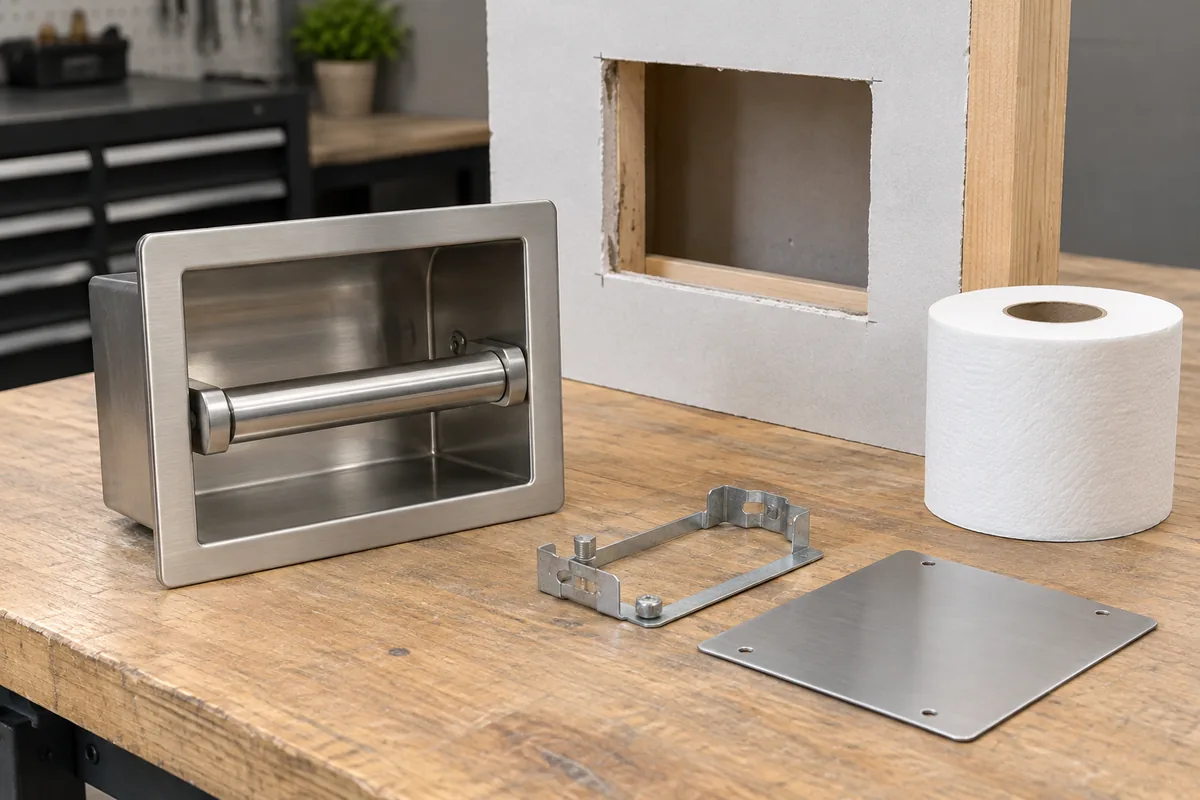
What should a representative wall mock-up test?
A mock-up should reproduce the interfaces that control fit, even if it is not a full bathroom wall. Use the intended wall thickness, finished face and opening condition, plus the mounting parts specified for that product. Mark the product drawing revision and the mock-up construction so the result can be understood later.
First, dry-fit the shell and observe whether it enters without forcing or distorting the opening. Check that the flange sits as the product drawing expects and covers the opening on all sides. A neat front view is insufficient if a shell projection touches backing or the clamp cannot reach the surface it must grip.
Next, install the product using the selected fastener route. Record whether the fixing parts are accessible, whether they interfere with the shell or wall substrate, and whether the holder remains aligned when secured. Do not infer a load capacity from a one-time fit observation. If the project needs a strength or durability criterion, obtain an agreed method and acceptance limit from the responsible product team or qualified tester.
Finally, fit the intended roll and operate the spindle or refill mechanism. Check hand access, roll rotation and removal without assuming that all roll formats are identical. If the target market uses different rolls, document the intended assortment and verify the extremes. A product that fits the wall but cannot be refilled conveniently has still failed the buyer’s complete use case.
Photographs, measurement notes and the signed sample revision should be retained with the approval record. A modified shell, thicker flange, alternative spindle or changed fastener kit should trigger a fit review where it affects the controlled interface. This is especially important when samples and bulk production are separated in time.
What belongs in the supplier’s RFQ and sample-approval package?
Give suppliers the same wall and product assumptions so their proposals can be compared fairly. An RFQ for a recessed holder should describe the intended application and ask for explicit deviations where the proposed product does not fit that envelope.
- State the intended finished-wall build-up and available cavity, or mark those values as project-specific unknowns requiring installer confirmation.
- Request front, side and section views with a finished-face datum, rough-opening proposal, shell envelope and flange overlap.
- Identify the mounting variant: clamp, backing and screws, or another documented system. List every supplied fixing component.
- Define the intended roll and spindle service envelope, including refill access after the holder is installed.
- Ask for a production-intent sample and the supplier’s installation instructions tied to the same drawing revision.
- Agree who will build the wall-section mock-up, observe the fit and approve any installation limitations.
- Record material, finish and packaging separately; none of these replaces the geometric fit review.
For quotations, keep the holder shell, visible finish, mounting kit, packaging and installation literature in scope. A lower component quote may omit the clamp or use a different flange or spindle. Compare the delivered assembly and documentation, not only the front appearance or unit price. If a supplier proposes a different mounting route, request an updated section view before treating the options as equivalent.
| Approval item | Evidence to retain | Change that needs renewed review |
|---|---|---|
| Wall interface | Finished-wall section and mock-up notes | Target wall thickness, substrate or finish changes |
| Holder geometry | Approved shell, flange and opening drawing | Shell depth, flange width or corner form changes |
| Fastening | Component list and installation sequence | Clamp, backing or fastener substitution |
| Service access | Roll and spindle fit observations | New spindle or target roll assortment |
| Identity | Sample ID, drawing revision and supplier instructions | Any uncontrolled design or kit revision |
The checklist is an approval framework, not a universal installation instruction. The supplier and the buyer’s installation professional must establish the final requirements for the actual product and wall. Do not turn one manufacturer’s model dimensions into a general catalogue claim.
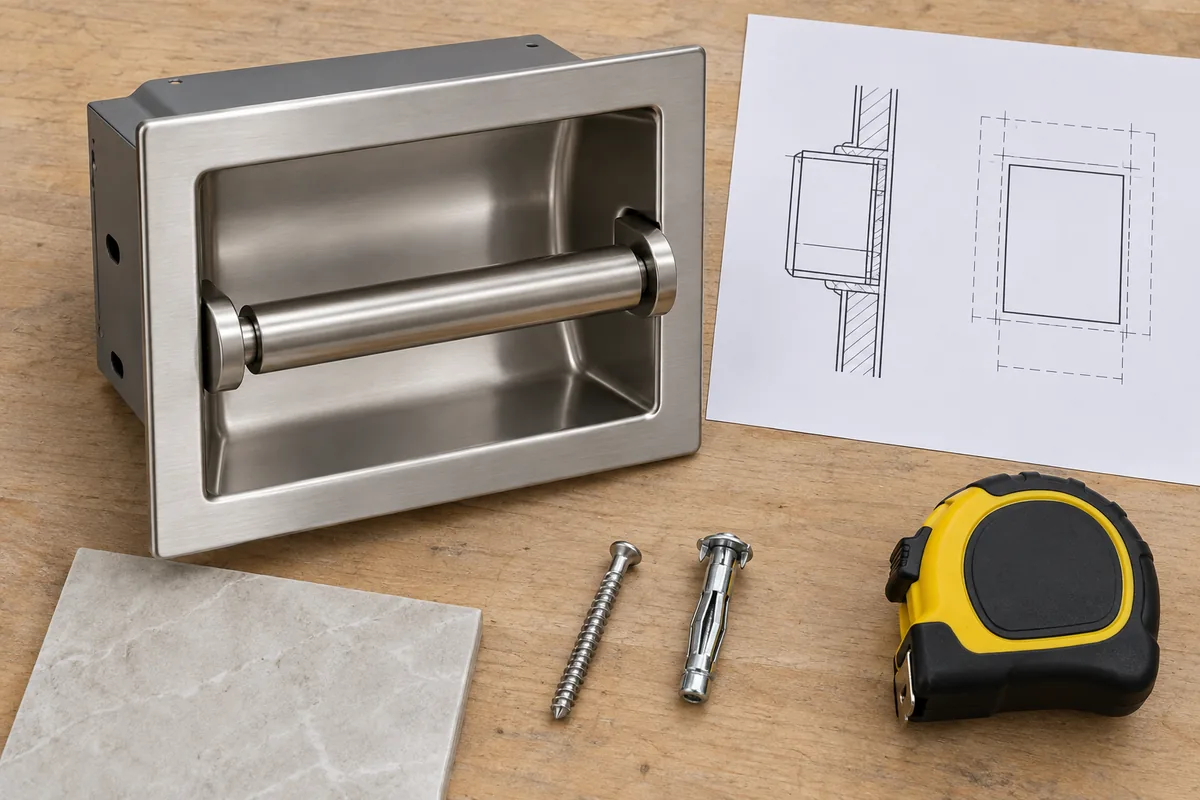
Where do buyer specifications commonly go wrong?
The first mistake is quoting only the faceplate width and height. Those values may help a buyer assess appearance, yet say little about the cavity, rough opening or fixing access. The second is using the dimensions of a supplier’s example model as if they applied to another product. Even a small revision to a flange or shell can affect the opening and finish coverage.
Another mistake is approving a loose sample without the intended wall section. A product may look well made on a table but fit poorly once its clamp, backing and roll are considered together. A fourth mistake is allowing the purchase order to say simply “recessed tissue holder” while the sample and bulk order use different fixing kits. Identify the kit and its revision as part of the product assembly.
The practical decision is to approve a holder-to-wall compatibility record: selected product drawing, selected wall section, rough opening, fastening method and refill check. That record lets an importer compare supplier proposals and explain installation limits to downstream buyers without claiming a universal fit. Koitor is a family-owned custom metal hardware factory focused on bathroom and home storage hardware; buyers can discuss a drawing or sample and review the custom bathroom hardware manufacturing scope. Whether a particular recessed holder can be produced or supplied must be confirmed project by project.
What should buyers take away?
Treat recessed toilet paper holder wall depth as one part of a complete interface, measured from the finished wall face. Approve the rough opening, shell, flange, fixing route and roll-service path on the selected supplier’s drawing and a representative mock-up. Keep model-specific manufacturer data in its own context and require a new fit review when the holder or wall assembly changes.
Can one sample approve several wall constructions?
Only if the sampled interfaces represent each intended construction and the responsible installer agrees. A single dry-wall mock-up may not show what happens with tile, different board thickness, a countertop apron or a different backing position. Record which wall build-up was actually checked, then list untested alternatives as open questions. A supplier’s product data can identify a permitted mounting route, but the buyer should not silently broaden it to every project wall.
Should a buyer specify a universal minimum cavity depth?
No. The required recess depends on the selected holder shell and its fasteners, measured from the finished face indicated by the supplier. The phrase “recessed toilet paper holder wall depth” should lead to a model-specific section drawing and fit check, not a copied number. A product revision may change the answer even when the front styling looks similar.
What changes after the sample is approved?
Record the approved holder, wall section, mounting kit and roll format as separate controlled inputs. If the supplier changes the shell or clamp, request the revised drawing and repeat the affected fit checks. If the buyer changes the target wall or roll assortment, review those interfaces again before reusing earlier installation claims. A photograph of the original sample alone does not identify which revision or wall condition it represented.
What evidence is enough for a first sourcing decision?
For an initial shortlist, compare supplier drawings, the complete mounting-kit list and any documented wall limitations. For final sample approval, add observations from the representative wall mock-up and refill check. Additional performance or regulatory evidence should be set by the buyer’s project team where relevant. This staged approach keeps the request focused on the actual product decision while preserving unanswered installation issues for qualified review.
Review a Recessed Holder Concept With Koitor
Share the holder drawing, target wall section, mounting method and intended roll assortment for a metal-hardware sourcing discussion. Product feasibility and manufacturing scope are confirmed for each project.
OEM / EIGENE MARKE
Verwandeln Sie diesen Beschaffungsleitfaden in ein Produktdossier
Teilen Sie uns Ihr Zielprodukt, die Größe, die Oberflächenausführung, die Bestellmenge und Ihre Verpackungsanforderungen mit. Ihr Team erhält vor der Angebotserstellung eine praxisorientierte Prüfung der Herstellbarkeit.
 English
 Español
 Português
 Français
 Deutsch
 العربية