
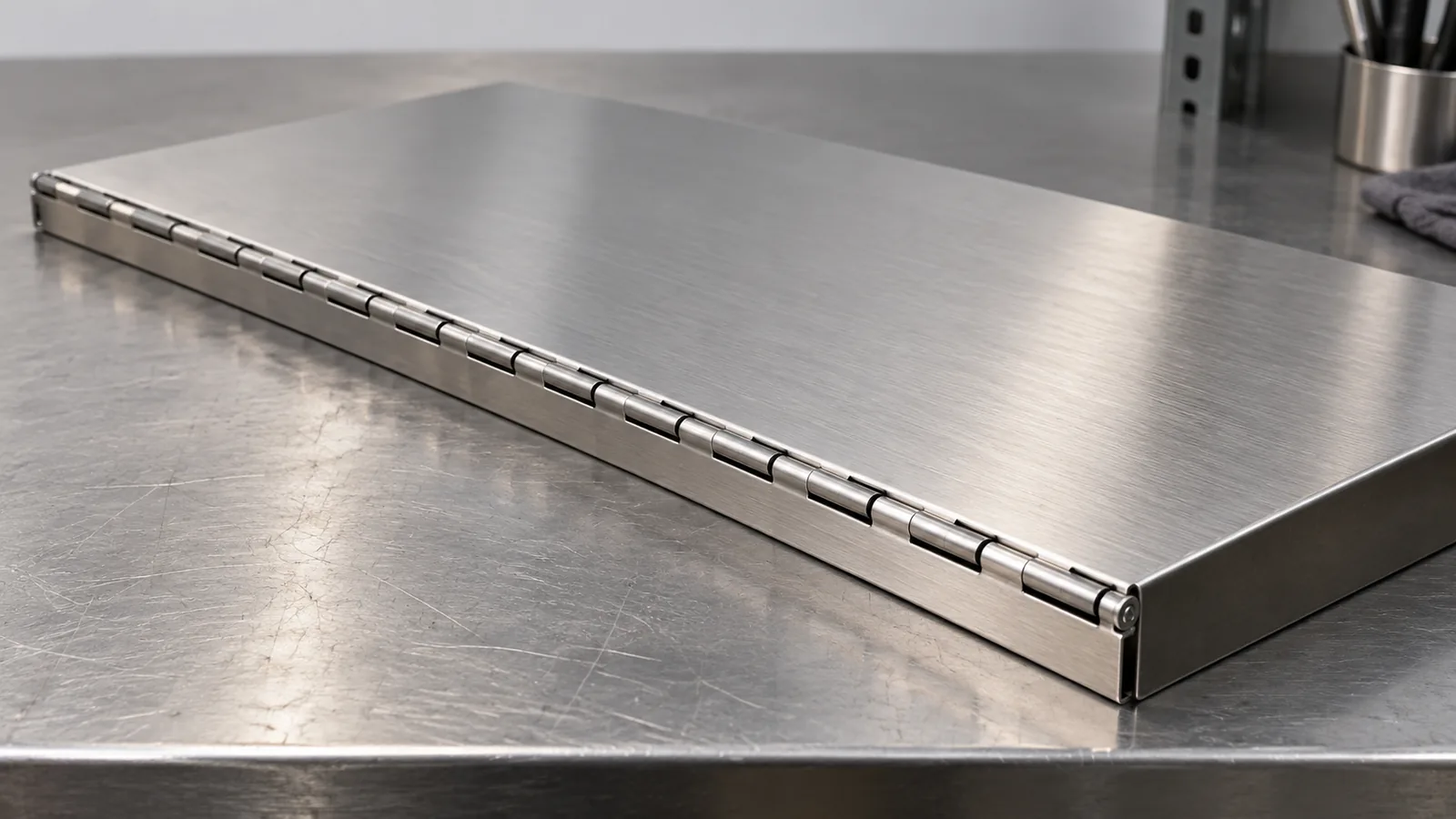
For piano continuous hinge length trimming end knuckle retention on a folding shelf panel, buyers should approve the finished cut end—not only the hinge’s nominal length or pin type. A continuous hinge may be supplied in a standard length and trimmed for a product, but the buyer still needs to define which end features must remain, how sharp edges are handled, and what evidence represents the production condition. A supplier drawing and an approved sample should show these details together.
The distinction matters because the hinge is a long assembly of leaves, knuckles and a pin. A cut made at the wrong location can leave a partial end knuckle or expose a pin end in a way that differs from the intended design. Deburring can also change the local edge appearance. These are interface and workmanship questions for the specific hinge construction; they are not settled by saying “cut to length.” Guden’s continuous-hinge selection guide describes continuous hinges as available in differing lengths and configurations and discusses pin-retention options. That reference helps identify the decision, but it does not set acceptance limits for a particular folding shelf. See the continuous hinge selection guide.
Define the product end before specifying hinge length
Start with the panel assembly. Record the product drawing revision, hinge side, open and folded positions, mounting orientation and the required finished length. Mark the datum from which length is measured, and state whether the dimension applies to the leaf, the assembled hinge, or another clearly identified feature. A number without a datum can produce different interpretations between buyer and supplier.
Show both ends in a detail view. Identify the last complete knuckle, any intended gap, the hinge pin end condition, leaf edge and nearby panel or frame. If one end is concealed after assembly and the other remains visible, call out the difference. A visual reference should show which end is representative and whether left/right orientation matters. Avoid relying on a product photograph alone when a dimensioned drawing can define the interface more precisely.
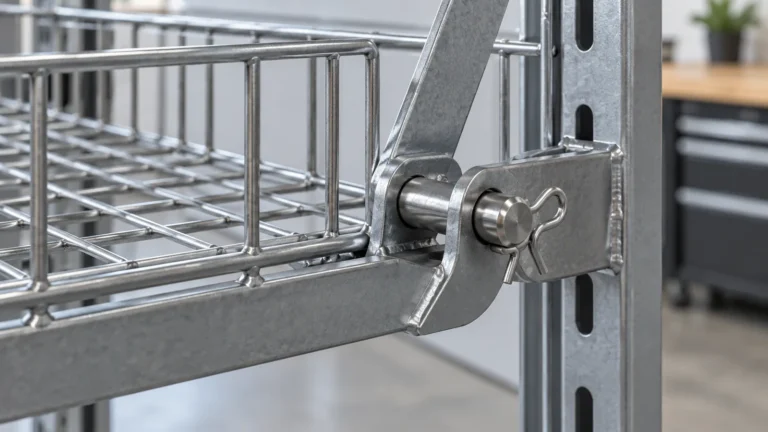
For a folding storage product, also show the hinge’s relationship to adjacent wires, sheet edges, brackets, handles and stops. The available trimming zone may be constrained by mounting holes, welds, panel clearance or the folding path. The intended end treatment should not create interference during motion or obstruct installation. Those clearances must be evaluated on the actual assembly; a general hinge guide cannot confirm them.
Separate cut length, end retention and edge condition
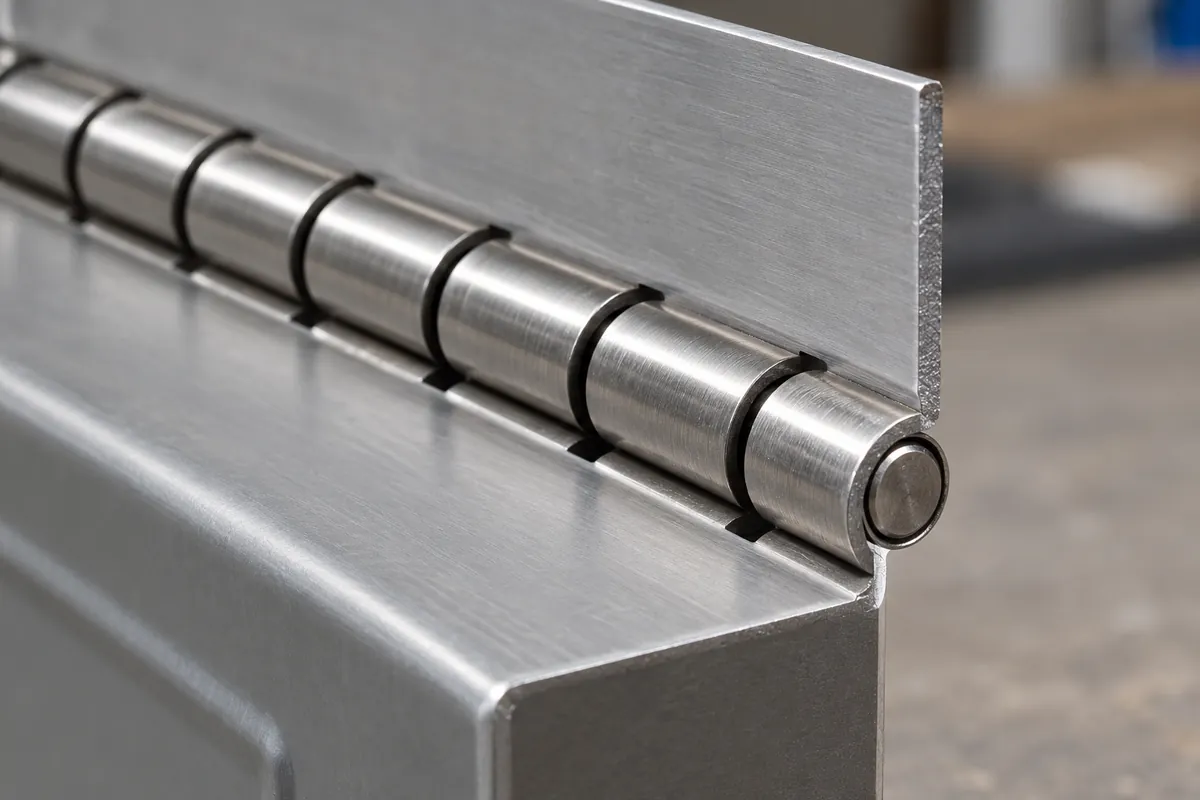
Treat three acceptance questions separately. First, is the finished length correct from the stated datum? Second, does the terminal knuckle and pin arrangement match the drawing? Third, is the cut edge in the specified condition, without an unacceptable burr, deformation or sharp projection? Combining all three into “hinge end OK” makes inspection subjective and makes corrective action harder to target.
End retention is a construction-specific question. Some continuous hinges use a pin feature or end treatment intended to reduce pin migration; other designs may rely on different arrangements. Confirm the actual hinge type and supplier documentation before requiring a particular retaining method. Do not infer that a visually closed end proves the pin is secured, or that every hinge requires a separate cap or retainer. If the project depends on a specific end feature, identify it on the approved drawing and request supplier evidence for that configuration.
In practical terms, piano continuous hinge length trimming end knuckle retention joins three separate approvals: where the hinge is cut, what terminal geometry remains, and what the supplier documents about the pin or end feature. Keeping those approvals distinct prevents a correct length measurement from masking an incorrect end construction.
| Käuferprüfung | What to define | Useful sample evidence | What it does not prove by itself |
|---|---|---|---|
| Finished length | Datum, measurement points, drawing revision and applicable tolerance | Measurement record for identified sample ends | Correct pin retention or fold performance |
| Terminal knuckle | Whether a complete knuckle, partial feature or specified end geometry is required | Close-up of both ends against the drawing | Hidden internal pin security |
| Pin/end retention | Actual construction and supplier-confirmed retention feature, if specified | Component description or process evidence plus sample inspection | Long-term resistance to migration under every use condition |
| Cut-edge condition | Burr, sharp-edge and deformation criteria tied to product use and finish | Visual/tactile check under an agreed method, with defect examples if needed | Corrosion life, coating durability or user safety certification |
| Assembly clearance | Fold path, adjacent parts and exposed-end orientation | Assembled sample checked in intended positions | Performance outside the tested sample and conditions |
The table is a buyer checklist, not a universal hinge standard. Set numeric tolerances, safety requirements and test criteria with the responsible engineer and applicable market requirements. If a sharp-edge or injury risk is in scope, define the evaluation method and responsible party rather than treating a casual fingertip check as a certified safety assessment.
Compare trimming and end-treatment proposals consistently
Suppliers may propose a cut-to-length hinge, a hinge made to a specified length, or an additional end operation. These are quoting and process options, not automatically equivalent products. Ask each supplier to identify which operations are included, which end features will be retained, and whether any added cap, pin treatment or finishing step is part of the offer. Keep the proposed construction distinct from the buyer-approved design until the sample review is complete.
| Proposal | Clarify before comparing | Buyer trade-off to review |
|---|---|---|
| Standard hinge trimmed to length | Cut location, end condition, burr removal and how the pin/end feature is handled | May simplify sourcing, but buyer must confirm the cut result matches the design |
| Supplier-provided length/configuration | Whether the quoted hinge is made or selected to the finished dimension and which details are standard | Can reduce downstream cutting, but the product-specific configuration still needs approval |
| Added end treatment or accessory | Part identity, attachment method, material/finish responsibility and assembly sequence | May address a defined interface need, but adds a component or operation to control |
Request equivalent information from each source: drawing revision, hinge construction, finished dimension, end detail, included finishing operations, sample condition and any purchased component assumptions. If one proposal omits the end detail, mark it as an open point rather than assuming it matches another quote. This protects quote comparison from a hidden scope difference.
Do not rank these options by presumed strength or cost without project evidence. A factory may use different tools and sequences depending on the hinge section, material, finish, quantity and order of operations. Ask about the proposed route and its inspection point. Any claimed saving or performance advantage should be connected to the actual design and volume, not generalized from the option name.
Approve an assembled sample, not just a loose hinge
A loose hinge can confirm its own appearance and dimensions, but not necessarily fit, alignment or clearance on the folding shelf. Review a representative assembled sample with the intended panel and fasteners or the closest authorized production-equivalent parts. Record the sample identifier, hinge supplier or part reference, drawing revision, end orientation and any known differences from the planned production materials.
Check that the hinge reaches the specified length and that both terminal ends match the drawing. Inspect for displaced or visibly damaged knuckles, burrs, sharp projections, pin-end differences and finish damage around the cut. Then move the product through its intended open and folded positions, observing the nearby frame, wall, stops and any components that could contact the hinge end. A movement demonstration only documents the observed sample and conditions; it does not establish a load rating, cycle life or lifetime guarantee.
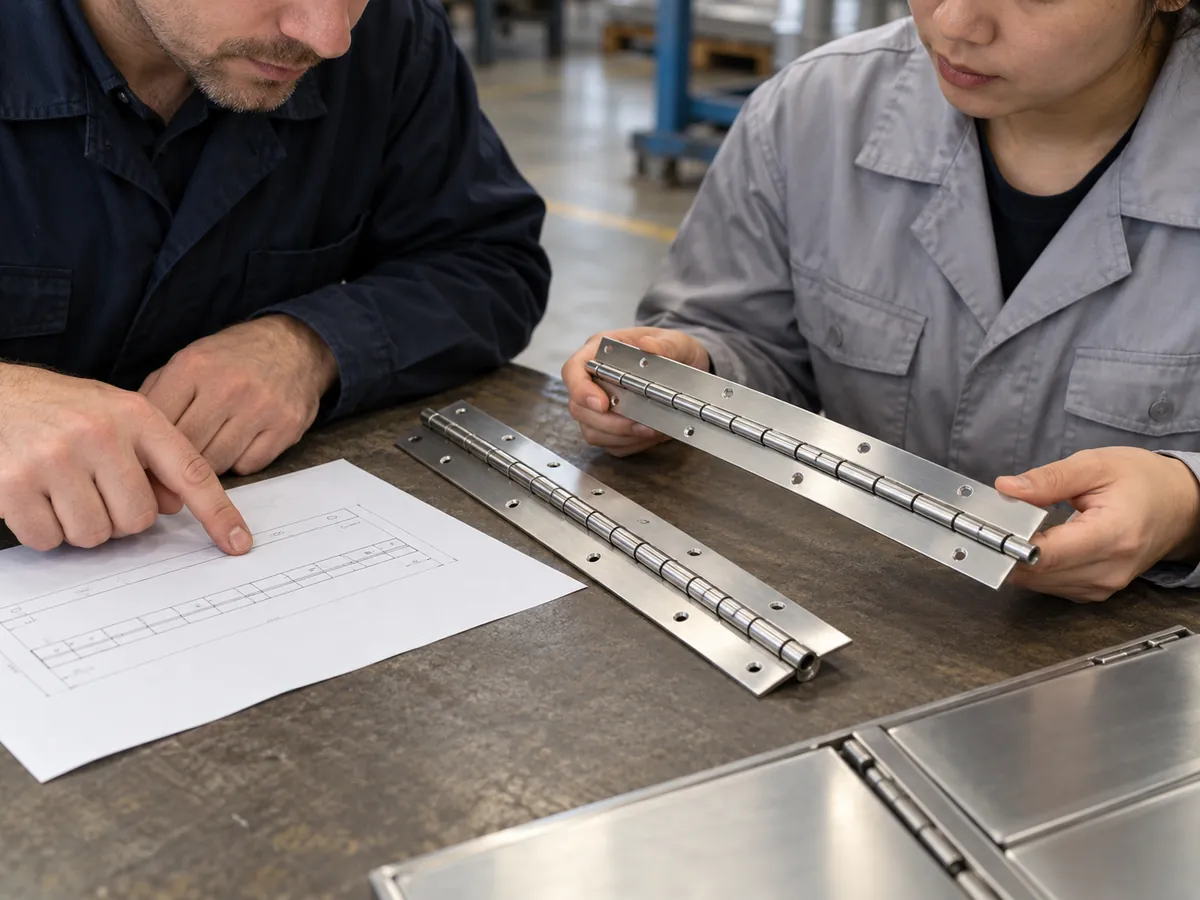
If pin migration matters to the product requirement, agree what evidence can demonstrate the selected construction and what change would trigger renewed approval. Depending on the component and supplier, the evidence might include a component drawing, a controlled work instruction, a sample inspection record or a project-defined test. The buyer should not claim that one photograph or a short folding check proves long-term retention.
Write the RFQ and inspection plan around observable features
An RFQ should allow suppliers to quote the same scope. Include the panel drawing and hinge detail; finished length and datum; end geometry; desired pin/end-retention arrangement if known; edge condition; finish; assembly orientation; and any tests or records the project requires. State which dimensions and features are critical to fit or use. If the design is still open, ask suppliers to list alternatives separately and identify assumptions instead of silently selecting a substitute.
Use the phrase piano continuous hinge length trimming end knuckle retention in the internal specification only when it is paired with those drawing details; the phrase itself is not an acceptance criterion. The drawing, sample and supplier evidence define the approved result.
For inspection, assign each check a method and point in the process. Length can be recorded with a suitable measuring method from the defined datum. End geometry and burr condition can be compared with an approved visual standard or project sample. Fit and folding clearance need an assembled check. Internal pin construction may require supplier documentation or another agreed evidence source rather than an external visual check. Keep the inspection record tied to the production lot and revision where the buyer requires traceability.
Acceptance criteria should distinguish critical function from cosmetic preference. A deformed knuckle affecting rotation is not the same observation as a minor appearance variation at a concealed end. If both matter, describe them separately and give inspectors reference examples. Do not invent a tolerance based on a catalog image or copy a value from another hinge without confirming its relevance.
For repeat orders, retain the approved sample or controlled images, drawing revision, supplier part identification and agreed end-treatment notes. If the supplier changes the hinge source, pin arrangement, cut sequence, deburring method or finish, request a change notice and evaluate whether the affected features need another sample review. This is more targeted than automatically repeating every test after every minor change, but more reliable than assuming all visually similar hinges are identical.
Keep manufacturing claims conditional and verifiable
Hinge materials, coatings, tolerances and end-retention details vary by design and supplier. The Guden guide is useful for terminology and selection questions, but it is not a project specification. A general web reference cannot establish that a particular hinge is suitable for a bathroom environment, that its pin cannot migrate, or that a trimmed end meets a buyer’s safety requirement. Those conclusions require evidence for the selected product and defined conditions.
Likewise, avoid assuming the trimming process is always performed before or after finishing. The sequence may depend on the supplier’s construction and the specified appearance. Ask the supplier to state the proposed process and show a representative sample. If a cut occurs after finishing, inspect the exposed area and any required touch-up or corrosion-control approach; if it occurs earlier, verify the subsequent finish at the end. These are process questions to confirm, not universal claims about every hinge.
For folding shelf panels, the buyer’s most useful leverage is a clear product-specific drawing, a production-representative sample and a change-control note. Those records make it easier to resolve whether a discrepancy comes from length, end shape, pin retention, edge condition or assembled clearance. A shared acceptance language also reduces the risk that buyer, supplier and inspector use “trimmed hinge” to mean different results.
How Koitor can support a folding-hardware discussion
Koitor’s verified scope includes metal storage hardware manufacturing, drawing and sample development, assembly and packaging. That makes it appropriate to discuss how a hinge interface relates to a folding metal panel, what information belongs in the product drawing and how a sample review should be organized. This article does not claim that Koitor manufactures continuous hinges or owns a specific hinge-cutting process. The selected hinge source and its construction must be confirmed for each project.
For an OEM discussion, share the folding-panel drawing or sample, required hinge length and datum, both end details, intended motion, finish, inspection evidence and any market-specific requirements. The team can clarify the metal frame and assembly interfaces while identifying which hinge-component evidence must come from the hinge supplier. Visit Koitor’s home-storage hardware manufacturing page oder Kontaktieren Sie Koitor.
Häufig gestellte Fragen
Does a cut-to-length continuous hinge automatically retain its pin?
No universal conclusion follows from the finished length alone. Confirm the hinge construction and the supplier’s specified end or pin-retention arrangement, then connect the evidence to the exact hinge selected for the product.
Should buyers accept a partial end knuckle?
Only when the drawing and product design allow it. Show the expected terminal geometry and review the assembled sample, including clearance and the exposed end. A catalog description does not define the acceptable result for a custom panel.
Is deburring the same as end retention?
No. Deburring concerns the condition of a cut edge; retention concerns how the hinge pin or end feature is kept in its intended position. They require separate requirements and evidence.
Does a folding test prove long-term hinge performance?
It confirms only the motion observed under the stated sample conditions. A load, cycle, environmental or retention requirement needs a defined method and acceptance criteria for the specific assembly.
Arbeiten Sie mit Koitor Hardware zusammen
Share the product drawing, hinge end detail and sample requirements to align the folding-panel interface before production approval.
Developing a folding metal storage product?
Send the panel drawing, continuous-hinge end detail and sample review requirements for an OEM discussion.
OEM / EIGENE MARKE
Verwandeln Sie diesen Beschaffungsleitfaden in ein Produktdossier
Teilen Sie uns Ihr Zielprodukt, die Größe, die Oberflächenausführung, die Bestellmenge und Ihre Verpackungsanforderungen mit. Ihr Team erhält vor der Angebotserstellung eine praxisorientierte Prüfung der Herstellbarkeit.
 English
 Español
 Português
 Français
 Deutsch
 العربية