

A supplier quality agreement gives an importer and an OEM supplier a shared, product-specific reference for what “acceptable” means before production begins. For bathroom and home-storage hardware, it should identify the exact SKU and revision, the records that control, inspection evidence, change approvals and the route for handling nonconforming goods. It is a quality-planning document—not a substitute for the purchase contract, applicable law or qualified technical and legal review.
A useful agreement is proportional to the product and the buyer’s risk. It should make requirements understandable and verifiable without copying a large corporation’s aerospace, medical or electronics clauses into a simple wire basket order. This checklist helps importers prepare the discussion; the parties should adapt and approve the final terms for their actual products and markets.
What should a supplier quality agreement identify first?
Start with identity and scope. Name the contracting entities and the supplier site that will manufacture or pack the product. Then map each covered SKU or model to its current drawing or specification revision, approved sample, finish, mounting method and purchase-order line. If a retailer or private-label brand uses a different item code, make the mapping explicit. A product family name alone may not distinguish a suction-mounted basket from a shower-head caddy, or one finish and size from another.
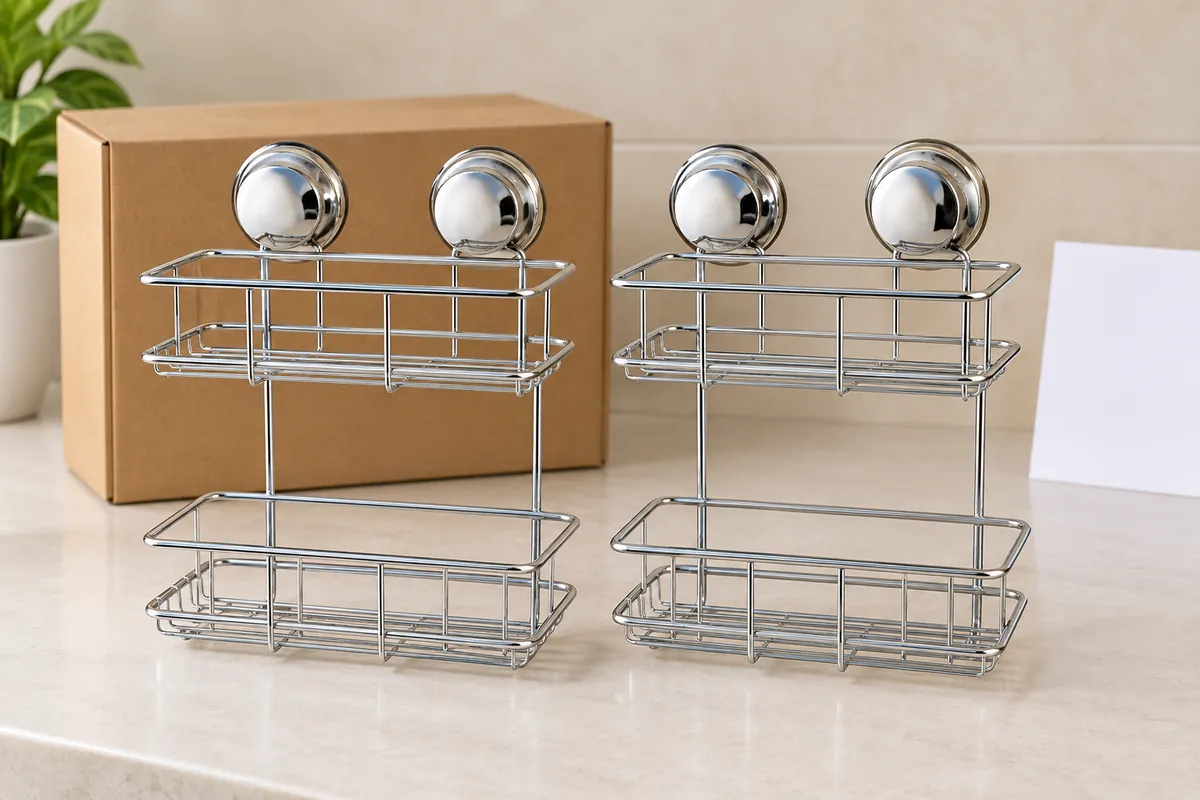
The scope should say whether the agreement covers only finished goods or also relevant components and packaging. For a metal storage basket, the buyer may care about wire dimensions, basket geometry, weld location, deburring, coating or plating appearance, mounting parts, assembly and carton protection. The agreement does not need to prescribe every manufacturing step. It should identify the finished-product characteristics that matter and point to the controlled documents where they are defined.
The buyer and supplier should also name practical contacts: who answers commercial questions, who can approve a drawing or sample, who reviews an inspection record, and who receives a nonconformity notice. One person may hold more than one role in a small team, but the approval authority should be clear. Otherwise, a production decision can be made from an informal message that another stakeholder did not see.
The written requirements should be specific enough that a replacement buyer, quality contact or production planner can determine which records and approvals apply without relying on memory. A one-page scope matrix that lists product, revision, site and responsible contacts can be more useful than broad language that neither side can translate into a production check.
Which documents and product requirements should control?
List the documents that define the item and state how conflicts will be resolved. Common references include the purchase order, approved drawing, written specification, signed sample-approval record, finish/color reference, packaging artwork, inspection plan and agreed change notices. The parties should define a precedence rule rather than assuming a later email automatically overrides a drawing or that a sample always controls over a written dimension.
Public supplier manuals illustrate why this question matters, but they are not universal templates. For example, Barry-Wehmiller’s current supplier quality manual sets a document order for its own purchasing context, while Sanmina’s supplier agreement defines a different hierarchy for quality requirements. A hardware importer should use these as examples of the issue to resolve—not copy their order or sector-specific clauses as default terms. Review the Barry-Wehmiller supplier requirements manual und Sanmina’s published agreement to see how different buyers document their own requirements. Home Hardware likewise tells suppliers to consult its current supplier guide and supporting documents, which may be updated over time; its program applies to its own supplier relationships, not every importer. Check Home Hardware’s supplier resource page directly for current versions.
Avoid vague requirements such as “premium quality,” “perfect finish” or “strong welding.” Convert them into observable criteria, a reference sample, a measurement method or a buyer-approved visual standard. If a characteristic is critical—such as basket width for fit, suction-base spacing for mounting, a visible chrome surface, or carton configuration—define how it will be checked and who resolves an ambiguous result. Do not treat a photograph as proof of hidden material grade or performance.
| Agreement area | What the buyer and supplier should define | Warum das wichtig ist |
|---|---|---|
| Produktidentität | SKU, model, revision, finish, mount type, site and PO line | Prevents similar variants or old revisions from being mixed |
| Controlling records | PO, drawing/specification, approved sample, finish reference, packaging/artwork and precedence | Establishes which requirement applies when records differ |
| Inspection basis | Characteristic, method, sample/lot basis, timing and report format | Makes acceptance checks repeatable and interpretable |
| Change control | Changes requiring notice or written approval, decision owner and effective order/lot | Avoids unreviewed changes to product or evidence |
| Nonconformity | Notice, containment, disposition authority, rework/reinspection and closure record | Separates facts, interim action and final resolution |
| Records | What evidence is kept, by whom, and an agreed retention period | Supports repeat orders and later investigation |
Where there is no sensible test for every unit, define a proportionate sampling or inspection method and identify the buyer’s acceptance criteria. Do not import a fixed sample size, AQL, test duration or record-retention period from a different product or customer unless the parties have selected and can operate it.
How should inspections and evidence be agreed?
An agreement should connect each important requirement with a verification method and evidence owner. For example, overall dimensions may be checked against a drawing with a named measurement method; finish appearance may be reviewed under a defined lighting or reference-sample condition; and included mounting components may be counted against the packing list. These examples are options to discuss, not a claim that one method fits every design.
Separate pre-production approval from routine production and shipment checks. A first-article review can confirm that the initial production setup matches the current drawings, approved sample and agreed finish. Later in-process or final checks can focus on characteristics that are important and reasonably verifiable at that stage. Inspection at one point does not prove every product will conform, and a passed sample does not replace process control. For clearer pre-production records, see how to prepare drawings or samples for a custom hardware factory.
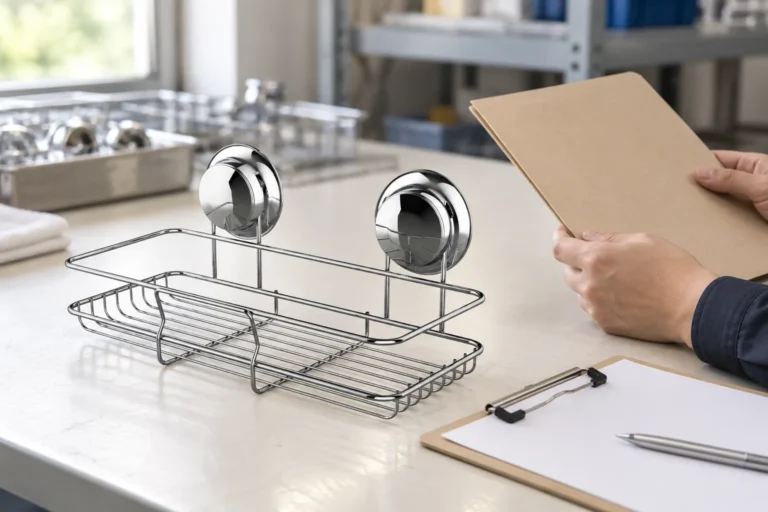
Agree what an inspection record should show: product identifier and revision, order or lot reference if available, date, characteristics checked, method, sample quantity, results, deviations, disposition and reviewer. If the buyer needs photographs, test reports or a certificate of conformity for a specific order, state which documents are required and who issues or reviews them. A document title alone is not enough; the buyer should know what information it must contain and whether it is required for every shipment or only on request.
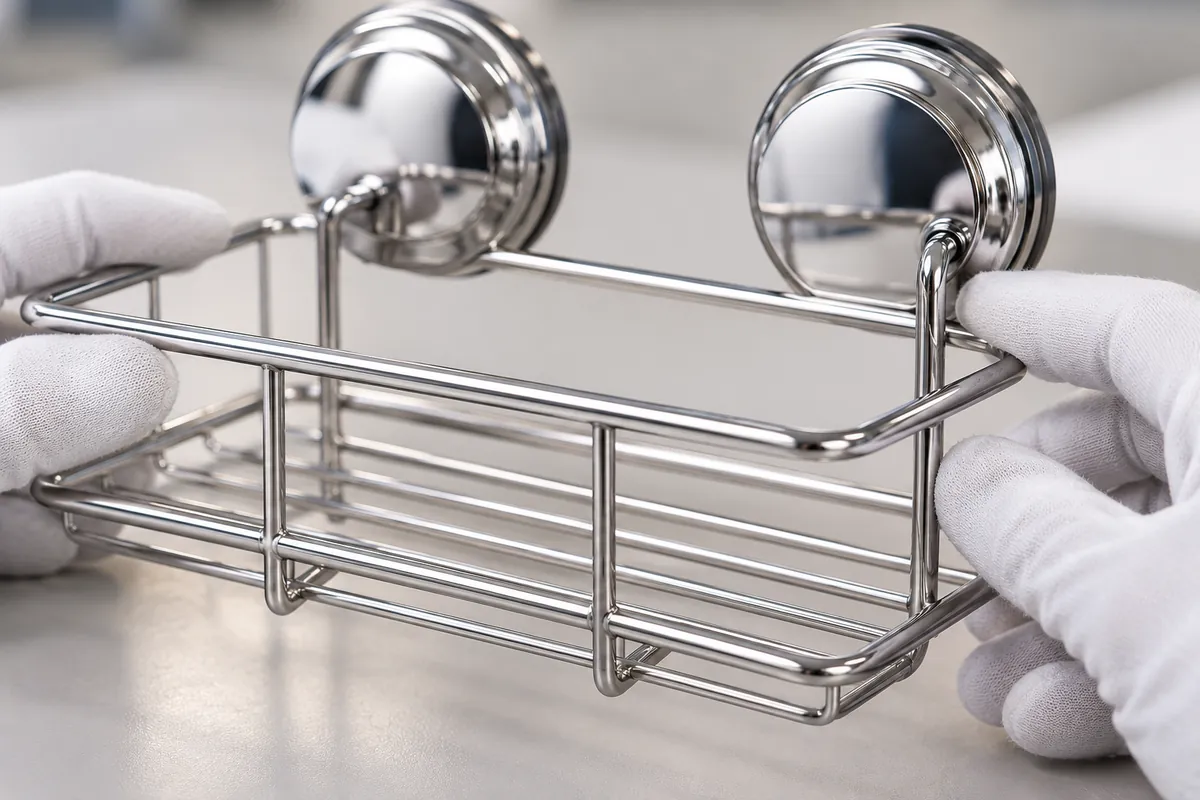
For a welded basket, the visual check might address wire alignment, sharp edges, visible spatter and the specified finish appearance. A dimensional check might verify basket width or the spacing of two suction cups. Those observations do not establish corrosion life, suction holding performance or weld strength unless an appropriate agreed test has been defined. Keep inspection evidence connected to the exact product and acceptance criterion, and avoid presenting a visual sample review as a laboratory test.
Which changes need notice or approval?
Identify changes that could alter fit, function, appearance, safety, compliance evidence or packing. Depending on the product, the buyer may want advance notice or written approval before a supplier changes a material, wire or tube size, tooling, weld location, mounting component, production site, finish route, inspection method, packaging insert or product artwork. A buyer should not automatically require notice for every internal adjustment; instead, specify the changes that can affect agreed product characteristics or buyer obligations.
The agreement should say who evaluates the proposed change, what information accompanies the request and how the decision is recorded. Useful evidence may include a revised drawing, marked-up comparison, sample, risk explanation, inspection results, updated packaging mock-up or a statement of affected orders. Define when the approved change takes effect—such as a named PO, lot or date—so old and new versions are not unintentionally mixed.
Do not assume that “no change” can be verified without a system. A buyer can ask the supplier to notify it when a defined characteristic or manufacturing location changes and to preserve a record of approvals. What the supplier can promise should be agreed based on its actual process and subcontracting arrangements. The goal is clear communication, not an unsupported claim that a particular factory has a formal change-control system.
This section is distinct from a stand-alone change-notification procedure. The quality agreement establishes which changes matter and how the parties approve them; a separate change-control work instruction can cover detailed execution where needed.
What happens when product does not meet agreed requirements?
Define the initial notification, containment and disposition steps without prejudging the cause. A useful sequence is to identify the affected SKU, revision, order and quantity; describe the observed difference; preserve relevant evidence; agree whether additional inspection or samples are needed; and decide what material should be held, reworked, sorted, accepted by deviation or otherwise handled. The correct disposition depends on the requirement, product, evidence and agreement.
Clarify who may approve a deviation and whether approval applies to one lot, a defined quantity or future production. Rework should have a verification step so the parties know how corrected units will be checked and documented. If the issue repeats, the buyer and supplier may decide whether formal corrective action is appropriate, what evidence is needed and how effectiveness will be reviewed. A report of one defect is not proof of a systemic cause.
Keep commercial remedies separate from the quality finding. A quality agreement can identify how the parties communicate and preserve records, while warranty terms, purchase-contract remedies, freight or sorting costs, and product-safety escalation may be addressed elsewhere. Do not treat a supplier quality agreement as a guarantee of compensation, a consumer-rights policy or a substitute for product-safety obligations in the destination market. The terms should be checked against the wider contract and applicable law.
Records are most useful when they can be found later. Decide which inspection results, approved samples, drawing revisions, deviation approvals and corrective-action records must be retained, in what format, by whom, and for what agreed period. The period should reflect business, legal and product needs; a buyer should not copy an unrelated supplier manual’s retention rule without review.
Buyer checklist before production
Before confirming the agreement, use this short checklist to find gaps:
- Are the legal entities, actual production/packing site, product family and covered SKUs identified?
- Does every SKU map to the current drawing or specification revision, finish, mounting system and approved sample?
- Is there a clear rule for resolving conflicts among the PO, drawing, sample approval, finish reference and later approved changes?
- Are critical fit, appearance, function and packaging requirements measurable or tied to a controlled reference?
- Does each inspection requirement identify the method, timing, sample or lot basis, report contents and responsible reviewer?
- Are first-article approval and routine production/shipment checks treated as different stages?
- Are relevant product, material, tooling, site, process, finish, component and packaging changes covered by an agreed notice/approval rule?
- Does the nonconformity procedure name the notification route, evidence, containment, disposition authority, rework check and closure record?
- Are deviation approvals limited to the defined order, lot or quantity?
- Are record owners, format and retention period agreed and realistic?
- Do warranty, costs, safety escalation, customer commitments and governing contract terms align with this quality document?
- Have technical, purchasing and legal reviewers approved the final wording for the intended product and market?
The arrangement should be workable for both parties. If the buyer requires an inspection, traceability detail or record that the supplier cannot reliably produce, clarify the requirement before the purchase order rather than discovering the gap after shipment. When the buyer can explain the decision each clause supports, the agreement is more likely to guide production and less likely to become a copied document that nobody uses.
Häufig gestellte Fragen
Is a supplier quality agreement the same as a quality manual?
No. A supplier quality agreement is a buyer-supplier record of the requirements and responsibilities that apply to a defined purchasing relationship or product scope. A quality manual may describe a company’s broader management system or operating procedures. The document names and legal effects vary, so the parties should define what they mean in the contract.
Should every OEM supplier accept an ISO 9001 requirement?
Not automatically. Whether a certification requirement is appropriate depends on the buyer’s program, product risk, market and supplier capability. Do not copy a requirement from an electronics, aerospace or medical supplier manual into a bathroom-accessory order without confirming its purpose and agreeing how it will be evidenced.
Does a passed first article guarantee the whole production lot?
No. First-article inspection checks an initial production item or set of characteristics against an agreed basis. It does not guarantee that every later unit will conform. Buyers should also define appropriate production controls, inspection evidence and change communication.
Can a buyer use one agreement for every product?
A master agreement may be possible, but it should reference product-specific schedules or controlled records. Wire baskets, towel bars and suction-mounted accessories may have different dimensions, finish checks, mounting components and packaging requirements. A single generic paragraph may not cover those differences adequately.
Arbeiten Sie mit Koitor Hardware zusammen
If you are preparing a quality schedule for custom bathroom or home-storage hardware, share the drawing, approved sample, target finish, mounting requirements and inspection questions with Koitor. As a family-owned specialized OEM manufacturer, Koitor can discuss product-specific manufacturing and sampling questions within its verified scope; final quality, legal and market requirements should be agreed by the buyer and supplier.
Align Quality Requirements Before Production
Share the product drawing, approved revision, finish and inspection questions so the buyer and factory can clarify the quality basis before order confirmation.
OEM / EIGENE MARKE
Verwandeln Sie diesen Beschaffungsleitfaden in ein Produktdossier
Teilen Sie uns Ihr Zielprodukt, die Größe, die Oberflächenausführung, die Bestellmenge und Ihre Verpackungsanforderungen mit. Ihr Team erhält vor der Angebotserstellung eine praxisorientierte Prüfung der Herstellbarkeit.

 English
 Español
 Português
 Français
 Deutsch
 العربية