
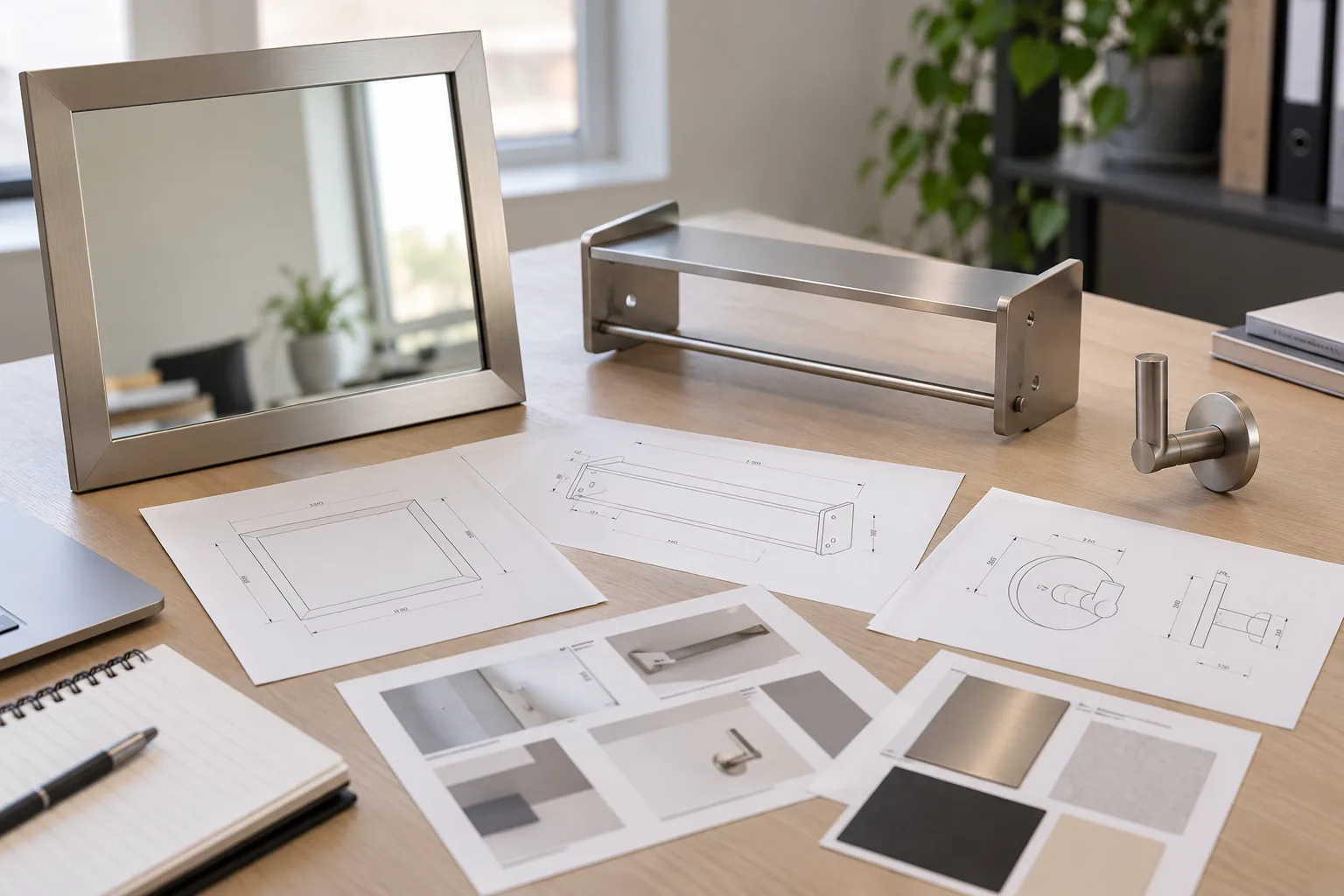
ADA compliant bathroom accessories is a phrase buyers may encounter in product listings, catalogs, packaging, or project submittals. Before an importer repeats it, the claim should be tied to an exact product and revision, a relevant requirement, evidence that supports the product-level facts, and the installation or project scope where the product will be used. For an importer checking ADA compliant bathroom accessories, the label is only the starting point; the review must identify exactly what the evidence covers. A drawing or sample can establish useful dimensions and construction details; it cannot, by itself, establish that a completed room meets every applicable requirement. This guide gives importers a claim-to-evidence workflow, not a legal determination or a declaration that any product is compliant.
Why Does an Accessibility Claim Need a Defined Scope?
A product description can compress several different questions into a few words: which accessory is being sold, what feature is said to be accessible, which standard or project requirement is relevant, and how the item will be installed. If those pieces are not connected, a buyer may approve copy for one model and later apply it to another revision, finish, mounting kit, or room layout. The practical risk is not merely imprecise marketing. A product may be physically capable of meeting one measured feature while the proposed room location, clear floor space, reach, projection, or adjacent equipment still needs review.
Start by separating three scopes:
- Product scope: the exact accessory, model, SKU, revision, supplied components, finish, and drawing.
- Installation scope: mounting surface, fasteners, substrate, position, neighboring fixtures, and the condition after installation.
- Facility or project scope: the room type, the applicable federal standard, any state or local requirements, owner specifications, and the review authority.
A supplier can usually document product identity, dimensions shown on a controlled drawing, material and finish descriptions, included mounting parts, and sample differences. A product supplier may not know the final wall construction, room layout, selected accessible fixture, applicable local amendments, or whether several components work together in the finished space. The buyer’s claim file should identify which party owns each open question instead of treating a product data sheet as a completed-room approval. For model-specific toilet-paper-holder datums, see Koitor’s commercial toilet-paper-holder importer guide; it is a separate product-level resource and does not replace project review.
This distinction matters for non-grab-bar items such as mirrors, shelves, hooks, and selected dispensers. A product label does not tell the buyer which item in a room must comply, what other elements may overlap a clearance, or whether a different requirement applies in a bathing room, toilet compartment, dwelling unit, or other project context. The same accessory can be sold into different settings, so a broad phrase on a package should not silently become a universal promise.
What Do the Federal ADA Standards Actually Cover?
The U.S. Department of Justice describes the 2010 ADA Standards for Accessible Design as minimum scoping and technical requirements for covered newly designed and constructed or altered facilities. That framing is important for importers: the Standards address the accessibility of covered facilities and elements, not simply whether a product belongs to a category marketed with an accessibility phrase.
Chapter 6 and its scoping provisions identify several bathroom elements that may matter to accessory buyers. For example, the Standards address mirrors under §§213.3.5 and 603.3; coat hooks and shelves under §§213.3.7 and 603.4 in relevant room contexts; and dispensers or other operable parts through provisions including §§205 and 309. The exact scoping depends on where the element is provided. The U.S. Access Board toilet-room guide explains that mirrors, dispensers, shelves, and hooks sit within a larger room arrangement that also includes fixtures, turning space, and clearances.
Some examples show why a model name is not enough. Section 603.3 addresses the bottom edge of a mirror’s reflecting surface, with different criteria depending on whether the mirror is above a lavatory or countertop. Section 603.4 addresses coat-hook reach ranges and shelf location. The standards also use scoping rules to determine when at least one element of a provided type must comply. These are examples of requirements buyers can identify and pass to the responsible project reviewer; they are not universal mounting instructions for every mirror, shelf, or hook. They do not establish that an entire room complies.
Bathing facilities have their own applicability and element requirements. The Access Board’s bathing-room guide explains those contexts. A buyer should therefore record whether the intended application is a toilet room, toilet compartment, bathing room, or another setting rather than lifting a number from a guide and applying it to every product listing. If a project mixes room types or has unusual conditions, route the question to the project’s architect, accessibility consultant, code professional, or other responsible reviewer.
The 2010 Standards are not the only project input. DOJ explains that facilities may also have to meet state or local accessibility requirements and that local codes can vary. Its Title III Technical Assistance Manual describes that relationship. An importer should record the target jurisdiction and project specification instead of assuming that one federal reference resolves every local question. This article does not interpret those laws or decide which requirement governs a specific building.
Which Product Evidence Can a Supplier Actually Provide?
A buyer should request evidence that can be traced to the exact item being offered. At minimum, identify the model or SKU, drawing number, revision, date, finish, mounting kit, and any option that changes the product’s dimensions or operation. If the catalog, sample label, and drawing use different identifiers, ask the supplier to reconcile them before the claim is approved. Evidence without a stable product identity can be accurate for the wrong item and still be unusable for the buyer.
Useful supplier-side evidence can include:
- A controlled product drawing with the feature and datum identified.
- A bill of materials or option list that shows which components are included in the quoted model.
- A sample review record that says which sample and revision were checked.
- Product measurements tied to the drawing revision and measurement method.
- Finish, material, and packaging descriptions for the exact option.
- Installation instructions that identify fasteners or mounting assumptions, where the supplier provides them.
- A written list of product changes since the previously approved sample.
Each item has limits. A drawing documents the design intent it depicts; it does not demonstrate where a contractor will place the item. A sample check documents the sample reviewed; it does not automatically prove every production unit is identical. A supplier’s product measurement does not establish room clearances or jurisdictional approval. A finish description does not make an accessibility claim true. A carton statement, website bullet, or QR-linked product page is not a substitute for matching the claim to the product evidence.
For metal bathroom hardware, engineering revisions can change the finished position of a hook, shelf edge, mounting plate, or reflecting surface datum. A small shift in a hole, bracket, formed edge, or assembly sequence can affect how the product mounts or how a buyer measures it. Koitor Hardware can discuss drawing, sample, finish, and product-data alignment as a custom metal hardware manufacturer, but no accessibility-specific test, certification, or compliance approval capability is claimed here. Buyers should ask suppliers to document what they can verify and leave the installation and legal determination with the project reviewer.
How Should Importers Map Evidence to Each Accessory?
Use a matrix that names the product and separates the reference to check from what the supplier can support. The phrase ADA compliant bathroom accessories should not be treated as a family-wide status; map each proposed claim to the specific item and project context. The examples below identify possible review points; they do not tell a buyer that a particular SKU or room is compliant.
| Product example | Reference or issue to review | Supplier evidence to request | What remains outside product-only proof |
|---|---|---|---|
| Mirror | Sections 213.3.5 and 603.3, where applicable; reflecting-surface datum | Exact model/revision drawing, reflecting-surface edge, overall dimensions, mounting slots and hardware | Whether the selected mirror is the one required in the room and whether installed location and neighboring clearances are correct |
| Wall shelf | Sections 213.3.7 and 603.4 in the applicable room context; shelf type and position | Shelf type, revision, usable surface, mounting datum and drawing dimensions | Project scoping, selected shelf location, wall substrate, room clearances and local requirements |
| Coat hook | Sections 213.3.7 and 603.4, or the applicable compartment provision | Hook model, projection, mounting point, drawing revision and supplied fasteners | Whether the hook is required or selected in that room and whether the installed reach and adjacent space meet the applicable design |
| Soap, towel or other dispenser | Applicable scoping and operable-part provisions, including §§205 and 309 where relevant | Exact dispenser interface, operating method, mounting template, product dimensions and included parts | Location relative to the accessible fixture, approach space, use conditions and project approval |
| Towel bar or other accessory with no obvious product-specific line item | Room-level rules that may apply to projection, operable parts, route, or adjacent clearances | Product drawing, projection, edge details, mounting hardware and options | Whether the room or project imposes a requirement; do not invent a universal “ADA towel-bar height” from a product category |
The matrix deliberately avoids a column called “ADA compliant: yes/no.” That binary label can hide the distinction between a product feature and an installed configuration. Instead, let the buyer record a decision for each claim: supported by identified product evidence, requires project review, unsupported, or not applicable. If an exact Standard section is not relevant to the product, write “reference to confirm with project reviewer” rather than attaching a nearby section because its subject sounds similar.
A useful record also preserves the source version. Save the applicable official page or standard section, date checked, project jurisdiction, reviewer, and the exact question sent for review. If an owner specification or local code differs from the federal reference, retain both instructions and ask the responsible professional to resolve the conflict. The supplier should not choose which code applies merely because it can manufacture to a drawing.
What Should the Importer Checklist Include Before Approval?
A short review sequence makes the claim reproducible when the item is reordered or copied into a new listing:
- Freeze product identity. Record SKU, model, drawing number, drawing revision, sample ID, finish, mounting kit, and optional parts. If packaging will show the claim, record the packaging artwork revision too.
- Quote the claim exactly. Copy the proposed sentence from the listing, catalog, instruction sheet, submittal, or carton. Do not paraphrase it into a stronger statement during review.
- Identify the setting. Name the intended room or fixture context and jurisdiction. “U.S. bathroom” is often too broad for a project decision; identify the facility or project that is actually under review.
- Find the official reference. Record the provision the project team believes applies and why. Link to the official source, not only a supplier blog, reseller page, or search snippet. If the buyer cannot identify a relevant provision, mark it unresolved for the project reviewer.
- Connect each statement to product evidence. For every product attribute in the claim, identify the drawing view, dimension, operating feature, sample record, or other controlled evidence that supports it.
- List installation assumptions. Record substrate, fastener, mounting position, adjacent fixtures, and installer instructions that the supplier’s documentation assumes. Mark unknown wall or room conditions as project inputs.
- Assign the review owner. Name the importer product owner, design professional, accessibility reviewer, code official, or customer representative responsible for each remaining decision. Do not imply that a supplier has approved questions it never received.
- Approve wording and revision together. Store the accepted claim, source and drawing revision in one file or system. Reopen the review if the product, mount, project, jurisdiction, or claim wording changes.
This process is useful even when the final decision is to avoid an accessibility claim. A buyer may decide that a narrower factual statement is supportable, that the evidence belongs only in a project submittal, or that a professional needs to review the complete installation first. The right outcome is the one the evidence and project reviewer support—not the sentence that sounds most persuasive.
For a repeat order, compare the new quote and sample against the revision previously reviewed. Ask whether the supplier changed material thickness, bracket geometry, hole location, finish, supplied fasteners, or packaging copy. A product can keep the same retail name while its drawing or hardware changes. The review record should say whether the revised model needs a new measurement, a revised image, new instructions, or renewed project approval.
How Can Claim Wording Stay Within the Evidence?
The safest wording describes what the document actually shows and identifies what is still under review. An importer should not use “ADA compliant bathroom accessories” to describe every SKU simply because one model’s documents were reviewed. For example, a supplier data sheet may say that a named shelf model has a stated drawing revision and measured mounting points. That statement is product-specific and verifiable if the drawing and measurement records are controlled. It does not transform into “ADA compliant bathroom shelf” unless the relevant product and project review supports that broader claim.
Prefer a structured claim record with four fields:
- Proposed wording: the exact public or project-facing sentence.
- Supported fact: the feature or dimension the evidence actually documents.
- Evidence reference: the controlled drawing, sample ID, measurement record, or official requirement.
- Qualification or open item: the room, installation, jurisdiction, or professional review that remains.
Avoid using “ADA certified” as a shorthand for the 2010 Standards. If a supplier, test lab, or buyer cites a separate certification or evaluation program, request the program name, issuer, scope, covered model and revision, report date, and current status. Do not assume that a certificate for one part, model, finish, or installation configuration transfers to another. Do not state that a product has no product-specific program either; simply verify any cited credential before repeating it.
Do not write broad phrases such as “all our bathroom accessories are ADA compliant” based on a single model drawing or one project review. Do not infer accessibility from the category name, product appearance, an icon, or a competitor’s copy. If the project professional approves a particular wording for a defined product and application, retain that approval and reproduce its scope accurately. If no approver has reviewed the claim, use factual product data without a compliance conclusion and state internally that the claim is pending.
The buyer should also align claims across channels. A website title, marketplace bullet, instruction sheet, carton, quotation, and submittal should not make different promises about the same SKU. Maintain one approved wording record linked to the current model revision; then adapt only the surrounding copy, not the technical meaning. If marketing wants a shorter phrase that removes an important limitation, return it for review rather than quietly expanding the claim.
Where Do Importers Commonly Overstate the Evidence?
A frequent process error is treating “the drawing has a dimension” as equivalent to “the installed room satisfies the standard.” A product drawing cannot show the final floor level, wall construction, obstruction, other fixture location, required clear floor area, or the actual site decision unless those details are explicitly part of the reviewed installation package. Record the product measurement and the installation question as separate items.
Another error is applying one example dimension to an entire product family. The Standards distinguish between elements and room contexts; mirror reflecting-surface measurements differ by placement, and shelf/hook criteria are not the same as a blanket instruction for every accessory. If several sizes or mounting options exist, match the evidence to the exact selected version. A product family name does not establish that all variants share one mounting datum.
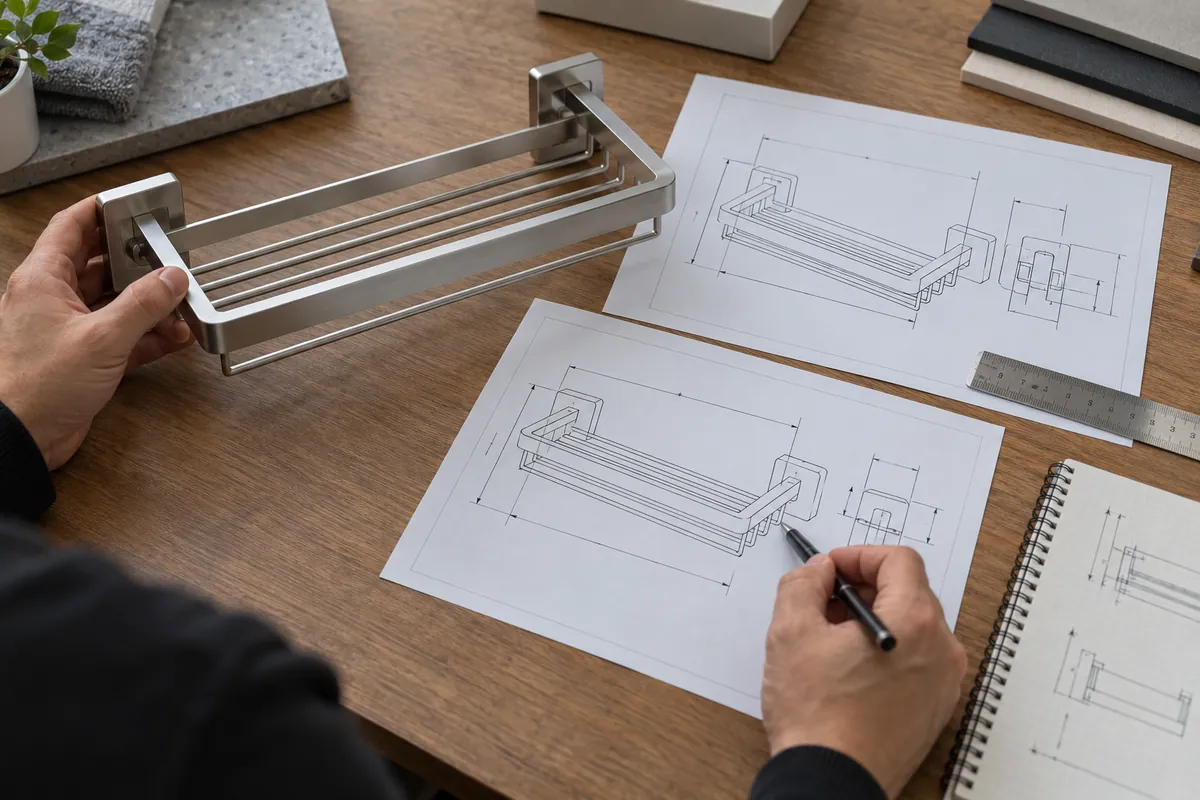
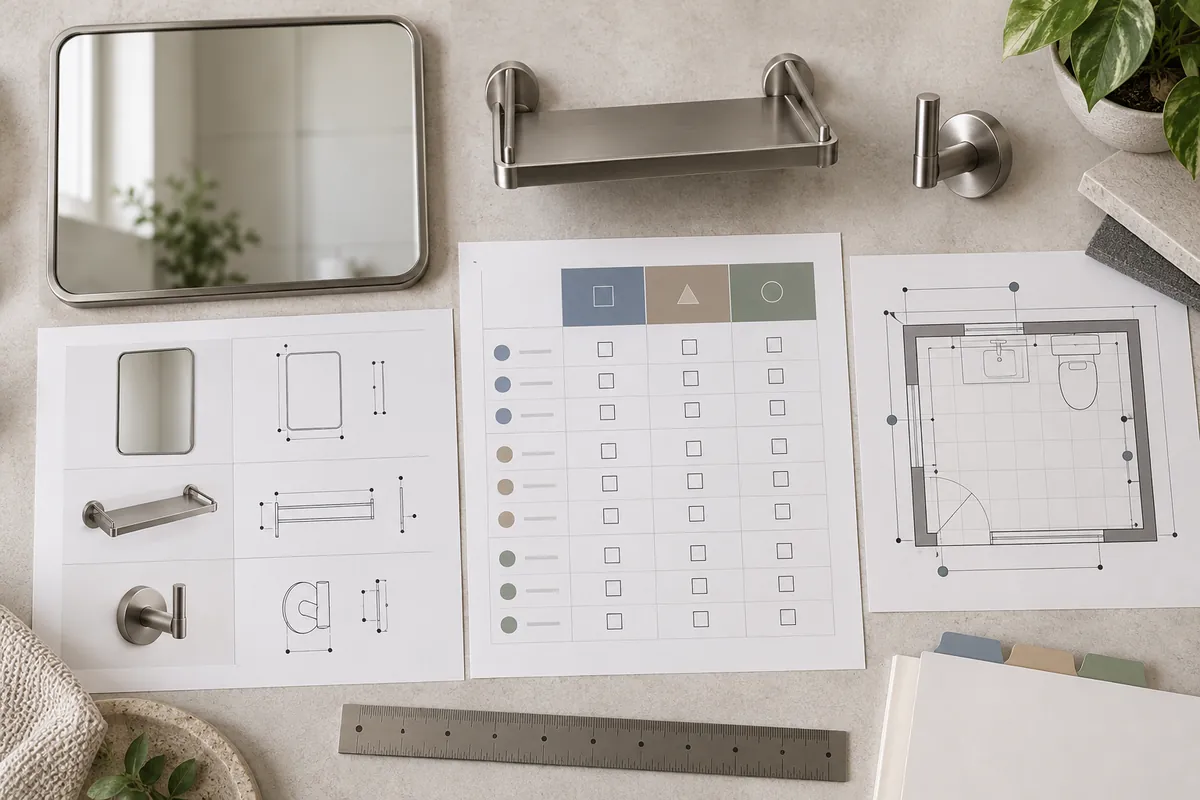
Teams also overstate evidence when they use an image of a wheelchair, an accessibility symbol, or a green check as if it were a third-party evaluation. A symbol communicates an impression; it does not identify the model, standard, revision, tested condition, or approving authority. Keep illustrative procurement images separate from proof records. The images used with this guide are generic document-review scenes and are not product evidence.
Finally, do not treat a generic supplier statement as a legal opinion. A manufacturer may explain its product dimensions and manufacturing changes, but project applicability and code interpretation belong with the responsible professionals and authorities. DOJ notes that state and local accessibility rules may also apply and can vary. Keep legal language narrow, retain the official source, and escalate uncertain claims before publication.
Häufig gestellte Fragen
Does the ADA certify bathroom accessories as products?
The 2010 ADA Standards are official scoping and technical requirements for covered facilities and elements. Do not use “ADA certified” as an automatic synonym for a product’s dimensions or for compliance with an installed room. If someone cites a separate credential, verify its issuer, program, scope and exact product revision before repeating it.
Can an importer say a shelf is ADA compliant because its drawing shows a height?
A drawing can document a product dimension or mounting point. It does not establish whether the shelf is the relevant type, whether the room requires it, how it will be installed, or whether the entire project meets applicable requirements. Tie the dimension to the official reference and project review before approving a broader claim.
Is there one ADA mounting height for every towel bar?
Do not assume that a single mounting height applies to every towel bar or bathroom project. The Standards contain provisions for specific elements and locations, and a project may include additional state or local requirements. Use the responsible project’s reference and reviewer rather than copying an isolated number into a general listing.
What should a supplier provide to support an importer review?
Ask for the exact SKU and revision, a controlled drawing, sample identification, relevant measurements, finish and mounting details, and a change record. Then map each product fact to the proposed wording and leave room placement, jurisdiction and installation approval with the project team.
Should a supplier sign the buyer’s accessibility declaration?
A supplier should only confirm facts within its knowledge and records. It may identify the drawing, model, sample, materials, dimensions, supplied hardware, or documented tests it can substantiate. It should not sign a project-level legal conclusion it has not evaluated. Buyers should split the declaration into product facts and installation or project determinations.
When should an importer repeat the review?
Repeat the review when the product revision, mounting hardware, supplied option, drawing datum, target project, jurisdiction, installation condition or claim wording changes. Reorders should reference the last approved revision and identify any differences before the same claim is reused.
Arbeiten Sie mit Koitor Hardware zusammen
For product-level discussion, Koitor Hardware can review a drawing, sample, revision, finish and supplied product data as part of a custom bathroom hardware project. That discussion does not provide an accessibility certification, a legal interpretation, or approval of an installed room. Send the intended product, market, project question and proposed claim so the supplier-side facts can be separated from project review.
Review Bathroom Hardware Product Data
Share the exact SKU, drawing revision, finish, mounting details, target project and proposed wording. Koitor can discuss supplier-side product information; project compliance decisions remain with the responsible reviewer.
OEM / EIGENE MARKE
Verwandeln Sie diesen Beschaffungsleitfaden in ein Produktdossier
Teilen Sie uns Ihr Zielprodukt, die Größe, die Oberflächenausführung, die Bestellmenge und Ihre Verpackungsanforderungen mit. Ihr Team erhält vor der Angebotserstellung eine praxisorientierte Prüfung der Herstellbarkeit.


 English
 Español
 Português
 Français
 Deutsch
 العربية