
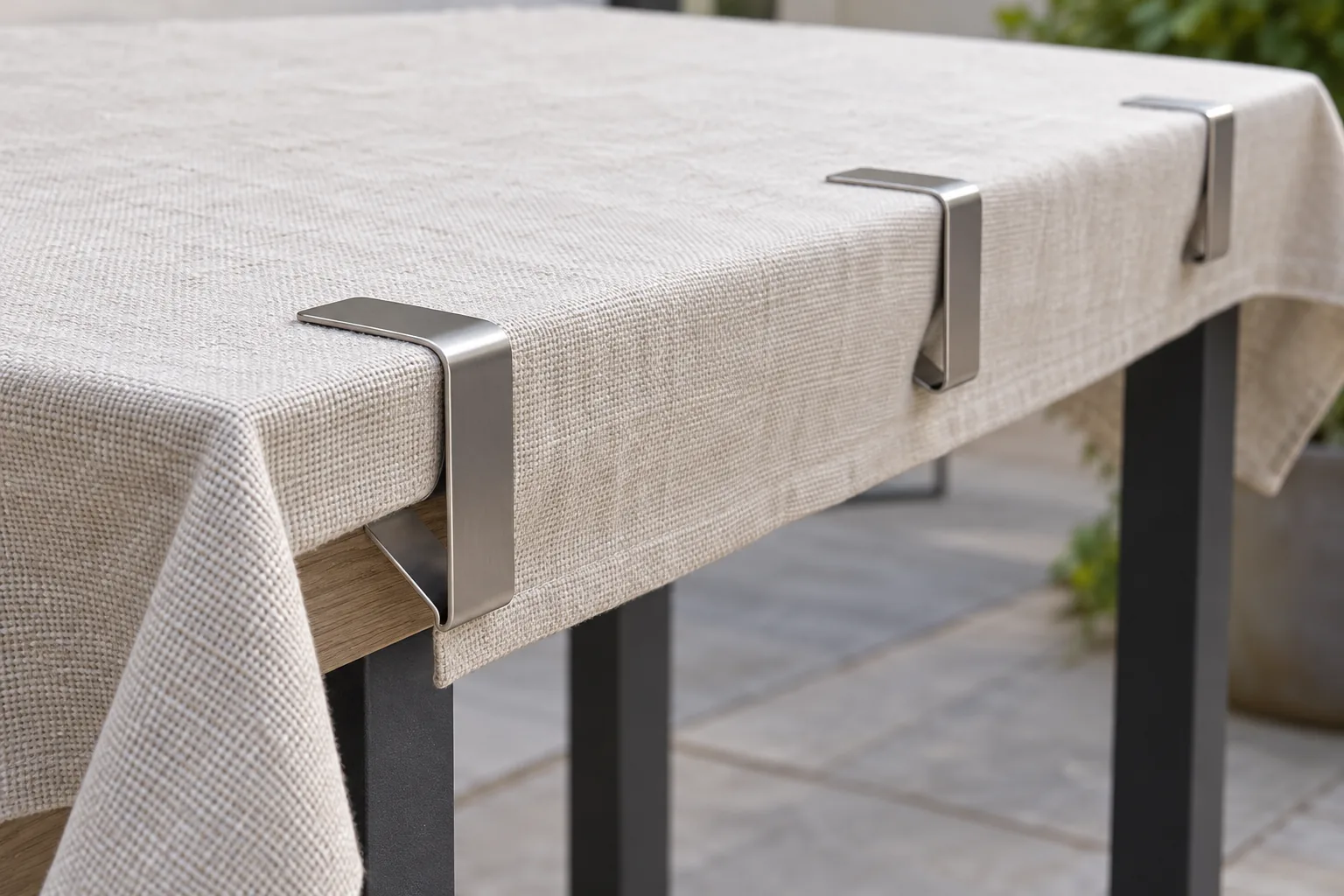
Metal tablecloth clip table thickness should be specified as a complete edge-fit condition: tabletop top, edge profile, underside return and the cloth layers between the clip and table. A single nominal thickness can miss a rounded lip, apron, overhang or seam that changes how the clip opens and seats. Importers should test the exact table and fabric references with the intended clip architecture, then record the approved range for that specific model.
What does the buyer need the clip to do?
First describe the product’s job. A clip may keep a table covering aligned, reduce movement during service, or hold a drape on a specific table edge. These are different use expectations and should not be collapsed into a broad promise that the cloth “will not move.” State where the clip is installed, how many are used, whether removal is frequent, and whether the tablecloth must remain visually smooth at the edge.
The buyer should define the item as either a clip sold for a named table profile or a general accessory with an explicitly tested range of references. If the product listing shows one thin table edge, that picture does not establish fit on a thick banquet top. If the range is meant to span more than one table construction, document each end condition and an intermediate reference rather than extrapolating from one sample.
The fabric matters too. A single lightweight cloth creates a different interface from a tablecloth layered over a protector or another textile. A hem, seam, folded corner or coated backing can increase local thickness or change friction. Record what fabric layers the product is expected to touch and whether the clip should grip the cloth, the table, or both. This specification lets the supplier inspect the same combination that the buyer intends to sell.
How should table thickness and edge geometry be measured?
Measure the table at the actual clip positions. Record top thickness from the upper surface to the lower surface, but also identify edge radius or bevel, any underside lip, apron, trim or frame, and how far the table covering hangs past the edge. Two tables can share a nominal slab thickness yet differ substantially in the space available for a jaw or spring to pass underneath.
Use a section sketch or photo with dimensions. Mark the clip’s installation direction and the tabletop datum. If the edge is rounded, show the radius or supply a physical reference. If the cloth wraps around the underside, include all layers in the measurement and note whether the clip is installed over the textile or directly against the tabletop. A surface-only measurement does not define the complete stack.
A buyer can create three reference setups: the thinnest accepted edge with the intended fabric, the thickest accepted edge with the intended fabric, and a representative middle case. The acceptance decision should define the conditions, not claim a universal capacity. If an alternate table has a substantial apron or decorative edge, assess it separately.
Official examples demonstrate why a category label is insufficient. Westmark’s tablecloth clip product page identifies a specific spiral clip construction, stainless material and product-specific tabletop-thickness range. GEFU’s FERMO clamps describe a different metal construction and intended use. These are two manufacturers’ model descriptions, not a standard shared by every clip. Buyers should check current product details and test their own table-and-fabric references.
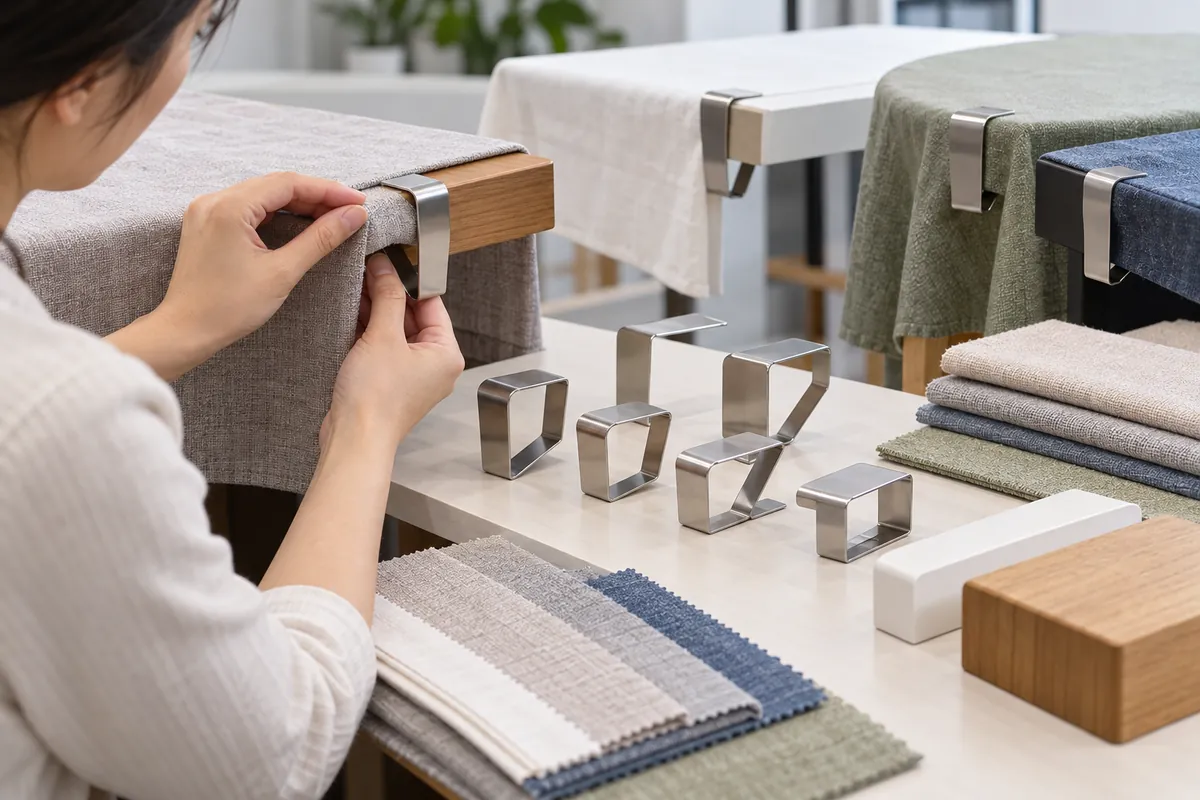
The process image is a prompt for an interface review. On the physical sample, check whether the jaw can be placed without stretching or tearing the cloth, whether the edge bottoms out in an unintended location, and whether the underside clears the table apron. Then remove and reinstall the clip using the expected method. Record the edge and fabric configuration for each tested condition.
Which clip interfaces should the RFQ define?
A clip usually combines an opening, a contact surface and a retention mechanism. The buyer should identify the type of jaw or loop, the surfaces that touch the table and cloth, the movement needed for installation, and any part that flexes during use. Do not assume that two clips with similar silhouettes share the same useful opening or spring behavior.
For a spiral or wire-loop design, inspect how the table edge enters the loop and which wire segment bears on the cloth. For a hinged clamp, identify the opening, hinge path and contact pads if present. For a spring plate, record the thickness range and confirm that the plate moves through its intended travel without binding. These descriptions should match the supplied product; an article cannot prescribe a mechanism that the supplier has not confirmed.
The drawing should identify the metal grade or approved material description, wire or sheet dimensions where relevant, formed radii, joint locations and finish. A polished edge or coating should be checked where it contacts the fabric, but appearance alone does not demonstrate snag resistance or corrosion performance. Define the surface finish requirement and the inspection criteria based on the product application and buyer evidence. Avoid unsupported claims such as “fabric safe” unless the specific contact material and test evidence support that statement.
For an extender or alternative clip position, specify whether it is a separate component and how it is supplied. A table extension can change the local edge geometry; do not assume a clip designed for the original table fits the extended section. The buyer should include the extension joint or gap if it falls near a clip location.
What should a fit and fabric-contact trial include?
A fit trial should follow the actual installation sequence. Place the cloth as it will be used, position the clip at the approved edge, and inspect the top and underside. Confirm that the clip’s intended surfaces make contact and the product does not force the cloth into a wrinkle or pull it away from a seam. Test all prescribed positions because corner, straight-edge and extension sections may differ.
Then check the operating cycle: install, adjust, remove, store and reinstall. Note whether the user needs a tool, exceptional force or access from a particular side. The buyer should describe any ergonomic expectation in observable terms rather than substitute an undefined word such as “easy.” If use by a particular service team matters, have that team review the sample and document its comments.
For fabric contact, inspect the finished edges and any roughness that could catch threads. Test with the actual material and hem, including the approved care and cleaning method. A brief sample trial cannot establish long-term fabric wear across all cloth types. If abrasion, staining, laundering or repeated-use evidence is commercially important, define a product-specific test, cycle, fabric and acceptance criterion with the responsible supplier.
A useful sample record can use the following matrix:
| Rezensionsobjekt | Actual reference | Evidence and decision |
|---|---|---|
| Table thickness | Minimum, maximum and typical edges | Measurement plus clip installation result |
| Edge form | Radius, bevel, lip and underside shape | Section sketch or identified sample |
| Cloth stack | Fabric, hem and additional layers | Material sample and contact observation |
| Jaw engagement | Entry path and bearing surfaces | Photos from top and underside |
| Removal | Hand access and removal direction | Recorded sequence, snag or distortion notes |
| Finish | Contact edge and visible surface | Agreed visual standard and deviation list |
| Model boundary | Approved clip and extension combination | Part number, revision and list of excluded tables |
What manufacturing and finish details affect repeatability?
Formed wire or sheet features can vary with material, thickness, spring design, tooling and process sequence. A supplier should identify the controlled dimensions that determine the opening and contact condition. The buyer should distinguish those interface dimensions from cosmetic dimensions so inspection effort focuses on fit without neglecting the visible finish.
If the design uses a coating, plating or polished surface, state which areas are covered and which are intended to remain uncoated. Coating build can affect a narrow opening or moving interface, while polishing can change edge shape or remove material. These are design-specific considerations; they do not support a generic conclusion that a thicker finish or smoother appearance automatically performs better.
Packaging should prevent clips from rubbing together or marking neighboring products. Define whether sets are nested, bagged or separated by an insert, and make sure that nesting does not permanently distort a spring or wire element. Inspect both the first item and a sample drawn from the packed set. If the clips are bundled with tables or linens, specify how the buyer will identify the corresponding model and compatible edge range.
Koitor’s published company home page provides context about its current bathroom and home-storage hardware business, not a claim that it already makes tablecloth clips. For a new metal component, buyers can share the drawing and intended material through Kontaktieren Sie Koitor and request a feasibility response before treating it as a quoted catalog item. A feasibility discussion should be separated from a confirmed specification, price or performance commitment.
Use metal tablecloth clip table thickness as a named fit-record field, then pair the value with the edge profile, underside and fabric stack.
What sourcing mistakes should importers avoid?
The first mistake is using only the tabletop’s nominal thickness. The underside apron, rounded edge and fabric hem may be the features that control the fit. Measure the complete installation profile and supply a sample or drawing.
The second is testing an empty clip on a bare table. The approved product may be used over multiple cloth layers; the real stack should be present during approval. If the clip touches the fabric, include an appropriate material reference and inspect the edge finish.
The third is assuming that one successful installation proves the full range. Check both the minimum and maximum accepted setups and any relevant corner or extension condition. If a table is excluded, state that boundary in the listing and buyer documentation.
The fourth is interpreting a manufacturer’s thickness statement as a guarantee for another product. The range belongs to the identified model and its defined test condition. Verify whether the stated dimensions include fabric or refer only to the tabletop, and repeat the review when the clip or table model changes.
The fifth is treating grip force as the only acceptance measure. Excessive pressure may damage a cloth or make installation awkward, while low pressure may fail the buyer’s intended task. The buyer needs the desired use outcome, contact surfaces, removal behavior and evidence—not a number selected without a method.
The accepted metal tablecloth clip table thickness range belongs to the tested model and reference setup; do not extend it to another clip.
What should the buyer approve before ordering?
Before quotation, submit a table section, edge profile, fabric sample, intended use, clip count, material and finish preference, expected installation locations and the boundaries of the compatible range. State whether the product is sold separately or bundled and how it should be packed.
Before sample approval, test the specified edge-and-cloth combinations, inspect contact and finish, install and remove each clip as intended, review adjacent table details and document exclusions. Freeze the drawing and supplier sample with a revision identifier. Before shipment, compare the accepted sample with the production lot and confirm that the packing arrangement preserves shape and finish.
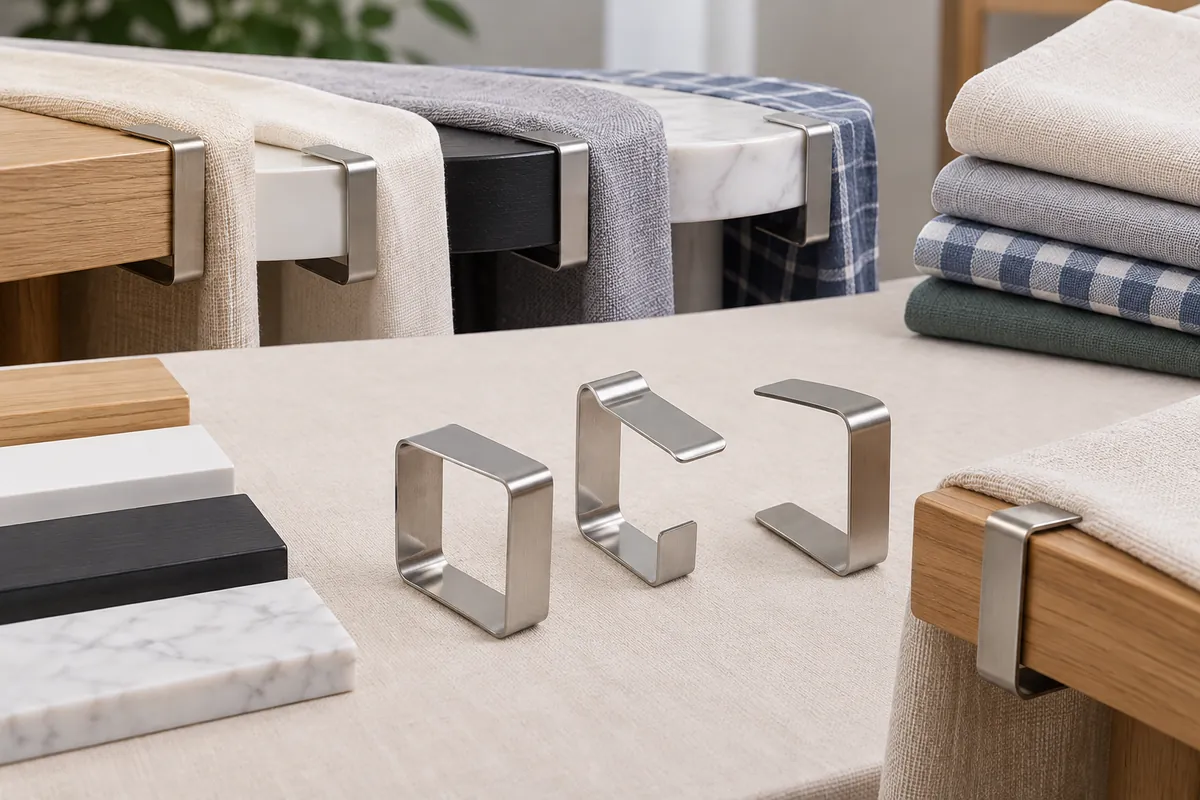
A receiving plan should also preserve the approved reference rather than ask warehouse staff to reconstruct it from memory. Keep one labeled tabletop section or a dimensioned edge drawing with the sample record, and attach the fabric model and fold description. If physical references cannot travel with every order, record who owns them and where the current revision is stored. When a shipment uses a different clip finish or packaging configuration, receiving staff should compare that variation against the approved sample and raise a deviation instead of silently treating it as equivalent. This handoff is particularly useful when procurement, quality and the retailer review the item at different times.
Does one tabletop thickness number define clip fit?
No. It omits edge shape, underside access and fabric layers. A useful specification records the complete edge stack for the intended clip position.
Can a product page’s stated range be applied to another clip?
No. The range belongs to the named model and its stated conditions. A different jaw, material or cloth arrangement needs its own fit review.
Should fabric be included in a metal clip sample test?
Yes, when the clip contacts or passes over fabric in use. Identify the fabric and hem, and inspect for contact problems under the actual installation sequence.
Does a successful clip test prove it will not move during every service?
No. The test proves only the agreed setup and criteria. Define the intended application and any additional evidence separately.
Reference examples: Westmark tablecloth clips und GEFU FERMO tablecloth clamps illustrate model-specific designs and stated use boundaries.
Discuss a metal component feasibility review
Share the clip drawing, table-edge section and fabric reference. Koitor will confirm whether the proposed metalwork fits its documented manufacturing scope before any capability is assumed.
OEM / EIGENE MARKE
Verwandeln Sie diesen Beschaffungsleitfaden in ein Produktdossier
Teilen Sie uns Ihr Zielprodukt, die Größe, die Oberflächenausführung, die Bestellmenge und Ihre Verpackungsanforderungen mit. Ihr Team erhält vor der Angebotserstellung eine praxisorientierte Prüfung der Herstellbarkeit.



 English
 Español
 Português
 Français
 Deutsch
 العربية