
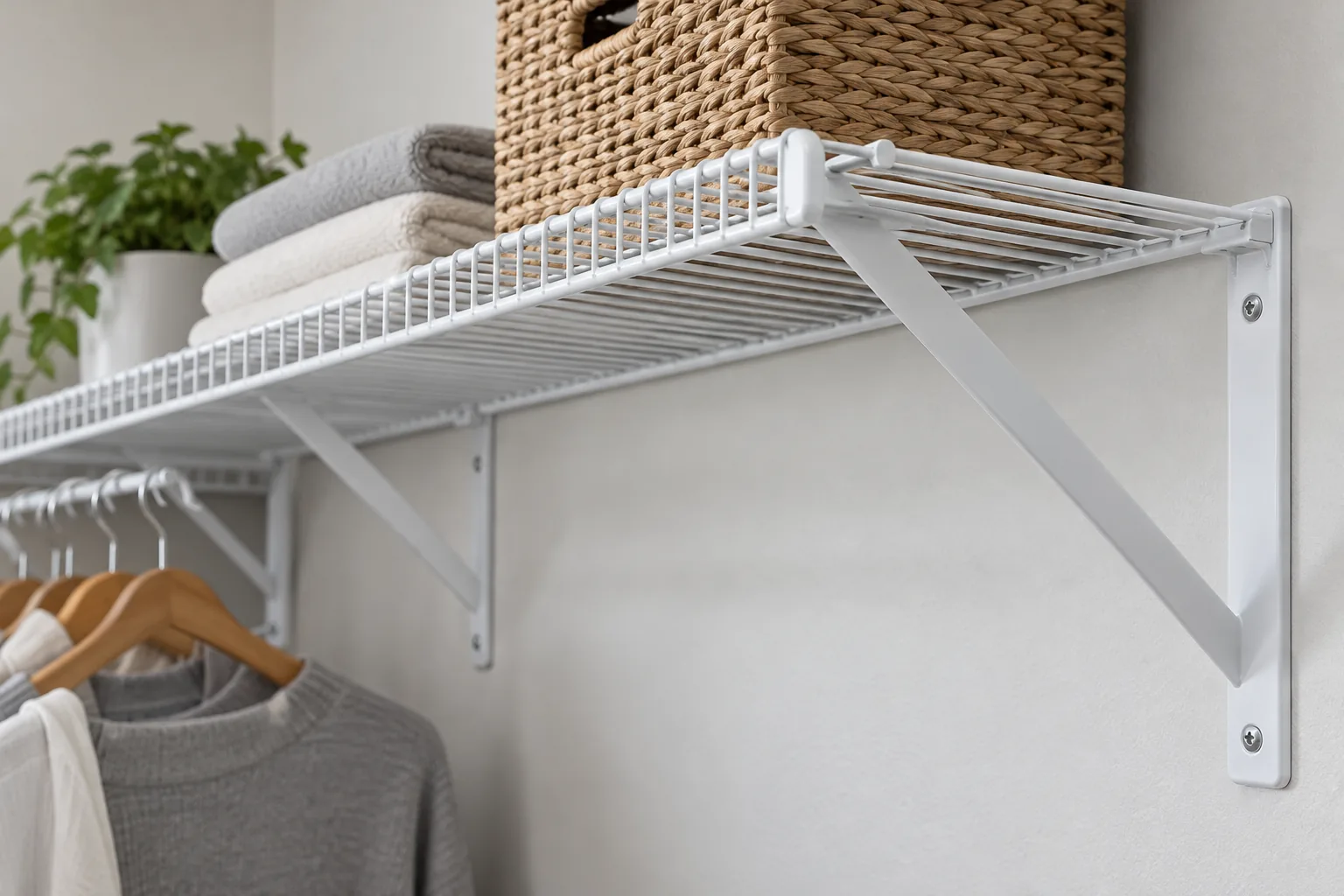
For closet wire shelf bracket depth matching, compare the support bracket with the exact shelf profile and the wall or cabinet interface shown on the supplier’s drawing. A bracket that looks similar may support a different shelf depth, wire arrangement, or mounting configuration. Buyers should share the shelf identity and intended installation, then approve the combination using a representative sample rather than selecting by a generic depth label.
What does bracket depth matching actually decide?
A wire shelf system is an assembly, not a shelf panel alone. The wire profile, front and rear edges, support bracket, wall attachment, and installation layout work together. Bracket geometry has to reach the intended shelf area and engage the shelf in the way the system supplier specifies. If a buyer compares depth labels from different catalogues without comparing the corresponding profiles, those labels may not describe interchangeable parts.
The supplier reference notes that bracket choice depends on the shelf system. That supports the need to match the interface; it does not establish a universal size chart or a single bracket design for all wire shelves. Each product family may define depth, attachment points, and compatible supports differently. The buyer should request a drawing that identifies the shelf model and the matching bracket, along with any installation conditions needed to preserve the intended interface.
The commercial decision is whether to quote, sample, and stock a paired shelf-and-support configuration or to treat brackets as interchangeable accessories. For closet wire shelf bracket depth matching, the safe answer is to document the shelf profile, support identity, and installation conditions together. A depth number without the part identity and reference view is incomplete.
What information should the buyer provide?
Start by identifying the shelf product, not by asking a supplier for a bracket “that fits.” Provide the product-family name, model or SKU, revision if controlled, and a profile drawing or physical sample. Mark the shelf’s front and rear and show how it will be installed. If the application includes a wall, cabinet side, post, or other support surface, identify that mating structure and the intended support location.
Ask the supplier to define what its depth measurement refers to. It could describe the shelf projection, the bracket reach, the installation spacing, or another product-specific dimension. The RFQ should request a dimensioned view showing the measurement datums instead of assuming that a number has the same meaning across suppliers. Where the supplier has an official compatibility list, request the current revision and confirm that it covers the exact shelf model being quoted.
| Buyer input | What to share or confirm | Warum das wichtig ist |
|---|---|---|
| Shelf identity | Model, revision, profile drawing, or labeled sample | Keeps the bracket paired with the intended shelf system |
| Orientation | Front edge, rear edge, and installed direction | Prevents a reversed or misunderstood profile reference |
| Depth definition | Supplier’s named datums and dimensioned view | Makes quoted values comparable and auditable |
| Support interface | Wall, cabinet, post, rail, or other mating structure | Shows where the bracket is intended to attach |
| Installation layout | Support positions and nearby obstructions from the system instructions | Identifies conditions that change the bracket’s fit |
| Model records | Bracket SKU, drawing revision, compatibility note, and instructions | Connects inquiry, sample, order, and receiving checks |
Do not substitute a shelf’s nominal depth for the supplier’s complete fit inputs. If the buyer has not selected the shelf model, ask each supplier to propose a complete system and identify the assumptions. That lets procurement compare clear configurations rather than receive unanchored quotations for a standalone bracket.
How should different bracket proposals be compared?
Compare only options that are documented for the shelf or proposed as a complete alternative. A system-matched bracket is one the supplier identifies for the selected shelf family. A different bracket may be proposed if its interface is separately shown and reviewed. A bracket with a similar projection but a different engagement feature should not be treated as equivalent without a drawing and sample review.
| Proposal | Buyer review | Evidence needed before approval |
|---|---|---|
| Supplier-listed matching bracket | Confirm the listing names the exact shelf model and revision | Current compatibility record and installation instructions |
| Alternate bracket from same supplier | Identify what interface or installation detail changes | Marked comparison drawing and representative assembled sample |
| Bracket from another supplier | Verify the mating features and responsibilities for the combined assembly | Drawings from both parties plus fit review on the intended support |
| Custom or modified support | Define who owns the design and who approves the modification | Controlled drawing, deviation record, and approved sample |
The goal is not to declare one proposal universally stronger or better. It is to establish that the selected configuration matches the buyer’s product and installation requirements. If the bracket is part of a system tested or warranted by a specialist supplier, do not extend that supplier’s claims to an unapproved substitute or altered installation.
When a supplier offers multiple depths, ask how each maps to shelf profile and support position. Request all dimensions that determine engagement and clearance. If one proposal appears to fit but lacks a compatibility statement, mark that as an open item rather than presuming it is correct from its appearance. A visible contact point is not by itself evidence that the full shelf interface is seated as intended.
How should the shelf and bracket interface be inspected?
Review the shelf and bracket together in the orientation specified by the supplier. Confirm that the sample parts match the model numbers in the quotation. Lay out the shelf profile, bracket, attachment hardware, and installation instructions so the buyer can see which piece engages which surface. Check any required spacing or orientation on the actual assembly; do not infer it from a front-view product photo.
Use the supplier’s defined inspection points. Compare the profile, projection, engagement area, and support location with the controlled drawing. If no drawing exists, request one before approving a repeat-order reference. Avoid creating a new tolerance or fit criterion based on a single sample unless the buyer and supplier agree that it is the correct acceptance rule and record it.
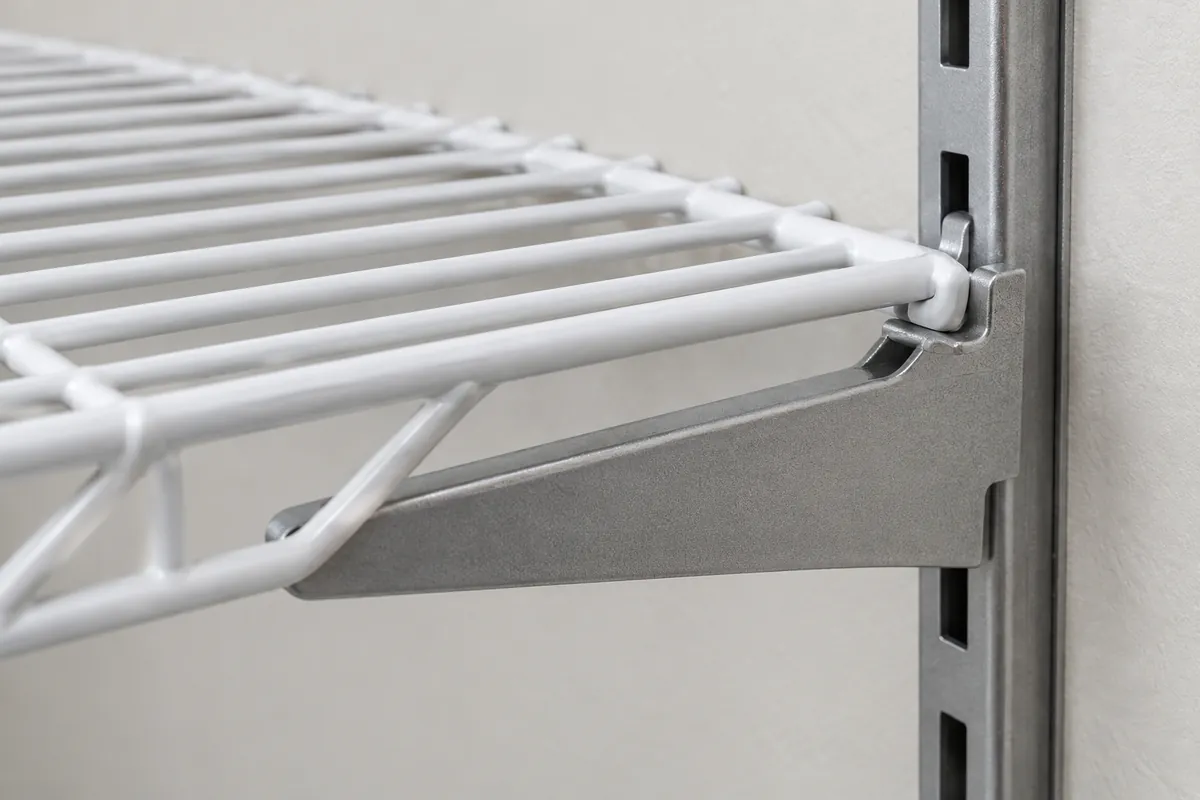
Also check the installation context. A bracket can match the shelf profile but still be unsuitable for a different support surface, layout, or nearby obstruction. Use the installation guide for the exact shelf system and make the test representative of the intended configuration. The article does not assign a load value or guarantee structural performance; such claims require the responsible system supplier’s documented method and conditions.
What should a representative sample prove?
The sample review should answer the open compatibility question, not merely show that two parts can be placed next to one another. Verify supplier, part number, revision, shelf profile, support type, fastener or attachment components, and instructions. If the package lacks traceable identity, stop and reconcile the mismatch before testing the combination.
Assemble the shelf and bracket according to the supplier’s stated sequence. Observe whether the bracket engages the shelf in the intended orientation and whether the assembly reaches the specified support surface without an unapproved modification. Record the position, contact points, and any interference. If the application uses a sample wall or cabinet, record its construction and relevant fixture points so another reviewer can understand what was actually tested.
Photograph the installed profile from a side view and a view that shows the support attachment. Note any adjustment required and whether it was part of the installation instructions. A sample that needs an improvised bend, spacer, or fastener change is a deviation requiring review, not an automatic approval. Ask the responsible supplier whether the deviation changes fit, product claims, or the accepted installation conditions.
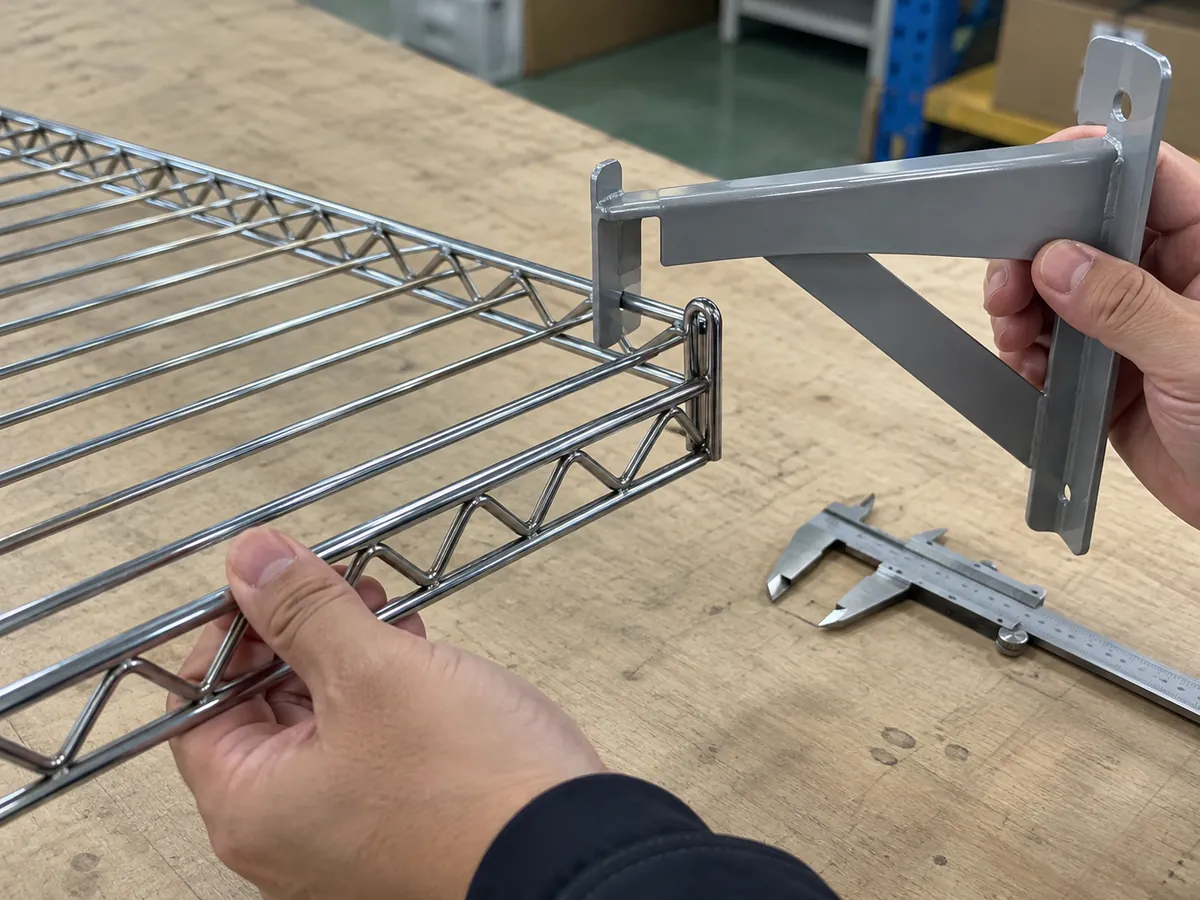
Approval should name the shelf model, bracket model, revision, installation method, and responsible approver. It should also state what the approval does not cover—for example, a different shelf width, a revised profile, another wall system, or a substitute bracket. This prevents a fit check on one pairing from being misused as a blanket compatibility claim.
What records should be controlled for repeat orders?
Store the compatibility drawing and supplier list with the item master or purchasing specification. Link the shelf and bracket SKUs, revision, dimensions and definitions, support type, installation instruction version, sample photos, and approved deviations. If the component supplier updates a part or revises its documentation, determine whether the change affects the approved mating interface before carrying forward an old sample reference.
The purchase order should identify the bracket that was approved for the shelf, not just the broad shelf family. Receiving inspection can then compare labels and visible geometry with the order and reference sample. If the bracket ships separately, use packaging or line-item identification that keeps the parts associated. The exact logistics controls depend on the buyer’s system, but the objective is consistent identity across quote, order, packing, and inspection.
For a private-label range with several shelf depths, maintain a compatibility matrix that names each shelf and matching support. Mark combinations that have not been checked as unverified. Do not let a product-page list or internal sales shortcut silently imply that every bracket works with every shelf. A concise matrix can reduce selection errors, provided it is based on current supplier data and approved pairings.
Re-review if the shelf profile, support, attachment method, wall condition, installation spacing, or component revision changes. Some changes may not affect fit, but the responsible supplier should confirm that rather than relying on an old approval. Preserve the change decision and its supporting evidence so future buyers know why the pairing was retained or replaced.
What sourcing errors should buyers avoid?
Do not order a bracket using only a depth number. Do not assume that the same number from two catalogues refers to the same datum. Do not approve by appearance where engagement geometry is hidden. Do not transfer system-specific load or installation claims to a different bracket. Each mistake confuses a product label with evidence of compatibility.
Avoid treating a supplier compatibility page as current if it does not identify the product revision or model family. Ask for clarification where the code on the quote, the package label, and the drawing do not agree. If a supplier proposes a substitute, have it state the exact change and identify any unreviewed condition. A buyer may accept a substitute after evaluation, but it should be deliberate and traceable.
For adjacent metal shelving products, a manufacturer can help clarify the metal product’s drawing and the part boundary, while a specialist shelf-system supplier remains responsible for its own purchased bracket design and compatibility. Koitor’s OEM home-storage hardware und Fertigung von maßgefertigten Metallregalen pages describe relevant metal-product sourcing scope, not a claim that Koitor produces this specific closet system or bracket. For a project combining components, share the drawing or sample through Koitor’s contact page and identify which supplier owns each interface.
Häufig gestellte Fragen
Does the shelf depth alone identify the correct bracket?
No. The shelf profile, engagement geometry, support surface, installation layout, and supplier-defined measurement all matter. Use the exact model and compatibility information.
Can brackets from different brands be mixed?
Do not assume they are interchangeable. Compare drawings and confirm engagement with the responsible suppliers. A similar projection does not prove equivalent fit.
What is closet wire shelf bracket depth matching for a buyer?
It is the process of linking a shelf’s exact profile and installation interface to the supplier-identified support bracket, with evidence retained for the approved pairing.
Should buyers specify a universal bracket depth?
No universal number should be invented. Ask the supplier to define its measurement datum and identify compatible shelf models and installation conditions.
What should an approval record include?
Record supplier and model identities, revisions, shelf profile, support type, installation method, drawing, sample observations, and any accepted deviations.
Does a successful fit sample establish load capacity?
No. It demonstrates the fit conditions observed. Performance or load claims need separate evidence from the responsible product supplier under stated methods and conditions.
What if the shelf profile changes but its listed depth does not?
Treat it as a possible interface change. Ask the supplier to compare the new drawing with the approved bracket and decide whether another sample check is required.
How should distributors manage several shelf sizes?
Maintain a current compatibility matrix based on supplier records and approved pairings. Mark unverified combinations clearly and link the matrix to model revisions.
What is the minimum useful information to request a quote?
Share the shelf model or profile, intended orientation, support surface, relevant installation views, and any supplier documentation already available. Ask the supplier to list missing inputs.
How do buyers keep sample and bulk parts aligned?
Tie the approved sample to supplier, part number, revision, quotation, purchase order, package identification, and receiving checks. Reassess material changes that affect the interface.
Clarify a shelf-support interface
Share the selected wire shelf drawing or sample, support part number, and installation context to define the combination being reviewed.
Clarify the shelf-support pairing
Send the shelf profile, proposed support, and installation drawing so the product interface and supplier responsibilities are clear.
OEM / EIGENE MARKE
Verwandeln Sie diesen Beschaffungsleitfaden in ein Produktdossier
Teilen Sie uns Ihr Zielprodukt, die Größe, die Oberflächenausführung, die Bestellmenge und Ihre Verpackungsanforderungen mit. Ihr Team erhält vor der Angebotserstellung eine praxisorientierte Prüfung der Herstellbarkeit.


 English
 Español
 Português
 Français
 Deutsch
 العربية