
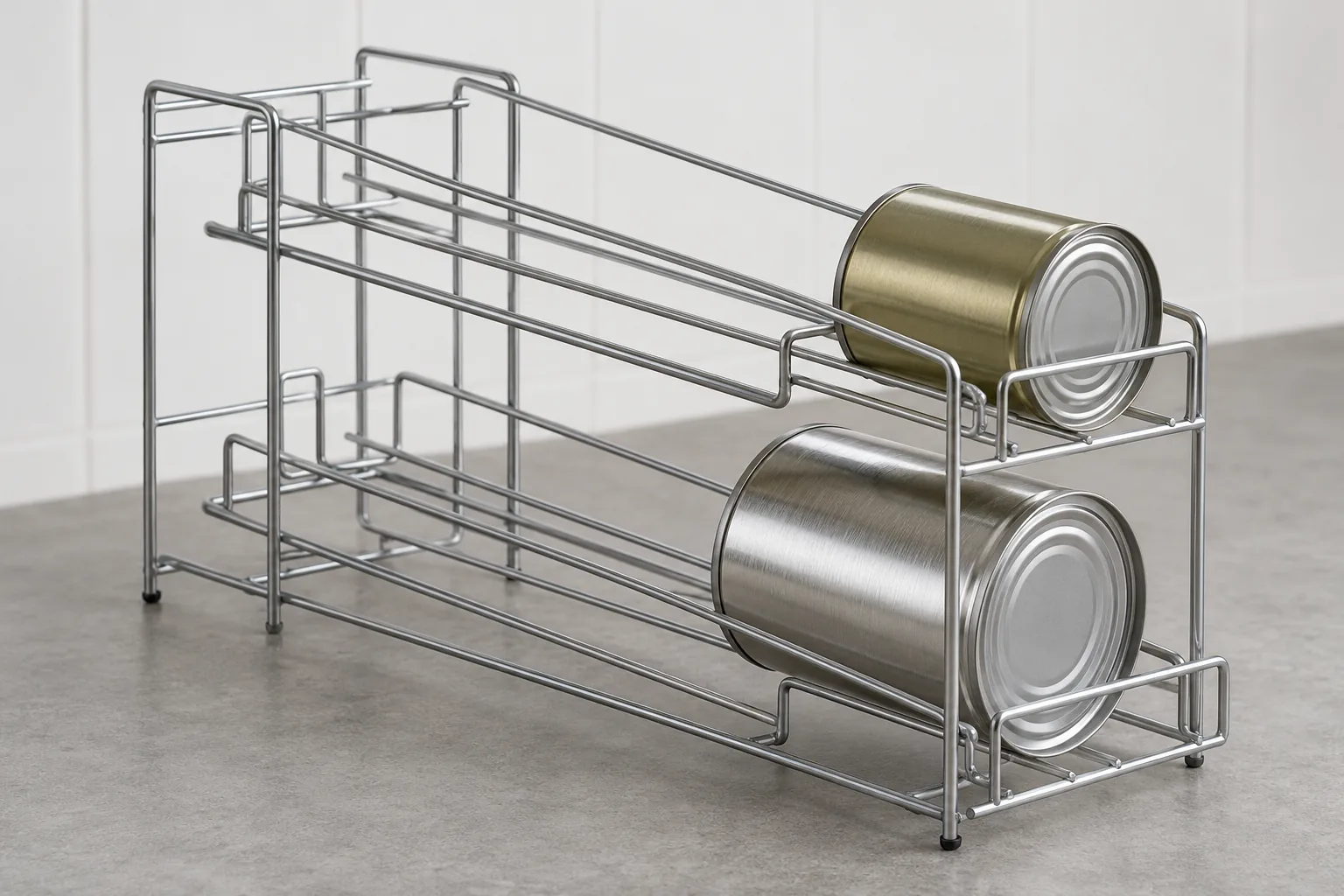
For gravity feed can rack can size compatibility, buyers sourcing a conceptual gravity-feed metal pantry can rack should define the can diameter and height envelope, lane width, transition geometry, slope and loaded retrieval path and approve representative evidence before production. A rack that accepts one can diameter may bind, bridge or feed inconsistently when the buyer adds a different can format.
Weitere Informationen zum Fertigungskontext finden Sie unter Herstellung von Hardware für Heimspeichersysteme im Auftrag (OEM); für eine Projektbesprechung, Kontaktieren Sie Koitor zusammen mit der Zeichnung oder dem Muster.
Warum ist dieses Käuferproblem von Bedeutung?
The buyer problem is specific: A rack that accepts one can diameter may bind, bridge or feed inconsistently when the buyer adds a different can format. It is not resolved by a product label, a single nominal dimension, or a quick visual check. The useful starting point is to tie the question to a conceptual gravity-feed metal pantry can rack, its actual interface and the way a buyer expects the finished item to be used. Keep the scope on the defined component and do not assume an adjacent material or process is a current Koitor production capability.
For an RFQ, translate the concern into a decision: the can diameter and height envelope, lane width, transition geometry, slope and loaded retrieval path. A supplier can then identify assumptions before quotation rather than silently selecting a part or process that changes the finished product. The drawing, sample and purchase specification should use the same revision and name which party supplies, verifies and approves each component.
The risk is not proof that every product will fail. Rather, a nominal lane dimension can look acceptable while a rim, seam or shoulder catches at a transition under gravity. A buyer should distinguish a plausible mechanism from a confirmed defect and ask what evidence would show the chosen assembly is suitable for the project. Generic published data is useful for forming questions, but it cannot replace the actual supplier's component identity and use-specific review.
This guide treats gravity feed can rack can size compatibility as a search expression for a procurement decision, not as a universal engineering limit. The project team should define the intended environment, product geometry, functional endpoint and any specialist review needed. Koitor's verified scope supports custom metal hardware, sample development and supplier communication; material-specific performance and testing claims require supporting supplier evidence.
Welche Eingaben sollten Käufer vor der Angebotserstellung festlegen?
Start with a drawing or controlled sketch that identifies a conceptual gravity-feed metal pantry can rack and the product revision. Show the functional datums, mating parts, assembly direction and any clearance that affects fit. If the dimension belongs to a bought-in component, label the responsible supplier and the final inspection stage. A nominal part number without the finished interface is rarely enough for a sourcing team to compare quotations on equal terms.
Next, identify the input that controls the issue: body diameter, rim/seam envelope, height, lane clearance, slope, wire spacing, finish build and first-to-last retrieval. Some fields may be approved requirements while others are supplier proposals. Mark the difference clearly. Where a grade, compound, coating or fastener design is not yet known, request the supplier's proposed identity and limitations instead of writing an unsupported universal value into the specification.
Halten Sie die Bedingungen fest, die das Ergebnis beeinflussen können. Dazu können beispielsweise die Montagereihenfolge, der Kontakt mit Wasser oder Reinigungsmitteln, die Lagertemperatur, dauerhafte Belastung, wiederholter Einsatz, die Verpackung oder die Endbearbeitung gehören. Geben Sie an, was bekannt ist und was noch unbekannt bleibt. Ist das Produkt für den Einsatz unter Bedingungen vorgesehen, die außerhalb einer gewöhnlichen Innenraumumgebung liegen, sollte ein qualifizierter Prüfer vor der Kaufgenehmigung die Eignung des Materials und den Validierungsumfang bestätigen.
Legen Sie abschließend fest, was als repräsentativer Nachweis gilt. Das Muster sollte die vorgesehene Komponente, die Gegenstücke, den Fertigungsweg und die Oberflächenbeschaffenheit enthalten; andernfalls müssen Abweichungen davon angegeben werden. Kennzeichnen Sie es mit einer Muster-ID und der Zeichnungsrevision. Ein Muster, das vor einer Material- oder Geometrieänderung genehmigt wurde, gilt nicht automatisch als Genehmigung für das geänderte Bauteil; legen Sie in den Auftragsunterlagen einen Prozess für Änderungsmitteilungen und die erneute Genehmigung fest.
Wie sollten Beschaffungsoptionen verglichen werden?
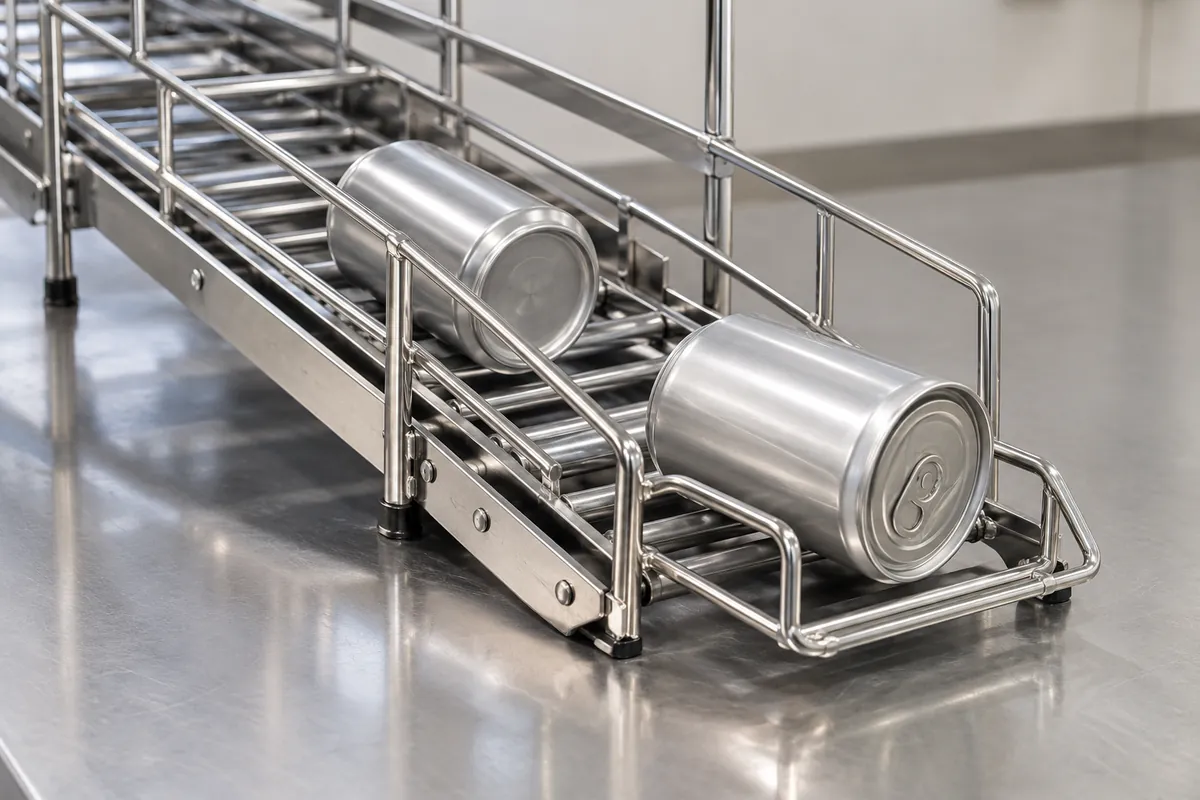
Compare options against the same product envelope and intended use. An apparent upgrade can introduce a new fit, finish, availability or assembly issue, while a lower-cost option can leave the original question unanswered. For a conceptual gravity-feed metal pantry can rack, ask each supplier to state the proposed component identity, process assumptions, evidence supplied and any excluded conditions. Use the following table as a decision aid; it does not rank materials or declare one option universally best.
Ein nützlicher Vergleich besteht auch darin, das Bauteil von der kompletten Baugruppe zu unterscheiden. Ein Werkstoffdatenblatt beschreibt möglicherweise ein standardisiertes Prüfstück, während der Käufer ein geformtes, verbundenes, beschichtetes oder montiertes Produkt genehmigt. Geometrie und benachbarte Teile können Kontakt, Festlegung und Beanspruchung verändern. Fragen Sie nach, ob die Nachweise des Lieferanten direkt anwendbar sind, eine technische Analogie darstellen oder lediglich eine erste Vorauswahl darstellen, und vermerken Sie diese Einstufung im Prüfprotokoll.
Normalisieren Sie für das Angebot die Annahmen hinsichtlich Menge, Oberflächenbehandlung, Montage, Prüfung und Verpackung. Wenn ein Lieferant eine bestimmte Komponente einbezieht und ein anderer davon ausgeht, dass Teile vom Käufer bereitgestellt werden, vergleichen Sie den Lieferumfang (Landed Scope) und nicht nur den Stückpreis. Fragen Sie nach schriftlichen Ausschlüssen und vorgeschlagenen Ersatzteilen. Wenn das jeweilige Produkt an die aktuellen Kategorien von Koitor angrenzt, beschreiben Sie es als angrenzendes Beschaffungswissen und überprüfen Sie die tatsächliche Produktionsverantwortung Projekt für Projekt.
Der Käufer sollte das Mindestpaket an Nachweisen wählen, das dem tatsächlichen Risiko entspricht. Dazu können Identitätsnachweise, Maßkontrollen, eine Sichtprüfung, Beobachtungen während der Montage oder eine qualifizierte Prüfung gehören. Fordern Sie keine übertriebene Prüfung, nur weil sie streng klingt; eine Methode, die das Produkt nicht angemessen widerspiegelt, kann falsches Vertrauen schaffen. Legen Sie objektive Abnahmekriterien und die Zuständigkeit für die Nachweise fest, bevor Sie sich zur Serienproduktion verpflichten.
| Option | Möglicher Vorteil | Zu bewertende Grenze | Käufernachweis / Kaufentscheidung |
|---|---|---|---|
| Single nominal can size | Simple lane geometry | Narrows assortment compatibility | Approve against one controlled package family |
| Defined can-size family | Supports a broader assortment | Extremes can interact differently at transitions | Review minimum and maximum envelopes |
| Adjustable or multi-lane proposal | Can separate formats | Adds parts, setup and cost questions | Compare samples and replenishment behavior |
Welche Informationen sollte eine repräsentative Stichprobe liefern?
Sample approval should begin with identity: record the component supplier, material or part designation, revision, finish and manufacturing state. Then compare the sample to the controlled drawing and assemble it using the intended mating parts. For a conceptual gravity-feed metal pantry can rack, a substitute sample or hand-fitted prototype may help explore a design but should not be mistaken for production-intent approval unless its differences are documented.
Observe the features tied to the buyer decision, including body diameter, rim/seam envelope, height, lane clearance, slope, wire spacing, finish build and first-to-last retrieval. Identify the measuring or observation location, tool or visual setup, and who records the result. If the criterion is qualitative, use agreed reference samples, photos or an explicit description of acceptable variation. Avoid relying on adjectives such as strong, smooth, stable or premium without a common observable meaning.
Falls die Konditionierung oder die Dauer eine Rolle spielen, legen Sie die Abfolge vor Beginn fest: Ausgangszustand, Belastungs- oder Montagebedingung, Beobachtungszeit, Funktion nach der Konditionierung und etwaige Erholungsphase. Lieferant und Käufer sollten wissen, ob es sich bei der Prüfung um eine Screening-Studie oder um ein Freigabekriterium handelt. Eine kurze Stichprobenprüfung kann nicht alle Ergebnisse zur Lebensdauer abdecken, und aus diesem Artikel sollten keine allgemeinen Aussagen zu Belastung, Temperatur, Korrosion oder Lebensdauer abgeleitet werden.
Erfassen Sie sowohl die Entscheidung „bestanden/nicht bestanden“ als auch die verbleibenden Grenzwerte. Notieren Sie die Proben-ID, die Charge oder die Herkunft (sofern verfügbar), die Zeichnungsrevision, Abweichungen, die geprüften Unterlagen und offene Fragen. Wenn die Probe mit einer Einschränkung akzeptiert wird, geben Sie diese klar an – zum Beispiel eine ausgeschlossene Umgebung oder eine Komponente, die nicht ersetzt werden darf. Dadurch wird die Freigabe zu einer nutzbaren Kontrollmaßnahme für Nachbestellungen und bleibt nicht nur ein undokumentierter visueller Eindruck.
Inwiefern können Inspektionen und die Änderungskontrolle Unklarheiten verringern?
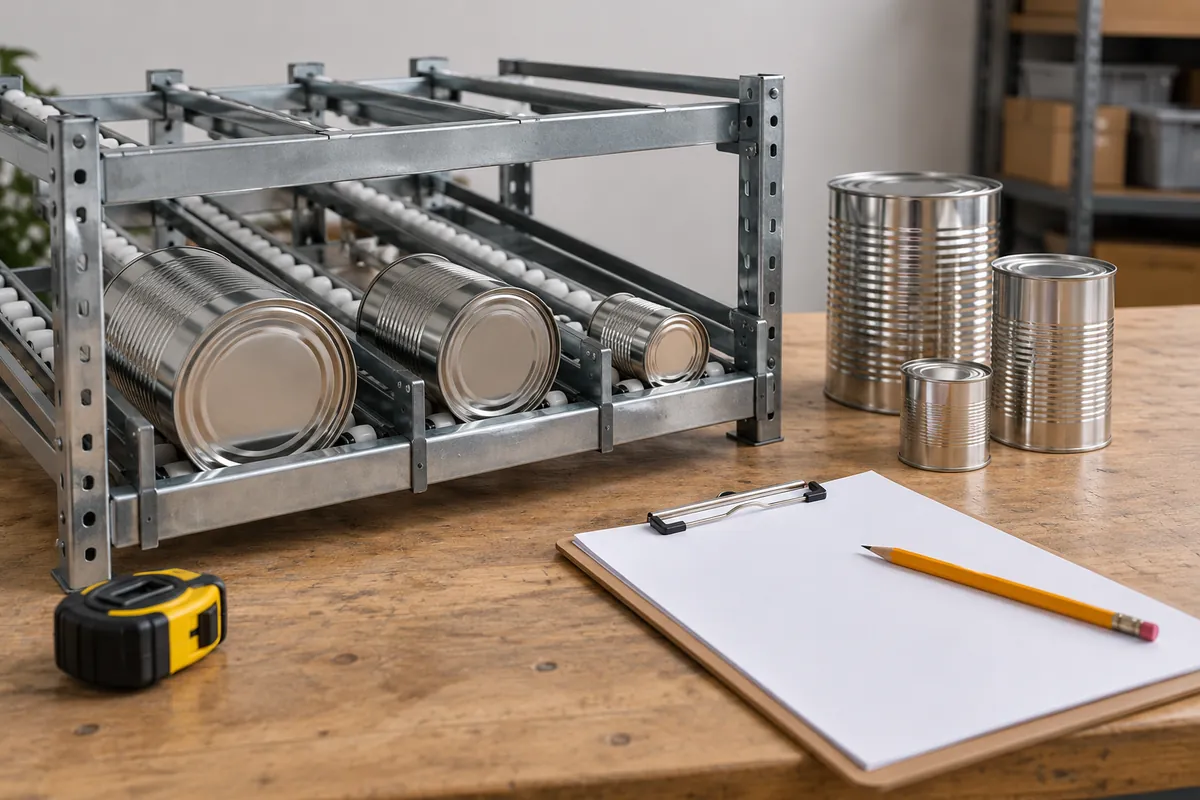
An inspection plan should be proportionate to consequence and variation. Separate identity checks, dimensional fit, appearance and functional behavior rather than allowing one result to stand in for another. For a conceptual gravity-feed metal pantry can rack, list the critical-to-fit features and the evidence source for each. A supplier record can establish what was checked; it does not automatically prove the requirement was appropriate or that every finished unit has been inspected.
Wenn eine numerische Toleranz erforderlich ist, legen Sie gemeinsam mit dem Lieferanten den Bezugspunkt, das Messgerät oder die Messmethode, die Stichprobenlogik und die Entscheidungsregel fest. Vergewissern Sie sich, dass die Messung nach der Fertigung und Montage möglich ist. Wenn für einen Wert keine Konstruktionsgrundlage vorliegt, erfinden Sie keine, nur damit eine Checkliste vollständig erscheint. Ein technischer Prüfer oder Compliance-Prüfer auf Seiten des Einkäufers sollte die technische Anforderung klären; die Mitarbeiter der Beschaffungsabteilung können die genehmigte Antwort in der Angebotsanfrage und der Auftragsänderung festhalten.
Keep traceability practical. Link the approved drawing and component identity to the sample record, purchase specification and change history. The amount of lot-level evidence should match the product risk and commercial need. Do not imply that a general certificate, marketing phrase or supplier catalog establishes a specific performance result. If specialist material analysis or laboratory testing is required, identify the qualified provider and scope separately.
For recurring issues, define containment and communication. Ask the supplier to identify affected lots, stop unauthorized substitutions, compare the defect with the approved reference and propose a corrective action supported by evidence. This is not the same as assuming the cause from appearance alone. A structured record helps the importer decide whether to accept, rework, sort, replace or revise the product, with the responsible buyer retaining disposition authority.
What should importers confirm before production release?
Cost is shaped by more than the nominal component. Material identity, part geometry, tooling access, finishing, assembly, inspection, packaging and supplier evidence can all affect the quoted scope. Ask for the assumptions behind any cost difference. A change that reduces one operation may require another inspection or alter the product envelope, so compare proposals against a stable functional brief rather than a single unit price.
Before production release, confirm the drawing revision, selected component and finish, sample disposition, inspection plan, packaging arrangement and open limitations. Record who approves a deviation and who may authorize a material or supplier substitution. If a component is buyer-nominated or bought in, clarify how its availability and change notices reach the assembler. This avoids a late discovery that the approved sample and bulk order use different inputs.
For repeat orders, review risk triggers rather than repeating every check mechanically. A new supplier, material grade, tool, geometry, finish or assembly sequence may change the relevant evidence. Keep stable items on routine controls and reopen the technical review when a trigger is crossed. The supplier should communicate proposed changes before implementation, while the buyer updates the controlled specification and sample record when needed.
Koitor Hardware's approved profile supports custom metal bathroom and home-storage hardware, drawing or sample-based customization, relevant fabrication and finishing discussion, packaging and direct factory communication. It does not establish current manufacture of every adjacent component described here, nor a specific test laboratory or performance guarantee. Buyers can share a drawing or sample for a project discussion and verify actual capability, supplier roles and required evidence before award.
Buyer approval checklist
- Collect actual can drawings or measure representative packages, including rims and seams.
- List approved minimum and maximum diameters and heights by SKU family.
- Show lane width, entry, slope and every transition on the drawing.
- Check loaded movement and manual access at the first and last can.
- Use production-intent finish and wire geometry in the sample review.
- Reapprove when can assortment, tooling or rack dimensions change.
Häufig gestellte Fragen
What is the first thing to define for gravity feed can rack can size compatibility?
Start with a conceptual gravity-feed metal pantry can rack, the drawing revision and the can diameter and height envelope, lane width, transition geometry, slope and loaded retrieval path. A label alone is not a complete acceptance requirement.
Can a supplier data sheet approve the finished product?
Not by itself. Confirm that the document matches the supplied grade, component, geometry and stated conditions, then review the actual assembly where fit or function matters.
Does one sample prove long-term performance?
No. A sample is evidence only for the part, revision and conditions reviewed. Duration, environment and test scope must be agreed with qualified reviewers.
Does this article confirm Koitor manufactures every component discussed?
No. Koitor's confirmed scope is custom metal bathroom and home-storage hardware. Adjacent components and specialist material processes must be confirmed for each project.
When should a buyer request reapproval?
Reopen the review when the supplier, material, geometry, finish, tooling or assembly changes in a way that can affect the approved buyer decision.
Further technical context: Canned food shelf or rack?. The reference applies to its own material or process context; buyers should verify the actual part and conditions for their project.
Discuss your product specification
Share the drawing, target interface, finish and sample requirements so the project scope can be reviewed.
OEM / EIGENE MARKE
Verwandeln Sie diesen Beschaffungsleitfaden in ein Produktdossier
Teilen Sie uns Ihr Zielprodukt, die Größe, die Oberflächenausführung, die Bestellmenge und Ihre Verpackungsanforderungen mit. Ihr Team erhält vor der Angebotserstellung eine praxisorientierte Prüfung der Herstellbarkeit.


 English
 Español
 Português
 Français
 Deutsch
 العربية