

An install sheet can only explain how to install a mailbox lock once it matches the packed cam lock to the letterbox door it is meant for. A mailbox lock is usually a small cam lock: a keyed cylinder that passes through the door, a retaining nut or clip behind the door, a cam that turns to hold the door shut, and a set of keys.
If the cylinder is too short, the retainer will not thread on. If the cam is the wrong shape or turns the wrong way, the door will not latch, or it will latch and not open. Those are the problems users report most, and every one of them is a fit question that the sheet can settle before anyone picks up a tool.
This guide is for importers, distributors and private-label teams selling residential letterboxes or spare letterbox locks. Koitor Hardware is a family-owned China OEM manufacturer of custom metal bathroom and home storage hardware. The guide covers owner-controlled residential letterboxes. It does not cover cluster box units or any lock controlled by the Postal Service.
Specification of the letterbox itself, including mail formats, deposit and retrieval, and siting, is covered by the live metal letterbox buyer specification checks. This page covers the lock: matching it to the door, and the replacement sequence the supplier documents.
What does how to install a mailbox lock depend on first?
It depends on four fit fields: cylinder length, cam shape and orientation, the retainer type, and the key set. If all four match the letterbox door, the sequence is short. If any one is wrong, no sequence will make the lock work properly.
Cylinder length must suit the thickness of the door, including any reinforcing plate behind it. A cylinder that is too long leaves the cam in the wrong plane; one that is too short leaves no thread for the nut. The supplier’s drawing should state the door thickness range the lock is designed for.
Cam shape and orientation decide whether the cam reaches the catch inside the letterbox. Straight cams, offset or cranked cams, and cams of different lengths exist because letterbox catches sit at different positions. The cam must also turn in the right direction and stop at the right angle.
The retainer is the part that holds the cylinder in the door. Some locks use a threaded nut; others use a horseshoe or spring clip that slides into a groove on the cylinder. The door’s cutout shape may also matter, because many cylinders have flats that stop them turning in the hole.
Keys complete the set. A replacement lock may come with keys that differ from other locks in a building, or may be keyed alike with others. The sheet should say which. It should not imply that a lock matches any existing key unless the supplier documents that.
For a brand, the question is whether a listing can say “fits most mailboxes.” That phrase is rarely supportable. The honest listing names the cylinder length, cam options and retainer, and points to the letterbox models the lock is designed for.
Which cam lock fit fields must match the letterbox door?
The fit section of the sheet should be precise and visual. Users replacing a lock almost always have the old lock in hand, so the best sheet lets them compare old and new part by part.
Cylinder length and door thickness
Measure from the face of the lock to the back of the cylinder on the old lock, or check the door thickness. The supplier’s drawing should give a range rather than a single number, and the sheet should copy that range. If the door has a backing plate, the measurement includes it.
Door cutout shape
Many letterbox doors have a cutout with one or two flats or a notch. The cylinder must match that shape so it does not spin. If the replacement cylinder has a different profile, it will either not fit or not stay in place. The sheet should show the cutout shape the lock is made for.
Cam shape, length and offset
Compare the new cam to the old one. Length, offset and the position of the mounting hole all matter. Some locks ship with several cams so the installer can pick the matching one. If so, the sheet should explain how to choose, using the supplier’s drawing.
Cam rotation and stop
Cams turn either clockwise or counterclockwise to lock, and they stop after a set angle. Some locks let the installer change rotation by flipping the cam or a stop washer. The sheet should state the documented rotation options and how to set them, without inventing angles.
Retainer type
Threaded nuts and spring clips are not interchangeable. A cylinder with a clip groove will not take a nut, and a threaded cylinder will not hold a clip. The sheet should show the packed retainer and how it seats.
Keys and keying
State the number of keys supplied and whether the lock is keyed alike with others in a set. If the supplier offers keyed-alike sets for multi-box installations, the sheet can describe how to order them, without offering any security claim.
Locks for new letterboxes versus spare locks
A lock fitted at the factory and a spare lock bought later raise different sheet questions. For a factory-fitted lock, the sheet mainly covers key handover and what to do if a key is lost. For a spare lock, the sheet must cover fit and replacement in full, because the buyer may be fitting it to a letterbox the brand did not make.
That difference should show up in the listing too. A factory lock can be described simply as part of the letterbox. A spare lock should list every fit field, so buyers with a letterbox from another maker can check before ordering.
Using the old lock as a template
The most reliable fit check is a side-by-side comparison with the lock being replaced. The sheet can include a short comparison panel: lay the old lock next to the drawing, check the cylinder length, the flats on the cylinder, the cam and the retainer. If any one does not match, stop before removing anything else.
This also helps when a letterbox was supplied with an unusual lock. The user notices the mismatch at the start, not halfway through removing the old lock, which keeps the letterbox usable while the right part is sourced.

What should a mailbox lock install sheet list?
The install section is mostly a short sequence, preceded by the fit fields. The table is a template. It has no dimensions or security claims, because those belong to the supplier’s drawing for a named lock.
| Field | What to write | Source |
|---|---|---|
| Lock name and drawing | The supplier’s part name and a line drawing of the cylinder and cam | Supplier drawing |
| Door thickness range | The range the cylinder is designed for | Supplier drawing |
| Cutout profile | The door hole shape the cylinder fits | Supplier drawing |
| Cam options | Cams supplied, with length and offset shown on the drawing | Supplier drawing and packing list |
| Rotation setting | How rotation direction is set, if adjustable | Supplier sheet |
| Retainer | Nut or clip, with how it seats | Packing list and supplier sheet |
| Keys | Number of keys and keying arrangement | Packing list |
| Scope | Owner-controlled residential letterboxes only | Brand policy |
A typical replacement sequence
A typical documented sequence starts with opening the letterbox door with the existing key. The cam is then unscrewed from the back of the cylinder, the retaining nut or clip is removed, and the old cylinder is pushed out through the front of the door.
The new cylinder goes in from the front, matching the cutout profile. The retainer is fitted from behind. The chosen cam is mounted at the documented orientation and fastened with its screw or nut. Finally, the lock is tested with the door open, then closed, several times.
The sheet should copy the supplier’s version of this sequence, including any notes on tightening the cam screw or the nut. It should not add steps, such as drilling or enlarging the cutout, unless the supplier documents them for a specific door.
What if the door will not open?
If the existing key is lost and the door is locked, the replacement sequence cannot start from the inside. The sheet should say plainly that opening a locked letterbox without its key is outside its scope and that the owner should contact the letterbox supplier or a locksmith. It should give no forced-entry method.
Test before closing
The test step catches most fit errors. With the door open, turn the key and watch the cam travel and stop. Then close the door and lock it, and check that it holds and releases smoothly. A cam that rubs or does not reach the catch points back to the cam choice or rotation setting.
Tools the sheet should name
Most cam lock replacements need only a screwdriver or a small wrench for the cam screw and the retaining nut, and sometimes pliers for a spring clip. The sheet should list exactly the tools the supplier names. Adding drills or files invites users to modify the door, which changes the fit and is usually not needed.
Keeping small parts under control
Cam screws, washers and clips are small and easy to drop inside the letterbox or onto the ground. The sheet can suggest working with the door open and a cloth laid inside the box, which is general good practice. If the kit includes spare small parts, the sheet should say so.
Recording the key code
Some locks carry a key code stamped on the face or the key. Recording it allows replacement keys to be ordered later. The sheet can tell the owner where the code is and to keep it somewhere safe, without implying that anyone with the code can obtain keys freely.
Who may replace a mailbox lock?
For owner-controlled residential letterboxes, the owner replaces the lock. That is the scope of this sheet. Cluster box units and other mail receptacles owned or controlled by the Postal Service are handled through the Postal Service, and a spare-lock listing should not offer instructions for them.
The USPS mailbox guidance is the right starting point for questions about curbside mailbox installation and Postal Service rules. A letterbox lock sheet can point readers there for questions about mailbox placement or approval, rather than answering them in the lock leaflet.
Multi-unit residential buildings may have letterbox banks owned by the building rather than the Postal Service. In that case, the building manager decides who replaces locks. The sheet can say that lock changes in shared installations should be authorized by the owner or manager.
Letterbox banks in private buildings
Apartment buildings, offices and gated communities sometimes use private letterbox banks rather than Postal Service units. Lock replacement in those banks follows the building’s rules, and the locks may be part of a keyed system. The sheet can describe the lock fit and sequence, and leave authorization to the building manager.
Rentals and tenant changes
Landlords often change letterbox locks between tenants. The sheet can support that by making replacement straightforward and by supporting keyed-alike or master-keyed sets where the supplier offers them. It should not give legal advice about who is entitled to a key.
Lock security and ratings
A letterbox cam lock is a basic privacy lock. Its pick resistance and attack resistance vary, and many are not rated at all. The sheet should not print security grades, pick-resistance claims or “high security” language unless the lock carries a recognized rating and the supplier provides the evidence.
Door and lock hardware standards in the United States are developed by the Builders Hardware Manufacturers Association. A letterbox cam lock sheet should not claim a BHMA grade unless the part has been certified.
Where do related letterbox questions belong?
A lock sheet stays accurate when it stays narrow. Several related questions belong in other documents.
Letterbox specification, including size, mail formats, deposit slot and siting, belongs on the metal letterbox buyer specification checks. If a buyer is choosing a new letterbox, that page is the starting point.
Packing of the lock, keys and cams should be checked against the bill of materials. The hardware kit packing inspection checklist covers that control. A sheet that lists three cams is only correct if three cams are in the bag.
Programs that combine letterboxes with other metal storage or wall-mounted hardware can work with an OEM home storage hardware manufacturer to align packaging and leaflets across the range.
Spare lock listings
Spare lock listings are where most fit errors start. A listing that shows the cylinder, cams, retainer and keys, with the door thickness range and cutout profile, lets buyers check fit before ordering. A listing that only says “mailbox lock with two keys” leads to returns.
Weather and finish
Exterior letterboxes expose locks to rain, frost and dust. Finish and weather resistance are product properties. The sheet can tell users to keep the keyway clear and follow the supplier’s maintenance notes, but should not claim weatherproof performance without data.
Lubrication
Users often ask whether to oil a stiff letterbox lock. Some suppliers recommend a dry lubricant; others recommend nothing. The sheet should repeat the supplier’s advice or stay silent, because the wrong lubricant can attract dust and make the lock worse.
Locks on locking parcel boxes
Larger residential parcel boxes often use the same kind of cam lock, sometimes with a longer cam or a second locking point. If a brand sells both letterboxes and parcel boxes, each needs its own fit fields. A cam lock that fits a letterbox door may not reach the catch on a deeper parcel box door.
The sheet for a parcel box should also note any second lock or latch, so the user does not assume that replacing one cylinder secures the whole door. Again, the supplier’s drawing is the source for each part.
Condition of the door itself
A replacement lock will not fix a bent door, a worn hinge or a rusted catch. If the old lock failed because the door no longer lines up, the sheet can tell the user to check the door and catch before blaming the lock, and to contact the letterbox supplier if the door needs repair.
What must a mailbox lock install sheet not print?
Check the sheet against this list before release.
- “Universal fit,” “fits all mailboxes” or similar claims.
- Security grades, pick resistance or high-security language without certification.
- Any instructions for cluster box units or Postal Service locks.
- Methods for opening a locked letterbox without its key.
- Cylinder lengths, cam dimensions or rotation angles not in the supplier’s drawing.
- Legal advice about mailbox ownership or tenant rights.
- Drilling or enlarging the door cutout unless the supplier documents it for that door.
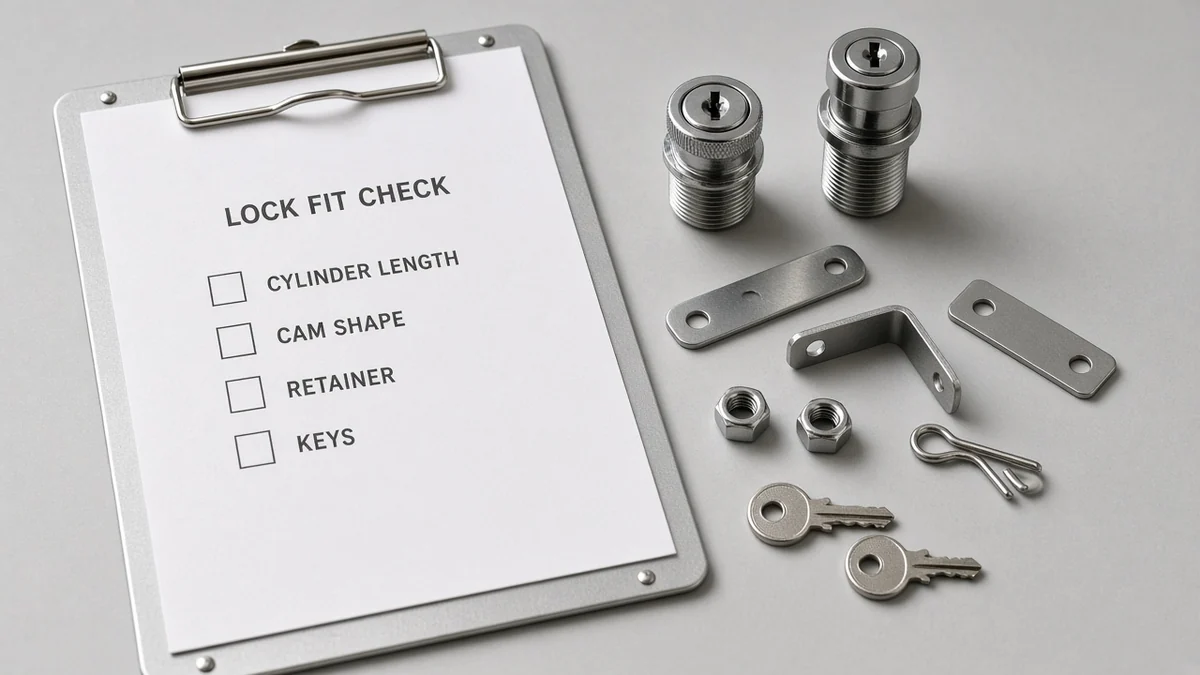
After the list check, install the lock in a sample door following the sheet. If the cylinder seats, the retainer fits, the cam reaches the catch and turns the right way, the sheet is complete.
Translation and pictograms
Cam lock leaflets are often pictogram-based. Make sure the cam options and rotation setting are drawn clearly, because those are where text-free leaflets most often fail. Keep part numbers consistent across languages.
Sign-off
The brand approves the wording and the supplier confirms the lock data. Koitor can review the install sheet against the packed lock and the letterbox door and flag missing fit fields or unsupported claims.
When to rewrite
If the existing sheet was written for a different lock, rewrite it from the fit fields. Cylinder, cutout, cam, rotation, retainer and keys, followed by a short sequence and a scope line, are enough for nearly every residential letterbox lock.
Frequently asked questions about mailbox locks
How do I know which mailbox lock to buy?
Compare the old lock: cylinder length, cutout shape, cam shape and retainer. Match those to the supplier’s drawing. If the letterbox maker sells replacement locks for that model, that is usually the safest fit.
Can I replace the lock on a cluster mailbox myself?
Not with this sheet. Cluster box units controlled by the Postal Service are handled through the Postal Service. This sheet covers owner-controlled residential letterboxes only.
Why does my new mailbox lock turn but not lock?
The cam is probably the wrong shape, mounted at the wrong orientation, or set to the wrong rotation. Check the cam options and rotation setting in the supplier’s sheet.
Can I change the direction my mailbox lock turns?
On some locks, yes, by flipping the cam or moving a stop washer. The supplier’s sheet will say whether rotation is adjustable and how. If it is not adjustable, a lock with the other rotation is needed.
What if the retaining nut will not thread on?
The cylinder is probably too short for the door, or a backing plate adds thickness. Check the door thickness against the supplier’s range. A longer cylinder may be needed.
Does a new mailbox lock come with keys?
Usually, and the sheet should state how many. Whether it matches other locks depends on whether it was ordered keyed alike.
Should I oil a new mailbox lock?
Only if the supplier recommends it, and only with the lubricant they name. Many cam locks are supplied ready to use, and the wrong lubricant can collect dust and make the keyway stiff over time.
Is a mailbox lock secure?
It provides basic privacy. Security performance varies and is often not rated. The sheet should not claim security grades without certification.
Does Koitor make mailbox locks?
Koitor makes custom metal bathroom and home storage hardware and reviews install wording for parts in its programs. Whether a letterbox or lock is part of a specific program is confirmed on the packing list and quote.
Arbeiten Sie mit Koitor Hardware zusammen
Review a mailbox lock install sheet
Send the letterbox door drawing, the cam lock drawing and the current install sheet. We can review whether the wording matches the lock to the door and follows the documented sequence. We will not issue a security rating, a universal-fit claim or advice on Postal Service locks.
OEM / EIGENE MARKE
Verwandeln Sie diesen Beschaffungsleitfaden in ein Produktdossier
Teilen Sie uns Ihr Zielprodukt, die Größe, die Oberflächenausführung, die Bestellmenge und Ihre Verpackungsanforderungen mit. Ihr Team erhält vor der Angebotserstellung eine praxisorientierte Prüfung der Herstellbarkeit.


 English
 Español
 Português
 Français
 Deutsch
 العربية