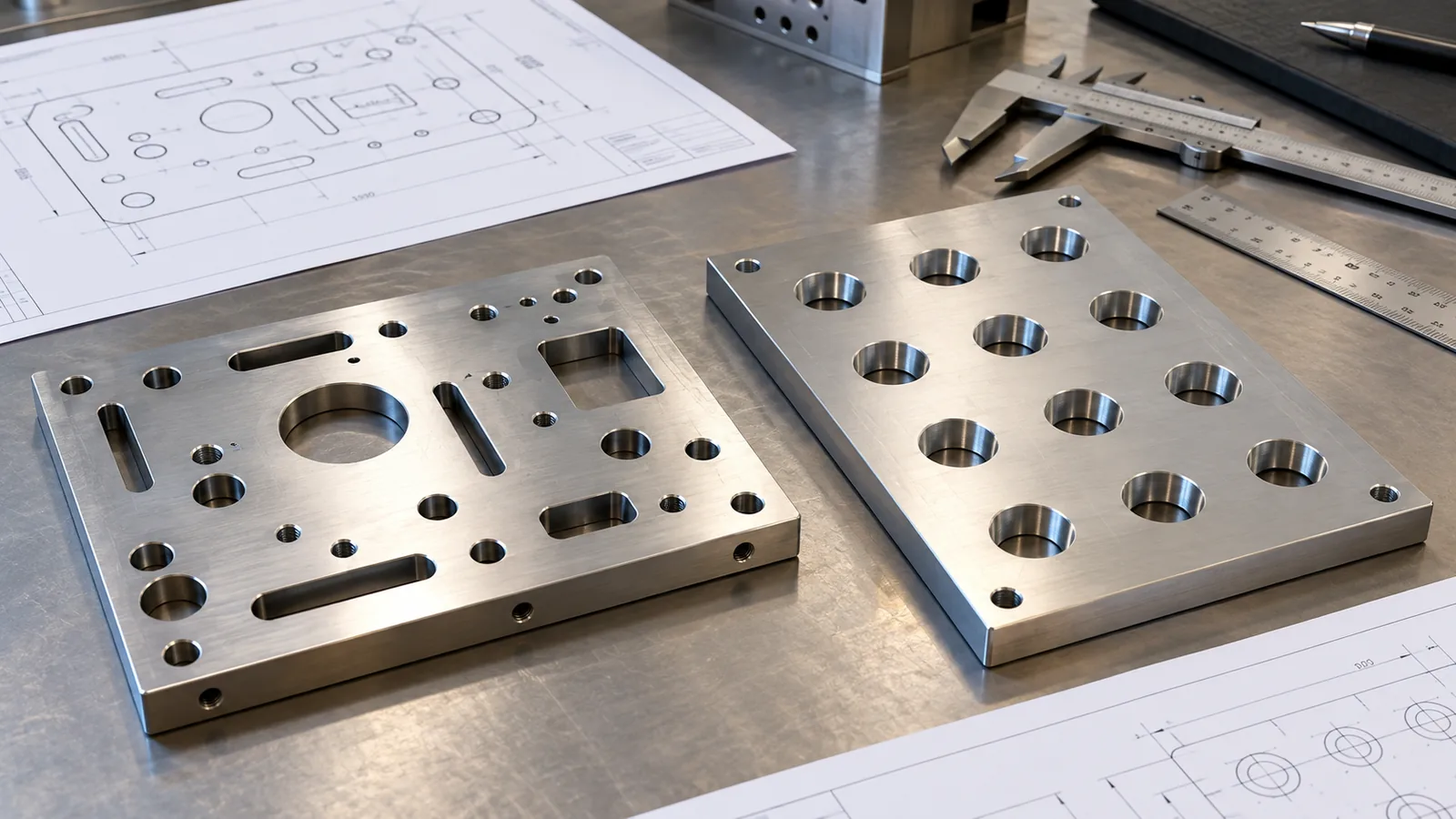
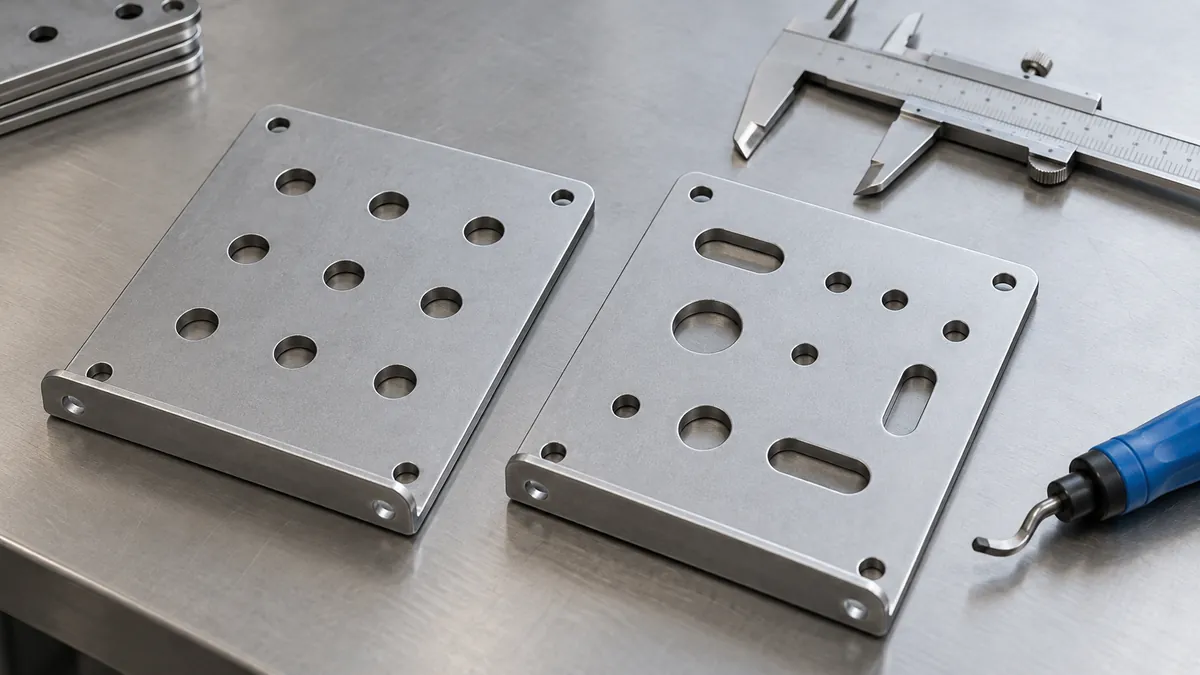
Choosing laser cutting vs punching for a bathroom hardware mounting plate depends on the actual part geometry, repeated features, design stability, edge requirements, expected revisions, and the supplier’s process assumptions. Buyers should request a like-for-like quotation and sample plan rather than expecting one process to be universally faster or cheaper. The decision is a project-specific manufacturing trade-off, not a generic machine ranking. Buyers searching the exact phrase “laser cutting vs punching bathroom hardware mounting plate” should treat it as a system-level question answered with the actual drawing and sample, not as a universal rule.
For related category context, see the Hersteller von maßgefertigten Badbeschlägen and this related buyer guide.
What manufacturing decision is the buyer actually making?
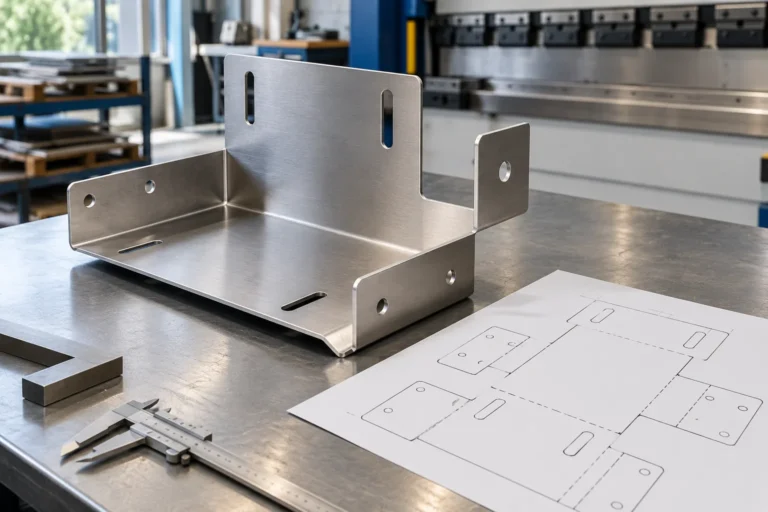
A mounting plate may carry holes, slots, notches, profiles, and bend lines that connect it to the rest of a bathroom accessory. The process choice affects how the blank is produced, but the finished part must still meet fit, appearance, edge, and assembly needs. A buyer should start from the drawing revision and the function of each feature instead of asking only which cutting method has the lowest unit price.
Laser cutting can be considered when the profile or feature pattern changes frequently, when one-off samples are needed, or when geometry is complex. Punching may be considered when features repeat and a stable production setup can be justified. Those are general decision prompts, not guarantees; actual feasibility depends on material, thickness, machine availability, tooling, nesting, secondary work, and supplier quotation assumptions.
The buyer also needs to separate cutting from later operations. A plate may need deburring, bending, tapping, welding, polishing, coating, or assembly. A difference at the blank stage can be overwhelmed by finishing or labor later. Request the full routing or scope that the supplier is pricing, and identify which steps are included versus supplied by another party.
For Koitor, this article is process education grounded in metal hardware sourcing, not proof of a particular machine ownership or a product-specific quote. A buyer can use the comparison to improve an RFQ and then confirm the factory’s actual process route for the specific drawing. Do not infer from a general capability statement that a specific machine, tooling set, or production volume is available.
How do feature pattern and revision frequency affect the choice?
A pattern with many repeated holes may be a good candidate for a punching discussion, particularly when the design is stable and quantities support setup or tooling work. The buyer should still check hole diameter, spacing, shape, feature access, and the number of tool hits or operations assumed. A repeated pattern alone does not prove punching is the preferred route.
A variable or frequently revised pattern can favor a route that avoids dedicated feature tooling, depending on the supplier and part. Early product development often involves moving holes, changing slots, or adjusting outline dimensions after mounting trials. Buyers should include expected design revisions in the commercial comparison instead of treating each drawing iteration as a surprise.
Feature location near an edge or bend may affect later forming and fit regardless of how the blank is cut. A cut method can create a different edge condition or process mark, but it does not solve a hole-to-bend clearance issue by itself. Review the complete feature sequence and sample geometry, especially where a fastener must align after bending.
The most useful comparison separates stable features from changeable features. Mark which dimensions are frozen, which are still being evaluated, and how often a revision is expected. If only a few features are uncertain, the team can ask whether the process route or tooling plan can accommodate that uncertainty without committing to a universal answer. Record who pays for a rework or tool change if the design changes after approval.
| Buyer condition | Laser-cutting discussion | Punching discussion |
|---|---|---|
| Complex or changing profile | Can be considered where programming changes support revision flexibility | Review tool coverage and cost/effort of feature changes |
| Repeated stable features | May still be suitable; request a comparable route quote | Can be considered if features and volume justify setup |
| Edge requirements | Define any edge cleanup and final-finish checks | Define burr direction, cleanup and feature-edge acceptance |
| Development stage | Useful to quote prototype or interim samples where offered | Check tooling/setup assumptions and whether sample represents release route |
| Cost comparison | Include programming/setup and secondary operations as quoted | Include tooling/setup, ownership and amortization basis as quoted |
Which quality and edge questions belong in the quote?
The buyer should define the finished edge expectation for accessible or visible areas. Ask whether deburring or another edge-finishing step is included and how the sample will be inspected. The presence of a laser-cut edge or punched edge does not automatically state whether the part is safe to handle, visually acceptable, or ready for coating. Those are acceptance questions tied to the final product and handling surfaces.
For punched features, review the cut perimeter and any burr direction or rollover that may affect assembly. For laser-cut features, review the edge and heat-affected appearance where it matters to the material and finish. Actual outcomes depend on process settings and material condition. Ask for a finished sample under the intended post-processing route instead of treating a generic process description as final proof.
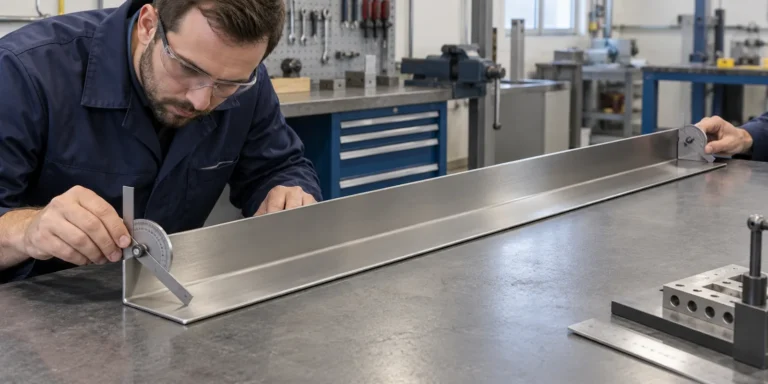
Dimensional checks should focus on features that locate the plate in the product: hole centers, slots, edge distances, bend references, and mating faces. Identify the datums, inspection method, and drawing revision. If a mounting plate is hidden after assembly, that may reduce cosmetic requirements but not fit or corrosion concerns. If it remains visible, appearance criteria need to be discussed separately.
A comparison of process routes must include secondary operations and reject risk assumptions. A quote with a low cutting price may exclude deburring or finish handling. Another supplier may include operations in a combined line item. Request the same scope, sample quantity, expected revision basis, and pack-out so the comparison informs a purchasing decision rather than merely comparing unrelated prices. In this context, “laser cutting vs punching bathroom hardware mounting plate” is a shorthand for a documented design-and-sample decision, not a preset engineering value.
How should setup, tooling, and volume be compared?
Setup and tooling costs should be recorded as quoted project facts, not derived from a generic rule. If the supplier proposes dedicated punching tools, ask what features the tools cover, whether they are included or charged separately, who owns them, and what happens when the drawing changes. Tooling questions matter even if the initial batch is small, because later repeat volume may follow a different plan.
Volume assumptions change the economics, but there is no universal break-even quantity between laser cutting and punching. Suppliers can compare a defined batch, repeat cadence, part mix, and revision scenario. The buyer should specify whether the quantity is per release or expected annual demand, whether the same plate appears across multiple SKUs, and whether the supplier may combine production lots.
Low-volume sampling and high-volume repeat production may reasonably use different routes, if the supplier and buyer approve the transition and verify the resulting part. A process change can affect edge condition, dimensions, lead time, or inspection plan. The approved sample should represent the intended production process whenever possible; if not, the gap and required verification should be explicit.
Include the cost of design changes in the discussion. Ask whether a drawing revision requires new setup, new tooling, a revised sample, or only updated programming; the answer is supplier-specific. A useful quote compares stable and revised configurations on the same commercial basis without pretending that one process is always flexible or the other always expensive.
What should a buyer ask suppliers to state explicitly?
Ask the supplier to identify the proposed route for the current revision, material, thickness, and feature pattern. If the route is undecided, request the decision assumptions and any sample work needed to resolve it. The supplier should not be expected to infer whether the buyer values short-term flexibility, unit cost, tooling ownership, cosmetic edge appearance, or rapid revision more highly.
Clarify material supply, grain or surface direction if relevant, blank nesting assumptions, edge treatment, secondary forming, finish, assembly, and packaging. State which party owns the drawing and tooling, which file format is controlled, and how change notices are handled. A mounting plate can be simple geometrically but still create a sourcing gap when the parts list and process scope are divided among suppliers.
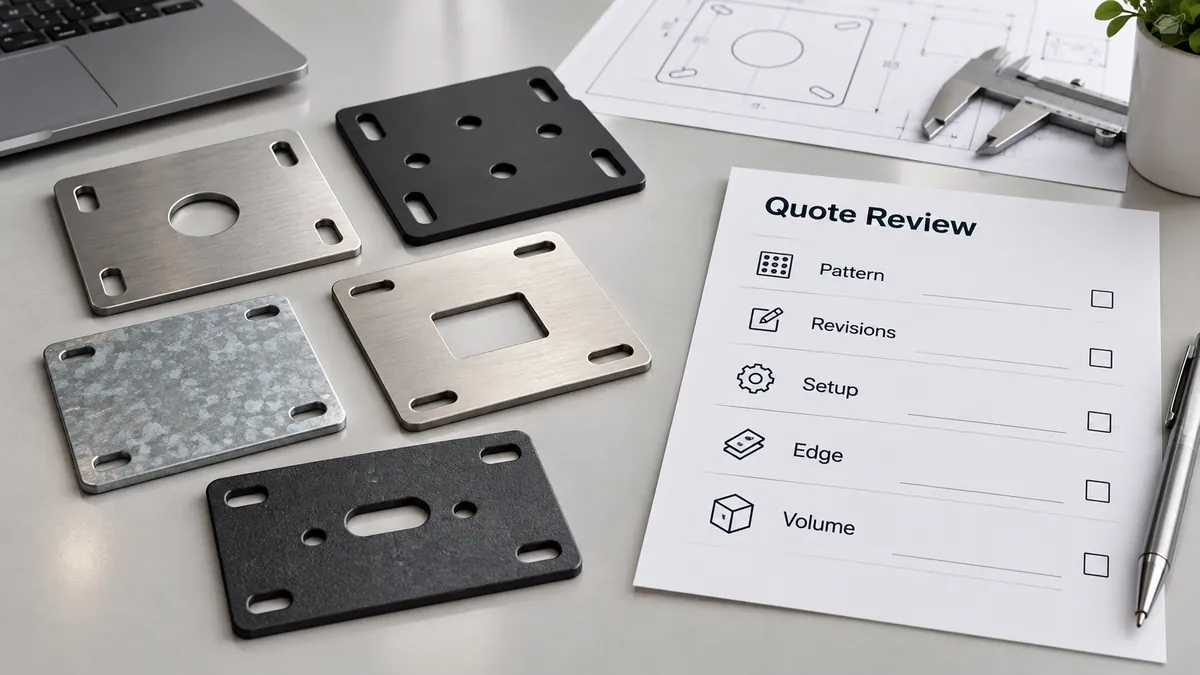
A fair quote comparison includes sample cost, production price basis, tooling or setup charges, lead-time assumptions, minimum order quantity, packaging scope, and inspection responsibilities. Do not compare unit prices if one supplier assumes raw blanks and another includes a finished assembled component. If the buyer has a target price, it should be used to guide trade-offs, not as evidence that a process will meet a certain cost.
The buyer’s technical contact should review the sample and quote together. Verify that the proposed process yields the required holes, edge condition, bend references, and mating fit. Record unresolved items as open actions. For private-label programs, also ensure the product description and package do not promise a process or performance feature that the approved evidence does not support. The phrase “laser cutting vs punching bathroom hardware mounting plate” should therefore remain tied to the approved configuration and its inspection record.
How can first-article approval protect the process decision?
The first article should match the drawing revision, material requirement, and process route that the buyer intends to release. Record the route and any secondary operations. If the prototype used a different process for speed, identify which characteristics remain to be confirmed on a production-intent sample. A sample without process identity may prove shape but not production readiness.
Inspect critical hole and slot locations from agreed datums, overall outline, flatness or formed geometry where relevant, and edges after the specified finishing step. Use a drawing balloon or inspection plan to keep the feature list focused. A check should be reproducible and tied to the same measuring method. First-article approval is not a claim that every future piece will be identical; ongoing controls still matter.
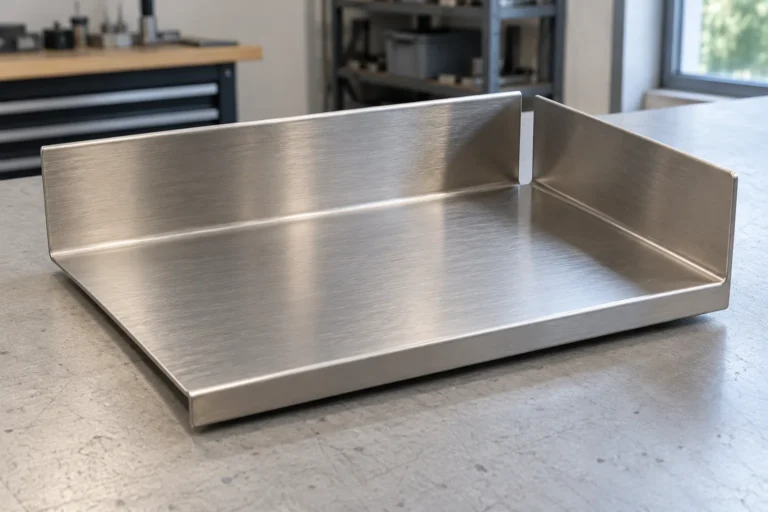
Confirm the mounting plate within its mating assembly. A plate can pass a flatness or dimension check and still fail because a hole does not line up with the housing, a bend obstructs a fastener, or the selected screw head conflicts with another feature. Use representative mating parts or a controlled fixture and record any substitutions.
After approval, route changes back through change control. A new feature pattern, material lot specification, process, tool, finishing sequence, supplier, or quantity may create a reason to review selected characteristics again. Risk-based revalidation keeps the process decision grounded in the actual part. The buyer should avoid treating an old first article as automatic proof for a materially revised design.
Buyer approval checklist
Add a process-route field to the sample record and quote comparison. If the trial and repeat-order routes differ, list the dimensions, edges, fit points, and finish condition that need rechecking. Keep the commercial comparison attached to the same drawing revision and quantity basis. This prevents a process name or low headline price from replacing the actual approved construction and scope.
- Send the controlled drawing, material and thickness requirement, revision status, expected order pattern, and intended finished condition.
- Mark repeated versus changeable features and identify which holes/slots locate the plate in the assembly.
- Ask each supplier to state cutting route, edge treatment, secondary steps, setup/tooling assumptions, ownership and quote scope.
- Compare the same batch quantity, revision scenario, sample plan, finish, packaging, inspection and delivery assumptions.
- Approve a production-intent sample and route any process or design change through an agreed revalidation plan.
Häufig gestellte Fragen
Is laser cutting always better for prototypes?
Not always. It depends on supplier capability, material, geometry, scheduling, edge needs, and the prototype’s purpose. Ask whether the sample route represents the planned production route.
Does punching always cost less at high volume?
No universal conclusion applies. Tooling, setup, feature pattern, batch size, repeat cadence, secondary work, and supplier pricing all matter. Compare actual quotations on the same scope.
Can the cutting process fix a hole near a bend?
No. The blank process does not remove the need to review feature-to-bend geometry, forming displacement, and final assembly fit.
Who owns dedicated tooling?
The buyer and supplier should agree ownership, charges, storage, maintenance, access, and what happens after a revision in writing.
Does this article confirm Koitor owns a laser or punch press?
No. It is a buyer decision guide, not a verified equipment inventory. Confirm the actual process route and equipment for the specific project.
Plan a buyer-ready product specification
Share your drawing, product range and sample requirements so the project team can review the relevant manufacturing questions.
OEM / EIGENE MARKE
Verwandeln Sie diesen Beschaffungsleitfaden in ein Produktdossier
Teilen Sie uns Ihr Zielprodukt, die Größe, die Oberflächenausführung, die Bestellmenge und Ihre Verpackungsanforderungen mit. Ihr Team erhält vor der Angebotserstellung eine praxisorientierte Prüfung der Herstellbarkeit.
 English
  Español
  Português
  Français
  Deutsch
  العربية