

Quotation vs estimate is not simply a comparison between a “fixed” price and a “flexible” one. Businesses use the terms differently, and the document’s legal effect depends on its wording, the governing law and the parties’ agreement. For a hardware buyer, the useful distinction is how much of the purchase scope and price basis has been defined, which assumptions remain open, how long the offer is valid, and what event turns the document into an accepted order.
A supplier may use “estimate,” “budgetary quote,” “quotation” or “proposal” as a label. Do not infer that the title alone guarantees a price, confirms capacity, reserves production time or incorporates every specification. Read the scope and terms, ask questions in writing, and make sure the approved purchase order points to the correct revision of the quote, drawing, sample and packaging brief. The quotation vs estimate review should therefore focus on assumptions and approval records, not the heading printed at the top of the file.
Quotation vs estimate: the buyer’s practical distinction
An estimate generally communicates an expected or preliminary amount based on information available at the time. A quotation generally presents a price offer for a stated scope and assumptions. Those are common business usages, not universal legal definitions. A document titled “estimate” can contain detailed commitments; a document titled “quotation” can still be conditional, incomplete or subject to revision. The words “fixed,” “firm,” “budgetary” or “indicative” also need to be read in context.
For a custom metal hardware project, an early estimate may be based on a sketch, approximate quantity, preferred finish and assumed packaging. A later quotation may follow drawing review, material confirmation, sample approval and freight clarification. The price difference may reflect a changed scope, updated supplier costs or a more specific process—not a simple change from one document type to another.
| Rezensionsobjekt | Preliminary estimate often leaves open | A usable quotation should define or disclose |
|---|---|---|
| Product scope | Drawing revision, material, finish, components | Item description, specification and referenced revision |
| Quantity | Forecast or assumed order size | Price basis, order quantity and any quantity breaks |
| Process | Unconfirmed tooling, fabrication or finishing route | Included operations and any process assumptions |
| Verpackung | Generic carton or buyer-provided packing assumption | Packaging level, labeling, included materials and exclusions |
| Commercial terms | Currency, validity, payment or freight basis | Currency, validity date, payment terms and delivery basis |
| Uncertainty | Open technical or sourcing variables | Explicit assumptions, exclusions, alternatives and change triggers |
The table is a review framework, not a claim that every estimate or quotation follows one standard format. The document and contract control. If an important field is blank, ask who will decide it, by when, and whether it changes the price or delivery schedule.
Why a quote can change before the order
A price is tied to a scope and date. A supplier cannot meaningfully compare an early sketch-based estimate with a later drawing-based quote unless the buyer can identify what changed. For metal storage hardware, price may depend on material form and thickness, wire or tube dimensions, bends, joints, welding, surface finish, assembly, inspection, packaging, quantity, tooling and transport assumptions. The article does not assign a universal cost to any of these items; the supplier’s actual costing and confirmed scope determine the offer.
Product definition and engineering inputs
An incomplete drawing may leave a critical dimension, hole location, weld position, cosmetic face or mating component unresolved. The supplier may assume a standard dimension or propose a workable construction. If the buyer later changes the geometry or adds a component, the supplier may need to review material usage, fixture setup, process sequence, labor, sample work or inspection. That is a scope change, even if the product name remains the same.
Send the current drawing or physical sample, identify critical-to-function dimensions, indicate visible faces, state the finish reference, describe the intended environment, and provide the order quantity and packaging needs. If information is not yet known, label it as an assumption and ask for a separate alternate price where useful. A transparent estimate can be helpful during development as long as it is not mistaken for a fully approved production offer.
Quantity and order pattern
The price for a prototype, pilot order and repeat order may not use the same basis. A supplier may have setup, tooling, programming, material minimums, inspection or packaging costs that are distributed differently at different quantities. Ask whether an offer applies to a one-time order, a forecast, a blanket purchase agreement or releases over time. Do not assume an indicated annual forecast guarantees the quoted unit price for every future release.
If the order combines multiple SKUs, specify quantities per item, color or finish. A total order quantity can conceal an assortment with many small runs. Ask whether the quote assumes a single product, a mixed batch, shared packaging or separate cartons. A change in mix can affect production scheduling and packing even when the total unit count stays constant.
Tooling, sampling and revisions
Clarify whether tooling or fixtures are included, separately charged, reusable, customer-owned or subject to another agreement. A sample charge may cover a specific development round and not later design changes. State who pays for sample revisions and what approval event authorizes production. Ask how the supplier will record a changed drawing or finish so an obsolete revision does not remain attached to the order.
Do not assume that a quotation includes unlimited sampling, design work, special packaging artwork, certification testing or production validation. If such work is required, list the deliverable, acceptance criteria, responsibility, timing and price basis. If it is excluded, decide whether to remove it or obtain a separate offer before approving the main order.
What the quotation should say
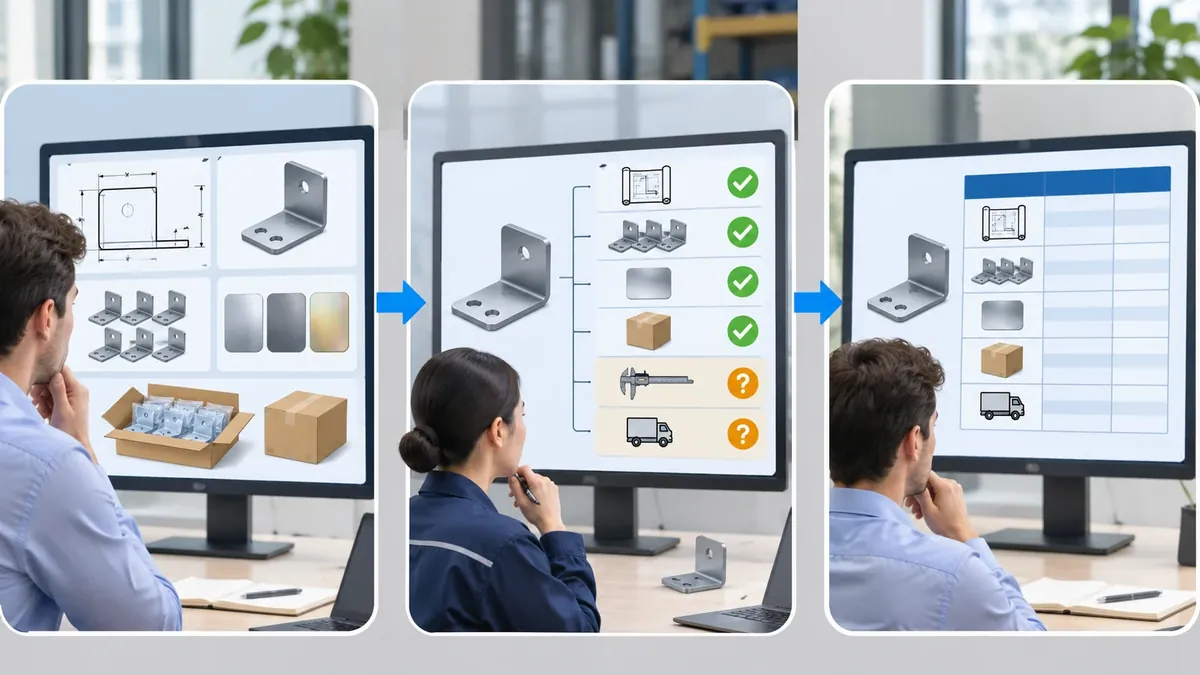
Treat the quotation as a structured offer record. It should let a buyer understand what is being purchased, in what quantity, to which specification, at what price and under what conditions. A buyer should be able to locate the exact product or service being priced without relying on an email subject line or a salesperson’s memory.
Product and specification reference
Each line should refer to an item number, buyer SKU, drawing revision, sample identifier or other controlled description. If the offer uses an assumption—for example, a specific steel grade, finish, carton size or included fastener—state it. If the buyer has not approved that assumption, mark it as open and avoid issuing a purchase order that treats it as settled.
Price basis and currency
Record whether the price is per piece, per set, per carton, per lot or another unit. State quantity breaks and minimum order conditions. Identify currency, tax treatment where relevant, payment milestones and whether a deposit or balance is required. If the price is linked to a material or exchange-rate assumption, state how a change is handled and who must approve it.
Validity and availability
The validity date tells the buyer how long the offer is stated to remain open under its terms. It does not necessarily guarantee raw-material availability or reserve production capacity. Ask what happens if the buyer issues the PO after expiration, requests a different quantity or changes the ship date. Reconfirm price and schedule before ordering if the original validity has lapsed.
Delivery, freight and packaging
Identify the delivery basis, named place or port where applicable, responsibility for freight, insurance and import costs, and the packaging level included. If the supplier has quoted only product value, do not treat the quote as a landed cost. If packaging is customer-supplied or artwork is pending, state the assumption and the approval dependency.
Exclusions, alternatives and change triggers
List items not included: special tests, tooling, inspection by a third party, label translation, retail packaging, taxes, duties, export documentation, inland delivery or optional components. If alternatives are offered, identify which one is the base price and how the alternative changes scope. Define what would trigger repricing: material revision, drawing change, quantity shift, additional operation, new destination or delayed order release.
A buyer’s comparison method
Use one comparison sheet for every supplier and normalize the assumptions before selecting. A lower unit price is not automatically a lower total cost if one quote excludes packaging or tooling while another includes it. Conversely, an all-inclusive quote may contain a service the buyer does not need. The goal is not to make every supplier use identical wording; it is to make the priced scope comparable and the differences visible.
- Freeze the request. Send the same drawing revision, sample reference, quantity, finish, inspection requirements and packaging brief to each supplier.
- Separate known facts from assumptions. Mark each open item and ask the supplier to state its assumed value.
- Compare line items. Review product, tooling, sample, packaging, inspection, freight and optional services separately.
- Check units and currency. Confirm price per piece or set, currency, tax basis, and quantity breaks.
- Check date and capacity language. Record validity, lead-time basis, production slot assumptions and the date from which timing is measured.
- Review exclusions. Translate “not included” into a cost or a clear buyer action.
- Reconcile revisions. Make sure the PO, quote, drawing, sample and terms use compatible revisions.
- Record acceptance. State which quote and revision the buyer accepts, what the supplier must confirm, and what remains open.
If a supplier provides only a broad estimate, use it to decide whether a project merits further development, not as a final supplier comparison. If the buyer needs a budget number before design completion, request a range or alternatives with the assumptions printed beside each amount. A number without its scope can be more misleading than a clearly labeled estimate.
For example, a buyer may receive one price for a finished metal rack based on powder coating, assembled hooks and retail packaging, and another price for an unfinished component with bulk packing. A comparison by unit price alone would favor the second offer while ignoring the operations the buyer still needs to purchase. Put both scopes into a normalized worksheet: product construction, finish, assembly, carton configuration, inspection, delivery basis and quantity. Then ask each supplier to price the missing work or remove the unneeded operations. If the supplier cannot quote a final value until a drawing or sample is approved, record the estimate as a planning input and schedule the next confirmation step. This preserves its value without promoting it to an approved order price.
What “firm” and “fixed” should mean in practice
Buyers often ask whether a quote is “firm.” Rather than rely on that single word, ask what changes the offer and what the supplier promises during the stated validity period. Does the offer cover a specific quantity and delivery basis? Can the supplier revise it if a drawing changes? Is the quote conditional on raw-material availability, a particular exchange rate or a confirmed production window? What happens if the buyer delays approval?
Ask the supplier to state when a binding order exists under the parties’ process. The accepted quote may be incorporated into a purchase order, a signed sales confirmation or another contract document. The relevant legal effect depends on the documents and applicable law. This article does not determine whether a particular document is legally binding; obtain counsel’s advice where the contractual commitment matters.
Operationally, the buyer should distinguish “price valid until date” from “capacity reserved until date,” and both from “delivery date guaranteed.” A supplier may quote a price while waiting for the buyer’s sample approval or deposit before scheduling production. Record the milestone that starts lead time, such as receipt of approved drawing, sample, deposit or complete purchase order, if that is how the supplier defines it.
Reconfirm an expired or changed quotation
Before issuing a purchase order against an old quote, request written reconfirmation. A quote may have expired because its validity period ended, the assumed quantity changed, a supplier revised its input costs, or the product specification changed. The supplier should identify the affected items and the new basis. The buyer should not silently overwrite the original PDF or assume the earlier price still applies.
Use a revision record: quote number, revision date, prior version, changed line, reason, updated validity and buyer approval. If no price changes, ask the supplier to confirm that the original amount and scope remain valid. If the quote changes, compare the revised scope and assumptions against the original before submitting the PO. Related guidance on reconfirming an expired metal hardware quote before a purchase order covers that follow-up control.
When a specification change occurs after the PO, document it as a change order or revised confirmation. Record price impact, schedule impact, sample or drawing approval requirements, packaging changes and any cancellation or obsolete-material exposure. A note such as “please proceed with the latest version” is not a safe revision-control system if several documents carry different dates.
Estimate, quotation, invoice and purchase order are not interchangeable
An estimate or quotation communicates a price basis or offer; an invoice requests or records payment under the parties’ transaction; a purchase order communicates the buyer’s order and may form part of the contract process. A pro forma invoice may be used as a preliminary commercial document for payment or shipment planning, while a commercial invoice supports an actual shipment and customs documentation. Exact uses differ by company and jurisdiction.
Keep the documents linked but do not treat them as duplicates. A quote may contain technical assumptions that the PO must preserve. The PO may include buyer terms that differ from supplier terms. The invoice may need to match shipped goods, quantities and values. Before shipment, reconcile the current purchase order, commercial invoice, packing list and product identifiers. A mismatched document can delay internal approval or create import questions.
If a supplier’s estimate becomes the basis of a purchase order, identify the accepted version and incorporate the necessary scope and terms. If the parties’ documents conflict, pause to resolve the inconsistency in writing before production or payment. Do not assume that attaching several contradictory documents will make the intended terms obvious.
Common buyer mistakes
Treating the title as a promise
“Quotation” does not necessarily mean every cost is fixed, and “estimate” does not necessarily mean there are no commitments. Read the document’s content, assumptions, validity and contract terms.
Comparing prices built on different product revisions
Two offers may quote different dimensions, material, finish, packaging or included components. Match each quote to the same drawing or sample reference before comparing unit cost.
Forgetting the total order mix
A quote for one SKU or one finish may not cover multiple colors, mixed cartons, small release quantities or combined orders. Confirm the exact mix and order pattern.
Ignoring expiry dates
An old price may not reflect current scope or availability. Reconfirm in writing instead of assuming the original terms remain in place.
Treating an estimate as a final landed cost
The amount may exclude packaging, tooling, inspections, freight, insurance, duty or delivery. List exclusions and calculate the buyer’s total cost separately.
A quotation review checklist
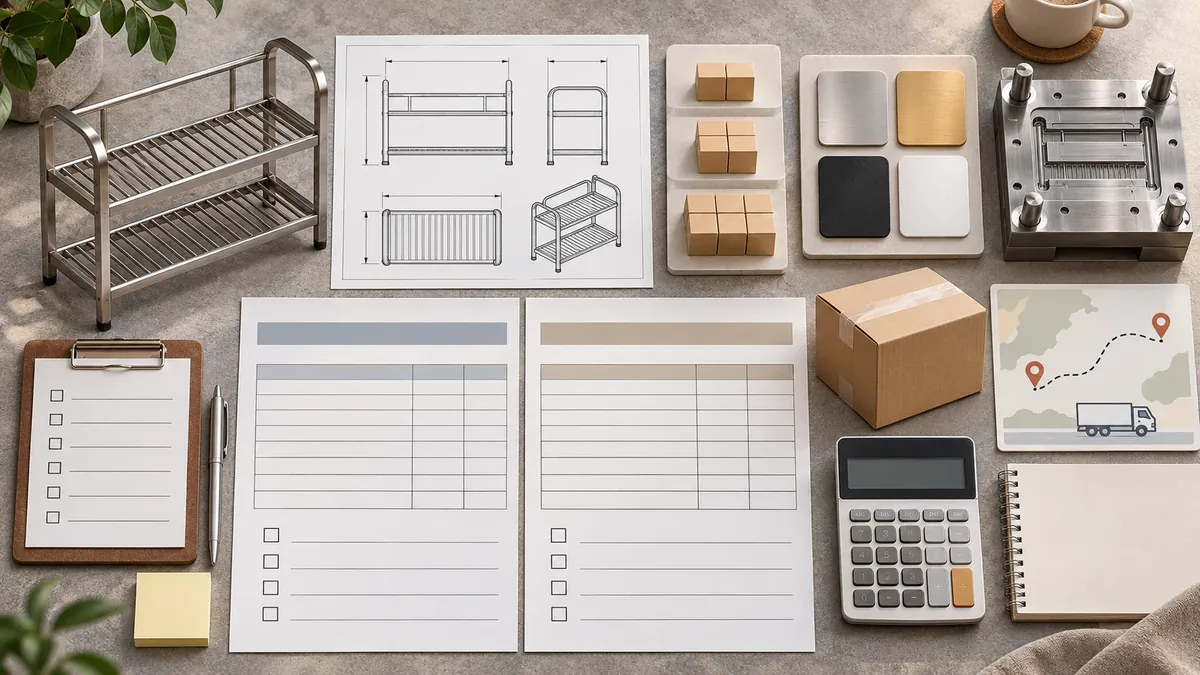
Before approving the price, confirm:
- The quote or estimate number, revision date and validity period.
- Product line, buyer SKU, drawing revision or approved sample reference.
- Quantity per SKU, quantity breaks, minimum order and order-release assumptions.
- Material, finish, components and any open technical assumption.
- Sample development, tooling, fixture or engineering charges.
- Packaging level, carton data, labeling, artwork and included inserts.
- Inspection or testing scope and any third-party costs.
- Unit basis, currency, tax treatment, payment terms and charges.
- Freight or delivery basis, named place and excluded destination costs.
- Production lead-time start milestone and schedule assumptions.
- Repricing triggers and the process for buyer-approved changes.
- Which document and revision the PO will incorporate.
If a field is not relevant, mark it “not applicable” rather than leaving the supplier to guess. If a field is undecided, record an owner and due date. A complete review can be quicker than resolving a mismatch after the order is in production.
Häufig gestellte Fragen
Is a quotation more binding than an estimate?
Not solely because of its title. The document wording, acceptance, contract, governing law and transaction facts determine legal effect. Ask the supplier to clarify the commercial commitment and obtain legal advice where needed.
Can an estimate become a quotation?
A supplier may issue a more detailed or revised price document after the buyer confirms scope. The buyer should retain the estimate for planning and use the current approved quotation or contract document for order acceptance.
How long is a supplier quotation valid?
The validity period should be stated on the offer. It varies by supplier and project. Reconfirm an expired offer or one affected by changed quantity, specification, delivery basis or timing.
Should the buyer issue a PO before sample approval?
That depends on the parties’ process and what the PO authorizes. If production must wait for a sample, drawing or finish approval, state that hold point and the conditions that release the order.
What should be attached to the purchase order?
Reference the accepted quote revision, product drawing, approved sample or finish standard, packaging brief, quantity, delivery terms and any agreed exclusions or change conditions. Ensure the documents are consistent.
Sources and scope
- Intuit QuickBooks: Estimates and Proposals — used for general business-document context; it is not a universal legal definition of quotation or estimate.
- QuickBooks Online: Create and Send Estimates — illustrates one software workflow for estimates, not a rule governing supplier contracts.
Terminology and legal effect vary by business, contract and jurisdiction. This article is a procurement-control guide, not legal or accounting advice. It does not claim that Koitor offers a particular price, delivery commitment or legal contract term.
Arbeiten Sie mit Koitor Hardware zusammen
Send a complete RFQ package
Share the current drawing or sample, quantity by SKU, finish, target market, packaging needs, inspection expectations and delivery basis. Koitor Hardware is a family-owned custom metal hardware factory focused on bathroom and home-storage products. The team can review a confirmed manufacturing brief for an OEM discussion; final commercial terms and acceptance should be recorded in the current quotation and purchase-order documents.
Request a Scope-Based Hardware Quote
Send the current drawing or sample, order quantity, finish, packaging requirements and target delivery basis so the supplier can identify assumptions before you compare prices.
OEM / EIGENE MARKE
Verwandeln Sie diesen Beschaffungsleitfaden in ein Produktdossier
Teilen Sie uns Ihr Zielprodukt, die Größe, die Oberflächenausführung, die Bestellmenge und Ihre Verpackungsanforderungen mit. Ihr Team erhält vor der Angebotserstellung eine praxisorientierte Prüfung der Herstellbarkeit.


 English
 Español
 Português
 Français
 Deutsch
 العربية