
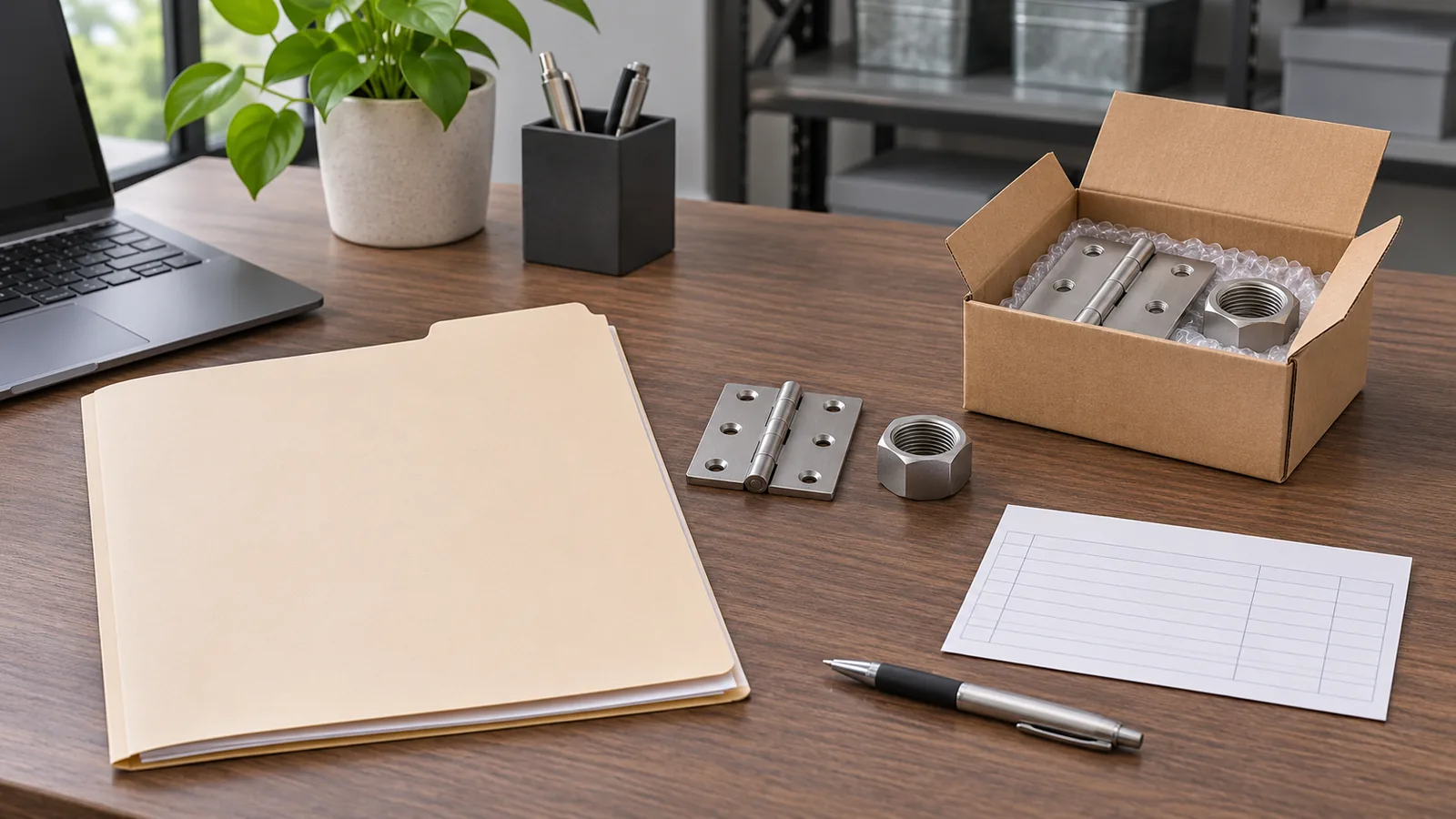
A supplier credit note replacement goods claim can involve two different outcomes: a financial adjustment and a physical replacement shipment. A buyer should record each separately and reconcile them against the same claim reference. Otherwise, a credit may be assumed before it appears in the account, or a replacement carton may arrive without clear agreement about freight, quantity, inspection or whether it closes the original issue.
For a hardware importer, the practical goal is to turn an agreed remedy into a traceable closeout. Link the complaint evidence, commercial agreement, credit or refund record, replacement order, shipment documents and final receiving check. This article explains a purchasing workflow; it is not accounting, tax or legal advice. Local rules and contract terms vary, so consult the appropriate finance or legal professional where required.
Separate the issue, the remedy and the transaction
For this decision, record the supplier credit note replacement goods claim requirements in the controlled specification and sample review so the approved scope remains clear to purchasing, quality and the supplier.
The supplier credit note replacement goods claim specification should also identify the assumptions that remain open and who must confirm them before order release.
A quality claim begins with a defined issue. Identify the affected product, purchase order, SKU, lot or shipment, observed condition, quantity and evidence. Use photos, inspection records, carton marks and correspondence to describe what happened. Keep the original requirement visible, such as the approved drawing revision or packaging instruction, so the buyer and supplier can compare the result against an agreed reference.
The remedy is a separate decision. It may be a price adjustment, credit, refund, replacement units, repair, parts shipment or another negotiated outcome. A buyer should not record a proposed remedy as completed before the relevant evidence exists. If both a credit and replacements are agreed, state what each one covers and whether either is conditional on returning, scrapping or retaining the affected goods.
The transaction records are another layer. A supplier may issue a credit note or credit memo, send replacement goods on a new shipment, or apply an agreed amount to a later invoice. Terminology and accounting treatment can differ by jurisdiction and enterprise system. The purchase team should preserve the supplier’s document and route it to finance rather than deciding unilaterally how it must be posted.
| Record | What it should identify | Closeout question |
|---|---|---|
| Claim record | PO, SKU, lot, quantity, issue and evidence | Does it describe the affected scope precisely? |
| Remedy agreement | Credit, replacement, repair or combined outcome | Which quantities and costs are covered? |
| Credit document | Supplier, reference, currency and approved amount | Has finance received and reconciled it? |
| Replacement order | SKU, quantity, revision and required delivery | Does it link back to the original claim? |
| Shipment record | Packing list, tracking and freight responsibility | Did the agreed replacement arrive? |
| Receiving result | Count, identity and inspection outcome | Is the replacement accepted or still open? |
Published procurement and accounting software guidance describes credit notes and supplier credits as records that adjust payable or transaction values within a particular system. For example, Infor’s supplier credit note documentation und Microsoft’s Business Central guidance describe software-specific workflows. The exact controls depend on the configured system and local accounting process. UK public guidance on procurement and payment likewise describes credit-note handling in its own context; do not treat any one source as universal accounting or tax advice.
Agree exactly what each remedy covers
Before a credit is issued, clarify the basis of the adjustment. Is it tied to a specific quantity of rejected goods, a percentage of a line, an agreed rework cost, freight, sorting expense or another amount? The buyer should write down the scope and currency, confirm who approves it, and identify the invoice or purchase order it references. Avoid informal shorthand such as “credit for the issue” if multiple SKUs or shipments are involved.
Replacement goods need a separate specification. Confirm whether the supplier will replace every affected unit or only a sample quantity, whether the original revision remains current, and whether the replacement will be inspected before shipment. If the original problem involved finish, dimensions, packaging or labeling, state what evidence will be provided before dispatch. A replacement built to an old drawing may reproduce the same problem.
Freight and ownership terms can also affect closeout. State who pays transport, customs charges or return shipping under the parties’ agreement. If the buyer will retain the affected products, record that. If goods are returned or destroyed, define the evidence and timing. This is commercial coordination, not a universal legal rule; the contract, Incoterm and local requirements govern the actual arrangement.
Where a credit is applied to a future invoice, record the intended application and ask finance to confirm when it is visible in the accounting system. A supplier email saying “we will deduct it next time” is useful correspondence but is not necessarily the same as a posted credit document or confirmed settlement. Keep the agreed intent, issued record and actual ledger outcome distinguishable.
Track replacement goods as their own shipment
Create a replacement shipment record that points back to the original claim. Include product identifiers, quantity, drawing revision, packaging requirements, agreed ship date, tracking reference and responsible contacts. Make clear whether the replacement is shipped free of charge or under another commercial arrangement. The physical movement should not be confused with the original purchase quantity in receiving or inventory records.
When the replacement arrives, check the carton labels and packing list first. Match each unit to the replacement record and inspect the characteristics connected to the original issue. A claim about finish should trigger a finish review; a packaging damage claim should include an appropriate pack inspection. Do not interpret an acceptance of replacement goods as proof that unrelated requirements or all production lots are compliant.
If the goods are a partial replacement, record the outstanding balance and next action. If the supplier sends substitute parts rather than complete products, document who performs the rework and whether the resulting assembly needs a new inspection. If a replacement unit is drawn from regular production, confirm that it follows the current approved specification and traceability method.

Reconcile quantity, value and status
A closeout checklist should compare the commercial and physical sides without merging them. For quantity, reconcile affected units, accepted units, credited units, replacement units and any balance. For value, compare the agreed credit basis with the issued document and finance’s posting. For delivery, compare the agreed replacement quantity with the packing list, receipt and inspection result.
Use an explicit status for each line: proposed, approved, issued, in transit, received, inspected, posted, partially closed or closed. This prevents a single “resolved” label from hiding a missing credit or an uninspected replacement. If the claim is only partly resolved, keep the open item visible and assign a responsible owner and date for the next action.
A simple reconciliation table can show the relationship:
| Claim line | Agreed action | Evidence to close |
|---|---|---|
| Financial adjustment | Credit or refund amount agreed | Issued supplier document and finance confirmation |
| Replacement quantity | Units, parts or repair agreed | Shipment documents, receipt and relevant inspection |
| Original goods | Retain, return, rework or dispose | Agreed instruction and completion record |
| Cost responsibility | Freight, sorting or rework allocation | Written agreement and linked transaction |
| Remaining issue | Unresolved quantity or evidence gap | Owner, next action and target date |
Do not close a claim solely because a replacement carton was dispatched or a credit document was received. The buyer should confirm the actual result against the agreed remedy. Conversely, a small administrative posting delay should be tracked by finance without erasing the operational fact that a replacement has already passed receiving inspection. Each function can close the part it owns while the overall claim remains open until all required parts are complete.
Prevent repeat claims through controlled records
A closeout should identify whether the issue requires a corrective action or a specification update. Keep the root-cause conclusion proportional to the available evidence. A damaged carton may have several possible causes; do not assign responsibility without investigation. If a drawing, finish sample or packaging requirement was unclear, update the controlled reference after the buyer and supplier agree the change.
Connect claim records to reorder controls. At minimum, retain the original product and lot reference, photos, agreed remedy, updated drawing or instruction if changed, replacement shipment identifier and acceptance result. For private-label products, update quality instructions, carton artwork or customer service information where needed. Do not replace historical evidence; preserve revisions so a later reviewer can see what changed.
A purchasing team can use a concise claim identifier across email, purchase orders, credit records and replacement shipments. Avoid putting confidential customer information or unnecessary personal data into supplier-facing documents. Share only the information needed to identify the products and resolve the matter.
If a claim crosses multiple departments, give each workstream an owner. Quality can maintain the defect evidence and acceptance result; purchasing can coordinate the supplier agreement; logistics can track any return or replacement shipment; and finance can confirm the credit posting. The claim record should show the status of each part and who will update it. One overall owner can monitor completion without substituting for the specialist who controls a particular record. This division is especially useful when a replacement shipment arrives before a credit is processed, or when a supplier’s document needs correction before accounting can apply it.
Retain a dated closeout summary once the buyer has confirmed all agreed actions. State the final affected quantity, what happened to the original goods, the replacement inspection result, the financial document reference and any open prevention action. Link source records rather than copying every detail into the summary. If the claim remains partially unresolved, call it partial and preserve the next action; do not force a “closed” label merely to clear a dashboard. A clear status is more useful for the next reorder than a tidy but inaccurate record.
Koitor’s confirmed positioning is as a custom metal bathroom and home-storage hardware manufacturer with direct factory communication and drawing- or sample-based customization within confirmed scope. This does not establish any particular remedy policy, credit terms or customer claim history. For a relevant OEM project, buyers can review the custom bathroom hardware manufacturer page and direct project questions through the Kontaktseite.

Buyer checklist for a clean closeout
- Link the issue to the purchase order, SKU, lot or shipment and evidence.
- Separate the agreed financial adjustment from the physical replacement.
- State the quantity, value basis, currency and conditions for each remedy.
- Confirm freight, return, rework and disposition responsibilities in writing.
- Track replacement goods with their own order and shipment records.
- Inspect replacements against the characteristics tied to the claim.
- Route credit documents to finance and confirm the posting process.
- Mark partial completion and assign an owner for each open item.
- Preserve the final drawing, packaging or process changes and their revisions.
Häufig gestellte Fragen
Is a replacement shipment the same as a supplier credit?
No. A replacement is a physical remedy; a credit or refund is a financial adjustment. A settlement can include either or both, so record each separately.
Does receiving a credit note automatically close the quality claim?
Not necessarily. The physical goods, replacement quantity, rework, freight or other agreed actions may still be open. Close the overall claim only when its required parts are complete.
Should the buyer return the affected goods?
That depends on the agreement, contract and applicable requirements. Record whether goods are retained, returned, reworked or disposed of and who is responsible.
Can the purchasing team decide how the credit is posted?
The purchasing team can document the agreement and supplier record. Finance should handle posting under the company’s accounting process and applicable local rules.
Does this article describe Koitor’s credit policy?
No. It is a general buyer workflow and makes no claim about Koitor’s specific credit, replacement, legal or accounting terms.
Discuss a Relevant Metal Hardware Project
Share the product scope, drawings or samples, quantities and requirements relevant to this decision. Koitor can clarify whether a metal hardware project fits its confirmed production scope. The supplier credit note replacement goods claim specification should state the intended interface and review conditions.
OEM / EIGENE MARKE
Verwandeln Sie diesen Beschaffungsleitfaden in ein Produktdossier
Teilen Sie uns Ihr Zielprodukt, die Größe, die Oberflächenausführung, die Bestellmenge und Ihre Verpackungsanforderungen mit. Ihr Team erhält vor der Angebotserstellung eine praxisorientierte Prüfung der Herstellbarkeit.


 English
 Español
 Português
 Français
 Deutsch
 العربية