
UFLPA importer supply chain traceability China planning is not a country-of-origin shortcut: a U.S. buyer needs to connect a specific product to its suppliers, relevant inputs, production and shipment records. The Uyghur Forced Labor Prevention Act (UFLPA) creates a rebuttable presumption for goods mined, produced or manufactured wholly or in part in Xinjiang, or by an entity on the UFLPA Entity List. It does not mean every item made in China is automatically covered. The record plan in this article is a practical way to organize information, not a universal legal checklist or guarantee that U.S. Customs and Border Protection (CBP) will release a shipment.
Short answer: connect the product to the evidence
For a bathroom or home-storage hardware SKU, begin with the identity of the exact item and version being imported. Link the approved drawing or bill of materials (BOM) revision to the seller, actual production site where known, significant components and materials, order or lot, and shipping documents. Record who supplied each statement, when it was provided, and what product or period it covers. Keep unknowns visible instead of filling them with assumptions.
This helps an importer organize a scope review or respond to a specific CBP request. It does not decide whether the UFLPA applies, prove that no forced labor was used, or replace customs and legal advice. Requirements and evidence depend on the facts, the authority involved, the goods, the supply chain, and the procedural route. A supplier declaration, mill document, audit, or certificate may support one part of a record set; none should be described as proof of every upstream stage or a release guarantee.

What the UFLPA covers—and what it does not
The UFLPA became effective on June 21, 2022. It directs CBP to apply a rebuttable presumption that goods mined, produced, or manufactured wholly or in part in the Xinjiang Uyghur Autonomous Region (Xinjiang), or by an entity on the UFLPA Entity List, are prohibited from importation under 19 U.S.C. § 1307. The presumption can also reach a downstream product that incorporates a covered input, even if the finished product is assembled elsewhere.
The trigger is not simply “made in China.” China-origin alone does not establish that the UFLPA presumption applies. At the same time, a final assembly location outside Xinjiang does not by itself answer where relevant inputs were mined, produced, or manufactured. Importers should check the actual product and supply-chain facts, and consult qualified customs counsel or their broker about a particular shipment.
The underlying Section 307 prohibition is broader than the UFLPA-specific presumption: it prohibits importing goods made wholly or in part with forced labor. CBP’s June 2026 Forced Labor Enforcement Operational Guidance brings together the agency’s discussion of Section 307, UFLPA, and the Countering America’s Adversaries Through Sanctions Act (CAATSA). These are related but distinct authorities with different scope and procedures. Do not treat a general supplier questionnaire as resolving them all.
CBP’s current guidance includes process information, examples, and recommended supply-chain documentation for certain high-priority sectors. Those examples can help an importer understand the kind of records that may matter, but they are not a claim that every bathroom rack or every shipment has identical documentation requirements. Revisit the live guidance and Entity List before an order or shipment decision because government information and enforcement materials can change.
For the current official starting points, see CBP’s June 2026 guidance announcement, the CBP Forced Labor Enforcement Operational Guidance for Importers, the CBP UFLPA overview, the DHS UFLPA resources and Entity List page, and CBP’s UFLPA FAQ. The official materials explain the law and agency process; a buyer’s worksheet is not a legal determination.
Build a product-to-input-to-shipment record map
The useful question is not “Do we have a folder?” but “Can we identify which records relate to this SKU, version and shipment?” A buyer-created map may include the following fields. The table is an organizing aid; it does not state that every field is required for every import or is sufficient to establish admissibility.
| Record area | Hardware buyer can try to connect | Possible source and limitation |
|---|---|---|
| Produktidentität | SKU, model, finish, drawing and BOM revisions, pack configuration | Approved specification; confirms the version being purchased, not labor conditions |
| Responsible parties | Seller, importer, manufacturer and known processors, with their roles | Purchase order, supplier master and supplier confirmation; a seller address may differ from the production site |
| Production locations | Facility for the finished product and known sites performing relevant operations | Supplier response or manufacturing record; do not infer a factory from a billing or export address |
| Components and materials | Significant metal parts, mounting hardware, material descriptions and known upstream inputs | BOM, material specification, mill or component records when available; a grade certificate does not establish every upstream source |
| Movement and transactions | Purchase, payment, transport, receiving, production-lot and shipment references | Commercial, accounting, warehouse and freight records; each record has a defined scope |
| Changes and gaps | Site, subcontractor, component or material changes; missing or conflicting information | Revision/change log and dated clarification; open items should remain clearly labeled |
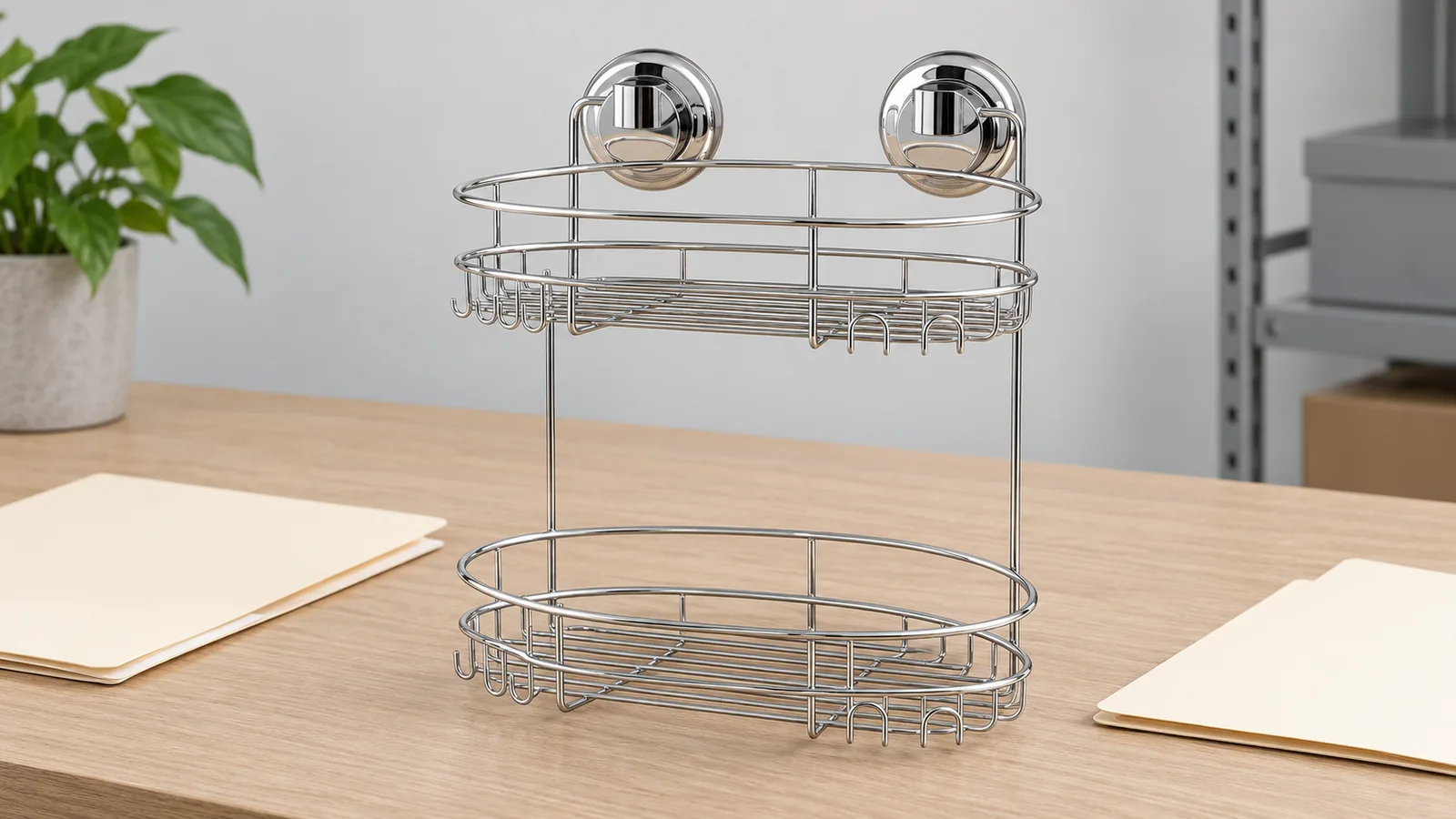
For example, a wire basket’s drawing revision can connect to the finished SKU and a production order. Its purchase and packing records can connect that order to a shipment and invoice. If the buyer has reliable information about a mounting part, wire or coating input, the BOM or supplier record can identify where that information belongs. This does not mean Koitor or any particular supplier necessarily holds every upstream record. Availability depends on the product’s real chain, what parties record, contract terms, and the question at hand.
Where a form, metal, coating or component comes through another supplier, ask what is actually known and who holds the source record. “Purchased from Supplier A” is different from knowing where the raw material originated. Likewise, the port of export is not proof of the manufacturing or raw-material origin. Preserve that distinction in internal notes and buyer communications.
Ask suppliers bounded, product-specific questions
A useful supplier request names the product, revision, order, time period and records sought. Instead of asking for a broad promise such as “confirm UFLPA compliance,” ask the supplier to describe what it can verify and the limits of that information. For example:
- Which facility manufactures this SKU and revision? Do any production steps take place at another facility?
- Which components or materials are significant to this product, and which suppliers provide them?
- What origin or transaction records are available for those inputs, and what stage do the records cover?
- Can the approved product and BOM revision be connected to the production order, lot, invoice and shipment?
- Have the site, subcontracting arrangement, material source or component supplier changed since the last approved order?
- Who can clarify an open field, and when will the answer be reviewed again?
These are practical buyer questions, not mandatory wording from the statute or a guarantee that a supplier can answer every one. Keep the request proportionate to the product and purchasing decision. A small metal organizer may have a short component list; a product with multiple materials, sites or outsourced processes may need more coordination. Ask for supporting records where relevant, but do not tell a supplier that a general certificate or audit conclusively resolves a UFLPA question.
A UFLPA importer supply chain traceability China review should distinguish “supplier stated,” “documented in a transaction record,” and “independently checked.” Those are different levels of support. Store the source, date, scope and responsible person for each important statement so that a later reviewer can see what was known when the purchase or shipment decision was made.

Keep gaps, changes and conflicts visible
Records become less useful when they are detached from revisions or silently overwritten. If the factory, finishing location, material, subcontractor or component supplier changes, note the affected SKU and orders, the effective date, who reported the change, and whether the buyer approved it. Link the new information to the old version rather than replacing the history. This is ordinary product and order control; it does not establish that the change creates a UFLPA concern.
When records conflict, preserve both versions and ask the source to explain the difference. For example, an invoice may identify a seller while a product record identifies a different factory. That discrepancy is a question to resolve, not proof of wrongdoing. If an upstream origin is unknown, record “not confirmed” and decide whether the information gap calls for additional sourcing review, a shipment hold, a different supplier, or legal advice. Do not convert unknown data into a confident country or facility claim.
Avoid broad conclusions from a single clue. A supplier’s country, a metal type, a port, a general audit, or the absence of a name from a list does not by itself settle the applicability of the law to a particular product and supply chain. Screen relevant entities against the current official list, retain the date and method of the check, and ask a qualified professional to assess how the result applies to the import.
If CBP asks questions, organize before responding
CBP’s process depends on the authority and notice involved. A detention, request for information, applicability review, exception request, WRO/Finding action or CAATSA matter should not be treated as interchangeable. Read the actual notice, observe its deadlines and submission instructions, and involve the importer’s customs broker and qualified trade counsel promptly. The 2026 consolidated guidance describes enforcement processes and sample notices; use the applicable version and current CBP instructions rather than a generic blog checklist.
An importer may need to establish that an import is outside the scope of the UFLPA or, in a different situation, seek an exception to the presumption. These are not the same argument. The statutory exception has specific conditions, including compliance with relevant guidance and a clear-and-convincing-evidence standard, as well as complete, substantive responses to CBP requests. A buyer-created spreadsheet, supplier statement or test result does not itself meet that standard. Let counsel assess the legal route and evidentiary sufficiency.
Before an inquiry arises, the buyer can identify internal owners for commercial records, product specifications, supplier contacts, freight files and legal review. Make sure the records can be retrieved by SKU, purchase order, production lot or shipment, not only by supplier name. This preparation can reduce scrambling, but it does not guarantee a release, prevent a detention or replace CBP’s decision.
Common importer questions
Does every product made in China fall under the UFLPA presumption?
No. The UFLPA’s rebuttable presumption has specific Xinjiang and Entity List triggers, including covered goods incorporated as inputs into downstream products. China origin alone is not the trigger. The broader Section 307 prohibition and other authorities have their own scope, so buyers should not treat this short answer as a shipment-specific legal conclusion.
Is a supplier declaration enough?
It may support a particular fact if its scope and basis are clear. On its own, a declaration does not necessarily connect every component to every upstream source, prove conditions at each production stage, or guarantee CBP acceptance. Record who made it, what it covers, when it was issued and what supports it.
Does a factory audit prove that a product is outside the UFLPA?
Not automatically. An audit has a defined facility, period, method and scope. It may be one input to a broader review, but it does not necessarily trace the product’s materials or all upstream production. Do not describe a general social audit as a legal safe harbor.
What should a hardware buyer do first?
Identify the imported SKU and version, locate the parties and sites involved, connect the available input and transaction records to the order, and document gaps. Then use the current CBP materials and ask a qualified customs professional what the facts mean for the planned import.
For UFLPA importer supply chain traceability China, the practical takeaway is to make the product, parties, inputs and shipment records connectable while preserving what is unknown. The goal is an honest, dated evidence trail—not a claim that a generic checklist or supplier document guarantees compliance.
Arbeiten Sie mit Koitor Hardware zusammen
Align Product Specifications and Sourcing Records
Koitor Hardware manufactures bathroom and home-storage metal products for overseas buyers. Product specifications, approved drawings and supplier-to-order communication can help keep product versions and purchasing records aligned. The specific records available depend on the product and its supply chain; this article is not legal advice, forced-labor certification or a guarantee of import admissibility.
OEM / EIGENE MARKE
Verwandeln Sie diesen Beschaffungsleitfaden in ein Produktdossier
Teilen Sie uns Ihr Zielprodukt, die Größe, die Oberflächenausführung, die Bestellmenge und Ihre Verpackungsanforderungen mit. Ihr Team erhält vor der Angebotserstellung eine praxisorientierte Prüfung der Herstellbarkeit.


 English
 Español
 Português
 Français
 Deutsch
 العربية