
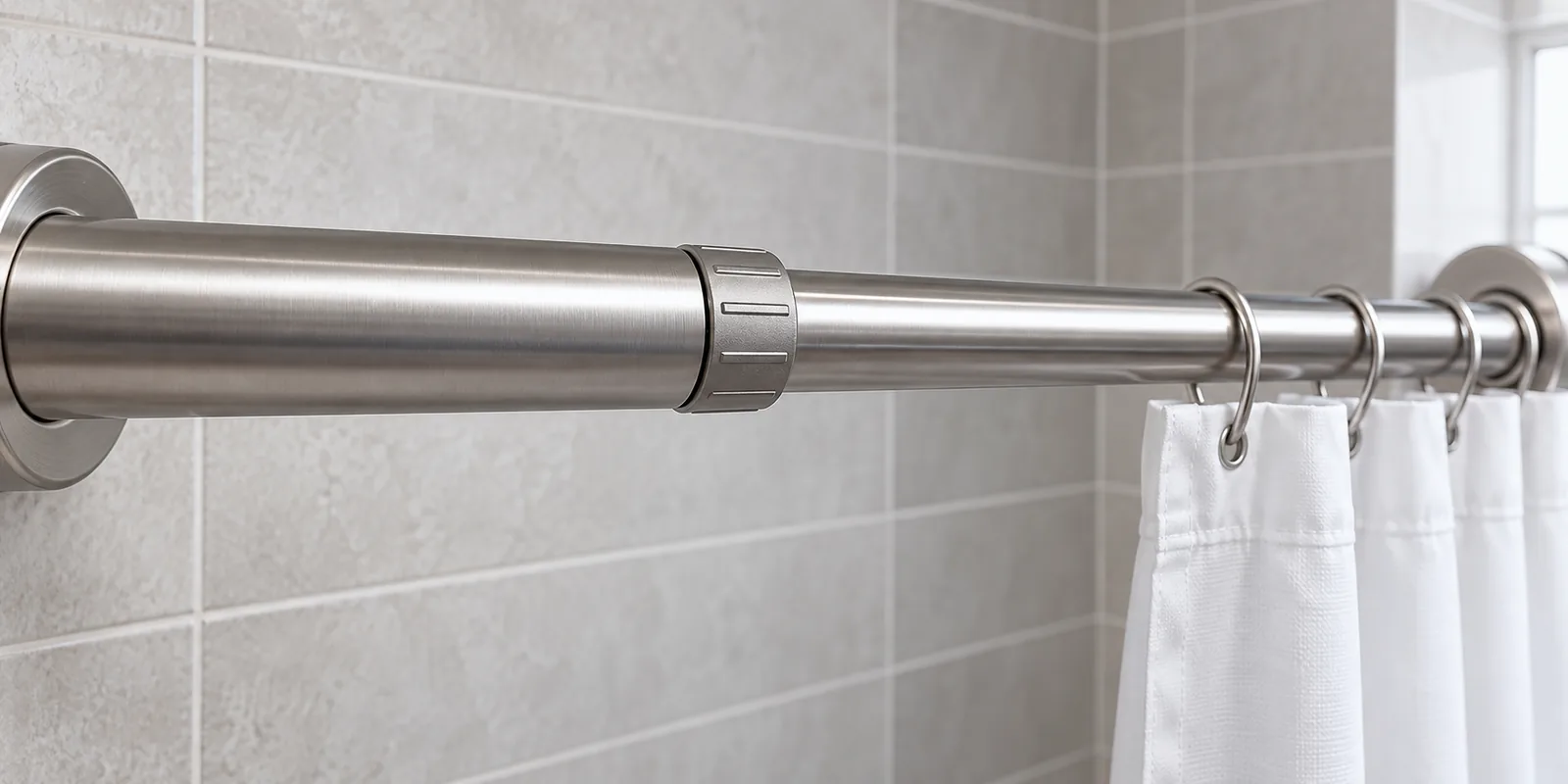
A telescoping tension shower rod overlap joint slip specification should define the usable length range, minimum tube overlap, joint construction and intended lock or release behavior. Buyers should review the joint at more than one adjustment position and record whether it rotates, slides or collapses under the project's agreed observation. A lock instruction for one model is not a universal mechanism standard; the approved drawing and sample must describe the actual product being sourced.
In buyer research, the exact phrase “telescoping tension shower rod overlap joint slip specification” is a useful shorthand; the RFQ should replace it with the project's actual dimensions, interfaces and sample acceptance observations.
Related project context: fabricante de accesorios de baño a medida. For a project-specific review, buyers can Ponte en contacto con Koitor with a drawing or sample.
Why can a telescoping joint behave differently across its range?
A telescoping rod joins a smaller tube inside a larger tube so the assembly can change length. The exposed inner length and remaining overlap change together as the rod extends. If a buyer reviews only a middle position, the sample may not reveal how the joint seats near either end of its declared range. The supplier should identify the usable range and the minimum overlap or engagement required by the actual design.
Movement at the interface can take several forms: axial shortening, rotation of one tube, lock-collar slip, looseness or a release action that is difficult to repeat. These observations are not interchangeable. A rod can extend smoothly yet fail to remain at a selected length; a lock may hold but be hard for an intended user to release. Buyer criteria should distinguish adjustment convenience from retention after setup.
The joint also sits within a full assembly. End caps, spring elements, brackets or installation instructions may interact with the telescoping section. This guide does not assume any one construction is used by every rod. Ask the supplier to disclose the functional interfaces and make sure the sample includes the intended end components. Reviewing a tube pair without the product's actual locking parts can miss the feature that controls the buyer's question.
Community questions about rods that shorten or slip show why buyers search for joint guidance, but forum reports do not establish a failure rate. They help define a useful procurement question: what does the supplier mean by locked, and how will the approved sample demonstrate it? The response should be specific to the mechanism, adjustment range and installation instructions rather than copied from a different model.
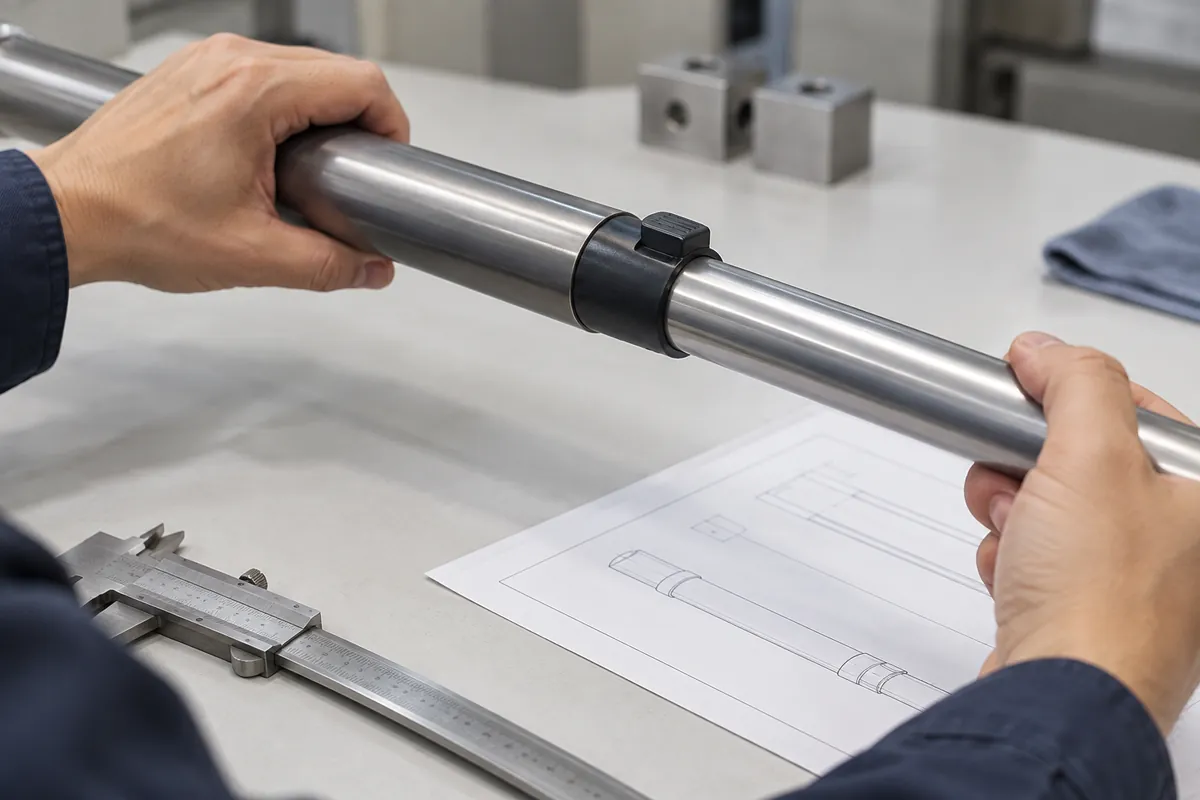
What should the drawing specify about overlap and locking?
Show the smallest, middle and largest intended assembly positions, or otherwise define the functional endpoints. Identify the datum for measuring overall length and clarify whether end fittings are included. Mark the joint region and indicate the minimum engagement that the supplier proposes for the approved range. Do not select an overlap number from an unrelated product; geometry, tube dimensions and mechanism design determine what is appropriate.
Describe the lock by its user action and observable outcome. A twist collar, push button, spring element or friction fit may require different instructions and inspection. State how the user engages and releases it, whether the outer tube is held during adjustment, and what position counts as secured. If the supplier proposes a mechanism change, request a revised drawing and instructions before sample approval rather than accepting a visually similar but functionally different joint.
Mark any rotation that is intended or prohibited after locking. Some designs may permit alignment movement while others are expected to remain fixed once installed. The drawing or inspection sheet should state the expected condition without imposing a cycle count or torque that lacks a project basis. If a quantitative requirement is needed, the buyer and qualified technical team should define the method and acceptance threshold for this specific assembly.
Write the RFQ so a supplier can separate the tube interface from end-cap fit. The keyword phrase “telescoping tension shower rod overlap joint slip specification” should resolve into the exact range, interface, lock action and sample checks under review. Keep the wall-contact question separate: end-cap grip on a surface is the subject of K219's distinct buyer decision, not a substitute for examining overlap and locking at this joint.
How do buyers compare telescoping joint concepts?
A plain sliding overlap can be mechanically simple, but it may rely on fit or a separate end mechanism to remain at the selected length. A twist-lock collar can provide a deliberate user action, though the buyer needs to know how it engages and whether it introduces cosmetic or assembly concerns. A spring-assisted arrangement may change extension behavior and internal part count. These are categories to investigate, not a recommendation that one suits every assortment.
Compare adjustment feel and retention separately. The user may need to extend the rod easily during installation but still expect no unintended length change afterward. Ask the supplier to demonstrate the full sequence from released, through adjustment, to locked. If the mechanism has an indicator or alignment mark, include it in the approved instruction and inspect whether it remains visible at the relevant positions.
A telescoping overlap can create a step between outer and inner tube surfaces. That step may affect appearance, curtain-ring movement, cleaning or packaging. Review the joint in its actual orientation with the intended rings or accessories if those can pass across it. Do not infer a snag-free glide from a close-up photograph; an assembled sample demonstrates more than a rendering of two tubes.
Commercial comparison should align length range, finish, end fittings, lock type, packaging, spare parts and sample route. If one supplier quotes a simpler sliding tube and another includes an additional lock, their prices do not cover the same function. The buyer can request options, but each option needs a clear name and sample condition. A concise comparison sheet makes it easier to evaluate unit cost alongside use and inspection needs.
| Joint concept | Decisión del comprador | Documentación que hay que solicitar |
|---|---|---|
| Sliding overlap | What holds the chosen length? | Range positions and post-adjustment movement |
| Twist collar | How does the user lock and release it? | Model instruction and sample operation |
| Spring-assisted joint | What changes during extension? | Assembly scope and endpoint observations |
| Separate sleeve or insert | Does it control fit or appearance? | Component identification and revision |
| End-contact system | Is wall grip a separate requirement? | Surface matrix and installed sample |
How should suppliers verify the joint at sample stage?
Ask for a production-intent sample identified by drawing revision, tube dimensions, finish and mechanism version. Observe adjustment at the buyer-defined endpoints and at one intermediate position. Record how the lock engages, whether the tubes turn as intended, and whether the assembly remains at the selected position during the agreed check. Do not describe an informal hand observation as a load test or cycle-life result.
Inspect the overlap zone for burrs, sharp transitions, finish discontinuity and inconsistent clearance. If a collar covers the interface, review both the assembled appearance and the accessible condition when released. Check whether the user's fingers can operate the lock according to the supplied instructions, without inventing a universal force threshold. Any specialized usability or safety assessment belongs to the buyer's planned validation and qualified review.
Repeat observations after the rod is installed between the specified surfaces, because end compression or alignment can influence joint behavior. This does not mean a wall test can prove every mechanism characteristic; it connects the interface to its intended context. Document the opening, adjustment position, locking action, and any accessories present. If the rod shifts, identify whether the cause appears at the joint, end caps or installation rather than guessing from the result alone.
A model-specific instruction manual is useful for confirming sequence and terminology. For example, the linked assembly instruction demonstrates a particular twist-to-lock process; it should be treated as evidence for that model, not imported as a default requirement for another supplier. Ask for the chosen design's own instruction sheet and attach it to the sample record so production and retail teams share the same operational language.

What cost, finish and packaging details belong in the comparison?
Material, tube section, finish, overlap length and any locking components can affect material use, assembly time, adjustment behavior and quote scope. The buyer does not need to dictate a process without evidence; it can state the required fit and appearance, then ask the supplier to explain the proposed route. Make clear which parts are included, such as end caps, brackets, sleeves or instructions, to prevent low-price quotes from hiding omitted components.
Finish needs review at the sliding region and at the visible transition. A thick coating or rough edge may alter the clearance of a telescoping fit, while a mismatch between inner and outer tubes may be conspicuous in an extended position. The relevance depends on actual materials and finishes. Approve a representative sample at multiple lengths rather than judging only the nested shipping position.
Packaging should prevent the tubes from sliding, striking one another or abrading adjacent components in transit. Retention tabs, separators or protective sleeves may be options, but the package must be reviewed with the final mechanism and retail presentation. Check whether loose lock parts or end caps remain associated with the correct rod. A packaging sample helps identify handling issues but does not prove transit performance without a planned validation.
The phrase “telescoping tension shower rod overlap joint slip specification” belongs in the drawing notes only if it is translated into measurable product requirements. For repeat orders, retain the approved joint version, assembly sequence, finish condition, instructions and packaging revision. When any of these changes, assess the checks affected. A color update and a change in lock construction do not carry the same risk, so change control should be proportionate and documented.
How should buyers control approval and future revisions?
Use a sample record that names each functional characteristic: length range, overlap, lock action, rotation expectation, visible step and installed condition. State the approved sample ID and drawing revision. If a feature is not evaluated, mark it as open or outside scope. This is more useful than a general approval note because a later team can tell what the buyer actually accepted and what still needs evidence.
If the supplier proposes a different tube size or lock, request a short comparison explaining effects on usable range, appearance, packaging and operation. A redesign might be acceptable, but it should not be silently substituted after sample approval. Keep commercial approval separate from technical approval where that helps procurement: a quote can be reviewed while the joint still awaits a sample decision.
For private-label products, align retail instructions, packaging and the approved mechanism. A user may misinterpret a twist, pull or spring action if the wording is copied from another design. Review diagrams against the actual sample, confirm that parts are shown in the right order, and remove any unsupported universal claims. An accurate instruction can reduce avoidable confusion even though it cannot replace fit verification.
Koitor Hardware's documented expertise is in custom bathroom and home-storage metal hardware, forming, joining, finishing, assembly and sample development. The exact tension-rod lock system is not established as a current product capability. Buyers should confirm whether a prospective supplier makes the mechanism, sources a component or proposes a new development, and should assign responsibility for functional validation explicitly.
An example of buyer-facing information is available in a model-specific shower-rod assembly instruction. It is context for the specific source product or process, not a universal specification for this project.
Lista de comprobación para la aprobación del comprador
- Define overall length datums and usable adjustment endpoints.
- Show the overlap region and supplier-proposed minimum engagement.
- Describe lock, release and intended rotation behavior in user terms.
- Observe the joint at multiple positions, then recheck in the installed configuration.
- Align finish, supplied parts, instructions, packaging and change-control records.
Preguntas frecuentes
Is a visible tube overlap enough to show the joint will hold?
No. It identifies geometry but not the lock action or retention condition. Review the mechanism and a sample at the required adjustment positions.
Should buyers require a fixed overlap length for every rod?
No universal value is appropriate. Define the product's range and have the supplier propose and verify the engagement for that design.
Are twist-lock instructions interchangeable between brands?
No. Locking direction and installation sequence can vary by model. Use the instructions supplied for the exact approved assembly.
Does joint movement prove the rod is unsafe?
Not by itself. Identify the movement, setup and buyer requirement, then have the project team assess it against the product's intended use and validation plan.
Does Koitor currently make this telescoping mechanism?
This research does not confirm that exact capability. Buyers should ask the supplier to state the development and component scope for their project.
Comenta las especificaciones de tu producto
Comparte el boceto, la interfaz de destino, el acabado y los requisitos de las muestras para que se pueda revisar el alcance del proyecto.
OEM / MARCA BLANCA
Convierte esta guía de abastecimiento en un resumen del producto
Indícanos el producto que deseas, el tamaño, el acabado, la cantidad del pedido y los requisitos de embalaje. Tu equipo recibirá un análisis práctico de la viabilidad de fabricación antes de recibir el presupuesto.

 English
 Español
 Português
 Français
 Deutsch
 العربية