
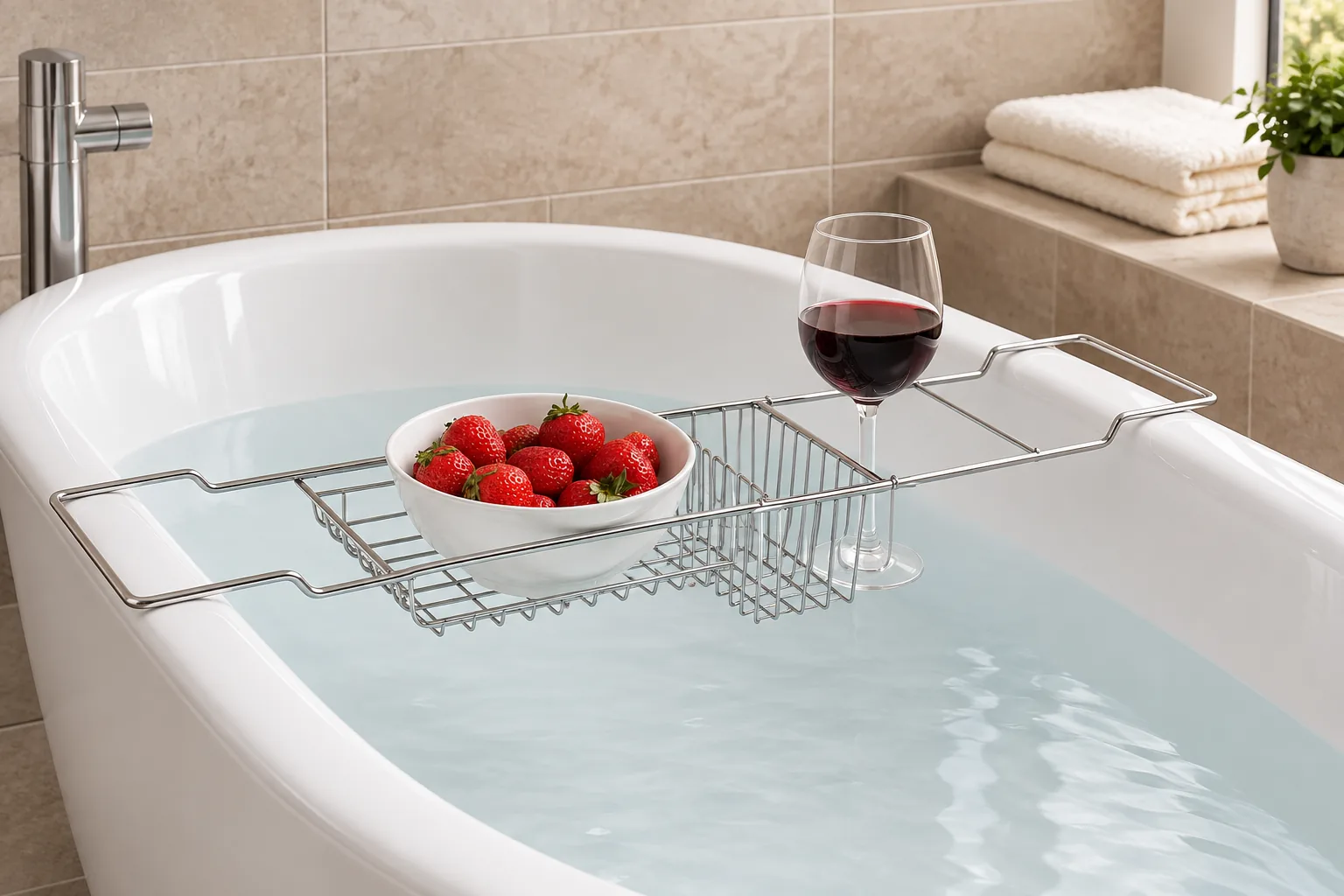
A bath tray bathtub rim support fit guide should begin with the tub's usable opening and the profile of both opposing rims, then check where each tray end actually contacts the bathtub. Overall width alone does not prove a stable fit: taps, slopes, narrow ledges or asymmetrical edges can change the support position. Buyers should approve a representative tray on a tub mock-up or target sample and record the configuration rather than claim universal bathtub compatibility.
In buyer research, the exact phrase “bath tray bathtub rim support fit guide” is a useful shorthand; the RFQ should replace it with the project's actual dimensions, interfaces and sample acceptance observations.
Related project context: fabricante de accesorios de baño a medida. For a project-specific review, buyers can Ponte en contacto con Koitor with a drawing or sample.
Why does nominal tub width fail to describe tray fit?
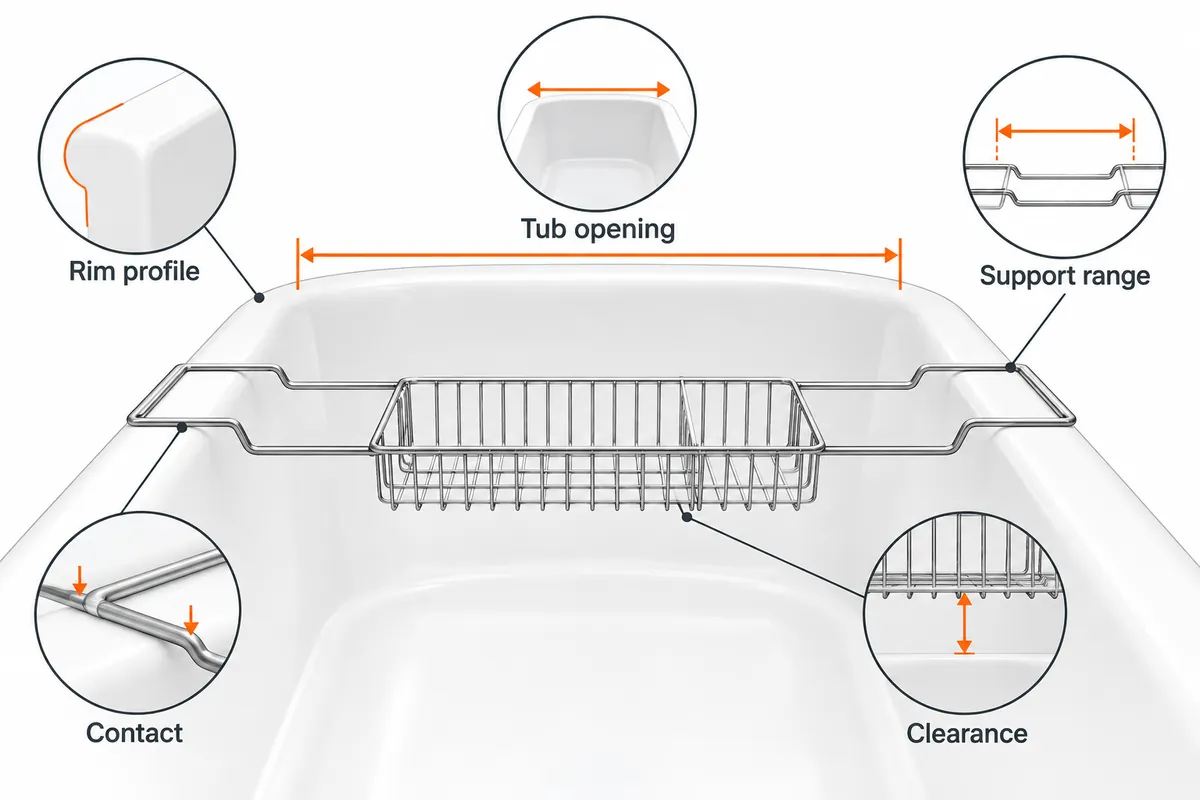
A measurement across the tub opening says how far apart two reference points are, but it does not describe the surfaces that support the tray. Rim width, slope, curve, rounded corners, surrounding tile and nearby fittings can all affect where an end rest sits. Two tubs with similar openings may present different contact geometry. Buyers should separate the inside span from the outside bearing surfaces when preparing an RFQ.
Support can be offset or asymmetric. One end may rest on a broad level rim while the other meets a narrower ledge, sloped face or nearby enclosure. A tray that appears centered from above may actually sit close to an edge on one side. Note both ends separately, show the intended orientation and capture a side view of the contact. Do not assume the tub is perfectly rectangular or symmetrical unless the target product context confirms it.
Clearance around the tray is a functional part of fit. A faucet, handle, shower screen, wall tile projection or curtain may interfere with a support arm or stored item. A tray may rest on both rims but still obstruct a control or sit too close to an edge. Include these nearby features in the mock-up or sample review when they matter to the buyer's assortment and installation instructions.
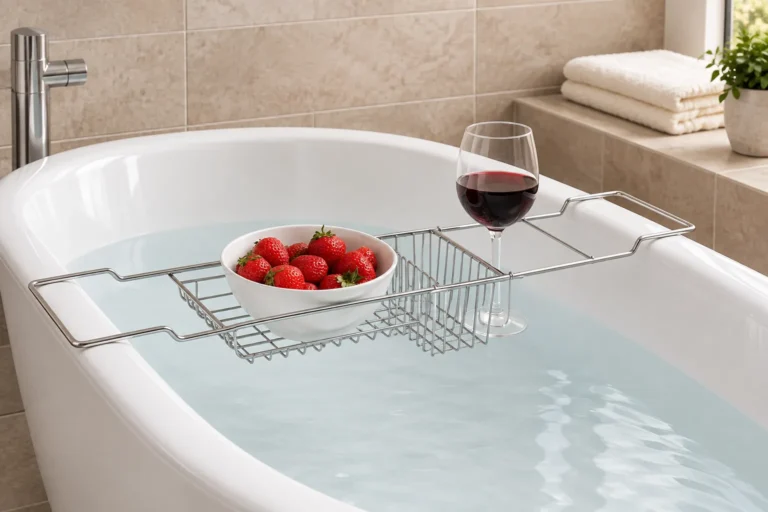
The tray form itself influences what needs checking. A wire basket may provide storage below a bridge section, while a flat or compartmented tray presents different support contact and cleaning questions. Use the exact product-form reference and identify which elements are fixed or adjustable. This article is adjacent sourcing guidance; it does not assert that every bathtub tray configuration is in Koitor's current production range.
Which tub and support measurements belong in an RFQ?
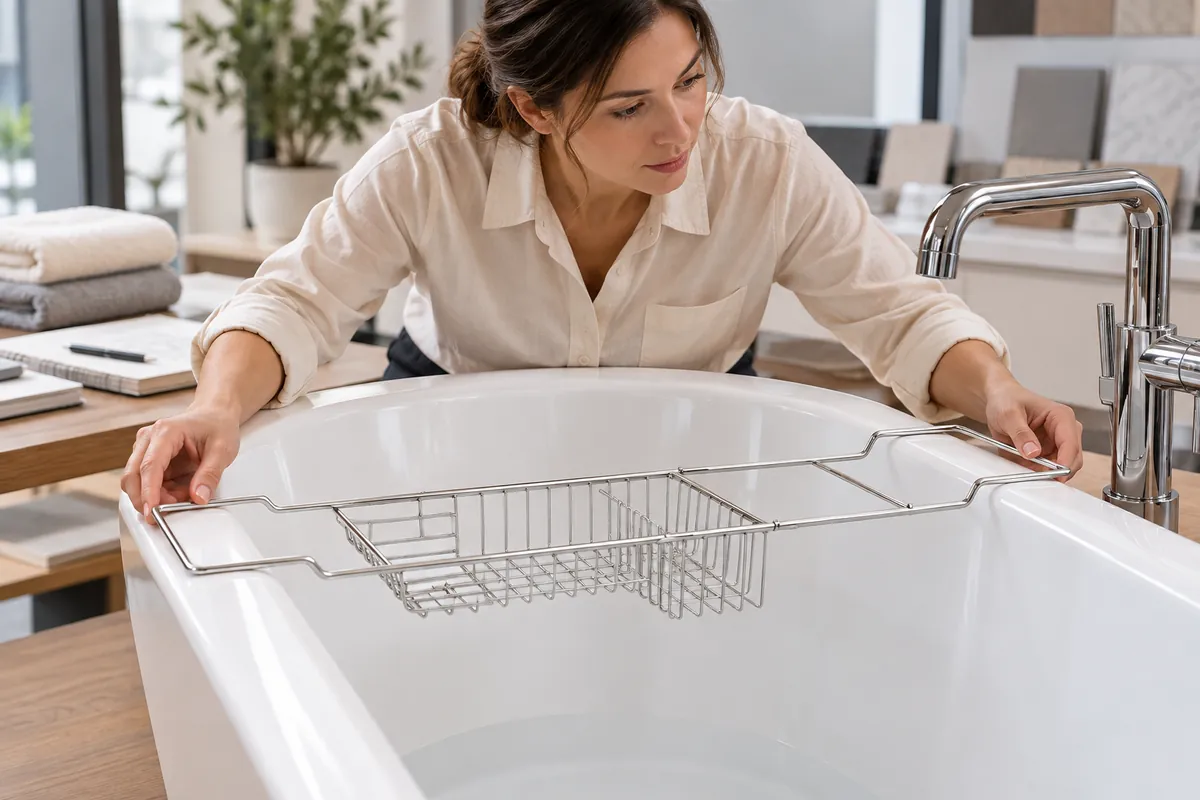
Define the inside opening at the intended tray location and the outer span between actual end-contact datums. State the measurement method and whether the tray must accommodate a range or one target tub family. If dimensions vary across a market assortment, provide the relevant min/max values from the buyer's own research. Avoid phrases such as standard tub width unless the buyer supplies a standard and states how it applies.
Record each rim profile at the support point: width, slope direction, corner radius and any stepped transition that changes contact. Photos with a scale or a simple cross-section sketch can help a supplier understand the surface, but actual measurements should control where fit is critical. If the two ends differ, label left and right or faucet and drain ends. Do not mirror one side automatically in the drawing.
Identify the support construction. A fixed arm, sliding extension, telescoping end or removable contact pad has different implications for adjustment and retention. State whether the buyer expects no adjustment, a declared range or a replaceable accessory, and ask the supplier to confirm the proposed behavior. An adjustable commercial example may use protective end covers, but that example does not prove every caddy shares the same construction or fit envelope.
Finally, specify clearances to faucets, handles, screens, wall surfaces and any storage items that define the product's use. The phrase “bath tray bathtub rim support fit guide” should become a drawing with dimensions and contact notes, not a vague demand that the tray fits all tubs. Buyers should also record excluded tub shapes or installation conditions so the final listing and retail instructions do not exceed the approved evidence.
How do common support concepts compare?
A fixed-span bridge can be simple to inspect when the buyer targets one known opening, but it may not accommodate a broader assortment. A telescoping or adjustable span can widen the potential fit range, while adding a moving interface that needs review at minimum and maximum positions. A removable end support may help with packaging or replacement but creates another part to identify and retain. Compare concepts against the sourcing brief instead of assuming adjustability is always preferable.
End-contact materials and shapes should be reviewed for the target rim. A cap can help separate metal from a tub surface, but its material, shape and retention are project details. A narrow point contact, broad pad or formed wire rest distributes contact differently; no one option can be approved without the tub profile and intended sample. Buyers should ask whether any proposed pad is part of the quoted assembly and whether spares are included.
A central basket, tray or divider changes clearance below and around the bridge. A product can span the rim while a hanging basket contacts the tub interior or competes with the user's space. Review the full three-dimensional envelope from top, side and end views. If storage capacity is part of the buyer's requirement, validate it with the intended product arrangement rather than a visual rendering alone.
Cost comparison should keep span, end supports, pads, finish, storage sections, packaging and quantity constant. One quote may describe a single-size tray; another might include an adjustable interface or extra components. Ask suppliers to itemize what is included and identify any tooling or sample work as a separate scope. A published specification for one branded caddy can help illustrate the type of information buyers may find, but its dimensions and features must not be copied into another project.
| Fit variable | Buyer record | Por qué es importante |
|---|---|---|
| Inside opening | Measurement points and location | Defines the required span |
| Left and right rim | Width, slope, radius and offset | Shows actual support surface |
| End support | Fixed, adjustable, padded or removable | Changes fit and part scope |
| Nearby fixtures | Tap, screen, wall and handle envelope | Prevents interference |
| Tray envelope | Basket depth and underside clearance | Confirms usable placement |
How can a buyer evaluate narrow or offset tub ledges?
Create a fixture or select a representative tub that reproduces the actual bearing surfaces. Where the rim is narrow, mark the usable contact width and identify whether the support may sit partly on a slope or rounded corner. For offset ledges, record the height and horizontal difference between left and right. The supplier can then show where the support lands and whether the tray remains in the intended orientation.
Test the fit without adding an unapproved shim, pad or adhesive. If the sample only works after a buyer improvises a spacer, record that as an open design change instead of approving the original configuration. Examine whether the end support can shift during ordinary placement and whether the assembly is easy to position according to the instructions. This is a fit review, not a safety or load certification.
Include faucet and screen clearance in the test arrangement. Some taps project into the tray's envelope, while a shower screen or ledge can restrict how the tray is positioned. Photograph top, side and contact views; note any parts that must be rotated or removed during installation. If the sample is intended for multiple tub profiles, repeat the same documented checks on each target fixture instead of generalizing from a single model.
A clear fit decision says which tub or mock-up was used, which side was which, where contact occurred, what clearances were checked and what remained unknown. If the tray is approved only for a specific opening or rim profile, make that limitation visible to product and retail teams. It is better to describe a verified fit subset than to make a broad compatibility claim without sufficient sample evidence.
What should the sample approval record contain?
Identify the tray by drawing revision, material/finish description, end-support version and accessories. Record the target tub opening, rim profiles and any measured offset. If an adjustable component is present, note its setting at each observation. The sample record is useful only when another reviewer can reproduce the arrangement, so include reference photos and distinguish the product's front, faucet side and drain side.
Inspect the contact surfaces for rocking, uneven seating, slippage or interference using a method agreed by the project team. Observe the tray during the product-specific fit check and note whether it needs an undocumented adjustment. Do not write a generic pass based on appearance from above. If user interaction or load validation is necessary, a qualified project team should define the setup, criteria and evidence separately from this dimensional fit review.
Review finish and cleaning access after the tray is installed. Water, soap residue or cleaning products can reach interfaces that are not obvious on a studio table; however, a visual sample does not prove corrosion or chemical compatibility. Buyers should specify what finish and maintenance information they require and obtain appropriate evidence. The fit checklist should not expand into unsupported claims about hygiene, durability or safety.
A manufacturer product specification can illustrate the dimensions or end details one supplier chooses to publish, but it is only a comparison point. For this project's bath tray, the approved buyer drawing and physical sample control. Keep the source sheet in research notes and do not transplant its size, capacity or warranty language into a Koitor article or product claim.
How should buyers plan packaging and assortment changes?
A long tray or bridge can be vulnerable to bending, finish rubbing or loose support parts during handling. Review whether the package restrains both ends, protects contact pads and keeps small components with the correct tray. If the product includes removable sections, make their orientation clear for assembly. Unpacking should not require a tool or action that was absent from the instructions. A packaging sample can expose these questions before a production release.
Different tub ranges may require separate lengths, an adjustable design or multiple end-support configurations. Buyers should compare inventory complexity, carton dimensions and SKU labeling along with consumer fit. A flexible design can reduce the number of size-specific products but may increase parts or assembly checks. The best option depends on the target market evidence and the actual package economics, not on a blanket assumption that one adjustable product fits all.
If a new retailer or region introduces a different tub profile, review the fit map before changing the product listing. Update the approved fixtures, installation notes and images to reflect the supported context. Do not retain old compatibility language just because the tray's center section is unchanged; the end supports and bearing surfaces carry the fit decision. Keep version history so that buyer teams know which sample and instructions were approved.
Koitor's documented positioning supports custom metal bathroom and home-storage hardware discussions, including drawing and sample review. This adjacent category guide does not claim Koitor currently manufactures a particular bathtub tray. A buyer considering development should confirm the product design, manufacturing scope, bought-in components, finish route, packaging and validation responsibilities directly with the supplier.
An example of buyer-facing information is available in a published tub-caddy product specification example. It is context for the specific source product or process, not a universal specification for this project.
Buyer approval checklist
- Measure both opening and actual end-contact datums at the intended position.
- Describe left and right rim profiles separately, including offsets and rounded edges.
- Identify end-support construction, adjustments and contact-pad scope.
- Check faucet, screen and underside clearance on a representative tub or fixture.
- Record sample ID, drawing revision, fit observations, exclusions and package configuration.
Preguntas frecuentes
Is the bathtub's inside width enough to specify a bath tray?
No. Buyers also need the rim bearing profile, contact position, nearby fittings and the tray's outer support span.
Should an adjustable tray fit every tub?
No. Adjustment broadens a possible range but does not guarantee compatible rim shapes or clearance. State and validate the intended range.
Can end pads be assumed to protect any tub finish?
No. Review the exact pad and tub-surface combination, and avoid universal scratch-prevention claims without evidence.
Does a fit sample prove the tray is safe under load?
No. Fit, retention and load validation are different questions. Any load criteria require a project-specific method and qualified review.
Does Koitor currently manufacture this bath tray?
That exact SKU is unconfirmed. Treat this as adjacent sourcing education and verify the supplier's development and production scope.
Discuss your product specification
Share the drawing, target interface, finish and sample requirements so the project scope can be reviewed.
OEM / MARCA BLANCA
Convierte esta guía de abastecimiento en un resumen del producto
Indícanos el producto que deseas, el tamaño, el acabado, la cantidad del pedido y los requisitos de embalaje. Tu equipo recibirá un análisis práctico de la viabilidad de fabricación antes de recibir el presupuesto.
 English
  Español
  Português
  Français
  Deutsch
  العربية