
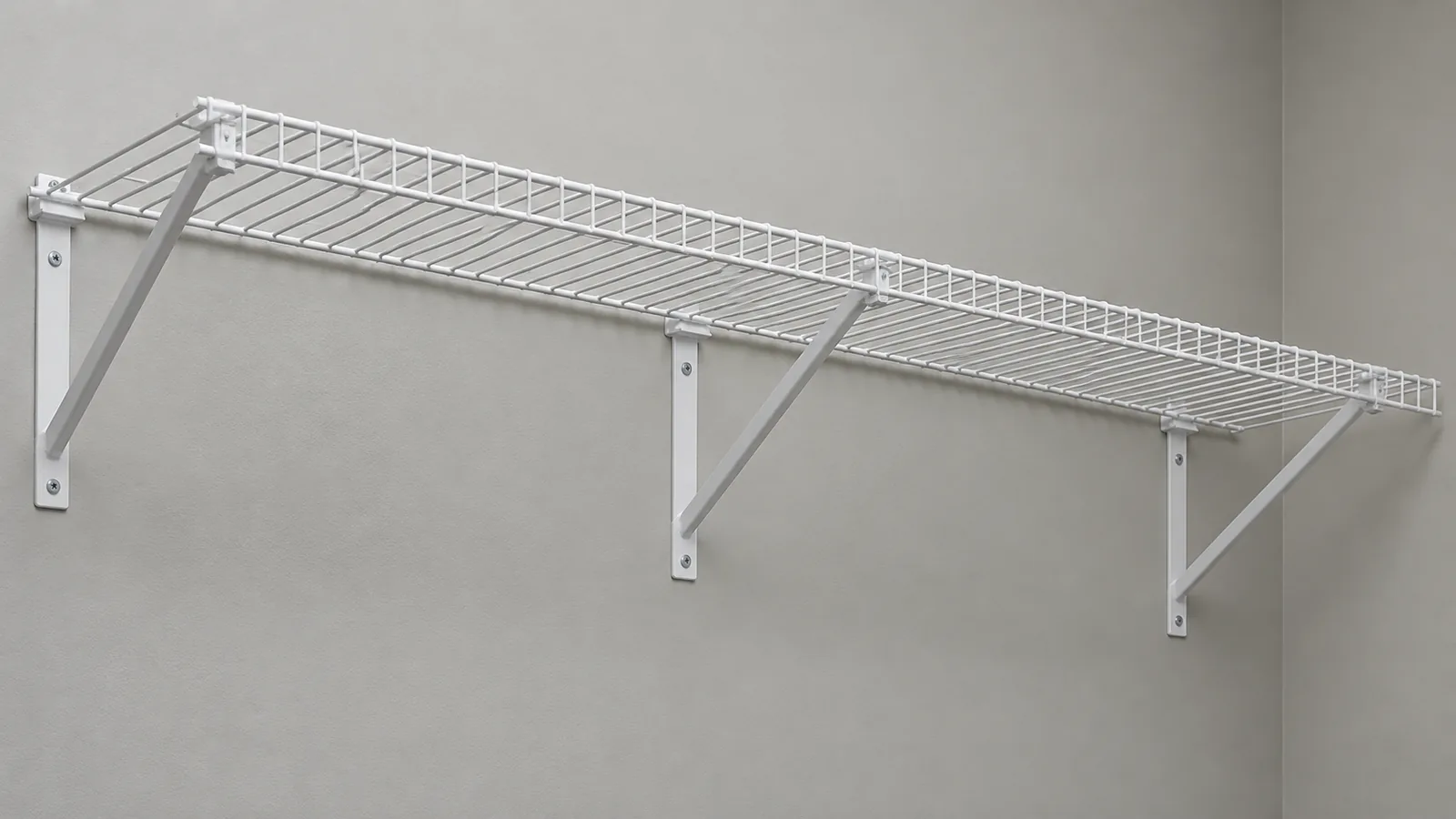
Wire shelf support bracket spacing must be approved for the actual shelf construction, bracket system, wall fixing and intended use. Buyers should not copy a span from another brand or treat bracket count as a universal load rating. Request the selected supplier's layout guidance and stated limits, then review the representative shelf and wall assembly. The decision is whether the proposed support positions match documented conditions for the product being quoted.
This short video shows the product or manufacturing context discussed in this guide.
Why does support spacing affect shelf behavior?
A wire shelf transfers load through its perimeter and cross wires into brackets or channels, then through fasteners into the wall. Changing support positions changes the unsupported span and how force is shared. Shelf wire diameter, frame profile, depth, width and joints also influence deflection. This is why a spacing recommendation belongs to a defined product and installation system rather than the generic phrase wire shelf.
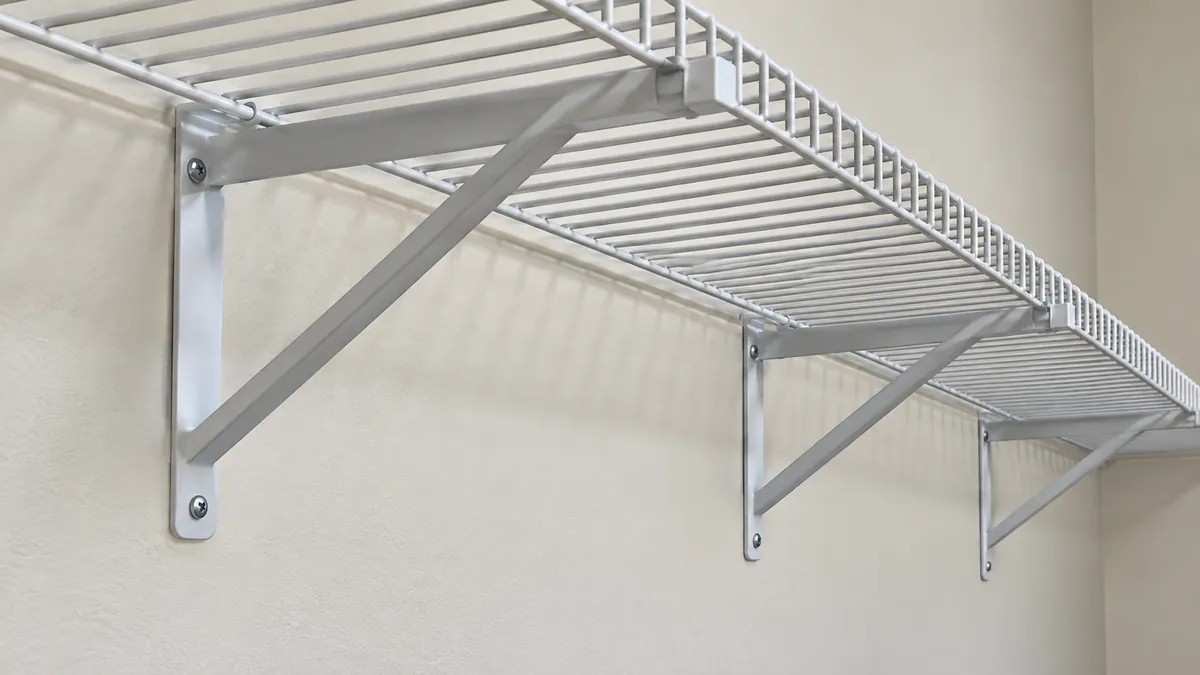
ClosetMaid's installation resources illustrate that support placement and compatible brackets are defined within a particular shelving system. Those instructions are not a universal span or load value for another maker's shelf. Ask the quoted supplier for its current drawing and conditions. If an importer sells components separately, the package should identify which support arrangement and wall type the stated use assumes.
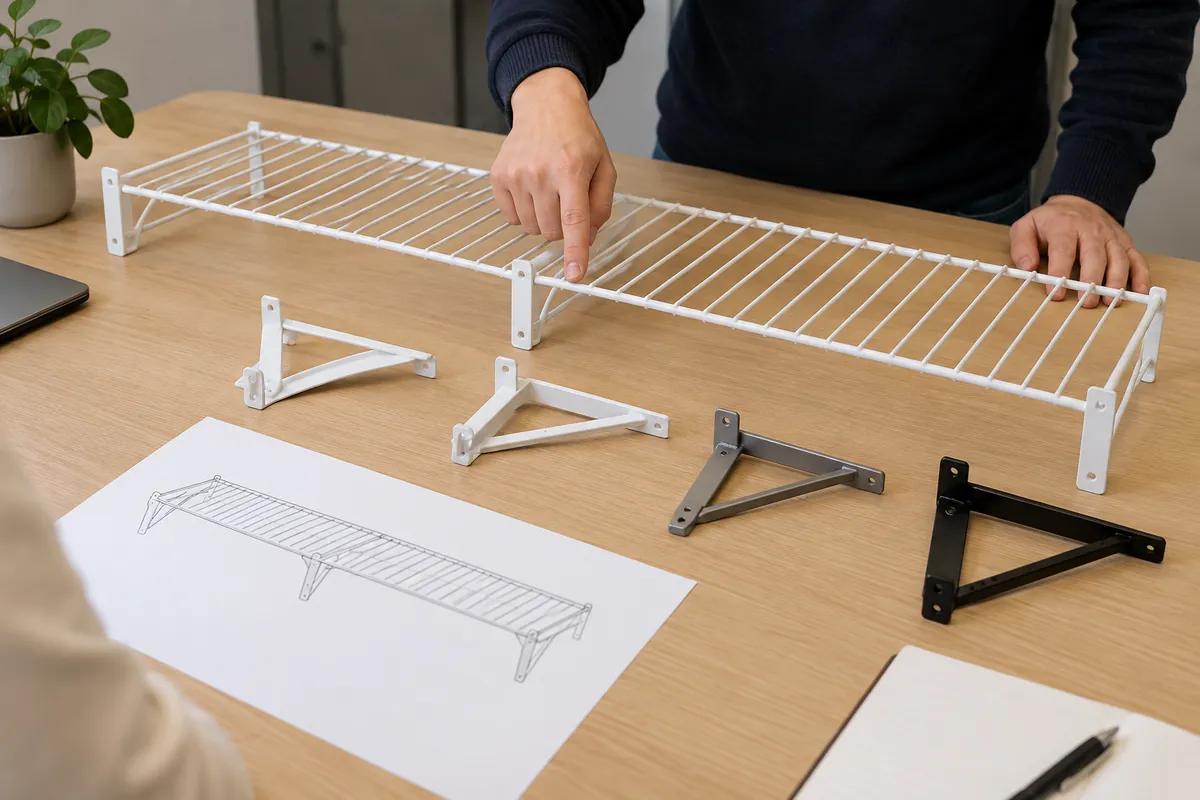
A shelf can bend in the center, twist near a corner or pull a bracket away from a wall for different reasons. The symptom depends on load position, direction, wall attachment and geometry. A bracket placed near an edge may not support a concentrated item at midspan, while adding support can introduce a new fastener or interference. Describe intended storage distribution rather than saying only light or heavy use.
Deflection is not automatically a defect, and an empty sample that looks straight does not prove behavior under an unspecified load. Define the observation, loading setup and who supplies any rated capacity. If the supplier provides a load table, retain its model identity and boundary conditions. Do not convert a competitor's test or a casual demonstration into a performance claim for another shelf.
Which product and installation inputs should the buyer specify?
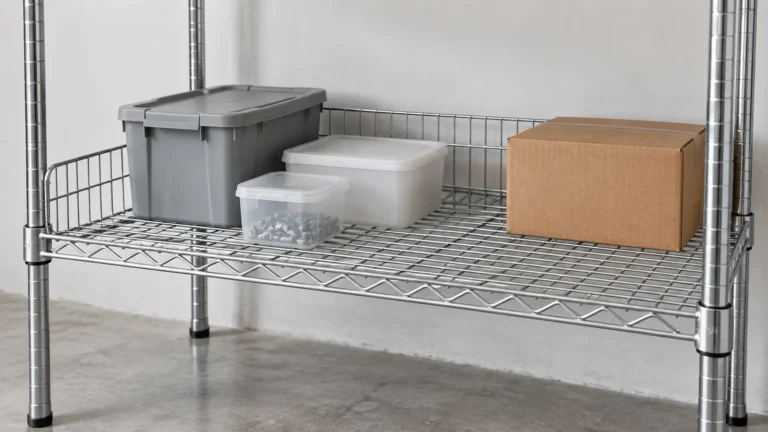
Identify shelf width, depth, wire layout, front edge, end geometry, material and revision. Show where brackets contact the frame or cross wires, and whether the shelf has a dedicated back clip or corner connection. A diagram should use a clear datum for bracket centerlines and shelf ends. Ask which positions are required, optional or conditional on length; do not invent a universal support interval.
Describe wall and fixing system. State substrate, channel, fastener type and planned installation method. A bracket's published capacity may rely on a specific anchor or support structure. If an installer chooses anchors on site, identify that responsibility and avoid claiming the shelf kit alone carries a fixed load across every substrate. A decorative surface is not the same as the structure behind it.
Clarify what the shelf is expected to store and where the load sits. A long object near the wall, a concentrated object near the front and evenly distributed goods create different conditions. Use the buyer's intended use to ask whether supplier data is relevant. If a project needs quantified load, define distribution, duration, measurement points and acceptable deflection with the qualified system supplier.
Include neighboring shelves, corner joins and end conditions in the layout. A continuous run may share a bracket or channel; separate pieces can create an unsupported joint. A corner can alter the support path and occupy a fastener position. Provide plan and elevation views showing adjacent sections and obstructions so the supplier can evaluate the exact assembly.
How should buyers compare proposed bracket layouts?
Normalize each proposal to the same shelf size, substrate, support type and intended loading. Record the supplier's bracket locations, maximum span if documented, end conditions and any required center support. Keep the source model and revision beside the data. If a supplier gives only a product photograph, request a drawing or written guidance before comparing it with a measured proposal.
Closer spacing may add parts and wall penetrations, but that alone does not prove better performance. A bracket can be mismatched, placed where a stud is unavailable or interfere with neighboring components. Wider spacing may suit only specified conditions. Compare parts, installation access, appearance, wall preparation and service access together.
Distinguish shelf strength from wall attachment. A robust wire grid cannot compensate for an inappropriate anchor; a strong fastener cannot prevent every form of shelf deflection. List shelf construction, bracket and channel identity, fixing method, wall assumptions, stated load evidence and test setup separately. Unknown entries should stay open instead of being hidden by one capacity number.
Review accessories that change the load path. A front rail, side stop, corner joint or under-shelf basket may transfer force differently from a bare shelf. If the buyer bundles them, show them on the assembly drawing and ask whether published support guidance still applies. Do not assume an add-on reinforces the shelf unless the system supplier describes that function.
What should a representative installed sample demonstrate?
Build with the quoted shelf, brackets, channel, anchors and representative wall substrate. Confirm revisions and instructions. Mark support centerlines and photograph the shelf from front, side and underside. A sample attached to a workbench with clamps can help inspect components but cannot demonstrate the actual wall fixing system.
Install each support as instructed and verify it contacts the intended shelf members. Observe whether all brackets seat without forcing the shelf to twist or lift. Check end overhangs, center region and any joint. If the instructions specify positioning order or a locking clip, follow it and record the method; a reversed bracket can look installed while presenting a different contact surface.
If load behavior is part of approval, use a written protocol agreed with the system supplier. Identify test items, distribution, duration, wall condition and measurement points. Do not invent capacity from a photograph or a brief hand placement. If the buyer only needs a fit check, label it as installation evidence rather than load qualification.
After the agreed review, inspect for permanent bending, bracket movement, loose fasteners, wall damage or a changed shelf position. Record observations without assigning cause prematurely. A displaced support could result from the anchor, substrate, installation or shelf connection. Preserve the setup for supplier review if it falls outside the documented requirement.
How can bracket spacing be confirmed before production?
The wire shelf support bracket spacing should be derived from the shelf span, bracket model, wall construction and project load requirements—not copied from another installation. First identify the bracket's load path and the surfaces that transfer force. A bracket may support a shelf edge, engage a rail or mate with a proprietary profile. Obtain the selected supplier's installation drawing and mark the spacing datum, end offsets, fastener positions and level reference on the buyer's drawing.
Check that the specified spacing can be set out on the intended wall or cabinet and that the fasteners suit the substrate. Drywall, masonry, wood studs and cabinet panels require different anchors or fixing details; the hardware supplier should not infer the wall structure. A nominal center-to-center value is incomplete if the installer cannot find the reference edge or if the bracket has an adjustment slot. Include a layout template or clear dimension chain when useful.
Review a representative assembly at the intended span. Confirm that the shelf reaches each support without forcing, both brackets sit in their intended orientation and the shelf does not rock because one support is proud or twisted. Record the bracket identity and any adjustment range demonstrated. A fit check verifies that sample and setup; it does not establish a safe load limit unless the approved test method, mounting substrate and acceptance criteria are also recorded.
If the shelf width changes, revisit bracket positions and end clearances. A new width can alter overhang, support alignment and how a user applies load, even when the bracket itself is unchanged. Have the responsible engineer or product supplier confirm whether the existing spacing remains suitable. Do not publish a universal spacing rule without a named system and validated application.
What should buyers include in the installation package?
Show a front view with bracket centers, a side view that explains engagement and a note identifying the surface used for each measurement. Distinguish finished opening dimensions from rough wall dimensions. State units and tolerances, and identify whether dimensions are nominal, minimum or adjustable. The wire shelf support bracket spacing should be easy for an installer to reproduce without measuring from an ambiguous decorative edge.
List the included brackets, fasteners and anchors separately. If anchors are not supplied, state that the installer must select them for the verified substrate. If they are included, identify their type and intended substrate rather than suggesting they work everywhere. The buyer should have the installation instruction reviewed against the kit actually packed, because a drawing that depicts one fastener while the carton contains another creates avoidable field confusion.
Use the approved sample and instruction revision as the baseline for production checks. Confirm bracket count, handedness if applicable, finish, hole or slot location and shelf engagement. For a change to bracket supplier, metal gauge, coating or slot geometry, assess which fit or inspection evidence needs repeating. Keep the review proportional to the changed characteristic and document the rationale rather than treating every change as either harmless or a full redesign.
When distributors receive installation feedback, capture the wall type, shelf span, bracket identity, fastener, observed condition and images before diagnosing the product. A shelf that loosens in an unsuitable substrate and a bracket that fails to seat are different issues. This structured record lets the correct supplier investigate and helps buyers improve the next specification without making unsupported claims about the whole product family.
How should the final spacing decision be documented?
Include wire shelf support bracket spacing on the controlled installation drawing using a clearly identified datum and finished opening. Add bracket identity, support orientation, shelf span, fastener assumptions and the approved wall or cabinet substrate. Keep a representative installed sample record with the instruction revision. When the shelf, bracket or mounting surface changes, the buyer can then see which dimensions and fit checks need reassessment rather than reusing a number without context.
How should field feedback be evaluated?
If a shelf appears unstable, record the substrate, anchor, bracket positions, span and direction of movement before adjusting it. A tilted bracket, unsuitable anchor and incomplete shelf engagement can produce similar symptoms but require different corrections. Share the installation evidence with the responsible supplier and preserve the original parts. A revised spacing or fastener instruction should be verified on the relevant setup and issued under a controlled revision.
Buyer comparison table
| Factor | Por qué es importante | Pruebas del comprador |
|---|---|---|
| Shelf span and depth | Changes unsupported geometry | Dimensioned shelf drawing |
| Wire and frame | Defines contact and bending behavior | Supplier section details |
| Bracket and channel | Controls connection and load path | Compatible model and instructions |
| Wall substrate | Affects anchor responsibility | Substrate-specific fixing method |
| Load distribution | Concentrated and distributed use differ | Defined test or use condition |
Lista de comprobación para el comprador
- Freeze shelf width, depth, profile and revision
- Request supplier support layout
- Name wall substrate and fixing responsibility
- Show joins, accessories and end overhangs
- Review bracket contact on an installed sample
- Define method for any load or deflection claim
For a project-specific detail, consult the manufacturer or technical reference. Its information applies to the stated system and conditions.
Ver related OEM sourcing information o Ponte en contacto con Koitor for a metal-product drawing discussion.
Preguntas frecuentes
Is there a universal wire shelf bracket spacing?
No. Use the selected supplier's current layout for that shelf and fixing system.
Do more brackets automatically raise capacity?
No. Compatibility, placement, wall anchors and shelf geometry all matter.
Can a visual sample prove a rated load?
No. A load claim needs the defined system, setup, method and evidence.
Can I copy another brand's spacing?
No. Obtain data from the quoted supplier for its exact system.
Discuss a project-specific sourcing question
Koitor Hardware is a family-owned custom metal hardware factory focused on bathroom and home storage products. Share the product drawing or physical sample, the purchased fitting identity, the intended application and the buyer decision that still needs evidence. Specialist drawer runners, closet shelf fittings and coating systems must be confirmed by their responsible suppliers.
OEM / MARCA BLANCA
Convierte esta guía de abastecimiento en un resumen del producto
Indícanos el producto que deseas, el tamaño, el acabado, la cantidad del pedido y los requisitos de embalaje. Tu equipo recibirá un análisis práctico de la viabilidad de fabricación antes de recibir el presupuesto.
 English
  Español
  Português
  Français
  Deutsch
  العربية