
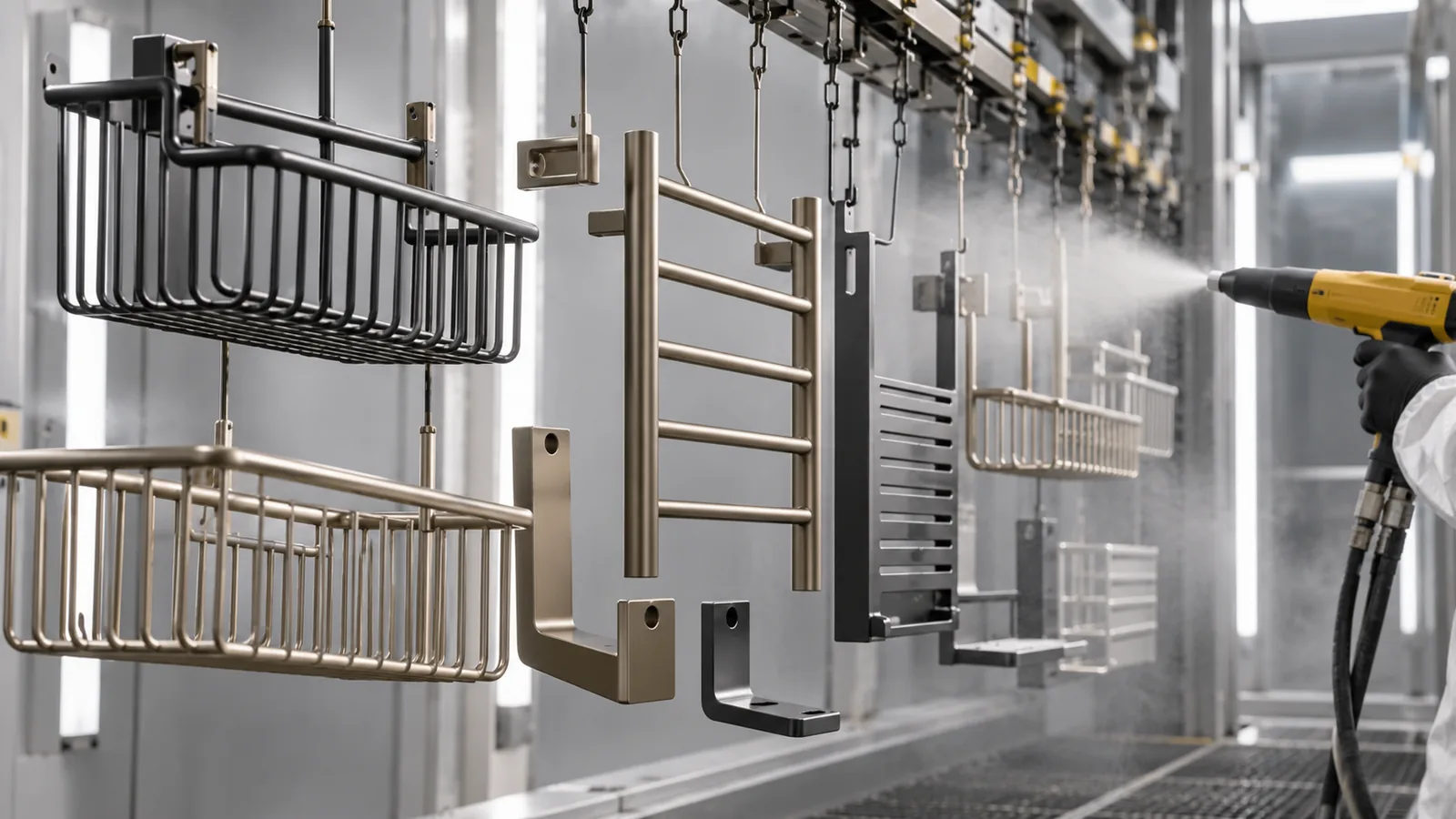
For a powder coating clearcoat over metallic base recoat window, buyers should approve the complete coating system and the supplier’s documented sequence—not specify an isolated number of hours copied from another product sheet. The relevant interval, handling and cure conditions depend on the named powder products, substrate, part geometry and production route. Ask the coating supplier to identify the approved base/clear combination, explain when the clear must be applied, and provide representative evidence from the agreed production condition.
Powder suppliers describe transparent powder as a topcoat for metallic coatings to add protection or visual depth, while noting process requirements for overcoating an already-coated surface. TIGER’s two-coat technical information sheet is specifically a guidance document for applicators; IGP’s transparent-coating processing guide likewise describes topcoating metallic finishes and stresses process conditions. These manufacturer instructions are system-specific, not universal settings for every hardware supplier or powder combination.
This article is about a qualified two-coat system—metallic base followed by clear topcoat—not unscheduled repair of a rejected part. It helps buyers define what is proposed, what has been approved and what evidence should accompany a sample or process change. It does not provide a generic recoat time, cure schedule, coating thickness or adhesion guarantee.
Why the interval matters in a two-coat system
The base coat and clear topcoat are connected layers in one planned finish. A powder-coating manufacturer’s technical sheet may specify when and how its clear should be applied over a compatible base. If the parts wait, are handled, cool, move through a different oven condition or follow an unapproved route, the production condition may no longer match the qualified system. The practical buyer question is therefore not “What is the universal recoat window?” but “Which exact product pair and process sequence are approved for this part, and how is that sequence controlled?”
Metallic finishes add another reason to identify the system precisely. The base establishes the visual effect; a transparent layer may alter depth or protection. The result depends on the selected products and the way they are applied and cured. A visual sample can help approve appearance, but it cannot by itself prove that the production process matches the supplier’s instructions or that adhesion will remain acceptable after a change.
Do not transfer values from a powder supplier’s sheet to a different powder brand, formulation, part, oven, substrate or plant without confirmation by the responsible technical authority. Even a source that gives specific application guidance is only evidence for the named system and conditions it covers. It is not an approved recipe for Koitor or for another factory.

Identify the exact coating combination and part
Before requesting a recoat window, anchor the question to the actual product. Record the drawing revision, material or substrate as specified, part geometry, visible surfaces, metallic base powder identity, clear powder identity, intended finish appearance and use environment. If the supplier proposes alternates, list each combination separately; different product codes should not be treated as interchangeable because they share a color description such as “metallic silver.”
Ask the supplier to provide current technical documents for the base and clear products and to identify the applicable version or revision. The supplier or coating manufacturer should confirm whether the clear is intended for the named base, which application sequence applies, and the boundaries of the stated interval. If the documentation is silent or ambiguous, do not fill the gap by guessing. Request written technical clarification from the powder supplier or qualified applicator.
| Buyer input | Qué grabar | Por qué es importante |
|---|---|---|
| Part identity | SKU, drawing revision, substrate as specified, geometry and visible faces | The source instruction needs to be connected to the actual component |
| Base coat | Manufacturer, product code, finish/effect description and document revision | “Metallic” alone does not identify a formulation |
| Clear topcoat | Manufacturer, product code, appearance and document revision | Clear powders can have different intended uses and processing guidance |
| Process sequence | Base application/cure state, handling path, clear application and final cure route | The interval applies to a sequence, not an abstract coating label |
| Evidence | Approved technical guidance, sample ID, process record and acceptance method | Buyer and supplier can distinguish documented facts from assumptions |
Specify what must remain constant between approved sample and production. If the sample is coated on a flat coupon but the product has corners, welds, wire intersections or recessed regions, identify which surface features need representative review. Geometry can affect access, deposition and visual appearance, so a coupon may not represent the complete hardware part.
Define the recoat window with the responsible supplier
Ask for the coating manufacturer’s recommended interval or process window for the identified base/clear combination and require the applicator to state how it will be observed on the production route. A meaningful window should name the event that starts and ends the timing, such as the base coat’s specified cure or cool state and the clear-coat application step. The buyer should not accept an unlabeled duration without knowing those reference points.
The supplier should also clarify what “recoat” means in the particular instruction. It can refer to a planned second coat in a qualified system; that is not the same as stripping, scuffing or reprocessing a defective or aged finish. If a part is rejected and later recoated, the repair route needs its own disposition and approval. Do not assume that a scheduled two-coat method authorizes ad-hoc repair of a finished part.
For a powder coating clearcoat over metallic base recoat window, ask the applicator to link the approved interval to the named product documents, production line and sample condition. If production uses a batch oven, different part thicknesses, different hanging orientation or a different handling path than the development sample, ask whether those differences affect the documented window or cure evidence. The coating supplier, not the buyer’s keyword research, should confirm technical settings.
Compare the two cases without confusing them
| Case | Pregunta del comprador | Documentación que hay que solicitar | What it does not establish |
|---|---|---|---|
| Planned two-coat system | What base/clear pair and application interval are approved for this part? | Current product guidance, written applicator process, sample reference and production record | A universal interval for other powders or factories |
| Repair or rework after rejection | What happened to the first finish, what surface preparation is proposed, and is the repair route qualified? | Nonconformance disposition, repair method, affected parts, technical approval and reinspection plan | That the original two-coat instructions also authorize repair |
| Visual-only sample approval | Does the sample show the intended color, effect and clear appearance? | Identified sample, lighting/observation method and approval record | Adhesion, cure or process conformance by appearance alone |
The separation matters because the underlying questions differ. A planned two-coat system is designed and qualified as a sequence. A repair starts from a different surface history and may need a distinct method. If the commercial order allows rework, define the decision authority and evidence before shipment rather than allowing a vague “touch-up if required” instruction.
Approve a representative sample and process evidence
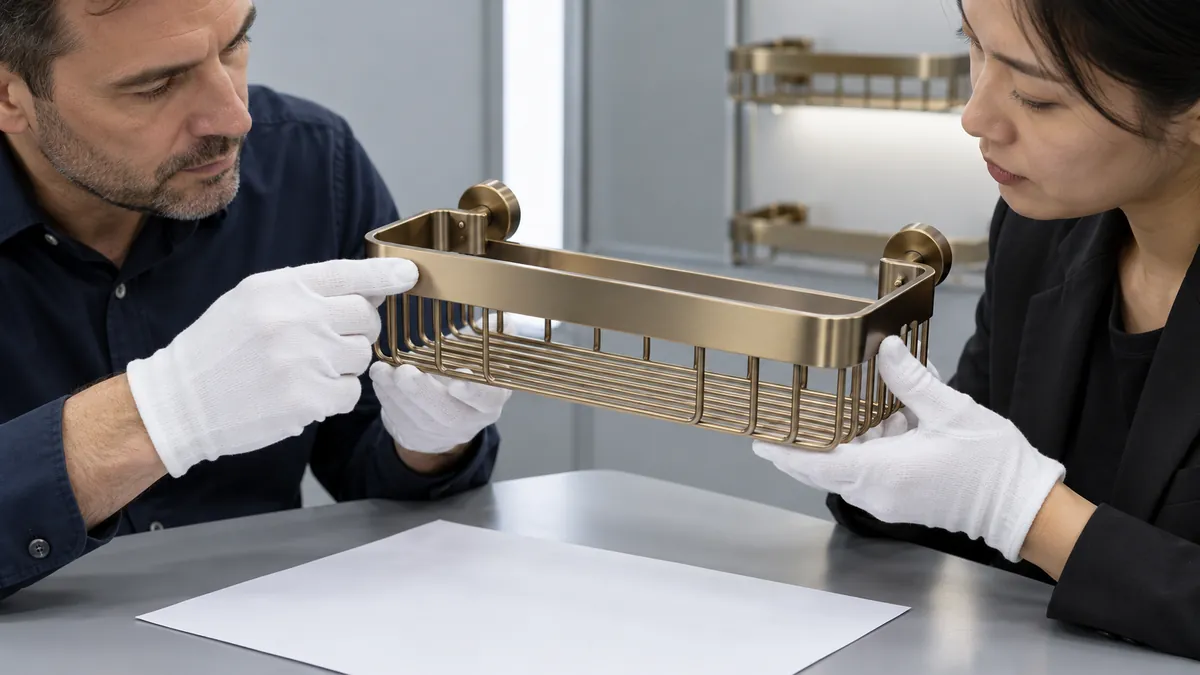
Review the production-intent part or a representative sample with the same substrate, geometry, base and clear products, orientation and process route where possible. Record the sample identification, coating product codes, drawing revision, approval date and any known difference from planned production. If the sample uses a flat test panel instead of the finished basket, rack or bracket, state which details remain unverified.
Inspect appearance under an agreed, repeatable viewing setup. Metallic effects can appear different with viewing angle and lighting; finish comparison should use the approved reference and state the viewing conditions. Look for the specific visual characteristics that matter to the buyer, such as color, effect uniformity, gloss or visible defects, but do not treat a smooth-looking surface as proof of adhesion or correct cure.
Ask what process record can be retained for production: product identifiers and batch references, line sequence, relevant timing events, oven profile or other cure evidence appropriate to the supplier’s documented process, and lot/sample traceability. The article does not prescribe a measurement instrument or pass/fail threshold. Agree those requirements with the qualified coating supplier and buyer based on the product and risk.
If a test is needed, define the question it answers. An adhesion assessment can address a specified interface under its stated method; a cure check addresses a different process condition; appearance comparison addresses the agreed visual target. One does not automatically substitute for the others. Record the method, specimen, conditioning, acceptance rule and responsible party rather than citing a test name without scope.
What can change the approved process?
Review any change to the base powder, clear powder, supplier, product substrate, surface preparation, line sequence, application arrangement, handling interval, oven or part configuration. A change may be immaterial for a particular system, but the relevant technical owner should decide and document that conclusion. Buyers should not assume a change is safe solely because the named color or topcoat description remains the same.
Geometry changes deserve attention when they alter surfaces visible to the customer or the way the component is mounted and moved through the process. A new bracket, a changed wire intersection or a modified hanging point could affect access or sample representativeness. Ask the applicator whether the revised part still fits the approved process and whether additional sample evidence is needed.
Treat clearcoat over a metallic base separately from repair of a damaged finish. A repair disposition should identify the affected quantity, proposed preparation, coating system, inspection and release authority. If the supplier’s technical documents do not cover the repair condition, seek qualified technical approval or select another disposition; do not assume the original planned-coat process covers it.
Put the requirements into the RFQ and control plan
The RFQ should state the desired finish as a system, not merely “metallic powder with clear.” Include the component and revision, base and clear identities if already approved, intended application sequence, acceptable alternative process proposal path, visible appearance reference, sample requirement and required records. Ask the supplier to list all unresolved technical assumptions and exclusions.
Before production, agree who can approve changes and what evidence triggers reapproval. Keep the powder manufacturer’s instructions, applicator’s written interpretation, sample approval and production records linked to the item revision. If different parties own coating supply and part fabrication, name who confirms system compatibility and who retains the records.
Use a concise handoff checklist:
- Is the exact base and clear product pair identified, with current documents?
- Does the document apply to the substrate and planned use of the part?
- Is the start and end point of any interval defined by the responsible applicator?
- Does the approved sample represent the real geometry, orientation and production route?
- Are appearance approval and process evidence treated as separate checks?
- Are repair/rework instructions distinguished from the planned two-coat system?
- Are changes, records, inspection responsibility and release authority assigned?
This checklist reduces ambiguity; it does not establish that a finish meets a particular performance claim. If the buyer needs corrosion, weathering, chemical or other evidence, name the product exposure and applicable method separately and seek supplier/manufacturer guidance. Do not promise service life or universal bathroom durability from a two-coat description alone.
When reviewing a powder coating clearcoat over metallic base recoat window proposal, translate each supplier statement into a recordable event: named products, identified part, sequence, interval start/end, and evidence from the approved route. If any one of these is missing, mark it as an open RFQ question rather than filling it with a generic process assumption.
How can Koitor support a finish specification?
Koitor’s approved capabilities include powder coating, metal fabrication, assembly, packaging and drawing/sample development for bathroom and home-storage hardware. This allows a project discussion around finish references, component geometry, sample approval and supplier coordination. It does not establish a specific metallic base/clear formulation, laboratory capability, coating test result or universal process window; those details must be confirmed for the project with the responsible coating supplier or qualified applicator.
For a sourcing discussion, see Koitor’s OEM home-storage hardware manufacturing page or Ponte en contacto con Koitor. Share the component drawing, target finish reference, substrate requirement, intended environment and any named powder products. The team can then identify which points are within the manufacturing discussion and which require the coating supplier’s technical approval.
Preguntas frecuentes
Is there one universal recoat window for clear powder over a metallic base?
No. The applicable interval and conditions depend on the named base and clear products and their approved processing instructions. Ask the responsible powder manufacturer or applicator to confirm the exact system.
Does a clear topcoat always improve corrosion resistance?
Do not assume that from the word “clearcoat.” Manufacturers may describe a specific topcoat as adding protection, but the result is system- and exposure-dependent. Require the relevant product evidence for the buyer’s application.
Can I use the planned two-coat process to repair a rejected part?
Not without confirming that repair condition separately. A rejected, cured or handled finish has a different surface history from a planned two-coat sequence; obtain a documented disposition and technical approval.
Does visual approval prove adhesion and cure?
No. Visual appearance and process or adhesion evidence answer different questions. Define each required check and its sample, method and acceptance rule.
Trabaja con Koitor Hardware
For decorative metal storage hardware, share the finish reference and drawing revision so the base/clear proposal and sample evidence can be discussed with the appropriate supplier.
Planning a metallic powder finish for storage hardware?
Share the part drawing, finish reference and intended coating system for an OEM sample discussion.
OEM / MARCA BLANCA
Convierte esta guía de abastecimiento en un resumen del producto
Indícanos el producto que deseas, el tamaño, el acabado, la cantidad del pedido y los requisitos de embalaje. Tu equipo recibirá un análisis práctico de la viabilidad de fabricación antes de recibir el presupuesto.

 English
 Español
 Português
 Français
 Deutsch
 العربية