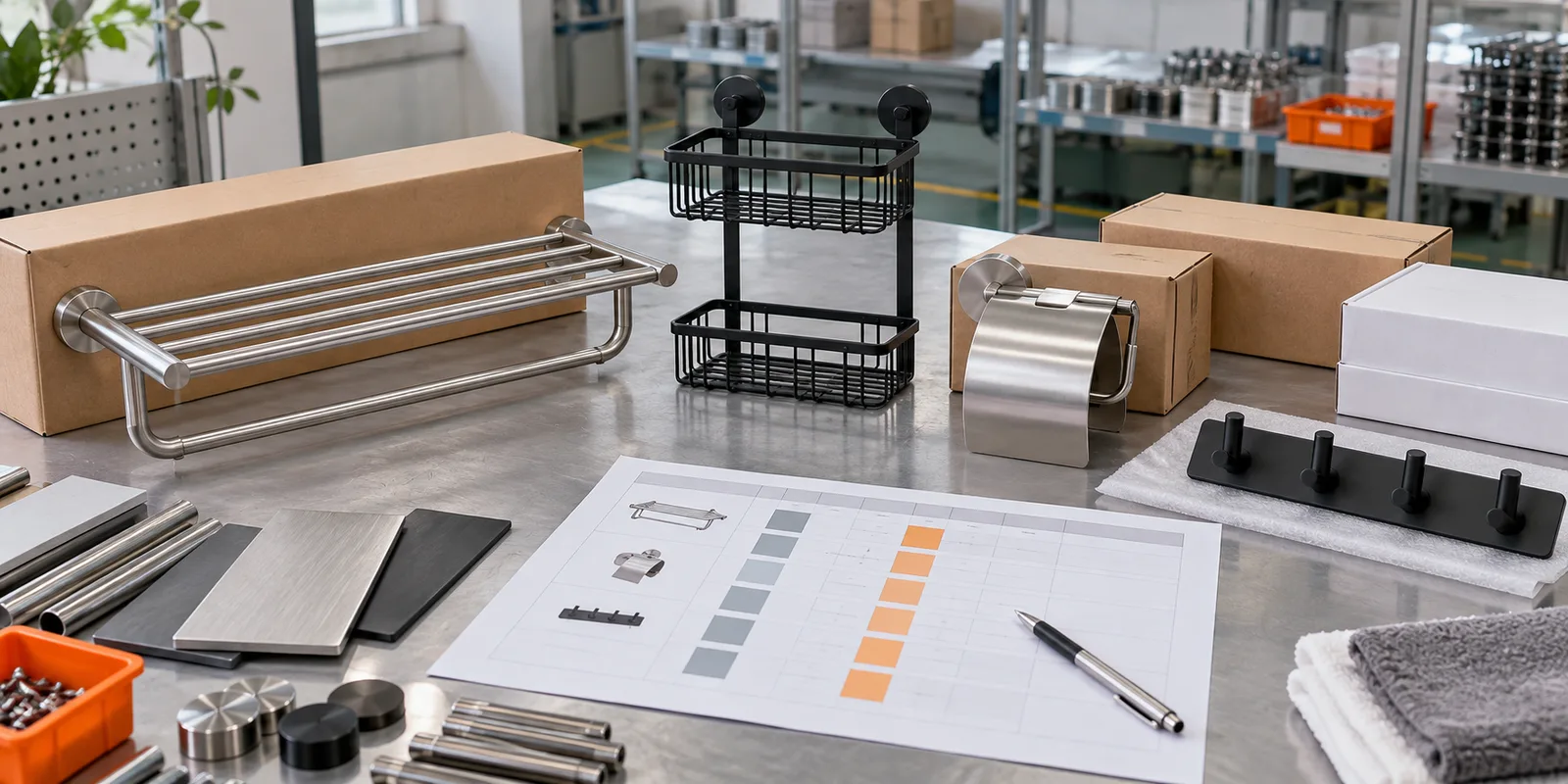
Mixed SKU MOQ bathroom accessories orders are practical when the selected products share compatible materials, finishes, components, packaging methods and production processes. Importers should not assume that several low quantities can always be combined into one factory minimum. A useful mixed order plan separates the total commercial order value from the production minimum required for each model, color, finish and packaging version.
What does mixed SKU MOQ mean for bathroom accessories?
Mixed SKU MOQ means ordering several bathroom accessory models within one purchase order while each model has a smaller quantity than a normal single-model order. The supplier reviews whether those models can share purchasing, production, finishing, assembly or packaging resources.
For importers, mixed SKU MOQ bathroom accessories planning is therefore a compatibility exercise rather than simple quantity addition. Each SKU keeps its own identity while selected factory resources may be shared.
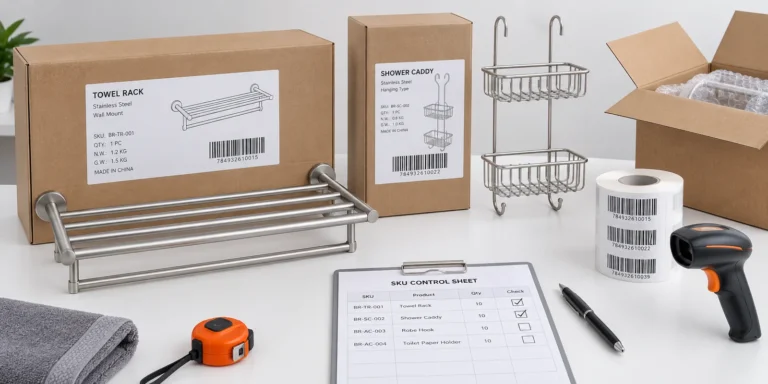
An SKU is a distinct sellable version. A black towel rack and a chrome towel rack are normally separate SKUs even if their structure is identical. A two-tier shower caddy and a three-tier caddy are also separate SKUs because their material use, welding fixtures, packaging and production time differ.
MOQ can refer to several different minimums. A factory may have a product MOQ, a raw-material purchasing quantity, a finish batch requirement, a packaging printing quantity or a commercially workable order value. Buyers should ask which minimum is creating the constraint rather than negotiate only one headline number.
For example, 100 pieces each of three towel rack sizes may be easier to combine than 100 pieces each of a towel rack, tissue holder and complex shower caddy. The three rack sizes may use the same tube, finish and carton style. The three unrelated products may require different wire, tooling, welding steps and packing materials.
Koitor Hardware can review a mixed model bathroom hardware order based on actual drawings, samples and specifications. As a family-owned fabricante de accesorios de baño a medida, Koitor evaluates whether small-batch models can be grouped without hiding model-specific costs or quality requirements.
Why can the MOQ differ for every SKU in one order?
The MOQ differs because each SKU creates its own purchasing, setup, processing, finishing, inspection and packaging workload. Two products placed on the same purchase order do not automatically move through the factory as one production batch.
Raw materials are an early constraint. A family of towel bars may share stainless steel tube dimensions, while a wire basket may require several wire diameters and a separate frame. If a special tube, sheet thickness or component is not used by other models, its purchasing minimum may remain tied to that SKU.
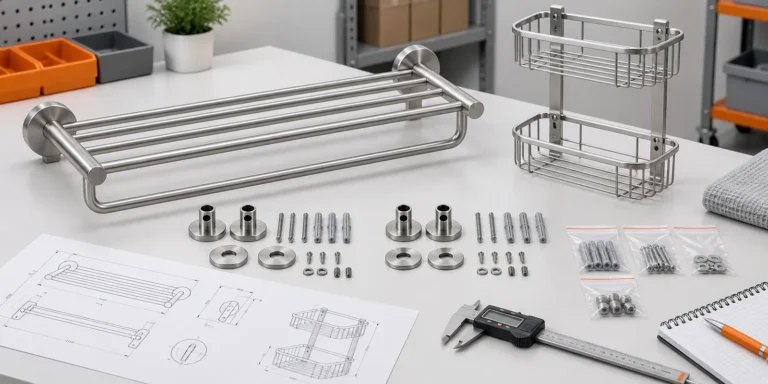
Fixtures and setup also matter. Bending stops, welding jigs, punching tools and assembly gauges must be prepared and checked for each structure. Setup time is spread across the quantity produced. At very low volume, the setup cost per piece can become more important than the material cost.
Surface finishing is often batch-sensitive. Products using the same powder color may be grouped only when substrate preparation, hanging method, visual standard and schedule are compatible. Similar-looking black finishes should not be combined without confirming the approved color, texture and gloss reference.
Packaging creates another minimum. A plain export carton with labels may support a small trial order more easily than a fully printed retail box. Different languages, barcodes or retail channels can turn one product into several packaging SKUs even when the metal part is unchanged.
Inspection records remain model-specific. Hole spacing, basket dimensions, mounting parts and appearance zones differ across SKUs. A combined order can share planning, but acceptance criteria must still identify each model clearly.
Which factors make small-batch mixed SKU sourcing practical?
Small-batch mixed SKU sourcing is most practical when buyers deliberately standardize the features that create factory complexity. Common materials, finishes, components and packaging formats can reduce separate purchasing and setup requirements.
- Common material: use compatible tube, wire or sheet specifications where the product function allows.
- Common finish: group models under one approved finish reference instead of creating unnecessary color variations.
- Shared components: standardize screws, wall plugs, caps, brackets or tools when technically appropriate.
- Related structures: combine size or tier variants that use similar manufacturing steps.
- Simple packaging: use labels, sleeves or neutral cartons for an initial test order when retail requirements permit.
- One approval schedule: confirm drawings and samples together so one late SKU does not hold the entire order.
Standardization should not override product function. A shared bracket is useful only when it fits the intended wall interface and rack structure. A common screw pack should not be used simply to reduce part numbers if one product needs different fixing hardware.
Forecast clarity helps the supplier distinguish a genuine product test from a permanently fragmented program. Buyers can explain which models are core items, which are experimental, and which may be reordered together. This information supports material and packaging planning without promising future volume.
Private-label programs should define which elements must be unique. Brand artwork may be common across the range, while barcode, model name and dimensions vary by SKU. The accesorios de baño de marca propia workflow can help buyers separate reusable brand elements from model-specific files.
How should buyers compare mixed-order cost structures?
Buyers should compare mixed-order quotations by separating recurring unit costs from one-time or batch-level costs. A slightly higher unit price may be commercially sensible when it avoids excess inventory, while an apparently low unit price may require packaging or material commitments that are not visible in the headline figure.
| Cost or Requirement | Can SKUs Commonly Share It? | Buyer Question | Planning Risk |
|---|---|---|---|
| Standard raw material | Sometimes, when dimensions and grade match | Which models use the same confirmed specification? | Special material remains unused after the trial order |
| Welding or bending setup | Usually only across closely related structures | Which fixture or setup is unique to each model? | Low quantity carries a high setup cost per piece |
| Surface finish batch | Sometimes, with one approved finish and compatible process | Can these models be finished in the same scheduled batch? | Color or texture inconsistency between lots |
| Standard hardware pack | Often, after installation requirements are checked | Can screws, anchors and tools be standardized safely? | Incorrect components are packed with one SKU |
| Printed retail packaging | Partly; artwork base may be shared but SKUs still vary | What printing or carton minimum applies to each version? | Excess boxes remain when a model changes |
| Inspection and labeling | Process can be shared, records should remain separate | How will each model and revision be identified? | Mixed cartons or incorrect labels |
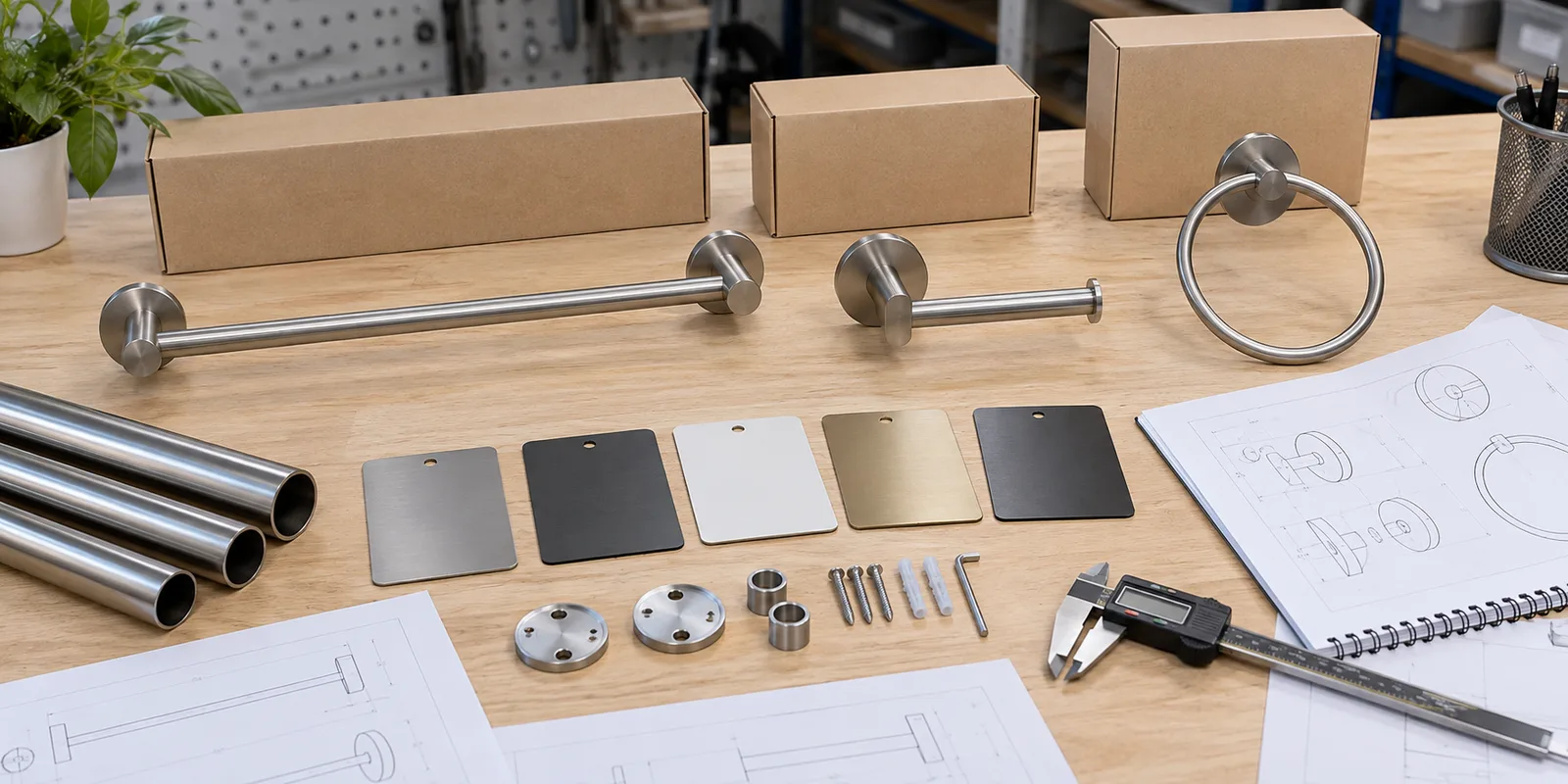
Ask the supplier to show the quotation logic clearly. Useful lines include product quantity, finish, packaging type, tooling or fixture charge if applicable, sample cost, carton quantity and any material commitment. Buyers can then compare a 100-piece trial with a larger single-SKU order on the same basis.
Do not force all costs into the unit price if that makes future reorders hard to understand. A transparent one-time setup cost can be easier to manage than a hidden unit surcharge whose duration is unclear. Confirm whether the charge applies only to the first order or returns when the design changes.
How can importers plan a mixed SKU order step by step?
Importers should begin with a SKU matrix, group technically compatible products, obtain model-level quotations, approve samples and packaging, and then freeze the purchase order. The sequence prevents a commercial assortment decision from hiding production differences.
- List every SKU. Record product code, size, structure, material, finish, packaging and target quantity.
- Mark shared specifications. Identify common tube, wire, coating color, brackets, hardware packs and carton elements.
- Separate unique requirements. Highlight special components, finishes, labels, tools or assembly steps.
- Request a feasibility review. Send drawings or samples and ask which SKUs can share production resources.
- Compare quantity scenarios. Request practical alternatives rather than asking only for the lowest possible MOQ.
- Approve samples by SKU. Do not treat approval of one model as approval of every related item.
- Freeze packaging files. Confirm barcode, model identification, component count and carton marks.
- Issue a revision-controlled order. The purchase order should match approved drawings and packing references.
A useful scenario comparison might include 100 pieces per SKU, 200 pieces per SKU and one larger quantity for a likely best seller. MOQ can start from 100 pieces depending on structure, material, finish and packaging, but every mixed order needs project-specific confirmation.
What common mixed-order mistakes should buyers avoid?
The most common mistakes are counting total pieces instead of production batches, creating too many finish variants, approving only one sample, and changing packaging after the quotation. These actions increase hidden complexity.
- Assuming 500 total pieces automatically satisfy five SKUs at 100 pieces each.
- Using different black finishes without separate approved references.
- Adding regional barcodes late and creating unplanned packaging versions.
- Combining unrelated products only because they belong to one retail category.
- Changing a bracket or screw pack without updating all affected drawings.
- Requesting an assortment carton before product dimensions are frozen.
- Comparing suppliers only on unit price while ignoring setup and leftover packaging.
Buyers should also avoid vague requests such as “mix any models to reach MOQ.” A factory needs a proposed SKU list and quantity matrix to judge feasibility. Additional purchasing guidance is available in Recursos de Koitor.
What should a mixed SKU MOQ buyer checklist include?
A mixed SKU checklist should connect commercial assortment choices with material, process, finish and packaging constraints. Complete it before requesting the final quotation so the supplier can identify which minimum applies to each version.
Use the mixed SKU MOQ bathroom accessories checklist as the controlled input for quotation, sampling and purchase-order review. When a quantity or finish changes, update the same matrix so every affected requirement remains visible.
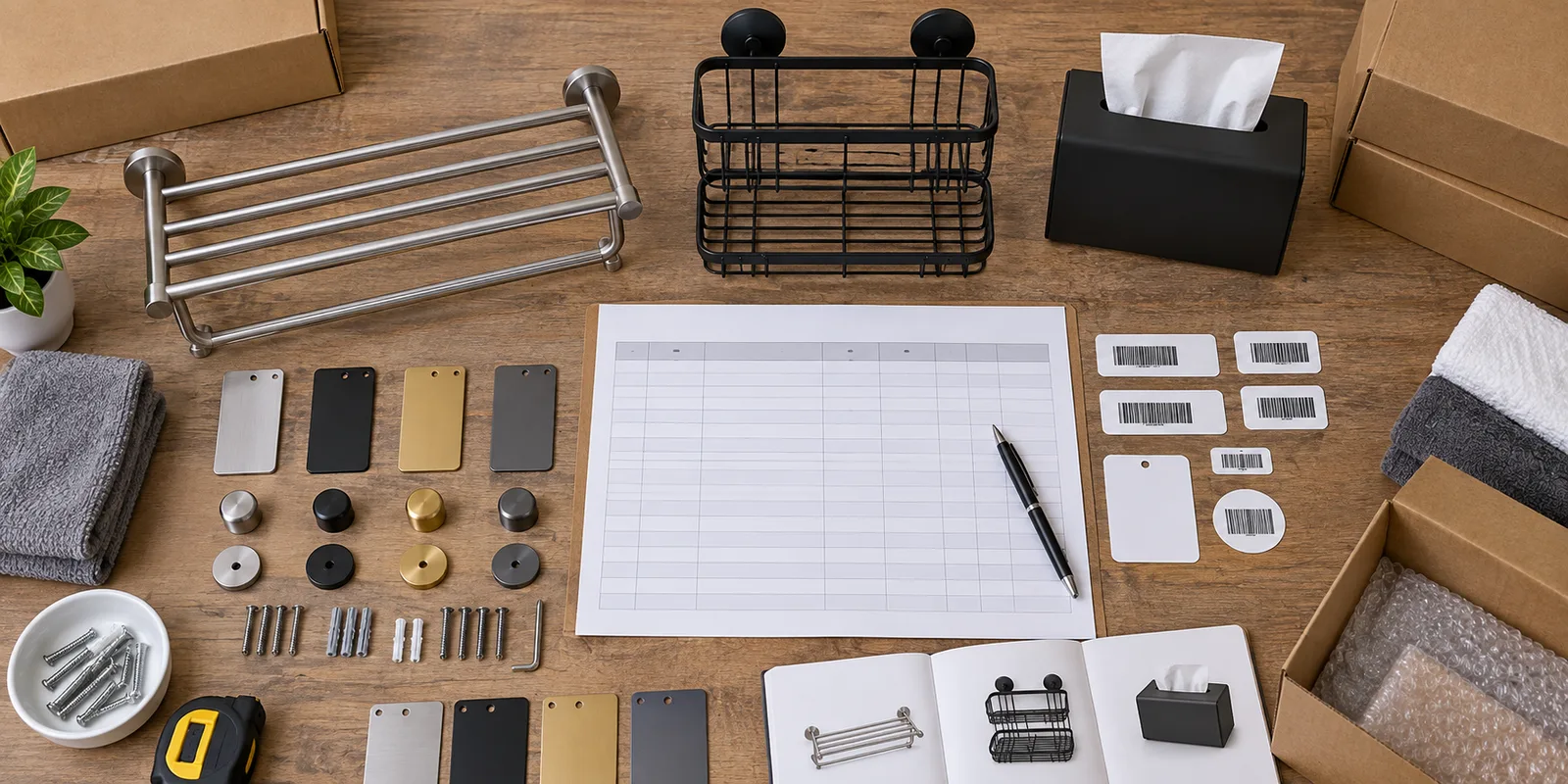
- SKU code and product description for every model.
- Target quantity and expected reorder priority by SKU.
- Drawing or physical sample reference and revision.
- Base material, tube, wire or sheet specification.
- Surface finish reference for every color or texture.
- Shared and unique mounting components.
- Logo, barcode and language version by SKU.
- Individual packaging and master-carton requirements.
- Requested quantity scenarios and acceptable alternatives.
- Sample approval owner and target decision date.
- Inspection criteria and model identification method.
- Required shipment timing and whether split delivery is acceptable.
Koitor Hardware can review the matrix before sampling and explain which products can reasonably be grouped. Samples usually take around 5–7 working days after details are confirmed, and bulk production usually takes around 4–6 weeks depending on quantity, complexity, materials, finish and packaging. These are planning references, not fixed guarantees.
The checklist should also identify the decision rule for an SKU that cannot meet a workable quantity. The buyer may increase that model, replace it with a related structure, simplify its finish or remove it from the first shipment. Recording the acceptable choices before quotation reduces repeated negotiation and lets the supplier present useful alternatives.
For repeat orders, compare actual sales by SKU with leftover packaging, components and material commitments. A slow model may be better combined with a later production window, while a core model can move to a more efficient quantity. Mixed-order planning works best as a controlled assortment process, not as a one-time request for an exception.
Frequently asked questions about mixed SKU MOQ
Can different bathroom accessory products share one MOQ?
Sometimes. Products can be easier to combine when they share materials, finish, components and production processes. Each model still needs a confirmed minimum and quotation.
Can different colors of the same towel rack be combined?
They remain different SKUs, and each finish may have its own batch requirement. Confirm the finish reference, quantity and finishing schedule before treating colors as one order.
Does neutral packaging reduce the MOQ?
Neutral cartons with model labels can reduce printing commitments in some projects. The product, finish and production minimums still apply, and retail-channel requirements must be considered.
Should every SKU have a physical sample?
Each structurally or visually different SKU should be approved appropriately. Closely related variants may share some references, but differences in size, finish, mounting or packaging must remain documented.
How should buyers request a mixed SKU quotation?
Send one SKU matrix with drawings, quantities, materials, finishes, components and packaging requirements. Ask the supplier to identify shared resources, model-specific minimums and practical quantity alternatives.
Can Koitor support trial orders with mixed models?
Koitor can review small-batch mixed model proposals for bathroom and home storage hardware. Feasibility depends on the actual product structures and specifications. Buyers can Ponte en contacto con Koitor with a proposed SKU list.
Trabaja con Koitor Hardware
Planning a Mixed Bathroom Accessories Trial Order?
Send Koitor your SKU matrix, drawings, target quantities, finishes, component list and packaging plan. Our team can review which models may share materials or processes and prepare practical quantity options before quotation.
OEM / MARCA BLANCA
Convierte esta guía de abastecimiento en un resumen del producto
Indícanos el producto que deseas, el tamaño, el acabado, la cantidad del pedido y los requisitos de embalaje. Tu equipo recibirá un análisis práctico de la viabilidad de fabricación antes de recibir el presupuesto.
 English
  Español
  Português
  Français
  Deutsch
  العربية